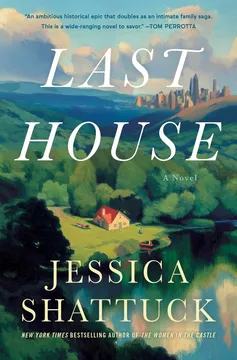


Plot Summary
Prologue
In 1953, junior oil-company lawyer Nick Taylor flies over Abadan, where Iran’s nationalization of its oil industry has halted production and drawn American and British attention. His Yale acquaintance Carter Weston, now a CIA operative, frames the frozen oil fields as a contest over the future of world power and hints that intelligence work may move events more effectively than armies.
Nick shares Carter’s fear of Soviet influence, but his faith in international law and orderly progress is still intact. The conversation sets the terms of Nick’s first covert assignment: he will try to make a political intervention seem like a lawful transaction.
The opening links buried oil to the dead matter that powers modern life, then places Nick above an industry whose consequences he cannot yet see from the air. Carter’s language turns economic access into a civilizational emergency, a persuasive story that lets intervention present itself as protection. Nick’s caution matters: he is not a simple zealot, but a man whose belief in law makes him susceptible to a plan described as legally defensible. The prologue plants the novel’s central problem, how moral purpose can be recruited to disguise the pursuit of power.
A Bomb on the Dinner Table
While Nick is away, Bet Taylor takes her first chance to leave the children and watches Mapleton celebrate the demolition of its oldest house for a drive-in theater. The spectacle troubles her, especially because she remembers her daughter Katherine meeting the frail former owner inside the house.
At home, Katherine reveals that she has made a bomb for her returning father, absorbing the language of nuclear fear from the radio. Nick arrives with Carter Weston, and their reunion is warm but unsettled by Carter’s presence and Nick’s evasive account of his work.
The next day Nick fishes with Katherine and meets Curtis Stanvein, the son of a teacher targeted over alleged Communist ties. Nick offers Curtis his rod, quietly refusing the town’s ostracism.
The demolition and the child’s homemade bomb compress two kinds of destruction into one household: sanctioned civic progress and the terror of weapons that children hear discussed as ordinary news. Bet recognizes the hypocrisy of condemning the crowd while standing among it, a small but telling measure of her own uncertain agency. Nick’s kindness to Curtis offers a counterexample to the town’s political reflexes, yet he is already preparing to enter a covert operation shaped by those same fears. The family’s private life and the public machinery of anticommunism begin to occupy the same rooms.
The Coup Called Progress
Carter recruits Nick to support a CIA-backed effort to remove Iran’s elected prime minister, Mohammad Mossadegh, and restore the shah. Nick accepts despite knowing the trip must be hidden from Bet.
In Tehran, he meets wealthy royalists whose allegiance often follows payment, then befriends Ahmad Marhavi, a landowner whose hatred of Soviet occupation comes from the rape of his family and the destruction of their livelihood. Ahmad takes Nick to Persepolis, where their talk about empire unsettles Nick’s belief that American influence simply means freedom.
The first attempt to depose Mossadegh fails; a later uprising succeeds, and the shah returns. Iran’s oil begins flowing again, and Nick receives a promotion and raise. He comes home materially rewarded, but the operation’s human cost has begun to trouble his confidence.
Nick’s role depends on a distinction between the coup’s stated aims and its practical beneficiaries. He believes he is helping Iran resist Soviet domination and negotiate a fairer oil arrangement, yet the royalists’ transactions expose how easily principle becomes a cover for private gain. Ahmad complicates the choice: his opposition to Soviet power is rooted in genuine injury, not merely Western propaganda. At Persepolis, the remains of an earlier empire make Nick’s own country’s self-description less secure. The promotion converts political ambiguity into personal reward, tying his family’s rising comfort to an intervention he cannot fully justify.
A Valley for the End
In 1954, Nick’s raise brings new money, but it cannot quiet Bet’s fear of nuclear war or restore the life she imagined before marriage. A weekend with Carter and his fiancée Virginia introduces them to Last House, an isolated farmhouse Carter has stocked against catastrophe.
Bet loves its roughness and imagines making the neglected place her own; Nick agrees, and they buy it in 1956. Their summers become a shared project of repairs, gardening, and storing supplies, a rare setting where Nick’s practical skills and Bet’s appetite for reinvention meet.
Their children respond differently: Harry thrives outdoors, while Katherine resists the quiet. When Harry leaps in front of a carriage horse being whipped, Nick initially punishes his son for defying the driver, then softens under the stars.
Last House offers the Taylors a refuge, but not an escape from history. Its stores, wells, and woodpiles embody Nick’s wish to make uncertainty manageable, while Bet’s renovations let her build a life through action after abandoning her academic ambitions. The family’s conflict over the horse reveals the different moral inheritances shaping the children: Nick equates respect with obedience to an older, wounded veteran, while Harry reacts to the animal’s suffering. Nick’s later tenderness does not resolve that conflict; it shows him glimpsing that the security he hoped to provide may also narrow his children’s freedom to judge for themselves.
Katherine Enters the Movement
In 1968, Katherine Taylor leaves her teaching job after Martin Luther King Jr.’s assassination and joins a protest in Central Park. Outside an apartment building, she meets Brent Cousens, a Black law student who recognizes her grief but challenges her to confront racism at home, not only in slogans.
He introduces her to the radical newspaper the Leaflet, where she becomes a reporter covering student occupations and protests. Her parents’ polite reserve toward Brent during a dinner in Mapleton exposes the limits of their liberal self-image.
Katherine turns that hurt into distance from home, while Brent leaves for a Fulbright in Berlin before their friendship becomes romance. The movement gives Katherine a sense of purpose, but it also encourages her to mistake proximity to struggle for understanding of other people’s lives.
Katherine’s political awakening is inseparable from her hunger to escape a life whose domestic roles feel preassigned. Brent opens a door, but he also insists that her ideals be tested against the racial assumptions her family prefers not to name. Her parents’ failure is not expressed as open hatred; its force lies in the ordinary social distance they consider neutral. Katherine’s departure from Mapleton therefore brings both conviction and avoidance. She finds a public language for injustice, yet risks using that language to outrun the intimate work of recognizing how privilege operates in her own family.
Harry Refuses the Easy Answer
Harry goes to college in California but feels out of place and increasingly disturbed by the oil spill that coats Santa Barbara’s wildlife. He helps rescue animals, watches a duck die in his hands, and begins to see his father’s industry as an engine of ecological harm.
Wanting to serve rather than consume, he quits college and tries to enlist for Vietnam, but nasal polyps disqualify him. Back in Mapleton, he grows withdrawn until he protests his father’s decision to cut down a centuries-old beech tree by sitting beneath it. Nick finally sends the workers away.
Harry later moves into Katherine’s crowded New York apartment, where the Leaflet’s radicals and their politics surround him. His concern for living things is real, but neither his family nor his sister understands how urgently he is searching for a way to act.
Harry’s route toward radical action begins not in political theory but in direct encounters with vulnerable life: oil-coated birds, a dying duck, an old tree marked for removal. His attempt to enlist exposes a painful confusion between contribution and self-sacrifice; when the military rejects him, his sense of purpose has nowhere obvious to go. The tree protest shows conviction before ideology, while the New York apartment supplies the language and networks that can redirect that conviction. Katherine interprets his quietness as political indifference, missing how deeply he is already engaged with the moral consequences of ordinary comforts.
The Leaflet Turns Hard
In 1971, Katherine brings Leaflet colleagues to Last House to settle their split over nonviolent protest. Martin Berk favors direct action and alignment with the Weather Underground; Katherine opposes escalation, and Harry declines to join their vote.
Harry has already met Candy, a young woman fleeing scrutiny after her Black Panther ex-boyfriend was framed, and the two grow close at the farmhouse. Martin takes an interest in Harry’s environmental anger, gives him radical books, and encourages him to imagine an action against oil.
Katherine sees the connection forming but remains absorbed in her own attachment to Brent and the Leaflet’s internal struggle. She does not understand that Martin is turning Harry’s sincere concern into a plan for sabotage.
This turning point is a study in how recruitment exploits a person’s strongest moral instinct. Harry’s environmental concern is neither a pose nor a borrowed ideology, but Martin reframes it as proof that dramatic violence is the only adequate response. Katherine recognizes Martin’s vanity and the movement’s appetite for spectacle, yet her attention is divided by love, work, and her own political rupture. Her failure is not simple negligence: she assumes that Harry’s gentle character will protect him from manipulation. The episode shows how a movement can confuse the purity of a grievance with the wisdom of its proposed remedy.
The Party at Persepolis
In 1971, Nick brings Bet to Iran while he negotiates a new oil agreement. When a last-minute dispute keeps him in Tehran, he sends Carter to accompany her on a desert excursion. Bet learns that the shah’s military buildup is being supported by American technicians, then watches secret police seize a frightened young man from the street.
At the lavish Persepolis celebration, the spectacle of imported luxuries and absent ordinary Iranians sharpens Nick’s doubts about the progress he once believed he served.
He sees Carter watching Bet with unmistakable desire and understands how often ambition disguises itself as public principle. Nick leaves the banquet with Bet rather than stay for its speeches. The next day, they receive news that Harry has died in an explosion at an oil facility in Vermont.
The party brings the novel’s political and intimate plots into the same room. Bet’s brief desert solitude gives her a perspective beyond the catered performance, while Nick sees the endpoint of the policy he helped advance: a monarch celebrated amid coercion and conspicuous inequality. Carter’s desire does not cause Nick’s crisis, but it makes his old friend’s appetite for possession newly legible. Nick’s decision to leave is a small refusal, not a clean absolution. The telegram that follows joins this public reckoning to private catastrophe, making the family’s earlier faith in progress impossible to recover intact.
The Bomb Takes Harry
The explosion at a Lake Champlain oil-transfer facility kills Harry before the intended demonstration can occur. News reports speculate about whether a tanker was nearby and whether the bomb was meant to ignite the oil, but Katherine learns the bomber was her brother when police identify his bracelet among the wreckage.
She conceals Candy’s presence at Last House, yet investigators trace the young woman there and blame her and her imprisoned former boyfriend. Candy has already disappeared, helped by Carter, who reaches her before the search.
The Taylors face grief alongside a press that turns Harry into either a revolutionary hero or a spoiled extremist. Someone throws a rock through their window with a message branding them traitors. Their private loss becomes a public argument about who gets to define their son.
Harry’s death is both a material accident and a collapse of the stories others tell about him. The press needs a legible political symbol, while the family remembers a son whose actions cannot be reconciled with either heroic martyrdom or caricatured fanaticism. Katherine’s silence about Candy is an act of protection, but it cannot stop institutions from targeting her. The rock through the window extends punishment to the parents, whose grief is forced into public debate. The novel refuses to make the blast meaningful enough to redeem it: even a cause that names real damage cannot restore the person lost.
The Bomb’s Other Author
Brent returns to support Katherine, but investigators treat him as a possible handler because he brought Candy to Last House. A protest against the accusation fails to save his federal clerkship, and he leaves for civil-rights work in Georgia.
After Martin is imprisoned, Katherine visits him and learns that he supplied the bomb and cultivated Harry’s anger, first proposing an attack on her father’s office before agreeing to a rural oil site. Martin says Harry wanted the action, but his account cannot erase the manipulation Katherine now understands.
Their mother later reveals that she secretly paid a doctor to disqualify Harry from military service. Katherine admits she introduced Harry to Martin; her mother insists Harry made his own choices. Both women carry guilt without claiming full control over the past.
The revelation distributes responsibility without allowing anyone the comfort of a single culprit. Martin engineered the opportunity and supplied the device, but Harry chose to participate; Katherine’s introduction created access, not intention. Their mother’s intervention saved Harry from one danger without protecting him from another. Brent also pays for proximity rather than culpability, losing a career he had earned. These distinctions matter because grief seeks simple causal accounts, while the novel insists that influence, choice, and consequence coexist. Katherine’s confession to her mother changes guilt from a private accusation into a truth they can hold together.
Last House Opens Again
After years of avoiding Vermont, Katherine returns to Last House in 1978 to oversee repairs after a tree crashes through its roof. She meets Ben Wyzanski, a local builder whose father worked at the very oil facility Harry bombed.
Ben’s steadiness helps Katherine restore the house and build a life beyond the Leaflet; they marry there, bringing her parents back. Nick leaves the oil business and practices law in North Carolina before returning north, while Bet and Nick settle into a quieter life shaped by gardening, conservation, and reading.
Katherine also learns that Nick’s beloved brother Ame died by suicide, a truth Nick had never shared. When the Iranian revolution arrives, Nick acknowledges that he acted on the information he had, but still wonders what his intervention helped set in motion.
Repair becomes a form of memory that does not require pretending the past can be repaired. Ben’s connection to the bomb site makes him an embodied link between domestic livelihood and the industry Harry opposed, without reducing him to either side. The parents’ return to Last House gives grief a place to live rather than a problem to solve. Nick’s revelation about Ame revises Katherine’s understanding of her father: his restraint contains an old wound, not emotional absence. His reflection on Iran preserves moral uncertainty, rejecting both self-exoneration and the fantasy that hindsight can produce a clean alternative history.
Candy Comes Back to the Family
Years after Harry’s death, Bet finds Candy living at a Vermont farm cooperative with her daughter, Myrlie. She visits in secret, then eventually brings Nick, admitting that she had kept this connection to Harry for herself.
Myrlie greets them with a newly hatched chick, recalling the Easter bird Nick once brought home for Katherine. Nick accepts Candy as Harry’s family, and the three adults share the knowledge that loving Harry never meant knowing every part of him.
Candy remains at the cooperative, while Bet and Nick help provide for Myrlie’s future. Their reunion does not solve the questions around the bombing or erase their grief. It gives Harry’s parents a living relationship that can carry his memory beyond the circumstances of his death.
The reunion makes kinship an act of recognition rather than a fact guaranteed by marriage or blood. Bet’s secrecy began as a way to preserve her private bond with Harry, but it also kept Nick outside a source of possible comfort. The chick connects the present to the family’s earlier rituals without turning repetition into magical repair. Candy’s calm welcome and Nick’s attention to Myrlie allow the adults to acknowledge the limits of their knowledge about Harry. The scene offers continuity, not closure: memory can generate new obligations and relationships even when the past remains irreducibly incomplete.
Epilogue
In 2026, Katherine’s family gathers at Last House for her birthday just as a vast winter blackout cuts power across New England. The house’s solar equipment, generator, well, and stored food make it a refuge, though news of the outage remains uncertain. During dinner, Katherine asks what should happen to the property after Candy is gone.
Her grandson Behr suggests returning it to the woods. Later, as snow thickens, the family passes firewood hand to hand toward the house. Mara, who once abandoned painting, imagines the scene as an image of human shelter that will not last forever. The outage is still unfolding, but the family meets it together rather than mistaking preparation for escape.
The blackout tests the promise that Last House can stand outside the systems its inhabitants distrust. Its solar pump and supplies help, but the family still depends on broader infrastructure and shared labor. Behr’s wish to return the house to the woods challenges the inherited assumption that land is valuable chiefly as property or refuge. The final human chain does not defeat the storm; it demonstrates a more modest form of resilience, one built through cooperation. Mara’s renewed desire to paint makes attention itself a response to crisis, not an alternative to practical care.
Analysis
Last House follows three generations through a recurring conflict between protection and participation. Nick believes law, oil agreements, and American power can preserve peace; his work in Iran shows how those instruments can also strengthen a ruler and obscure the lives of people subjected to his security state. Katherine rejects her father’s compromises, but her political certainty does not prevent her from overlooking Harry’s vulnerability or the risks Brent bears. Harry’s environmental concern begins in direct attention to animals and trees, then becomes vulnerable to a movement that confuses the urgency of a grievance with the legitimacy of violence. The novel refuses the consoling idea that good intentions reliably produce good outcomes. It also resists turning catastrophe into proof that action is futile. Bet’s secrecy, Nick’s retrospective doubt, and Katherine’s later admissions show how moral judgment changes when private motives become visible. Last House itself embodies the contradiction: its refuge is funded by the world its occupants hope to escape, yet it becomes a place where people can return, repair, and care for one another. The final blackout makes that contradiction immediate. Stored supplies matter, but no household can become wholly independent of shared systems or other people. The family’s chain of firewood is not a triumph over history or nature. It is a practical act of mutual reliance, and a small refusal to let fear become isolation.
Review Summary
Last House receives mixed reviews, averaging 3.57 out of 5. Praised for its ambitious multigenerational scope, spanning 1953 to 2026, it follows the Taylor family through post-WWII America, the Cold War, Vietnam, and climate change. Readers admire its rich historical backdrop, distinct character voices, and thought-provoking themes around generational conflict, oil industry politics, and family dynamics. Common criticisms include uneven pacing, insufficient character depth, and a rushed ending. Many recommend it as an excellent book club selection for its philosophical exploration of how each generation inherits and responds to the consequences of those before them.
People Also Read







Characters
Bet Taylor
Restless keeper of memoryBet is Nick’s wife and the mother of Katherine and Harry, an intelligent Vassar graduate whose plans for doctoral study are displaced by marriage and domestic life. Her wartime cryptography work gave her a taste of intellectual purpose, and she remains alert to the distance between public ideals and private consequences. She is empathetic to the point of absorbing other people’s distress, yet she can also retreat into routine or conceal what she fears might change a relationship. Her attraction to new experiences coexists with a strong attachment to family and loyalty. Bet’s perspective makes domestic work, motherhood, and political history part of one continuous question about what a life allows a person to become.
Nick Taylor
Lawyer seeking moral orderNick is Bet’s husband, a father, and an oil-company lawyer shaped by a strict Mennonite childhood and service in the Pacific War. He believes law and international agreements can restrain violence, and his intelligence makes him attentive to history, politics, and the physical world. Nick values family stability partly because war has shown him how quickly the self and its certainties can disappear. He is capable of compassion, but his instinct to preserve order can make him mistake obedience for moral conduct. His work gives him influence and security while forcing him to confront the gap between the ideals he serves and the power those ideals may protect.
Katherine Taylor
Impatient seeker of justiceKatherine is Bet and Nick’s daughter, a sharp, independent-minded child who grows into a teacher and radical journalist. She wants to be part of consequential change and is impatient with the compromises of her parents’ comfortable life. Her moral intensity is genuine, but it can make her interpret disagreement as complicity and overlook the complexity of people close to her. She is drawn to language, protest, and political communities, yet struggles with intimacy when family relationships expose her own blind spots. As a narrator of memory, Katherine is candid about her youthful certainty and the ways grief altered what she can see in her parents and brother.
Harry Taylor
Gentle environmental conscienceHarry is Bet and Nick’s son and Katherine’s younger brother. Quiet, observant, and deeply responsive to animals and landscapes, he is less drawn to argument than to the tangible work of caring for living things. He knows trees, birds, and local terrain, and he often notices small details others miss. His easygoing manner can conceal an intense moral seriousness, especially when he sees people or animals treated as expendable. Harry’s desire to contribute grows from a discomfort with passive privilege and a conviction that human life is entangled with the natural world. He is not naturally suited to political theater, which makes the people who offer him a cause especially consequential.
Carter Weston
Charismatic covert operatorCarter is Nick’s Yale acquaintance and a CIA operative who moves easily among oil executives, officials, and social circles. Tall, confident, and skilled at making every room feel like his own, he treats politics as a contest of influence and improvisation. His stories and charm make him compelling company, but his certainty can turn other people into pieces in a plan. Carter believes survival and power are more fundamental than abstract principle, a worldview that both attracts and unsettles those around him. His long connection to the Taylors places him at the intersection of public schemes and private loyalties.
Brent Cousens
Bridge between divided worldsBrent is a Black law student and civil-rights organizer who becomes Katherine’s friend and love interest. Composed, perceptive, and adept at bringing people together, he moves among communities that often remain separated by race, ideology, and institutional power. Brent challenges Katherine to name racism in her own family rather than treating it as a distant political issue. His calm is not detachment: it is a practiced way of managing risks that she can afford to meet with anger. He values law and effective organizing, and his ambitions are grounded in work rather than performance. His perspective exposes the uneven costs of protest and public suspicion.
Candy
Private survivor and caregiverCandy is a young Black woman who works hard, supports her family, and hopes to become a nurse. She is cautious with personal information, not because she lacks feeling but because experience has taught her that exposure can carry real danger. Her dry humor and practical judgment cut through the self-dramatizing language of the activists around her. Candy is protective of people she loves, while remaining wary of political movements that can turn vulnerable lives into symbols. Her relationship with Harry grows in a setting where everyday work and quiet companionship matter more than slogans.
Martin Berk
Radical strategist and recruiterMartin edits the Leaflet and enjoys directing its attention, arguments, and ambitions. Bright, theatrical, and hungry for influence, he can make political ideas feel like invitations to history. He favors provocation and direct action, and he is skilled at identifying what will motivate someone else. His intellectual confidence often masks a willingness to treat people as instruments. Katherine sees his vanity before she understands how far his strategic interest in Harry may extend.
Ahmad Marhavi
Iranian landowner with scarsAhmad is a young Iranian landowner whose family suffered under Soviet occupation. He supports the shah for personal and political reasons, including the hope of using oil beneath his land to restore his family’s fortunes. Warm, humorous, and historically alert, he is the person Nick most enjoys meeting in Iran. Ahmad challenges American assumptions about freedom and empire without pretending his own interests are pure. His friendship gives Nick a human relationship through which to test the abstractions of the oil negotiations.
Frank O’Malley
Bet’s ambitious fatherFrank is Bet’s father, a self-made businessman who rose from a working-class Irish family to influence in the utility industry. He values education, security, and practical action, and he wants his daughter’s family to enjoy the opportunities he worked to create. His confidence in order and material progress can make him dismissive of political anger, but he is not indifferent to fairness. Frank’s business success shapes the comfort of the Taylor household and becomes a source of friction with Katherine’s anti-capitalist convictions.
Ame Taylor
Nick’s elusive older brotherAme is Nick’s older brother, a solitary boy who loves fishing and resists the severe discipline of their Mennonite household. Unlike Nick, he does not organize himself around approval, achievement, or duty. He teaches Nick the patience and pleasure of fishing, offering a private alternative to their father’s rigid moral world. Ame remains a powerful presence in Nick’s memory, associated with freedom, beauty, and the burdens of family history.
Ben Wyzanski
Vermont builder and partnerBen is a Vermont carpenter who meets Katherine while repairing Last House. Practical, patient, and comfortable with his own limits, he approaches conflict without the appetite for ideological performance that shaped Katherine’s earlier circle. His family’s connection to the local oil facility gives him a personal perspective on the industry’s reach. Ben’s skill at rebuilding houses and his steadiness in relationships offer Katherine a way to imagine a life grounded in ordinary, shared work.
Sadie Gozol
Bet’s wartime friendSadie is Bet’s former roommate and fellow codebreaker, a reserved reader who remains in government service after the war. She is careful about secrecy and its consequences, and her loyalty to the work differs from Bet’s later unease about how classified information affects individual lives.
Plot Devices
Last House
Refuge with porous wallsThe farmhouse in Vermont is first imagined as a shelter from nuclear war and later becomes the family’s recurring place of repair, retreat, and reckoning. Its wells, cellar, wood, and stored food give the Taylors practical independence, but the house is purchased through a life shaped by oil wealth and connected to people in government and industry. Each generation reads it differently: as escape, childhood confinement, sanctuary, or inherited responsibility. The house anchors the novel’s shifting decades while testing whether any family can stand apart from the political and ecological systems that sustain its comforts.
The Huma bird
Emblem of endings and returnCarter brings a carved Huma bird from Iran to Last House. Its mythical association with cycles of destruction and renewal makes it a recurring object through which characters consider survival, historical repetition, and the limits of human control. It appears as decoration, unsettling sculpture, and family inheritance, gathering new meaning without supplying a clear answer. The bird links the Iranian setting to the Vermont house and allows the novel to connect ancient empires, modern crises, and the possibility that an ending may become the beginning of another order.
Oil and its afterlives
Material link across generationsOil is both a practical resource and the substance connecting the novel’s separate conflicts. Nick’s legal work and covert mission help shape who controls Iranian production; Frank’s business success helps fund the family’s comfort; Harry later sees oil’s ecological costs and its role in war. The resource turns abstract arguments about progress into consequences for governments, workers, wildlife, and families. Its origin in ancient organic matter gives it an additional force as a reminder that the modern world runs on remnants of the living past.
Hidden knowledge
Secrets that redirect intimacyThe book’s secrets include Bet’s classified wartime work, Nick’s concealed Iran assignment, the political decisions hidden behind public accounts, and the family information withheld through grief. These omissions do not function as puzzles with one final solution. Instead, they show how people protect relationships, preserve authority, or avoid a painful conversation, often without understanding what the silence costs. Later revelations revise earlier memories, especially Katherine’s account of her father and the circumstances surrounding Harry. Knowledge arrives unevenly, and each character must decide whether truth is a form of care, a burden, or both.
Download PDF
Download EPUB
.epub digital book format is ideal for reading ebooks on phones, tablets, and e-readers.








