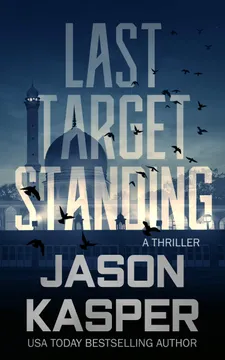


Plot Summary
The Convoy Takes Fire
David Rivers,1 a CIA paramilitary team leader, is escorting four specialists through Afghanistan toward a covert operation in China. Their mission is to reach Ghulam Samedi,7 a suspected link to the July 4 attack, and recover intelligence before another plot can follow.
An RPG hits near their armored convoy in Badakhshan, forcing the vehicles to stop where the road curves beneath the attackers' high ground. David1 rejects the Green Beret captain's safer plan to wait for helicopter support: an airstrike could expose the mission and cost them their narrow timetable.
He takes his five-man team uphill, where they flank the rocket crew and kill seven fighters. The escort survives, but the mission begins with a delay and a reminder that their secrecy depends on choices made under fire.
David's first consequential choice establishes the novel's central bargain: operational success requires accepting risks that cannot be cleanly delegated. He does not dismiss the captain's caution as cowardice; he judges that the safer response would endanger the mission in another way. The opening firefight also gives the team an early, unwanted visibility problem. Their expertise saves the convoy, yet every shot makes the supposedly quiet operation less quiet. The tension is not simply whether they can fight, but whether each necessary act of force will make the next act harder.
A Landing Without Ground
After reaching a remote forward refueling point, David's1 team boards a special operations Chinook escorted by armed Black Hawks. The pilots warn that they have no quick-response force waiting behind them. Mountain winds make the planned landing too dangerous, so they divert to an alternate site and attempt a backward pinnacle landing on a steep slope.
The rear wheels touch down briefly; the five men spill onto snow as the Chinook lifts away above them. Their insertion has succeeded, but the alternate landing adds miles of difficult travel at extreme altitude. Headquarters has no aerial view of their progress, leaving David's1 team dependent on its own navigation and on short, vulnerable radio reports.
The insertion converts institutional distance into physical exposure. The aircraft can deliver the team, but its departure removes the comforting fiction of rescue on demand. The alternate landing is a small mechanical change with large narrative consequences: extra terrain, less time, and greater reliance on the team’s judgment. The dark, precarious touchdown also echoes the operation's larger design. They are being placed in a space where formal safeguards have narrowed, and where a margin of safety must be created by people who cannot see the whole board.
Thirty Feet Below
During the high-altitude march, loose stone gives way beneath David1 and sends him down a steep slope onto a narrow ledge. Reilly4 rappels to him, checks for spinal and head injuries, then attaches David1 and his rucksack to separate ropes so the others can haul them back up. David1 is shaken and his night-vision goggles are ruined.
Cancer5 assumes tactical command while the team continues, requiring Reilly4 to test David1 repeatedly before restoring his authority. The incident costs time and exposes how quickly a leader can become a liability. David1 accepts the medical limits he would impose on any teammate, then rejoins the march with a borrowed set of goggles.
The fall makes David confront leadership as a responsibility rather than a possession. He wants to resume command, but the standard he set for his team requires him to submit to Reilly's judgment. Cancer's temporary authority is not a coup; it is the group honoring its own rules when David cannot reliably assess himself. Their cohesion is therefore practical and moral at once. The rescue also leaves David physically and cognitively vulnerable, a condition the mission cannot pause long enough to accommodate fully.
Across the Chinese Line
At dawn, the team crosses from Afghanistan into China's Xinjiang region, a border crossing with no fence but enormous political consequences. David1 reports the codeword Switchblade to Duchess,6 the CIA commander overseeing the operation.
At their prearranged meeting point, a Uyghur porter arrives with five mules. Ian2 verifies the porter and his meager supplies, while the team pays him and conceals its equipment beneath blankets. The porter knows little about the Americans and their destination, a compartmentalized arrangement meant to limit damage if anyone is caught.
With the mules carrying their heavy packs, the team moves deeper into China disguised as travelers. Their route now depends on strangers whose identities and loyalties are deliberately kept from them.
The border crossing is less a line on a map than a change in what the team can safely know. Compartmentalization protects the operation, but it also leaves David unable to evaluate the network that is carrying his people. The porter is not treated as a full partner; he is inspected, paid, and warned. That imbalance later sharpens the story's attention to local risk. The Americans can call their arrival a successful insertion, yet the people who live along the route will bear consequences they cannot control.
Opium on the Ratline
Cancer5 spots four armed men moving toward the Afghan border, but the team continues with the porter until Worthy3 rounds a canyon corner and finds another group of smugglers aiming weapons at him. The team opens fire, kills all four, and discovers their packs contain a valuable load of opium.
To make the deaths look like a rival gang's robbery, Cancer5 leaves the drug hidden in a fissure and relies on ammunition casings marked as Chinese-made. The tactic may protect their identities, but it gives the smuggling network a reason to search for the missing cargo. Ian2 warns that their planned route back is now more dangerous. Duchess6 begins considering alternate extraction options, though political approval remains out of her hands.
The team tries to make violence disappear by shaping the evidence it leaves behind. Hiding the opium and using deceptive ammunition markings are not tidy solutions; they redirect suspicion toward other people and create a new incentive for retaliation. Ian's assessment recognizes that the missing cargo matters more than the four dead men because it has economic value and an owner with reach. The operation's risk expands beyond discovery. The team has altered local interests, and its original route may now be watched by people who do not know who they are hunting.
The Driver and Checkpoint
The team reaches its next contact, Asadulla Akhmadieva,8 a Uyghur trader with a small van and a firm insistence on being addressed by his own name. He drives them toward Taxkorgan while Ian2 questions him about Ghulam Samedi,7 the resistance leader believed to be hiding in the mountains. A checkpoint blocks the road, and its armed men demand to inspect the van.
David's1 attempt to pass as a missionary and then buy passage fails, so Reilly4 and Cancer5 burst from the cargo area as the team attacks. Six checkpoint fighters die, and the van escapes. The violence confirms that the missing opium has stirred a pursuit, while Asadulla's8 knowledge of the route becomes essential to reaching the target.7
Asadulla's insistence on his name gives him a boundary in a story where nearly everyone is reduced to a callsign, asset, or target. David's careless nickname threatens that fragile respect, while Ian's tact repairs the exchange. At the checkpoint, the team's rehearsed strategy fails in sequence, leaving violence as the remaining option. That failure shows the limits of procedure without making the procedure useless: each member still knows where to move when the plan collapses. Asadulla's presence is no longer merely logistical; it is a relationship the team must learn to handle.
Samedi in the Cave
At night, Cancer5 and Reilly4 eliminate two outer lookouts while David,1 Worthy,3 and Ian2 approach Samedi's7 mountain hideout. They kill the guards at the entrance and rush the cave, where David1 tackles Samedi7 before he can use a pistol. Ian2 finds satellite phones but no records, maps, or computers.
Samedi says the intelligence is stored in his memory, and the team has no time to test the claim: armed fighters emerge from neighboring caves and fire on the Americans. Rather than kill Samedi7 and leave empty-handed, David1 restrains him and orders the team to withdraw with their captive.7 Reilly4 and Cancer5 suppress the attackers while the others escape under fire.
The empty cave reverses the mission's expected logic. The team came for material evidence, but the only useful archive is a person they had been sent to kill. David's decision to carry Samedi out is a strategic gamble and an ethical complication, not a sudden change of heart: without the intelligence, the operation has failed in its larger purpose. Samedi's survival also changes his status from target to hostage, forcing the team to protect someone whose cause and methods they oppose.
A Prisoner Names Weisz
After reaching a hideout in Dafdar and evading Chinese forces moving south, the team questions Samedi7 about the July 4 attack. He says a man calling himself Erik Weisz14 approached him with money and a detailed plan designed to make the United States blame China. Samedi7 supplied a Uyghur team led by Bari Khan, then sent them through a refugee route into Laos, where Weisz's14 people took over.
He argues that the attack was meant to provoke war and draw American support to the Uyghur cause. Ian2 considers the account plausible but unverified. David1 reports that Samedi7 is alive, giving Duchess6 a reason to seek extraordinary rendition and approval for a new, high-risk extraction.
Samedi's account turns the apparent local conspiracy into a geopolitical manipulation: his grievance was real, but an outsider tried to convert it into a trigger for war. This does not absolve Samedi, who knowingly supplied people for the attack. It does complicate the team's assumptions about who designed it and who stands to benefit. Ian's cautious judgment matters because the explanation is useful precisely when it is least safe to trust. Duchess must now argue that a captive's uncertain testimony is worth an unprecedented rescue effort.
The Safehouse Goes Dark
Duchess6 secures approval for a stealth Block 33 aircraft to extract the team and Samedi from a desert landing strip, while arranging temporary refuge through India's intelligence service. On the drive east, David's1 delayed concussion clouds his thinking, and the team relies on Ian2 and Asadulla8 to help navigate.
When they reach Ba Shimaili, they see Chinese secret police searching vehicles near the intended safehouse and conclude that its communications have been compromised. They divert to a safehouse Samedi7 identifies in Xiemailai. Along the way, their van gets stuck in mud, so Asadulla8 negotiates the purchase of a pickup to tow it free. The team reaches shelter, but its new route and refuge remain uncertain.
Duchess's aircraft plan is a political victory with a narrow clock attached, while the team's ground reality keeps producing changes she cannot fully observe. The compromised safehouse exposes the danger of relying on an ally's communications without knowing who may be listening. David's concussion adds an intimate version of the same problem: the commander cannot fully trust his own perception. The passage through Xinjiang also makes Asadulla's local knowledge indispensable, shifting the team's survival from a purely military matter toward dependence on civilian relationships.
A Bomb Opens the House
Before dawn, Uyghur militants approach the Xiemailai safehouse through surrounding fields and detonate a vehicle bomb at the front entrance. The blast opens a breach as fighters enter through the damaged doorway and windows. David1 and Cancer5 hold the front, while Worthy3 fights attackers on the other side of the building. Reilly4 leaves Samedi's7 room to treat Worthy3 after a bullet tears through his calf.
That choice saves the point man's3 life, but the militants cut the team's vehicle tires and seize Samedi.7 With their prisoner7 gone and transport disabled, David1 leads the survivors into nearby fields before daylight exposes them. The team escapes the house battered, short of equipment, and without the man7 they crossed China to capture.
The safehouse attack forces the team to choose between two obligations that cannot be met at once: guard the prisoner or save a wounded teammate. Reilly chooses the living man in front of him, and the resulting loss is not a moral failure but the cost of limited hands and time. The attack also strips away the team's remaining infrastructure. Vehicles, captive, and shelter disappear together, leaving David with a mission that can only continue through improvisation.
The Driver's Fare
The team evades pursuit through fields while Reilly4 treats Worthy's3 gunshot wound and David1 decides they must recapture Samedi7 before exfil. They reconnect with Asadulla,8 who locates a box truck and a four-door pickup while the Americans hide. Worthy3 learns that Asadulla8 is saving money to move his family to Laos, away from China's persecution of Uyghurs.
He gives the driver8 more than the remaining amount needed for the journey, then asks him to stay as translator until nightfall. Asadulla8 agrees. The gesture turns a paid arrangement into a bond of trust, while the team uses a receiver and Asadulla's8 language skills to search for Samedi's7 location.
Asadulla's family plan gives the team's local assistance a human cost and a concrete destination. Worthy's gift does not erase the danger Asadulla has faced, but it recognizes that the Americans' mission has drawn him into risks larger than his payment covered. His decision to stay is therefore not simple obedience. In a story filled with state power and ideological projects, the family remains a smaller, measurable unit of care: a wife and children who need a chance to leave before the machinery reaches them.
A Second Snatch
A radio receiver picks up a Uyghur transmission confirming that Samedi7 is held in a compound with eleven guards and an escort due at midnight. Cancer5 proposes a diversion: he and Reilly4 will draw defenders toward the back with a grenade, while David1 and Worthy3 wait beside the vehicles. The plan works.
As gunfire pulls the guards away, Samedi's7 escort runs him toward the front, where the Americans kill his protectors and seize him. David1 recognizes the clean-shaven captive7 despite his disguise. Ian2 drives the pickup to collect them, and Reilly4 and Cancer5 break from their firing position to join the escape. Samedi7 is back in American custody, but militants now pursue the team through the oasis.
Cancer's plan succeeds because it treats the defenders' duty as predictable: they will move toward the threat and protect the person they believe is in danger. The Americans exploit that expectation without attempting to overpower the whole compound. Samedi's shaved face makes recognition a test of attention, and David passes it only because he has spent time close enough to know the man beyond a file photograph. The recapture restores the mission's objective, but it does not restore safety; the team has exchanged a siege for a chase.
Sixty Seconds in China
The team kills a pursuing driver, then reaches a Chinese government roadblock where Ian2 rejects a risky attempt to evade and instead drives through as the others fire. They break into the Taklamakan Desert, following increasingly precise coordinates from Duchess6 while their fuel and ammunition run low.
The team reaches the landing site just before midnight, but the Block 33 has only sixty seconds on the ground and is already preparing to leave. David1 orders Ian2 to drive the pickup up the aircraft ramp.
The crew chief warns that an unsecured vehicle could cause a crash, so the team pushes the truck back into the sand as the plane accelerates. Cancer's5 final grenade detonates behind them. With Samedi7 aboard, the aircraft climbs toward Afghanistan.
The extraction compresses the novel's recurring problem into a literal countdown: plans and permissions matter only if exhausted people can reach the right place at the right second. Ian's decision at the government roadblock marks a shift from analyst to active driver of the team's survival. The final improvisation risks the aircraft itself, yet the crew's rule-bound sixty seconds cannot accommodate the team's delay. They survive by refusing to treat procedure as a substitute for judgment, even when the cost is a vehicle and another breach of protocol.
The Map Points Home
Two weeks later, David1 meets Duchess6 at CIA headquarters, where she demands an honest account of the mission. He admits that Samedi7 escaped when militants attacked the second safehouse, and that the team located and captured him again at the compound. Samedi's7 interrogators have corroborated his account of Erik Weisz,14 whose identity remains unknown, and traced the financing through a foreign bank.
The payments lead to a bank official connected with a local extremist organization that falls within Project Longwing's remit. Duchess6 shows David1 the new point of interest on a map: the United States. The immediate operation is over, but its explanation has opened another question about who helped set the July 4 attack in motion.
The debrief reframes the mission's success as an incomplete answer. David's confession restores the cost of the operation to the official narrative, while Duchess's decision to share the emerging lead treats him as more than a field instrument. The map's final turn toward home unsettles the familiar division between a dangerous foreign theater and a safe domestic center. The novel ends not by resolving Weisz's identity, but by showing that the machinery behind the attack may have had a local foothold all along.
Analysis
Last Target Standing treats covert action as a chain of dependencies rather than a clean contest between a capable team and an enemy. David's1 men can win firefights, but survival depends just as much on a porter who knows a road, a driver whose family needs money,8 an analyst who notices a compromised safehouse,13 and a commander willing to seek political approval6 before time runs out. Every attempt to remove uncertainty creates another kind of vulnerability. Compartmentalized intelligence protects sources while depriving the team of context; a hidden landing plan protects the aircraft while forcing the Americans to move toward a destination they cannot fully know.
The book also refuses to make the Uyghur conflict a simple backdrop. Samedi7 opposes real repression, yet recruits people into violence and helps an outside actor weaponize that cause. Asadulla's8 escape plan exposes what ideological leaders risk treating as expendable: families trying to preserve ordinary lives. The American team is not morally clean either. Its members use deception, kill people who obstruct them, and carry a prisoner7 whose treatment will be decided by institutions far from the scene. Reilly's4 medical ethics and Worthy's3 concern for Asadulla8 keep those costs visible without making them easy to resolve.
The July 4 attack's supposed explanation becomes another uncertainty, not a final answer. Samedi's7 account shifts suspicion from a local resistance leader7 toward Erik Weisz,14 while the financial trail at the end points back toward a figure in the United States. That turn makes the title's last target less a person than an unresolved question: who arranged the violence, and how close is the source to home? The mission succeeds in getting a witness7 out, but the larger investigation has only found its next door.
Review Summary
Last Target Standing receives overwhelmingly positive reviews, averaging 4.52 out of 5 stars. Readers praise Kasper's authentic military expertise, relentless pacing, and realistic combat sequences. The novel's setting in China's Xinjiang province, compelling characters, and team dynamics are frequently highlighted. Many consider it superior to the first book in the Shadow Strike series. Minor criticisms include occasional pacing issues and limited character backstory development. Reviewers consistently recommend the series to fans of military thrillers.
Characters
David Rivers
Field commander under pressureDavid leads the five-person team with the practiced calm of a former soldier and the improvisational habits of a contractor. He makes rapid decisions, but his confidence is not invulnerability: he accepts medical limits when injured and relies on teammates whose expertise exceeds his own. Away from work, his wife Laila15 and adopted daughter Langley16 shape his sense of what violence threatens. He is protective without being gentle by nature, and his greatest psychological strain comes from having to translate imperfect information into decisions that may cost other people their lives.
Ian Greenberg
The team's intelligence mindIan is the team's analyst, language researcher, and careful observer, more comfortable building a map of a problem than winning a close-range fight. His Jewish identity and family history inform his sharp attention to persecution, while his intellectual precision can become a way of managing fear. The others tease him for his academic digressions and limited combat confidence, but they depend on his ability to read people, interpret information, and challenge assumptions. Ian's value lies not in becoming another shooter, but in seeing what the shooters may overlook.
Worthy
The team's steady point manWorthy, called Racegun by the team, leads from the front and treats risk as a duty he has volunteered to carry. His speed and marksmanship make him a formidable fighter, but his defining instinct is loyalty. He pays attention to the people around him, including the civilian driver8 whose sacrifices the others might reduce to logistics. Worthy's quiet manner can hide a firm moral line; when he believes someone has been overlooked, he makes the case directly rather than waiting for permission.
Reilly
Medic with a moral lineReilly is the team's medic and a powerful, technically skilled soldier whose humor keeps fear from dominating every silence. He treats medical judgment as binding even when the patient is his commanding officer1, and he is willing to confront David1 when a mission's demands begin to overrun ethical limits. Reilly's compassion does not make him hesitant in a fight; it makes him attentive to the human consequences afterward. He wants the team to survive without becoming indifferent to the people their work harms.
Cancer
The veteran sniperCancer is the team's silver-haired second-in-command, a sniper whose appetite for combat is matched by a deep knowledge of weapons and military history. He is abrasive, impatient, and more comfortable with force than Ian2 or Reilly4, yet he understands command and can take control when David1 is incapacitated. His cynicism protects him from disappointment, while his private interest in history hints at a mind broader than his appetite for action. He values competence and loyalty, even when he expresses both through insults.
Duchess
The mission's CIA commanderDuchess, whose name is Kimberly Bannister, directs Project Longwing from the CIA operations center. She is experienced, politically alert, and accustomed to carrying responsibility for decisions made far beyond her control. Her preference for information and contingency planning collides with the team's need to act before approval arrives. She is neither a distant bureaucrat nor an uncomplicated ally: she understands the costs of the field, but must also protect the operation from oversight that can undo it.
Ghulam Samedi
The hidden resistance leaderSamedi is an elderly Uyghur resistance leader who has survived by keeping his organization compartmentalized and his most important knowledge in his own memory. He is intelligent, patient, and convinced that political change requires a long horizon, qualities that make him difficult to dismiss as a simple fanatic. His priorities combine resistance to state oppression with a willingness to use dangerous means. He reads the Americans' motives quickly and treats survival as another instrument of his cause.
Asadulla Akhmadieva
The Uyghur driverAsadulla is a trader and local driver who knows the mountain roads, languages, and social customs the Americans cannot navigate alone. He is practical about money but driven by a more urgent purpose: saving his family from persecution and finding a future outside China. His insistence on his name marks a refusal to surrender dignity even when surrounded by armed strangers. He is cautious, resourceful, and braver than his small stature initially suggests.
Jo Ann Brown
Military mission liaisonJo Ann Brown is a Navy lieutenant commander assigned to oversee the military side of Project Longwing. Her steady manner sometimes irritates Duchess6, but she understands the operational stakes and is willing to defend the field team's judgment to political overseers. She serves as a counterweight to the CIA command structure, asking practical questions about what the operation can actually support rather than what it should look like on paper.
Wes Jamieson
The candid operations plannerWes Jamieson is Project Longwing's J3 operations officer and a former Marine whose combat injury led him into a support role. He gives Duchess6 blunt assessments rather than reassuring her with plans that cannot work. His prosthetic leg is not presented as a symbol of weakness; his authority comes from experience, preparation, and a willingness to tell a superior what the situation demands.
Thomas Gossweiler
The intelligence committee chairSenator Thomas Gossweiler chairs the Senate Select Committee on Intelligence and keeps Project Longwing under close political scrutiny. He is sharp enough to identify operational risks, but his attention is shaped by the consequences an exposed mission could have for the government. He represents the oversight that Duchess6 must negotiate, a force that can restrict the operation while also enabling its most consequential decisions.
Brian Sutherland
The special operations air expertBrian Sutherland is Project Longwing's joint terminal attack controller, responsible for assessing how aircraft can support the mission. He approaches aviation problems with technical confidence and a knack for finding capabilities that ordinary planning overlooks. His knowledge turns the desert from an empty expanse into a possible landing surface, while his enthusiasm sometimes arrives with important caveats.
Andolin Lucios
The intelligence analystLucios is a highly educated intelligence analyst who works from data patterns and satellite imagery. He identifies suspicious activity around a compound in the Kargilik oasis, though his analysis cannot provide the team with a safe refuge. His measured, nearly emotionless manner contrasts with Duchess's6 impatience.
Erik Weisz
The unseen political brokerErik Weisz is the name attached to a mysterious outsider who appears in Samedi's7 account of the July 4 attack. He is defined by strategic calculation rather than a known public identity, using money, other people's grievances, and distance from the violence to shape events. Even the name may be a chosen mask, leaving investigators with a profile to pursue rather than a person they can confidently identify.
Laila Rivers
David's wife and physicianLaila is David's1 wife, a pediatrician whose work and family life give him a world beyond covert missions. She has endured violence connected to his work, and their relationship depends on an honesty David1 once withheld. Her presence in his memories clarifies what he is trying to protect.
Langley Rivers
David's adventurous daughterLangley is David's1 adopted daughter, a curious child who loves hiking and exploring. Her confidence and appetite for discovery appear in memories that surface during David's1 injury and the long movement through China. She embodies the ordinary future his work is meant to defend.
Plot Devices
The compartmented ratline
A chain with hidden linksThe ratline is a sequence of local contacts, transport arrangements, and timed meetings that moves the team through China without revealing the entire route to any one participant. It offers concealment by limiting what each person knows, but that same secrecy leaves David1 unable to verify the people arranging his movement. The porter, Asadulla8, and the planned safehouses each provide a different link. When routes become compromised, the team cannot simply ask a central authority for help; it must find a new passage through the network.
Switchblade reporting
A code for crossing overSwitchblade is the team's coded report that it has crossed into China and begun the mission. It allows Duchess6 to notify senior officials without describing the operation over an exposed channel. Later, increasingly precise coordinates and strict reporting intervals govern the approved aircraft extraction. The system protects the landing site from interception, but its rigidity creates pressure: if the team misses a check-in or fails to reach a narrowing grid on time, the aircraft will abort.
Disguised ammunition
Blame routed toward rivalsThe Americans carry subsonic ammunition whose shell casings bear Chinese factory markings. After killing smugglers and hiding their opium, Cancer5 uses the markings to help make the deaths look like the work of a competing faction. The deception may prevent investigators from identifying the Americans, but it cannot erase the missing cargo. Instead, it encourages the smugglers to search for the opium and increases the danger along the team's route.
Samedi's memory
A living intelligence archiveSamedi7 claims that the critical records of his organization exist in his memory rather than in files or computers. The empty cave gives the claim immediate stakes: without him, the team has little to show for its mission. His detailed recollection of locations and the July 4 attack makes the claim credible enough to justify keeping him alive, but his account remains a source that must be verified. The device turns interrogation into a question of trust and makes the prisoner7 central to extraction.
The Block 33 extraction
A shrinking window of escapeThe stealth-modified C-17 can land on a hard, exposed stretch of desert, but the crew is authorized only a minute on the ground. Duchess6 releases the landing coordinates in stages, from a broad grid to an exact point, and the team must report at set intervals to keep the mission active. The aircraft provides a way out that the original ground plan could not, but it also turns every delay into a threat. The final vehicle-loading crisis tests whether procedural limits can survive contact with the team's actual condition.
Shadow Strike Series


About the Author

Download PDF
Download EPUB
.epub digital book format is ideal for reading ebooks on phones, tablets, and e-readers.








