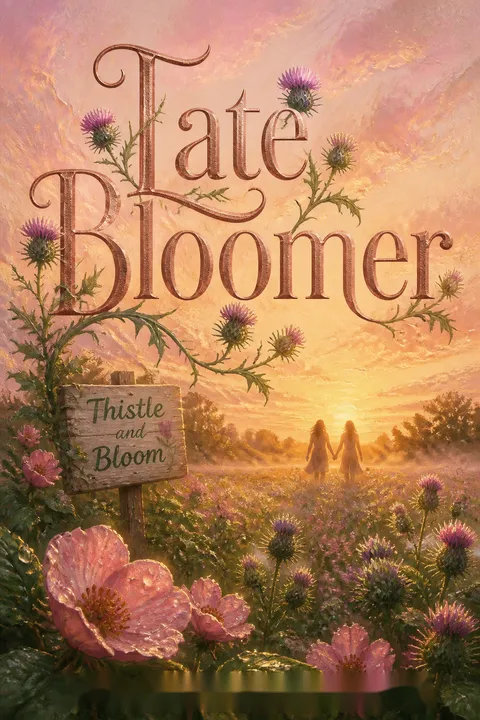


Plot Summary
The Lottery Buys a Farm
At Sprinkle in Charlotte, Opal Devlin spends her shifts inside an inflatable ice-cream costume and her nights answering Miles, an ex who summons her for sex and then disappears. Laney, her bandmate and supposed friend, gives Opal two scratch tickets for her belated birthday, then asks her to cover a shift so she can play with Miles.
Opal uncovers a $500,000 prize and finally sees money as permission to stop postponing her art. Her sisters Olivia and Ophelia urge her not to hand the windfall to people who suddenly want favors.
Searching apartments, Opal realizes New York feels wrong and Asheville feels familiar. A flower farm listing catches her imagination, and she pays its owner, Trish Boden, $300,000 for the property, adding $10,000 to help Trish escape a bad relationship.
Opal’s windfall changes her options before it changes her habits. She has spent years mistaking availability for intimacy, from covering Laney’s shift to accepting Miles’s intermittent attention. The ticket gives her material freedom, but her first major purchase is still guided by longing and impulse rather than careful investigation. That contradiction makes the farm more than a whimsical escape: it tests whether Opal can use newfound resources to choose a life, not simply to please or rescue someone else. Her sisters’ warnings register as an alternative form of care, one that asks her to protect her own future.
A Deed Names the Wrong Owner
Pepper, who has spent years tending the Thistle and Bloom flower farm, returns to the cabin and finds Opal unloading supplies for a shoe-art studio. The deed bears the seller’s signature, and Pepper recognizes Trish as her estranged mother, who left her with Grandma Lou when she was seventeen.
Pepper calls Trish and learns that Lou died without a known will, so the property passed to her next of kin. Trish refuses to reverse the sale, leaving Pepper afraid of losing both her home and livelihood.
Opal has invested most of her winnings and cannot simply walk away, so she proposes sharing the cabin while Pepper gradually buys her out. Pepper accepts because the farm is her only home, though she treats their agreement as an emergency ceasefire rather than the start of a friendship.
The sale makes private history an immediate legal crisis. Pepper’s home is not merely a valuable property: it is the stable ground Lou gave her after years of instability with Trish. The deed turns Pepper’s deepest fear, being displaced by someone else’s choices, into a concrete fact she cannot solve through routine or hard work. Opal is implicated without intending harm, so their conflict begins with a genuine collision of needs rather than a simple villain and victim arrangement. Sharing the cabin becomes a provisional negotiation between two women who have little reason to trust each other but no affordable way to separate.
Flowers Become a Lifeline
Pepper’s rigid routines and guarded manner meet Opal’s energetic attempts at connection, until Pepper suffers a debilitating migraine after working in the fields. Opal stays beside her overnight, then calls Pepper’s friends Diksha and Tal to help harvest while Pepper rests.
That practical care begins to soften Pepper’s suspicion. Diksha brings news of the Living Art Festival, whose large-installation prize is $100,000, money that could keep the struggling farm alive. Pepper doubts she can make art on that scale and initially rejects Opal’s offer to help.
Opal, a fine artist who paints shoes and has made installation pieces, sees possibility in the farm’s flowers and the unused shed. Pepper eventually lets her use it as a studio, but fear of financial risk and distrust of kindness still make a true partnership difficult.
Care arrives here as action, not reassurance. Opal helps Pepper through a migraine and then organizes labor that protects the flowers, answering Pepper’s practical needs before asking for emotional closeness. The festival gives their forced arrangement a shared objective, but it also exposes how differently they respond to uncertainty. Pepper protects the farm by avoiding risks; Opal tends to leap toward an idea before she knows whether it will work. Their potential strength lies in that mismatch, though Pepper experiences Opal’s offer as another unpredictable demand on already scarce resources.
The Portrait Opens a Door
As Pepper’s friends gather for her birthday, Opal tries to finish a watercolor portrait of Pepper with Grandma Lou, spills pigment across it, and attempts to recover the image with gold. Her impulsive hair bleaching leaves her nearly white-haired, so she hides beneath a beanie at the party.
Pepper’s friends, including Diksha, Tal, Alfie, and Alfie’s partner Evens, welcome Opal alongside her visiting sisters. After the guests leave, Opal gives Pepper the painting, which recreates a cherished Christmas memory with Lou.
Pepper recognizes the care in every detail and, overwhelmed, kisses Opal. The kiss startles them both. Pepper bolts into the dark without shoes, leaving Opal with a treasured portrait and no clear explanation of what their sudden intimacy means.
The portrait makes Opal’s attention visible: she has not simply noticed Pepper’s grief, but learned what a particular memory means to her. For Pepper, being accurately seen is more disorienting than being desired, because it reaches the wound that her self-protective routines keep covered. The party also places Opal inside Pepper’s chosen community, where affection is expressed through teasing, food, and shared rituals rather than demands. Yet Pepper flees immediately after the kiss, showing that closeness is not automatically safe just because it is wanted. The image becomes an offered connection; Pepper’s response is both an embrace and an escape.
Desire Gets Ground Rules
The morning after the kiss, Pepper retreats into spreadsheets and worries about the farm’s finances. Opal approaches her, and their attempt to discuss the kiss veers into Pepper apologizing for wanting the flower competition and Opal clarifying that she wants to help.
When they admit they enjoyed kissing, Opal proposes a casual sexual arrangement, expecting they can keep feelings out of it. They agree to avoid commitment and keep separate bedrooms, even as neither can resist another kiss.
In Pepper’s room, their first sexual encounter becomes more vulnerable than either planned when Pepper reveals she has never been with anyone. Opal responds without judgment, helps her feel safe, and they pleasure each other. Afterward, they confirm they will work together on the contest, while each privately fears the arrangement might mean more.
The rules are an attempt to make intimacy manageable by narrowing its definition. Opal and Pepper both want closeness, but their histories encourage different defenses: Opal expects herself to be useful and sexually capable, while Pepper relies on control and emotional distance. Their pact lets them approach desire without naming attachment, which is less a deception than a temporary scaffold. The encounter tests whether vulnerability can be met without judgment. Opal’s acceptance of Pepper’s inexperience creates safety, but the tenderness that follows makes their rule against feelings increasingly difficult to distinguish from a rule against honesty.
An Antique-Shop Detour
As Pepper struggles to commit to the festival, Opal takes her into town to browse an antiques shop, searching for materials and inspiration. Opal collects old tools, postcards, and photographs, explaining that discarded objects can still hold stories; Pepper finds herself laughing at Opal’s jokes and admitting that she likes her strangeness.
On the drive home, Pepper considers abandoning the contest, worried about time, supplies, and the farm’s fragile finances. Opal takes the retreat personally, and they argue about whether Pepper is afraid to try.
Opal later apologizes for pushing too hard. Pepper lets her back in, and they resume harvesting together, discussing how they might dry flowers to stretch the farm’s limited yield. Their partnership begins to rely on each woman’s strengths rather than either woman pretending to be someone else.
The antiques outing reveals how collaboration can begin with attention rather than efficiency. Opal treats a box of anonymous photographs as evidence that ordinary lives deserve to be remembered, a view that quietly resonates with Pepper’s dependence on Lou’s legacy. Their argument exposes the danger in Opal’s instinct to interpret hesitation as fear: her confidence can become pressure when she assumes she knows what Pepper needs. The apology matters because it interrupts that pattern. Once they return to the work, their differences become usable. Opal can generate possibilities quickly; Pepper can assess what the farm can actually sustain.
Lou's Garden Holds Memory
Over the next two weeks, Pepper and Opal settle into a morning rhythm of coffee, harvesting, and trading ideas for the festival. Pepper sets aside part of each crop for Opal to dry or press, while the rest goes to the farm’s florists.
When Opal asks about a neglected plot, Pepper takes her into its center, where Grandma Lou is buried among the flowers she planted. Pepper explains that Lou taught her how to grow things and gave her a home after Trish abandoned her.
She remembers Lou as both strong and tender, a person who believed flowers needed room and care before their beauty could be shared. Opal stays close without demanding more. She places an anemone in Pepper’s hair and tells her, through the gesture, that her grief does not make her less worthy of being loved.
The garden is both a working landscape and an intimate archive. Pepper has maintained Lou’s farm through labor, but bringing Opal to the burial plot lets her share what the labor protects: a relationship that rescued her from a childhood without dependable shelter. Her account of Lou’s approach to planting also describes the kind of care Pepper herself needs, attention without domination and room to grow at her own pace. Opal understands the moment by not trying to solve it. The anemone in Pepper’s hair offers recognition without turning grief into a problem to be fixed.
The Storm Drowns the Fields
A violent storm tears through the Thistle and Bloom, ripping row covers, breaking stems, and collapsing the roof above Opal’s bedroom. Pepper pulls Opal away before more debris falls, then gives her shelter in her own bed as the power fails.
While they huddle together for warmth, Pepper explains that Trish left her with Lou, then stole the college fund Robert, a former stepfather, had set aside for her education. The loss ended Pepper’s plans for school and made the farm her only refuge.
Opal listens, but when Pepper reaches for her, she insists that feelings between them would bring trouble. The storm leaves the farm’s crop and the festival plan in jeopardy, while the women lie beside each other holding back the very attachment they have begun to want.
The storm makes the story’s emotional danger physical: the roof fails, the crop is damaged, and the room Opal had made into a sanctuary is destroyed. Pepper’s account of the stolen college fund explains why she treats hope as a liability. A future once seemed possible, then someone she trusted redirected the money and removed her choice. Her insistence on keeping feelings out is therefore a form of risk management, not a lack of desire. Opal’s presence offers comfort, but neither can yet translate comfort into trust. Their shared bed is intimate while their spoken boundary keeps them emotionally apart.
Two Greenhouses, One Confession
After the storm damages the fields, Opal works with contractor Bruce and neighboring flower growers to install two greenhouses behind the barn. She fills them with plants and flowers donated by local farms, remembering that Lou used to help neighboring growers.
The gift gives Pepper a chance to restore her crop and keep the farm operating. Pepper kisses Opal in gratitude, but Opal refuses to pretend the gesture is only practical: she admits she genuinely likes Pepper and wants to make her happy.
Pepper cannot answer with words, so she kisses Opal again and lets their casual arrangement loosen. They resume the festival project with greater trust, eventually settling on a large floral tribute to Sappho. The greenhouses give their work a future, while the confession makes their personal stakes impossible to ignore.
Opal’s gift reverses the story’s original transaction. She first bought the farm impulsively and accidentally threatened Pepper’s home; now she spends her remaining resources to protect the people and community connected to it. Her choice is not a grand romantic cure, since Pepper still struggles to articulate what she feels. Instead, it gives Pepper evidence that generosity can be reliable and specific. The greenhouses also change the material conditions of their partnership: the festival is no longer a desperate attempt to extract value from a failing crop. It becomes a project they can pursue together, even as emotional uncertainty remains.
Sappho Takes the Stage
Opal and Pepper build their festival installation around Sappho, using a tall figure, a book, and flowers spilling from its pages to represent poetry’s reach across time. At the Grove Park Inn, just before they begin setup, Pepper finds Trish waiting in the lobby.
Trish claims she has come to reconnect after seeing Pepper featured in local news, but quickly reveals that she and her new partner need somewhere to stay while a house is delayed. Pepper recognizes the familiar request for money and attention disguised as affection.
Opal stands beside her and warns Trish away from pressuring Pepper. Trish leaves with her partner, unable to turn the encounter into a new favor. Pepper is shaken by the old hope that her mother might finally care, but Opal stays with her as they return to their work.
Trish’s return tests Pepper at the exact point where she is most visible and vulnerable. Her success in the local press gives Trish a convenient reason to present renewed contact as maternal concern, but the request for lodging exposes the transaction beneath it. Pepper’s instinctive hope is not foolishness; it is the ordinary wish of a child for a parent’s attention, persisting long after repeated disappointments. Opal’s intervention matters because she does not replace Pepper’s judgment or speak for her feelings. She helps protect the boundary Pepper is trying to establish, allowing Pepper to refuse without being isolated.
The Wedding Scene Wins
At the Living Art Festival, Opal presents the Sappho installation and explains how the poet’s surviving work carries desire across centuries of erasure and judgment. Pepper watches with pride as Opal speaks, and their friends admire the piece.
The grand prize instead goes to a flower-built wedding scene. Opal is devastated by the loss, while Pepper, crushed herself and unsure how to comfort her, focuses on how the result complicates the farm’s finances. Opal hears only rejection in Pepper’s practical response and snaps at her; Pepper becomes defensive, feeling blamed for another person’s disappointment.
Opal leaves the conversation in anger, and both return to the farm without repairing the damage. They stop speaking, and Opal sleeps in her own room, turning the cabin’s familiar quiet into a painful distance.
The contest gives the couple a public measure of success, but the loss exposes how differently they attach meaning to creative work. Opal has poured identity and hope into the installation; Pepper sees the same result through the farm’s urgent economic need. Neither response is wrong, yet each mistakes the other’s distress for a judgment. The argument repeats an old relational pattern: Opal fears she has failed to be valuable, while Pepper expects closeness to become accusation. Their silence is not a new conflict so much as the return of their earliest defenses, now more painful because they have begun to depend on each other.
Lou's Box Holds the Will
After two days of silence, Pepper finally enters Grandma Lou’s bedroom, a space she has avoided since Lou died. She puts on one of Lou’s shirts and lets herself cry, recognizing that missing her grandmother can be painful without destroying her.
On the bedside table she finds Lou’s carved puzzle box, which she remembers opening as a teenager. Inside is a note in Lou’s handwriting and, beneath it, the missing will. The note affirms Lou’s love for Pepper; the document confirms that Lou left the farm to her.
Pepper realizes that Trish’s sale rested on the assumption that no will existed. The discovery gives Pepper a legal path back to the property, but it does not resolve the immediate silence with Opal, who has been trying to disappear from Pepper’s life.
Pepper’s entry into the bedroom marks a change in how she carries grief. She does not stop missing Lou; instead, she learns that remembering her can produce tears and comfort at once. The puzzle box turns that emotional movement into a plot revelation, linking Lou’s private tenderness to the legal crisis that began the story. The will restores Pepper’s claim to the farm, but its deeper force is relational: Lou’s written care gives Pepper a form of reassurance that cannot be withdrawn or made conditional. Yet the document cannot repair the new rupture. Practical security arrives just as Pepper risks losing the person who helped her feel less alone.
No More Useful Friends
Pepper finds Opal preparing to leave and tells her that Lou’s will leaves the farm to her, so Opal no longer needs to stay or help. Opal believes Pepper’s silence means she is unwanted. Before either can settle the misunderstanding, Laney and Miles arrive after tracking Opal’s phone location.
They try to lure her onto their tour, treating her as if she has nowhere better to be. Pepper orders them off the property; Opal steps between them and Pepper, rejects their demands, and ends the friendships that have used her generosity.
Then she asks why Pepper called her a girlfriend. Pepper admits she loves her. Opal, still afraid of being a burden, says she wants to stay only if Pepper truly wants her there. Pepper chooses a shared home, not a debt or obligation, and Opal stays.
The final confrontation joins two kinds of boundary-setting. Opal rejects Laney and Miles not because she has stopped wanting connection, but because their version of friendship depends on her usefulness and compliance. Pepper’s declaration answers a different fear: Opal’s belief that her presence is a burden. The will removes the financial necessity that first bound them together, so Pepper’s choice to keep Opal is no longer entangled with a repayment plan. Their resolution depends on explicit mutual desire, not rescue. Each woman must risk being wanted for herself rather than for the labor, money, stability, or pleasure she can provide.
Epilogue
A few years later, Pepper and Opal have built a thriving life at the Thistle and Bloom. With Lou’s will in hand, they successfully challenge Trish’s sale, transfer the farm into Pepper’s name, and put recovered assets into the business. Opal’s hand-painted gardening shoes become popular enough for her to hire help, while Pepper’s farm grows steadily.
Opal funds Pepper’s first years of college, giving her a choice she lost as a teenager. The couple wear rings bearing each other’s names and begin planning a wedding beside the fireplace, surrounded by the ordinary routines they once feared they would never have.
The epilogue makes repair material as well as emotional. Pepper regains the farm through the will, but the legal victory matters most because it gives her choice back: she can invest in the business, study, and imagine a future beyond mere survival. Opal’s education fund answers the theft that once closed Pepper’s path to college, not by erasing the injury but by creating a new opportunity without demanding a particular course of study. Their shared prosperity also avoids a simple rescue fantasy. Pepper’s expertise sustains the farm; Opal’s art expands it. The ending treats stability as something built through affection, practical resources, and room for individual ambitions.
Analysis
Late Bloomer makes belonging a practical question: who has a key, who owns the land, who shows up to harvest, and who can be trusted with a vulnerable truth. Opal and Pepper meet because a financial transaction accidentally dislodges Pepper from the home that has anchored her since adolescence. Their romance therefore grows inside a dispute over property and debt, not outside it. The farm’s economic crisis keeps affection from becoming a private fantasy; every choice has consequences for work, shelter, and the future.
The novel also distinguishes generosity from self-erasure. Opal initially treats giving as a way to secure closeness, while Pepper treats self-reliance as protection from betrayal. Each pattern has a history: Opal’s lonely relationships reward her for being accommodating, and Pepper’s mother has repeatedly made care conditional on what Pepper can provide. Their growth depends on seeing that help can be reciprocal without becoming a debt, and that a boundary can preserve connection rather than end it.
Flowers make this argument tangible. They require attention, timing, and labor, but they cannot be kept in bloom indefinitely. Pepper learns that caring for the farm does not mean controlling every outcome; Opal learns that a dramatic gesture cannot substitute for listening. The storm destroys part of what they have cultivated, and the festival judges reject their work. Neither loss is erased by romance. Instead, the women respond by rebuilding with local growers, returning to the garden, and telling the truth about what they fear.
The ending restores more than property. Lou’s will secures Pepper’s claim, while Opal’s later education gift reopens a future that Trish’s theft once closed. Their shared life is not proof that love cures trauma or guarantees success. It is evidence that trust can be made through repeated, concrete acts: standing beside someone when a parent returns with another request, respecting a pause, creating a new growing space, and making room for each other’s ambitions.
Review Summary
Late Bloomer received mixed reviews, with praise for its neurodivergent representation, sapphic romance, and cozy setting. Many readers enjoyed the chemistry between Opal and Pepper, finding their relationship sweet and tender. However, some critics felt the plot lacked direction and depth, with underdeveloped characters and excessive sex scenes. The writing style and dialogue were divisive, with some finding it charming and others cringing. Overall, readers appreciated the representation and cottage core vibes but were split on the execution and character development.
Characters
Opal Devlin
Restless textile artistOpal is a fine artist who paints textiles and shoes, though she has not found the confidence or stability to make art her livelihood. Her generosity and quick attachment help her create community, but they also leave her vulnerable to people who treat her availability as an endless resource. Impulsive choices, restless energy, and a hunger for stimulation shape how she handles uncertainty; she often leaps before considering the cost. She is also learning to understand her neurodivergence and to manage a complicated relationship with alcohol. Opal wants to belong without having to perform cheerfulness or prove her usefulness. Her art, changing hair, and willingness to help are ways of claiming a self that she has often bent around other people.
Pepper
Guarded flower farmerPepper runs the Thistle and Bloom, the flower farm where she found stability after a childhood marked by her mother’s instability. Autistic and prone to migraines, she depends on routine and the predictability of tending plants, while grief and financial pressure make change feel dangerous. Her precision and deep knowledge of flowers are strengths, but she has learned to rely on herself so completely that accepting help can feel like surrender. Pepper is observant, dryly funny, and more tender than her guarded manner suggests. She wants to protect the farm because it represents both her home and her bond with Grandma Lou. Beneath her caution is a desire for connection that she has difficulty naming or trusting.
Trish Boden
Charming, unreliable motherTrish is Pepper’s mother, a charismatic woman whose warmth can turn quickly into self-interest. She has a history of unstable relationships and schemes, and she often recasts other people’s boundaries as cruelty toward her. Her charm is real, but so is her ability to use it to secure money, housing, or forgiveness. Pepper’s wish for Trish’s affection persists despite years of disappointment, which gives Trish unusual power over her.
Grandma Lou
Pepper's botanical anchorLou founded the Thistle and Bloom and gave Pepper a safe home when Trish left her behind. Warm, practical, and deeply attentive to the living world, she teaches Pepper to grow flowers and to care without smothering. Her affection is not conditional on Pepper being easy or successful. Even in memory, Lou’s habits, garden, and quiet acts of care shape Pepper’s sense of what home can mean.
Diksha
Blunt protective friendDiksha is Pepper’s closest friend and a sharp, unsentimental source of advice. She is married to Tal, has helped Pepper with the farm, and is quick to distrust people who might exploit her. Her bluntness is protective rather than cold: she challenges Pepper’s avoidance while also showing up when practical help is needed. She introduces the festival opportunity that could help the farm.
Tal
Floral artist and allyTal is Diksha’s spouse, a skilled florist, and one of the Thistle and Bloom’s important buyers. They are observant and capable, with a preference for focused work over social drama. Tal knows the floral world and helps with harvesting, contacts, and the festival effort. Their steady presence makes them one of Pepper’s most reliable sources of practical support.
Olivia
Steady older sisterOlivia is Opal’s older sister, a writer with a measured, protective temperament. She recognizes when Opal is being used and tries to help her slow down before making consequential choices. Her care is affectionate but not indulgent; she encourages Opal’s artistic ambitions while reminding her to consider money and consequences.
Ophelia
Dancer, fearless sisterOphelia is Opal’s sister and a ballet dancer, known for direct advice and a mischievous sense of humor. She refuses to let Opal romanticize people who treat her badly, even when the truth is uncomfortable. Her teasing sits alongside fierce loyalty, and she helps her sister feel loved without requiring her to be composed.
Laney
Self-serving former friendLaney is Opal’s coworker and a singer in a band with Miles. She presents herself as Opal’s friend, but often asks for favors and uses guilt when Opal does not respond as she wants. Laney’s attention is especially confusing to Opal because it mixes apparent affection with entitlement.
Miles
Unavailable musician exMiles is Opal’s ex-boyfriend and Laney’s bandmate. He offers intermittent attention that keeps Opal hoping for a relationship he does not meaningfully sustain. His casual requests and lack of consideration expose how loneliness can make scraps of affection feel more valuable than they are.
Alfie
Generous cafe-owning friendAlfie owns a popular Asheville café and belongs to Pepper’s close circle of friends. He is warm, theatrical, and quick to welcome newcomers, often using humor to soften a room. His affection for Pepper shows in practical care, including food, celebrations, and an instinct to draw people into the group.
Evens
Alfie's dancer partnerEvens is Alfie’s partner and a modern dancer. He is affectionate, good-humored, and comfortable around the group, adding a gentle steadiness to Alfie’s theatrical energy.
Robert
Kind former stepfatherRobert was once engaged to Trish and treated young Pepper with genuine kindness. He encouraged her education and set aside money for her future, making his support a rare glimpse of the stable life she wanted.
Linda
Concerned motherLinda is Opal’s mother. She is surprised by Opal’s sudden farm purchase and joins the family in questioning whether her daughter has considered the risks.
Lloyd
Practical fatherLloyd is Opal’s father, a statistician who checks the paperwork after she buys the farm. His careful review confirms that the sale documents appear legitimate.
Bruce
Helpful local contractorBruce is a local contractor who assesses storm damage at the cabin. His knowledge of greenhouse construction helps Opal find a practical way to support the farm.
Randy
Trish's latest partnerRandy is Trish’s current partner, accompanying her when she approaches Pepper at the festival. His presence underscores Trish’s latest attempt to secure a place to stay.
Plot Devices
The lottery ticket
Windfall, then complicationThe scratch ticket gives Opal $500,000 and makes an artistic fresh start seem possible. It also enables her impulsive purchase of the Thistle and Bloom, which ties her future to Pepper’s home and livelihood. The money attracts renewed attention from people who had not been present when Opal was struggling, testing whether she can distinguish genuine connection from opportunism. It functions as both freedom and pressure: Opal can act, but each choice has consequences she is not yet equipped to anticipate.
The farm deed and will
Home, inheritance, and claimThe sale deed initially makes Opal the legal owner and leaves Pepper believing she has lost the farm Lou meant her to inherit. The missing will is introduced through the family’s uncertainty and becomes a delayed answer to the central property conflict. When Pepper finds it inside Lou’s puzzle box, the document restores her claim and exposes how the sale could be contested. Beyond its legal function, the will links the farm’s future to Lou’s private love for Pepper and gives Pepper written evidence that she was cared for.
The Living Art Festival
A public creative testThe festival offers a $100,000 prize and national exposure, creating a concrete reason for Pepper and Opal to collaborate. Its theme, Love in Bloom, requires them to translate a feeling into a large floral installation using the farm’s limited harvest. The work draws on their contrasting strengths: Pepper knows the flowers and the growing conditions, while Opal has experience with visual art and construction. Their Sappho-inspired piece turns the contest into an expression of queer artistic history, but the judges award the prize to a wedding installation instead. The loss tests whether their partnership can survive disappointment.
Flowers and their meanings
Emotional language through natureThe flowers are the farm’s livelihood, but they also give Pepper a vocabulary for experiences she struggles to name. Anemones reflect her instinct to close herself off during emotional storms; Lou’s flowers connect Pepper to the person who gave her a home. Opal works with dried and fresh blooms to turn the festival theme into art, while the greenhouses offer a practical response to the storm’s damage. The motif never replaces the plot’s material stakes. Flowers must be grown, harvested, protected, and sold, so emotional meaning remains rooted in daily labor.
The no-feelings arrangement
A boundary under pressureAfter their first kiss, Opal and Pepper agree to keep their attraction casual, avoid commitment, and sleep in separate rooms. The arrangement lets them pursue physical intimacy while avoiding the emotional risks each fears. Its rules are repeatedly tested by the ways they care for one another: Opal tends Pepper through a migraine, Pepper shares the history of Lou and Trish, and both seek comfort after the storm. The pact is not simply a romantic obstacle. It reveals how each woman tries to control vulnerability, until practical acts and unspoken attachment make the boundary impossible to maintain honestly.
FAQ
Synopsis & Basic Details
What is Late Bloomer about?
- Chaotic artist finds purpose: The story follows Opal, a woman whose life is a series of chaotic events and bad decisions, who unexpectedly wins the lottery and impulsively buys a flower farm.
- Two women, one farm: Opal's fresh start is complicated by Pepper, the farm's current resident and the previous owner's daughter, who is struggling to keep the farm afloat.
- Finding love and growth: The novel explores the unlikely partnership between Opal and Pepper as they navigate their shared space, their personal struggles, and a growing attraction, all while trying to save the farm.
Why should I read Late Bloomer?
- Heartfelt and humorous romance: The book offers a blend of humor and emotional depth, exploring the complexities of love and self-discovery with relatable characters.
- Unique and quirky characters: Opal and Pepper are both flawed and endearing, making their journey of growth and connection all the more compelling.
- Exploration of personal growth: The story delves into themes of overcoming past traumas, embracing vulnerability, and finding the courage to pursue one's dreams.
What is the background of Late Bloomer?
- Contemporary setting in North Carolina: The story is set in present-day Charlotte and Asheville, North Carolina, providing a backdrop of small-town charm and natural beauty.
- Focus on artistic expression: The novel highlights the importance of art and creativity as a means of self-discovery and healing, with Opal's textile art and Pepper's flower farming.
- Exploration of queer identity: The book features a sapphic romance, exploring the complexities of queer relationships and the journey of self-acceptance.
What are the most memorable quotes in Late Bloomer?
- "I want to use it for a fresh start.": This quote encapsulates Opal's desire for change and her determination to pursue her artistic dreams after winning the lottery.
- "This is my home. The Thistle and Bloom is mine.": This quote highlights Pepper's fierce protectiveness of the farm and her initial resistance to Opal's presence.
- "You're a giver, Opal. I can tell. One of those beautiful souls, like an angel walkin' around down here, spreading kindness to others, reminding us of the good in the world.": This quote from Trish, despite her duplicity, reveals a core truth about Opal's character and her desire to help others.
What writing style, narrative choices, and literary techniques does Mazey Eddings use?
- First-person perspective: The story is told from Opal's point of view, allowing readers to experience her chaotic thoughts and emotions firsthand.
- Humorous and witty tone: Eddings uses a lighthearted and comedic tone to balance the heavier themes of the novel, making it an engaging and enjoyable read.
- Emotional depth and vulnerability: Despite the humor, the novel delves into the characters' emotional complexities, exploring their fears, insecurities, and desires with honesty and vulnerability.
Hidden Details & Subtle Connections
What are some minor details that add significant meaning?
- Opal's "Sandwich" tattoo: The tattoo, initially a symbol of a failed relationship, becomes a symbol of Opal's resilience and her ability to find humor in her mistakes.
- The ceramic snowman key hider: This detail, a constant presence at the Thistle and Bloom, represents the farm's history and Pepper's connection to her grandmother.
- Opal's collection of shoes: The shoes, initially just a quirky detail, become a symbol of Opal's artistic passion and her desire to create something beautiful and unique.
What are some subtle foreshadowing and callbacks?
- Laney's thong in Miles's car: This seemingly throwaway detail foreshadows the potential for a deeper connection between Laney and Miles, adding to Opal's insecurities.
- Opal's childhood nickname, "Opie": Ophelia's use of this nickname highlights the close bond between the sisters and their shared history.
- Trish's comment about being "low on funds": This seemingly casual remark foreshadows her true motives for selling the farm and her history of financial instability.
What are some unexpected character connections?
- Trish and Pepper's strained relationship: The reveal that Trish is Pepper's estranged mother adds a layer of complexity to the story, highlighting the impact of parental abandonment and manipulation.
- Opal and Pepper's shared neurodivergence: The subtle hints at both Opal and Pepper's neurodivergent traits create a deeper connection between them, highlighting their shared experiences and challenges.
- Diksha and Tal's support for Pepper: The depth of Diksha and Tal's friendship with Pepper reveals a hidden support system that has been crucial to her survival.
Who are the most significant supporting characters?
- Olivia and Ophelia: Opal's sisters provide emotional support and guidance, encouraging her to pursue her dreams and offering a sense of stability.
- Diksha and Tal: Pepper's friends offer practical support and a sense of community, helping her navigate the challenges of running the farm and providing a safe space for her to be herself.
- Trish: Despite her negative role, Trish's actions drive the plot forward and force Opal and Pepper to confront their pasts and make difficult decisions.
Psychological, Emotional, & Relational Analysis
What are some unspoken motivations of the characters?
- Opal's need for validation: Opal's desire to please others and her tendency to seek validation from external sources stem from her deep-seated insecurities and loneliness.
- Pepper's fear of vulnerability: Pepper's guarded nature and her resistance to change are rooted in her fear of being hurt and her desire to protect herself from further disappointment.
- Trish's desire for control: Trish's manipulative behavior and her constant need for money stem from her desire to control her environment and avoid vulnerability.
What psychological complexities do the characters exhibit?
- Opal's people-pleasing tendencies: Opal's desire to please others often leads her to make poor decisions and prioritize the needs of others over her own.
- Pepper's autism and need for control: Pepper's autism manifests in her need for routine and her difficulty with change, which often leads to anxiety and frustration.
- Trish's narcissistic traits: Trish's manipulative behavior, her lack of empathy, and her constant need for validation are indicative of narcissistic traits.
What are the major emotional turning points?
- Opal's decision to move to Asheville: This decision marks a turning point in Opal's life, as she chooses to pursue her dreams and leave behind her toxic past.
- Pepper's vulnerability with Opal: Pepper's willingness to share her past and her fears with Opal marks a significant shift in their relationship, as she begins to trust and open herself up to love.
- The storm and its aftermath: The storm forces Opal and Pepper to confront their feelings and rely on each other for support, strengthening their bond and deepening their connection.
How do relationship dynamics evolve?
- Opal and Pepper's initial animosity: Their relationship begins with tension and distrust, as they are forced to share a space and navigate their conflicting goals.
- The development of trust and vulnerability: As they work together, Opal and Pepper begin to trust each other, sharing their fears and insecurities and building a deeper connection.
- The shift from friendship to romance: Their relationship evolves from a reluctant partnership to a passionate romance, as they explore their physical and emotional attraction.
Interpretation & Debate
Which parts of the story remain ambiguous or open-ended?
- The long-term future of the farm: While the story ends on a hopeful note, the long-term financial stability of the farm remains uncertain, leaving room for future challenges.
- The extent of Trish's redemption: While Trish is shown to be capable of some level of remorse, her true intentions and potential for change remain ambiguous.
- The specific details of Opal's artistic career: While Opal is shown to be pursuing her passion, the specific details of her artistic career and her future success are left open to interpretation.
What are some debatable, controversial scenes or moments in Late Bloomer?
- Opal and Pepper's no-strings-attached arrangement: This decision raises questions about the nature of their relationship and whether they can truly separate their physical and emotional desires.
- Pepper's initial resistance to Opal: Pepper's guarded nature and her initial distrust of Opal may be seen as harsh or unfair, raising questions about her ability to accept love and change.
- Trish's manipulation and abandonment: Trish's actions are undeniably harmful, but some readers may debate whether she is capable of genuine remorse or change.
Late Bloomer Ending Explained: How It Ends & What It Means
- Opal and Pepper's commitment to each other: The ending emphasizes the strength of Opal and Pepper's love and their commitment to building a future together, despite the challenges they face.
- The importance of self-acceptance and vulnerability: The ending highlights the importance of embracing one's true self and being open to vulnerability, as both Opal and Pepper learn to accept their flaws and embrace their strengths.
- The power of new beginnings and hope: The ending offers a message of hope and resilience, suggesting that it is never too late to pursue one's dreams and find love and happiness.
Download PDF
Download EPUB
.epub digital book format is ideal for reading ebooks on phones, tablets, and e-readers.








