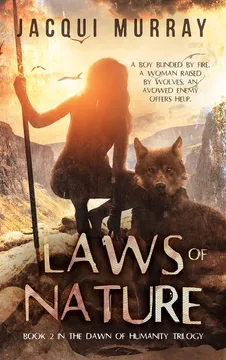


Plot Summary
Prologue
Before Lucy’s story begins, the prologue races through Earth’s upheavals and the succession of early hominids. Orrorin and Ardipithecus appear, investigate their surroundings, then vanish as new species replace them.
Lucy’s arrival marks the emergence of the genus Homo, a creature whose curiosity and growing ability to reason may change its odds against a world that kills without warning.
The prologue frames evolution as a chain of experiments rather than a march toward a guaranteed human destiny. Each species meets a changing habitat, and even curiosity, the quality that distinguishes the early hominids, offers no promise of survival. Lucy’s story therefore begins under pressure: intelligence is useful only when it becomes action. The opening also makes the natural world an active force, not a backdrop. Climate, terrain, and extinction shape the conditions in which the characters must learn to live together.
A Meal Beneath the Cat
Lucy and her young pairmate, Garv, lie coated in mammoth dung while a Short-tooth Cat eats a gazelle. Once the cat leaves, they sprint in, drive back Snarling-dogs and carrion birds with stones, and escape with meat for their hungry group. At their cave homebase, their child Voi, the tree-dwelling Boah, and the doglike Ump welcome them.
The band shares food and skills, bound less by likeness than by the daily work of keeping one another alive. Yet Lucy’s relief is shadowed by a recurring inner warning: Raza, her former pairmate, may be in danger. The feeling pulls her attention toward the people she left behind.
The opening makes intelligence visible as a sequence of practical choices. Lucy disguises herself, waits for the cat to finish, assigns Garv the cutting while she distracts the scavengers, and retreats before victory turns into a fight she cannot win. Survival here is neither solitary prowess nor brute strength. It is coordinated attention. The group’s return to shared food also establishes a contrast with the predatory order around them: even though its members differ sharply in body and ability, they treat those differences as useful contributions rather than grounds for exclusion. Lucy’s unease about Raza keeps that fragile domestic rhythm from feeling secure.
Lucy Leaves Feq
Two years earlier, Lucy leaves her brother Feq to travel with Raza and the elder Baad. She agrees to become Raza’s pairmate because his tribe needs her, but Raza refuses to bring Feq, whose weak survival skills make Lucy feel responsible for him. Across the Impassable-rift, she learns Raza’s gestures while noticing that he and Baad hurry without explaining their purpose.
At Raza’s homebase, the tribe keeps Lucy at a distance. Garv later arrives with a different group, a partner, and Voi, after a flood separated him from Lucy’s former band. When a firestorm scatters them and Man-who-preys captures Raza’s people, Garv finds Lucy again and helps her escape with their small group.
Lucy’s departure is a choice made under constrained loyalties, not a clean break with the past. She gives up Feq because she believes joining Raza may improve the chances of a larger group, even while understanding that her brother will be left vulnerable. Raza’s refusal exposes the difference between Lucy’s expansive idea of responsibility and his narrower calculations of usefulness. Garv’s return complicates the new life she has accepted: the old bond survives, but it cannot restore the people or circumstances they lost. Her later instinctive worry for Raza grows from this unresolved history, where leaving someone behind never feels like a finished act.
The Herd Turns South
After fleeing their captors, Lucy’s band follows a vast migrating herd, hoping its route will lead to safer land and reliable food. The ground begins to shudder; deep fissures rip through the plains, swallowing animals and people before they can escape. Ump howls and leads the group to a hill, where they survive the upheaval.
At the Impassable-rift, Lucy finds signs that Man-who-preys has crossed, so the group turns away. They continue north with the herd until colder weather makes the journey unbearable. On their return, Lucy and Garv debate whether to settle near her former home, but Ump cannot manage the descent there. They press on, watching for herds and signs of the enemy.
The migrating herd offers direction without safety. Lucy and Garv use its movement as a guide, but the earthquake reveals that nature is not a stable map: the ground can erase routes and communities in a single rupture. Ump’s early warning grants the group a narrow margin to act, reinforcing his role as a sensor the others cannot replace. Lucy’s decision to turn away from familiar territory is equally revealing. Longing for Feq does not outweigh evidence of the enemy’s presence. The group’s survival depends on making memory answer to current conditions, even when the safer choice means abandoning the place Lucy most wants to return to.
The Cave That Saves Them
A watched campsite convinces Lucy that Man-who-preys is tracking them, and Garv persuades her to move rather than risk a fight. The search for shelter becomes a series of narrow escapes. Lucy sees a Short-tooth Cat and a gazelle sink together into quicksand, then leads the group to butcher a pig the cat left behind.
Later, she sinks into another patch of death sand until Garv, Voi, Boah, and Ump pull her free. A dangerous river sweeps Lucy downstream; Ump races along the bank and helps her reach shore. When a storm brings freezing rain, Ump finds a cave. Its shelter saves the group from the cold, though a flood later drives them into its tunnels.
These ordeals turn the group’s dependence into something physical and reciprocal. Lucy, usually the one who reads terrain and makes plans, must let the others pull her from the quicksand and stay alive through the river. Ump’s contribution is not simply strength: he locates danger, tracks Lucy downstream, and finds the shelter that the group cannot afford to miss. The cave itself offers protection only conditionally. It keeps out the cold, then exposes them to floodwater. Safety is never a permanent state in this landscape, only a temporary arrangement made through observation, cooperation, and a willingness to revise the plan.
The Leader Who Watches
While Lucy’s band travels south, Xha, leader of a Man-who-preys tribe, begins following her. His people’s numbers are shrinking, and he believes studying Lucy may teach him how her kind raises resilient children. He has also captured Raza’s group, including Sahn, Ahnda, and Vorak. Rather than dismissing them as helpless prisoners, Xha notices their quiet planning and their ability to adapt.
Sahn bargains to guide hunters to game in exchange for better food for her people. With Xha’s cooperation, the captives arrange an escape: Raza, Kush, and Falda remain behind so the captors will think the attempt has failed, while the others slip away. Xha recognizes the plan’s intelligence and does not stop it.
Xha’s curiosity begins as a form of strategic observation, but it unsettles the hierarchy that sustains his authority. He expects the captives to confirm his tribe’s assumptions about weakness; instead, Sahn’s careful bargain and the escape plan reveal disciplined thought beneath apparent submission. The prisoners exploit what their captors take for granted, while Xha notices that obedience can be performed without being inwardly accepted. His choice not to interfere matters because it marks a crack between his individual judgment and his tribe’s coercive customs. Lucy is his stated object of study, but the captives begin changing what he believes before he reaches her.
The Captives Slip Away
When Xha leads most of his hunters away, the captives leave the camp one at a time, using ordinary errands as cover. Raza distracts the guards after a startled bird nearly exposes Gleb, and the escapees hide in trees close to camp while their pursuers search elsewhere. They wait until the hunters abandon the search, then travel by night, moving in one another’s footprints.
Their goal is to find Lucy, whose route Sahn expects will confound their enemies. At a stream, Vorak’s group misleads Man-who-preys scouts by hiding its tracks in the water, then emerges downstream. At the Impassable-rift, they cross into Lucy’s old territory and follow the traces she has deliberately left for them.
The escape succeeds because the group turns its captors’ expectations into cover. The guards assume the fugitives will flee far away, so the escapees remain close enough to watch the search and leave only when it is safe. Night travel, overlapping footprints, and the stream are not dramatic gestures but carefully chosen ways to disrupt pursuit. Sahn and Vorak preserve the group by distributing risk rather than demanding that everyone move together. Their journey also depends on trust in Lucy’s intelligence: the escapees follow a route that makes little conventional sense because they believe she is shaping it for them.
Ahnda Follows the Signs
Ahnda and his friend Gleb find Lucy’s old footprints alongside tracks from Voi, Boah, and Ump. To avoid leaving an easy trail, Lucy’s group travels among herds, where hooves erase its prints. Ahnda realizes the herd is concealment, not evidence that the group has vanished, and leads his companions through the animals to recover the trail.
Vorak teaches him to look for the choices behind a missing footprint: Lucy climbs into tree canopies, while Ump diverts his tracks so enemies cannot follow him to the others. A Man-who-preys tracker continues shadowing them, but does not attack. Ahnda grows more capable, even as the cold and the unfamiliar country begin to wear down the escapees.
Ahnda’s growing skill comes from learning to interpret absence. A missing track no longer means failure; it may mean Lucy has chosen a method of concealment. Vorak’s instruction pushes Ahnda beyond copying techniques toward understanding why a trail has changed. This is an early form of inference, a way to imagine another person’s intention from the shape of the evidence left behind. The lesson also deepens Ahnda’s relationship to Lucy before they meet again. He begins to recognize her mind through her tactics, while the unseen pursuer complicates the group’s sense of danger: not every watcher is acting to recapture them.
The Journey Takes Its Toll
The trek turns catastrophic when Ahnda injures his ankle on a cliff and a mother Dinofelis attacks the group sheltering near her kits. Ahnda tries to draw her away, but Yoo stays beside him and is killed. Later, a giant Canis enters an unguarded cave. Ahnda and Gleb distract it long enough for the others to escape, but Gleb falls into a chasm.
Grg and Brum disappear on the backtrail. Vorak is mauled by a Panther-cat protecting her cubs, and infection kills him despite Sahn’s care. Sahn then falls from a tree nest and dies of her injuries. Ahnda and Kelda continue alone. During a violent storm, Kelda refuses to leave a fire’s warmth, catches fire, and dies; Ahnda survives in a ditch, badly burned and nearly blind.
The losses strip away the adults and companions who had shared the work of interpreting danger. Ahnda’s emerging leadership is repeatedly tested by circumstances he cannot control: he fails to save Yoo, loses Gleb during a successful escape, and watches illness and exposure claim people no plan can protect. The sequence resists the comforting idea that courage guarantees survival. Yet the deaths change Ahnda’s sense of responsibility. After Kelda is gone, he must decide whether to continue without the group that gave his journey meaning. His grief is bound to self-blame, but survival requires him to turn that pain into practical attention rather than surrender to it.
A Blind Scout Keeps Moving
Alone and nearly blind, Ahnda cannot follow Lucy’s trail by sight. He tests his surroundings with a stick, uses the warmth of Sun to maintain direction, and learns to recognize water, animals, and danger through sound, scent, and vibration. He scavenges meat from a mammoth carcass by frightening off dogs and carrion birds, then splints his injured leg with bark and grass.
Xha, who has secretly kept predators and rival hunters away, realizes Ahnda is adapting rather than giving up. At last Xha approaches openly and offers help. Ahnda accepts because he needs food and guidance, but asks Xha to teach him to use a spear. They agree to seek Lucy together.
Ahnda’s blindness forces him to rebuild navigation from sensory information he once treated as secondary. The stick is both tool and extension of attention; Sun’s warmth becomes a compass, and changes in animal sound become warnings. His adaptation does not erase his dependence on others, but it changes what assistance can mean. Xha’s help is ethically complicated because he belongs to the people who captured Ahnda’s group. Ahnda accepts it without mistaking it for innocence. Their agreement rests on practical need and cautious truth, allowing cooperation to begin before trust is complete.
The Last Canis Pup
At the cave homebase, Lucy and Ump discover a dead Canis with a spear wound in its chest and a humanlike girl guarding the body. The girl growls and attacks Ump, but Ump subdues her without killing her. Lucy recognizes that the dead animal raised her and that Man-who-preys killed it. She removes the spear and invites the girl to leave before the hunters return.
Ump’s signals persuade her to follow. Lucy names her Wild and brings her to the group, where Wild first treats Boah as a rival and relies on Ump’s dominance to understand her place. Lucy refuses to demand that Wild stop being what her old pack taught her to be, but makes room for a different way of belonging.
Wild’s first encounter with Lucy is shaped by a collision between learned behavior and immediate threat. She has survived by copying Canis signals, so her growling is not evidence of cruelty but the language available to her. Lucy recognizes the grief behind the hostility and gives Wild a choice rather than treating her as a problem to be corrected. Ump serves as the bridge: Wild understands his hierarchy before she can understand Lucy’s gestures. The scene makes belonging a process of translation. The group does not require Wild to become human all at once; it first gives her a safe place in which other forms of communication can be learned.
Wild Learns the Group
Wild watches Lucy’s people at work and begins copying their gestures, their crouched posture, and their stone toolmaking. She learns to sharpen a stone rather than search for one already sharp, and she eats roots when the group’s shared work makes them easier to chew. On a hunt, Wild reveals that she understands their gestures and proposes attacking a dik-dik instead of waiting for a predator to leave meat.
She and Ump bring it down together. Lucy later rebukes Wild for hunting alone at night, explaining that danger to one groupmember draws the whole group into danger. Wild asks to make a carrying sack so she can contribute safely. Her skills expand, but she still recoils from the spear that recalls the killing of her Canis family.
Wild’s adjustment is not a simple conversion from animal instinct to human custom. She evaluates each practice by its usefulness, then adopts it when it improves her ability to contribute. Her rapid learning reveals the difference between lacking a skill and lacking the capacity to acquire one. Lucy’s rebuke about solitary hunting introduces a social principle Wild’s former pack did not require: an individual’s risk becomes everyone’s responsibility. The spear remains a bodily memory of violence, not merely a tool to master. Wild’s progress therefore includes limits and refusals, showing that integration can mean learning new obligations without pretending old injuries have disappeared.
The Boar Draws Hunters
Wild, Lucy, and Ump encounter a Giant Boar and kill it through coordinated attacks: Wild throws stones, Ump tears at its throat, and Lucy targets vulnerable spots. The meat feeds the group, but the kill occurs in territory claimed by Man-who-preys. Xha watches and understands that the act may invite retaliation. Soon, armed hunters arrive to take the carcass.
Wild charges them, while Xha fights beside her and urges the others toward the cave’s tunnels. Wild announces that the conflict has centered on her, and Ump reluctantly retreats with Lucy, Garv, Voi, and Boah. The hunters press close; then the ground shakes, the cave collapses, and dust and rock bury the passage between the group and the surface.
The Giant Boar hunt marks a change in what the group can do and what that new competence costs. The coordinated kill frees them from reliance on scavenging, but it also crosses a territorial boundary that the local Man-who-preys regard as theirs. Wild’s confidence is earned, yet she underestimates how quickly a successful hunt can become a political challenge. Xha’s decision to fight beside her contrasts with the violence of his tribe, though it cannot undo the danger he helped create as a member of that culture. The collapse then removes the group’s familiar choices, forcing survival to depend on cooperation in a place where strength and speed are no longer enough.
Buried Beneath the Cave
The survivors find one another in the darkness: Lucy reunites with Garv, Voi, and Boah, then hears Ump barking from beyond the rubble and helps dig him free. Wild is missing. With the front entrance sealed, they follow the cave’s tunnels, using Lucy’s remembered route and Ump’s hearing to guide them.
They find a glowing mineral spire, underground water, and small creatures to eat, but floods, heat, exhaustion, and Boah’s growing distress threaten them. Voi steadies Boah and later climbs a narrow shaft to test a possible exit, but the smooth stone defeats him. The group keeps moving, marks branches in the passage with cairns, and follows the bats that travel between the cave and the outside world.
The underground journey compresses the group’s usual roles into a space that frustrates each one. Lucy cannot rely on sight, Boah’s fear becomes harder to contain, and Ump’s senses help only when the route allows them to matter. Voi emerges as a source of steadiness, not because he has adult strength but because he can make fear manageable for someone else. The cairns show Lucy converting memory into a resource the whole group can use. Following the bats is another act of learning from other species, a pattern that has repeatedly saved them. The cave is a harsh teacher, but its inhabitants offer clues to an exit.
The Bats Find Daylight
Lucy recalls Wild’s account of flying mice that roost inside caves and leave through hidden openings at night. The group waits in a cavern until the bats take flight, then follows their passage through the tunnels. When daylight appears, a narrow exit blocks the larger survivors, so they dig at the opening together. Wild reaches them from outside and helps widen the gap.
Her reunion with Lucy brings relief, but it is interrupted by the sight of Xha approaching. Lucy and Garv raise stones, unwilling to trust the former enemy who once pursued them. Wild explains that Xha fought beside her during the attack and helped find the back entrance. Before Lucy can decide what to do with him, Xha reveals that he has brought someone she knows.
The escape depends on Wild’s knowledge, even though she is absent for much of the ordeal. A detail that once seemed incidental becomes the group’s route back to the surface, underscoring how knowledge circulates through relationships and can outlast separation. Wild’s appearance changes the emotional stakes from simple escape to reunion, while Xha’s arrival immediately tests whether gratitude can coexist with justified suspicion. Lucy’s defensive response is not a failure of generosity; she knows the history of Man-who-preys too well to let one act erase a pattern of violence. The unresolved question is whether Xha’s recent conduct can support a different future.
Ahnda Reaches Lucy
Wild identifies Xha as the Man-who-preys who fought beside her and helped locate the exit. Xha says he wants to help Lucy rescue Raza’s captive group, but Lucy asks why his people destroyed her former tribe. He admits that his people, not he personally, carried out the violence, and he asks for a chance to prove useful. Lucy refuses to let him join immediately.
Then she sees Ahnda, injured and nearly blind, standing behind Xha. The recognition breaks through her guardedness. Xha has kept his promise to guide Ahnda to her, and Ahnda’s survival reunites Lucy with one of Raza’s people. The book ends before Lucy decides whether to trust Xha or how the group will free the remaining captives.
The ending resolves the pursuit that has organized Ahnda’s journey, but it deliberately leaves the larger conflict open. Lucy receives proof that Xha has acted with care: he kept Ahnda alive and brought him to her. That evidence does not settle whether the leader can be trusted, because his people’s violence remains real and his own complicity is morally difficult to parse. Lucy’s refusal is therefore a boundary, not a final rejection. Ahnda’s arrival changes the question from whether reunion is possible to what the reunited group will do next. The emotional release arrives alongside a fresh obligation, joining personal recognition to the unfinished rescue of Raza’s people.
Analysis
Laws of Nature treats intelligence not as an abstract human advantage but as a practice built from attention, memory, inference, and cooperation. Lucy studies predators before approaching their leftovers; Ahnda learns to navigate through warmth, vibration, and smell when sight fails; Wild observes gestures until she can participate in the group’s work. Each character develops knowledge in response to a particular vulnerability. Survival is therefore unevenly distributed, but never purely individual. The group succeeds because different bodies and histories produce different forms of competence.
The book also questions the hierarchy that Xha’s people use to justify domination. They call Lucy’s kind inferior because it scavenges and communicates quietly, yet those traits conceal patience, planning, and the ability to move without attracting notice. Xha’s changing judgment begins when observation contradicts ideology. His transformation is not absolution: he still belongs to a violent system and must earn trust through concrete choices. Lucy’s caution preserves the moral complexity of that change.
Belonging is portrayed as learned behavior rather than shared biology. Ump, Boah, and Wild enter a group whose members do not share a species, a diet, or a common communication system. Their inclusion does not erase difference; it turns difference into useful knowledge and mutual obligation. The group’s ethic is tested whenever danger threatens one member, since rescue may put everyone else at risk. Lucy insists that this risk is part of membership, while Wild must learn that individual action can carry collective consequences.
The ending brings emotional recognition without resolving political danger. Ahnda reaches Lucy, but Raza’s people remain captive and Xha’s place in the group is undecided. This unfinished conclusion suits a world where safety cannot be secured once and for all. The characters can change the terms of survival through learning and cooperation, but the land, predators, and human violence continue to impose costs.
Review Summary
Laws of Nature is highly praised for its meticulous research, vivid prehistoric setting, and compelling characters. Readers appreciate the immersive storytelling, strong female protagonist Lucy, and the exploration of early human survival. The book is commended for its attention to detail, realistic portrayal of prehistoric life, and the author's ability to create a believable ancient world. Reviewers consistently mention the engaging plot, well-developed characters, and the seamless blend of fiction and historical accuracy. Many recommend reading the first book in the series before this one.
Characters
Lucy
Curious pack leaderLucy is a resourceful member of the Man-who-makes-tools who watches animals and terrain for methods her people have not yet discovered. She learns through observation, makes tools, gathers healing plants, and can plan under pressure, but she is not invulnerable: loss and uncertainty can pull her attention toward people she could not protect. Her idea of a group is unusually inclusive. She accepts the Canis Ump and the Tree-man Boah as family, judging them by what they contribute and how they care for one another rather than by species. Lucy’s curiosity is both intellectual and practical. She wants to understand the world because each new understanding may keep someone alive.
Garv
Lucy’s steady partnerGarv is Lucy’s pairmate, a capable toolmaker and hunter whose calm judgment balances her restless curiosity. He teaches Lucy skills and trusts her observations, including when her instincts point toward danger he cannot see. Garv does not mistake caution for cowardice; he argues for retreat when it protects their small group and stands beside Lucy when retreat is no longer possible. His loyalty is practical as well as emotional: he shares food, helps raise Voi, and contributes to the group’s safety without demanding that others resemble him. He offers Lucy a rare continuity after repeated separation and loss, while still allowing her to make difficult decisions for herself.
Ahnda
Young tracker and survivorAhnda is a determined young member of Raza’s group, attentive to patterns and unusually willing to question what he sees. His tracking skill grows from curiosity, but his strongest quality is persistence when certainty disappears. He learns from Vorak, protects younger companions, and tries to make decisions even when adult guidance is thinning around him. Ahnda’s confidence can tip toward self-blame when events go badly, making his resilience hard-won rather than effortless. He is not defined by physical strength alone; observation, memory, and adaptability become equally important to him. His journey tests whether a young person can inherit responsibility without mistaking responsibility for control over every outcome.
Xha
Uneasy enemy leaderXha leads a Man-who-preys tribe whose rules prize strength and dominance. He is an accomplished hunter, but increasingly dissatisfied with the brutality and assumptions that govern his people. His attention to Lucy begins as a search for knowledge that might solve his tribe’s shrinking population. Watching the captives, however, makes him question whether the people he calls inferior are actually less capable. Xha is observant and strategic, yet accustomed to authority and to treating other lives as resources. His conflict is not simply between good intentions and bad customs; he must confront how his position has benefited from those customs. He is drawn to people whose mutual care exposes what his own group lacks.
Wild
Canis-raised hunterWild is a humanlike female raised among Canis, whose movements and instincts reflect the pack that taught her to survive. She is fast, fierce, and highly capable of reading the behavior of prey and predators. Because she learned dominance and submission before human gestures, she initially misunderstands the quieter expectations of Lucy’s group. Wild’s curiosity makes her a quick learner, especially when a new practice gives her a way to help. Her relationship with Ump gives her a point of recognition, while Lucy and the others invite her to develop skills beyond hunting. She carries grief and fear connected to the spear, so her strength should not be confused with an absence of vulnerability.
Ump
Canis pack guardianUmp is a large, doglike Canis who belongs to Lucy’s group by choice and treats its members as his pack. He tracks, hunts, detects danger, and uses his size to discourage threats, but his importance exceeds his physical abilities. His reactions often provide information before the others understand what is wrong. Ump communicates through posture, scent, sounds, and small movements that Lucy has learned to interpret. He is protective without being merely obedient: his decisions reflect an independent understanding of risk and belonging. His presence helps bridge the group’s differences, particularly for Wild, who recognizes Canis signals more readily than human gestures.
Voi
Steady young learnerVoi is Lucy and Garv’s child, quick to learn toolmaking and eager to take on responsibilities. He often steadies Boah, whose fears and strengths differ from his own, and treats cooperation as ordinary rather than remarkable. Voi is observant, patient, and more accepting of hardship than many adults expect from someone his age. His efforts to communicate with Wild and reassure Boah show how much care can be conveyed through action. He is small for the work his group needs, but his judgment and persistence make him a meaningful contributor.
Boah
Tree-man in Lucy’s packBoah is a Tree-man, a smaller-headed, long-armed hominid skilled at climbing and moving through the canopy. His physical talents make him an excellent forager, though toolmaking and unfamiliar dangers can frustrate or frighten him. Boah is patient, affectionate, and eager to contribute, especially when someone recognizes his effort. He communicates through grunts, gestures, and expressive movements rather than the group’s more elaborate hand signals. Lucy’s acceptance gives him a place where his differences are not treated as defects. His closeness with Voi offers both companionship and a practical partnership.
Raza
Lucy’s former pairmateRaza is a skilled hunter and leader whose group Lucy joined after leaving her brother. He is decisive and capable of strategic sacrifice, though his judgments can conflict with Lucy’s instinct to protect vulnerable individuals. Raza understands that survival sometimes requires controlling what information others receive and shaping how enemies interpret a situation. His relationship with Lucy is complicated by shared history, separation, and the choices each made for their people. He represents a kind of leadership built around experience and group survival, while Lucy’s later group tests a more flexible model of belonging.
Sahn
Elder and careful plannerSahn is an elder in Raza’s group, respected for her knowledge of herds, her composure, and her ability to read people. She understands that apparent compliance can conceal a plan and uses patience as a means of protecting her group. Her quiet practices, including observing the sun’s shadow, help the people around her measure time and coordinate decisions. Sahn does not lead through force; she makes others feel that careful thought is possible even under captivity. Her steadiness becomes an anchor for the young people who travel with her.
Vorak
Mentor to AhndaVorak is a strong, generous member of Raza’s group who combines physical competence with a willingness to teach. He guides Ahnda in tracking, survival, and judgment, preparing the younger male to act independently rather than merely follow instructions. Vorak’s good humor helps sustain morale, but he also understands the costs of responsibility. He trusts others to contribute and adapts plans to protect the group. His relationship with Ahnda is both practical mentorship and an investment in the next generation.
Kelda
Contentious groupmateKelda is a member of Raza’s group, known for complaining and resisting decisions she did not make. Her difficult manner isolates her from companions, but it is partly rooted in losses and instability she has endured. She is not an easy person for Ahnda to travel with, and their tension reveals how cooperation can fray when patience runs out. Kelda’s presence challenges the group to distinguish between someone’s unpleasant behavior and their right to remain part of the community.
Gleb
Ahnda’s close companionGleb is Ahnda’s longtime friend and fellow subadult, physically capable and loyal. He shares Ahnda’s escape and helps him follow Lucy’s trail, though he is more cautious about hazards Ahnda is willing to confront. Their differences strengthen their partnership: Gleb questions risky choices while still showing up when Ahnda needs help. He provides a familiar bond in a journey where the group’s composition keeps changing.
Yoo
Younger member of Raza’s groupYoo is a young member of Raza’s group who travels with Ahnda and the other escapees. Curious and trusting, he asks questions that make the older members explain their decisions. His closeness to Ahnda reveals the protective bonds linking children and subadults in the group.
Feq
Lucy’s vulnerable brotherFeq is Lucy’s brother, a member of her earlier group whose limited survival skills make her feel responsible for him. Their bond helps explain why leaving for Raza’s group is painful, even when Lucy believes the move may benefit more people.
Baad
Elderly guide and scoutBaad is an older member of Raza’s group who accompanies Raza to bring Lucy to their homebase. His age and physical injuries mark the costs of a life spent traveling and surviving, while his experience gives him a perspective Lucy is still learning to interpret.
Falda
Protective captive motherFalda is a member of Raza’s group who has lived among Man-who-preys and understands the dangers facing its children. Her choices are shaped by the need to protect the young, even when doing so conflicts with her own desire for freedom.
Kush
Mother guarding the youngKush is a member of Raza’s group and mother to Dok. She is attentive to the children’s vulnerability and knows that survival sometimes requires adults to remain behind rather than abandon them to hostile captors.
Grg
Elder of Raza’s groupGrg is one of the elders traveling with the escapees. His presence represents the group’s obligation to protect people whose strength and speed have diminished, even when the journey is dangerous.
Brum
Elder who knows the routeBrum is an elder whose remembered knowledge of the land helps the group identify a way across a difficult rift. His experience supplies a kind of navigation that cannot be learned from tracks alone.
Plot Devices
Natural signs and tracks
The landscape leaves cluesTracks, dung, broken branches, animal calls, scents, and changes in weather function as the characters’ information network. Lucy and Ahnda use these signs to locate food, detect enemies, choose routes, and infer what other travelers intended. The same clue can support different conclusions: a missing print might indicate a lost trail or a deliberate move into the canopy. Ahnda’s changing senses make this device central to his survival, while Lucy’s knowledge of landmarks lets her guide people who have never visited a place. Nature’s signs do not explain themselves; the characters must compare them, remember them, and risk acting on an interpretation.
Gestures and callsigns
Communication without speechThe groups communicate largely through hands, posture, facial expression, and vocal sounds. Callsigns identify individuals through familiar noises, while gestures carry plans and practical information. This system creates both connection and misunderstanding: Lucy learns Raza’s gestures by watching, but Wild initially understands Canis behavior more readily than human signs. As characters observe one another carefully, communication becomes evidence of attention and respect. The method also supports stealth, since quiet signals are safer than loud speech in a landscape full of predators. Different species and tribes do not share every signal, so communication must be learned rather than assumed.
Rifts and shifting ground
Terrain forces new choicesThe Impassable-rift, earthquakes, cliffs, rivers, and unstable ground repeatedly alter the characters’ routes. The rifts separate Lucy from people she cares about, then become landmarks the escapees use to find her. Earthquakes turn open plains into lethal fractures, while quicksand and floods make apparently traversable paths dangerous. These obstacles do more than delay travel: they divide groups, expose differences in physical ability, and force characters to depend on one another. The terrain is never merely a barrier to be overcome. It changes what counts as a safe plan and can invalidate yesterday’s knowledge without warning.
Caves and hidden passages
Shelter becomes a trapCaves first offer Lucy’s group warmth and protection from predators, making them a solution to the lethal cold. Yet cave entrances can belong to other animals, storms can send water through their chambers, and a collapse can seal the group underground. Their tunnels turn familiar survival skills into new tests: the characters must feel their way forward, ration food, avoid floods, and follow the movements of cave-dwelling animals. The cave system also provides a hidden route between danger and safety. Its meaning changes with circumstance, from shelter to confinement and finally to a possible way back into daylight.
The spear
A weapon with a historyThe Man-who-preys spear represents a new reach of violence: it can kill from a distance, making it especially dangerous to people and animals who cannot match its range. Lucy observes how the weapon is used and longs for one because it could reduce her group’s dependence on scavenging. For Wild, the spear carries a different meaning, recalling the attack that destroyed the Canis pack that raised her. Ahnda later asks Xha to teach him to use one, treating the weapon as a skill he needs in a dangerous world. The spear thus links knowledge, protection, trauma, and the choices its wielder makes.
Download PDF
Download EPUB
.epub digital book format is ideal for reading ebooks on phones, tablets, and e-readers.








