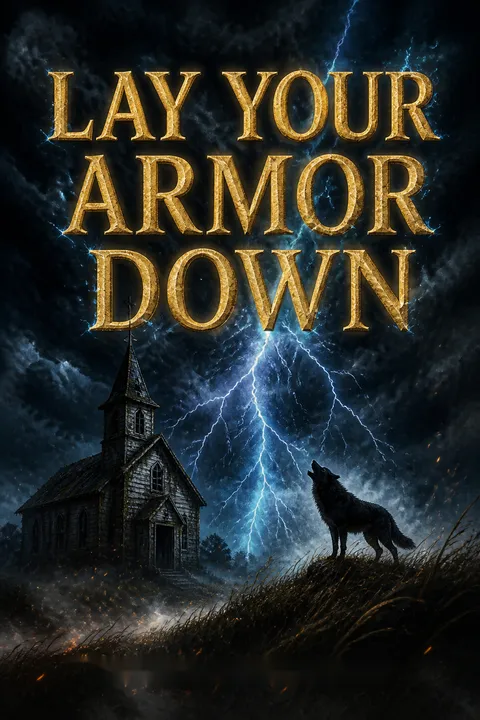


Plot Summary
Cash in the Firelight
Wanetah Wilkins, an elderly woman losing her grasp on the present, wanders from her cluttered house carrying a grocery sack stuffed with keepsakes and forgotten cash. In the woods, she finds Keal and Burdean, two rough-edged men waiting to resume a secret job at an abandoned church.
Burdean takes her money and draws a knife, fearing she can identify them. Keal stops him, recognizing in Wanetah the helplessness that recalls his dead mother, Raylene. He leads Wanetah away and releases her among the trees, then leaves her to continue alone.
Keal has spent years avoiding sleep because dreams once seemed to predict ordinary events and, later, his mother’s illness. Now the old woman has appeared inside a dream that had begun troubling him again.
The first moral decision arrives before the mystery has a name. Burdean treats Wanetah as a liability because that is how his working life has trained him to see people; Keal recognizes a person in danger and risks the partnership by intervening. His response is not a clean conversion into heroism. He still leaves Wanetah alone in the woods, and the money remains in his pocket. The scene makes care imperfect but consequential. Keal’s uncertainty about whether Wanetah is a dream, a warning, or simply a vulnerable stranger exposes the novel’s central pressure: what does responsibility demand when certainty is unavailable?
The Church Cellar
Keal returns to the clearing, hoping to find Wanetah before the woods do. A wolf first draws him to a dead deer, then moves toward shotgun blasts from the abandoned church. At the churchyard, Keal finds several bodies, open cellar doors, and vehicles left running.
Burdean arrives separately in a borrowed truck and joins him underground, where they pass older, rotting remains and discover a sealed room marked with strange drawings. Inside, Wanetah stands beside a silent little girl.
The two men bring them out through the corpse-strewn cellar. Wanetah cannot explain where she lives, but Keal finds an old envelope bearing her name and address. Burdean orders the truck’s driver, Ed, to move into the back, and the group sets out to return Wanetah home.
The cellar turns an errand into an ethical emergency. Keal and Burdean were hired to retrieve something without being told what it was, a structure that lets them avoid imagining the human consequences until they are already among the dead. The girl’s silence offers no explanation or reassurance, while the old woman’s presence links the violence belowground to the vulnerable life Keal tried to leave in the forest. The wolf’s guidance is deliberately difficult to categorize: it may be animal instinct, coincidence, or an intrusion of the uncanny. Whatever its cause, it makes Keal move toward danger rather than away from it.
Wanetah's Empty House
At daybreak, Keal and Burdean bring Wanetah back to her house. Keal returns the two rolls of cash by slipping them beneath her hand as she sleeps, then leaves with the girl. Soon afterward, Cara, the neighbor who has been checking on Wanetah, finds the old woman and calls for help.
Social workers and hospice staff arrive, but Wanetah can no longer identify herself or her home. Before they take her into care, she asks whether anyone can protect a girl from the world’s edge. Cara understands the fear even without knowing its source.
She has already lost Lola, the young daughter she helped raise, when Lola’s mother returned and took her away. After an assault by a man from her past left her fingers crooked, Cara learned to distrust the warning feelings she could not explain.
Wanetah’s plea gives Cara a responsibility without giving her a map. The old woman cannot name the girl, yet her question reaches directly into Cara’s history as Lola’s temporary caregiver and into the violence that taught her how little protection good intentions can guarantee. Her choice to seek help for Wanetah is practical, but it does not erase the sadness of surrendering someone she has tried to keep safe. Keal’s return of the money matters for the same reason: it cannot repair the danger he helped create, but it refuses to let his first act of care become another theft.
The Girl Runs Again
Keal takes the girl back to the church in daylight, hoping to understand the room where he found her. When armed men arrive in a sedan and try to reach her, she bolts down the road. Keal follows in the big car while Cara, driving her battered Volkswagen, encounters the chase and hits one pursuer with her vehicle.
Keal catches the girl in a pasture, but another attacker is closing in, so Cara joins them in the car and helps them escape. Later, a county investigator and a strange man in a leather coat suppress the church evidence and arrange to have Cara’s damaged Volkswagen returned to her.
The leather-coated man, Wayman, has already examined the bodies and searched the road. The adults now know that the girl is being hunted by people with influence as well as guns.
The chase creates an alliance through action rather than trust. Cara has no reason to believe Keal, but she sees a child fleeing a man and intervenes before she knows the whole story. Her car becomes both weapon and escape route, turning the damage done to her ordinary life into immediate protection for someone else. The authorities’ response complicates any assumption that law enforcement will solve the danger: an investigator follows Wayman’s instructions and helps erase the scene. By showing the cover-up before explaining the conspiracy, the novel makes the characters’ secrecy feel less like paranoia than a rational response to compromised institutions.
A Storm in the Room
Keal and Burdean hide with the girl in a run-down hotel, where Keal unexpectedly falls asleep and dreams of lightning destroying a building. The girl stands at the window with clenched fists as the sky darkens, but she will not explain what she is doing. Cara joins the men, and the girl agrees to speak only at Cara’s house.
There she tells Cara that her captors believe she can control the weather and that they call her part of the hand of God. No one can establish whether she believes this or can do it. Burdean admits that an unknown caller hired him for an unusually large payment and gave him no reliable name. He remembers a leather-coated stranger who once sought him out, making Wayman a likely presence behind the job.
The girl’s claimed power is presented through other people’s interpretations, not through a settled explanation. Keal sees a possible answer to the uncanny dreams he has spent years trying to suppress; Burdean sees a dangerous story attached to a valuable child; Cara hears what has been done to her and attends first to her fear. Their competing readings reveal how quickly a child can become an idea in adult hands. The phrase about God’s hand also binds spiritual language to organized violence. Whatever the girl can do, her captors have made belief itself a tool for keeping her frightened and controllable.
Fire Around Cara's House
Wayman waits outside Cara’s home, then pours gasoline around it and sets the house ablaze. Burdean is shot as he rushes outside; Keal and Cara try to get the girl clear while the flames and gunfire trap them inside. The girl escapes through the fire toward the woods, and Wayman pursues her. A wolf attacks him before he can capture her, but Wayman stabs the animal and survives.
Cara puts out the fire around the house while Keal searches the woods. He finds the wolf dying beside Wayman’s bloodied pocket watch, then loses the trail. At dawn, a sudden shift in the wind recalls his recurring dream, and the girl emerges from hiding beneath kudzu. Her account confirms that the wolf interrupted Wayman’s capture attempt.
The fire strips away the possibility that Cara’s home can function as a safe enclosure. Wayman’s attack is purposeful: he targets the shelter, shoots Burdean, and follows the girl into the woods. The wolf’s intervention buys her time but costs it its life, making protection an embodied act rather than a comforting abstraction. Keal’s changing weather sense offers him a way to find the girl, yet the scene stops short of proving that she caused the storm or the wind. The uncertainty preserves the novel’s tension between supernatural possibility and human need: the characters must act on what they observe, not on what they can prove.
Burdean Changes the Deal
Wounded and afraid, Burdean calls the unknown employer and accepts a new offer for the girl, hoping the money can buy him an exit from the life he has made. He meets two men at a swamp bar, one of whom resembles him, while the other explains that the voice behind the job belongs to something shared among them all.
Burdean recognizes that the men intend to take the girl and that the promised payment is not a reason to trust them. He refuses to return to the church or help deliver her. When the second man attacks with a knife, Burdean shoots him and then kills the scarred man, but the knife has already pierced his wounded shoulder and ribs. Keal, Cara, and the girl ram the attackers’ car into the bar and pull Burdean free.
Burdean’s attempted bargain is not erased by his change of heart. He has already placed the girl’s life on the table, and his recognition of the danger comes only when he meets the people who want her. The men’s resemblance and shared voice destabilize the idea of a single mastermind; complicity seems to spread through a system whose participants can be both agents and copies. Burdean’s refusal therefore matters precisely because it is late and costly. The novel does not make him innocent. It gives him a moment in which he sees the consequence of his customary indifference and chooses differently.
The Bar Burns Bright
Keal carries Burdean to the hidden hotel room, where Burdean asks him to retrieve the coat containing the money from Wanetah. Burdean dies before help can arrive. Keal and Cara return to her house with the girl, then decide Keal will go back for the cash while Cara prepares to leave if he does not return.
On the way, Keal experiences the rain, silence, thunder, and lightning from his recurring dream in the same order. The storm strikes the swamp bar and sets it ablaze before he can recover the coat. Keal takes Burdean’s broken crucifix from Cara’s wall and uses it to mark a grave for him on the levee. Though the money is lost, Keal turns the car back toward Cara and the girl.
Burdean’s death gives Keal no clean moment of closure. He is left with blood, an unfinished errand, and the knowledge that the older man’s last choices were both compromised and brave. The lightning storm converts Keal’s dreams from private torment into a sequence he can recognize in waking life, but it offers no control: the bar and the money disappear in the very event he anticipated. His makeshift grave for Burdean, marked with a broken crucifix, rejects a polished account of redemption. The gesture acknowledges a flawed life and Keal’s decision to keep moving with the people still alive.
The Hammer at Dawn
While Keal is away, Cara sees the girl standing in a storm that gathers and then vanishes. Wayman, mauled by the wolf but still alive, enters the house with a shotgun and orders Cara to move away from the girl. He fires into the floor and ceiling to force her compliance. Keal arrives and shoots at Wayman, who wounds him in the side.
As Wayman turns to control the room, Cara grabs the hammer she left by the window and strikes the back of his head. He falls, and the girl remains with Cara. Keal survives, badly injured, and the three leave the immediate danger behind, though neither the girl’s abilities nor the reach of the people hunting her has been settled.
The confrontation reverses the roles that have defined the household. Wayman uses a weapon to make the girl an object to be moved, while Cara refuses to relinquish physical contact and Keal returns despite the risk of betrayal or death. Cara’s hammer is an ordinary household tool, not a sign of supernatural power; her intervention depends on attention, proximity, and timing. The storm immediately before Wayman’s arrival deepens the question of the girl’s abilities without answering it. The resolution is concrete but not total: one pursuer is stopped, while the larger machinery of belief, money, and pursuit remains beyond the room.
Epilogue
Months later, Keal, Cara, and the girl live as fugitives, moving between small towns and cheap rooms. Keal and Cara begin to share the stories they have kept from each other, while the girl remains the center of their unanswered questions. Then a traveling revival begins assembling in the parking lot outside their Louisiana apartment.
Keal wakes from a troubling dream, sees the blood-red cross above the tent, and understands that the danger has found them again. Cara arrives as if she has sensed the same warning. Before the first service begins, the three leave, carrying no certainty that escape will last, only the trust they have built among themselves.
The epilogue denies the comfort of a final safe house. Keal and Cara have begun to form a family through shared care and partial confession, yet the revival tent reactivates the novel’s suspicion of religious spectacle when it gathers under a blood-red cross. The girl’s silence still prevents the adults from turning her into a confirmed miracle, but it does not protect her from people eager to claim one. Their departure is neither triumph nor surrender. It is a practiced response to danger, and a fragile act of loyalty: they leave together because certainty is unavailable and separation would be worse.
Analysis
The novel makes uncertainty a condition of action rather than a puzzle that can be solved before anyone takes responsibility. Keal’s dreams, the girl’s possible weather power, Wanetah’s fragments of knowledge, and Wayman’s claims about time all suggest that the world exceeds ordinary explanation. Yet the story keeps its moral choices concrete. Keal can spare Wanetah or allow Burdean to kill her. Cara can keep driving or intervene when a child runs into the road. Burdean can take the money or refuse the people who sent him. None needs proof of the supernatural to know that someone is in danger.
The recurring language of religion is similarly unstable. The captors invoke divine authority to make the girl seem like an instrument, while the damaged crucifix becomes a personal object carried by people who cannot claim purity. Wayman’s blood-red revival imagery in the epilogue extends this critique: public promises of salvation may become another form of capture. Against those grand claims, care is small and physical. It means returning stolen cash, driving through gunfire, sharing a bed and a meal, or staying with someone who may not survive.
Sleep and sleeplessness deepen the book’s treatment of vulnerability. Keal rejects dreams because they seem to make grief inevitable; Cara’s sleepless memories keep old violence close. Their late connection does not cure either condition, but it makes their solitude less absolute. The girl remains deliberately unreadable, resisting the adults’ desire to turn her into either a miracle or a weapon. The ending offers no verified account of her abilities and no permanent refuge. What it offers instead is a provisional ethic: when the world’s meaning cannot be trusted, people can still choose whom they will protect, and whether they will leave together.
Review Summary
Characters
Keal
Sleepless forecasterKeal is a young drifter and Burdean’s partner in under-the-table jobs. Since childhood, he has dreamed events before they happen, a gift that first comforted him and later terrified him when he dreamed of his mother’s illness. After her death, he tried to suppress the visions by refusing sleep, leaving him exhausted and emotionally isolated. His instincts make him attentive to the vulnerable, but he often doubts what he perceives and has learned to distrust his own mind. Keal’s connection to the girl and to Cara challenges his preference for distance. He is most compelling when he acts before he can explain why, accepting that responsibility may come before certainty.
Burdean
Hardened night-runnerBurdean is an older outlaw who recruits Keal for jobs that require silence, intimidation, or the delivery of something unnamed. He has survived by treating attachment as a liability and work as a series of transactions, habits rooted in his rejection of the repetitive labor and obligations he watched his father endure. His blunt humor and practiced confidence conceal an intermittent awareness of what his choices cost other people. Burdean prefers the immediate freedoms of drinking, fighting, and living without plans, but he is not incapable of recognizing a moral line. His relationship with Keal mixes authority, irritation, and the familiarity of two men who have relied on each other without asking for intimacy.
Cara
Reluctant protectorCara lives alone in the hill country and works ordinary jobs while guarding a hard-won independence. Her fractured fingers carry the history of an assault, and her sleeplessness leaves her vulnerable to memories she rarely shares. Earlier, she helped raise Lola, the daughter of her friend Madrid, and experienced the loss of that bond when Madrid returned for the child. Cara’s care for Wanetah grows from compassion rather than family obligation, while her response to the hunted girl draws on the protective love she has already known and lost. She is observant, self-reliant, and wary of grand explanations. Her strength is practical: she intervenes, makes room, and accepts the cost of choosing another person’s safety.
The girl
Silent weather mysteryThe girl is around nine, dark-haired, and marked by a birthmark at her temple that she often traces with one finger. She is found in a hidden church room beside Wanetah, surrounded by evidence of violence, and responds to her rescuers with guarded silence. The angel drawing she carries becomes a private object of attention, though its meaning is never made explicit. Her captors have told her that she can control the weather and belongs to a divine power, claims the adults cannot confirm. She watches more than she explains and retains a measure of agency by choosing when to speak. Her stillness can look like defiance, fear, or concentration, leaving others to confront their need to interpret her.
Wanetah Wilkins
Lost-house wandererWanetah is an elderly neighbor living with severe dementia in a house overwhelmed by accumulated belongings. Her confusion sends her wandering through the woods with old keepsakes and cash, where she unexpectedly reaches the campfire shared by Keal and Burdean. Though she cannot consistently identify herself or explain her actions, she becomes the first person to interrupt the men’s job and the one who leads them to the hidden girl. Her lucid fragments carry an unsettling sense that she understands more than her condition allows her to express. Cara has tried to support her, but Wanetah’s decline shows how care can coexist with the limits of what one person can safely provide.
Wayman
Patient leather-coat hunterWayman is a lean, scarred man in a leather coat who moves through violent scenes with unnerving patience. He inspects the church killings, adds a mark to the hidden room, and uses his connections to redirect the official response. His manner suggests that he sees events as part of a pattern larger than any one person, and he speaks as though individual choice cannot escape that pattern. Wayman’s calm does not make him benign. He treats the girl as the center of a pursuit and uses force when persuasion fails. His stillness, stopped watch, and apparent familiarity with the men pursuing the child make him feel less like a conventional criminal than an emissary of a system whose boundaries remain unclear.
Raylene
Keal's fierce motherRaylene raised Keal while working multiple jobs and kept him close through ordinary acts of care, from teaching him to drive to playing catch in the yard. When she became gravely ill, Keal dreamed of her sickness before she told him, shaping his belief that his dreams could reveal what was coming. Her death left him alone and helped drive his long attempt to avoid sleep. In memory, she remains a practical, strong presence rather than a source of supernatural answers. Keal’s response to Wanetah is partly shaped by the tenderness and helplessness he associates with his mother.
Ed
Talkative driverEd is Burdean’s friend, a man of few apparent interests and many words. He drives the camouflage truck that helps the men leave the church and later provides a possible place to hide. Burdean finds Ed’s chatter irritating, yet trusts him to keep the details of their jobs private. That combination makes Ed useful in a world where loyalty is usually measured by what someone will not say.
Madrid
Lola's returning motherMadrid is Lola’s mother and once shared an apartment and a fragile sense of family with Cara. She fled a difficult home and initially relied on Cara for help raising her daughter. Over time, Madrid withdrew, disappeared for days, and eventually returned to reclaim Lola. Her history with Cara reveals how intimacy can be real without being permanent, and how a parent’s claim can undo years of another person’s care.
Lola
Cara's lost young loveLola is Madrid’s young daughter, whom Cara helps raise during a period when Madrid is absent. Cara reads to her, takes her to the library, and builds the routines of a parent-child bond. When Madrid returns and takes Lola away, Cara loses a relationship that had given shape to her hope of becoming important to someone. Lola remains central to Cara’s understanding of attachment, protection, and the pain of loving a child who is not legally hers.
Hoss
Burdean's uneasy linkHoss is a fellow night-runner who brings a stranger to Burdean with an offer of unusually large work. He is unsettled by the stranger but passes along the opportunity for money, helping connect Burdean to the job that sets the story in motion.
Plot Devices
Keal's prophetic dreams
Warnings without controlKeal’s dreams sometimes anticipate events, first in small childhood incidents and later in his mother’s illness and the storms that shape the present action. He tries to silence them by avoiding sleep, but the effort damages his health and does not permanently end the visions. In the woods and at the swamp bar, his dream imagery helps him recognize changes in the world around him. The visions provide direction rather than mastery: Keal can sometimes see what is coming, but he cannot reliably prevent it or explain its source. The device binds insomnia, grief, and the book’s uncertain supernatural logic.
The framed angel
A fragile object of faithThe crayon angel begins among Wanetah’s scattered possessions and travels with Keal, Burdean, and the girl. The girl studies and traces its wings, giving the picture a significance no adult can confidently interpret. For Keal, it recalls childhood innocence; for Burdean, it becomes one more inexplicable detail attached to the job. The drawing does not reveal what the girl is or what she can do. Instead, it offers a small, tangible focus amid the adults’ competing attempts to define her, and its presence keeps the question of protection close to the surface.
The stopped pocket watch
Time made uncannyWayman’s pocket watch does not keep time, yet it becomes a physical link between him, the wolf, and Keal’s journey. Keal finds it beside the dying wolf after Wayman’s attack, and its frozen hands echo Wayman’s belief that events repeat and individuals cannot step outside them. The watch offers no practical clue about how to defeat him. Its value is symbolic and atmospheric, making time feel less like a reliable sequence than a closed mechanism. Keal eventually rejects that burden by throwing the watch away, though the larger cycle of pursuit remains unresolved.
The weather claim
Power under suspicionThe girl’s captors tell her that she can control the weather and connect her to the hand of God. The claim shapes the adults’ understanding of why she is hunted, while her guarded manner prevents them from treating it as a confirmed fact. Keal’s dreams and the storms surrounding the group provide suggestive parallels, but the story avoids a definitive demonstration that she causes them. This uncertainty is essential: the girl is endangered both by what she may be able to do and by what others believe she can do. The device turns religious language into a source of power, fear, and exploitation.
Download PDF
Download EPUB
.epub digital book format is ideal for reading ebooks on phones, tablets, and e-readers.








