

Key Takeaways
Make gratitude a leadership instrument, not a ceremonial thank-you
The crisis test. During the 2008 financial crisis, WD-40 CEO Garry Ridge promised employees honest communication, no layoffs, and continued investment in their development. He also asked managers to notice and thank people for living the company’s values, including work that might otherwise go unseen. The company later reported record financial results and exceptionally high employee engagement.
See before you thank. The book’s central point is that useful gratitude is authentic, specific, and timely. It requires leaders to understand what people actually contribute, not simply dispense polite phrases. The authors cite research linking grateful managers with stronger business metrics, including higher profitability, customer satisfaction, and engagement. These findings show an association, not proof that gratitude alone causes better results.
Gratitude here is both a social signal and a way of gathering information. A leader who notices effort learns where work is difficult, who enables success, and which behaviors deserve reinforcement. That makes appreciation more operational than sentimental. The caution is important: a warm tone cannot compensate for layoffs, unsafe conditions, or unfair treatment. Ridge’s response mattered because appreciation sat alongside transparency and concrete commitments, rather than being used to distract employees from the crisis.
Replace fear with candor, clarity, and help when work goes wrong
Fear hides the facts. Threats, blame, micromanagement, and unpredictable outbursts encourage employees to protect themselves instead of sharing problems. Chronic anxiety can drain energy and discourage people from proposing ideas or admitting mistakes. The authors cite a survey in which 81 percent said appreciation from a boss would motivate harder work, compared with 37 percent who said fear of job loss would.
Ford changed the meeting. When Alan Mulally led Ford, executives were accustomed to concealing problems. At one review, an executive disclosed a delayed vehicle launch. Mulally thanked him for making the issue visible, then asked colleagues to help. The episode helped establish a norm that a problem should be reported and solved, not treated as proof that its bearer was the problem. Employee engagement rose during Mulally’s tenure.
The crucial distinction is between high standards and interpersonal threat. A team can demand excellent work while making it safe to report bad news early. That combination resembles psychological safety: people can take interpersonal risks, such as asking for help, without expecting humiliation. It is not permissiveness; accountability still matters. The practical test is whether employees can raise a red flag before they have a complete fix. If not, leaders may be rewarding concealment while believing they are rewarding performance.
Treat appreciation as useful feedback, not a dose of flattery
Praise can clarify. Employees who ask for recognition often want information about whether their work is effective and valuable, not compliments for every small act. The authors report that 65 percent of employees want more feedback than they receive. They distinguish useful acknowledgment of a concrete behavior from inflated declarations that someone is exceptional at everything. Research discussed in the book links parental warmth with children’s self-esteem, while parental overvaluation is associated with narcissism.
Balance the ledger. In a Wharton study described by the authors, fundraisers who received daily specific thanks made 50 percent more calls than those who did not. The book also points to research on couples in which a higher share of positive interactions was associated with relationships that endured. It suggests frequent positive contact at work, but that ratio should be treated as a guide, not a universal formula.
Specific feedback respects the recipient’s intelligence: it identifies an action, its effect, and why it mattered. That is different from praise designed to manage someone’s self-image. The distinction also helps avoid the false choice between kindness and rigor. A manager can say that a decision was excellent and still discuss what needs improvement. The ratio evidence deserves restraint, though. A number drawn from one kind of relationship or task cannot dictate every workplace conversation, where goals, power, and context vary.
Ask employees for ideas, then show what happened to them
Invite useful input. A manufacturing company leader told employees he did not have all the answers, then spent time on the factory floor and listened to suggestions. Workers proposed changes that helped cut production time from two weeks to six hours. Over the following three years, sales rose by more than 20 percent while costs and headcount fell through attrition. Asking for input communicated that employees’ judgment mattered, but following through made the invitation credible.
Make the question fit. The authors advise asking questions that people can answer from their experience, rather than demanding a complete solution to a problem beyond their role. When an idea cannot be used, explain why and thank the person for raising it. A clear response turns even a declined suggestion into evidence that speaking up is worthwhile.
An invitation to contribute is meaningful only when employees can see a path from suggestion to decision. This is a small but powerful form of procedural fairness: people may accept an unfavorable outcome more readily when they understand how it was reached. Specific questions also make participation less performative. Leaders should beware of soliciting ideas to create the appearance of inclusion while decisions remain sealed. That gap can damage trust more than never asking at all.
Notice small progress before setbacks erase its signal
Progress sustains effort. Research by Teresa Amabile and Steven Kramer, discussed in the book, found that making progress in meaningful work was a strong daily source of motivation and creative energy. Small advances mattered, while setbacks could weigh heavily. Leaders who notice incremental movement help employees see that a difficult project is advancing, even when the final result remains distant.
Make feedback immediate. The book describes a hospital that installed a live display showing staff handwashing results and offering positive messages after each instance. Compliance reportedly rose from about 10 percent to nearly 90 percent within four weeks. The authors also say that employees on highly engaged teams commonly report receiving some form of acknowledgment about once a week. The point is not to praise on a rigid schedule, but to avoid saving all recognition for annual reviews.
Small-win recognition works partly by correcting attention. People tend to notice the unfinished task more readily than the progress already made, so a leader’s observation can restore perspective and energy. Immediate feedback also makes the link between action and outcome easier to understand. Still, measurement must not become surveillance or a contest over trivial metrics. The hospital example worked because the behavior was clear and patient-relevant; not every valuable contribution can be captured on a dashboard.
Make appreciation personal enough to prove you noticed the person
Same reward, different meaning. The authors describe a manager who received a modest gift card for months of work improving employee orientation. At the same meeting, another person won an identical card for answering a sports question. The first employee was not angry, but the reward did little to convey that the achievement had been understood. The book’s Motivators Assessment groups 23 workplace motivators, such as autonomy, learning, teamwork, and purpose, and emphasizes that people rank them differently.
Match effort and preference. A useful response might be private thanks for someone who dislikes public attention, a stretch assignment for someone driven by autonomy, or a team celebration for someone energized by connection. The authors also sort recognition by the scale of the contribution, from everyday praise to larger rewards for sustained or significant achievements.
Personalization is evidence of attention, not merely a clever reward strategy. It asks the manager to learn what the employee values instead of assuming that one’s own preferences are universal. That said, assessments should open conversations rather than turn people into fixed profiles. Motivations change with circumstances, career stage, and personal life. Asking what kind of recognition feels useful is often more respectful than confidently guessing, especially when the gesture is public or consequential.
Pay fairly, but do not mistake a bonus for gratitude
Money matters, but it is not the whole message. The authors are clear that recognition cannot replace fair compensation. Pay inequity and unclear bonus rules can breed resentment, while complicated incentives may leave employees unsure how their work connects to rewards. Once compensation meets a person’s basic threshold, other factors, including meaningful work and appreciation, may matter more to motivation.
Beware the wrong signal. Bonuses tied narrowly to numbers can encourage employees to chase the metric rather than serve customers. The book points to Wells Fargo’s unauthorized accounts scandal as an example of incentives that encouraged misconduct. It also describes a company that made profit-sharing transparent by showing workers current performance and bonus forecasts. Financial rewards work best when the rules are clear and the measures support the behavior the organization actually wants.
This distinction echoes a basic principle of incentive design: people respond not only to the size of a reward, but to what the reward tells them to optimize. A bonus can recognize achievement, yet a badly chosen target can distort judgment and crowd out less measurable work, such as mentoring or careful service. Appreciation adds context by naming the human contribution behind a result. It should complement fair pay, never serve as a low-cost substitute for it.
Connect recognition to values so ideals become visible behavior
Values need examples. Many organizations publish principles such as teamwork or integrity without explaining how employees should enact them. The authors argue that specific recognition gives those abstractions practical meaning. A hotel laundry employee who found cash in a guest’s bedding returned it, and her manager publicly linked the action to integrity and guest trust. The story clarified both what the value meant and why it mattered to the business.
Make the standard shared. Leaders should model the values themselves, explain how they apply to everyday decisions, and recognize employees who demonstrate them. The book also recommends ranking values when they conflict. For instance, employees need to know whether ethical conduct takes priority over speed when the two pull in opposite directions. Otherwise, a values poster may be little more than decoration.
Recognition can turn a corporate value from a slogan into a behavioral example that others can interpret and repeat. Stories are especially useful because they show judgment in context, rather than pretending every principle has an easy definition. The harder question is who sets the values and whose interests they serve. Leaders should invite discussion when stated principles conflict with employees’ ethical concerns. Praising compliance without making room for dissent risks producing obedience, not integrity.
Let coworkers recognize one another instead of waiting for the boss
Appreciation can travel sideways. Peer recognition affirms qualities coworkers see directly, such as reliability, helpfulness, and skill. JetBlue’s Lift program, described in the book, lets employees nominate colleagues for contributions and share successes across the company. The authors report that a 10 percent increase in employees saying they were recognized was associated with a 3 percent increase in retention and a 2 percent increase in engagement.
Build a shared practice. Recognition might happen through a simple team ritual, handwritten notes, or an online channel. Leaders should model it and connect appreciation to meaningful contributions, rather than turning it into a points contest or a stream of generic praise. When colleagues in different departments recognize one another, employees can see work beyond their own teams and understand how people support shared goals.
Peer recognition distributes attention beyond the manager’s limited field of view and can strengthen a sense of mutual support. It also gives employees a role in defining what good collaboration looks like. The caveat is that popularity and visibility can distort informal praise. Quiet, remote, or less socially connected employees may be overlooked. A healthy system therefore makes recognition easy, welcomes concrete examples, and asks leaders to monitor whether appreciation is reaching people whose contributions are less public.
Practice gratitude at home, where leadership habits become personal
Do not reserve your best attention for work. The book warns that some leaders are considerate with colleagues yet distant at home, while others are warm with family but harsh at work. One executive coached by Annie McKee began paying closer attention to his family after repeated work demands strained those relationships. Seeing and appreciating loved ones more clearly also changed how he treated his team.
Build a small ritual. The authors recommend keeping a gratitude journal, giving loved ones undivided attention, and sharing specific appreciations at dinner. Dave Kerpen’s family routine asks each person to name a favorite moment, someone absent they appreciate, and someone present who deserves thanks. The goal is not forced cheerfulness. It is to notice people and moments that routine, distraction, or stress can make easy to miss.
The home connection makes gratitude less like a management technique and more like a practice of attention. Family life is a useful test because loved ones are rarely impressed by polished workplace performance; they encounter the habits underneath it. Rituals can help, but they should remain flexible and genuine. A gratitude exercise that feels compulsory may produce formulaic answers. The deeper practice is remembering to look up, listen, and respond to the particular person in front of you.
Analysis
The book’s strongest argument is not that leaders should become more pleasant. It is that gratitude improves what leaders can see. Specific appreciation requires attention to the labor behind an outcome, the obstacles a worker faces, and the behaviors a team needs repeated. In that sense, gratitude functions as a management practice: it gathers information, signals what matters, and gives employees evidence that their contributions are legible.
The examples make the argument memorable because gratitude appears in consequential moments, not only in award ceremonies. At Ford, a leader’s response to a disclosed delay helped turn hidden trouble into shared problem-solving. In the hospital, immediate positive feedback reinforced a safety behavior. At WD-40, appreciation accompanied transparent communication during a financial crisis. Across these cases, the practice works best when joined to structural conditions that support trust, including clear expectations, fair treatment, and leaders who act on employee input.
The book’s evidence is persuasive as a practical case, but its performance statistics deserve careful reading. Correlation between gratitude and business outcomes does not establish that praise alone causes profitability, retention, or engagement. High-performing organizations may also have better pay, management, resources, or selection practices. The more defensible claim is that thoughtful recognition can reinforce useful behaviors and improve the quality of workplace relationships, especially when it is credible and timely.
That qualification sharpens the book’s advice. Gratitude becomes manipulative when attached to extra work, used to obscure inadequate compensation, or delivered as generic flattery. It can also privilege visible achievement over maintenance, care, and less measurable contributions. Leaders therefore need to ask not only whom they praise, but whose work remains unseen and whether their words match their decisions. The core discipline is attention followed by honest acknowledgment. Done well, gratitude is neither a substitute for management nor a soft alternative to standards. It is one way to make both more human and more precise.
Review Summary
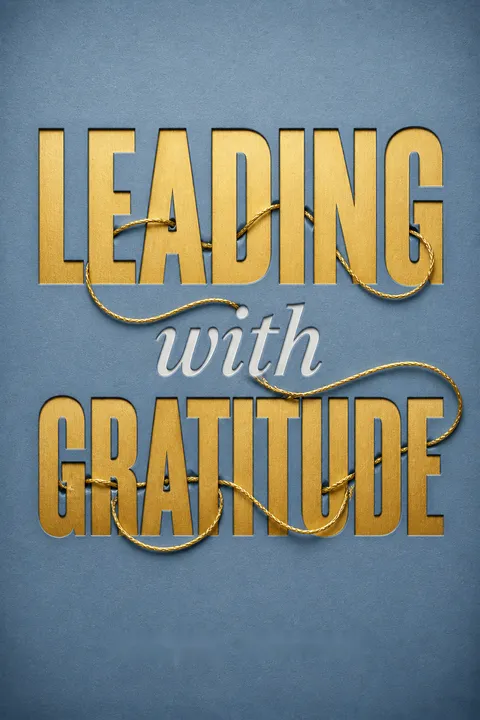
Leading with Gratitude receives mixed reviews, with an average rating of 3.86/5. Readers appreciate its insights on cultivating gratitude in leadership and workplaces, citing practical advice and research-backed strategies. Many find the book's message valuable for improving team performance and employee engagement. However, some criticize its writing style, repetitive content, and outdated references. Positive aspects include the focus on specific, timely expressions of gratitude and debunking common myths. Critics note the book's corporate-centric approach and occasional lack of depth in exploring concepts.
People Also Read









Glossary
Gratitude gap
Knowing appreciation matters, yet withholding itThe gap between leaders’ awareness that employee appreciation supports motivation and performance, and their inconsistent practice of expressing it. The authors attribute this divide to habits such as busyness, fear of seeming insincere, assumptions that praise weakens standards, and attention focused more readily on problems than contributions.
Ingratitude Myths
Beliefs used to justify withholding thanksA set of common managerial assumptions that discourage appreciation, including the beliefs that fear motivates best, employees receive too much praise, leaders lack time, gratitude is not part of their nature, only exceptional workers deserve it, money is the only meaningful reward, and employees will distrust a change in behavior. The book challenges these assumptions with stories, research, and practical alternatives.
Motivators Assessment
Maps individual work motivatorsAn assessment described by the authors that identifies a person’s relative priorities among 23 workplace motivators, including autonomy, learning, teamwork, purpose, money, and recognition. The authors use it to illustrate why the same reward can feel meaningful to one employee and irrelevant to another. It is intended to help managers tailor appreciation and work opportunities to individual preferences.
Learning moment
A mistake treated as shared learningWD-40 CEO Garry Ridge’s term for a positive or negative outcome that is openly shared so others can learn from it. It reframes mistakes as information for improvement rather than automatic grounds for blame. The practice depends on employees being able to disclose setbacks without expecting humiliation or punishment.
Praise-worthy, reward-worthy, platinum-level, and diamond-level gratitude
Four levels for matching recognition to contributionThe authors’ categories for calibrating recognition to the scale of an achievement. Praise-worthy appreciation acknowledges expected work and small steps aligned with values. Reward-worthy recognition marks a one-time stretch contribution. Platinum-level recognition reflects sustained, above-and-beyond behavior. Diamond-level recognition is reserved for achievements with significant organizational impact and may include a substantial reward.
Radical candor
Direct feedback grounded in empathyA feedback approach associated with Kim Scott and discussed in the book through leaders who emphasize both care and directness. The giver offers honest criticism because the other person’s success matters, rather than using bluntness as permission to be cruel. Trust and demonstrated concern make candid feedback easier to hear and more useful.
Negativity bias
Greater attention to threats than positivesA tendency to notice and remember negative events more readily than positive ones. The authors use it to explain why managers may focus on errors, risks, and urgent problems while overlooking everyday contributions. They argue that gratitude requires deliberate attention to counter this imbalance, particularly during stressful periods.
FAQ
What's "Leading with Gratitude" about?
- Core Concept: "Leading with Gratitude" by Adrian Gostick and Chester Elton explores how expressing gratitude can transform leadership and improve business results.
- Structure: The book is divided into three parts: debunking myths about ingratitude, introducing powerful gratitude practices, and applying gratitude in personal life.
- Practical Advice: It provides eight specific practices for leaders to effectively express gratitude and enhance team performance.
- Research-Based: The authors use research and real-world examples to demonstrate the impact of gratitude on employee engagement and organizational success.
Why should I read "Leading with Gratitude"?
- Improved Leadership Skills: The book offers actionable insights for leaders to foster a more positive and productive work environment.
- Enhanced Employee Engagement: By implementing gratitude practices, leaders can increase employee motivation and retention.
- Research-Backed Strategies: The book is grounded in research, providing credible and effective methods for leading with gratitude.
- Personal Growth: It also addresses how gratitude can improve personal relationships and overall well-being.
What are the key takeaways of "Leading with Gratitude"?
- Gratitude Gap: There is a significant gap between knowing gratitude's importance and practicing it effectively in the workplace.
- Eight Practices: The book outlines eight powerful gratitude practices, such as "Solicit and Act on Input" and "Assume Positive Intent."
- Myth Debunking: It challenges common myths that prevent leaders from expressing gratitude, like the belief that fear is the best motivator.
- Personal and Professional Impact: Gratitude not only enhances workplace dynamics but also enriches personal life.
What are the best quotes from "Leading with Gratitude" and what do they mean?
- "Gratitude creates feelings of belonging." This quote emphasizes that expressing gratitude fosters a sense of community and loyalty within an organization.
- "The key to a happy life isn’t what people think. It’s putting gratitude at the center of everything you do." It highlights the central theme that gratitude is essential for personal happiness and professional success.
- "A lack of gratitude is a form of stupidity." This provocative statement underscores the missed opportunities and negative consequences of not practicing gratitude.
How does "Leading with Gratitude" debunk the myth that fear is the best motivator?
- Fear's Limitations: The book argues that fear can lead to short-term compliance but is detrimental to long-term motivation and innovation.
- Negative Impact: Fear-based cultures create stress and reduce employee engagement, leading to lower productivity.
- Alternative Approach: The authors advocate for gratitude as a more effective motivator that fosters trust and collaboration.
- Real-World Examples: The book provides examples of leaders who successfully replaced fear with gratitude to achieve better results.
What are the eight most powerful gratitude practices in "Leading with Gratitude"?
- Solicit and Act on Input: Encourage employee feedback and act on their suggestions to show appreciation for their contributions.
- Assume Positive Intent: Approach employee mistakes with understanding and use them as learning opportunities.
- Walk in Their Shoes: Develop empathy by understanding the challenges employees face in their roles.
- Look for Small Wins: Recognize and celebrate incremental progress to boost morale and motivation.
- Give It Now, Give It Often, Don’t Be Afraid: Express gratitude frequently and promptly to reinforce positive behaviors.
- Tailor to the Individual: Customize expressions of gratitude to align with individual motivators and preferences.
- Reinforce Core Values: Connect gratitude to the organization’s core values to reinforce their importance.
- Make It Peer-to-Peer: Encourage team members to express gratitude to each other to build a supportive culture.
How can leaders implement the practice of "Solicit and Act on Input"?
- Encourage Feedback: Actively seek input from employees on how to improve processes and address challenges.
- Act on Suggestions: Implement viable ideas and communicate the reasons for not pursuing others to show consideration.
- Create a Safe Environment: Foster a culture where employees feel comfortable sharing their thoughts without fear of retribution.
- Recognize Contributors: Publicly acknowledge and reward employees who provide valuable insights and solutions.
What does "Assume Positive Intent" mean in the context of "Leading with Gratitude"?
- Understanding Mistakes: Approach employee errors with the assumption that they had good intentions, which opens the door for constructive dialogue.
- Teaching Moments: Use mistakes as opportunities to teach and guide rather than punish.
- Building Trust: This approach fosters a culture of trust and encourages employees to be open about challenges.
- Positive Outcomes: Assuming positive intent can lead to more innovative solutions and a more cohesive team.
How does "Leading with Gratitude" suggest leaders should "Walk in Their Shoes"?
- Empathy Development: Leaders should spend time understanding the daily challenges their employees face.
- Direct Experience: Whenever possible, leaders should perform the tasks of their employees to gain firsthand insight.
- Open Communication: Regularly ask employees about their work processes and any obstacles they encounter.
- Recognition of Efforts: Use the insights gained to express specific and meaningful gratitude for employees' hard work.
What is the significance of "Look for Small Wins" in "Leading with Gratitude"?
- Incremental Progress: Recognizing small achievements helps maintain momentum and motivation.
- Boosting Morale: Celebrating small wins can uplift spirits and encourage continued effort.
- Signposts of Success: Small wins serve as indicators that the team is on the right path toward larger goals.
- Daily Practice: Leaders should make it a habit to notice and acknowledge these small victories regularly.
How can leaders effectively "Tailor Gratitude to the Individual"?
- Understand Motivators: Identify what drives each employee and customize gratitude expressions accordingly.
- Personalized Rewards: Choose rewards that align with individual preferences and values.
- Avoid Generic Praise: Specific and personalized gratitude is more meaningful and impactful.
- Use Assessment Tools: Consider using tools like the Motivators Assessment to gain insights into employees' unique motivators.
How does "Leading with Gratitude" recommend making gratitude peer-to-peer?
- Encourage Team Recognition: Foster a culture where team members regularly express gratitude to each other.
- Use Technology: Implement social recognition systems to facilitate and track peer-to-peer gratitude.
- Break Down Silos: Peer recognition can help build connections across different teams and departments.
- Model the Behavior: Leaders should also participate in peer recognition to set an example for the team.
About the Author


Download PDF
Download EPUB
.epub digital book format is ideal for reading ebooks on phones, tablets, and e-readers.








