

Key Takeaways
Treat midlife's unraveling as a transition, not proof your life has failed.
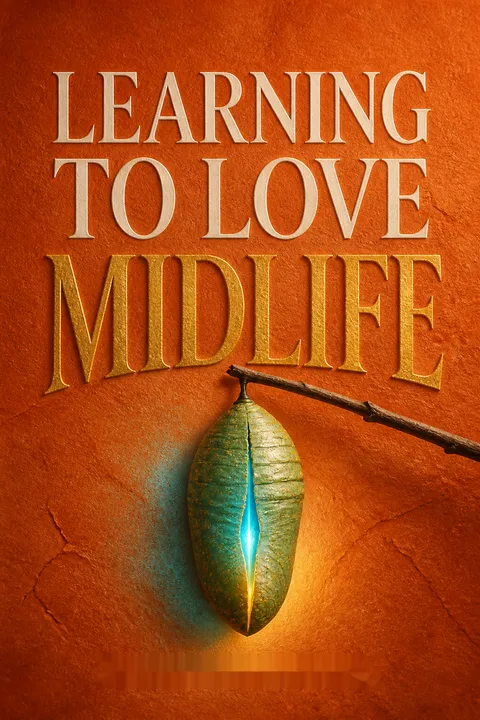
A passage, not a verdict. Conley describes his own midlife as a cascade of losses: a relationship ending, his hotel company struggling, a foster son imprisoned, and a near-death experience that forced him to see how far he had drifted from joy. He calls midlife a chrysalis, a transitional state in which old identities loosen before a new life takes shape. The process can feel frightening and isolating, but it is not evidence that a person is broken.
Transitions need room. Conley frames change in three phases: releasing what has ended, living through an uncertain in-between, and beginning again. His turning point included selling his company, leaving a relationship, and later joining Airbnb as a mentor. He argues that support and time matter: a major transition can take years, not weeks.
What's valuable here is the distinction between pain and pathology. A disrupted identity can be a normal response to a genuine life transition, and naming it may reduce shame enough to make help-seeking possible. The chrysalis image also resists the demand to produce an immediate plan while life is unsettled. Still, a hopeful frame should never be used to minimize severe depression, financial precarity, or suicidal thoughts. Reframing can help people interpret hardship, but it cannot replace clinical care, material support, or safety.
Plan for the decades ahead, not the lifespan averages you misread.
The second half is substantial. Conley asks readers to stop imagining life as a three-act sequence ending with retirement around 65. In the United States, someone who reaches 65 has at least a 50 percent chance of living past 85, according to the book. Yet a 2023 survey cited by Conley found that 53 percent of midlifers had inaccurate information about life expectancy. Underestimating remaining time can discourage new pursuits and leave people financially unprepared.
Count quality, too. Life span means how long a person lives; health span means how long they remain healthy and independent. Conley recommends building habits that support both, including regular movement, meaningful relationships, stress reduction, and purpose. He also introduces Transitional IQ, or TQ: the skill of navigating change by letting go, tolerating the uncertain middle, and entering a new beginning.
Longevity literacy changes practical decisions, from saving to retraining, because the assumed length of a future shapes what seems worth attempting. Separating life span from health span is especially useful: more years are not automatically more agency. This perspective also highlights a fairness problem. Advice to plan a long, flexible second act assumes access to health care, savings, and choice, resources distributed unequally. A realistic life plan should include both personal aspirations and the social conditions that make them possible.
Train your body for capability, not for a frozen image of youth.
Looks are a narrow scoreboard. Conley describes a half-trillion-dollar beauty industry that profits from the belief that aging bodies need correction. Actor Tara Gadomski once followed rules designed to prevent wrinkles, including taping her face at home, before she began questioning the ideal those rules served. Conley argues that midlife can move attention from appearance toward other sources of identity, such as relationships, ideas, and community.
Choose useful fitness. The question is not whether to care for the body, but what that care is meant to achieve. Conley contrasts an acquaintance who organized his life around recovering six-pack abs with executive coach Alisa Cohn, whose exercise habit supported mood, health, and activities she wanted to keep doing. He also describes his cancer experience as a reason to treat the body as a partner that needs attention, not a machine to dominate.
The shift from appearance to capability offers a more durable basis for exercise: strength and mobility support participation in ordinary life, not just approval in a mirror. It also challenges ageism that is especially visible in media and beauty standards for women. Yet health and vanity are not clean opposites. Wanting to look good can coexist with wanting to feel well, and cultural pressure shapes both desires. The useful test is whether a regimen enlarges a person's life or consumes it.
Use age to build emotional range, not just endure more stress.
Experience can improve emotional skill. Conley cites research by psychologist Robert Levenson in which older participants were more able to reinterpret distressing scenes positively and process their emotions. Research by David Almeida, also cited in the book, found that adults reported daily stressors on roughly 40 to 45 percent of days in early adulthood, compared with about 20 to 25 percent in later midlife. The claim is not that life becomes easy, but that responses can become steadier.
Practice a wider margin. Conley describes becoming less reactive, less caught in comparison, and more able to recognize which environments help him thrive. He recommends a growth mindset: treating a difficulty as something to learn about rather than a fixed verdict on the self. His own example is changing from believing he was bad at yoga to learning in a setting where social comparison felt less threatening.
This account connects emotional maturity with regulation, not emotional suppression. Reappraising a stressful event can reduce its grip, while a growth mindset can turn self-judgment into experimentation. Both are useful capacities in work, relationships, and health behavior. The age pattern should not be mistaken for a guarantee: trauma, illness, and chronic stress can undermine regulation at any age. The more practical message is that emotional skill is trainable, and accumulated experience becomes useful when it is reflected on rather than merely endured.
Invest in close relationships before your social world quietly thins.
Connection is a health asset. The Harvard Study of Adult Development followed 724 people over many decades. Conley highlights one finding: among participants, satisfaction with relationships at age 50 predicted who was healthier at 80 more strongly than measures such as cholesterol or body mass. Close relationships can buffer stress, while friendship networks require active care because people move, change, and lose touch.
Make a new friend on purpose. Myra Lavenue felt isolated after retiring from recreational soccer and losing the social life of an office. An improv class helped her meet Lisa; Myra made the first move, and the two became close friends. Conley calls the value built through relationships relational capital. His practical suggestions include reconnecting with an old friend, listening with genuine curiosity, and joining or creating a group around a shared interest.
The idea of friendship as emotional insurance is more than a metaphor: dependable relationships provide belonging, perspective, and practical help when circumstances change. Myra's story also counters the assumption that adult friendship is mostly inherited from school or early career. It can be cultivated through repeated contact and an explicit invitation. However, social wellness is not a matter of maximizing contacts. A few reciprocal, safe relationships may matter more than a crowded calendar, and solitude can be restorative when chosen rather than imposed.
Spend approval-seeking energy only on people and causes that matter.
Attention has a cost. Conley traces his people-pleasing to a long dependence on social approval, then describes learning that most people are too occupied with their own concerns to scrutinize his every mistake. In midlife, he argues, the point is not to stop caring altogether. It is to stop donating attention to every opinion, invitation, and status contest.
Let values filter commitments. Conley once served on six nonprofit boards, each connected to a cause he valued. He realized that his time was limited and focused his service on urban poverty, a cause he cared about most. Kay Scorah offers another model: after years in a conventional business career, she made room for creative work, activism, and mentoring. Conley's practical test is whether a commitment reflects a chosen value or merely an old need to impress.
Selective caring is a form of attention management, and attention is finite even when social demands are not. The strongest version of this idea is not indifference, but a more deliberate moral budget: fewer performative commitments, deeper investment in what matters. That can create room for both boundaries and responsibility. The caution is that not all obligations are freely chosen; caregiving and economic pressures can constrain a person's ability to say no. Discernment should recognize those constraints rather than turn every overload into a personal failure.
Turn experience into wisdom by reflecting, naming patterns, and sharing.
Experience needs processing. Conley defines wisdom as experience transformed into compassion that can help someone else. At 28, during a business crisis after the 1989 San Francisco earthquake, he began writing weekly lessons from difficult events in a journal he called his Wisdom Book. The practice helped him extract usable insight from mistakes, including how to gather skeptical feedback before presenting a risky idea to a team.
Map your recurring story. Conley adapts the Hero's Journey, a story pattern of leaving the familiar, facing trials, and returning changed, as a prompt for examining personal transitions. His own map revealed a repeated cycle: enthusiasm, intense focus, overwork, resentment, recovery, and renewal. Naming the pattern made it easier to notice where collaboration and rest were needed. The goal is not to force life into a myth, but to see what keeps repeating.
Reflection converts memory into learning by making patterns available for future choices. This resembles a useful practice in professional debriefs: identify what happened, what assumptions shaped the response, and what should change next time. The story framework can also help people integrate experiences that otherwise feel disconnected. Its risk is over-coherence. Not every setback carries a hidden lesson, and a life story should not be polished into destiny. The most credible narrative leaves room for accident, injustice, and unresolved grief.
Edit identities that expired, then replant your skills in new work.
Success can become a cage. Conley calls the excessive pursuit of achievement successism. Midlife, in his account, is a chance to question a success script inherited from family, peers, or industry. Former football player Aaron Taylor had built his identity around the sport, then had to retire at 28 because of injuries. Recovery required grieving that identity before he could become a broadcaster and mental-health advocate.
Reuse the seed, change the soil. Conley describes repurposing his hotel leadership experience at Airbnb, where he worked as a mentor to a much younger CEO rather than as the chief executive himself. He also recommends a portfolio career, combining roles such as consulting, teaching, board service, and part-time work. This kind of redesign is not a single dramatic leap. It can be a gradual shift toward work that better fits a person's current values and circumstances.
Career identity often supplies structure, status, and community, so leaving a role can feel like losing more than a paycheck. Taylor's story makes the grief legible instead of treating reinvention as effortless. Transferable skills can survive even when a title does not, especially skills involving judgment, teaching, and relationships. Still, portfolio work is not universally available or financially secure. The idea is most useful as a prompt to identify multiple ways of contributing, not as a promise that everyone can freely assemble an ideal career.
Protect unhurried time by becoming a beginner again.
Busyness can hide time poverty. Conley argues that packed schedules leave little room for reflection, curiosity, and connection. Novel experiences can make time feel less repetitive because they create distinct memories. He recommends returning to beginnerhood, not to become expert at everything, but to experience life with fresh attention. In MEA workshops, adults try activities such as improv, bread baking, or surfing, often alongside other beginners.
Use time to create, not merely fill. Psychologist Erik Erikson's concept of generativity describes contributing to younger generations and the wider community. Diane Flynn used a period of reflection after illness and family responsibilities to launch a program helping midlife women return to work. Conley frames a meaningful later career as a possible mix of learning, earning, teaching, and service, rather than a binary choice between full-time work and retirement.
Novelty can interrupt the blur of routine, while shared beginnerhood lowers the social cost of looking clumsy. Together, these ideas connect time affluence with learning and play, not simply leisure. Generativity adds a useful direction: free time can become a resource for contribution rather than a vacuum to be filled. But not everyone has discretionary time, especially people balancing paid work and caregiving. Time affluence is partly a personal design challenge and partly a question of workplace policy, income, and social support.
Make wholeness practical through service, awe, and shared rituals.
A deeper identity can emerge. Conley presents midlife as a possible shift from organizing life around ego, achievement, and recognition toward a broader sense of self connected to service and meaning. His experience on the board of Glide Memorial Church brought him into direct service with people in need. Speaking there became less about appearing impressive and more about telling a personal story that might help others.
Create moments of shared wonder. Sociologist Émile Durkheim called collective effervescence the heightened energy people can feel when gathered in shared ritual. Conley found it at festivals, in community life, and in the natural world. For people who do not connect with religious institutions, he suggests that attention to nature, music, kindness, or communal activity can also create a sense of belonging to something larger.
The chapter's spiritual language is broad enough to include religious faith, secular service, and attention to nature. That breadth matters because meaning is often practiced before it is explained: caring for someone, joining a ritual, or noticing beauty can change how isolated life feels. Shared experiences can also counter the individualism that makes midlife transitions harder to bear alone. The nuance is that collective intensity is not automatically wise or ethical. Belonging is most nourishing when it leaves room for difference, consent, and reflection.
Analysis
The book's central move is a rebranding of midlife, but its deeper argument concerns the terms by which adulthood is measured. A life organized around accumulation, achievement, appearance, and external approval can work for decades, then become poorly suited to changing bodies, longer lives, and shifting responsibilities. Midlife is not simply a crisis to survive. It is a period in which inherited measures of success can be examined and replaced with chosen commitments, relationships, contribution, and a more integrated identity.
Conley's structure is deliberately expansive. He moves from physical changes through emotional and mental capacities, then into work and spiritual life. Personal stories keep the framework from becoming a list of slogans, and his own history gives the optimistic thesis credibility: despair and disorientation are not edited out of the account. The recurring metaphors of chrysalis, editing, and replanting make change vivid while emphasizing that transformation includes loss, uncertainty, and time.
The book is strongest when it joins research with practice. The reader is asked to reflect on longevity, friendships, personal patterns, vocational identity, and the use of time. It also makes an important social claim: societies offer abundant rituals for entering adulthood but few for navigating the transition into later adulthood. Learning communities and peer support can fill part of that gap.
Its optimism deserves a careful reading. Happiness curves and improved emotional regulation describe broad patterns, not individual guarantees. Aging is shaped by disability, income, discrimination, caregiving, and access to health care. Nor can a changed mindset compensate for structural barriers. The most useful interpretation is neither that midlife automatically gets better nor that each person can redesign life at will. Rather, longer life creates real possibilities, but people need support, resources, and honest room to grieve as they choose which possibilities to pursue.
Review Summary
Learning to Love Midlife receives mixed reviews, with an average rating of 3.69 out of 5. Some readers find it insightful and empowering, appreciating Conley's perspective on midlife as a transformative period. Others criticize it for being too focused on wealthy individuals and lacking practical advice for the average person. The book's strengths lie in its optimistic outlook and encouragement to embrace new experiences. However, some readers find it cliché-ridden and self-promotional. Overall, the book resonates more with those open to introspection and seeking a positive midlife narrative.
Glossary
Midlife chrysalis
A transitional stateConley's metaphor for midlife as a period of transformation rather than a fixed crisis. Old identities, habits, and expectations may loosen before a person knows what comes next. The image emphasizes that the uncertain middle can be difficult and isolating while still creating conditions for a different way of living.
Middlescence
Adult transition resembling adolescenceA term used by gerontologists Ken Dychtwald and Barbara Waxman for the midlife phase of substantial physical, hormonal, emotional, and identity change. Conley compares it with adolescence: both are transitions that can unsettle a person's sense of self, but society provides far fewer rituals and supports for adults moving through middlescence.
Transitional IQ (TQ)
Skill for navigating changeConley's term for the ability to navigate a transition. It involves recognizing three broad phases: letting go of an old situation, tolerating the uncertain in-between period, and beginning something new. TQ is not about avoiding disruption or rushing through it, but about understanding where one is in the change process and responding with patience and support.
Great Midlife Edit
Intentional life simplificationConley's practice of reviewing what has accumulated in a person's life and releasing what no longer fits. The edit can involve expectations, habits, relationships, possessions, and professional identities. The purpose is not merely to subtract, but to free time and attention for commitments that better match the person's present values.
Age-fluid
Identity beyond fixed ageConley's term for someone who does not treat chronological age as a fixed identity or strict guide to when life milestones should occur. An age-fluid person can feel older or younger than their years and may question generational expectations. The concept is not a denial of physical aging; it is a challenge to age-based assumptions about possibility.
Relational capital
Value built through relationshipsThe support, trust, closeness, and shared understanding that accumulate through investment in relationships. Conley treats this as a form of wealth that can offer emotional support during difficult periods. Like other forms of capital, it requires attention and upkeep; friendships can weaken when people stop making time for one another.
Successism
Harmful pursuit of achievementConley's term for pursuing ever more success in ways that damage well-being, dignity, or relationships. It describes the treadmill of chasing titles, recognition, or status without pausing to ask whether those goals still matter. Midlife can prompt people to examine the success script they inherited and define achievement on more personal terms.
Time affluence
A felt abundance of timeA sense of having enough time for reflection, curiosity, relationships, and meaningful activity. Conley contrasts time affluence with time poverty, in which busyness leaves little room for these experiences. It is not simply the result of having fewer obligations; it also depends on how commitments are chosen and arranged.
Portfolio career
Work across multiple rolesA work life made up of several activities rather than one exclusive full-time job. Conley's examples include consulting, mentoring, teaching, board service, study, and paid employment. A portfolio career can allow people to reuse their experience in different settings, but its feasibility depends on financial resources, available work, and personal circumstances.
Collective effervescence
Shared energy in a groupSociologist Émile Durkheim's term for the heightened sense of energy and connection that can arise when people gather around a shared ritual or experience. Conley applies it to festivals, community gatherings, and other moments when individual self-consciousness gives way to communal joy and belonging.
Harvard Study of Adult Development
Longitudinal study of adult livesA long-running research project that began in 1938 and followed 724 participants, collecting information about their physical and emotional health over many decades. Conley emphasizes findings linking good relationships with later well-being, including the predictive value of relationship satisfaction in midlife for health in older age.
FAQ
What's "Learning to Love Midlife" about?
- Overview: "Learning to Love Midlife" by Chip Conley explores the transformative potential of midlife, challenging the stereotype of a midlife crisis and presenting it as a period of growth and opportunity.
- Structure: The book is divided into sections focusing on different aspects of life—physical, emotional, mental, vocational, and spiritual—each offering insights and strategies for embracing midlife.
- Personal Journey: Conley shares his personal experiences and those of others to illustrate how midlife can be a time of renewal and reinvention.
- Goal: The book aims to reframe midlife as a time to embrace new possibilities, deepen relationships, and find greater fulfillment.
Why should I read "Learning to Love Midlife"?
- Reframe Midlife: It offers a fresh perspective on midlife, encouraging readers to see it as a time of opportunity rather than decline.
- Practical Advice: The book provides actionable strategies for navigating the challenges and opportunities of midlife.
- Inspiration: Through personal stories and examples, Conley inspires readers to embrace change and pursue personal growth.
- Comprehensive Approach: It covers various aspects of life, ensuring a holistic approach to understanding and thriving in midlife.
What are the key takeaways of "Learning to Love Midlife"?
- Midlife as Opportunity: Midlife is a time for transformation and growth, not just a crisis to endure.
- Embrace Change: Being open to change and new experiences can lead to personal and professional fulfillment.
- Value Relationships: Investing in relationships is crucial for happiness and well-being in midlife.
- Wisdom and Legacy: Midlife is a time to harness accumulated wisdom and consider the legacy you want to leave.
How does Chip Conley redefine midlife in "Learning to Love Midlife"?
- Midlife as a Chrysalis: Conley likens midlife to a chrysalis stage, where transformation and growth occur, leading to a more fulfilled life.
- Three Stages of Midlife: He identifies early, core, and later midlife stages, each with unique challenges and opportunities.
- From Ego to Soul: The book suggests a shift from ego-driven pursuits to soul-centered living during midlife.
- Focus on Growth: Conley emphasizes personal growth, wisdom, and the pursuit of meaningful experiences.
What are the best quotes from "Learning to Love Midlife" and what do they mean?
- "Midlife is not a crisis, it's a crossroads." This quote encapsulates the book's central theme of viewing midlife as a time for new directions and opportunities.
- "The trip becomes a journey only after you've lost your baggage." It suggests that letting go of past burdens is essential for personal growth and transformation.
- "You are only as big as the problems that annoy you." This quote encourages readers to focus on what truly matters and not be bogged down by trivial issues.
- "Life is not a one-tank journey." It highlights the importance of refueling and reimagining one's life, especially during midlife.
How does "Learning to Love Midlife" address the concept of time affluence?
- Time Affluence Defined: Conley introduces the idea of time affluence as having the freedom to spend time on meaningful activities rather than being constantly busy.
- Midlife Opportunity: Midlife offers a chance to reassess priorities and focus on what truly matters, leading to a richer, more fulfilling life.
- Practical Steps: The book provides strategies for achieving time affluence, such as simplifying commitments and embracing new experiences.
- Impact on Well-being: Time affluence is linked to increased happiness and reduced stress, making it a crucial aspect of thriving in midlife.
What is the "Great Midlife Edit" in "Learning to Love Midlife"?
- Concept: The "Great Midlife Edit" involves shedding outdated identities, habits, and relationships that no longer serve you.
- Purpose: It aims to simplify life and make room for new opportunities and personal growth.
- Ritual: Conley suggests a ritual of writing down what you want to let go of and burning it as a symbolic act of release.
- Outcome: This process helps individuals focus on what truly matters and align their lives with their current values and goals.
How does Chip Conley suggest we handle expectations in midlife?
- Expectation vs. Reality: Conley discusses the gap between youthful expectations and midlife reality, which can lead to disappointment.
- Adjusting Expectations: He advises adjusting expectations to align with current realities, focusing on hope rather than entitlement.
- Embrace Hope: Hope is seen as a more sustainable and positive approach than rigid expectations.
- Letting Go: Letting go of unrealistic expectations can lead to greater contentment and fulfillment in midlife.
What role does wisdom play in "Learning to Love Midlife"?
- Wisdom as a Resource: Conley emphasizes that wisdom, accumulated through life experiences, is a valuable resource in midlife.
- Crystallized Intelligence: The book highlights how certain mental competencies, like wisdom, improve with age.
- Sharing Wisdom: Midlife is a time to share wisdom with others, contributing to personal and communal growth.
- Wisdom Practices: Conley suggests practices for cultivating wisdom, such as reflection, journaling, and mentoring.
How does "Learning to Love Midlife" address the emotional aspects of midlife?
- Emotional Intelligence: The book discusses how emotional intelligence tends to improve with age, aiding in better handling of life's challenges.
- Contentment Over Happiness: Conley suggests that midlife is more about finding contentment and joy rather than chasing fleeting happiness.
- Emotional Resilience: Midlife offers an opportunity to develop emotional resilience and a deeper understanding of oneself.
- Relationships: Investing in relationships is crucial for emotional well-being and is a key focus in midlife.
What is the significance of the Hero's Journey in "Learning to Love Midlife"?
- Framework for Growth: Conley uses the Hero's Journey as a framework to understand personal growth and transformation in midlife.
- Stages of the Journey: He outlines stages such as the call to adventure, facing challenges, and returning transformed.
- Personal Application: Readers are encouraged to map their own Hero's Journey to gain insights into their life patterns and growth.
- Empowerment: Understanding one's journey empowers individuals to embrace change and pursue new opportunities.
How does "Learning to Love Midlife" suggest we approach vocational life in midlife?
- Portfolio Career: Conley introduces the concept of a portfolio career, where individuals engage in multiple roles and activities rather than a single full-time job.
- Repurposing Skills: Midlife is a time to repurpose skills and knowledge in new and fulfilling ways.
- Phased Retirement: The book discusses phased retirement as an option for gradually transitioning from full-time work.
- Focus on Impact: Vocational life in midlife should focus on meaningful impact and personal fulfillment rather than traditional success metrics.
Download PDF
Download EPUB
.epub digital book format is ideal for reading ebooks on phones, tablets, and e-readers.








