

Key Takeaways
LeBron leveraged Reebok's $10 million offer into a better-fit Nike deal
Urgency was leverage. In 2003, Reebok tried to secure eighteen-year-old LeBron immediately, putting a $10 million check in his hands and offering a contract worth as much as $100 million. He refused to sign on the spot and continued hearing pitches. That patience kept the bidding alive, even though turning down a life-changing sum was a serious risk for a teenager from a poor family.
Fit outlasted the check. Reebok ultimately offered more than $100 million, but LeBron chose Nike for its design, marketing, and the future he imagined with the brand. His Nike deal guaranteed $77 million over seven years plus a $10 million signing bonus, and royalties later pushed the value higher. The decision joined business judgment with personal preference rather than treating the largest immediate offer as the only measure of value.
The deal illustrates a real-options idea: keeping choices open has value when the next piece of information could improve a decision. Reebok’s offer established what a rival was willing to pay, while LeBron’s continued interest gave Nike a reason to improve its terms. Yet the lesson is not simply to reject generous offers. That strategy depends on having credible alternatives, sound advice, and the ability to withstand the risk of losing the offer. LeBron had an unusually strong negotiating position because competing companies saw him as a rare asset. Most people cannot reproduce that leverage, but they can distinguish an urgent offer from a genuinely best-fit one.
Treat early access as contract risk, not a favor
Help can carry strings. When LeBron was sixteen, his family needed money to travel and support his rising basketball career. Joe Marsh loaned $100,000 to Eddie Jackson and Gloria James at 10 percent annual interest. The arrangement also sought rights to a future documentary and participation in LeBron’s endorsement deals. Jackson helped the family, but the agreement placed a young athlete and inexperienced adults inside a complicated business relationship.
Control came with experience. LeBron never signed the agreement. After communication with Marsh broke down, Marsh sued him for $15 million, arguing that oral promises had been breached. A jury sided with LeBron, who repaid the loan with interest, about $122,000. The episode shows how early dependence can create obligations that outlast the immediate need, and how important it is to distinguish genuine support from a deal whose terms are unclear.
This is a principal-agent problem in a deeply personal setting. The people arranging access, funding, and future opportunities may care about the young athlete while also pursuing their own financial interests. Those motives can coexist, which makes simple labels like benefactor or exploiter inadequate. A useful safeguard is not suspicion of everyone, but independent review: who owes what, who controls the rights, and what happens if plans change? The family’s circumstances made the financing valuable, so criticizing them for accepting help misses the power imbalance. The stronger lesson is that access to opportunity should not require a child to carry adult-sized contractual risk.
Turn proximity into expertise before taking over the business
Trust needed training. LeBron and Maverick Carter had known each other since childhood, but friendship alone did not make Carter a qualified business operator. Nike executive Lynn Merritt offered him an internship at the company, where Carter studied how athlete marketing worked and asked questions about the business. He planned to work alongside LeBron, not merely borrow his name. That experience helped the pair build LRMR Marketing, named for LeBron, Randy Mims, Maverick Carter, and Rich Paul.
Early bets missed. LRMR tried to represent athletes beyond LeBron, but prospective stars such as Derrick Rose and John Wall chose other agents and shoe brands. The firm struggled to prove that it could serve clients whose main attraction was not LeBron. Its more durable progress came from marketing LeBron and developing media projects. The path involved learning by doing, including discovering which business model did not fit their advantage.
The story distinguishes social capital, the value of relationships, from operating competence. Carter’s access to LeBron opened doors, but learning Nike’s processes helped him contribute once inside them. That is a stronger foundation than assuming loyalty can substitute for expertise. At the same time, a trusted inner circle can make it harder to separate friendship from accountability. The failed athlete-representation push shows why outside clients might question whether they would receive attention, while the founders might overestimate what their celebrity could sell. Effective partnerships need both trust and clear evidence of capability.
Negotiate ownership when your name can help create company value
A paycheck has a ceiling. Early in his career, LeBron passed on a potential equity deal with VitaminWater, preferring established endorsement partnerships with companies such as Coca-Cola. Later, rapper 50 Cent took an ownership stake in the growing beverage brand. Coca-Cola eventually bought the company for more than $4 billion, and 50 Cent’s proceeds were reported at $60 million to $100 million. The difference was not just fame, but a stake in the business that fame helped promote.
Beats made the lesson tangible. LeBron and Carter helped introduce Beats headphones to athletes by giving pairs to teammates at the Beijing Olympics, turning influential players into visible users. LeBron later took an ownership stake as well as a promotional role. When Apple acquired Beats for $3 billion, LeBron received more than $50 million. The pattern was to seek a share of the value created, not only payment for lending his face to a product.
Equity changes the relationship between celebrity and company: the public figure is no longer only a distribution channel, but a participant in the upside. That can align incentives and reward the person whose reputation helps make a product desirable. It also transfers risk. A large endorsement check is predictable; a stake in a young business may become valuable, or may become worthless. The VitaminWater example can sound like an obvious missed opportunity only because the outcome is known. The more general discipline is to assess the product, the company’s prospects, and the actual terms before confusing a share of ownership with guaranteed wealth.
A charitable purpose cannot rescue a tone-deaf public performance
The format overwhelmed the message. In 2010, LeBron announced his move from Cleveland to Miami during a live ESPN special called The Decision. The event was designed to raise money for Boys and Girls Clubs, and it ultimately directed more than $2.5 million to clubs around the country. But viewers had to wait through a drawn-out interview before hearing the choice, and LeBron offered little explanation of the personal and basketball reasons behind it. Many fans experienced the production as self-important and insensitive.
Good outcomes did not erase bad framing. After the show, LeBron’s positive public rating fell 42 percent while his negative rating rose 77 percent, according to the Q Scores figures cited in the book. The idea of an athlete controlling a major announcement was new, but the execution made the audience feel managed rather than respected. A worthy donation and a commercially clever broadcast did not compensate for the gap between the organizers’ intentions and the public’s experience.
The episode separates outcome from legitimacy. Money reached charitable organizations, yet the audience judged the announcement as a social interaction, not simply a fundraising mechanism. That is a useful lesson for any public-facing strategy: people infer motives from timing, tone, and who gets to speak. Control can protect a message from distortion, but it can also look like an attempt to avoid scrutiny. The reaction was not only about the decision to leave Cleveland; the staging gave disappointment a focal point. Ethical intent matters, but it does not automatically produce a credible experience for the people affected.
Build a media business around control, not a single announcement
A better message had room. In 2014, LeBron announced his return to Cleveland through a personal essay published by Sports Illustrated. It explained the choice directly and gave him space to address his relationship with his hometown. The contrast with the televised announcement four years earlier was striking: the medium was still controlled, but the message began with the decision and supplied the context fans wanted.
Ownership became infrastructure. The essay helped inspire Uninterrupted, a platform where athletes could deliver their stories directly, and SpringHill, LeBron and Carter’s production company. SpringHill’s path included the documentary More than a Game and the television series Survivor’s Remorse. A deal with Warner Bros. and investment from Turner Sports gave the operation staff, funding, and distribution relationships. The goal shifted from selling one appearance to building a company capable of developing many projects.
The contrast suggests that control is most persuasive when paired with candor and good storytelling. A direct channel reduces the number of intermediaries, but it also removes some of the editorial distance that audiences may trust. In 2014, the essay worked because the format served a clear purpose: explaining a complicated return in a coherent voice. The broader business move was more consequential than the announcement itself. A platform can turn access to one famous person into repeatable production capacity, though a company still has to earn audiences through the quality of what it makes.
Build philanthropy around the bottleneck, not the photo opportunity
Early generosity lacked a system. LeBron’s foundation began with events such as a community bikeathon, but the event lost money and the organization struggled to focus its efforts. In 2011, it gave out $89,000 in grants. A State Farm campaign about school dropouts connected with LeBron’s own experience of missing more than eighty school days in fourth grade before a stable home changed his routine. The foundation began working with Akron schools to address a more specific problem: the city’s high-school dropout rate was 26 percent.
The intervention moved upstream. Educators identified third grade as a key point, when falling behind in reading or math could threaten a student’s chance of graduating. The I Promise program combined extra support for students with a longer-term partnership involving families, schools, and the University of Akron. The university offered scholarships for qualifying students, and the foundation opened an I Promise school. These commitments required sustained funding, not just an inspiring event.
The shift is from episodic charity to institutional design. A bikeathon can build enthusiasm and raise awareness, but it does not necessarily address why students fall behind. Working with schools let the foundation focus on a specific bottleneck and provide support over time. That approach is more demanding to evaluate: graduation and college outcomes take years to appear, and the announcement of a program is not proof of its effectiveness. The book’s account is strongest when it presents I Promise as a serious commitment and a testable intervention, rather than assuming good intentions alone guarantee results.
Plan beyond playing while fame still opens doors
Los Angeles served a larger plan. When LeBron joined the Lakers in 2018, the move was not only a basketball choice. Carter and much of the business operation were already in Los Angeles, where SpringHill was developing projects with major entertainment partners. The city also offered a setting for LeBron’s children and kept him close to the production work he and Carter had spent years building. The basketball prospects were uncertain, but the move fit a broader professional strategy.
A portfolio was taking shape. LeBron had interests in Liverpool FC, Blaze Pizza, SpringHill, and Uninterrupted, alongside long-running endorsement income. The book’s 2018 snapshot puts his career earnings, including endorsements, at an estimated $765 million, while noting he had not yet become a billionaire. He and Carter were interested in eventual sports-team ownership, but that remained an ambition, not a completed achievement. The business story was still unfolding as his playing career moved toward its later chapters.
The strategic principle is to convert a temporary advantage into assets, relationships, and capabilities that can survive a change in role. LeBron’s fame created entry points, while Carter and experienced partners helped turn those openings into operating businesses. The distinction matters: proximity to Hollywood or ownership on paper does not guarantee durable success. Media projects can fail, restaurant investments can disappoint, and a celebrity brand can lose relevance. A diversified portfolio can reduce dependence on one income stream, but only if the underlying ventures have substance beyond the famous name attached to them.
Analysis
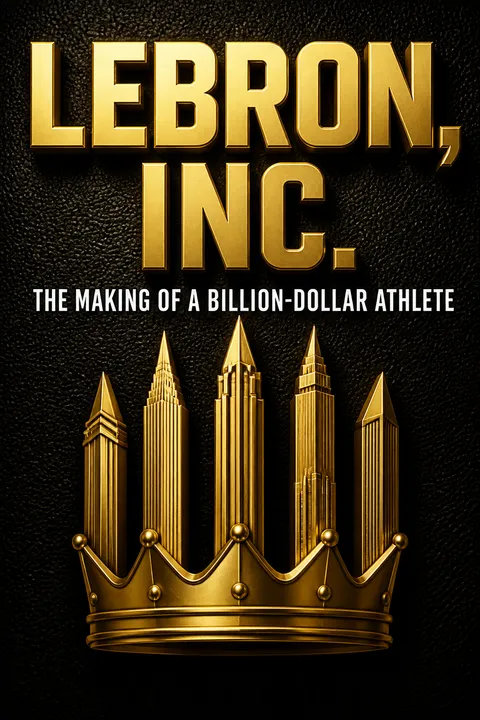
LeBron, Inc. is a business biography organized around a single evolving advantage: LeBron’s ability to notice where power, trust, and attention are moving, then choose whether to accept a transaction or shape it. The book begins with an eighteen-year-old facing an extraordinary offer, but its real subject is not a sequence of large checks. It is the gradual conversion of athletic fame into negotiating leverage, business knowledge, equity, media infrastructure, and philanthropic capacity.
The narrative’s most useful tension is between access and competence. LeBron’s celebrity opens rooms, yet it does not automatically make a venture work. LRMR’s attempts to represent other athletes struggled; More than a Game failed to become a box-office hit; The Decision badly damaged public opinion. These episodes keep the story from becoming a simple triumphal account. Progress comes through partners who contribute different skills, especially Carter’s operational learning and Wachter’s dealmaking, and through the willingness to change direction when a model does not fit.
The book also complicates the familiar idea that business success means maximizing immediate income. LeBron sometimes chose a preferred brand, equity, or long-term relationship over a larger guaranteed payment. That approach can create substantial upside, as Beats demonstrates, but it also depends on selection and timing. Retrospective success can make risk look more obvious and repeatable than it was.
The philanthropic arc gives the business story a consequential test. The foundation’s shift from costly events toward school partnerships suggests that influence matters most when it strengthens a durable institution. Yet the book’s account ends before the long-term educational outcomes can be known. Its strongest conclusion is therefore not that LeBron has solved wealth creation or public service, but that he has learned to treat fame as a resource to steward. The unfinished nature of that project is part of the story, not a flaw in it.
Review Summary
LeBron, Inc. explores the business acumen of basketball superstar LeBron James. Readers generally found the book insightful, praising its focus on James' off-court ventures and philanthropic efforts. Many were impressed by his strategic approach to deals and investments. The book offers a unique perspective on James' growth as an entrepreneur and his impact beyond basketball. Some readers felt it lacked depth or criticism, while others appreciated the behind-the-scenes look at his business empire. Overall, it was well-received by those interested in sports, business, and James' career.
People Also Read



Glossary
The Decision
LeBron's televised team choiceThe 2010 ESPN special in which LeBron James announced he would leave Cleveland and join the Miami Heat. The broadcast was designed to control the announcement and raise money for Boys and Girls Clubs. It ultimately raised millions for the clubs, but its staging and lack of personal explanation provoked intense public backlash.
Four Horsemen
LeBron's close business circleThe nickname used by LeBron James and three close associates, Maverick Carter, Rich Paul, and Randy Mims. In the early years of LeBron’s NBA career, the friends supported him socially and began exploring business opportunities around his fame. Their loyalty and shared history shaped the group’s early ventures, though experience and professional roles changed over time.
LRMR Marketing
LeBron's marketing companyA company formed by LeBron James and his close associates. Its name uses the initials of LeBron, Randy Mims, Maverick Carter, and Rich Paul. LRMR initially sought to manage marketing work for LeBron and other athletes, but its efforts to recruit outside athletes did not develop as hoped. The company’s role shifted as the group focused more on LeBron’s business and media projects.
SpringHill Entertainment
LeBron's production companyThe entertainment company created by LeBron James and Maverick Carter, initially called SpringHill Productions. Named for the Akron housing development where LeBron lived as a teenager, it developed films, television shows, and other media projects. Its growth gave the partners a production operation that could create content and pursue industry deals without requiring LeBron to appear in every project.
Uninterrupted
Athletes' direct media platformA media platform developed by LeBron James, Maverick Carter, and their partners to let athletes communicate directly with audiences. The idea grew from LeBron’s 2014 personal essay explaining his return to Cleveland. Its projects used athletes’ voices and stories across digital video and other media, with commercial partnerships helping fund the work.
I Promise
Akron student-support programThe LeBron James Family Foundation’s education initiative in Akron, developed with local schools and other partners. It grew from a focus on helping at-risk students stay in school into a broader program offering academic support, family resources, college preparation, and scholarships for qualifying students. The initiative also includes the I Promise school, which opened in 2018.
FAQ
What's "LeBron, Inc.: The Making of a Billion-Dollar Athlete" about?
- Overview: "LeBron, Inc." by Brian Windhorst explores the business journey of LeBron James, detailing how he became a billion-dollar athlete through strategic decisions and partnerships.
- Focus on Business: The book highlights LeBron's off-court ventures, including his endorsement deals, investments, and the creation of his own media company.
- Personal Growth: It also delves into LeBron's personal growth and how his awareness and decision-making have been pivotal in his business success.
- Cultural Impact: The narrative covers LeBron's influence on sports, business, and culture, showcasing his role as a trailblazer for athlete empowerment.
Why should I read "LeBron, Inc.: The Making of a Billion-Dollar Athlete"?
- Inspiration: The book provides an inspiring story of how LeBron James leveraged his talent and fame to build a business empire.
- Business Insights: Readers gain insights into the strategies and decisions that contributed to LeBron's success, offering valuable lessons for entrepreneurs.
- Cultural Relevance: It highlights LeBron's impact on sports and culture, making it a compelling read for those interested in the intersection of athletics and business.
- Comprehensive Narrative: Brian Windhorst offers a detailed account of LeBron's journey, making it an engaging and informative read for fans and business enthusiasts alike.
What are the key takeaways of "LeBron, Inc.: The Making of a Billion-Dollar Athlete"?
- Strategic Partnerships: LeBron's success is largely due to his ability to form strategic partnerships, such as with Nike and Fenway Sports Group.
- Long-term Vision: LeBron's focus on long-term goals over short-term gains has been crucial in building his brand and business empire.
- Empowerment and Control: The book emphasizes the importance of athlete empowerment and controlling one's narrative and business ventures.
- Philanthropy and Legacy: LeBron's commitment to giving back, particularly through education initiatives, highlights the significance of legacy in his career.
How did LeBron James become a billion-dollar athlete according to "LeBron, Inc."?
- Endorsement Deals: LeBron's lucrative endorsement deals, particularly with Nike, played a significant role in his financial success.
- Business Ventures: His investments in companies like Blaze Pizza and Liverpool FC contributed to his growing wealth.
- Media and Entertainment: LeBron's foray into media with SpringHill Entertainment and Uninterrupted expanded his business portfolio.
- Strategic Decisions: His ability to make strategic decisions, such as turning down short-term gains for long-term benefits, was pivotal.
What role did Maverick Carter play in LeBron's business success as described in "LeBron, Inc."?
- Business Partner: Maverick Carter, a childhood friend of LeBron, became a key business partner and CEO of SpringHill Entertainment.
- Strategic Vision: Carter's strategic vision and understanding of the business landscape helped guide LeBron's off-court ventures.
- Innovative Deals: He was instrumental in negotiating innovative deals, such as the lifetime contract with Nike and the partnership with Fenway Sports Group.
- Media Expansion: Carter played a crucial role in expanding LeBron's presence in media and entertainment, contributing to the success of projects like "Survivor’s Remorse."
How did "The Decision" impact LeBron's career and business according to "LeBron, Inc."?
- Public Backlash: "The Decision" led to significant public backlash, affecting LeBron's reputation and Q rating negatively.
- Charitable Aspect: Despite the criticism, the event raised over $2.5 million for the Boys and Girls Clubs of America.
- Learning Experience: It served as a learning experience for LeBron and his team, influencing how they handled future announcements and media interactions.
- Legacy of Control: The event highlighted the importance of controlling one's narrative, a lesson that LeBron applied in subsequent business and personal decisions.
What are the best quotes from "LeBron, Inc.: The Making of a Billion-Dollar Athlete" and what do they mean?
- "I want it all." This quote encapsulates LeBron's ambition and drive to maximize his potential both on and off the court.
- "I promise to never forget where I came from." Reflects LeBron's commitment to his roots and his dedication to giving back to his community.
- "Always think big." A mantra that guided LeBron and his team in making bold and strategic business decisions.
- "I’ve been breaking the mold for a long time." Highlights LeBron's role as a trailblazer in redefining what it means to be a professional athlete.
How did LeBron's partnership with Nike evolve according to "LeBron, Inc."?
- Initial Deal: LeBron's initial deal with Nike in 2003 was a landmark $90 million contract, setting the stage for his future success.
- Lifetime Contract: In 2016, LeBron signed a lifetime contract with Nike, reportedly worth over $1 billion, solidifying his long-term relationship with the brand.
- Shoe Sales: His signature shoe line became one of Nike's top sellers, contributing significantly to his earnings.
- Brand Alignment: LeBron's alignment with Nike's brand values and marketing strategies played a crucial role in the partnership's success.
What is the significance of LeBron's investment in Liverpool FC as discussed in "LeBron, Inc."?
- Unique Deal: LeBron's investment in Liverpool FC was part of a unique deal with Fenway Sports Group, trading marketing rights for equity.
- Value Growth: The value of Liverpool FC has increased significantly since LeBron's investment, enhancing his wealth.
- Global Reach: The investment expanded LeBron's global reach and influence, particularly in the European market.
- Strategic Move: It exemplifies LeBron's strategic approach to business, focusing on long-term value and growth.
How did LeBron's media ventures contribute to his business empire according to "LeBron, Inc."?
- SpringHill Entertainment: LeBron co-founded SpringHill Entertainment, producing successful shows like "Survivor’s Remorse."
- Uninterrupted Platform: He launched Uninterrupted, a digital media platform for athletes to share their stories directly with fans.
- Warner Bros. Partnership: A partnership with Warner Bros. provided resources and opportunities to expand his media presence.
- Diverse Content: LeBron's media ventures include documentaries, scripted series, and digital content, showcasing his versatility and influence.
What lessons can entrepreneurs learn from "LeBron, Inc.: The Making of a Billion-Dollar Athlete"?
- Strategic Partnerships: Building strong partnerships can amplify success and open new opportunities.
- Long-term Vision: Focusing on long-term goals rather than short-term gains can lead to sustainable growth.
- Empowerment and Control: Taking control of one's narrative and business decisions is crucial for success.
- Authenticity and Legacy: Staying true to one's values and focusing on legacy can enhance both personal and professional fulfillment.
How does "LeBron, Inc." portray LeBron's impact on athlete empowerment?
- Control of Narrative: LeBron's approach to controlling his narrative, such as through "The Decision" and Uninterrupted, set a precedent for athlete empowerment.
- Business Ventures: His successful business ventures demonstrate the potential for athletes to build empires beyond their sports careers.
- Philanthropy: LeBron's philanthropic efforts, particularly in education, highlight the broader impact athletes can have on society.
- Cultural Influence: The book illustrates how LeBron has influenced the culture of sports, encouraging athletes to take charge of their careers and brands.
Download PDF
Download EPUB
.epub digital book format is ideal for reading ebooks on phones, tablets, and e-readers.








