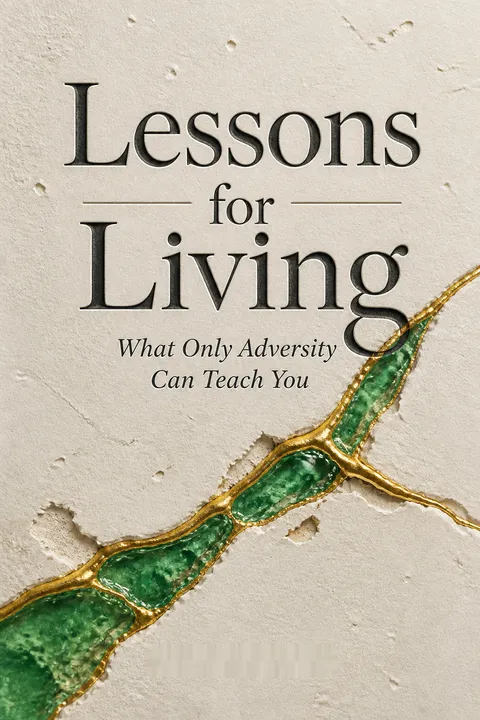


Key Takeaways
Treat hardship as part of life, then ask what capacity it can train
Pain is not proof of failure. Stutz challenges the fantasy that a good life should be painless, predictable, and easy. Loss, uncertainty, and effort belong to everyone, not just people who have made the wrong choices. His “philosophy of events” means treating even unwelcome experiences as expected parts of life, not evidence that something is uniquely wrong with you.
Turn events into practice. Stutz advises naming an adverse event and asking what ability it could help develop. Rejection might call for greater emotional independence; a difficult decision might train tolerance for uncertainty. He describes faith as an ongoing trust that life can contain meaning, built through action rather than proof. The point is not to welcome pain, but to meet it with a prepared response.
This frame can replace shame with agency: an obstacle becomes something to respond to, rather than a verdict on personal worth. Its value depends on keeping interpretation separate from justification. A painful event may reveal a skill to practice without being deserved, beneficial, or part of a cosmic plan. That distinction matters especially in trauma or injustice, where meaning-making should support recovery, not pressure people to praise what harmed them.
Train attention on what is real before worry writes the whole story
Notice the inner adversary. Stutz calls the force that intensifies negative thinking “Part X.” In his model, it traps attention in grievance, fear, and the wish to feel exceptional or exempt from ordinary difficulty. A successful professor in the book relied on applause, alcohol, and romance to lift his mood, then sank when those sources disappeared. Stutz argues that external rewards cannot provide reliable emotional stability.
Return to the present. His “Grateful Flow” is a brief practice of naming ordinary things that are genuinely going well, such as a meal, a working car, or a loved one’s health. Unlike hopeful fantasies about the future, this exercise directs attention to current facts. Stutz also acknowledges that medication can help; these attention practices should not be treated as a replacement for appropriate clinical care.
The useful distinction here is between optimism about an imagined future and attention to resources already present. That resembles a practical form of attentional training: attention is redirected without requiring every fear to be disproved. Still, depression is not simply a failure to take responsibility for one’s mood. Biological, social, and psychological factors can all matter, so gratitude is best understood as a possible coping practice, not a diagnosis or cure.
Make restraint an investment in energy, not a punishment
See the short-term bargain. Stutz calls the route to instant pleasure the “lower channel.” It includes obvious habits such as overeating or drug use, but also impulsive anger, complaining, and trying to win affection by overextending yourself. A photographer’s representative in the book used food, marijuana, and emotional venting to get through exhausting days. Those quick rewards, Stutz argues, depleted the energy he needed to change his work and relationships.
Redirect the impulse. The “higher channel” names the energy Stutz believes becomes available when a person interrupts an urge and turns toward purposeful action or service. He suggests noticing the discomfort of craving, seeking support, and picturing oneself acting in a useful way. Restraint then becomes more than saying no: it is practice in choosing a longer-term direction over an immediate payoff.
This model makes self-control feel less like moral purity and more like redirecting attention and effort. That can be motivating because it gives abstaining a positive purpose. The limit is that “bad habits” are not all maintained by the same mechanism. Addiction, stress, and compulsive behavior can require medical or social support as well as willpower. The book’s exercise can complement those supports, but should not be mistaken for a universal treatment.
Act to discover the next step; thought cannot supply missing experience
Let action gather evidence. Stutz recounts how Harold Benjamin helped create a free support organization for people with serious illnesses. While therapists debated the risks of early ideas, Benjamin made calls and arranged practical next steps. The experience taught Stutz that action can reveal information that speculation cannot. He calls this “intelligence of the will ”: the capacity to learn through doing, not merely to execute a decision already made.
Choose, then adjust. Because the future cannot be fully known, decisions are better guided by values than by an impossible search for complete certainty. Stutz recommends acting on an instinct, observing the consequences, and treating an unwanted result as information for the next attempt. He makes a similar case for dreams: their images may prompt reflection on an attitude or assumption, but they are material to examine, not automatic instructions.
The strongest idea is that a decision can function as an experiment. It reduces the burden of choosing perfectly and creates feedback from the world, a principle useful in creative work and organizational learning. Action is not automatically wise, however. Small, reversible tests are often safer than dramatic leaps, and reflection still matters. Dreams can also be useful prompts without being treated as reliable messages from a supernatural source.
Give time a rhythm by keeping promises small and exact
Make time tangible. Stutz argues that devices promising efficiency can leave people more distracted and less present. He offers three ways to restore a sense of rhythm: finish a chosen activity without letting every impulse interrupt it, keep commitments at the time promised, and practice patience with results that need time to develop. A promise to begin at a particular hour matters because it connects a past intention to a present action.
Build a daily structure. A short nightly review can help identify what was avoided and set specific commitments for the next day. This practice supports what Stutz calls a “higher motivational system,” in which meaning comes from keeping a chosen plan rather than waiting for stress, praise, or excitement to provide energy. The scale can be modest: routine meals, exercise, focused work, or time with family.
Rituals make intentions visible and reduce the daily cost of deciding what to do next. The book’s emphasis on exact commitments is useful when a vague plan keeps slipping. Yet structure should serve human needs, not become another standard for self-punishment. A routine that allows adaptation is more durable than one that treats every disruption as failure, especially when work, caregiving, or health makes time unpredictable.
Build love through daily effort, not the fantasy of a perfect partner
Beware of magical expectations. Stutz tells of an actor who gained fame and began searching for a more impressive wife, imagining a new partner could deliver a more exciting life. He eventually saw that he had nearly lost a loving marriage while pursuing an ideal that no real person could satisfy. Stutz’s alternative is to treat love as a continuing practice, not proof that one has found a flawless match.
Look for mutual work. He describes a lasting “higher bond” as a relationship strengthened by repeated acts of connection. Three useful signs are initiative, meaning each person reaches out; sacrifice, meaning each sometimes gives up a preference for the relationship; and empathy, meaning each makes an effort to understand the other. These qualities offer more practical evidence of partnership than a surge of early passion.
This account usefully shifts attention from chemistry alone to observable behavior. Initiative, reciprocity, and empathy can be discussed and assessed, while idealized fantasies are difficult to test. The framework should not turn relationships into a scorecard: people differ in how they express care, and sacrifice should be mutual rather than demanded by one partner. Commitment also cannot make an unsafe or persistently harmful relationship healthy.
Use conflict to practice self-command without surrendering your boundaries
Conflict can deepen contact. As a young karate student, Stutz feared the men at a rough Bronx gym who sparred hard. One of them later helped him when his car broke down, revealing warmth beneath the fighting. Stutz uses the story to argue that closeness requires vulnerability, and vulnerability can bring disagreement. He calls the space where people risk that contact the “zone of engagement.”
Change your response. His “active love” practice means deliberately directing care toward someone who has provoked anger. In his anger exercise, a person first acknowledges the anger, then creates distance from it, and finally tries to replace hostility with a deliberate act of goodwill. The goal is not to approve of the other person or abandon a boundary. It is to avoid letting anger dictate every next move.
The distinction between goodwill and approval is essential. A person can refuse mistreatment while avoiding the exhausting work of rehearsing revenge. That may preserve attention for a constructive response. The book’s language of love is less suitable if it implies reconciliation or continued exposure to danger. In abusive situations, distance, outside help, and clear protection may be more important than emotional openness.
Choose a path before every open option becomes another form of paralysis
Options have a cost. A patient of Stutz dreamed of retiring to a private island, free from work and obligations. When he fell in love, the possibility of marriage and family felt like a trap. Stutz argues that the deeper trap was his belief that freedom meant keeping every option open and avoiding all demands. Time makes that impossible: choosing one direction necessarily means not choosing others.
Accept the loss in choosing. Stutz links commitment with the ability to tolerate what a decision leaves behind. He also offers a visualization for loss: imagine releasing an object to which you are clinging, and picture the act as freeing rather than annihilating. The exercise is meant to loosen obsession, not to make goals unimportant. A person can pursue an outcome seriously while accepting that it is not fully under their control.
This is a strong antidote to the idea that more choice always produces more freedom. Commitment converts possibility into lived experience, though it also narrows alternatives. The useful question is not whether a choice has costs, but whether those costs are worth bearing for what matters. Nonattachment should not mean indifference to preventable loss; it can instead keep a valued goal from becoming the sole measure of a life.
Treat insecurity as material for self-acceptance, not a reason to hide
Meet the disowned self. Stutz uses Jung’s term “shadow” for the traits and experiences a person feels ashamed of and tries to conceal. A mother seeking elite-school status for her child assumed the other parents were secure and superior. She later learned they had felt intimidated by her. The encounter helped her see that insecurity was not proof she belonged to an inferior class; it was part of being human.
Respond without self-attack. Stutz suggests picturing the younger, vulnerable self who felt rejected, then offering that image care rather than contempt. This is not a claim that every behavior should be excused. It is a way to face weakness without adding humiliation to it. He connects the same practice to envy and harsh judgment: both can loosen when a person stops treating another life as proof that their own is inadequate.
Self-acceptance is most useful when it makes honest effort safer. Shame often encourages concealment, while a less punitive response can make it easier to acknowledge a mistake and repair it. The shadow is a metaphor, not a clinical explanation for every insecurity. It also helps to distinguish accepting a feeling from accepting harmful conduct: a person can treat themselves with compassion while changing what they do.
Give children a dependable family, not a frantic ticket to status
Model values at home. Stutz warns that anxious competition over schools and status can teach children that outside approval matters more than family life. He names love, spirituality, and discipline as foundations of a secure home. In practice, these mean expressing care, making room for awe or reflection, and keeping predictable routines and boundaries. Children learn these values less from speeches than from seeing adults live them, especially under stress.
Lead with credible authority. Stutz argues that children need adults who can set limits, and teenagers need to see adults practicing self-restraint and continuing to grow. He also urges adults to seek the perspective of older relatives, while recognizing that not every elder is a sound guide. The larger point is to build a family with both connection and individual responsibility, rather than making children carry adult decisions or adult anxieties.
The account is strongest when authority means reliable care, not control for its own sake. Predictable limits can reduce uncertainty for children, while affection makes those limits easier to trust. Its spiritual language may not fit every household, but the underlying practices can be expressed through shared values, reflection, and service. Parents also need to adapt structure to a child’s temperament and circumstances rather than treating obedience as the sole measure of growth.
Analysis
Stutz’s book is a collection of compact essays, each built around a recognizable trouble: depression, envy, anger, indecision, family guilt, or the fear of losing what matters. The stories of patients give abstract claims a human scale, while recurring ideas link the essays into a single argument. Life cannot be made safe by finding the perfect partner, career, mood, or decision. A person becomes more capable by practicing how to meet what cannot be controlled.
The book’s distinctive contribution is its insistence that inner change must be enacted in the moment of difficulty. Gratitude is a response to spiraling worry; restraint is a response to craving; active love is a response to anger; routine is a response to drift. These are not merely beliefs to endorse. They are small procedures intended to interrupt a familiar reaction and create a different one. That gives the book unusual practical coherence across topics that might otherwise seem unrelated.
Its spiritual account of higher forces is also its central vulnerability. Readers can understand the exercises as attention training, behavioral rehearsal, or meaning-making without accepting that the universe intentionally sends lessons. The metaphor may deepen commitment for some, but it can overstate what is knowable. Similarly, the claim that people can take responsibility for their moods needs care: agency matters, but illness, trauma, poverty, and social conditions can sharply limit it. Stutz does acknowledge the potential value of medication, though his clinical anecdotes can sound more certain than the evidence presented here supports.
The most useful reading is therefore neither literal obedience nor dismissal. Keep the practices that help interrupt unproductive habits, test them against lived results, and retain the book’s best distinction: accepting a difficulty does not mean approving of it. The aim is to recover enough agency to act, connect, and keep moving without demanding guarantees first.
Review Summary
Lessons for Living receives mostly positive reviews for its practical advice on overcoming adversity and finding meaning in life's challenges. Readers appreciate Stutz's direct writing style, relatable examples, and actionable tools. Many find the book insightful and transformative, praising its emphasis on spirituality and personal growth. Some critics note that certain topics may not resonate with all readers, and a few find the content repetitive or lacking scientific backing. Overall, the book is seen as a valuable resource for those seeking self-improvement and resilience.
People Also Read






Glossary
Philosophy of events
A meaning-making approachStutz’s approach to treating life events, including painful ones, as expected parts of being alive rather than proof of personal failure. It asks a person to name an adverse event and consider what capacity or spiritual skill responding to it might develop. The approach emphasizes learning from events, not predicting or controlling them.
Part X
An inner force of resistanceStutz’s name for an adversarial part of the psyche that he believes pushes people toward stagnation, dissatisfaction, impulsive gratification, and negative thinking. He describes it as though it has its own agenda, while using it as a practical way to identify thoughts and behaviors that obstruct growth.
Grateful Flow
Present-focused gratitude practiceA brief exercise Stutz uses to interrupt spiraling negative thought. A person mentally names specific things they appreciate in the present, including ordinary conditions often taken for granted. The exercise differs from imagining a better future because it directs attention toward what is already real and available.
lower channel
Route to immediate gratificationStutz’s term for the impulsive pursuit of quick rewards, including substances, food, anger, or other actions that promise immediate relief. He argues that repeatedly following this route can weaken a person’s capacity for sustained effort and make short-term pleasure feel necessary.
higher channel
Energy redirected toward purposeIn Stutz’s model, energy becomes available when a person resists an immediate impulse and redirects attention toward meaningful action or service. He presents this as the constructive counterpart to the lower channel. The concept is spiritual in his account, but can also be read as a metaphor for practicing delayed gratification and purposeful behavior.
intelligence of the will
Learning through actionStutz’s idea that the will does more than provide energy to act. Taking action also reveals information that cannot be gained through thought alone, because the world responds to what a person does. The concept favors practical experiments, observation, and adjustment over waiting for complete certainty.
higher bond
A relationship built through workStutz’s term for the connection created when partners repeatedly prioritize the relationship alongside their individual needs. It depends on initiative, some willingness to sacrifice personal preferences, and empathy. The bond is not guaranteed by passion or by selecting a supposedly perfect partner; it has to be maintained through ongoing effort.
active love
Deliberately generated goodwillA practice of intentionally directing care toward another person, especially when anger, resentment, or envy makes affection difficult. Stutz describes imagining love as an energy that can be gathered and directed. The exercise is meant to change the practitioner’s state, not to signal approval of another person’s behavior or require reconciliation.
zone of engagement
Vulnerable interpersonal contactStutz’s term for the relational space in which people become vulnerable enough to encounter disagreement, fear, and potential conflict. He argues that avoiding all conflict can also prevent genuine closeness. In this view, conflict can deepen connection when people manage their reactions rather than retreating into blame or hostility.
shadow
Disowned parts of the selfA Jungian term Stutz uses for traits, memories, or perceived flaws a person rejects and tries to hide. He treats the shadow not simply as an inferior self, but as a reminder of human vulnerability and a source of material for self-acceptance. In practice, he encourages people to acknowledge this part rather than attack it.
higher motivational system
Motivation based on meaningStutz’s name for motivation generated internally through meaningful commitments and planned action, rather than through fear, conflict, praise, or other external stimulation. A nightly review helps a person plan the following day and choose an avoided task. The aim is steady effort that does not depend on immediate excitement or reward.
PRIM
Signs of Part X activityStutz’s shorthand for four patterns he associates with Part X: primitive attachment to familiar routines, belief in a magical reward that will bring lasting fulfillment, fixation on injury or unfairness, and a sense that one must act on an impulse. The acronym is intended as a quick way to notice when a person feels stuck or driven by reaction.
FAQ
What's "Lessons for Living: What Only Adversity Can Teach You" about?
- Author's Background: The book is written by Phil Stutz, a psychiatrist known for developing a new kind of psychotherapy called the Tools, which focuses on practical methods for personal growth.
- Core Theme: It explores how adversity can be a powerful teacher, offering lessons that can lead to personal transformation and resilience.
- Structure: The book is a collection of essays originally published in a newsletter, each addressing common life challenges like depression, anger, and conflict.
- Purpose: Stutz aims to provide readers with insights and tools to navigate life's difficulties, emphasizing the importance of embracing challenges as opportunities for growth.
Why should I read "Lessons for Living: What Only Adversity Can Teach You"?
- Practical Tools: The book offers actionable tools and exercises designed to help readers overcome personal challenges and improve their mental well-being.
- Unique Perspective: Stutz's approach is rooted in his extensive experience as a psychiatrist, offering a blend of psychological insights and spiritual wisdom.
- Relevance: The essays address contemporary issues exacerbated by modern life, such as social media's impact on mental health and the sense of isolation many feel today.
- Empowerment: Readers are encouraged to take control of their lives by embracing adversity, leading to a more fulfilling and resilient existence.
What are the key takeaways of "Lessons for Living: What Only Adversity Can Teach You"?
- Adversity as a Teacher: Embrace challenges as opportunities for growth rather than obstacles to avoid.
- The Tools: Utilize specific techniques like "The Grateful Flow" and "Active Love" to transform negative emotions and improve mental health.
- Inner Strength: Develop emotional independence and resilience by focusing on internal rather than external validation.
- Spiritual Connection: Recognize the importance of connecting with higher forces to find meaning and purpose in life.
What is the "Tools" method mentioned in "Lessons for Living"?
- Definition: The Tools are a set of practical exercises designed to help individuals overcome psychological barriers and achieve personal growth.
- Components: They include techniques like "The Grateful Flow" for combating negative thinking and "Active Love" for resolving conflict.
- Application: The Tools emphasize forward motion, encouraging individuals to take proactive steps toward their goals rather than dwelling on past issues.
- Higher Forces: The method incorporates the idea of connecting with higher forces to access wisdom and strength beyond one's immediate circumstances.
How does Phil Stutz suggest dealing with negative thinking in "Lessons for Living"?
- Identify Part X: Recognize the inner adversary, Part X, which generates negative thoughts and keeps you from experiencing the positive aspects of life.
- Gratefulness: Use "The Grateful Flow" to replace negative thoughts with gratitude, focusing on the positive aspects of your current reality.
- Dynamic Process: Understand that negative thinking is a habit that can be changed by consistently practicing gratefulness and other positive mental habits.
- Connection to Reality: By focusing on gratitude, you align yourself with the dynamic, positive nature of the universe, reducing the power of negative thinking.
What advice does Phil Stutz give on handling anger in "Lessons for Living"?
- Positive Potential: Recognize that anger can be a force for individuality and self-assertion if processed constructively.
- Three-Step Process: Use self-assertion to intensify the emotion, self-control to dissolve it, and active love to transform it into positive energy.
- Avoid Victim Mentality: Understand that feeling victimized by unfair treatment leads to a cycle of rage and stagnation.
- Transformative Power: By processing anger constructively, you can strengthen your sense of self and move forward in life.
How does "Lessons for Living" address the concept of time?
- Sacred Nature: Time is a sacred gift that should be treated with respect and awe, not as a commodity to be controlled.
- Ritual and Rhythm: Incorporate rituals and a sense of rhythm into daily life to restore time's sacred status and create meaning.
- Submission and Patience: Develop a disciplined relationship with time through submission, commitment, and patience, recognizing that creation takes time.
- Family Dynamics: Respect for time within a family structure fosters peace and coherence, allowing higher forces to enter and strengthen relationships.
What does Phil Stutz mean by "Real Freedom" in "Lessons for Living"?
- Inner Authority: Real freedom comes from developing inner authority and discipline, allowing you to live independently of external validation.
- Forward Motion: Continuously seek new experiences and deeper self-awareness to maintain spiritual and personal growth.
- Higher Values: Live by higher values that benefit others, not just yourself, to inspire respect and create meaningful connections.
- Spiritual Adulthood: Achieve spiritual adulthood by expressing your individuality and holding your ground even when misunderstood or disliked.
How does "Lessons for Living" suggest overcoming envy?
- Path of Meaning: Focus on your unique path and find meaning in your experiences, rather than coveting what others have.
- Illusion of Scarcity: Recognize that envy stems from the illusion that others live by more favorable rules, which is not true.
- Active Love: Use active love to send positive energy to those you envy, accepting their path and freeing yourself from obsession.
- Higher World: By practicing love and acceptance, you enter a higher world of abundance and creativity, moving beyond envy.
What role do dreams play in "Lessons for Living"?
- Wisdom Source: Dreams are a source of wisdom, offering guidance and correction to your attitude and life path.
- Symbolism and Archetypes: Dreams use symbols and archetypes to convey messages, connecting you to the collective unconscious.
- Inner Reality: Dreams reveal inner truths and hidden parts of yourself, providing insights into your personal growth.
- Emotional Education: The structure of dreams offers an emotional education, helping you navigate life's challenges with greater understanding.
How does Phil Stutz define "Emotional Independence" in "Lessons for Living"?
- Self-Reliance: Emotional independence means having a life and identity that don't depend on others for validation or fulfillment.
- Handling Emotions: Learn to manage negative emotions on your own, rather than relying on others to alleviate them.
- Personal Habits: Maintain personal discipline and structure to create a stable foundation for your identity.
- Outside Interests: Develop interests and activities outside of relationships to ensure personal growth and independence.
What are the best quotes from "Lessons for Living" and what do they mean?
- "Life is a process." This quote emphasizes that life is dynamic and ever-changing, requiring continuous effort and adaptation.
- "Adverse events are supposed to happen." Stutz suggests that challenges are a natural part of life and offer opportunities for growth and learning.
- "The higher bond is a living thing." This highlights the importance of nurturing relationships through ongoing effort and commitment.
- "Real freedom is the freedom from illusion." True freedom comes from accepting reality and letting go of fantasies about a perfect, stress-free life.
About the Author

Download PDF
Download EPUB
.epub digital book format is ideal for reading ebooks on phones, tablets, and e-readers.








