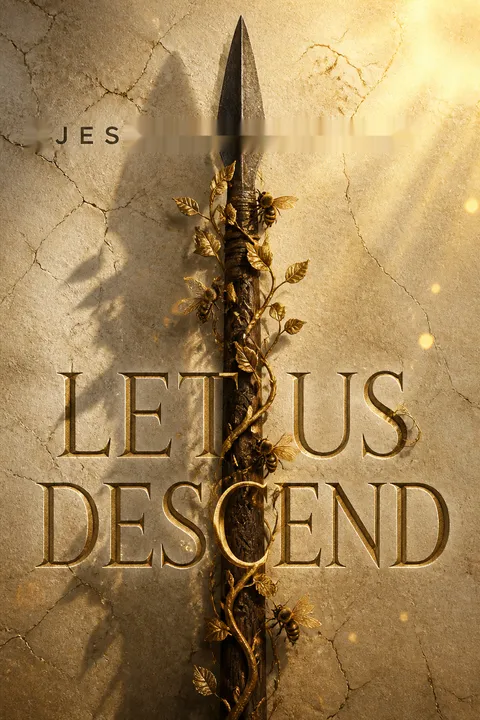


Plot Summary
The Ivory Awl
Annis grows up enslaved on her white father’s Carolina plantation, where her mother, Sasha, secretly trains her with staffs inherited from Sasha’s mother, Aza, a captured African warrior. The lessons give Annis a history and a means of defending herself, even as she works in the house beside her white half sisters.
When her father orders Annis to remove his boots, she recognizes the threat in his attention and escapes to Sasha. Sasha gives her the ivory awl passed down from Aza, insisting that Annis herself must be her strongest weapon. Months later, the Georgia Man arrives to sell enslaved people south. Annis clings to Sasha, but her father has chosen Sasha for sale, and the traders wrench mother and daughter apart.
The training scene turns inheritance into something bodily: Annis receives no legal protection, education, or claim to family, but she learns how to stand, strike, and survive. The ivory awl condenses a longer history of forced movement into an object carried close to the body. Sasha’s instructions are loving, yet never sentimental; survival includes knowing when to flee. The sale demonstrates the limit of that knowledge. Annis can recognize danger and still cannot stop a system that treats kinship as property. Her mother’s removal is therefore both the story’s rupture and the beginning of Annis’s search for a way to act where individual strength seems insufficient.
Warmth After Loss
After Sasha is sold, Annis retreats to the woods and stops caring for herself. Safi, a fellow house worker and the daughter of the enslaved woman Sasha replaced in the kitchen, washes and braids Annis’s hair, returning the ivory awl to its place. Their comfort grows into a secret romance. Annis takes Safi to the bee-filled clearing, hoping to share the tender world she once had with her mother.
But Annis’s father catches them together in his bedroom. Two days later, he sells both young women. Bound into a coffle, they are marched toward New Orleans under armed guards. Safi’s anger and Annis’s guilt travel with them; when Safi stumbles, Annis hauls her upright, unable to undo the danger that her own stolen happiness helped bring upon them.
Safi’s care gives Annis a route back into bodily life: washing, touch, and desire interrupt the numbness that followed Sasha’s sale. But intimacy has no safe private boundary on the plantation. The father’s surveillance converts their affection into evidence of disobedience, and his sale of both women shows how enslavers punish even small acts of self-possession. Annis’s guilt is psychologically credible because she mistakes the timing of the punishment for its cause. The novel instead locates responsibility in the owner’s power to sell. Their love does not rescue them, but it changes what Annis has to lose and what she later remembers as tenderness.
Safi Slips the Rope
During the march, Safi is taken from the line and sexually assaulted by the Georgia Man. When he ties her back carelessly, she works her wrists free. Annis urges her to escape alone, knowing she cannot loosen her own bonds, and watches Safi disappear into the woods. That night, a voice calls Annis by her birth name, Arese.
Aza appears in storm clouds and lightning, identifying herself as a spirit summoned by Annis’s grief. At dawn the traders discover Safi is gone and punish the remaining women, but Annis conceals what she knows. A new captive takes Safi’s place in the rope. Annis keeps walking with Safi’s blood on her hand and the first knowledge that the unseen world may answer when she calls.
Safi’s escape is a victory with an immediate cost: she survives by leaving Annis behind, while Annis must choose between love and the possibility of freedom for one person. The decision refuses a simple romantic rescue. Annis cannot free Safi without endangering her, and she cannot follow without remaining bound. Aza’s appearance then complicates the idea of help. The spirit answers, but not as a human rescuer who can simply break the rope. By naming Annis Arese, Aza recognizes an identity the plantation has diminished, yet her power and motives remain uncertain. The episode establishes a recurring tension between being seen and being saved.
The River Takes a Man
The march grinds south through rain, swollen rivers, and a swamp where captive Phyllis tells Annis about people who have escaped into hidden communities. At a broad crossing, chained men are dragged through the current; a small gardener from Annis’s former plantation drowns.
Annis survives another crossing and begins to understand that rivers possess voices as well as force. Aza tells her that she once answered Annis’s grandmother, Mama Aza, aboard a slave ship, halting a storm that threatened the captives.
She also reveals that Sasha called for her during her own ordeal. When the coffle reaches New Orleans, Aza names the city as a place crowded with suffering and supplication. The traders deliver Annis and the other captives to a slave pen, where the journey becomes a market.
The river crossing makes the violence of the trade literal: the captives’ bonds turn water into a lethal obstacle, while the traders treat deaths as an inconvenience. Annis’s attempt to help others marks a small shift from private survival toward shared responsibility, but solidarity cannot guarantee safety. The revelations about Mama Aza and Sasha widen the story’s spiritual scale without making the spirits straightforward allies. Aza has witnessed generations of harm and sometimes intervened, yet her presence has not prevented the family’s enslavement. New Orleans gathers that contradiction into a city: a place where many lives, beliefs, and forms of suffering meet, while the slave market converts people into saleable categories.
Measured for Sale
In the New Orleans pen, a doctor examines Annis and assesses her body for sale, while a free brown woman records his findings without meeting her eyes. The seller classifies Annis as a sexual commodity.
She later refuses to let a prospective buyer define her that way, naming the domestic work and plant knowledge she can offer instead. The man withdraws, and the seller withholds her food as punishment. Aza eventually explains that she consulted a farseeing spirit, who identified a small white woman as Annis’s likeliest route out of the city.
When that buyer arrives and asks whether Annis can launder, Annis answers truthfully about her skills. She accepts the woman’s purchase, leaving the pen with three other enslaved people and the one-armed servant Emil.
The sale process reduces people to bodily measurements and imagined uses, making the doctor’s clinical language part of the violence rather than a neutral description. Annis’s response is strategic: she asserts skills to refuse the sexual role assigned to her, although that assertion risks punishment and does not make her free. Her decision to accept the small woman’s offer is not a sudden surrender of agency. It is a choice under constraint, guided by Aza’s prediction but tested against Annis’s own distrust. The buyer’s apparent protection is ambiguous, since she too purchases people. The scene asks what agency can mean when every available option is structured by ownership.
The House Beyond Cane
The woman takes Annis from the city to her isolated Louisiana plantation, where cane fields, a refinery, and crowded work buildings surround a grand house. Annis meets Esther, a house worker who speaks for Mary, a quiet young woman with a talent for killing snakes, and Cora, the cook.
The estate’s comforts belong to its owners; its workers are hungry and closely watched. Annis learns that the woman’s husband is expected, and the household prepares for his return. Before he arrives, overseers punish Emil for refusing an order by locking him in an underground hole.
Annis secretly pours water through the grate. After the husband returns and grabs Annis, the mistress orders her thrown into the same pit. The trap she witnessed from above becomes the place where she must fight to remain alive.
The plantation’s grand architecture masks a work system that consumes bodies across fields, kitchen, and refinery. Annis’s arrival does not deliver her from slavery; it relocates her into a new economy of surveillance and extraction. The relationships she begins to form with Esther, Mary, Cora, and Emil offer practical forms of care, from shared food to water slipped through a grate. Emil’s imprisonment foreshadows Annis’s own confinement, but her act of mercy also marks a distinction between the enslaved people and those who control the hole. The husband’s assault and the mistress’s retaliation reveal that sexual threat and punishment can operate within the house as readily as in the fields.
The Earth Answers Back
Inside the pit, Annis calls for Aza and her mother, but neither appears. Instead, the earth speaks as a collective presence that takes what dies and transforms it into new life. It tells Annis that her blood, sweat, and tears have already fed the ground, and it urges her to recognize both its taking and its giving.
After the hands haul her out, Annis cuts off her hair and offers it at a cypress tree, asking the earth to restore what she cannot remember. The offering unlocks the buried memory of Sasha’s earlier escape attempt: slave patrollers caught them, injured Sasha, and returned them to the plantation. Esther then tells Annis of maroon communities in the surrounding swamps, including her own family’s history of flight.
The earth’s voice differs sharply from Aza’s: it does not promise to prevent suffering, but describes transformation as a cycle that includes both loss and renewal. Annis’s hair offering turns memory into an exchange, not a passive recovery. She deliberately gives something of herself and receives a painful truth about Sasha’s past. That memory corrects Annis’s understanding of her mother’s life: Sasha had tried to escape with her, and their return was caused by capture, not by a lack of courage. Esther’s account of maroon settlements makes freedom imaginable but precarious. Survival here depends on knowledge of land, collective memory, and the willingness to face what has been buried.
Medicine and the Fever
As the husband develops yellow fever, the mistress orders Annis to find medicine. Annis searches the woods and meets Bastian, Esther’s brother, who has escaped to the borderlands and brings meat for his sister. She gathers a healing mushroom and prepares a tonic, resisting the temptation to use a poisonous lookalike against the man.
The mistress slaps Annis when the medicine spills, then gives the remaining dose to her husband. Annis and the household workers tend him, but he worsens and begins bleeding from his eyes, mouth, and other openings. He dies in the night. The mistress grieves beside his body and shuts herself away, while harvest season approaches and the plantation’s workers wait for her authority to begin cutting the cane.
Annis’s choice between healing and poisoning is a moral test shaped by power, not a simple contrast between goodness and revenge. She refuses to become the instrument of a system that could retaliate against everyone around her, while still using knowledge inherited from Sasha to preserve life. The mistress’s slap makes clear that her vulnerability in grief does not erase her capacity for violence. The death of the husband also reveals how little control the estate’s owners have over disease, even as they control the labor and movement of others. The approaching harvest turns private bereavement into an economic interruption: the plantation must resume its cycle whether its people are ready or not.
The Harvest Breaks
The mistress eventually orders the cane harvest, and Annis works until the fields and refinery have stripped her strength. When storm debris blocks the river, she joins Esther and Mary in clearing branches. Mary ventures too far, falls into the current, and Esther leaps after her. The river carries both women around a bend before Annis can reach them.
At the same time, Annis experiences the Water as a vast presence that holds and recognizes her. Back at the house, the grieving mistress attacks Annis with a fire poker after accusing her of taking what belongs to her. The blow sends Annis into the underground hole again. She wakes injured, trapped, and surrounded by rainwater, with the plantation’s pursuers searching above.
The river’s violence repeats earlier crossings, but this time the danger arises during an act of labor and mutual aid rather than a forced march. Esther’s leap for Mary demonstrates how care can become risk without guaranteeing rescue; their fate remains unknown. Annis’s encounter with the Water is different from her exchanges with Aza or the earth: it offers recognition without bargaining for her obedience. Yet no spiritual encounter prevents the mistress’s assault. The return to the hole compresses the novel’s central pressures into one crisis: the body is exhausted, the social world is violent, and supernatural aid has limits. Annis must decide what to do with the brief sense of being held.
Annis Breaks the Grate
Trapped below ground, Annis first considers accepting the earth’s offer of a hidden life beneath the plantation. She rejects a survival that would keep her buried and climbs the muddy walls, using a loose stake to widen the gap around the locked grate. When the opening is too small, she takes Mama Aza’s ivory awl from her hair and works the lock until it yields.
Annis forces herself into the storm above just before the searchers return. At the riverbank, she lashes floating branches together with her shirt, but the current will not release the makeshift raft. She calls to Aza, who pushes the tangled wood free. As the dogs and men gather on shore, Annis’s raft carries her into the dark water.
The escape gathers the book’s earlier objects and teachings into action: the awl passed down through generations becomes a tool, while Annis’s body supplies the leverage and judgment needed to use it. The earth offers refuge, but Annis distinguishes concealment from freedom; she refuses to let survival mean permanent burial. Aza’s help matters, yet it comes only after Annis has made the choice and done much of the labor herself. The raft is neither engineered nor secure. It is a fragile construction made from what the river has left behind, embodying an escape that depends on improvisation, inheritance, and risk rather than on a clean break from danger.
The Mothers on Water
As the raft drifts downriver, Annis hears Mama Aza recount her own survival aboard the slave ship and her decision to keep living, even when the crossing made death seem preferable. Sasha appears beside her, and Annis feels the love that has endured across their separation. The two women’s presence steadies her as the dogs and pursuers fall behind.
Aza urges Annis to stop in New Orleans, where the spirit’s worshippers might shelter her. Annis refuses that refuge and asks to be carried beyond the city, toward a swamp thick enough to hide her. Aza guides her through the city’s crowded waterways, past other spirits and enslaved people, then pushes her raft toward a remote lake and a north-flowing river.
The visions do not erase the violence that formed these women; they give Annis a way to understand survival as an active practice rather than a gift granted by a spirit. Mama Aza’s account restores her from ancestral symbol to a person who repeatedly chose to continue. Sasha’s presence offers emotional continuity without undoing their separation. Annis’s refusal of New Orleans is also a refusal to exchange one dependency for another, even when Aza offers the city as protection. She accepts guidance but chooses the destination. In this section, ancestral love becomes a resource for self-determination rather than a command to repeat the past.
A Clearing in the Swamp
Near dawn, Annis’s raft breaks apart at the edge of a vast lake, leaving her clinging to two logs. She follows a lone bee through mud, vines, and tangled swamp growth until it leads her to a clearing containing the remains of a burned house. Through her new ability to see into the past, she learns that a hidden plantation failed after yellow fever killed its white owner; the people who survived burned the unfinished mansion and disappeared into the swamp.
Annis cleans the abandoned cabin, gathers food, makes a fire, and begins shaping a life there. Aza urges her to return to the city and join worshippers who call on the storm spirit. Annis declines, choosing the difficult solitude of the place she found.
The bee links Annis’s childhood knowledge of care and observation to a new form of navigation. It does not carry her to a ready-made sanctuary; it leads her to a place she must interpret, clean, and make habitable. The ruin’s history reverses the plantation’s usual promise of permanence: the owner’s grand construction failed, while the people who fled left behind the possibility of another life. Annis’s choice of solitude is not a fantasy of effortless independence. Hunger, fear, and isolation remain. But the decision marks a change in her relationship to Aza: Annis can accept help without agreeing that the spirit owns her future.
A Life of Her Own
In the swamp, Annis gathers food, repairs the cabin, stores provisions, and learns the rhythms of a life no overseer directs. Loneliness returns, and she considers joining Aza’s followers, but the bees settle over her one night, restoring a bodily memory of her mother’s care.
Annis realizes she is pregnant by Bastian, whom she met while he lived free in the borderlands. When Aza returns and asks her to build a raft, Annis refuses to leave.
Aza claims Annis would have died without her, but Annis names the people and powers that helped her, then insists that she brought herself to this refuge. She accepts that Aza aided her while rejecting the spirit’s demand for a daughter’s devotion. Alone under the stars, Annis begins imagining a future for her child.
Annis’s pregnancy gives the ending a future tense, but the novel does not treat motherhood as automatic healing or a simple replacement for the mother she lost. Her decision to remain in the swamp rests on accumulated skills, remembered care, and a willingness to live with uncertainty. The bees return as a form of comfort that does not require worship or possession. Aza’s final claim exposes the difference between assistance and ownership: she has helped Annis, but interprets that help as a debt of love. Annis can acknowledge dependence without surrendering authorship. Her answer completes the movement from being sold and carried by others toward choosing where, and how, to live.
Analysis
Let Us Descend places the machinery of slavery beside a spiritual world that neither cancels nor neatly explains its violence. Annis is sold, examined, marched, and forced to labor; each institution makes the human body legible as property. Against that imposed accounting, she learns to read mushrooms, rivers, weather, and the gestures of other people. Attention becomes a survival practice, but also a form of recognition: Annis sees the fear beneath Esther’s silence, the intelligence others overlook in Mary, and the need concealed inside her own grief.
The novel’s spirits do not offer a simple moral hierarchy. Aza protects Annis at crucial moments, yet wants devotion and misunderstands how help can become a claim. The river promises escape but also consumes. The earth receives suffering and transforms it, but transformation does not restore those who are lost. The Water’s brief recognition matters because it is not presented as payment for obedience. Annis’s spiritual awakening is therefore also an ethical education in dependence: accepting aid is not the same as belonging to the helper.
Ancestral inheritance is practical as well as symbolic. Sasha’s fighting lessons, Mama Aza’s awl, and the family’s knowledge of plants survive because women pass them hand to hand. Their inheritance does not make Annis invulnerable, but it enables choices that enslavement is designed to foreclose. The ending refuses a conventional triumph. Annis is isolated, pregnant, and still vulnerable, yet she has reached a place she chose and rejects Aza’s attempt to define that choice as ownership. Her freedom is not safety guaranteed by the world; it is the difficult beginning of a life she can shape.
Review Summary
Let Us Descend is a powerful, haunting novel about slavery that blends brutal realism with magical elements. Ward's lyrical prose and vivid storytelling captivate readers, though some found the magical realism excessive. The book follows Annis, a young enslaved woman, on a harrowing journey from the Carolinas to Louisiana. Many praised Ward's ability to convey the horrors of slavery while maintaining hope and resilience. While some readers struggled with the pacing and supernatural aspects, most agreed that Ward's writing is exceptional and the story deeply impactful.
People Also Read









Characters
Annis
The self-forging daughterAnnis is the daughter of Sasha, an enslaved woman, and a white plantation owner. Raised to work in the house, she learns from Sasha to fight, forage, swim, and read danger in people’s movements. Her curiosity and attention to the natural world are forms of intelligence that the plantation cannot formally recognize. Annis is also hungry for tenderness, which shapes her attachment to Safi and her later connections with other workers. She can be impulsive and quick to blame herself, especially when people she loves are harmed. Yet her capacity to observe, adapt, and make difficult choices grows alongside her understanding that accepting help does not require surrendering her own judgment.
Sasha
The fighting motherSasha is Annis’s mother, a skilled cook and gatherer who passes on stories, practical knowledge, and a private tradition of fighting. She was born to Mama Aza after her mother was taken from Africa and raised under the violence of the plantation. Sasha loves Annis fiercely but expresses that love through preparation: she teaches her daughter to defend herself, recognize plants, swim, and flee when necessary. Her tenderness exists beside guardedness, shaped by the knowledge that attachment can be used against the vulnerable. Sasha’s stories preserve a larger family history, allowing Annis to imagine lives and forms of courage beyond the plantation.
Mama Aza
The warrior grandmotherMama Aza is Sasha’s mother and Annis’s grandmother. Before being enslaved, she was trained among the warrior women of Dahomey; her memories reach Annis through Sasha’s stories and connect the family to a world beyond the plantation. She is remembered as disciplined, inventive, and capable of tenderness, even as she is forced to serve a king and later sold across the ocean. Mama Aza’s survival does not make her invulnerable. Her history contains grief, love, and the compromises imposed by captivity. The fighting knowledge and ivory awl she leaves to her descendants become practical inheritance, while her story gives Annis a model of endurance that is more complex than triumph.
Aza
The storm spiritAza is a spirit of storm and wind who follows Annis’s family across generations and appears when called. She can move through weather, summon rain, and perceive parts of the world hidden from human sight, but her power has limits. Aza craves the attention and devotion of people, and her desire to be regarded shapes how she offers help. She is fascinated by the family’s capacity for love and survival, yet she does not always understand the cost of her choices to them. Her presence makes spiritual aid both intimate and unsettling: she can shelter Annis while also pressing for a closeness Annis must decide whether to accept.
Safi
Annis’s tender companionSafi is an enslaved young woman who works in the plantation house with Annis. She is the daughter of a woman who takes Sasha’s place in the kitchen, and she shows care through practical gestures, such as helping Annis wash and braid her hair. Safi’s gentleness does not mean passivity; she is observant, resourceful, and capable of acting under pressure. Her growing intimacy with Annis offers both women a brief shelter from grief and surveillance. Safi’s connection to her mother is a powerful source of loyalty, while her relationship with Annis gives her a rare chance to be seen beyond her assigned labor.
Phyllis
The swampwise captivePhyllis is an enslaved woman captured in North Carolina and marched south alongside Annis. Weakened by the journey, she nevertheless shares what she knows about people who have escaped into the Great Dismal Swamp. Her stories make hidden communities imaginable to Annis before she reaches Louisiana. Phyllis is frightened by the dangers of the swamp and by the possibility of leaving family behind, which gives her knowledge a painful edge. She is not a symbol of cowardice: her hesitation reflects the genuine risks of escape and the bonds that make departure difficult.
Esther
The wary house workerEsther works in the Louisiana plantation house with Mary and later Annis. She is practical, perceptive, and protective of those she trusts, but her caution is grounded in intimate knowledge of danger rather than timidity. Esther has a brother living in the borderlands and a family history connected to maroon communities. Her memories of loss and her concern for Mary shape her decisions, while her relationship with Annis grows through shared labor, food, and small acts of trust. Esther often understands the plantation’s risks before Annis does, yet she also carries hopes that the surrounding wilderness might offer another kind of life.
Mary
The silent singerMary is a young house worker who rarely speaks, but she communicates through decisive action and, at night, through song. She kills snakes with a poker, works beside Esther, and shares a deep affection with her. The mistress dismisses her as simple, a judgment that reveals more about the mistress’s limits than Mary’s abilities. Her singing carries communal memory into a household where speech is often dangerous. Mary’s quietness is not emptiness; she observes, chooses, and expresses herself in ways that the people around her do not always expect.
Cora
The kitchen’s quiet anchorCora is the cook on the Louisiana plantation and a steady presence for the house workers. She knows the kitchen’s rhythms, stretches scarce food, and makes room for others to eat when she can. Cora’s memories of her mother and her careful attention to ingredients reveal how cooking preserves intimacy under conditions designed to exhaust it. She is neither openly defiant nor indifferent; her caution reflects the surveillance surrounding every meal and tool. To Annis, Cora offers a practical model of how skill and care can keep people alive, even when the household’s owners try to account for every resource.
Emil
The one-armed servantEmil is the plantation mistress’s one-armed servant and driver. He works alongside the enslaved people and knows the estate’s routines, land, and punishments. Though he has little power over his own conditions, he can offer information and quiet support. Esther calls him uncle, showing the kinship that grows among people who are not related by blood. His refusal to obey an order brings him into direct conflict with the overseers, and Annis’s concern for him helps establish her habit of responding to another person’s suffering even when doing so is dangerous.
Bastian
Esther’s maroon brotherBastian is Esther’s brother, living beyond the plantation in the swampy borderlands with people who have escaped enslavement. He hunts and leaves food for his sister, sustaining a connection across the line between captivity and precarious freedom. Bastian is attentive and generous, but he cannot promise that the wilderness will keep his family safe. His presence introduces Annis to a possible life outside plantation control, while his bond with Esther reveals why escape is never only an individual decision. He sees Annis’s care and watchfulness, qualities formed through hardship rather than granted by status.
The plantation mistress
The grieving ownerThe unnamed mistress owns the Louisiana estate where Annis is sold. She manages the house and its enslaved laborers with close attention to supplies, order, and productivity. Her small stature and social dependence do not soften the power she exercises over the people she owns. She can show fear and grief within her marriage, but she also uses violence to enforce her authority. Her character exposes how vulnerability in one part of life can coexist with domination in another. She is not simply a cruel caricature: her attachment to her husband is real, but it does not make her treatment of others less brutal.
The blind mother
The mistress’s sharp-eyed elderThe mistress’s blind mother lives in the plantation house and moves through its rooms by listening and touch. She is an older woman with a forceful presence, willing to challenge her daughter and remind her of the demands of the harvest. Her dependence on others does not erase her authority or her ability to read the emotional weather of the household. Through her, the novel separates physical sight from moral attention: she cannot see the room, yet she often names what others prefer to ignore.
Annis’s father
The enslaver at homeAnnis’s unnamed father is a white plantation owner who enslaves Sasha and Annis while claiming paternal connection to Annis. He rapes Sasha, subjects the household to his authority, and uses the sale of mother and daughter to manage what he considers his property. His attention toward Annis makes the danger inside the house immediate. He treats people as possessions and labor, a worldview reflected in the routines of his plantation. His role is defined less by private complexity than by the power he exercises without consequence over those whose lives he controls.
The Georgia Man
The coffle’s armed driverThe Georgia Man is the trader who buys enslaved people for transport to New Orleans. He binds women in ropes, chains men together, and uses armed guards and violence to keep the coffle moving. His horse and riding crop make his authority visible throughout the march. To Annis, he represents the trade’s direct machinery: a person who turns capture into transport and transport into sale.
Nan
A crowded cabin neighborNan shares a cabin with Sasha and Annis and raises four children under enslavement. Her harsh discipline grows from a fear of loving people she cannot protect, though her household remains part of Annis’s early community. Nan’s presence shows another way women respond to powerlessness: by rationing tenderness as carefully as food.
Camille
A mother separated from homeCamille is a fellow captive Annis meets on the journey to the Louisiana plantation. She had hoped that teaching her daughter practical skills might protect the girl, but those skills instead made Camille more useful to the enslavers. Her brief exchange with Annis gives voice to the painful limits of parental preparation under a system that can turn a gift into a means of sale.
Plot Devices
The ivory awl
Ancestral tool and inheritanceMama Aza finds the ivory awl during an elephant hunt and passes it to Sasha, who gives it to Annis as protection. Annis wears it hidden in her hair, so it remains close through sale, forced travel, and confinement. It first carries practical and emotional weight: it recalls Sasha’s lessons and the women who came before her. Later, Annis uses it to work open the lock on the grate above the hole. The tool joins ancestry to action without making survival effortless. It matters because knowledge and objects can be carried when family members and homes are taken away.
The spirit world
Witness, aid, and moral pressureStorm, river, earth, and memory spirits inhabit the same world as the enslaved people and respond to suffering in different ways. Aza can bring weather and guide Annis, the river can offer passage or death, and the earth receives what is lost and transforms it. She Who Remembers witnesses suffering without being able to stop it. These powers do not function as a simple rescue system: each has limits, desires, and claims on human attention. Their encounters give Annis a language for grief and a wider sense of connection, while forcing her to judge what forms of help carry hidden costs.
The Water
Connection across livesThe Water is a foundational spiritual presence that links the worlds and carries voices between them. Annis senses it in the rivers and, most clearly, when she is overwhelmed by danger and loss. Its recognition gives her a form of comfort different from Aza’s guidance because it does not demand that she become anyone’s devoted child. The Water’s presence also allows memory and spiritual communication to cross distance, connecting Annis to her mother and grandmother. It is not a guarantee of safety or a route that removes the body’s suffering. Instead, it offers the possibility of relation beyond the visible world.
Bees and plant knowledge
Survival through close attentionAnnis learns from Sasha how to forage, distinguish useful plants and mushrooms, and observe animals and weather. Her knowledge feeds her, helps her treat illness, and gives her a language for reading the land. Bees recur as a source of memory, community, and unexpected comfort, first in the clearing she shared with her mother and later in the swamp. The natural world is not merely a refuge: rivers drown, plants poison, and weather can expose fugitives. The device gives Annis practical means of survival while emphasizing that knowledge must be learned carefully and applied with judgment.
The descent through hell
A map for forced passageAnnis overhears her half sisters studying an Italian poet’s journey into the underworld. The language of descent becomes a private framework for interpreting the coffle’s march, the slave pen, the plantation, and the pit where Annis is imprisoned. It gives her a way to name successive layers of suffering, but the book does not treat literary recognition as escape. Annis must still use her body, memory, and inherited skills to get out. The image’s function is therefore both intellectual and structural: it helps connect the book’s spiritual passages to the concrete geography of enslavement.
Download PDF
Download EPUB
.epub digital book format is ideal for reading ebooks on phones, tablets, and e-readers.








