

Key Takeaways
Treat the moments you hide as part of the story that made you
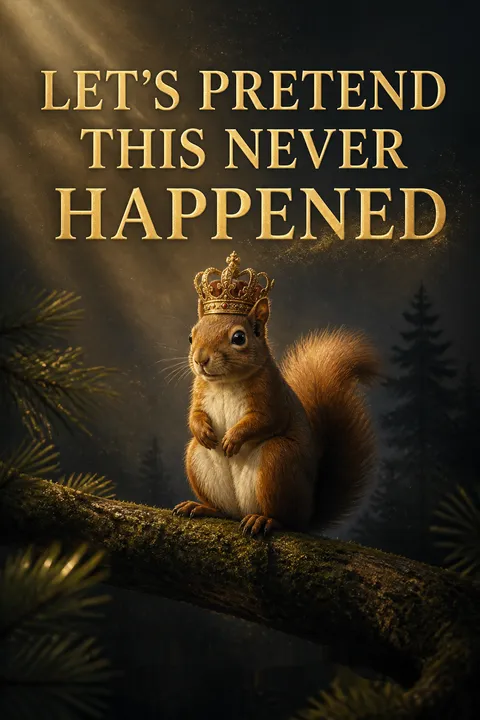
A memoir made from mishaps. Lawson gathers family stories around a claim: humiliating or painful events do not, by themselves, determine who a person becomes. Her childhood includes a fire started with a broom, a fall from a moving car, and Stanley, a dead squirrel her father turned into a crude puppet. These episodes are grotesque, funny, and uncomfortable, not tidy examples of adversity conquered.
The response is the point. Rather than conceal these memories to seem respectable, Lawson uses them to show how family, loyalty, and her own odd perspective took shape. Loving her family does not require pretending every event was wise or safe. The stories invite readers to reconsider which supposedly disqualifying moments also helped form their particular way of seeing and responding.
What's striking is the memoir's use of narrative identity, the process of making a self through the stories remembered and repeated. Lawson does not claim that every painful event was secretly beneficial; she claims the event need not have the final word. That distinction matters. Reinterpreting a memory can restore agency, while insisting that trauma is a gift can burden people who are still suffering. The book's strongest move is to hold both truths at once: some things were awful, and the person who lived through them is more than the awful thing.
Use humor to face absurdity, not to pretend pain has disappeared
Comedy beside pain. Lawson turns family chaos, workplace mishaps, and social embarrassment into jokes, often by describing the absurd detail everyone else might omit. But the memoir also slows down for miscarriage, panic attacks, and the death of a beloved dog. In those passages, the humor does not erase the hurt. It sits beside it, sometimes returning only after the immediate grief has been acknowledged.
A way to keep speaking. The comic voice lets Lawson describe experiences that might otherwise feel too shameful or strange to share. A story about humiliating herself at a party can make readers laugh, while her account of anxiety makes clear that the distress is real. Humor offers company and perspective here, not proof that everything is fine.
Psychology distinguishes cognitive reappraisal, changing how an experience is understood, from denying that it happened. Lawson's jokes often perform the first: a humiliating event becomes a story she can shape and share. That can loosen shame and invite connection. Yet humor is not universally protective. Some people use it to avoid asking for help, or feel pressured to make others comfortable with their pain. The memoir is most persuasive when comedy remains a voice, not a demand that suffering become entertaining.
Measure normal against your surroundings before calling yourself broken
A local definition of normal. Lawson grows up poor in rural Texas, where her family lives with unreliable water, raises animals in improvised spaces, and treats a taxidermy shop as an ordinary part of home life. Her father's rescues and experiments bring raccoons, turkeys, and other creatures into the family's orbit. To Lawson, this world is simply childhood, until television and other people's reactions reveal how unusual it looks from elsewhere.
Context changes the comparison. She also notices that nearby families have their own hardships, which makes her own circumstances seem less exceptional. This does not make poisoned well water or dangerous animals harmless. It shows how a community's baseline shapes what people notice, tolerate, and eventually describe as strange.
The story captures a basic insight from sociology: norms are learned in groups, not discovered as universal facts. A child may experience a family custom as ordinary until another setting supplies a contrast. That can reduce needless self-blame, especially for people who grew up feeling alien. But familiarity is not the same as safety. Communities can normalize deprivation as easily as they normalize eccentricity. The useful question is not simply whether a childhood was unusual, but which parts deserve affection, which deserve grief, and which should not be repeated.
Quit auditioning for acceptance when fitting in costs your real self
Jenkins made the difference visible. At school, Lawson tries to manage the embarrassment of her father's supposed quail, which are actually turkeys. One named Jenkins follows her into the school, where the birds create a mess and her father is called in to clean it up. The scene becomes a public spectacle for the classmates she hoped would see her as ordinary.
The performance loses its appeal. Instead of finding a way to erase the incident, Lawson gradually accepts that she is not going to become the popular, polished version of herself she imagined. She reads horror novels, embraces her odd interests, and lets go of some of the effort spent hiding them. Jenkins becomes a comic marker of the moment she stops treating acceptance as a test she must pass.
Social psychology suggests that belonging is not merely a matter of changing oneself; it also depends on finding settings where one's traits are welcomed. The turkey episode dramatizes the exhaustion of managing an identity for an audience that already has its own story about someone. Still, self-acceptance should not become a reason to reject every form of adaptation. The distinction is between learning social skills that make connection possible and performing a false self to earn approval. Lawson's story argues against the second, not against growth.
Name anxiety and illness as conditions, not character flaws
A name changes the blame. Lawson recalls childhood panic that adults variously call a nervous stomach, quirkiness, or shyness. As an adult, she receives a diagnosis of generalized anxiety disorder and describes panic attacks, treatment, and the effort of navigating social situations. A diagnosis gives her a way to understand that the fear is not simply a failure of nerve.
The body has its own risks. After repeated miscarriages, testing identifies antiphospholipid antibody syndrome, a rare autoimmune disorder that causes blood clots and can worsen during pregnancy. Blood-thinning treatment and frequent injections accompany a later pregnancy, and her daughter Hailey is born. The memoir presents these experiences as frightening and medically complex, not as problems solved by positive thinking.
Naming a condition can shift a person from moral self-accusation toward practical care. That is especially important where anxiety is mistaken for shyness or where reproductive loss is treated as a private failure. The account also resists a common simplification: diagnosis does not instantly remove suffering, and treatment involves uncertainty. Because Lawson's comic voice is so vivid, readers could underestimate the severity beneath it. Her story is a reminder that humor may help someone narrate illness, but assessment and support remain distinct needs.
Build intimacy through the unglamorous work of staying beside each other
A romance without polish. Lawson and Victor begin as mismatched college students. He proposes through a radio broadcast, but keeps her driving around for hours so she will hear it, while she increasingly suspects he is planning to kill her. The proposal ends with a ring, relief, and broken glass under his knee. Their marriage continues in the same spirit: affection mixed with arguments about towels, furniture, directions, and household standards.
Care is often practical. Victor accompanies Lawson through illness and family upheaval, even when he does not understand every fear or impulse. Lawson, in turn, recognizes that his steadiness matters more than matching her temperament. Their relationship is neither effortless nor a model of perfect communication. It is a life built through repeated acts of staying, helping, and returning after friction.
Relationship research often describes responsiveness as noticing a partner's needs and responding in ways that communicate care. This memoir offers an unpolished version: help with a difficult day, tolerate an eccentric fear, or remain present through a messy argument. Such acts matter more than romantic staging alone. Still, persistence is not automatically proof of a healthy relationship, and the book's comic framing can make conflict seem harmless. The useful insight is narrower: intimacy can survive difference when care is visible in ordinary behavior, not just in declarations.
Test your assumptions about people by spending time with them
Suspicion meets experience. Lawson spends much of her life finding it difficult to trust or befriend women. Online, she builds friendships with bloggers before meeting them in person, then reluctantly accepts an invitation to a wine-country retreat. She expects fashionable, judgmental strangers and worries about her clothes, her conversation, and her place in the group.
Shared awkwardness changes the picture. The women turn out to have their own insecurities, odd histories, and hard moments. Lawson discovers that they can be generous rather than competitive, and that she had sometimes used her outsider identity to dismiss people before getting to know them. The retreat does not make every woman trustworthy. It gives her a reason to stop treating a broad category as a verdict on individuals.
The retreat resembles the contact hypothesis in social psychology: meaningful interaction can weaken stereotypes, especially when people share a setting and have room to be known as individuals. Lawson's experience is persuasive because the change comes through ordinary conversation, not a lecture about prejudice. Its limits are equally important. One welcoming group cannot establish that every group is safe, and people do not owe strangers trust. The more durable lesson is to replace category-based certainty with evidence gathered from actual relationships.
Give children room to inherit resilience, not just protection
A protective plan gets revised. After Hailey is born, Lawson imagines giving her a safer, more conventional childhood than her own. She and Victor settle in the suburbs, where Hailey attends school and activities, but Lawson begins to miss the outdoor freedom and odd family life of rural Texas. The childhood she once wanted to escape now looks like a source of resourcefulness and belonging.
Protection is not the only gift. The family eventually moves to a rural home where Hailey can explore the land and spend time with her grandfather. Lawson is not arguing that children need poisoned water, frightening animals, or preventable danger. She is reconsidering the assumption that removing every discomfort will make a childhood richer. Children can benefit from room to explore, alongside adults who keep danger within reasonable bounds.
Developmental psychology distinguishes supportive autonomy from neglect: children need chances to explore, while adults remain responsible for proportionate safety. Lawson's shift is not a prescription to recreate her childhood wholesale. It is an acknowledgment that overprotection can narrow a child's world just as surely as reckless exposure can endanger it. The strongest version of her insight asks parents to examine what they are protecting children from, and whether the restriction serves the child or mainly soothes adult anxiety.
Let friends help carry the terrible parts you cannot fix
Grief is not a solo task. After the family's pug, Barnaby Jones, dies in the yard, Lawson buries him in a meadow while her husband is away. Vultures disturb the shallow grave, and she spends days trying to keep them away, sometimes wielding a machete. Her friend Laura arrives with a shovel and helps retrieve the dog's remains so they can be cared for properly.
Company makes the unbearable bearable. Laura does not undo the death or tell Lawson to stop grieving. She takes part in the grim practical work, stays through the distress, and finds a small joke that lets them breathe. Lawson's gratitude grows from being accompanied, not rescued. Some losses cannot be repaired, but they need not be faced without another person beside you.
Research on bereavement consistently treats social support as more than comforting words. Practical help, shared attention, and permission to grieve can reduce isolation without pretending that loss is fixable. Laura's shovel matters as much as her joke: one is action, the other is companionship. There is also a useful boundary here. Support does not require matching the grieving person's exact style or finding a silver lining. It can mean staying present while doing the unpleasant thing that needs doing.
Analysis
This memoir is less a sequence of comic anecdotes than a gradual revision of what counts as a life worth telling. Its structure moves from rural childhood and family eccentricity through anxiety, marriage, parenthood, illness, and the decision to return to country life. The connecting thread is not that every hardship becomes funny or valuable. It is that an embarrassing memory can be reclaimed without being denied, and that affection can include both candor and complaint.
Lawson's digressive voice is part of the argument. The detours, reversals, and self-corrections make the narrator feel socially unfiltered, but they also show how she manages fear: she converts an overwhelming scene into something she can describe, revisit, and share. Readers are invited to laugh, then notice when laughter stops. The shift is especially important in the accounts of miscarriage, panic, chronic pain, and Barnaby's death. The book does not treat suffering as a motivational device so much as a fact that sits awkwardly beside absurdity.
The memoir's family portraits also complicate the usual language of dysfunction. Lawson's father is loving and reckless; her mother is patient and pragmatic; Victor is devoted and exasperated. These contradictions resist turning people into either villains or saints. Yet the comedy can soften the edges of dangerous circumstances, and the adaptation should not imply that deprivation or untreated illness is character-building by nature. The book's more careful lesson is about meaning made after the fact, not harm justified in advance.
Ultimately, the title's invitation to pretend an event never happened is reversed. Lawson writes the stories down precisely because embarrassment can isolate people, while shared narration can create recognition. The book's value lies in making room for a less polished account of identity: one shaped by family, vulnerability, bad luck, imperfect care, and the particular humor that helps a person stay in the room.
Review Summary
Let's Pretend This Never Happened is a hilarious memoir that has readers laughing out loud. Jenny Lawson's unique childhood and quirky life experiences are recounted with wit and sarcasm. While some reviewers found the writing style overwhelming or forced at times, most praised Lawson's ability to find humor in difficult situations. The book tackles serious topics like mental health with honesty and humor. Audiobook listeners particularly enjoyed Lawson's narration. Overall, reviewers found the memoir entertaining, relatable, and refreshingly honest about life's absurdities.
People Also Read







Glossary
Dangerous Thesaurus of My Father
Decoding paternal warningsLawson's comic label for translating her father's cheerful assurances about animals or adventures into more realistic warnings about danger. For example, his claim that children will enjoy a surprise may mean that the surprise is frightening, bloody, or likely to cause a lasting memory. The device reflects how his daughters learned to interpret his enthusiasm.
Great Turkey Shit-off of 1983
Turkeys invade schoolLawson's comic name for the episode in which her father's supposedly tame quail, actually turkeys, follow her to school and leave droppings in the building. Her father is called in to clean up. The embarrassing incident becomes a turning point in her decision to stop trying so hard to seem like an ordinary, popular student.
antiphospholipid antibody syndrome
Pregnancy-complicating clotting disorderA rare autoimmune disorder that Lawson describes as causing blood clots and worsening during pregnancy. After repeated miscarriages, testing identifies the condition, and her doctor prescribes blood-thinning treatment during a later pregnancy. The diagnosis helps explain the medical risk she faced, though it does not make the pregnancy emotionally easy or certain.
problemly
Probably a problemA playful word Lawson includes among her proposed true facts. It means something that is likely to become a problem. The term reflects the memoir's interest in making language bend to personal experience, while also turning spelling disputes and invented words into jokes about who gets to decide what counts as correct usage.
FAQ
What is Let's Pretend This Never Happened: A Mostly True Memoir about?
- Mostly True, Mostly Absurd: The memoir chronicles Jenny Lawson's unconventional childhood and adulthood, filled with bizarre family situations, social awkwardness, and mental health struggles, all told with dark humor.
- Embracing Imperfection: It explores the idea that the most human moments, the ones we want to forget, are the very moments that define us, and that there is joy in embracing the absurdity of life.
- A Love Letter to Family: Despite the chaos, the book is a tribute to her family, celebrating their unique quirks and the lessons they taught her about resilience and self-acceptance.
Why should I read Let's Pretend This Never Happened: A Mostly True Memoir?
- Unique Voice and Humor: Jenny Lawson's writing style is distinctively funny, blending dark humor with genuine vulnerability, making it a refreshing and engaging read.
- Relatable Struggles: The memoir tackles universal themes of social anxiety, mental health, and family dynamics, making it relatable to readers who have experienced similar challenges.
- Celebration of Imperfection: It encourages readers to embrace their own quirks and find joy in the absurdities of life, offering a message of self-acceptance and resilience.
What is the background of Let's Pretend This Never Happened: A Mostly True Memoir?
- Rural Texas Setting: The memoir is set primarily in rural Texas, a backdrop that contributes to the unique and often bizarre experiences of Jenny's childhood and family life.
- Cultural Context: The book reflects the cultural context of rural Texas, including its unique traditions, values, and social norms, which often clash with Jenny's unconventional personality.
- Personal History: The memoir is deeply rooted in Jenny Lawson's personal history, drawing from her own experiences and family stories to create a narrative that is both humorous and poignant.
What are the most memorable quotes in Let's Pretend This Never Happened: A Mostly True Memoir?
- "You are defined not by life's imperfect moments, but by your reaction to them.": This quote encapsulates the central theme of the book, emphasizing the importance of resilience and self-acceptance in the face of life's challenges.
- "This book is totally true, except for the parts that aren't.": This quote highlights Jenny Lawson's playful approach to truth and fiction, acknowledging the subjective nature of memory and the creative license she takes in her storytelling.
- "I'm basically like Little House on the Prairie but with more cursing.": This quote showcases Jenny Lawson's unique blend of humor and irreverence, setting the tone for the memoir and highlighting her unconventional perspective on life.
What writing style, narrative choices, and literary techniques does Jenny Lawson use?
- Conversational and Informal: Lawson employs a conversational, informal tone, often using parentheticals and asides, creating a sense of intimacy and directness with the reader.
- Self-Deprecating Humor: She uses self-deprecating humor to address her own flaws and anxieties, making her relatable and endearing to readers.
- Exaggeration and Hyperbole: Lawson frequently uses exaggeration and hyperbole to amplify the absurdity of her experiences, enhancing the comedic effect of her storytelling.
Hidden Details & Subtle Connections
What are some minor details that add significant meaning?
- Recurring Animal References: The constant presence of animals, both dead and alive, throughout the memoir symbolizes the chaotic and unpredictable nature of Jenny's life and her family's unique dynamic.
- Specific Food Mentions: The detailed descriptions of food, from lard-dripping fries to half-baked brownies, reflect the comfort and chaos of her childhood and the sensory details that shape her memories.
- Emphasis on the Unconventional: The focus on the unusual and bizarre, such as the armadillo races and the taxidermy shop, highlights the importance of embracing individuality and finding beauty in the unexpected.
What are some subtle foreshadowing and callbacks?
- Early Mentions of Anxiety: The early references to Jenny's "nervous stomach" foreshadow her later struggles with anxiety disorder, highlighting the long-term impact of her childhood experiences.
- Recurring Phrases: The repeated use of phrases like "Don't tell your parents" and "That's how civilization breaks down!" create a sense of continuity and highlight the recurring themes of rebellion and absurdity.
- References to Past Events: The callbacks to earlier stories, such as the mention of the Great Turkey Shit-off of 1983, reinforce the interconnectedness of Jenny's experiences and the lasting impact of her childhood.
What are some unexpected character connections?
- Victor's Acceptance: Victor's initial bewilderment at Jenny's eccentricities evolves into a deep acceptance and love, highlighting the power of understanding and embracing differences in relationships.
- Grandlibby's Subversive Sweetness: Jenny's grandmother's seemingly innocent and sweet nature is revealed to be a form of rebellion, as she quietly subverts her husband's rules and encourages her grandchildren's mischief.
- The Taxidermists' Soft Hearts: The rough-looking taxidermists hired by Jenny's father are shown to be good-hearted, sharing their personal flasks and offering kindness to confused strangers, challenging stereotypes.
Who are the most significant supporting characters?
- Victor, the Patient Husband: Victor's role as a patient and supportive partner is crucial, providing a grounding force for Jenny and accepting her eccentricities with humor and love.
- Grandlibby, the Subversive Grandmother: Grandlibby's influence is significant, as she provides a space for Jenny and her sister to explore their creativity and indulge in childlike debauchery, while also teaching them the art of quiet rebellion.
- Laura, the Understanding Friend: Laura's role as a fellow blogger and friend is essential, as she helps Jenny navigate social situations and embrace her individuality, offering a sense of camaraderie and shared experience.
Psychological, Emotional, & Relational Analysis
What are some unspoken motivations of the characters?
- Jenny's Need for Acceptance: Jenny's constant need to share her bizarre experiences stems from a deep-seated desire for acceptance and understanding, as she seeks to connect with others through her unique perspective.
- Victor's Desire for Control: Victor's attempts to impose order on Jenny's chaotic life reflect his underlying need for control and stability, which often clashes with her free-spirited nature.
- Jenny's Parents' Hope for Normalcy: Jenny's parents' move to Wall and their attempts to encourage her to fit in reveal their unspoken desire for her to have a more conventional life, despite their own eccentricities.
What psychological complexities do the characters exhibit?
- Jenny's Anxiety and Self-Doubt: Jenny's struggles with anxiety and self-doubt are a central aspect of her character, highlighting the internal battles she faces as she tries to navigate social situations and her own identity.
- Victor's OCD and Control Issues: Victor's need for order and control, as seen in his reactions to the house's state and his attempts to manage Jenny's behavior, reveal his own psychological complexities.
- Jenny's Mother's Stoicism: Jenny's mother's stoic demeanor masks a deep well of patience and resilience, as she navigates the chaos of her family life with a quiet strength.
What are the major emotional turning points?
- The Loss of the First Baby: The miscarriage is a major emotional turning point, triggering a period of intense grief, self-blame, and a consideration of suicide, highlighting the depth of Jenny's emotional struggles.
- The Cow Insemination Incident: The cow insemination incident, while humorous, marks a turning point in Jenny's self-acceptance, as she realizes the futility of trying to fit in and embraces her own unique path.
- The Move to the Country: The move to the country represents a significant emotional shift, as Jenny realizes that her childhood home is no longer a place but a state of mind, and that she can create a new home wherever she is with her family.
How do relationship dynamics evolve?
- Jenny and Victor's Relationship: The relationship between Jenny and Victor evolves from initial attraction to a deep understanding and acceptance of each other's quirks and flaws, highlighting the importance of communication and compromise in a long-term partnership.
- Jenny and Lisa's Sisterhood: The bond between Jenny and Lisa deepens as they navigate the challenges of adulthood, finding solace and support in their shared history and unique family experiences.
- Jenny and Her Parents' Relationship: Jenny's relationship with her parents evolves from a mix of frustration and bewilderment to a deep appreciation for their unique qualities and the lessons they taught her about resilience and self-acceptance.
Interpretation & Debate
Which parts of the story remain ambiguous or open-ended?
- The Nature of the "Magic" Squirrel: The true nature of the "magical" squirrel remains ambiguous, leaving the reader to wonder whether it was a genuine attempt at magic or simply another example of Jenny's father's eccentricity.
- The Source of Jenny's Anxiety: The exact source of Jenny's anxiety is never fully explained, leaving the reader to ponder the complex interplay of genetics, environment, and personal experiences that contribute to mental health struggles.
- The Meaning of "Home": The definition of "home" is left open to interpretation, as Jenny grapples with the idea that home is not a place but a feeling, a state of mind, and a connection to loved ones.
What are some debatable, controversial scenes or moments in Let's Pretend This Never Happened: A Mostly True Memoir?
- The Use of Dark Humor: The use of dark humor to address sensitive topics like mental illness and death may be seen as controversial, with some readers finding it offensive while others appreciate its cathartic effect.
- The Portrayal of Family Dynamics: The portrayal of Jenny's family dynamics, particularly her father's eccentric behavior, may be seen as either endearing or problematic, depending on the reader's perspective.
- The Blurring of Truth and Fiction: The memoir's claim to be "mostly true" raises questions about the nature of truth and memory, and the extent to which Jenny Lawson's storytelling is a reflection of reality or a creative interpretation of it.
Let's Pretend This Never Happened: A Mostly True Memoir Ending Explained: How It Ends & What It Means
- Acceptance of Imperfection: The ending emphasizes the importance of accepting life's imperfections and finding joy in the absurdities, as Jenny embraces her unique identity and her family's unconventional ways.
- Finding Home in Relationships: The ending reveals that "home" is not a place but a feeling of belonging and connection, as Jenny realizes that her true home is wherever she is with her husband and daughter.
- The Power of Storytelling: The ending underscores the power of storytelling in making sense of life's chaos and in creating a legacy of love, laughter, and resilience, as Jenny shares her story with the world.

Download PDF
Download EPUB
.epub digital book format is ideal for reading ebooks on phones, tablets, and e-readers.








