

Key Takeaways
Treat everyday friction as a design problem, not a character flaw
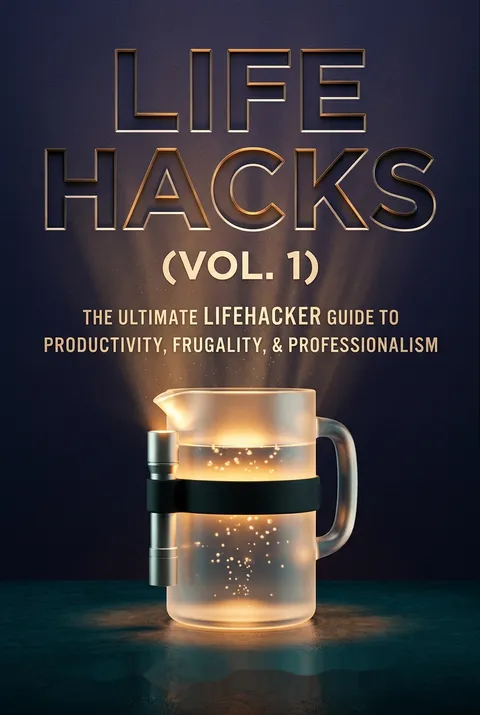
Small adjustments add up. This book is a collection of 60 practical suggestions rather than a single theory: make a water jug diffuse a flashlight in a tent, keep a list of things to do when free time appears, or use keyboard shortcuts to avoid repetitive clicking. The common move is to notice a recurring annoyance and change the setup around it instead of simply enduring it. Some suggestions concern work, some money, and others home life or technology, but all aim to make ordinary tasks easier to manage.
Start with a real nuisance. Choose a small problem that keeps recurring, then try a simple fix. The book's best ideas are modest: they save minutes, prevent avoidable confusion, or make a task less unpleasant. They are not substitutes for solving larger problems.
The collection is most useful as a prompt for noticing friction. That resembles choice architecture, the practice of arranging options so that a desired action takes less effort. A prepared checklist or a clearly placed tool can beat a vague intention because it changes what is easy in the moment. The limit is that convenience is not automatically improvement. A shortcut can introduce new risk, and a tip that saves seconds may not justify extra clutter. The strongest test is whether a change repeatedly saves time, money, or stress without creating a larger cost.
Outline the argument before drafting, and the blank page shrinks
Plan before prose. The book's essay advice begins with a manageable outline, so the writer decides what to say before getting tangled in sentences. Its example breaks an eight-page essay into about 16 paragraphs: an opening, a conclusion, and roughly 14 body paragraphs, each built around a supporting idea. The point is not that every essay needs exactly that shape. It is that a long assignment becomes less intimidating when divided into specific pieces.
Make the work easier to navigate. For speeches, the author suggests readable type, generous spacing, numbered pages, and changing text color every few lines to help speakers find their place after looking up. For editing, changing the font or asking another person to read aloud can make errors easier to notice. These methods prepare the task before attention is under pressure.
Breaking a large task into visible units reduces the mental burden of deciding what to do next. The outline also separates two kinds of work: generating and organizing ideas, then turning them into sentences. That distinction can help writers who mistake drafting difficulty for lack of ability. Still, a paragraph quota is a scaffold, not a measure of argument quality. A strong outline needs a through-line, and research may change the structure. The practical lesson is to plan enough to begin, while leaving room for the evidence to revise the plan.
Choose language that clarifies responsibility without sounding defensive
Tone shapes interpretation. The book recommends replacing a reflexive claim that one merely guessed with language that describes what one understood. It also advises separating an apology from the explanation that follows, rather than attaching the explanation with a contrast word that can seem to cancel the apology. In professional email, its rule is to write as though the message might reach an unintended reader. Together, these tips encourage deliberate wording when misunderstandings or tension arise.
Make speech easier to follow. The author also suggests pausing instead of filling silence with repeated hesitation sounds, and facing a person with hearing loss while speaking clearly in a lower register. These are small changes in delivery, but they shift attention from sounding impressive to helping the listener understand. The goal is not polished language for its own sake. It is reducing avoidable friction between what a speaker means and what another person hears.
This advice recognizes that communication is judged not only by content, but by how responsibility and respect are signaled. A pause can also make room for thought, while an apology that does not immediately defend itself is easier to receive. Yet tact should not become strategic vagueness. Saying a misunderstanding arose from unclear instructions may be appropriate, but accountability still matters when a person did make an assumption. The best version combines the book's attention to tone with a direct statement of what happened and what will be done next.
Build trust through useful attention, not performative charm
Show genuine interest. To get to know someone, the book suggests asking for their advice on a subject they understand or care about. It cautions against overusing the tactic or making oneself seem incapable of forming an opinion. The same principle appears in its career advice for students: visit professors during office hours, ask questions, and give them a real basis for knowing the student's work before requesting a recommendation.
Give children structure and reassurance. The author suggests offering a child two acceptable choices when both lead to the needed outcome, rather than issuing a command every time. It also advises adults to respond calmly when a child looks to them after a minor bump. These examples make attention practical: notice what the other person needs, then respond in a way that supports their agency or steadies the moment.
The strongest thread here is reciprocity. Asking for advice can signal respect, while regular office-hour conversations give a professor concrete knowledge to draw on when writing a recommendation. In both cases, trust grows from meaningful interaction rather than a last-minute request. Offering children bounded choices similarly preserves some agency while keeping limits clear. The advice works best when the interest is sincere. Used as a trick to extract affection, a request for advice becomes manipulation, and a calm response to a child's distress should never replace checking whether an injury needs care.
Make important information easy to retrieve before a stressful moment
Move memory outside your head. The book recommends keeping a list of tasks you would like to do when free time opens up, so that an unexpected quiet hour does not disappear into indecision. It also suggests using a phone contact for vehicle details such as the vehicle identification number, insurance information, and oil type. A photograph of a valet or coat-check ticket can serve as a backup if the paper copy goes missing.
Give lost things a default home. When searching for an item, notice the first place you expected it to be. Once found, return it there, so that future searches begin from a reliable location. These habits all turn information into something visible or stored in a predictable place. The payoff is especially clear when a person is rushed, distracted, or trying to solve a problem away from home.
These are examples of cognitive offloading: storing information in the environment or a device so attention can be used for the task at hand. The benefit is not that memory becomes unnecessary, but that fewer routine details must be remembered at precisely the wrong moment. Reliable systems also depend on upkeep. A vehicle contact with outdated insurance details is worse than no reference if it creates false confidence. A short periodic review keeps the external memory useful, current, and easy to find.
Turn your work into evidence that can travel with you
Build options deliberately. The author argues that being indispensable in one job can make advancement difficult if no one can easily replace the worker. The proposed response is to keep a future plan and research opportunities elsewhere rather than treating security as a guarantee of growth. The book also recommends saving job descriptions so that relevant responsibilities can later be described on a résumé, while rewriting them to reflect actual experience.
Make qualifications legible. For applications to large organizations, the author advises using relevant terms from the job posting so that a résumé clearly matches the role. It also encourages students to develop relationships with professors before asking for recommendation letters. These suggestions share a practical aim: make skills and accomplishments visible to people making decisions, and avoid relying on others to infer them.
This is a useful distinction between job security and career mobility. A role can be stable while offering limited room to advance, so maintaining a record of transferable accomplishments preserves choices. Matching the language of a job description can help a reader quickly see relevance, but keyword use should not turn a résumé into a mirror of the posting. Specific evidence, accurate scope, and outcomes matter more than repeating terms. The broader principle is to document work as it happens, while details are fresh, rather than trying to reconstruct a career from memory during a job search.
Inspect and document before signing, buying, or handing anything over
Catch problems before commitment. The apartment-hunting checklist asks prospective tenants to test phone reception and water pressure, inspect windows and hidden areas for damage or signs of pests, check outlets, learn about noise and safety at different times, and understand lease rules. It recommends photographing an apartment before moving belongings in, creating a record of its condition. This can help distinguish pre-existing damage from damage attributed to a tenant later.
Keep proof close. The same logic explains photographing a parking or coat-check ticket and keeping important car details accessible. These actions are inexpensive forms of documentation. They do not guarantee that a dispute will be resolved in one's favor, but they make it easier to establish what was present, what was agreed, or which information was provided when a problem occurs.
Documentation is a form of risk management: it preserves evidence before memory becomes contested. The apartment checklist is especially strong because it encourages observation beyond the staged impression of a quick viewing. The same habit applies to rentals, purchases, and shared responsibilities. Its limits matter, though. A photograph needs a date and context to be persuasive, and a tenant should still read the lease rather than treating pictures as a substitute for understanding the contract. Preparation does not eliminate disputes; it improves the quality of decisions and the record available if one arises.
Test a life hack before trusting it with safety, money, or emergencies
Not every tip is timeless. The book includes suggestions about abandoned online shopping carts producing discounts, asking a retailer for a refund after a price drop, and using indoor air-drying to humidify a room while saving energy and extending clothing life. It also offers technology advice, including ways to prompt queued messages to send in areas with weak reception, and claims about what happens when wet electronics are powered on.
Check the stakes first. Some recommendations depend on a company's current policy, a particular device, or conditions that the book does not establish. A trick described as useful in an emergency should not be treated as a reliable substitute for contacting help by a proven method. The durable lesson is to separate low-risk experiments from advice where failure could cost money, damage equipment, or put someone in danger.
The book's mixture of sensible habits and confident claims makes verification an essential companion to curiosity. Consumer policies change, and technologies behave differently across devices and networks. A low-cost experiment, such as trying a different microwave power setting, has little downside; relying on an unverified messaging workaround during an emergency has a very different risk profile. This is a useful general rule for practical advice: check whether the tip is current, test it in a safe setting, and ask what happens if it fails. A hack earns trust through results, not its catchy label.
Analysis
Life Hacks is less a unified argument than a pocket miscellany: sixty tips spanning writing, work, relationships, household routines, shopping, travel, and technology. Its organizing idea is implicit. Everyday life contains repeated small points of friction, and a modest change in wording, preparation, or surroundings can make a task easier. The book is strongest when it converts a vague intention into a concrete action: outline before drafting, photograph an apartment before moving in, or establish a predictable place for a frequently misplaced item.
That format also creates the book's main weakness. A collection places claims of very different reliability beside one another without a clear way to distinguish tested advice from personal preference, dated technology guidance, or speculation. A speech-format suggestion and a claim about forcing cellular messages through are not equivalent kinds of knowledge. The latter may be unreliable, especially when readers are encouraged to use it in an emergency. The useful adaptation is therefore not to accept every hack, but to preserve the book's experimental attitude while adding a risk filter: try low-cost ideas, verify changing policies, and avoid depending on uncertain methods when safety is involved.
The most valuable tips also reveal a few deeper patterns. External reminders reduce the burden on working memory. Documentation preserves evidence. Outlines turn a large task into smaller decisions. Clear, considerate phrasing can prevent a minor misunderstanding from becoming a status contest. These mechanisms help explain why some small tricks travel well across contexts even when the original example does not.
As a reference, the book is best approached selectively. Readers can scan for recurring annoyances, borrow an idea, and judge it against their own circumstances. The collection offers no universal operating system for life, and it does not need one. Its durable contribution is a habit of noticing where routine effort leaks away, then making a small, testable adjustment.
Download PDF
Download EPUB
.epub digital book format is ideal for reading ebooks on phones, tablets, and e-readers.








