

Key Takeaways
Learn to read hidden lives without mistaking clues for certainty.
A hidden craft. Marc Hamer is a gardener who becomes a molecatcher, learning to track an animal he rarely sees. He studies fresh mounds, soil, tunnel patterns, and advice passed down by farmers and older trappers. The work is practical, but the animal remains partly unknowable: molecatchers disagree about what signs mean, and even basic details of mole life are inferred from traces underground.
A partial portrait. Hamer sets this craft beside memories of his own life, which he describes as fragmentary and changeable. The book’s form echoes its subject: neither a mole’s life nor a person’s past can be reconstructed completely. The aim is not to solve every uncertainty, but to notice carefully and tell an honest account of what those observations suggest.
What's valuable here is a model of expertise that does not confuse confidence with total knowledge. Field researchers, doctors, and investigators often work from incomplete signals, building the best explanation available while keeping alternatives open. Hamer's approach also shows how practical skill can arise from repeated attention to small differences that are difficult to explain in words. The limitation is important: uncertainty can sharpen observation, but it cannot replace evidence. In wildlife management, careful measurement and local knowledge need each other.
See a perfect lawn as an aesthetic demand for control, not neutral nature.
Order has a cost. Moles can turn a smooth lawn into a scatter of earth, and Hamer sees how personally some owners take this disruption. The animal is small, yet its activity threatens the sense that a garden is controlled, permanent, and presentable. One customer even cut apart a beautiful magnolia because its branches seemed uneven, leaving little more than a leaning stump.
A managed landscape. Hamer contrasts that impulse with a flower meadow where moles, insects, birds, and mammals belong to a larger system. He cuts it with a scythe so creatures have a chance to move away, then removes the dried plants to keep the soil poor enough for wildflowers. A lawn is not nature untouched. It is a human choice about which forms of life may stay.
The lawn functions as more than a patch of grass. It is a visible promise that land can be made predictable, a promise that a molehill punctures. This connects to environmental psychology, where familiar, orderly spaces can offer comfort and status as well as practical use. The account also raises a fair question: not every maintained lawn is mere vanity. Play, accessibility, and recreation matter. The useful distinction is not wild equals good and cultivated equals bad, but whether maintenance serves a purpose or merely suppresses signs of life.
Map a mole’s tunnels from fresh hills, territory edges, and patient probing.
Read the surface. A molehill is usually a pile of excavated soil, not the animal’s home. Fresh, crumbly mounds indicate recent digging; older hills, fence lines, and hedges can point toward the more permanent routes. Hamer distinguishes feeding tunnels, which meander as a mole searches for prey, from deeper, more established passages that form the backbone of its territory.
Let clues guide you. Moles may dig about 20 metres of tunnel in a day, and their underground routes shift with food, soil, and weather. Hamer uses a steel probe to locate a tunnel, then places traps in active passages. He stresses that experienced trappers notice subtle changes underfoot, but that a map made from hills and soil is always provisional. A skilled search is attentive, not omniscient.
This is a vivid example of situated knowledge: expertise formed through repeated contact with a particular place, rather than through rules alone. Similar learning appears in farming, navigation, and clinical practice, where small cues become meaningful through experience. The method also cautions against treating patterns as guarantees. A line of hills may suggest a route, but the animal can alter its behavior in response to disturbance. Good field judgment combines a working model with readiness to revise it.
Treat survival as adjustment to danger, not a contest to dominate.
Learn by adapting. At sixteen, after his mother died and his home life collapsed, Hamer left and spent about eighteen months walking and sleeping outdoors. He learned to find water, shelter, and places to rest, and to recognize when a town or stranger might be dangerous. His belongings narrowed to what he could carry. A wet down sleeping bag failed him, while a wool blanket remained useful even when damp.
Avoid needless battles. Hamer describes survival less as conquering hardship than as noticing conditions and responding to them. Moles follow food, block tunnels when threatened, and detour around danger. People, too, survive through judgment: sometimes continuing is sensible, sometimes stepping aside is wiser. The lesson is not to romanticize hardship. Hunger, exposure, and isolation carry real costs, but alertness and adaptation can reduce them.
The emphasis on adjustment aligns with resilience research, which distinguishes flexible coping from simply enduring more. Hamer's experiences make the idea concrete: survival depends on reading weather, materials, people, and bodily limits. There is also a needed boundary. A story of self-reliance can obscure how much survival depends on luck and access to help. Hamer's eventual return to family and work matters as much as his outdoor skill. Adaptation includes accepting support, not only learning to manage alone.
Follow soil life far enough to see humans inside its cycle.
Soil is alive. The earth beneath a meadow is not inert dirt. In its upper layers, worms, insects, fungi, bacteria, and decaying plants process nutrients and create conditions in which roots can grow. Hamer describes mycorrhizal fungi, which associate with plant roots and help them access minerals. Moles, by turning and moving soil, are part of this activity, even when their mounds frustrate gardeners.
The cycle includes people. Hamer connects soil organisms with the microbes living in his own gut. Both are part of processes that break down material and make nutrients available. This perspective changes the image of a person standing apart from nature: bodies depend on living systems they cannot see. It also makes decay less like an ending than a transfer. What dies becomes material for other lives, and what people discard can remain in the earth long after its use is over.
The section’s strongest contribution is relational: soil fertility is not a substance delivered by nature, but an outcome of many interacting lives. Systems ecology reinforces this view, since a change in one part of a food web can alter conditions elsewhere. The comparison between soil and gut is illuminating, though it should not imply that the two systems work identically. Its broader value is to make dependence tangible. Environmental care becomes less abstract when the ground is understood as an active community rather than a background resource.
Choose methods that reduce suffering and collateral damage, while admitting what they cost.
Methods matter. Hamer chooses a scythe for meadow work because its quiet, slower cut gives animals more opportunity to escape than a powered trimmer. Mole control presents a harder choice. He studies traps designed to kill quickly, while rejecting crude devices that may leave an animal suffering. He also describes poisoned worms and strychnine, which could harm predators and pets that ate poisoned prey. Strychnine use was banned in the European Union in 2006.
No clean hands. Hamer’s work is not a simple celebration of humane technique. A trap may reduce suffering compared with a slower death, but it still ends a life. The book asks readers to distinguish between the intention to avoid needless harm and the fantasy that necessary work can be made morally spotless. His practical decisions remain bound to the landowners who hire him and the animals affected by the work.
This is a useful distinction in animal ethics: the manner of an intervention matters, but a less painful death is not the same as no harm. The same reasoning applies in conservation, agriculture, and public health, where choices can involve competing welfare interests. Hamer's transparency about killing prevents the familiar evasion of hiding harm behind a tidy result. At the same time, the judgment that trapping is the most humane option depends on context and execution. Ethical claims deserve scrutiny alongside the technical skill behind them.
Notice when a necessary job has become a moral burden you can no longer carry.
The final catch. After years of molecatching, Hamer finds a mole still alive in a trap, badly injured. He has to kill it by hand, striking it several times with his trowel. The experience breaks the distance he had maintained between himself and the deaths caused by his work. He recognizes that his usual efficiency had helped him avoid facing what the job meant to him.
An ending takes action. Hamer leaves the field knowing he is finished as a molecatcher. The decision is not a verdict that every past choice was wrong. He had studied the methods, earned a living, and tried to limit suffering. But the work’s emotional cost has changed, and continuing would require a self-deception he no longer accepts. A role can have been valuable and still reach its end.
The scene resembles what clinicians call moral distress: the strain of acting in ways that conflict with one’s values, even when the work has a practical justification. Hamer’s ending is powerful because it does not erase the livelihood, skill, or care that came before it. It also avoids turning discomfort into a universal command to quit. Many difficult jobs cannot simply be abandoned. The broader lesson is to treat recurring moral unease as information worth examining, rather than proof of weakness or a feeling to suppress.
Let solitude teach attention, but keep human ties that make a home.
Alone in the landscape. During his wandering years, Hamer learns to be still enough that birds and other animals stop treating him as a threat. Outdoors, he feels less separate from the world and less burdened by the identity he carried among people. As an older molecatcher, he again spends long days alone, listening and watching in fields.
Return to connection. Solitude is not his whole answer. He misses conversation, worries about being found if he becomes ill, and wants to return to Peggy, his wife. Their long relationship, their children, and the ordinary routines of home give his life a different kind of belonging from the open countryside. The book holds both truths together: solitude can make attention possible, while human attachment gives that attention somewhere to return.
Hamer’s account resists two familiar simplifications: that solitude is inherently liberating, or that connection is the only source of well-being. In attachment theory, secure relationships can provide a base from which a person explores the wider world. His experience suggests the reverse movement as well: time alone can clarify what connection means. Still, prolonged isolation can become dangerous, especially when health is fragile. The distinction is not between solitude and society, but between chosen solitude and being cut off from care.
Meet impermanence by attending to the small things still here.
Memory keeps changing. Hamer doubts that recollection can recover the past exactly. Memories arrive unevenly, acquire new details, and may be difficult to distinguish from stories encountered elsewhere. He does not treat this as permission to invent freely. Instead, he tries to describe what feels honest while admitting that certainty has limits.
Notice what is present. His working year turns on recurring seasons: leaves fall, compost forms, snowdrops appear, and mole populations return to familiar fields. The cycles repeat, but never with exactly the same people, animals, or conditions. As his body weakens and his working life ends, Hamer finds value in watching weather, birds, and the ground around him. Attention does not stop change. It allows a person to encounter a moment before it becomes memory.
The account resonates with cognitive science, which treats memory as reconstruction rather than a perfect recording. That insight can encourage humility about personal history, especially when no witnesses remain to verify it. There is a counterweight: factual records matter, and a commitment to present experience should not excuse avoidable error. Hamer’s more durable point is emotional rather than evidentiary. Since neither memory nor landscape can be held still, careful attention offers a way to participate in change without demanding that it become permanent.
Analysis
A Life in Nature is part memoir, part natural history, part account of a disappearing rural craft, and part ethical reckoning. Its apparent subject is molecatching. Its deeper subject is how a person makes a life among other lives while earning money from practices that can injure or kill them. The book’s structure mirrors that tension: practical passages about tunnels, traps, and animal behavior sit beside poems, uncertain memories, and reflections on age, marriage, and death.
Hamer is at his strongest when the concrete detail carries the philosophy. A scythe leaves time for small animals to escape. Fresh molehills offer evidence of activity without revealing the animal itself. A damaged mole forces the trapper to confront the distance his tools and routines have created. These episodes make attention feel like a practiced skill rather than a slogan. His account also resists sentimental nature writing. Wild creatures are vulnerable, predatory, and indifferent to human hopes. Yet the work remains tender toward the intricate systems that make life possible.
The book’s main tension is not a flaw to solve. Hamer values all living things, catches moles for a living, and eventually decides he can no longer continue. That contradiction reveals how ethical life often happens under imperfect conditions, where livelihoods, land use, and animal welfare overlap. His account does not establish a universal rule for managing wildlife. A gardener’s lawn, a farm, and a meadow have different purposes, and humane practice depends on context. The more transferable argument is that people should make those choices consciously, understand their effects, and remain willing to revise them.
The memoir’s account of memory is similarly double-edged. Hamer is right that recollection changes, but uncertainty need not make truth meaningless. His distinction between an honest account and an absolutely complete one offers a useful middle ground. The result is less a manual for catching moles than a record of what close work with the land can teach: attention, dependence, limits, and the possibility of ending a role without denying that it once mattered.
Review Summary
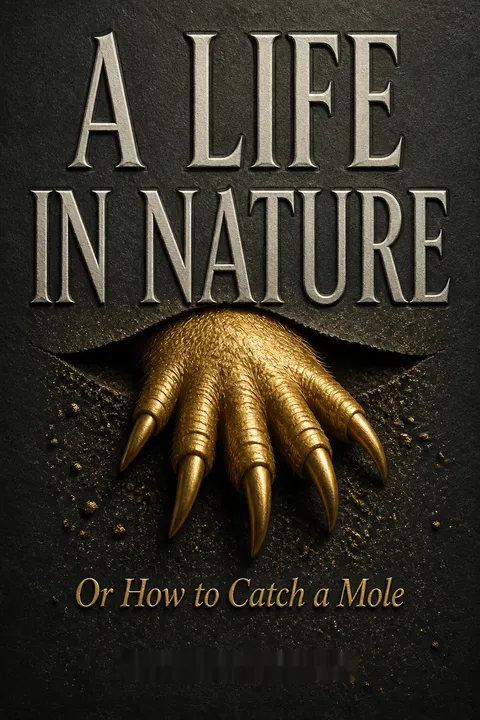
How to Catch a Mole receives high praise for its lyrical prose, philosophical reflections, and intimate connection with nature. Readers appreciate Hamer's gentle approach to a controversial subject, finding beauty in the ordinary and embracing life's impermanence. The book offers fascinating insights into mole behavior and the author's unconventional life experiences. While some find the poetry less engaging, most are captivated by Hamer's wisdom, respect for nature, and ability to weave memoir, natural history, and meditation into a unique and thought-provoking narrative.
People Also Read
Glossary
moleology
Archaeology through molehillsA practice of examining soil and artifacts brought to the surface by moles to learn about earlier human activity. Archaeologists can sift molehills for fragments such as pottery without excavating or disturbing the site itself. Hamer uses the term for this indirect way of finding traces of past life in ordinary heaps of earth.
fortress
A large breeding nest moundA very large mound of earth that may serve as a mole’s nest during breeding season when shallow or waterlogged ground prevents a female from making an underground nest. The female lines the mound with leaves and dried grass. Hamer describes such structures as rare, though one example produced many visiting moles in a small garden.
worm larder
Stored, immobilized wormsA chamber or section of a mole tunnel where the mole stores worms for later food. The mole bites off their heads, leaving them alive but unable to dig while they regrow. Hamer says these stores are fairly common and that a tunnel system may contain several of them.
Mouldiwarp
Traditional name for a moleA regional name used in parts of Great Britain and Northern Europe for the mole, meaning an earth mover. Hamer connects the term with the animal’s habit of pushing soil above ground as it digs. The name also reflects the folkloric image of the mole as a hidden, powerful creature that alters the land.
Download PDF
Download EPUB
.epub digital book format is ideal for reading ebooks on phones, tablets, and e-readers.








