

Key Takeaways
Let the life you live become part of your medicine
A crooked path became training. Low Dog describes growing up with dyslexia, leaving school at 16, and drifting through jobs before finding teachers in midwifery, martial arts, and herbal medicine. After her marriage ended, a solitary desert vision quest helped her understand that she was carrying shame and grief as well as physical possessions. Years later, the death of a seriously ill baby she had urged a parent to take to hospital prompted her to pursue medical training. She earned her GED, then became a physician, integrating conventional care with nutrition, herbs, movement, and relationships. Her life story makes the title concrete: health knowledge can come from lived experience, not only from a clinic.
What's powerful here is the way experience becomes a source of questions, rather than a substitute for expertise. In narrative psychology, people often make sense of change by connecting difficult episodes to later values and choices. That can help restore agency, especially after setbacks. Yet retrospective meaning is not proof that every painful event was necessary or beneficial. The story is strongest when read as one person's way of making use of hardship, not as a promise that suffering automatically produces wisdom.
Choose whole foods over diet fashions, and make meals a daily ritual
Quality beats food tribes. Low Dog favors a Mediterranean-style pattern built around vegetables, fruit, whole grains, beans, nuts, and olive oil, with fish and other animal foods according to preference. Rather than condemning all fats or carbohydrates, she distinguishes their sources: refined grains and sugary drinks are not equivalent to whole grains, fruit, or legumes. She cites estimates that healthy lifestyle choices could prevent up to 80 percent of heart disease and one-third of cancers, while emphasizing that no diet guarantees immunity from illness. Food is also social. She recommends shared meals and cooking together, pointing to research linking more frequent family dinners with fewer behavioral problems and lower substance use among teenagers.
The book joins nutrition science to the social setting in which eating happens. That matters because food choices are shaped by shopping, cooking skills, time, and company, not simply by nutrition knowledge. A shared meal can make healthier eating easier while giving people a regular chance to reconnect. The prevention figures are population estimates, not predictions for any individual, and associations between family meals and teen outcomes do not establish that dinner alone causes those outcomes. The practical message is more durable than a diet rule: build a nourishing pattern people can sustain together.
Use breath and movement to change how stress lands in your body
Regulate through the body. Slow breathing offers a quick way to influence the body's stress response. Low Dog teaches a Four-Seven-Eight pattern: inhale through the nose for four counts, hold for seven, and exhale for eight, repeating four cycles. She describes using this practice during martial arts training, childbirth, and moments of tension. Movement works on a wider scale. Walking, strength training, yoga, and tai chi can support cardiovascular health, bone and muscle strength, balance, mood, and sleep. The book notes that only 18.8 percent of adults in a cited CDC report met both aerobic and muscle-strengthening activity recommendations. The suggested starting point is modest: add movement regularly, and adapt it to current health and ability.
Breathing and exercise make regulation tangible: they give people something to do with the body while stress is happening, rather than asking them to reason their way out of it. This fits the broader idea of interoception, or noticing internal bodily signals, which can help a person recognize tension before it becomes overwhelming. Still, breathing exercises and activity are supports, not universal treatments. Breath holds may not suit everyone, and exercise plans should reflect disability, illness, and medical advice. The value lies in a flexible practice, not a single ideal routine.
Treat herbs and supplements as targeted tools, not harmless shortcuts
Match the remedy to the need. Low Dog uses supplements to address possible gaps, not to replace a varied diet. She describes taking a multivitamin, magnesium for migraines, and fish oil when she is not eating fish regularly. She also discusses nutrients whose needs can vary with age, pregnancy, diet, or medication, including iron, folate, iodine, vitamin D, and B12. Her herbal examples include ginger for nausea, lemon balm for tension, peppermint oil for irritable bowel symptoms, and calendula for minor skin problems. She stresses product quality and safety: look for independent quality seals, consider interactions, and consult a qualified clinician, especially during pregnancy or when taking medication.
This approach avoids two common extremes: treating every supplement as a cure, or dismissing every plant remedy as folklore. It also points toward an important distinction: a botanical product is not automatically safe because it is natural. Concentration, preparation, dose, interactions, and the condition being treated all matter. Evidence can vary substantially between products made from the same plant. The most responsible reading is to use supplements as specific, reviewable interventions, with medical care remaining central when symptoms are severe, persistent, or unexplained.
Prepare for sleep with darkness, routine, and less performance anxiety
Make room for rest. Low Dog recommends dimming lights and reducing screen exposure before bed, since blue-rich light can interfere with the body's signals for nighttime. A steady wind-down routine, a dark and cool bedroom, daylight during the day, and limiting late caffeine can support sleep. She also shares a surprising historical perspective: historian Roger Ekirch found references to a first and second sleep in accounts from before electric lighting was widespread, with a waking interval between them. When Low Dog began waking at night, this helped her stop treating every interruption as failure. She still advises checking persistent sleep problems for causes such as sleep apnea, pain, medications, or restless legs.
Sleep advice often becomes another performance standard, where a person lies awake worrying about doing sleep correctly. Reframing nighttime as a period of rest can reduce that pressure, while practical changes to light and routine address environmental barriers. The history of segmented sleep is a useful reminder that sleep patterns are not identical across eras or individuals. It should not, however, be used to dismiss chronic insomnia or symptoms of a disorder. Acceptance can ease distress, but persistent impairment still deserves assessment.
Restore your senses with nature, touch, music, and unhurried attention
Sensation shapes well-being. Low Dog argues that modern life can bombard the senses while leaving too little room for restorative experiences. She recommends time in gardens and natural settings, attention to food's aroma and flavor, gentle touch, music, quiet, and visually pleasing surroundings. In one Michigan study she cites, participants who walked for 50 minutes in an arboretum improved in mood, memory, and attention, while those walking downtown performed worse on those measures. She also urges protection of sight and hearing, including UV-blocking sunglasses and hearing protection around loud sound. Her point is not that sensory pleasures cure disease, but that the daily texture of an environment can either tax or soothe the nervous system.
This perspective treats the environment as an active part of health rather than a neutral backdrop. It also makes self-care less abstract: a walk beneath trees, a quiet meal, or music chosen for a particular mood can change the immediate conditions in which a person thinks and feels. Sensory preferences differ, and some environments that soothe one person may overwhelm another. Nature access is also unevenly distributed. The useful question is not whether everyone needs the same setting, but which sensory inputs restore attention and which keep the body on alert.
Make relationships part of prevention, not merely comfort after illness
Connection has bodily consequences. Low Dog recounts meeting a young massage client who was isolated and deeply lonely, and a hospitalized child who began to engage after a therapy dog approached her. These encounters illustrate her view that touch, companionship, and attentive listening can support healing. She cites a review of 148 studies that associated social disconnection with health risks comparable to smoking 15 cigarettes a day. That comparison describes a population-level association, not a literal equivalence for an individual. The book also presents animals as sources of comfort and social contact, while emphasizing that relationships need time and care. Making regular space for friends, family, and community is treated as a health practice.
The claim broadens prevention beyond individual behavior. Social connection can make healthy routines easier, offer practical help during illness, and give people a place to be heard. In that sense, relationships are not an optional emotional extra; they are part of the context in which health is maintained. But a simple measure of social contact can miss the difference between supportive relationships and harmful ones. The goal is not maximum sociability. It is access to trustworthy connection, including professional support when loneliness, trauma, or unsafe relationships make ordinary outreach insufficient.
Train attention so thoughts stop choosing your response
Practice returning to the present. Low Dog first encountered meditation in tae kwon do classes, where students sat quietly before and after training. At first she found it difficult to settle her mind. Over time, breath practice and a compassion mantra helped her notice wandering thoughts and return attention without judging them. She defines meditation as a trainable practice, not a demand to empty the mind. The book describes research in which experienced meditators showed differences in brain activity related to attention and empathy, while novice participants also showed changes after an eight-week mindfulness course. Low Dog's practical instruction is simple: sit comfortably, notice the breath, and gently return when attention wanders.
Meditation is presented less as escape than as rehearsal for choice. Each return to the breath is a small experience of noticing an impulse without obeying it. That skill can matter in conflict, pain, or distraction, where the gap between stimulus and response is easily lost. Brain research offers suggestive support, but findings from highly practiced meditators do not guarantee the same effects for every beginner. Meditation can also be uncomfortable for some people, especially when trauma is present. A gentle, adaptable practice is more useful than insisting on a single method.
Forgive without excusing harm or surrendering healthy boundaries
Release the burden, keep discernment. A parable in the book follows two monks who meet a demanding woman at a river. One carries her across, then puts her down; the other continues mentally carrying resentment for hours. Low Dog uses the story to distinguish forgiveness from excusing an offense. She says forgiveness does not require forgetting, reconciliation, or trusting someone who continues to cause harm. In a study she describes, people asked to imagine forgiveness after recalling hurtful experiences showed lower heart rate and blood pressure than when dwelling on the offense. Her own divorce took time to forgive, in part so anger would not define the home she made for her son.
The crucial distinction is between an internal shift and a change in the relationship. Forgiveness may reduce rumination without making the other person safe, accountable, or deserving of renewed access. That boundary protects the idea from becoming pressure on people who have been abused or betrayed. The physiological findings are consistent with the possibility that rehearsing anger sustains stress, but they do not prove that forgiveness is necessary for recovery. People can also heal through distance, justice, grief, or support. Forgiveness is one available route, not an obligation.
Protect resilience by scheduling joy, boundaries, and unscripted play
Reduce strain before it peaks. Low Dog defines resiliency as the ability to gather strength and resources to meet adversity. She argues that prevention includes managing commitments, organizing time, and learning to say no, rather than relying only on relaxation after becoming overwhelmed. She also defends unstructured play: children learn creativity, cooperation, and problem-solving when adults do not script every activity. For adults, games, laughter, hobbies, and time outside can keep life from shrinking to work and obligation. The Penn Resiliency Program she describes taught children coping and problem-solving skills through 18 to 24 lessons. Her practical point is that recovery capacity depends partly on how much room life leaves for rest, connection, and enjoyment.
The emphasis on preventing overload is more useful than treating resilience as endless toughness. A person cannot meditate their way out of every impossible workload, and setting limits can be more effective than becoming better at enduring strain. Play also creates low-stakes opportunities to experiment, fail, and adapt. At the same time, time management is not equally available to everyone; caregiving, poverty, and inflexible work can constrain choice. Resilience should therefore include both personal skills and the social conditions that let people rest and recover.
Seek healing even when cure is uncertain, and stop postponing life
Wholeness is not a test result. After Low Dog was diagnosed with cancer, she reflected on decades of work, including weeks of unused vacation and a wish to live closer to nature. Conventional treatment cured her cancer, but she says feeling healed also required changing how she spent her time. She and her husband moved to a forested ranch, closer to a long-held dream. The distinction matters: cure means a disease has been eliminated or controlled; healing can also involve becoming more at peace with life, relationships, and identity. Low Dog does not present contentment as giving up ambition. It means recognizing what is already enough while making choices that honor what matters.
This distinction gives illness a human meaning without confusing that meaning with medical outcome. Treatment can target pathology, while a person's sense of wholeness depends on relationships, purpose, and the shape of daily life. The story also makes a practical challenge: what long-postponed choice would be worth reconsidering now? Such reflection should not imply that patients are responsible for causing illness or that a positive outlook replaces treatment. Its value is in restoring choice where disease can otherwise make life feel entirely defined by what is wrong.
Analysis
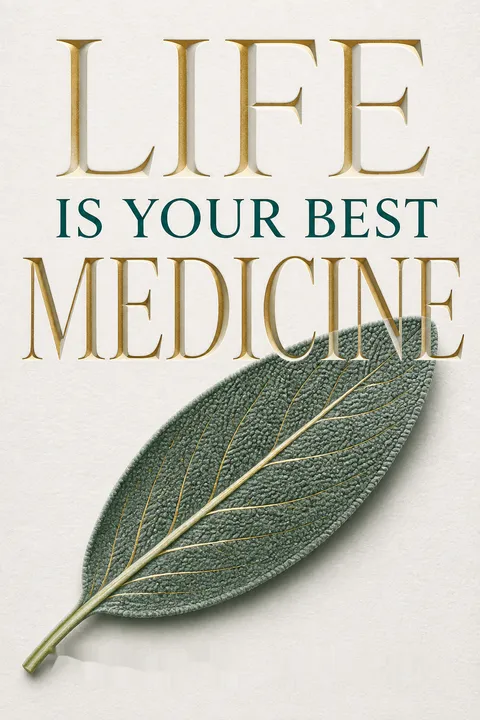
Life Is Your Best Medicine is part memoir, part practical guide, and part argument for a broader definition of health. Its structure follows three widening circles: the body, the senses, and the spirit. Low Dog's career and personal history hold those parts together. Her learning difficulties, early work with a midwife, martial arts training, single parenthood, and medical education are not merely credentials. They shape her conviction that useful care must listen to a patient's life as well as identify disease.
The book's most persuasive contribution is its insistence that ordinary conditions matter: food quality, movement, sleep, relationships, sensory surroundings, and time for recovery. It makes these influences concrete through practices such as slow breathing, shared meals, walking outdoors, and asking for help. Its integrative position is not simply a rejection of conventional medicine. The author's cancer treatment and medical practice make room for drugs and surgery alongside behavioral and traditional approaches.
The evidence needs historical context. The book was published in 2012, and some recommendations about supplements, herbs, nutrition, and disease prevention may not reflect current guidance. Several striking figures are estimates or associations, not guarantees of individual outcomes. Herbal products vary in composition and can interact with medication, so the book is best used as a source of questions for a qualified clinician, not as a prescription manual.
A further tension is the language of personal choice. Lifestyle can influence risk, but not everyone controls work schedules, food access, safe outdoor space, or caregiving demands. Illness is not proof that someone failed to live correctly. The strongest reading holds both truths together: daily habits and relationships can support well-being, while disease remains complex and often beyond individual control. The book ultimately offers not a promise of perfect health, but a wider map of what care can include.
Review Summary
Life Is Your Best Medicine receives mostly positive reviews, with readers praising its holistic approach to health and well-being. Many appreciate Dr. Low Dog's personal anecdotes and practical advice on nutrition, herbs, and self-care. The book is described as easy to read and informative, combining traditional and alternative healing methods. Some readers find it a great reference guide, while others note it may not offer much new information for those already familiar with holistic health practices. Overall, reviewers recommend it as a comprehensive guide to living a healthier life.
People Also Read







Glossary
Integrative medicine
Combines appropriate care approachesAn approach to health care that considers the whole person and uses conventional medicine alongside evidence-informed complementary practices when appropriate. In Low Dog's account, it may include medical treatment as well as nutrition, exercise, sleep, stress management, herbs, massage, and attention to relationships and beliefs.
Four-Seven-Eight Breath
A paced breathing exerciseA breathing practice in which a person inhales through the nose for four counts, holds the breath for seven counts, and exhales for eight counts. Low Dog recommends repeating the cycle four times while seated or lying comfortably. She presents it as a simple way to encourage calm and focus.
Glycemic index
Ranks blood sugar responseA measure used to compare how quickly carbohydrate-containing foods raise blood sugar. Low Dog distinguishes it from glycemic load, which also accounts for serving size. She uses these concepts to favor sources such as whole grains, vegetables, and fruit over rapidly absorbed refined carbohydrates.
Biophilia
Human affinity for living natureA term popularized by naturalist Edward O. Wilson for an assumed human tendency to feel drawn to living things and natural settings. Low Dog uses it to explain why gardens, landscapes, and other natural environments may feel restorative compared with heavily built surroundings.
Animal-assisted therapy (AAT)
Therapeutic work with animalsThe intentional use of specially trained animals in settings such as hospitals, schools, and care facilities to support physical, social, or emotional well-being. Low Dog describes animals helping people feel calmer, engage with others, and cope with loneliness, illness, or distress.
Nature-deficit disorder
A label for reduced nature contactA phrase used by Richard Louv to describe children's growing separation from natural environments. Low Dog discusses it as a proposed way to frame possible consequences of spending little time outdoors, including reduced opportunities for exploration, play, and attention-restoring contact with nature.
Resiliency
Capacity to recover from adversityLow Dog defines resiliency as the ability to gather strength and resources to meet difficult circumstances and recover. She treats it as physical, emotional, and social, supported by nutrition, movement, sleep, healthy relationships, stress management, and the ability to organize commitments and seek help.
Penn Resiliency Program
A child coping-skills curriculumA school-oriented program described in the book as teaching children strategies for problem-solving, managing emotions, handling conflict, and relaxing. Low Dog reports that the program used 18 to 24 lessons and was evaluated in trials involving children ages 8 to 15, with results suggesting reduced depression and anxiety.
Vision quest
A solitary spiritual seeking practiceIn Low Dog's memoir, a personal rite of solitude in the desert, preceded by a year of preparation and followed by three days and two nights without food or water. She interprets the experience as helping her release grief and shame. The account is her individual experience, not a universal description of Indigenous ceremonies.
Download PDF
Download EPUB
.epub digital book format is ideal for reading ebooks on phones, tablets, and e-readers.








