

Key Takeaways
Treat everyday competence as a sequence, not a personality trait.
Small steps lower the stakes. This collection turns tasks that can feel mysterious into manageable procedures. In a survey cited by the flower-arranging article, 68 percent of grocery-store flower buyers said they were afraid to arrange flowers. The fix is not artistic genius: plan where the vase will sit, choose a suitable container, trim stems, and arrange them. Three to five flowers can be enough, and tape across a vase can help hold them in place.
Instructions beat bravado. The same approach works for a button: locate its original position, stitch through its holes several times, then wrap thread around the fabric-to-button gap to create a small support. The book's practical promise is simple: a little preparation and a clear order can make ordinary tasks less intimidating.
What's striking is how often embarrassment masquerades as inability. A task feels innate when its steps remain invisible, but making the sequence explicit gives a novice somewhere to begin and a way to notice mistakes. This resembles procedural learning: complex performance becomes more accessible when attention is directed to a few concrete actions at a time. The approach is strongest for repeatable tasks with visible results. It cannot replace judgment where materials, risks, or individual circumstances differ, but it is an excellent antidote to the belief that practical competence is something other people are simply born with.
Prevent household mess by doing small maintenance before it compounds.
Routine beats rescue. The bathroom advice divides work into brief daily habits and a weekly clean. Rinsing the sink and shower, removing hair, and hanging towels takes about five minutes a day; the fuller weekly clean takes roughly 30 minutes. Frequent attention prevents soap scum and grime from becoming a larger job.
Clean in manageable zones. For the refrigerator, discard old food, then clean one shelf or bin at a time with hot water and dish soap. Check the door gasket, where mold can collect, and cover food before returning it. For lawn care, the book recommends a sharp mower blade and a higher cut to avoid damaging grass and encouraging weeds. Regular care is not glamorous, but it limits the need for strenuous repairs.
The handbook's maintenance advice is really about controlling accumulation. A small deposit of grime, clutter, or deferred care is easy to ignore; repeated neglect makes it more costly to remove. This is a practical form of preventive maintenance, familiar from engineering, where inspecting and servicing a system can avert a larger failure. The benefit is not only cleanliness but reduced decision fatigue: a recurring routine replaces the question of when to start. Still, routines should fit the household. A bathroom used by many people may need more frequent attention than the book's weekly baseline.
Inspect the evidence instead of trusting appearances or packaging.
Labels need arithmetic. A nutrition label gives information per serving, not necessarily per package. The book's example is an iced tea with 100 calories per serving and 2.5 servings in the bottle: finishing it means consuming 250 calories. It also directs readers to look beyond headline numbers, checking fiber, sodium, and the ingredient list. Its specific nutrition guidance reflects the period when the book was published, so current labels and health advice deserve priority.
Produce has better clues than color. For citrus, the book recommends comparing weight and firmness: among similar fruits, the heavier one is often juicier, while overly soft fruit may be past its best. A ripe grapefruit can still be green. The general lesson is to use observable, relevant clues rather than a package's most prominent number or a fruit's most familiar color.
This is a lesson in measurement literacy. Consumers routinely mistake a convenient unit, such as one serving or one piece of fruit, for a meaningful comparison. The book helps readers ask what the number refers to and which sensory signal actually predicts quality. That habit transfers well beyond groceries: check the denominator, compare like with like, and distinguish appearance from evidence. The caveat matters especially in nutrition. Label formats, dietary recommendations, and a person's health needs can change, so the chapter's 2012 advice is best read as a method for examining information, not as a current medical prescription.
Prepare for emergencies before stress steals your judgment.
Know the first safe move. For a small pan fire, the book says to turn off the heat and cover the pan with a metal lid, leaving it covered so oxygen cannot feed the flames. Never pour water on a grease fire. If smoke fills the room or the fire spreads, get everyone out and call emergency services. The chapter warns that kitchen fires can grow rapidly, making hesitation dangerous.
Store what cannot be replaced. An evacuation kit should include basics such as water, food, a radio, and first-aid supplies, but also copies of insurance and banking information, medication details, and contact cards. The Red Cross guidance cited in the book recommends one gallon of water per person per day. Keep documents protected and accessible, and make sure family members know where the kit is.
Emergency guidance is valuable because stress narrows attention. A rehearsed first action can prevent a panicked improvisation, while a prepared kit protects information that is difficult to reconstruct after a disaster. The book usefully treats documents and contacts as part of readiness, not as administrative extras. Its instructions also show why safety advice must be conservative: a fire extinguisher or household repair is appropriate only when the danger is limited and escape remains possible. Readers should verify current local emergency recommendations and follow the instructions for their equipment.
Teach physical skills by making the first movement easier.
Reduce the challenge first. To teach a child to ride a bike, the book recommends removing the pedals and letting the child learn to balance by walking the bike, then gliding with feet close to the ground. Once the child can balance, the pedals go back on. The sequence isolates the hardest early skill instead of asking the learner to balance, steer, and pedal all at once.
Aim at a useful intermediate target. A bowling beginner is told to focus on lane arrows rather than the distant pins. A bow-tie learner practices the tying sequence before expecting a quick, neat result. Each example replaces a vague goal, such as “do it properly,” with a manageable action that gives immediate feedback. Protective equipment and a suitable practice space still matter, especially when children are learning.
The bike lesson is a particularly clear example of reducing cognitive load. When several demands arrive at once, a novice can struggle to identify what went wrong; isolating balance makes progress easier to feel and repeat. The same principle appears in skill training across sports and crafts: practice a simplified version, then add complexity when the foundation is stable. The method is not universally optimal, and readiness varies by learner. Its deeper value is the question it prompts: which part of this task can be practiced safely on its own?
Pack and load around access, weight, and the likely disruption.
Take less, then organize it. For a road trip, the book advises laying out belongings before packing and returning about half to storage. Use smaller bags for individual passengers rather than one oversized suitcase, and keep a first-aid kit within reach. A vehicle check before departure can catch problems with oil, wipers, or other essentials.
Give heavy objects a stable home. On moving day, place the heaviest items near the front of the truck, distribute weight evenly, and use blankets or other padding to protect furniture. For boxes, build stable layers, with sturdier and heavier packages below lighter ones. One person should direct the loading while others carry items out. This reduces confusion and makes it easier to use gaps for smaller packages.
Packing is a form of systems design: what goes in, where it sits, and what must be reached first all shape the trip. The book's advice to appoint one loader recognizes that coordination can matter as much as physical effort. A single person managing the arrangement reduces the chance that several helpers create a pile no one can safely move. The same logic applies to emergency kits: usefulness depends on access, not merely possession. The trade-off is that minimalism should not become deprivation; weather, passengers, and trip length change what counts as necessary.
Speak plainly when a relationship needs repair, limits, or an ending.
Make the message clear. The apology advice favors a direct conversation, a clear statement of regret, and no defensive “but” that cancels the apology. The recipient need not forgive immediately; acknowledging the apology is enough. For a difficult workplace or family conversation, the book recommends describing specific events and asking questions rather than attacking someone's character.
Do not disguise a no. If a request needs consideration, pause and give a time to respond. If the answer is no, say so clearly rather than inventing a string of excuses that may suggest the answer could change. The breakup advice similarly emphasizes a private, face-to-face conversation when safe, honest reasons without blame, and avoiding behavior that implies reconciliation if the decision is final.
These communication pieces share a useful distinction between kindness and ambiguity. People often soften an uncomfortable message until the other person cannot tell what is being asked, regretted, or refused. Clear language respects the other person's ability to respond, while a calm tone helps keep the discussion from becoming a contest. The book's face-to-face preference for apologies and breakups is sensible for many relationships, but not universal. Distance, disability, coercion, or safety concerns can make another channel more appropriate. Directness is a tool for respect, not a rule that overrides context.
Use etiquette to reduce embarrassment, not enforce one universal script.
Start with consideration. When asking for a favor, the book suggests making the request in good time, explaining it personally, and giving the other person room to decline. If the answer is no, thank them for considering it. At a restaurant, asking in advance who is paying can prevent the awkward bill arriving without an agreed plan. The book's dating rule is that the person who invited the other person pays, while later dates may call for a more balanced arrangement.
Read the room. Door customs have shifted from gender-based rules toward whoever arrives first opening the door, with assistance based on need. Social kissing varies by region and group, and a nod or handshake can be safer than guessing. The book's funeral guidance likewise asks drivers outside a procession to stay out of it and show respect.
Etiquette works best as a coordination system, not a test of moral worth. A small courtesy can reduce uncertainty, but conventions vary across generations, regions, and relationships. The handbook recognizes this change in its door advice and its emphasis on following the other person's cues around social kissing. Its strongest principle is therefore not memorizing every rule, but noticing what would make the interaction easier for everyone. That principle also leaves room to challenge customs that presume fixed roles, especially when a supposedly polite script makes one person feel excluded or pressured.
Build your raise case from documented results, not years served.
Keep a record while the work is fresh. The raise advice recommends noting contributions that go beyond the original job description, such as work that saved time or money. A written proposal can connect the goals set at hiring with results delivered and plans for further improvement. This gives a manager concrete evidence to evaluate rather than a general appeal based on tenure or personal expenses.
Make a specific, professional request. Set a meeting rather than raising the issue casually, decide on a realistic amount, and be prepared to negotiate. If the answer is no, ask what goals would support revisiting the request in three to six months. The book cautions against threatening to quit as leverage. Its separate advice on reaching decision-makers favors persistence, though some suggested tactics, such as claiming to return a call, raise ethical concerns.
The recommendation to maintain a contribution record solves a basic memory problem: people often remember recent frustrations more vividly than months of useful work. Written evidence also shifts a compensation discussion from personal deservingness toward organizational value. That framing is practical, though it should not imply that every contribution can be neatly converted into revenue or that employers always reward documented performance. The advice on persistence is most defensible when it remains truthful and respects boundaries. Access is difficult, but deception can damage the trust a worker is trying to establish.
DIY confidently, but recognize the point where expertise is safer.
Start with a bounded problem. For a bathroom sink clog, the book recommends removing the cover over the overflow opening with a rag before using a small sink plunger. If that fails, a drain snake may help. If multiple drains back up, or the problem is a stubborn kitchen clog, the advice is to call a plumber. It also warns against pouring chemical drain cleaners into a pipe, especially if a professional may have to handle it.
Identify the part before replacing it. A leaking faucet may need a cartridge, a washer, or another model-specific part. Turn off the water, identify the faucet brand and model, and use the correct instructions and tools. A repair that begins with guessing can waste money or cause damage. Knowing when a task exceeds one's tools or knowledge is part of practical skill, not a failure of it.
The handbook is at its most responsible when it treats referral as part of the procedure. Competence is not measured by how many repairs someone attempts; it includes recognizing hidden complexity, such as shared plumbing or a faucet whose internal parts vary by model. This is a form of calibrated confidence: act when the problem is bounded, gather information when it is not, and stop when the downside rises. The boundary can be hard to judge, especially for renters or people with limited resources, so access to trustworthy professional help remains an important part of the equation.
Analysis
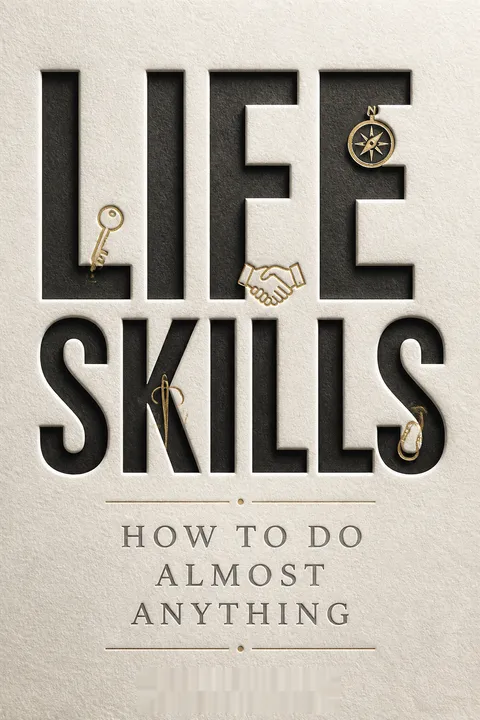
Life Skills is not a single-argument book so much as a newspaper service desk in book form. Its chapters move from arranging flowers to changing tires, from apologies to evacuation plans. The unifying idea is that ordinary competence can be made teachable: identify the task, prepare the tools, follow a sensible sequence, and know when the task is no longer safe to handle alone. That makes the book unusually practical, but also difficult to summarize. Its value lies less in one grand framework than in the accumulation of small procedures that readers can retrieve when a real need appears.
The collection's strongest method is procedural specificity. “Clean the refrigerator” becomes a series of manageable actions, while “teach a child to ride” becomes a progression from balancing to gliding to pedaling. Such sequencing reduces the number of decisions a novice must make at once. The advice also repeatedly favors preparation over improvisation: check vehicle supplies, record work contributions, store emergency documents, and ask about the bill before it arrives. In each case, a little forethought prevents a predictable moment of confusion.
The book's newspaper origins are both its advantage and its limitation. Expert interviews lend practical authority, and the variety makes the advice easy to browse. But these are brief service articles, not a systematically tested curriculum. Some recommendations are tied to 2012, local customs, particular products, or individual circumstances. Nutrition guidance, emergency procedures, and safety rules especially deserve comparison with current authoritative sources. Social advice can also harden into etiquette prescriptions if readers forget that customs vary.
A useful way to read the collection is as a toolkit, not a universal code. The best transferable lesson is not every instruction, but the habit of making a task concrete: clarify the goal, identify the risks, gather what is needed, and break the work into steps. That habit can help with tasks absent from the book, while its warnings about fire, plumbing, and medical situations remind readers that confidence must be calibrated to consequences.
Review Summary
Life Skills receives mixed reviews, with an average rating of 2.77 out of 5. Some readers find the book's basic tips and how-to guides helpful, especially for young adults. However, many criticize it for containing common sense information easily found online. Reviewers note that the book's content is often too generalized, lacks depth, and could benefit from better organization and editing. While some appreciate the wide range of topics covered, others find the information outdated or irrelevant. A few readers mention finding occasional useful tips, but overall, the book is considered disappointing by many.
Glossary
R-I-C-E
Basic sprain careA first-aid mnemonic the book gives for a minor sprain: rest the injured area, apply ice, use compression, and elevate the limb. The chapter cautions that a child who cannot bear weight may need medical attention, and that a wrap should not be tight enough to cause numbness, tingling, or color changes.
Four C's
Diamond buying criteriaThe four characteristics used in the book's engagement-ring guide: cut, clarity, color, and carat weight. Cut concerns how a diamond's proportions affect its sparkle; clarity describes internal imperfections; color uses a grading scale; and carat measures weight. The guide also notes that shape and setting are separate choices.
root collar
Root-to-trunk junctionThe point where a tree's roots meet its trunk, also called the root flare. The tree-planting instructions say it should sit slightly above ground level. Burying it too deeply can leave the tree improperly positioned, so the planting hole and added soil should be adjusted to keep the junction visible above the surrounding ground.
cornerstone
First stable boxA moving-truck loading term for a sturdy box placed against the truck's end wall to establish the depth and height of the first row. The book recommends building around this base, working across the truck, and using smaller packages to fill gaps without crushing boxes or creating an unstable stack.
Download PDF
Download EPUB
.epub digital book format is ideal for reading ebooks on phones, tablets, and e-readers.








