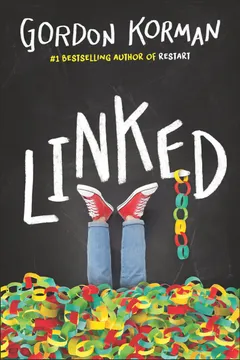


Plot Summary
Red Paint After Hours
Michael Amorosa, a seventh grader who runs the art club, returns to Chokecherry Middle School to retrieve his glitching phone. Near the stairs, he finds a freshly painted swastika. Custodian Mr. Kennedy sees it too and calls the police, while Michael can only stare at the mark reflected in his cracked phone screen.
By morning, the school has covered the wall, but hundreds of students photograph the stain and trade theories. Dana Levinson, the only Jewish student, arrives to find classmates watching her as if the symbol has named her. Principal Brademas calls an assembly, condemns the hatred, and announces tolerance lessons. The wall is repainted; the suspicion and fear remain.
The discovery divides the incident from its meaning. Michael sees evidence of vandalism, while Dana feels the symbol turn her into its presumed target. The school’s quick repainting makes the wall look repaired, but the students’ cameras and whispers keep the image circulating. Brademas tries to replace rumor with instruction, yet the assembly cannot immediately restore Dana’s privacy or Michael’s ordinary place among his classmates. The opening establishes the book’s central tension: a symbol can be physically removed long before people agree on what it says about their community.
Dinosaur Doo Doo Backfires
Lincoln Rowley, usually called Link, has his own trouble on the night the swastika is found. He and his friends carry a heavy bag of fertilizer to the Wexford-Smythe University office, planning to mock the scientists who excavate dinosaur fossils near town. When a car arrives, Link’s friends run, leaving the bag to collapse on top of him.
The people who catch him know his father, George Rowley, a real-estate agent betting heavily on the dig’s tourist potential. George scolds Link for jeopardizing that dream and for making the town look bad. Then the principal calls with news from the school. Link’s prank has already exposed his recklessness; the new crisis draws his family into a much larger public argument.
Link’s prank is comic in intention but reveals a serious hunger beneath it: he wants his father to notice him, even if attention arrives as punishment. George interprets his son’s behavior through the town’s economic future, making every juvenile mistake seem like a threat to a family business plan. That mismatch leaves Link feeling both controlled and unseen. The fertilizer stunt also establishes the practical, small-town ties that will later complicate the investigation: people know whose family owns what, who was where, and who is expected to behave. In Chokecherry, embarrassment travels quickly because nobody is anonymous.
The Wall Follows Dana
Dana has spent six months feeling like an outsider among children who grew up together, but the graffiti changes the shape of that isolation. Students assume the swastika concerns her most, and some treat the incident as a spectacle to share online.
Dana refuses to perform gratitude when classmates offer sympathy; she is unsettled by the mark and by being reduced to the school’s Jewish representative. In social studies, the class studies the Holocaust and a Tennessee school’s paper-clip memorial.
Caroline McNutt, the student council president, wants the school to return to normal, while others resent the new lessons. When Brademas ends the unit after three weeks, a championship banner drops to reveal a second swastika, this one painted in dark roofing tar.
Dana’s discomfort comes not only from hostility but also from the way concern can make her conspicuous. Her classmates mean well, yet their attention assigns her a role she did not choose. The tolerance lessons produce a related paradox: they make history more visible while tiring students who begin to treat the subject as an interruption. The second swastika proves that ending the lessons does not end the threat. The banner’s transformation of a sports celebration into another hateful display also links the school’s ordinary identity to the crisis, making it harder for anyone to dismiss the vandalism as an isolated mark.
Chokecherry's Buried Flames
Because roofing tar appears on the banner and Jordie Duros’s family runs the local roofing business, police search the Duros property and question Clayton Pouncey, Jordie’s friend.
A newspaper story then recalls the county’s 1978 Night of a Thousand Flames, when Klan members reportedly surrounded the foothills with burning crosses. Pouncey admits that his grandfather belonged to the Klan and once took his father, then a young child, to the gathering.
Link’s parents argue over whether the town should acknowledge this past or protect George’s plans for a dinosaur destination. Before the debate can settle, a third swastika appears on a school dumpster. Its painted surface gives the investigation another lead and makes the old history feel present again.
The town’s economic ambition makes its past feel like a threat to be managed rather than a record to be faced. George worries that investors will reject Chokecherry if its history becomes public; Link’s mother insists that hiding the history would make the town less honest, not more attractive. Pouncey’s family connection shows how inherited shame can persist without determining a child’s beliefs. The new vandalism prevents residents from treating the Klan story as safely distant. The scene’s tensions are not simply between good people and bad ones; they involve a community deciding whether truthful memory is a liability or a necessary condition of trust.
Link Finds His Inheritance
As swastikas continue appearing around school, Link’s mother tells him that his grandmother was born to a Jewish family in Nazi-occupied France. Her parents left her with nuns to save her from arrest, and she learned the truth about her origins only late in life. Link is furious that his parents kept the history from him, then begins to see the school’s symbol through the fate of relatives he never knew.
He seeks out Dana, who explains that Jewish identity follows the mother’s line and that he is Jewish too. Dana mentions bar mitzvah preparation as a way to end their awkward conversation. Link takes the suggestion seriously, contacts Rabbi Gold, and asks his parents to help arrange the ceremony.
Link’s discovery does not give him a ready-made identity; it unsettles the one he already inhabits. He has been accustomed to his father describing his life as a future project and his friends seeing him as an athlete and prankster. His family history adds a past he cannot simply ignore, while his parents’ delayed disclosure makes self-discovery feel like a breach of trust. Dana’s practical explanation offers a first action rather than a complete answer. The proposed bar mitzvah becomes a way to explore belonging, commemorate lost relatives, and choose something meaningful without pretending that one ceremony can settle who Link is.
Six Million Paper Links
Caroline draws students to a council meeting by spreading word that Link will attend. Once he arrives, the group debates the swastikas and the town’s response. Dana doubts students can stop the vandal, but Link argues that they can still act together. Michael proposes a paper chain of six million links, one for each Jewish victim of the Holocaust.
Brademas worries that the school cannot make so many, yet Link connects the number to the family his grandmother lost, and the principal approves the effort. Michael organizes the art room as Link studies Hebrew and Dana helps him. When another swastika appears on a science table, the volunteers respond by working harder, producing nearly a thousand links on their first afternoon.
The paper chain changes the students’ position from audience to makers. They cannot identify the vandal or undo what the swastika does, but they can create a visible counter-image through repeated, collective labor. Michael’s proposal turns an abstract number into a task that consumes time, paper, and attention. Link’s family history gives the project personal weight without making the Holocaust his alone to claim. Caroline’s organizing instinct and Dana’s presence help the idea become a school activity rather than a private gesture. The project also puts friction inside its own ideal: students must cooperate despite rivalries, impatience, and the sheer scale of what they have chosen.
ReelTok Goes Live
Adam Tok, the brash video blogger known as ReelTok, arrives to film the school and its paper-chain effort. Brademas tries to keep him off campus, but the students gather around him, eager to be interviewed.
His videos criticize the town for its swastikas and its reluctance to discuss the Klan past, drawing attention that helps donations arrive. The chain grows beyond the art room and into the gym. When the school runs out of construction paper, Brademas ends the project; Caroline protests publicly, and an art-supply company sends enough paper to restart it.
Families, younger students, the high school, and local businesses join in. ReelTok’s publicity helps the effort spread, even as his sensational coverage makes Chokecherry feel attacked.
ReelTok offers reach without stewardship. He can direct attention toward the chain and help secure supplies, but he also turns a real community’s distress into material for his audience. The students are not simply victims of that attention: they use the exposure to gather resources and recruit helpers. Brademas, by contrast, fears that publicity will lock the town into its worst image. The paper shortage exposes the project’s dependence on adult budgets, then the donation demonstrates how outside audiences can alter what a local institution thinks is possible. The same platform can amplify solidarity and profit from conflict, and the book refuses to make those functions identical.
Pamela's Locker Opens
The swastikas multiply, and Michael, still suspected because he found the first one and has access to art supplies, privately considers classmates and staff as possible culprits. The breakthrough comes when Jordie’s estranged girlfriend, Pamela Bynes, shoves him in a hallway.
Purple paint transfers from her hand to his shirt, matching a fresh swastika on the trophy case. Link initially claims responsibility to keep the school from searching Pamela’s locker, but Brademas has the lock cut and finds a wet brush and matching paint.
Pamela is removed from school. ReelTok soon identifies her as the source of every later swastika and reports her family’s Klan connection. Pamela admits she did not paint the first mark, leaving the original vandal unidentified.
The reveal complicates the students’ desire for a neat solution. Pamela’s participation in the paper-chain project and her familiar place in school life do not prevent her from spreading hate; her public identity offers no reliable guide to her private beliefs. Link’s reflexive attempt to shield her briefly repeats the old loyalty of his prankster circle, even as the evidence turns against her. Jordie’s heartbreak brings the political revelation into a friendship that had seemed ordinary and secure. Most important, Pamela’s confession leaves one mark unresolved. The school has identified a perpetrator, but the origin of the crisis remains attached to another student’s concealed action.
Names Inside the Chain
The chain passes one million links, and Chokecherry’s volunteers meet Holocaust survivors by video call. The survivors recount lost families and ask the students to write forty-two relatives’ names onto individual links.
Michael, Dana, Caroline, and Jordie carefully copy the names; Link adds the names of his grandmother’s unnamed parents. Around Thanksgiving, Link’s grandmother visits and tells him how she grew up without knowing why her parents had left her with nuns.
Surrounded by the chain in the municipal garage, she recognizes it as a memorial to the family she could not mourn. Meanwhile, contributions from schools and households keep arriving. In winter, a final shipment pushes the count past six million, and the students pause their celebration to remember the lives represented.
The chain’s scale becomes emotionally legible through names. A million links can still feel like a statistic; a parent or sibling written onto one strip of paper makes loss particular without reducing its enormity. Link’s grandmother’s response also reveals that survival does not erase grief. She was protected from the Holocaust but deprived of knowledge about the family she had lost, and the chain gives her a material place to encounter them. The students’ achievement therefore changes as it grows: it begins as a response to vandalism and becomes a form of public remembrance. Reaching six million is both a triumph of coordination and a reminder that no count can restore the dead.
The First Hand Revealed
After Pamela insists that she copied the first swastika rather than creating it, ReelTok uses footage from a home security camera facing the school. The recording shows Michael entering after school, then Link arriving later, before the graffiti is reported.
ReelTok confronts Link with the evidence. Link admits that anger at his father and suspension from sports drove him to paint the first symbol as a shocking act of rebellion, without grasping its full harm. He is suspended and charged with vandalism.
Pamela later calls him, treating his action as inspiration for her own; Link rejects her attempt to make them allies and ends the call. Though ashamed and isolated, he tells Rabbi Gold the truth about the graffiti and asks whether he can still proceed with his bar mitzvah.
The revelation separates intention from impact without allowing intention to erase responsibility. Link did not paint the symbol from an organized racist commitment, but he chose a hateful image because he wanted to wound and provoke. His anger explains the impulse, not the consequences. Pamela’s call tests whether shared wrongdoing can become a false bond; Link refuses to let his thoughtlessness serve as cover for her deliberate campaign. His confession to Rabbi Gold marks a change from managing appearances to accepting judgment. The book makes accountability active rather than declarative: Link must admit what he did to someone who understands the symbol’s history before he can decide what his ceremony means.
Crosses Beneath the Dig
While visiting the paleontology site with her father, Dana notices that discarded, scorched boards have nail holes and crosspieces. She recognizes them as pieces of burned crosses, likely remains of the Night of a Thousand Flames.
Her discovery gives the sheriff and the town physical evidence of an event some residents had dismissed as rumor. Later, Link visits Dana’s home after telling Rabbi Gold he will still have his bar mitzvah. Dana confronts him about the first swastika and his silence.
Link admits he was angry, frightened, and afraid that confessing would ruin the paper-chain effort, but he does not ask her to absolve him. He explains that the ceremony still matters because of his grandmother’s family. Dana is furious, yet understands that his commitment is real.
Dana’s discovery turns the town’s historical argument from competing memories into a question of what residents will do with evidence. The scorched wood cannot explain every detail of the past, but it makes denial harder to sustain. Her confrontation with Link carries a different burden: she must judge a person she had helped and whose supposed connection to Jewish history now feels compromised by his action. Link does not demand that his ancestry excuse him or that his apology restore their friendship. Dana’s anger remains legitimate. The scene allows recognition without instant reconciliation, showing that understanding another person’s motives is not the same as granting forgiveness.
Snow Closes the Roads
A blizzard closes the mountain passes on the morning of Link’s bar mitzvah, trapping his grandparents away from the synagogue. Rabbi Gold arranges to lead the service by video, but Dana arrives with her family in a university vehicle and takes Link to the school instead.
She has recruited students and residents to move all six million links into the building. ReelTok tries to attend and livestream, but Sheriff Ocasek blocks him. In an auditorium wrapped in the chain, Link begins by apologizing to the gathered town and accepting responsibility without excuses.
He then completes the Hebrew service with Rabbi Gold on screen. His parents, grandparents, Dana, Michael, Caroline, Jordie, and Pouncey witness him finish; classmates carry him through the halls until they stop to protect the chain.
The snowstorm removes the ceremony’s planned setting, but it also makes visible the people who choose to show up. Dana’s action is not a declaration that Link has been forgiven; it gives him a chance to take responsibility before the community he harmed. The six million links surrounding him hold together two truths: the scale of the historical loss and the possibility of collective care in the present. Link’s apology comes before his ritual performance, so the ceremony cannot be mistaken for an easy absolution. His classmates’ celebration is generous, but their care for the fragile chain keeps the moment grounded in ongoing responsibility.
The Museum Keeps Watch
After the ceremony, Chokecherry’s town council votes to create a museum and tolerance center. Its planned exhibits include the six-million-link chain, a Torah rescued during the liberation of a Nazi-occupied village, and the charred cross timbers Dana found at the dig.
The town has stopped treating the Klan gathering as an unprovable rumor, though residents still struggle with the shame it brings. Pamela’s family prepares to move, while Link accepts that remorse cannot erase his role or guarantee that everyone will forgive him.
The chain remains finished, but Michael reflects that tolerance will need continual work. Link declines Caroline’s offer to join her student-government campaign, choosing the art club instead. The town’s future is no longer defined solely by George’s dinosaur-resort dream.
The museum changes remembrance from a temporary school project into a civic responsibility. Its exhibits place the Holocaust, the rescued Torah, and Chokecherry’s own Klan history in the same public space, resisting the impulse to remember only distant atrocities. That choice does not make the town innocent; it makes denial harder to maintain. Link’s final position is similarly unfinished. He has made amends in some ways, but he does not claim that one ceremony has transformed him beyond recognition or erased his offense. The ending’s emphasis on continued work is precise: a completed chain can be stored, while tolerance must be practiced again whenever history or present behavior tests it.
Analysis
Linked makes its moral argument through a chain of concrete actions rather than a simple division between good students and bad ones. Link paints the first swastika out of anger, not organized ideology, but the difference explains his motive without excusing the harm. Pamela’s later campaign is more deliberate, yet her family history does not absolve or fully explain her either. The distinction matters because the novel treats responsibility as personal while showing how prejudice is taught, normalized, and carried through families and communities.
The paper chain translates scale into labor. Six million is difficult for young students to imagine, so they cut and join thousands of small pieces, then add names supplied by survivors. The project cannot repair historical loss, but it can change what the students do with their attention: instead of merely watching symbols appear, they build a public act of remembrance. The chain’s expansion also depends on imperfect systems. ReelTok brings help while manipulating the story; school officials make cautious choices; students disagree, tire, and return to work.
Chokecherry’s history sharpens the book’s account of memory. Residents argue that the Night of a Thousand Flames may never have happened until Dana recognizes burned crosses in the excavation debris. The town’s desire to attract tourists has encouraged silence, but the physical evidence forces public acknowledgment. The museum’s planned exhibits refuse to separate distant atrocity from local complicity.
Link’s bar mitzvah does not function as absolution. He confesses before the ceremony, apologizes to the people he harmed, and accepts that they may remain angry. Dana’s help and the community’s attendance offer a chance to act differently, not proof that the past has vanished. The ending’s central insight is practical: a chain can be completed and stored, while tolerance requires repeated choices to remember honestly, confront harm, and keep working after public attention moves on.
Characters
Lincoln Rowley
Identity-seeking young athleteLink is a popular seventh grader known for sports, pranks, and acting before he thinks. His father’s constant plans for his future leave him feeling more managed than understood, while his friends expect him to remain the group’s comic troublemaker. Learning about his family history forces him to consider a part of himself he had never been asked to examine. Link is not naturally reflective, so his attempts to understand his heritage are halting and sometimes uncomfortable. He wants to choose a purpose for himself, not merely fulfill an adult’s ambition. His impulsiveness makes him capable of harm, but his curiosity and capacity for self-questioning make him more than the role his classmates have assigned him.
Dana Levinson
Watchful Jewish newcomerDana is the only Jewish student at Chokecherry Middle School and the daughter of paleontologists working at the local dig. She has recently moved from a larger community and feels the strain of joining a school where friendships and reputations were formed long before her arrival. Dana is thoughtful, observant, and resistant to being treated as a symbol or spokesperson. Her knowledge of Jewish tradition is practical rather than showy, and she is willing to help someone who approaches her sincerely. She also has a firm sense of justice: empathy does not require her to excuse harm. Dana’s perspective keeps both school projects and personal relationships connected to the people affected by prejudice.
Michael Amorosa
Art-minded first witnessMichael is the art-club president who finds the first swastika while retrieving his forgotten phone. He is creative, observant, and accustomed to being underestimated beside more popular students. His role as a witness makes him an early target of suspicion, especially because he has access to art supplies. Michael’s care for practical details, including the paper chain’s painstaking count, gives the school’s response structure and endurance. He often sees the distance between a powerful idea and the work required to carry it out. His quiet persistence turns artistic skill into a form of public responsibility without making him a natural leader in every social setting.
Caroline McNutt
Relentless student organizerCaroline is the seventh-grade student-council president, an energetic planner who wants school life to be more than routine classes and sports. She can be ambitious and eager for recognition, but her desire to involve students is genuine. The swastika crisis gives her a problem larger than a dance or election, and she works to turn discussion into action. Caroline understands that participation often needs a spark, even if she sometimes relies on popularity to draw a crowd. Her confidence can tip into bossiness, yet she is capable of listening when classmates bring forward a stronger idea. She embodies the difficult, often unglamorous labor of organizing people who would rather leave the work to someone else.
Jordie Duros
Loyal friend and boyfriendJordie is one of Link’s closest friends and part of the prank-loving trio with Link and Pouncey. His on-again, off-again relationship with Pamela has lasted since childhood, making the school’s crisis personal as well as public. Jordie is quick with jokes and loyal to his friends, but he is not especially good at anticipating how his teasing lands. He responds to serious events more thoughtfully than his clowning suggests. His family’s roofing business draws suspicion after tar appears on school property, while his relationship with Pamela forces him to confront how little he knew about someone close to him.
Clayton Pouncey
Blunt prankster with baggageUsually called Pouncey, Clayton is Link and Jordie’s friend, an oddball who prefers blunt jokes to earnest conversation. His father is known locally for bigotry, and his grandfather’s Klan past makes classmates wonder whether prejudice runs through the family. Pouncey does not hide that history, but he resists letting it become a full account of who he is. He often deflects discomfort with humor and food, which can make him seem careless when he is actually avoiding subjects he does not know how to process. His loyalty shows most clearly through presence: he follows his friends into work and trouble, even when he pretends not to care.
Pamela Bynes
Popular childhood friendPamela is a popular student, a cheerleader, and Jordie’s longtime on-again, off-again girlfriend. She is accustomed to being part of the school’s familiar social center and can be sharp in her playful arguments with Jordie. Her confidence makes her seem easy to read, but she holds beliefs and family history that classmates do not suspect. Pamela’s place in Link’s wider circle shows how little popularity can tell people about someone’s private convictions. Her character raises questions about inherited ideology, personal choice, and the limits of treating a familiar face as proof of good character.
Adam Tok
Provocative online broadcasterAdam Tok, known online as ReelTok, is a New York video blogger who builds his audience through intense close-ups, dramatic reactions, and confrontational reporting. He sees Chokecherry’s swastikas and disputed Klan history as a compelling story, and he is skilled at finding the people and images that will keep viewers watching. His coverage helps the paper-chain project attract donations and outside participation, but he often treats students’ experiences as material for his channel. Adam is neither a neutral observer nor a simple villain: his influence can make neglected facts visible while rewarding the spectacle of conflict.
George Rowley
Father chasing a futureGeorge owns Chokecherry Real Estate and hopes the dinosaur excavation will transform the isolated town into a major tourist destination. He has invested heavily in local property and tends to interpret Link’s behavior through its consequences for the family’s future. George is ambitious and often overbearing, though his concern for his son is genuine beneath his lectures. The swastika crisis forces him to weigh his public plans against the history and safety of his family. His arc begins in the language of investment and image, but his strongest loyalties are tested in the private choices he makes as a father.
Nicole Rowley
Mother guarding family historyNicole is Link’s mother and the daughter of the woman hidden as a baby during the Nazi occupation of France. She knows the family history before Link does, and her decision to delay telling him comes from a desire to protect him rather than from indifference. That choice still hurts him when the truth emerges. Nicole is more troubled by the swastikas than George first realizes, and she understands that the marks touch her own family. She supports Link’s search for meaning while recognizing that identity can be complicated by a life already shaped in another tradition.
Lincoln's grandmother
Hidden child and survivorLink’s grandmother was placed with Catholic nuns as an infant when her Jewish parents faced arrest in occupied France. She grew up without knowing her origins and learned the truth only late in life. Her experience complicates any simple idea that survival automatically brings understanding or closure. She has lived a full life in the faith and family she knew, while carrying questions about the parents she never met. Her quiet presence gives Link a personal connection to history, but she remains a person with her own pace of discovery, not merely a symbol of his ancestry.
Principal Brademas
School's uneasy stewardBrademas is the principal responsible for protecting students and keeping the school functioning as swastikas appear across its walls and equipment. He responds with assemblies, educational lessons, and investigations, though the students eventually grow tired of his approach. He is cautious about the paper chain’s scale and about public attention, but he also recognizes the students’ need to act. His decisions are shaped by competing duties: maintaining school routines, supporting students who feel threatened, and responding to an unknown vandal. He is not always right, but he is willing to revise his position when the school community makes its needs unmistakable.
Sheriff Bennett Ocasek
Local investigator and skepticOcasek leads the investigation into the school vandalism and faces pressure from residents who want a quick answer. He initially considers Michael and other students as possible suspects because the school’s large population makes surveillance difficult. He is guarded about the town’s old Klan history, partly because he grew up hearing conflicting accounts. Ocasek dislikes ReelTok’s methods but understands the damage caused by hate and denial. His role connects the school’s mystery to the broader community, where law enforcement must distinguish careful investigation from the wish to protect a flattering image.
Rabbi Gold
Patient religious guideRabbi Gold leads Temple Judea in Shadbush Crossing and helps Link prepare for a bar mitzvah through remote lessons and a compressed course of study. He treats religious practice as something to understand, not merely recite, and makes room for a teenager who is beginning without years of preparation. Rabbi Gold is warm but direct when Link turns to him with a serious confession. He helps Link distinguish forgiveness from escape from responsibility. His guidance gives the ceremony spiritual shape while leaving the difficult moral work to Link himself.
Andrew Yee
Protective scientist's sonAndrew is an eighth grader whose mother works at the dinosaur dig. He tries to guide Dana away from the first public display of the swastika and stays attentive to her discomfort. Like Dana, he belongs to the visiting scientists’ families and knows what it feels like to be treated as an outsider in Chokecherry.
Ryan Rowley
Curious younger brotherRyan is Link’s younger brother, whose ordinary childhood concerns offer a contrast to the anxiety surrounding the school. He misunderstands the word swastika and accepts an innocent explanation from his mother. He also makes his own small contribution to the paper chain, showing how the project reaches beyond the students directly involved in its planning.
Plot Devices
The Swastika Graffiti
Visible hate, hidden authorshipThe first swastika disrupts school life, makes Dana feel exposed, and forces students and adults to confront the meaning of hate in their community. Later marks appear on a banner, a dumpster, school equipment, and other surfaces, each extending the crisis and shifting suspicion. The recurring symbol is also the novel’s central mystery: the school sees the marks, but does not know who made the first one or why. Its removal from a wall cannot settle those questions, so the repeated images make the difference between cleaning up evidence and repairing harm concrete.
The Six Million Link Chain
Grief made visibleMichael’s paper-chain proposal gives students a physical task representing the six million Jewish people murdered in the Holocaust. Each link requires cutting, folding, and fastening paper, so the large number becomes something students can approach through repeated human effort. The chain grows from a school activity into a community and international project, drawing in families, businesses, schools, and distant supporters. Writing survivors’ relatives’ names on links makes the memorial more personal. Its purpose is not to claim that paper can equal lives or undo the past, but to help students grasp the scale of loss and make remembrance public.
The Family Revelation
Ancestry becomes a questionLink learns that his maternal grandmother was born to Jewish parents who placed her with nuns to protect her from Nazi persecution. The revelation connects Link to a history he had understood only through school lessons and gives him a new reason to approach Dana and Rabbi Gold. It does not dictate what he must believe or erase the life his family has already built. Instead, it creates a conflict between inherited identity, lived experience, and personal choice. The family history also makes the swastika crisis intimate for Link in a way it was not before.
The Doorbell Camera
A hidden witness surfacesA home security camera facing the school records who enters the building on the night the first swastika appears. ReelTok obtains access to the footage through an online contact and uses it to challenge Pamela’s claim that she did not paint the original mark. The recording establishes that Link entered after school and gives the mystery a decisive answer. It also exposes the danger of surveillance and viral reporting: the image can reveal evidence, but the blogger controls how and when the discovery reaches the people involved.
ReelTok's Channel
Publicity with a priceAdam Tok’s videos bring Chokecherry’s vandalism, Klan history, and paper-chain project to a huge audience. His coverage helps attract supplies and contributions, making the students’ undertaking far larger than the school could manage alone. At the same time, he frames local events for maximum attention and treats students and residents as subjects in a story he wants to control. His channel connects the small town to people who can help, but it also intensifies shame, rumor, and conflict. The book uses his influence to show that publicity can support a cause while exploiting the people who made it necessary.
Download PDF
Download EPUB
.epub digital book format is ideal for reading ebooks on phones, tablets, and e-readers.








