

Key Takeaways
Treat family memory as history with a point of view.
The family archive edits. Moaveni grows up in California among relatives who remember Iran through exile, loss, and the overthrow of a life they valued. Her childhood image casts Iran as a radiant Persian homeland stolen by the 1979 revolution. That memory is emotionally real, but incomplete: the Shah’s authoritarian rule, economic inequality, and silencing of dissent helped fuel the uprising, even as clerics later seized power and imposed a repressive order.
Nostalgia has a job. Calling themselves exiles rather than immigrants lets her family preserve the hope that their stay abroad is temporary. It also makes present-day Iran easier to dismiss as a failed country, rather than face the painful possibility that the old home is gone. Memory keeps people connected, but it can turn a changing society into a backdrop for private grief.
What's striking is that nostalgia works here as both shelter and filter. It gives displaced families a language for loss, while also simplifying the politics that preceded their departure. That tension matters beyond this family: people often remember a homeland through the parts that explain their own rupture. Such memory deserves respect, not automatic authority. A useful question is what the story protects its tellers from having to see, as well as what it helps them preserve.
A homecoming can expose how little shared memory guarantees belonging.
The imagined country meets traffic. As a child, Moaveni remembers Tehran’s mulberry trees, family meals, and wide, welcoming houses. Returning as an adult journalist in 2000, she finds a sprawling city governed by rules she does not know, and relatives whose everyday skills outmatch her inherited cultural familiarity. She can recognize Persian food and customs, yet she cannot easily navigate a checkpoint, conduct an interview in fluent Farsi, or tell which public freedoms are safe to exercise.
Language makes the gap audible. In English, she can discuss politics and feelings with nuance; in Farsi, she initially has the vocabulary of family life but not abstract argument. People in Iran sometimes call her a foreigner, while Americans see her as Iranian. Her return does not settle the question of identity. It makes the question more complicated and more concrete.
The memoir treats belonging less as ancestry than as practical competence, shared memory, and recognition by others. That is a strong corrective to the idea that returning to a birthplace automatically restores a lost self. At the same time, fluency and local knowledge are not universal tests of identity. They are unevenly distributed, shaped by migration and opportunity. The useful insight is not that Moaveni is less Iranian, but that identity cannot be reduced to a single credential.
Watch daily habits for political change that laws conceal.
Permission begins in practice. Under Iran’s Islamic Republic, young people increasingly behaved as though ordinary freedoms were theirs: women wore brighter clothes and shifted their headscarves back, couples held hands, and people listened to banned music at private gatherings. Moaveni describes this as an “as if” practice: acting as though an activity is allowed, even when the law says otherwise. As these small acts spread, authorities could not enforce every rule without constant confrontation.
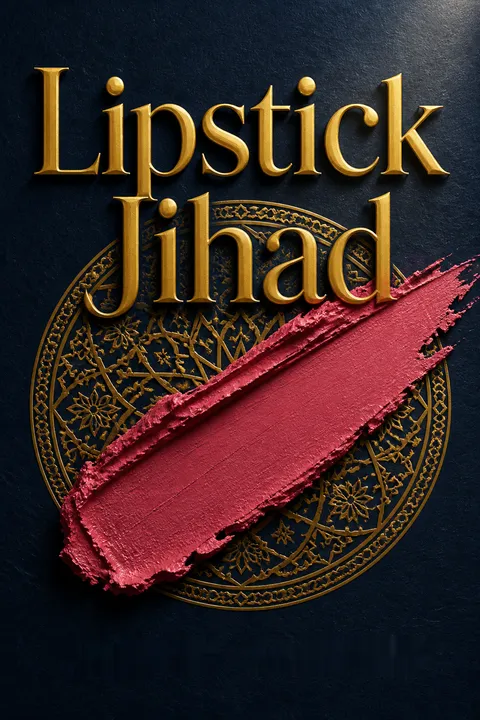
Style carried political weight. Cafés became public meeting places, and clothing once chosen to disappear gave way to colorful coats and visible self-expression. Moaveni’s title, “Lipstick Jihad,” frames this everyday effort as a struggle, not a military campaign. The legal code did not suddenly change, but people’s behavior altered what could be enforced in real life. The shift was incremental, uneven, and vulnerable to crackdowns.
This account makes a useful distinction between formal rights and lived norms. A rule can remain written down while losing practical force if enough people stop treating it as ordinary. But everyday noncompliance is not the same as secure freedom: it can expose people to arbitrary punishment, and a permissive moment can be reversed. The memoir’s strongest claim is therefore modest and powerful: culture can move before institutions do, but movement from below does not guarantee protection.
Reform can loosen a regime without changing who holds power.
The elected branches were constrained. President Mohammad Khatami’s 1997 election brought talk of civil society, dialogue, and the rule of law. His administration relaxed enforcement in some areas and allowed independent newspapers to operate. But the unelected clerical bodies, judiciary, and security forces retained decisive authority. The system of velayat-e faqih, or rule by a senior Islamic jurist, placed power above the elected president and parliament, whose decisions could be blocked.
Hope ran into structure. In 2001, Khatami won reelection with 78 percent of the vote, while 66 percent of eligible voters participated. The vote showed that many people still wanted change through elections, but it did not resolve the reform movement’s divisions or its lack of control over key institutions. Moaveni sees real effects in daily life, alongside political paralysis. Reform offered room to breathe, not a reliable route to transform the state.
The distinction between policy access and institutional power is central here. Leaders may change the tone of government and reduce the cost of ordinary life without controlling the bodies that can veto reform. Elections can still register public preference, even when they cannot settle who governs. The limitation is equally important: the memoir’s account concerns a specific political opening, not a universal rule that gradual reform is futile. Its lesson is to ask which institutions can block a promised change.
Restrictions distort intimacy long before they regulate behavior.
Public separation reshaped private life. Gender segregation in schools, buses, and public offices made young men and women less accustomed to casual friendship. Dating often required secrecy, improvised stories, and places away from surveillance. A roopoosh, the long outer coat women wore in public, could signal modesty while also becoming a surface for personal style and defiance.
Women faced different exits. Fatimeh, a chador-wearing photojournalist from a traditional family, wanted a professional life but had limited room to build an independent relationship. Mira, a young secular woman, sought sexual advice while trying to protect her prospects for marriage. Their situations differ, but both show how family expectations and state rules shaped women’s choices. Moaveni’s account does not present romance as an escape from politics: relationships themselves became a way to seek security, recognition, and a stable sense of self.
The stories show how regulation reaches beyond visible conduct and changes what people can imagine as normal. When ordinary friendship is difficult, romantic relationships can carry the extra burden of identity and escape. Yet these examples should not be mistaken for a single Iranian female experience. Fatimeh’s family, Mira’s choices, and Moaveni’s own position differ sharply. The strength of the memoir lies in showing how constraints are shared unevenly, rather than turning women into interchangeable symbols of oppression.
Protect sources when surveillance turns journalism into a personal negotiation.
Reporting carried private risks. Before receiving a press card, Moaveni was questioned by security officials about her background, loyalties, and editors. One interrogator, Mr. X, later demanded details about sources, monitored her movements, and hinted that her meetings could be used against her. A friend taught her to recognize “plants,” people who approach journalists to gather information or entrap them, and to use basic precautions such as a separate phone number and coded messages.
Ethics met coercion. Moaveni refused to identify confidential sources, even as officials framed disclosure as a matter of national security. Her reporting depended on access to people who faced arrest or intimidation, while her own safety depended on reading the state’s shifting limits. The pressure was not only editorial. It entered her friendships, phone calls, and sense of personal safety.
The section makes clear that press freedom is not merely permission to publish. It also depends on whether reporters can protect sources, refuse state demands, and continue working without intimidation. The journalist’s personal presence provides valuable detail, but it also makes the account openly situated rather than detached. That is not a flaw to erase. It is a reason to ask how the reporter’s access, fear, and relationships shape what can be known and safely told.
Keep a moral scale when violence becomes ordinary.
Routine can hide harm. Young people in Tehran learned how to avoid police checkpoints, explain away a gathering, or predict which officers might accept a bribe. One night Moaveni watched morality police punch a young man to provoke his girlfriend into admitting they were together. The couple treated the encounter as familiar. To them, it was one more obstacle in an ordinary evening.
Survival has a cost. During a 2001 soccer-related street gathering, police beat Moaveni and her colleague with batons. She spent a week unable to sit comfortably, then found herself jumpy around motorcycles and demonstrations. Others brushed off the incident as routine. The book shows how adaptation helps people continue living, but can also make cruelty seem unremarkable. Moaveni’s own distress becomes evidence of the distance between enduring harm and accepting it as acceptable.
People living under persistent threat often develop practical habits that outsiders mistake for indifference. Such adaptation can be a form of competence, not a lack of feeling. Yet when violence becomes part of the expected landscape, public standards can shrink: a beating is recoded as a nuisance rather than a violation. The memoir insists on preserving judgment without denying the usefulness of survival strategies. Its account also reminds readers that trauma may surface after the event, even when daily life quickly moves on.
Read reactions to America through remembered injuries, not slogans.
Grief crossed a political divide. After the September 11 attacks, Moaveni expected people around her in Tehran to express sympathy for the victims. Some did, including at a vigil, but others responded with anger or apparent indifference. Her friend Reza connected that reaction to how people in the region viewed U.S. policy, including the 1953 coup in Iran, support for Israel, and the human costs of sanctions and war.
Context explains, but does not excuse. Moaveni is hurt by the lack of sympathy and also recognizes that many people believed their own civilian deaths had been treated as less worthy of attention. The book resists two easy stories: that Iranians were uniformly anti-American, or that American intentions were beyond criticism. The label “axis of evil” further strengthened hard-liners inside Iran, narrowing the space for domestic debate.
The episode separates explanation from endorsement. Political grievances can help explain why empathy is withheld, but they do not make civilian deaths less tragic. At the same time, asking for universal sympathy requires noticing whose suffering is routinely made visible and whose becomes background noise. The account is most persuasive when it holds both points together. Its scope is personal and situated: the reactions Moaveni encounters illuminate a political climate, but cannot stand in for every Iranian response.
Leaving a country can protect a life, not betray a people.
Staying had different costs. Mitra, a relative who returned to Iran with two teenage daughters, eventually left again because she could not keep fighting the school system’s religious authorities over how her children were treated. Her decision unsettles Moaveni’s assumption that leaving meant abandoning the country. For a parent, protecting children from an environment that undermined the family could matter more than remaining physically close to homeland.
Departure can be forced by pressure. Moaveni also left after the atmosphere around her reporting worsened following September 11. An interrogator pressed her to submit stories for review, and she saw no safe way to agree or refuse. Leaving did not erase her attachment to Iran. It ended a particular period of reporting under pressure. The memoir asks readers to judge migration by the conditions people face, not by a simple test of loyalty.
The story challenges a familiar moral ranking in which those who stay are brave and those who leave are disloyal. People make these decisions within unequal conditions, with responsibilities to children, work, and personal safety. That does not mean departure is always the right choice, or that staying is irrational. It means the decision cannot be evaluated from a distance as a clean symbol. Moaveni’s change of view makes room for solidarity without requiring people to share the same risk.
Build home from relationships, not a recovered national past.
The old home could not be restored. At her grandfather’s funeral in California, Moaveni struggles to translate Persian poetry into English. Her cousin then speaks of their grandfather in imperfect Farsi, making the mourners laugh by describing his secular life and kindness. The moment briefly brings relatives together in the present, rather than in arguments about which country or language owns their memories.
Belonging becomes shared practice. Moaveni recalls the Simorgh, a mythical bird sought by a flock that discovers the answer in the gathered birds themselves. The story reframes her own journey: she went looking for Iran as a place that would complete her, but found that home also exists in family, friendship, language, and shared experience across borders. This is not a neat resolution. She remains pulled toward both Iran and America, and learns to live without demanding that one cancel the other.
The ending resists the idea that identity must be solved by choosing one national home. Instead, belonging appears as something practiced with other people, through language, rituals, and remembered care. That is emotionally generous, though it should not be mistaken for a universal comfort: displacement can remain painful, and community does not erase political danger or unequal recognition. The story’s insight is more precise. A person can be whole without being entirely at home in any single place.
Analysis
This memoir’s method is its argument. Moaveni reports on Iran while exposing how her own inherited stories, American upbringing, language limits, and access to family shape what she can see. The result is neither conventional foreign correspondence nor a simple return-to-roots narrative. Political events are made legible through scenes of clothing, food, dating, bureaucracy, and fear, while those scenes complicate the headline version of Iran as either a uniformly repressive state or a country on the verge of easy liberation.
Its most useful distinction is between formal change and lived change. Khatami’s presidency could make public life less restrictive without controlling the institutions that blocked deeper reform. Meanwhile, citizens altered the practical meaning of rules through small, repeated acts. The memoir does not claim these acts were sufficient to transform the state. It shows how they changed the texture of daily life and helped people imagine a different standard of normality.
The book also reveals the limits of speaking for a country. Moaveni’s journalism gives her access to political actors and young urban Iranians, but her perspective is shaped by her family’s class position, her professional role, and her movement between Tehran and the West. She is alert to these limits, though the Tehran-centered account cannot represent every region, class, or religious outlook. That limitation sharpens rather than cancels the memoir’s value: it offers a situated portrait instead of pretending to provide a total one.
The closing insight is not that belonging is effortless or that mixed identity resolves conflict. It is that the demand to choose one authentic self can itself become a burden. Moaveni’s final image of home is relational and mobile, but not placeless. It rests in particular people, languages, and shared memories, even as political borders and family histories keep pulling those attachments apart.
Review Summary
Lipstick Jihad offers a unique perspective on Iranian culture through the eyes of an Iranian-American journalist. Readers praised Moaveni's insights into modern Iran, youth culture, and the complexities of dual identity. Some found her writing engaging and illuminating, while others criticized her privileged background and self-centered narrative. The book provides a nuanced view of Iran beyond stereotypes, exploring themes of repression, rebellion, and cultural adaptation. Despite mixed opinions on Moaveni's tone, many readers appreciated the book's contribution to understanding contemporary Iranian society.
People Also Read



Glossary
Lipstick Jihad
Everyday struggle for selfhoodThe title’s use of jihad points to struggle in its ordinary sense, not armed conflict. It describes Iranian women’s efforts to express personality and claim space through clothing, makeup, and public behavior under rules that restrict those choices. The phrase links seemingly small acts of style to a broader contest over who controls everyday life.
as if
Practicing freedom before permissionMoaveni uses this phrase for behavior that treats a prohibited freedom as though it were already permitted. Young Iranians might dress, socialize, listen to music, or speak critically despite official restrictions. Repeated acts could alter what authorities could realistically enforce, although the risk of punishment remained and the legal rules themselves did not necessarily change.
velayat-e faqih
Rule by an Islamic juristA political doctrine at the center of Iran’s Islamic Republic, in which a senior Islamic jurist holds supreme authority over the state. Moaveni contrasts this model, in which the leader is not accountable to voters, with a system where elected officials answer to their constituencies. The doctrine helps explain why elected presidents and parliamentarians could be blocked by clerical institutions.
roopoosh
Public outer coatA long, loose coat worn by women in public in Iran over their other clothing. Its required use could make women feel concealed, but changing its length, color, cut, or fit also became a way to express personal style. Moaveni describes the garment as part of the everyday negotiation between official dress rules and individual self-presentation.
tarof
Ritualized Persian courtesyA Persian practice of elaborate politeness in which people may make gracious offers or invitations without expecting them to be accepted literally. It helps maintain warm social relations, but can also obscure what someone truly wants or means. Moaveni uses it to describe a culture of formal gestures that sometimes sit uneasily beside private frustration or conflict.
Basij
Regime-aligned volunteer militiaA volunteer militia associated with Iran’s Islamic Republic and given tacit approval to enforce public morality. In Moaveni’s account, Basij members, sometimes very young, take part in checkpoints, confrontations, and harassment of people seen as violating social rules. Their informal power and uncertain accountability make them a source of fear in everyday public life.
khodi / gheir-khodi
Insiders and outsidersTerms used in Iranian political life to distinguish people considered insiders from those regarded as outsiders. Moaveni applies them to the way rival political factions can fight among themselves while still viewing the broader public as outside their shared circle. The distinction shows how political conflict may occur within an elite without granting ordinary citizens equal standing.
Simorgh
Mythical king of birdsA legendary bird from the Persian story Moaveni recalls, in which a flock undertakes a difficult journey to find its sovereign. At the end, the surviving birds discover that the sought-for Simorgh is represented by the gathered flock itself. Moaveni uses the story to reconsider her search for Iran and to locate belonging in shared relationships and experience.
FAQ
What's Lipstick Jihad about?
- Personal Journey: Lipstick Jihad is a memoir by Azadeh Moaveni that explores her experiences as an Iranian-American growing up in the U.S. and later living in Iran. It delves into her identity struggles and cultural expectations.
- Cultural Observations: The book provides insights into the cultural contrasts between Iran and America, focusing on the challenges faced by young Iranians under the Islamic Republic.
- Political Context: Moaveni discusses Iran's political landscape, particularly the reform movement and the generational divide in attitudes toward the regime.
Why should I read Lipstick Jihad?
- Unique Perspective: The memoir offers an insider's view of Iranian society, challenging Western stereotypes. Moaveni's dual identity bridges cultural gaps.
- Engaging Narrative: Moaveni's vivid writing makes complex political and cultural issues accessible, with personal anecdotes that resonate with identity struggles.
- Cultural Relevance: The book encourages empathy and understanding of Iranian society, often misrepresented in media.
What are the key takeaways of Lipstick Jihad?
- Identity Exploration: The memoir emphasizes the fluidity of identity for those straddling multiple cultures, illustrating Moaveni's evolving understanding of being Iranian.
- Cultural Contradictions: Moaveni highlights the coexistence of modernity and tradition in Iranian society and how young Iranians navigate these contradictions.
- Political Awareness: The narrative underscores the importance of political engagement among youth, reflecting broader struggles for rights and freedoms in Iran.
What are the best quotes from Lipstick Jihad and what do they mean?
- “I was born in Palo Alto...”: This quote encapsulates Moaveni's dual identity and the longing felt by the diaspora, setting the stage for her exploration of cultural dislocation.
- “Being a Persian girl in California...”: Highlights the stark contrasts between her experiences in America and Iran, emphasizing identity complexities shaped by geography.
- “A jihad, in the classical sense...”: Moaveni redefines "jihad" to reflect her personal struggles with identity, underscoring the book's theme of internal and external battles.
How does Lipstick Jihad address the theme of cultural identity?
- Cultural Duality: Moaveni navigates her identity as both Iranian and American, reflecting on how her upbringing in California shaped her perceptions of Iran.
- Generational Differences: The memoir highlights the generational divide in attitudes toward culture and politics, with young Iranians seeking modernity and freedom.
- Personal vs. Political: Moaveni intertwines her personal journey with Iran's political landscape, showing how identity is influenced by societal norms and policies.
What role does the political landscape of Iran play in Lipstick Jihad?
- Reform Movement: The memoir captures the hopes and frustrations of young people seeking change within a resistant system, reflecting on the challenges faced by reformists.
- Impact of the Revolution: Moaveni examines the lasting effects of the 1979 Islamic Revolution on Iranian society and individual lives.
- Personal Consequences: The political environment impacts Moaveni's life and experiences, influencing her relationships and sense of safety.
How does Azadeh Moaveni define her identity in Lipstick Jihad?
- Cultural Hybridity: Moaveni grapples with her identity as an Iranian-American, feeling caught between two cultures and reflecting on her upbringing's influence.
- Personal Reflection: She examines her feelings of alienation and belonging, ultimately embracing her dual identity through a journey of self-discovery.
- Connection to Iran: Her return to Iran serves as a catalyst for confronting her identity, learning to navigate being both an insider and outsider.
How does Lipstick Jihad address gender issues in Iran?
- Women’s Rights: Moaveni explores the struggles of Iranian women under the Islamic Republic, highlighting limitations on their freedoms and societal expectations.
- Sexuality and Identity: The memoir delves into the complexities of sexuality in a repressive society, with candid reflections on Moaveni's experiences.
- Resistance and Resilience: Despite challenges, Iranian women are portrayed as resilient, asserting their identities and challenging societal norms.
How does Azadeh Moaveni’s background influence her writing in Lipstick Jihad?
- Cultural Context: Moaveni's U.S. upbringing and Iranian heritage provide a unique lens for viewing Iranian society, enriching her narrative.
- Journalistic Experience: Her background as a journalist blends personal anecdotes with social and political commentary, enhancing the memoir's depth.
- Personal Connection: Moaveni's personal experiences and struggles make her reflections authentic and relatable, intertwining self-discovery with cultural exploration.
What challenges does Azadeh Moaveni face while living in Iran?
- Censorship and Surveillance: Moaveni navigates censorship and government surveillance, complicating her work as a journalist and facing pressure to conform.
- Cultural Expectations: Societal norms and expectations on women create additional challenges, with tension between personal beliefs and cultural constraints.
- Emotional Turmoil: The emotional toll of living in a repressive environment leads to disillusionment and frustration as she witnesses fellow Iranians' struggles.
How does Lipstick Jihad portray the youth culture in Iran?
- Vibrant and Dynamic: Iranian youth are depicted as vibrant, seeking ways to express themselves despite societal restrictions, with creativity and resilience.
- Desire for Change: The memoir highlights young people's desire for change, reflecting disillusionment with the status quo and engagement in social issues.
- Cultural Resistance: Youth culture serves as resistance against the oppressive regime, with fashion and music as forms of identity assertion and societal challenge.
What insights does Lipstick Jihad provide about Iranian women?
- Resilience and Agency: Iranian women are portrayed as resilient, finding ways to assert agency despite societal constraints, central to the narrative.
- Cultural Expectations: The memoir explores cultural expectations on women, including dress codes and behavior, shaping identities and experiences.
- Solidarity and Community: Female friendships and solidarity are highlighted, providing support and strength in navigating a patriarchal society.
Download PDF
Download EPUB
.epub digital book format is ideal for reading ebooks on phones, tablets, and e-readers.








