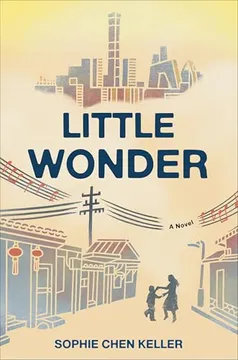


Plot Summary
The Station Takes River
In February 2016, Song1 arrives in Beijing with her eleven-year-old son,2 River,2 and every possession they own. The station’s New Year crowd crushes them toward the exits. When a stranger knocks River2 down, his beloved score slips from his hands. He dives for it; the crowd carries Song1 onward, and their hands separate.
She abandons her bags and fights back through the mass, but River2 is gone. The story opens with the terrible distance between them, then turns backward to show what Song1 has already carried to keep her son2 safe, and why this journey to Beijing matters so much.
The opening makes separation physical before it makes it psychological. Song and River are not parted by a quarrel or a deliberate choice, but by a crowd that treats individual bodies as obstacles in a current. The score matters because it is both River’s refuge and the thing that briefly draws him away from his mother’s hand. Song’s instinct is to shoulder burdens and force a path; River’s is to protect music and retreat from danger. Their different survival habits become the mechanism of the crisis.
A Family Built Apart
Before River2’s birth, Song1 meets Blue,3 a quiet construction worker, when he steps between her pineapple cart and corrupt street officers. She brings him red-bean hotcakes, and their shared walk home becomes a courtship. They marry, buy a bicycle food cart, and build a business selling hotcakes to construction workers until the site closes and the income disappears.
In July 2004, Song1 gives birth in her family’s crowded village home. Blue3 names their son2 River,2 wishing him a life without end, then leaves for distant work. Their parting promise is to reunite each New Year and eventually live together for good, a future made fragile by the migrant labor that keeps them apart.
Song and Blue’s romance grows out of work rather than escape from it. The cart lets them briefly own the fruits of their labor, but a construction project’s closure erases that independence overnight. Their affection is expressed through making and sharing: food, a business, a plan for a home. The name River carries a hope that exceeds their circumstances, while the repeated departures reveal how easily family life is subordinated to wages. Their promise is tender, but it is also an improvised structure built over economic uncertainty.
The Drawer Crosses Harbin
When Song’s mother13 tells her to leave four-month-old River2 behind and find work, Song1 asks her to come to Harbin and help. Her mother13 refuses, so Song1 packs their clothes, documents, radio, and savings, then straps River2’s dresser drawer to her scooter as a cradle.
She rides to Harbin and spends her remaining money securing a room, but restaurants will not hire a mother1 with a baby. At her lowest point, a cleaning woman offers a connection to an agency and urges Song1 to trust her ability to survive. Song1 takes the work, carries River2 from home to home, and sends money back to the family she has left behind.
Song’s decision is not a clean rejection of family duty. She leaves because staying would mean surrendering her child to a future she cannot shape, yet she continues to support the relatives who refused her request. The improvised drawer makes the cost of independence visible: River travels in the same precarious cargo as their few belongings. Help arrives through another working woman, not through an institution or a powerful benefactor. The episode revises Song’s belief that asking for help only exposes her to humiliation, even as she learns that survival still depends on her own labor.
Blue Never Comes Home
In January 2007, Song1 learns that Blue3 has died after falling from a scaffold during a storm. She is working in a warm apartment when the call comes, with River2 coughing beside her. At a clinic, a doctor identifies River2’s asthma and links it to Harbin’s polluted air, warning that exertion and exposure can trigger attacks.
Song1 cannot afford to stop working or move somewhere cleaner, so she learns to manage his breathing with medicine and music. Their separation from Blue3 becomes permanent, but Song1 keeps their clothespin dolls and the old promise alive. She has no choice but to make a future for River2 with the resources still within reach.
The chapter joins intimate loss to structural harm. Blue’s death is attributed to a workplace accident, while River’s illness develops in air that poorer families cannot escape. Song receives both facts as conditions she must manage, not injustices she can easily challenge. Her grief does not interrupt labor for long because the child beside her still needs food and care. The clothespin pair preserves Blue as part of daily life, while music begins to serve as a practical comfort for River’s breathing and an emotional language for a family that has been broken.
The Piano Opens a Door
At four, River2 encounters a toy piano in an apartment Song1 cleans and teaches himself to play Twinkle, Twinkle, Little Star by matching its notes to colors. Song1 contacts Professor Li,4 Harbin’s demanding piano teacher, who hears River2 reproduce the Tchaikovsky concerto and recognizes his rare musical ability.
He refuses Song1’s lesson money and begins teaching River2 technique and perfect pitch. Song1 eventually buys an upright piano with the compensation from Blue3’s accident, though she understands that it represents both a chance for River2 and the price paid for his father3’s life.
Professor Li4 lays out a decade-long competition plan centered on the Tchaikovsky, and Song1 embraces music as a possible route to cleaner air, choice, and freedom for her son.2
The piano enters first as a child’s discovery, then becomes an adult’s imagined escape route. Song’s hope is loving but consequential: she interprets River’s gift as protection against the pollution and poverty that have constrained them. Professor Li gives that hope a schedule, vocabulary, and institution, turning talent into a project with measurable milestones. The upright piano carries a double meaning, as an instrument bought with money paid after Blue’s death. Music can widen River’s possibilities, but the pressure to make it do so is already gathering around him.
A Teacher Crosses the Line
River2’s early competitions reveal that his private brilliance does not reliably survive an audience. At his first event, he flees the stage; later, repeated losses and anxiety make each performance feel like a test of his worth.
Song1 urges him onward, while Professor Li4 answers fear with more training and, eventually, beta-blockers. In November 2015, River2 collapses during the Harbin Conservatory competition after Professor Li4 gives him one of the pills. A doctor explains that the medication can dangerously worsen asthma.
Song1 ends the teaching relationship, recognizing that Li4’s ambition to produce a national champion has overtaken his responsibility to River.2 She decides to take her son2 to Beijing for a new teacher, beginning the move that brings them to the station.
The conflict is not simply between a strict teacher and a frightened child. Song and Professor Li both believe achievement can free River, but Li treats physical risk as a price worth paying for a performance. Song’s own drive has helped create the pressure he exploits. River’s collapse makes the body contradict the story of limitless potential: his lungs cannot be disciplined into silence. Ending the relationship is therefore a moral as well as practical choice. Song must revise her belief that the best teacher is necessarily the one who can take River furthest.
Beijing Swallows Them
After the crowd separates them, River2 escapes the station and accepts help from a narrow stranger who claims to have a phone. The man’s voice turns suspiciously urgent, so River2 slips away, hides among commuters, and reaches a sweet-potato cart. The stranger follows and pretends River2 is his son; the vendor lies to protect the boy, sending the man in the wrong direction.
Outside, River2 crosses a footbridge and disappears into an unfamiliar neighborhood. Song1 reaches an exit, but two young thieves steal her phone, and a station officer ejects her rather than investigate. The sweet-potato woman confirms that River2 fled from the stranger and points Song1 toward the bridge. The boy’s lost asthma medicine becomes her first tangible clue.
Both mother and son encounter systems that mistake vulnerability for inconvenience. River recognizes danger through attention to a stranger’s changing voice, while Song is treated as a disruptive migrant when she reports a theft. The sweet-potato vendor offers the crucial counterexample: she protects a child without proof of kinship and gives Song information without asking for payment. The stolen phone intensifies the separation because it holds both communication and the family’s recorded past. The medicine tube, a small object tied to River’s body, gives Song a direction but not a destination.
The Janitor’s Secret Piano
Unable to find Song,1 River2 returns to the station and meets Bing,7 its night janitor, who gives him food, a warm room, and a place to wait. Bing7 tries Song1’s number, but her phone is dead. River2 begins wearing Bing7’s orange uniform to move unnoticed through the station, then discovers a neglected upright piano beneath a staircase and plays through the grayness of his days.
Phyllis,5 a retired concert pianist who travels daily to buy her husband9’s remembered dough twist, hears River2 and recognizes both his talent and his flawed training. She offers to teach him properly. River2 leaves Bing7’s room with his score and backpack, choosing a new chance at music while still hoping his mother1 will find him.
Bing’s care is deliberately modest: shelter, noodles, a coat, and the willingness to keep looking. Those small acts give River enough safety to survive, but they cannot answer his fear that Song may never return. The hidden piano restores color to a child whose ordinary needs have gone unmet. Phyllis hears not merely virtuosity but the possibility of a different education, one based on rebuilding rather than display. River’s departure is not a rejection of Bing; it is an act of growth made possible by Bing’s generosity.
A Search Joins the Courtyard
Song1 moves from motel rooms to a courtyard house and turns to delivery work so she can earn money while searching Beijing. White Dragon,8 a veteran courier, teaches her the app and introduces her to Jade,10 Blackberry,11 and Bubbles,12 whose cramped home becomes a reluctant refuge from loneliness.
Song1 asks customers about River2 and posts his picture, but the first promising clue, a yellow jacket found after a dust storm, belongs to no one she can identify. Later, a blind saxophonist remembers a boy singing on a bridge in Chaoyang District. Song1 begins concentrating her deliveries there and urges White Dragon8 to visit his estranged daughter. Her search now has witnesses, allies, and a growing map, but still no reunion.
Song turns the delivery economy’s surveillance and speed toward a private purpose. The platform assigns her routes, yet she uses those routes to gather testimony from people who would otherwise remain strangers. Her companions are not idealized rescuers; they are workers with their own histories of injury, abandonment, and unfinished family ties. Song’s insistence that White Dragon face his daughter shows that searching for River has sharpened her understanding of what separation costs. The false jacket exposes the danger of treating hope as evidence, while the saxophonist’s memory gives her a more credible, if belated, lead.
River Leaves the Stage
Under Phyllis5’s care, River2 enters a wealthy, air-filtered world that protects his lungs but makes his mother1 seem even farther away. Phyllis5 becomes his guardian, and he grows close to her husband,9 Eight,9 whose memory is failing. At a recital, River2’s stage fright sends him to the roof, where he meets Mini,6 a pianist he first encountered in Harbin.
They return to the station and find Bing7’s room empty. River2 learns that Bing7 has left after rescuing a woman, and the janitor’s departure makes River2 confront how long he has waited. He quits the piano, believing that if he stops pursuing greatness he can stop waiting for Song.1 Phyllis5 does not force him back; River2 stays and helps her fold chairs.
River’s withdrawal is not a loss of talent but an attempt to regain control over the meaning imposed on it. For years, music has been tied to his mother’s hopes and to the promise that he must become exceptional. Quitting seems to loosen that bond, yet it also cuts him off from a source of pleasure and identity. Bing’s move is a painful lesson that care can lead people away from the place where River needs them. Phyllis responds without coercion, allowing his decision to remain his own, while Mini begins to connect him to ordinary companionship.
The Fire Calls Him Back
By fifteen, River2 has stopped playing and begun to live as an ordinary student, though his closeness with Mini6 cannot fill the absence of his mother.1 On his birthday, a fire sends emergency crews toward the migrant neighborhoods where Song1 might live. River2 realizes that he and Mini6 have been waiting for Song1 to find him, when he could make himself easier to find.
He decides to return to the piano and enter the World Chopin Competition, not simply to become famous but to send his music across the city. Phyllis5 agrees to train him. During the pandemic, River2 rebuilds his technique, conditions his body by chasing Precious across a field, and practices the Tchaikovsky until his old stage fright returns.
The fire changes River’s understanding of agency. His earlier ambition asked greatness to prove that he deserved his mother’s return; now he sees performance as a signal he can send into the world she is searching. This shift does not erase fear or guarantee success. It gives fear a purpose beyond self-protection. His running after Precious matters because it makes freedom bodily before it becomes musical: he learns that safety purchased through stillness can become another form of confinement. His renewed training is an attempt to choose movement without denying vulnerability.
A Mother Finds the Broadcast
When COVID restrictions empty Beijing’s streets, Song1 keeps riding deliveries, carrying food to people sealed inside their apartments while migrant workers lose jobs and homes. Her courtyard companions help her search, but the city’s lockdown narrows everyone’s movements.
In October 2021, a hospital rules out COVID and diagnoses advanced lung cancer. Song1 gathers her friends for hot pot and tells them she may have only weeks or months. Soon afterward, Blackberry11 recognizes River2 on television: at seventeen, he is entering the World Chopin Competition and dedicating his music to his missing mother.1
Song1 sees the grown son2 she has searched for through five lost years. She asks her friends to take her to the competition, determined that River2 will know she is alive and still coming.
The pandemic magnifies inequalities that have shaped the story from the start. Comfortable residents can shelter at home, while Song’s survival depends on entering the streets and exposing herself to danger. Her cancer diagnosis reveals that the same polluted environment that threatened River has also been working through her body. The broadcast gives Song recognition without yet giving her access: River can become visible to millions while remaining unreachable to his mother. Her request for help marks a change in her self-understanding. She no longer treats endurance alone as proof of strength.
A Message Through Yellow
As the competition advances, River2 studies the available grand pianos and chooses the instrument on which his mother1’s favorite Arabesque lingers most clearly. In Song1’s locked-down alley, a package arrives from her mother:13 fermented bean paste saved since the day Song1 left home, accompanied by an apology and an invitation to return.
Song1 tastes the reconciliation, then realizes she cannot travel to River2 and he cannot enter her neighborhood. She asks Bubbles12 to send a plea through the delivery platform to couriers across Beijing, asking them to meet River2 after the competition.
Her friends help her prepare, and she watches the early rounds from bed. When the final day comes, Song1 has enough strength to sit outside and listen, while the yellow-clad network carries her message toward the concert hall.
The two forms of transmission in this section are deliberately small: a jar passed from mother to daughter and a message routed through phones. Neither repairs the years of absence, but each makes contact possible across a distance that direct effort cannot overcome. Song’s mother cannot undo her earlier refusal, yet she can send something made in the past as a belated gesture of care. Song, in turn, accepts help from the courier community rather than relying on solitary force. Music, food, and digital networks become parallel ways of carrying love when bodies cannot cross a barrier.
The Music Brings Them Home
River2 performs the Tchaikovsky concerto with the full force of his training and wins the competition. Outside, couriers form a crowd that pushes past security long enough for one of them to tell him that Song1 is waiting and dying. River2 rides to her sealed neighborhood, where Mini,6 Phyllis,5 Eight,9 and Precious arrive to distract the guards.
One guard recognizes River2 and lets him through by turning away. River2 climbs the barricade and runs the alleys until he finds Song1’s room, where the clothespin dolls reunite on the windowsill. He spends her remaining days beside her, giving her sugar water, showing her his life, and singing. When Song1 asks to dance, River2 holds her and sways with her beneath the imagined blue sky as her life ebbs.
The climax resolves the opening separation not by restoring the old life but by bringing mother and son into the same room again. River’s performance succeeds publicly, yet its deepest audience is Song, and the couriers’ collective action makes that private recognition possible. The barricade that once represented an impersonal force is crossed through a mixture of courage, friendship, and one guard’s human choice. Their reunion cannot return the years they lost or cure Song’s illness. It can give those years a shared ending, with River carrying forward the music and care she gave him.
Analysis
Little Wonder makes separation a material condition rather than an abstract sorrow. Song1 and River2 are repeatedly divided by work schedules, rural residence permits, pollution, money, police indifference, and pandemic barriers. Each obstacle has a human cost, but none operates only as a personal villain. The city’s systems distribute safety unevenly: Phyllis5 can purify the air in her home, while Song1 and River2 must work outdoors; privileged families can disappear behind locked doors, while delivery workers remain exposed and indispensable.
Music offers an alternative form of movement. River2 first uses it to regulate a world that overwhelms his senses, then learns how institutions can turn his gift into a demand for exceptional achievement. The novel questions the promise that becoming great will automatically mean becoming free. River2’s most important change is not abandoning ambition or returning to it, but deciding what his playing is for. The concerto becomes meaningful when it carries love rather than a demand for proof.
The story also revises its definition of family. Song1’s devotion is fierce, but the belief that she must manage everything alone nearly becomes another trap. Bing,7 Phyllis,5 Mini,6 and the courtyard workers do not replace the missing bond between mother1 and son;2 they keep both of them alive and connected while that bond is out of reach. Their care is often practical: a warm room, a meal, a message, a shared search. Those acts form a social net where formal institutions repeatedly fail.
The ending refuses to make reunion a cure. Song1 and River2 recover a few days together, not the lost years or a future without illness. Yet the small time they share is fully theirs. The book’s emotional claim is not that persistence guarantees a happy outcome, but that love can still make a life legible and meaningful when it cannot undo what has happened.
Review Summary
Little Wonder receives mixed but generally positive reviews, averaging 4.13 stars. Many readers praise its emotional depth, beautiful writing, and exploration of themes like maternal love, resilience, and migrant worker struggles in China. The dual timeline structure and musical elements are frequently highlighted. Critics note issues with pacing, melodrama, and overly convenient plot points. Some found the COVID sections unwelcome, while others felt characters lacked depth. The audiobook narration by Emily Woo Zeller earned particular praise. It is both an Oprah Book Club and Jenna Bush Hager's Thousand Voices selection.
Characters
Song
The relentless motherSong is a migrant worker and River2’s mother, a practical woman whose love appears through food, work, protection, and unembarrassed persistence. Raised in a family that treats survival as a duty, she has learned to make herself physically and emotionally large enough to clear a path for her son2. Her confidence can harden into refusal: she often assumes that accepting help will cost more than it gives, and she can mistake endurance for the only available form of strength. Yet she is observant, funny, and capable of changing course when another person’s need makes the choice clear. Her hopes for River2 are shaped by poverty and polluted air, but she also delights in his peculiar musical mind and his small, unguarded joys.
River
The music-minded sonRiver is Song1 and Blue3’s son, a gifted pianist with perfect pitch and lungs made vulnerable by asthma. As a child, he hears the world in musical notes and colors, using sound to organize sensations that might otherwise overwhelm him. His mother1’s protectiveness helps him survive, but it also teaches him to make himself smaller and avoid risk. Music offers both pleasure and a demanding path toward the freedom Song1 wants for him. River is sensitive to other people’s moods, often shy in crowds, and more perceptive than he first appears. His growth depends on learning that courage need not mean obeying someone else’s ambition, and that love can remain present even when the person he longs for is out of reach.
Blue
Song’s gentle husbandBlue is Song1’s husband and River2’s father, a construction worker whose quiet manner hides a firm protective streak. He first earns Song1’s trust by standing between her and abusive street officers, then builds a food-cart business with her. Blue values making things for his family rather than for an employer, and his tenderness is practical: he cooks for Song1, carves clothespin dolls, and imagines a future they can share. His work requires him to travel far from home, making absence an ordinary part of his family life. The promise he and Song1 make about reuniting gives their relationship a durable emotional shape.
Professor Li
The exacting first teacherProfessor Li is a celebrated piano teacher in Harbin who recognizes River2’s rare ear and takes him on without demanding an upfront fee. He is theatrical, disciplined, and passionately invested in the idea that disciplined technique can produce greatness. Li gives River2 a demanding musical education and offers Song1 a concrete plan for his future, qualities that make him easy to trust. His intensity can spill into volatility, and his certainty about what River2 needs leaves little room for the boy’s limits. He represents the possibility and danger of turning a child’s gift into a project.
Phyllis
The pianist in hidingPhyllis is a former concert pianist who has withdrawn from public performance and now lives in Beijing with her husband, Eight9. She hears River2 playing in the railway station and offers him a rigorous, less showy musical education. Phyllis is direct without being unkind; she expects discipline but respects River2’s need to make his own choices. Her comfortable home gives him security and access to schooling, while its distance from migrant life makes her aware that protection can also isolate. Her history of leaving the stage helps her understand that talent and ambition do not always point in the same direction.
Mini
The outspoken BachistMini is a young pianist River2 first meets in a Harbin competition line. She presents herself confidently online and takes pride in her skill at Bach, though her mother’s scrutiny makes her increasingly conscious of appearance and achievement. Mini is sharp, funny, and capable of acting before River2 can talk himself out of something. Her friendship gives him an experience outside the pressure of lessons and competitions. She sees both his fear and his potential, and she does not treat him as a prodigy before she treats him as a person.
Guo Bing
The station’s gentle guardGuo Bing, known as Bing, is the Beijing railway station’s night janitor. He is lonely, physically worn, and accustomed to being dismissed by people with authority, yet he notices a freezing child and acts. Bing gives River2 food, warmth, and a place to wait without pretending he can solve everything. His love of music emerges in his effort to whistle back a melody River2 sings. He becomes a model of care that is unspectacular but essential: a person can make another person safer without having money, status, or a family of his own.
White Dragon
The laughing courierWhite Dragon is an experienced delivery worker who knows Beijing’s alleys and platform rules. His jokes and reckless bravado make him seem untouched by hardship, but he carries grief over a long estrangement from his daughter. He gives Song1 practical help when she is newly stranded in the capital, then becomes one of the people who share her search. White Dragon’s courage is not the absence of fear; it is his growing willingness to face the family relationship he has avoided. His companionship challenges Song1’s belief that she must suffer alone.
Eight
Phyllis’s devoted husbandEight is Phyllis5’s husband, a former actor whose memory is failing. He sometimes mistakes River2 for his childhood friend Little Red, drawing the boy into a tender game of shared recollection. Their bond is built through everyday companionship rather than explanation: River2 wheels him to school, keeps him company, and listens to stories that drift between past and present. Eight’s dependence does not erase his warmth or his sense of humor. His relationship with Phyllis5 shows River2 a form of long love expressed through repeated acts of care.
Jade
The sharp-eyed neighborJade is a beauty worker in the courtyard house where Song1 lives in Beijing. Stylish, commercially shrewd, and quick with a cutting joke, she appears to think mainly about customers and business. Beneath that surface, she is loyal to her neighbors and willing to put her influence and energy behind Song1’s search. Jade’s relationship with Blackberry11 is openly affectionate and often comic. She offers Song1 practical solidarity without asking her to become less proud or less blunt.
Blackberry
Jade’s devoted partnerBlackberry is Jade10’s handsome, good-natured partner, more comfortable with jokes and games than with careful analysis. He is easily distracted, but his apparent foolishness does not prevent him from noticing what matters. He helps with the neighbors’ work, joins Song1’s search, and enjoys being included in a group that treats him as useful. His playful manner softens the courtyard’s hardships without denying them. Blackberry is the kind of friend who may miss a serious tone, then show up with wholehearted enthusiasm when someone needs him.
Bubbles
The quiet problem-solverBubbles is a delivery worker who uses a crutch and a three-wheeled scooter. He speaks little, but he pays attention to what the people around him need, whether that means lending Song1 a battery, setting up an app, or managing a phone when she is too weak to do so. His disability does not define his social life or his competence. Bubbles’s steady practical support helps turn the courtyard’s loose collection of workers into a dependable community.
Song’s mother
The hard-edged grandmotherSong’s mother is a village woman shaped by scarcity, gendered expectations, and years of family labor. She believes survival requires doing what is expected, even when that means suppressing tenderness or denying someone’s request for help. Her relationship with Song1 is full of old grievances and practical exchanges, especially money sent home. She has difficulty expressing affection directly, but food and the preservation of a family recipe carry meanings she cannot easily put into words. Her severity is not simple cruelty; it is a survival ethic that has become difficult to loosen.
Song’s father
The village patriarchSong’s father is a retired coal-mine foreman who spends much of his time at the mahjong den. He belongs to the household Song1 leaves behind, where money is scarce and family obligations are unevenly shared. His presence helps define the conditions that make Song1’s independence necessary.
Song’s brother
The thwarted studentSong’s older brother once showed promise in mathematics, and the family sacrificed to help him pursue higher education. A township leader steals the opportunity for his own son, leaving the brother at home with few prospects. His stalled life helps explain Song1’s fear that River2 will inherit the same narrow choices.
Plot Devices
The Tchaikovsky concerto
A musical road homeThe concerto enters River2’s life through his score and becomes the most demanding work in his repertoire. Song1 and Professor Li4 attach different hopes to it: Li4 sees a route to prestige, while Song1 imagines a life beyond polluted air and limited opportunity. River2 eventually uses the music to communicate what he cannot easily say, first to himself and ultimately to his mother1. The concerto’s repeated presence links childhood practice, separation, renewed ambition, and reunion, while its difficult passages measure the distance between being taught to perform and choosing what a performance means.
The clothespin dolls
Portable family memoryBlue3 carves a girl and boy from clothespins, small tokens that Song1 and River2 carry through moves, separations, and years of work. The dolls are easily lost or misplaced, but the characters keep finding them and returning them to one another. Their plainness suits a family whose possessions must fit into bags and makes them a counterweight to the piano’s expensive promise. The paired figures preserve Blue3’s presence without turning memory into a grand monument. They give Song1 and River2 a physical way to hold on to each other when distance makes ordinary reassurance impossible.
Music as color
River’s sensory compassRiver2 hears notes in ordinary sounds and associates musical pitches with colors and physical sensations. This ability makes sinks, traffic, voices, and crowds legible to him, while a lack of music leaves his surroundings flat and difficult to endure. The device is more than a mark of talent: it explains how River2 interprets emotional shifts, notices danger, and finds shelter inside his own mind. As he grows, music also becomes a way to translate private feeling into something another person can hear. The color system gives the narrative a concrete vocabulary for the difference between hiding from life and engaging with it.
Phones and delivery apps
Connection through infrastructureCashless payments, phone batteries, QR codes, delivery schedules, and identity checks shape who can move through modern Beijing and who becomes stranded. River2’s separation from Song1 is intensified by his lack of a phone, while Song1 loses both her contact with him and the photographs that preserve their past. Later, delivery platforms give her a way to search across the city while earning a living. The same system that disciplines workers with timers and penalties also supplies a network through which they can help one another. Digital infrastructure is neither a simple villain nor a miracle; its value depends on who can use it and for what.
The barricade
A wall between careSecurity barriers and COVID lockdowns turn public rules into literal divisions between people who need one another. Song1’s delivery work lets her travel widely, but when her alley is sealed she cannot reach River2 even after learning where he is. River2 must decide whether to remain outside the rules or cross the barrier to see her. The barricade gathers the book’s smaller obstacles into one visible object: class, surveillance, public health, and the fear of punishment. It cannot be crossed by love alone, so the characters rely on friends, workers, and a guard willing to recognize the people behind the procedure.
Download PDF
Download EPUB
.epub digital book format is ideal for reading ebooks on phones, tablets, and e-readers.








