

Key Takeaways
Read poverty as organized deprivation, not evidence of personal failure
Two neighborhoods, different futures. In Philadelphia, babies born in Kensington are expected to live seventeen years less than babies in Society Hill, only a few miles away. Kensington children encounter unsafe housing, contaminated school buildings, and underfunded classrooms. Society Hill children are more likely to have secure homes and well-resourced schools. These disparities are not simply differences in individual effort. They reflect how money, safety, and public services are distributed.
Survival takes constant work. The book follows Ryan, Corem, and Giancarlos, three Puerto Rican young people whose families navigate eviction, hunger, violence, inadequate schools, and incarceration. Their choices matter, but those choices unfold inside powerful constraints. The book’s central claim is that poverty is not a personal defect. It is a deprivation of the conditions people need to live safely and shape their own futures.
The neighborhood comparison makes inequality tangible: a short bus ride separates dramatically different chances of staying healthy and learning well. This resembles the social-determinants-of-health approach, which asks how housing, income, and public services shape health before a person reaches a clinic. The book’s attention to individual decisions keeps its structural account human rather than abstract. A useful caution is that neighborhood statistics describe patterned risk, not destiny for every resident. The point is not that effort is irrelevant, but that effort cannot substitute for safe housing, functioning schools, and dependable support.
When schools punish unmet needs, they manufacture the dropout they blame
A prank became a prosecution. At twelve, Ryan helped light a trash can on fire at school, then tried to put the flames out. Administrators called police, and he was arrested, detained, and transferred to a juvenile facility. His earlier school record included repeated discipline problems, poor attendance, and struggles that his mother had fought to have evaluated. Rather than treating the incident as a chance to understand what support he needed, the school moved him toward punishment and exclusion.
Exclusion can become a pipeline. The school-to-prison pipeline describes policies that move students from school discipline into contact with law enforcement and detention. Ryan’s transfer to a for-profit disciplinary school brought metal detectors, frequent fights, sparse instruction, and little learning. In one Houston evaluation discussed in the book, 90 percent of students had dropped out or transferred, while only 1 percent graduated. The label dropout hides how institutions help produce disengagement.
Ryan’s story illustrates how a school’s response can magnify an adolescent mistake into a lasting institutional record. Research on child development emphasizes that young people are still building impulse control and are especially responsive to the adults and settings around them. That does not make dangerous behavior harmless; a fire in a school deserves a serious response. The sharper question is whether punishment improves safety or learning. When an intervention removes a student from instruction and provides little education, it may satisfy an immediate demand for order while worsening the problem it claims to solve.
Build schools around relationships, choice, and real work, not confinement
El Centro offered another model. The alternative high school El Centro de Estudiantes enrolled young people who had been pushed out of other schools. Instead of metal detectors and rows of identical worksheets, students worked in small advisories, where the same teacher stayed with a group and made time to understand each student. Morning circles gave students space to discuss how they felt and what they wanted to accomplish.
Learning connected to life. Students developed projects around their interests, completed internships, and presented work for feedback from teachers, family, and mentors. Ryan found an advisor who became a trusted adult and discovered art, work experience, and a reason to return to school. Corem found supportive LGBTQ peers and adults. This approach draws on Big Picture Learning, a school model built around student interests, community internships, close advising, and public exhibitions of learning.
El Centro treats belonging as part of the learning environment, not a reward for students who have already learned to behave. That insight connects to motivation research: people are more willing to persist when they have meaningful choices, feel competent, and know that others care whether they succeed. The model is not simply relaxed discipline. It asks students to do substantial work and explain what they have learned. Its vulnerability is equally clear: individualized advising, internships, and counseling require time and stable resources. Relationship-centered schooling cannot thrive on goodwill alone.
When factories disappear, punishment cannot replace jobs or treatment
Kensington lost its economic base. Philadelphia was once a major manufacturing center, and textile mills employed generations of workers. In 1953, manufacturing employed 359,000 Philadelphians. By 1985, roughly two-thirds of those jobs had vanished. Puerto Rican families arrived as industrial work declined, while racism and segregation restricted where they could live and what work they could access.
The policy response leaned punitive. As the drug economy expanded, the drug war brought more police powers, arrests, and incarceration, including harsher penalties for crack than for powder cocaine. A 1992 visit by President George H. W. Bush highlighted the imbalance: his Weed and Seed program promised both law enforcement and community investment, but Philadelphia directed most of its limited funds toward enforcement. The book’s argument is that policing can contain symptoms, but it cannot replace stable employment, treatment, housing, or recreation.
The history helps explain why an illicit economy can look like work when formal jobs disappear and bills do not. It also shows how policy creates feedback loops: economic decline weakens community resources, while aggressive enforcement can further destabilize families and neighborhoods. This does not mean policing has no role in preventing immediate harm. It means policing cannot do the work of a labor market or health system. The strongest response to violence must distinguish urgent protection from the slower work of making safety and lawful opportunity ordinary.
Make family support reliable before crisis turns into eviction or separation
Aid often arrived too late or too small. Ivette, a disabled mother, raised Emmanuel while relying on Supplemental Security Income, food assistance, and limited cash aid. The household survived on about $10,000 a year, while moving repeatedly through unsafe housing and struggling to afford food, utilities, and basic supplies. Rayni also navigated homelessness and unstable work while raising her twins. Their stories show how illness, caregiving, and low income can turn an ordinary setback into a housing crisis.
Rules shape family choices. Welfare reform replaced the federal entitlement Aid to Families with Dependent Children with Temporary Assistance for Needy Families, a program with time limits, work requirements, and state-controlled funding. Ivette’s family also faced strict limits on disability benefits. The book argues for dependable supports, including a child allowance, so families can cover essentials without being pushed into desperate tradeoffs or punished for circumstances beyond their control.
The family stories make clear that cash is not an abstract policy lever. It can mean groceries before the end of the month, a more stable home, or enough breathing room to leave a dangerous relationship. Social policy also shapes bargaining power: someone with no savings or housing alternative has fewer ways to protect themselves. At the same time, income support alone cannot resolve abuse, disability, or a shortage of affordable homes. The policy case is strongest when cash is treated as a foundation that works alongside housing, health care, and safety services.
Safety and acceptance are prerequisites for learning, especially for queer youth
Corem faced danger at home and school. As a young person, Corem endured unstable housing, family violence, bullying, depression, and pressure to hide their attraction to boys. Their mother’s religious beliefs initially made it hard for Corem to feel accepted. At school, ridicule and disengagement deepened their isolation. These were not separate problems: unsafe living conditions and rejection made it harder to attend class, concentrate, and imagine a future.
Belonging changed what seemed possible. At El Centro, Corem found peers and adults who treated their identity with respect. An internship at Galaei, an organization serving queer and Latino communities, brought more support and connection. Corem graduated after their grades improved, then won financial aid to attend community college. The path was not smooth or guaranteed, but acceptance and a safe community helped make persistence possible.
Corem’s experience shows why identity-affirming support is educational infrastructure. A student who must spend the day anticipating ridicule has less attention available for learning, relationships, and planning. This connects to trauma-informed practice, which recognizes that safety and trust affect a person’s ability to focus and engage. Respectful spaces do not eliminate poverty or mental illness, and a school cannot be expected to repair every family relationship. But it can avoid adding shame to hardship and connect students with adults and services that widen their options.
Let young people help govern schools, and they become civic actors
Giancarlos turned frustration into organizing. After his family faced food insecurity and he briefly sold drugs to get by, Giancarlos found mentorship and political education through Youth United for Change. He learned to connect daily problems, such as boring classes, scarce programs, and rigid discipline, to decisions about school funding and policy. He helped organize protests, surveys, and walkouts, including a campaign against high-stakes exams that students believed could block graduation.
Student action can change rules. Philadelphia eventually revised its discipline code so many low-level violations could be handled through in-school interventions rather than automatic out-of-school suspension. Students also fought budget cuts and school closures, though they could not prevent every closure. Their organizing shows that young people are not merely recipients of education policy. Given information, support, and a real platform, they can identify institutional failures and press adults to respond.
Youth participation matters because the people most affected by a policy often notice its failures first. Organizing can turn scattered complaints into a shared account of what is wrong and what should change. It also builds skills in research, public speaking, coalition-building, and democratic negotiation. Still, participation is not power by itself. Decision-makers can listen politely and proceed unchanged, as school closure fights demonstrate. Genuine student voice requires adults to share some authority, explain decisions transparently, and accept that young people may challenge the priorities institutions take for granted.
A diploma opens a door, but cannot repair the world outside school
Graduation mattered, but it was not a cure. Ryan returned to El Centro at twenty and finally earned his diploma after years of school disruption, court involvement, family crises, and low-wage work. He hoped to become a police officer, but his criminal record made him ineligible for the academy. A judge who had seen his persistence offered him a job instead. Corem moved on to community college, while Giancarlos graduated after attending three different high schools and losing friends to gun violence.
Education cannot carry every burden. The diploma gave each young person a real achievement and expanded some possibilities. Yet it did not erase neighborhood danger, housing instability, trauma, or the shortage of good jobs. The book argues that schools can help students build knowledge and agency, but they cannot educate a society out of poverty when the surrounding economy and public services remain unequal.
This distinction protects education from two opposite mistakes: treating it as a magic ladder, or dismissing it because it cannot solve every structural problem. A diploma can expand choices and recognize hard-won achievement, but its value depends partly on the opportunities available after graduation. Ryan’s blocked police career makes that dependence visible. Schools deserve investment, and so do housing, health care, and decent work. The more useful question is not whether education alone can equalize society, but what other institutions must change for educational gains to translate into secure lives.
Use cash and public goods to prevent poverty's damage before it compounds
A brief policy shift showed the effect of cash. The expanded Child Tax Credit sent monthly payments to families in 2021. The book reports that the credit reached 61.2 million children and reduced child poverty by 30 percent by December of that year. Families commonly used the money for food, utilities, clothing, rent, school supplies, and child care. When the temporary expansion expired, nearly four million children were pushed back into poverty.
Prevention needs more than a school program. The book calls for reliable income support alongside well-funded schools, health care, housing, child care, paid leave, and decent jobs. These supports reduce the pressure that can turn a missed paycheck, an illness, or an eviction into a cascade of setbacks. The argument is not that policy can guarantee an easy life. It is that a wealthy society can stop making basic security depend on luck.
The child tax credit example offers a useful policy test: did money reach families quickly, and did material hardship shift while it was available? It supports the case for cash as a direct tool, rather than requiring families to prove deservingness through complicated systems. The short duration also makes a limitation visible. Temporary relief can interrupt hardship without creating lasting security if housing, health care, and wages remain precarious. Durable policy must combine income support with services and protections, while being evaluated for who receives help and who remains excluded.
Analysis
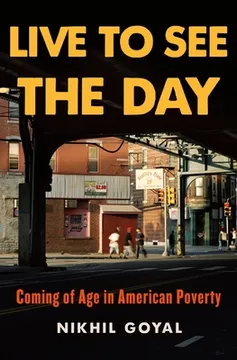
Live to See the Day is an ethnographic argument told through three lives. Its structure makes policy visible at the scale where policy is felt: a child waits in a detention cell, a mother searches for somewhere safe to sleep, or a student tries to stay in school after a friend is killed. The biographies are not illustrative decorations around an abstract thesis. Their changing relationships, setbacks, and moments of trust are the evidence through which the reader encounters the thesis.
The book’s strongest analytical move is to connect forces that public debate often separates. Deindustrialization, welfare rules, school funding, policing, housing, disability, and family violence appear as interacting conditions rather than isolated topics. A child’s attendance problem may be inseparable from eviction or illness. A drug arrest may sit within a neighborhood where stable jobs have disappeared and treatment is scarce. The idea of a dropout is therefore recast as an institutional outcome, not simply a personal decision.
El Centro de Estudiantes gives the account a practical counterexample. Its circles, internships, small advisories, and trusted adults show that a different school culture can restore engagement and help some students graduate. Yet the book does not suggest that a diploma cancels structural inequality. Ryan’s criminal record blocks his chosen career, and graduates remain exposed to violence and precarious work. That tension strengthens the case for education while clarifying its limits.
The argument is politically committed, and its causal claims deserve careful reading. Three closely followed young people cannot stand for every poor family, and a narrative cannot isolate the effect of any single policy from the rest of a life. The book’s policy history and cited research help broaden the frame, but the individual stories chiefly establish lived mechanisms and consequences. Its enduring challenge is both moral and empirical: judge systems not by their stated intentions, but by what happens to the people required to live inside them.
Review Summary
Reviews of Live to See the Day are largely positive, averaging 3.87/5. Many praise the book's powerful portrayal of poverty, systemic inequality, and the struggles of three Puerto Rican boys in Philadelphia's Kensington neighborhood. Readers appreciate its well-researched policy insights and compelling characters. Common criticisms include a choppy, disjointed writing style that jumps between characters and timelines, making emotional connection difficult. Some felt the author's political bias was too prominent. Despite stylistic reservations, most readers agree the book addresses vital issues of education, racism, and urban poverty.
Glossary
pushout
Institutional removal from schoolA term used instead of dropout to emphasize that students may be driven from school by institutional practices, not simply choose to leave. Punitive discipline, irrelevant instruction, bullying, inadequate special education, and failure to respond to students’ circumstances can make continued attendance difficult or impossible.
school-to-prison pipeline
Discipline leading toward incarcerationA pattern in which school policies increase students’ contact with law enforcement and the juvenile or adult justice system. In the book, suspensions, police referrals, metal detectors, disciplinary transfers, and detention are shown as connected practices that can push students away from education and toward punishment.
Big Picture Learning
Interest-led, community-based schoolingAn educational model organized around close relationships between students and advisors, learning connected to student interests, and experiences outside school. At El Centro de Estudiantes, students pursued projects, completed community internships, and presented their work for feedback rather than relying only on conventional lectures and tests.
restorative justice
Repairing harm through dialogueAn approach to conflict that focuses on understanding harm, supporting accountability, and repairing relationships rather than relying automatically on exclusion or punishment. In the book’s school examples, adults speak with students and families, address the underlying issue, and keep students connected to their educational community when possible.
social reproduction
Passing inequality across generationsThe process by which social and economic arrangements repeatedly place people in similar positions across generations. The book uses the idea to explain how young people can encounter many of the same barriers as their parents, including limited employment, school exclusion, and incarceration, even when they make choices of their own.
carceral continuum
Punitive methods beyond prisonsA concept associated in the book with Michel Foucault. It describes how practices of surveillance, classification, restriction, and punishment can extend beyond prisons into institutions such as schools and residential programs. The concept helps explain why detention-like routines may shape students’ daily experience even when they are not incarcerated.
child allowance
Regular cash support for childrenA recurring government payment to families to help cover the costs of raising children. The book presents a child allowance as a way to reduce hardship and give families greater security, independent of whether a parent meets restrictive work tests or navigates a crisis before receiving assistance.
Download PDF
Download EPUB
.epub digital book format is ideal for reading ebooks on phones, tablets, and e-readers.








