

Plot Summary
King's Last Warning
King Solomon dies beside the workshop, leaving his children scattered across Diggs and New York. His eldest, Junior, has just spent a night with Simon, the man he loves in secret, when his wife, Genesis, arrives and tells him his father is dead. CeCe, a New York lawyer, learns the news at work and collapses.
Tokey, the youngest, is eating alone in her car when Junior finds her. Mance, the son who stayed on the family land, discovers King’s body and hears his final warning about protecting their home. Each sibling receives the same loss through a different private struggle. By the time they understand that the Kingdom is in danger, the man who held the family together is gone.
The opening makes grief inseparable from the siblings’ existing evasions. Junior’s divided romantic life, CeCe’s professional misconduct, Tokey’s secret eating, and Mance’s fear for his son are not separate problems waiting politely offstage. King’s death brings them into one family crisis, but his final warning also leaves them with the very burden that helped keep them distant. The scattered introductions establish the novel’s central tension: inheritance can mean care and belonging, but it can also mean receiving an obligation before one knows how to choose it.
Four Children Come Home
CeCe returns to Diggs dressed for the city and already planning to sell the Kingdom, while Tokey resents her years of absence. At King’s funeral, Junior performs the dutiful eldest son’s role beside Genesis and their daughters, even though he wants a life with Simon. Mance, still shaken by finding his father’s body, clings to work and struggles to accept that his infant son, Henry, is deaf.
Doctors confirm Henry has significant hearing loss; Mance promises to find money for implants, while Lisha insists he must become a steadier father. Tokey buckles and falls at the casket, crying out for her father. At the graveside, CeCe reunites with Ellis, her childhood love, and King appears to her as a figure of disappointed memory.
The funeral turns the family’s differences into visible behavior. Junior manages appearances, CeCe keeps grief at arm’s length, Mance converts pain into labor, and Tokey’s body gives way under what she cannot yet name. The scene refuses to rank these responses as more or less loving. Each sibling has learned a different method for surviving King’s severity and absence. Mance’s promise about Henry also shows how readily protection becomes control: he wants to give his son every advantage, but has not yet learned that care begins with accepting the child who is actually there.
Five Acres Change Everything
After the funeral, a representative serves the family with notice that Malone & Kincaid owns five acres beneath the Kingdom and that the Solomons must leave within two weeks. Their longtime friend Ellis, now a lawyer, investigates and finds that King left no will or clear title.
The land has passed through generations as heir property, meaning descendants share ownership without a straightforward deed. That system let King’s estranged brother, Shad, claim five acres and transfer them to the developers.
The siblings divide the work: Ellis seeks legal help, Junior approaches the company, and Tokey searches the house for papers while packing belongings. The notice makes their argument about preserving family land urgent, practical, and frighteningly close.
The threat is powerful because it arrives through paperwork rather than a dramatic land grab. The law treats the family’s history as an administrative weakness, while the company turns a relative’s partial claim into a claim on the home itself. The siblings have inherited not simply acreage but an ownership structure made vulnerable by generations of exclusion and silence. Their different reactions reveal what the Kingdom means to each: duty to Junior, identity to Mance, home to Tokey, and a source of money to CeCe. The dispute forces these incompatible meanings into the same room.
A Letter Beneath the Drawer
Tokey tries to draw her siblings together over a family dinner, but old resentments quickly undo the meal. CeCe accuses Tokey of using the gathering to expose everyone’s private business; Tokey counters that her siblings no longer know one another. Alone afterward, she searches King’s room for land records and finds an old letter addressed to him, signed by a woman whose identity she recognizes as their absent mother.
Its brief apology and reference to Miss Jessie send Tokey to the neighbor, who gives her a folder of letters Hazel left behind. Tokey has spent her life wondering why her mother disappeared and why she herself feels unlike her siblings. For the first time, she has a way to investigate.
Tokey’s search for documents becomes a search for a self that family silence has left unfinished. The siblings’ failed dinner matters because it demonstrates that proximity is not the same as intimacy: they can share a table and still treat one another as strangers. The letter offers Tokey a history, but its smallness makes the discovery more destabilizing, not less. A few lines open a past that King never explained. Her need to know is not an indulgence beside the land crisis; it is another form of inheritance, one that has shaped her sense of belonging.
The Notices CeCe Ignored
CeCe and Ellis take the case to Ethan, a real-estate lawyer who specializes in heir property. He explains that Shad used an obscure Torrens procedure to obtain legal recognition of his claim, then sold the five acres to Malone & Kincaid. The family can challenge the ruling, but the appeal deadline has passed, making success uncertain.
Ethan also confirms that the Solomons still own the house, though it sits on land the company controls. CeCe realizes King had repeatedly sent her legal notices to review, and she ignored them because she assumed the offers would never matter. The company’s two-million-dollar valuation tempts her: the money could erase the half-million dollars she stole from clients.
CeCe’s professional expertise cannot protect her from the consequences of refusing to use it for her family. Her failure was not ignorance but selective attention: she knew enough to recognize that King needed help, then treated the request as an interruption to the life she had built elsewhere. The legal explanation gives the land conflict historical depth without making it abstract. A procedure designed to clarify ownership becomes a tool for dispossession when heirs lack resources and timely counsel. CeCe’s interest in selling is similarly double-edged: it looks like pragmatism, but her concealed debt makes it a desperate strategy.
Shad's Dangerous Bargain
Mance confronts Shad, who admits selling the five acres but claims he did not know the house stood on them. He offers Mance money through a burglary at the home of elderly Mrs. Annie Prescott, promising the job will help recover the Kingdom. Mance initially refuses, then agrees after thinking of Henry’s medical costs and the future he promised to protect.
Posing as a mover with Shad’s son Cedric, Mance assesses the antique-filled house and sees that much of its furniture is ordinary, but Cedric steals a ring. Mance leaves with it rather than return it, then joins the planned moving job. He tells himself the work can still be legitimate, though the ring already makes that excuse impossible.
Mance’s return to Shad’s orbit exposes the danger in defining responsibility as self-sacrifice without limits. He wants to provide for Henry and defend the Kingdom, but he treats those aims as permission to repeat choices that have already cost him freedom. The ring is small beside the land, yet it makes the moral compromise tangible: Mance can hold it, imagine a future for Lisha, and still know it belongs to someone else. His craft teaches precision and patience; under pressure, he applies those same skills to rationalizing a crime rather than stopping himself.
Ellis Sees the Truth
CeCe finally tells Ellis that she stole money from clients and has been having sex with Mark, a married colleague who discovered the theft and used it to secure her silence. When Mark summons her to a hotel room, she finds him drinking with a prospective client. He demands that she perform sexually for the man as well.
CeCe refuses, punches Mark, strikes the client with a phone, and escapes. Ellis is waiting outside; after beating Mark, he takes CeCe to his camper and gives her space to speak. She admits that she loves him, though she is not yet ready to face the consequences of her crimes. Ellis remains beside her, protecting her without pretending that love can erase what she did.
CeCe’s confession breaks the arrangement that has allowed her to mistake control for safety. Mark’s coercion escalates from a private bargain to an attempt to sell access to her body, exposing how little protection her carefully managed performance provides. Her escape is an act of agency, but it does not make her innocent or settle the stolen money. Ellis’s response holds both truths together: he is furious at her choices and still refuses to reduce her to them. The relationship becomes a place where she can tell the truth, not a refuge from accountability.
The Check and the Threat
At Malone & Kincaid, Junior receives a two-million-dollar offer for the entire Kingdom and its house. He cannot accept on his siblings’ behalf, but the size of the check shakes his confidence. Genesis’s father, James, has wanted the land for years and later summons Junior to pressure him into selling.
James reveals that a private investigator photographed Junior with Simon and threatens to expose the relationship unless Junior brings his family around. He also describes his history with Hazel in language that leaves Junior unsettled and ashamed.
Back home, Junior confronts Genesis about her father’s scheme; their argument ends with her revealing that she is pregnant. The offer now carries not just money, but blackmail, marriage, children, and the risk of being publicly known.
Junior’s predicament is not simply a conflict between duty and desire. James converts social stigma into leverage, relying on Junior’s fear of losing his children, job, and place in the community. The check gives that coercion a respectable surface: the family can be told that selling is sensible, even as the offer is backed by surveillance and threat. Genesis’s pregnancy further unsettles Junior’s attempt to separate his private identity from his public role. His response has been to divide himself into manageable versions; James’s blackmail makes that strategy increasingly costly.
Mance Crosses the Line
During the Prescott move, the valuable jewelry Shad expected is gone, but Mance continues loading furniture, hoping to fulfill his bargain. A police officer stops the truck, and the ring falls from Mance’s pocket. He admits finding it in the house and is arrested. In custody, he learns that Shad and Cedric escaped; Lisha tells him she will move with Henry to Charlotte rather than watch him return to prison.
After Mance is released, Shad appears at Lisha’s home and attacks her landlord’s son. The landlord stabs Shad, who dies before Mance can retaliate. Mance chooses to bury his uncle at the Kingdom and sends Cedric away. The encounter leaves him grieving, angry, and newly aware of how easily he could become Shad.
Mance’s arrest collapses the distinction he has tried to maintain between a lawful favor and a criminal operation. His protective instincts do not prevent harm; they have helped carry him toward it. Lisha’s decision to leave makes the cost intimate and immediate, while Shad’s death offers no clean victory. Mance refuses to kill him, even after years of violence and betrayal, and chooses burial over revenge. That restraint is not a simple transformation into gentleness. It is a moment in which Mance recognizes that strength can mean stopping before the family’s inherited violence chooses his next action.
Simon Names Junior
After Shad’s burial, Simon comes to the Kingdom and tells Junior that he cannot keep waiting for a man who hides him from family and community. Junior reveals that James has photographs of them and that Genesis is pregnant, but Simon refuses to make the choices for him. He points out that Junior is still pursuing his father’s approval rather than deciding what kind of life he wants.
Simon tells him that the family name and responsibility do not require him to become a copy of King. The two men kiss, but Simon leaves without promising to return. Junior is left with grief and a clearer understanding of his identity, though he still must decide what to do with the blackmail and the land.
Simon’s departure is painful because it denies Junior the fantasy that love alone will resolve his divided life. He offers recognition, not rescue: Junior must name himself and accept what that naming might cost. The King identity Simon invokes is not a demand to imitate the father who dominated Junior’s childhood. It reframes inheritance as something Junior can interpret rather than merely obey. Their goodbye makes the emotional stakes concrete. Junior cannot preserve every relationship by remaining undecided, and his habit of waiting has become an action with consequences.
Hazel's Letters Unite Them
Tokey gathers the family and shares Hazel’s letters. They learn that King and Hazel loved one another, that Shad killed Hazel’s abusive stepfather after he shot King, and that James used Hazel’s desperation and the threat of exposing the killing to coerce her into sex. Tokey fears this makes James her father, but Miss Jessie later confirms King was her biological father and gives her Hazel’s photograph.
The siblings each admit what they have hidden: Tokey’s compulsive eating and fear, Mance’s illegal dealings and terror for Henry, CeCe’s theft and extortion, and Junior’s relationship with Simon. Together they reject the developers’ offer and decide to fight for the remaining land, even if the house cannot be saved.
The letters do more than fill in a family tree; they change how the siblings read the present. The secrets that once seemed to protect King and Hazel instead passed fear, shame, and silence to their children. Tokey’s uncertainty about her parentage briefly threatens the very belonging she has sought, but her siblings answer her with care rather than bloodline arithmetic. Their decision against selling is meaningful because it comes after honest disclosure, not from a reflexive demand to obey King. The family begins to act together without pretending that its members are free of damage.
Junior Takes the Sledgehammer
Before the hearing, Junior goes to James’s office carrying the family’s inherited sledgehammer. He destroys the office door and confronts James about the photographs, the threat to expose him, and James’s treatment of Hazel. Junior smashes James’s hand and knocks out his front teeth, leaving him injured but alive.
The attack risks prison and gives the family a new legal crisis, but it also ends James’s immediate hold over Junior. Junior arrives at the courthouse bloodied and exhausted, where Mance sees him and offers silent support. Their father’s tool, once a symbol of defense and inherited force, has become the instrument Junior uses to stop hiding from the man who has been controlling him.
Junior’s attack is a morally compromised act of self-assertion. He does not resolve the harms James has caused through lawful means, and the violence may carry serious consequences. Yet the scene also marks a break in Junior’s practiced compliance: he no longer lets fear of exposure make every decision for him. The sledgehammer links his action to King, but not as simple imitation. Junior claims the family’s history while acting from his own anger and judgment. The novel leaves the reader to hold both facts: he has stepped into agency, and he has crossed a line.
The Kingdom Comes Down
The judge refuses to stop the notice of vacancy, leaving the Solomons facing eviction from the house on the five acres Shad sold. Mance returns to the Kingdom and kneels, choosing to yield rather than fight for the structure at any cost. Junior takes the excavator and knocks down the weakened columns supporting the house.
CeCe climbs into the machine after him and brings down another; Tokey, walking despite her failing knee, uses the sledgehammer on the final column. Police arrest the siblings, Ellis, and Genesis as the roof collapses. The family watches the house fall and begins laughing through their shock. Their choice destroys the building, but prevents Malone & Kincaid from turning it into a resort.
The destruction is neither a conventional victory nor a simple surrender. The family cannot reverse the legal ruling, but it can refuse to let the developers decide what the house will mean. Each sibling takes part through a different form of agency: Mance yields, Junior operates the excavator, CeCe continues the demolition, and Tokey makes the last strike. The collapse converts an inherited object into a chosen act. It also separates land from building: the house is lost, but the family’s history and remaining property are not identical to its walls.
Epilogue
After the arrests, the charges connected to the house’s destruction are dropped, though Junior faces probation and community service for attacking James. He divorces Genesis, shares custody of their daughters, loses his principal’s job, and returns to carpentry.
Mance gives Mrs. Annie her ring back, but she insists he keep it; he uses it to propose to Lisha, who accepts, and later learns to hold Henry without being haunted by holding King’s body.
The family rejects a second, larger offer from Malone & Kincaid and begins rebuilding on the remaining Kingdom land. Tokey moves into her own home and travels, while CeCe accepts a six-month sentence for stealing client money. Ellis waits for her, and she plans to return to Diggs and build a life with him.
The epilogue refuses to make the climax’s destruction a magic cure. Junior still faces punishment, CeCe serves time, Mance must repair trust with Lisha, and Tokey’s recovery remains a day-by-day effort. What has changed is their relationship to these consequences: they no longer conceal them from one another or confuse endurance with silence. The new Kingdom is not a return to the old house, but a shared project built by people who have begun to choose their obligations. The family’s future remains unfinished, which makes its hope more credible than a perfectly repaired past.
Analysis
The novel makes inheritance a material and psychological problem at once. The Solomons possess land, but the legal form through which it has passed down leaves them exposed; they inherit family stories, but King’s silence leaves those stories difficult to interpret. The two vulnerabilities reinforce each other. When the siblings cannot speak honestly about desire, shame, or history, they also struggle to make decisions together about the property that embodies their shared past. Each sibling has developed a different defense. Junior divides himself to preserve relationships and respectability. Mance turns fear into work and force. CeCe uses ambition and performance to escape the poverty she associates with Diggs. Tokey uses food to quiet loneliness and uncertainty. These are not interchangeable flaws. Each once helped its owner endure, then began to damage the very bonds it was meant to protect. Their growth comes not from becoming uncomplicated, but from naming those strategies and allowing the others to see their costs.
The house’s destruction is the novel’s most difficult answer to the threat of dispossession. The family cannot make the court undo the sale in time, so they deny the developers the building they hoped to exploit. This is neither a conventional victory nor a rejection of ancestral land: they preserve the remaining property while releasing the house that had become both home and burden. The act is costly, legally risky, and emotionally ambivalent. Its significance lies in who makes the choice. For the first time, the siblings decide together, with the truth in view.
The ending therefore treats healing as practice rather than absolution. CeCe must serve a sentence, Junior faces consequences for violence, Mance must rebuild trust, and Tokey continues to manage her addiction. The family’s new life does not cancel those facts. It offers a different inheritance: not silence disguised as strength, but shared responsibility, honest connection, and the possibility of building again.
Review Summary
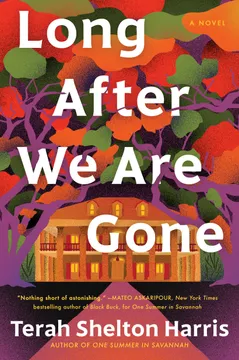
Long After We Are Gone garners mixed reviews, averaging 3.84 stars. Many readers praise Harris's compelling exploration of heir property and its impact on Black land ownership, alongside complex, flawed characters navigating secrets, addiction, and identity. The multiple POVs are largely seen as effective, though some find them difficult to manage. Positive reviews highlight emotional depth and strong writing, while critics cite unlikable characters, slow pacing, and excessive steam as drawbacks. Most agree the subject matter is important and eye-opening.
People Also Read









Characters
Junior
The divided eldest sonJunior is King’s eldest child, an elementary-school principal, husband to Genesis, and father to two young daughters. He has spent years presenting a dependable public self while concealing his attraction to men, a division he experiences as separate inner and outer lives. His sensitivity and habit of retreating inward contrast with the forceful masculinity King and Mance embody. Junior wants to be loved without disappointing his family, but his attempts to satisfy everyone leave him unable to speak plainly about what he needs. His deepest struggle is not simply choosing between two relationships; it is learning to distinguish responsibility from self-erasure and to act without waiting for someone else to authorize his identity.
Mance
The guarded builderMance is King’s younger son, a gifted carpenter, and a father whose fierce protectiveness is sharpened by a history of violence and imprisonment. He trusts his hands more readily than his words: he repairs furniture, houses, and broken objects, while anger often speaks before he can explain what frightens him. Mance admires King and has inherited the burden of maintaining the Kingdom, yet he also carries a private fear that he could repeat the destructive choices of the men before him. His love for Lisha and Henry presses against his instinct to solve every danger through force. He is most vulnerable when he believes that providing and protecting are the same thing.
CeCe
The ambitious runawayCeCe, whose birth name is Cecily, is King’s daughter and a successful New York lawyer who has built her identity around leaving Diggs behind. Polished, strategic, and sharply observant, she knows how to use charm as both social skill and shield. Her ambition grew from a promise never to be poor again, but the life she has constructed depends on secrecy and increasingly reckless choices. She is drawn to Ellis, the childhood friend who sees through her performances, while fearing that love will pull her back into a life she once rejected. CeCe’s strength is real, but she often mistakes control for freedom and is slow to admit when she needs help.
Tokey
The searching youngestTokey, the youngest Solomon sibling, teaches at the local school and has spent much of her life caring for King and trying to keep the family connected. Food offers her a private, immediate comfort when loneliness and anxiety become difficult to bear, though she hides the extent of her struggle from those around her. Tokey often sees what her siblings avoid, but she doubts her own judgment and feels out of place beside their stronger personalities and clearer ambitions. Her need to understand her mother is also a need to understand herself. She is not merely the family’s peacemaker; beneath her uncertainty is a growing capacity to ask difficult questions and take a first step without knowing the whole path.
King Solomon
The demanding patriarchKing is the father of Junior, Mance, CeCe, and Tokey, and the guardian of the family’s two-hundred-acre inheritance. A master carpenter and stubborn defender of the Kingdom, he expresses affection through labor, provision, and the standards he sets for his children. His silence around family history leaves his children to interpret his choices without the context that shaped them. King’s authority gives the siblings a powerful shared reference point, but also makes approval difficult to separate from love. He is remembered both as a hard man who expected much and as a person whose tenderness was often private.
Ellis
The loyal childhood loveEllis is the Solomons’ longtime friend, a lawyer, and CeCe’s first love. King welcomed him into the family when Ellis was a vulnerable boy, and Ellis repaid that care through steadfast loyalty to the household and the community. He is perceptive without being passive: he can offer CeCe tenderness while refusing to collude with her evasions, and he knows when Mance needs practical help. His years away and eventual return complicate his sense of home, but his commitment to Diggs is chosen rather than imposed. Ellis values honesty as a form of respect, even when the truth is painful.
Genesis
Junior's determined wifeGenesis is Junior’s wife and the mother of their two daughters. She values family stability, social respectability, and the promise of a shared life, and she often tries to manage uncertainty by arranging appearances and making plans for others. Her love for Junior is genuine, but it is bound up with expectations about marriage and the role she believes he should fulfill. Genesis can be perceptive and supportive, yet fear makes her reach for pressure rather than open acceptance. She is also shaped by her father’s influence and by the privileged world in which she was raised.
Simon
Junior's honest loverSimon is the man Junior loves, a consultant connected to the school and a person who lives with greater openness than Junior feels able to manage. Patient but not endlessly accommodating, Simon wants a relationship that exists beyond private meetings and borrowed moments. His directness exposes the cost of Junior’s indecision without erasing his affection for him. Simon’s insistence on being recognized is not a demand for spectacle; it is a refusal to accept a love that requires him to remain invisible.
Lisha
Mance's steady partnerLisha is Henry’s mother, a librarian, and Mance’s partner. Thoughtful and self-possessed, she can soothe Mance but does not confuse understanding him with excusing his anger. She wants a dependable home and a father who is present for their child, especially as they face Henry’s medical needs. Lisha’s love is generous, but she sets boundaries when Mance’s choices threaten the family’s safety. Books and reading offer her both work and a private source of pleasure.
Henry
Mance and Lisha's sonHenry is Mance and Lisha’s infant son. He is deaf, with some hearing in one ear, and his parents begin learning how to communicate with him while considering medical support. His arrival intensifies Mance’s desire to protect and provide, while challenging his assumptions about strength and what a good father must do. Henry’s presence makes the future immediate: Mance can no longer think only about the Kingdom or the past.
Hazel
The absent motherHazel is the Solomon siblings’ mother, a gifted singer and a woman whose letters preserve a voice her children barely knew. She grew up with limited choices and found deep affection with King, but she also faced pressures that complicated her loyalty, safety, and hopes for her family. The letters show her as more than the missing figure in her children’s lives: she is observant, loving, and capable of making painful decisions under constraint.
Shad
The estranged uncleShad is King’s brother and the Solomons’ unpredictable uncle. He is quick-witted, forceful, and shaped by the belief that the family’s land has trapped its men in work without reward. His history with King and Mance mixes loyalty, resentment, and a talent for bending others toward risky choices. Shad represents a competing idea of survival: take what can be gained now, rather than preserve an inheritance whose costs keep accumulating.
Miss Jessie
The keeper of memoriesMiss Jessie is the Solomons’ neighbor and longtime friend, a worldly, generous woman who has watched the family grow. Her home is filled with reminders of the life she has lived beyond Diggs, and she offers Tokey both practical kindness and a link to the family’s past. Miss Jessie knows more about Hazel than the children do, but she has tried to respect the promises entrusted to her.
James
The powerful investorJames is Genesis’s father, a prominent local investor with strong ties to real estate and an interest in the future of Diggs. He is accustomed to influence and expects people to recognize his authority. His business instincts are paired with a belief that land should be made profitable, even when its owners attach a different meaning to it. His relationships with the Solomons carry a history that complicates his public role as a potential ally.
Ethan
The heir-property lawyerEthan is Ellis’s law-school friend and a real-estate attorney who specializes in heir property. He explains the legal risks facing the Solomons and helps them identify possible appeals. His expertise gives the family a clearer view of the system they are up against.
Mrs. Annie Prescott
The elderly homeownerMrs. Annie Prescott is an elderly woman living in a once-grand family home filled with antiques and memories. Her shifting attention and elaborate stories complicate Mance’s attempt to assess the furniture, while her kindness makes the planned theft harder for him to justify.
Cedric
Shad's reckless companionCedric is Shad’s son and Mance’s cousin. Nervous and eager to prove himself, he lacks Mance’s judgment and often acts before considering the consequences. His presence brings instability to Shad’s schemes.
Earl
Lisha's protective landlordEarl is Lisha’s landlord and the father of a young man Mance once protected. He values debts of honor and remembers the help Mance gave his family. Earl’s loyalty connects Mance’s past choices to the fragile network of favors that supports life in Diggs.
Plot Devices
Heir property and the Torrens Act
The legal trapThe Kingdom has passed through the Solomon family without a clear will or title, leaving descendants with shared ownership. Shad uses a legal procedure to establish a claim to five acres, then sells them to Malone & Kincaid. The developers use that foothold to threaten the family’s residence and pressure the heirs to sell more. This device turns the novel’s historical concern with Black land loss into a concrete family crisis, showing how legal formality can favor those with money and expertise over people whose ownership rests on generations of labor.
Hazel's letters
The buried family historyThe letters Hazel wrote to Miss Jessie give Tokey a route into the past King kept from his children. They describe Hazel’s love for King, the violence surrounding the family, financial pressure on the Kingdom, and the choices she made to protect her household. As Tokey shares them, the siblings gain context for their parents and recognize echoes of their own conflicts. The letters also clarify Tokey’s anxieties about belonging. They function as both evidence and inheritance, transforming private family memory into knowledge the siblings can use to speak honestly with one another.
The Kingdom's columns
The failing supportThe old columns around the Kingdom hold up a deteriorating house, and Mance has been building replacements by hand. Their structural weakness is introduced as a practical danger long before it shapes the climax. The columns also mirror the family’s effort to keep a legacy upright through labor and sacrifice. When the siblings choose to bring the house down rather than let developers take possession, the columns become the physical means by which they make that choice. Their collapse does not erase the land or the family’s history, but it ends the house’s power to dictate the future.
The sledgehammer
Inherited force and choiceThe sledgehammer has been kept by the Kingdom’s front door and carries stories of earlier generations defending the family. King’s history gives it a meaning that is both protective and threatening, while Junior eventually takes it to James’s office. Later, Tokey uses it in the destruction of the house. Its repeated use links the siblings to their ancestors, but its meaning changes with the person holding it. The tool can enact rage, defense, or a chosen ending, making it a concrete symbol of the family’s struggle to inherit history without simply repeating it.
Download PDF
Download EPUB
.epub digital book format is ideal for reading ebooks on phones, tablets, and e-readers.








