

Plot Summary
The Blow in Mexico
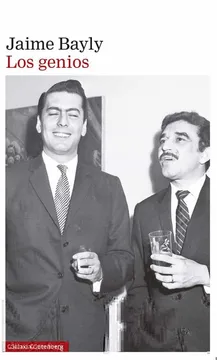
At a private Mexico City screening of a documentary written by Mario Vargas Llosa,1 his former friend Gabriel García Márquez2 approaches with open arms. Vargas Llosa1 strikes him in front of journalists, breaking his glasses and leaving his nose bleeding.
Mercedes Barcha4 and Elena Poniatowska rush to help García Márquez,2 while Vargas Llosa1 identifies Patricia,3 his wife,3 as the reason for the attack and then leaves without explaining. The novel begins with the friendship already shattered and its cause concealed. García Márquez2 is carried away injured, still trying to understand what his friend believes he has done; the witnesses are left with the same unanswered question.
Opening with violence before supplying its cause turns the reader into a witness to a private accusation made public. The punch is not merely a climax withheld for suspense. It makes the novel's central problem one of competing accounts: a long friendship can be ended by a story believed as completely as a fact. The injured man cannot explain himself, and the attacker refuses to explain further, so the reader must travel backward through loyalties, humiliations, and intimate choices to understand how certainty became irreversible.
A Wedding Under Fire
Before meeting García Márquez,2 Vargas Llosa1 has already learned to treat family life as a contest of power. His father, Ernesto,7 beat him and his mother, Dorita;8 at military school, Mario1 learned to fight back, and eventually drove Ernesto7 away from Dorita.8 After ending his first marriage to his aunt, Julia Urquidi,9 he marries his cousin Patricia,3 whom he first loved as a teenager.
Ernesto7 bursts into the small ceremony carrying a pistol and tries to stop it on the grounds that the couple are cousins. Mario1 disarms him and resumes the wedding. Patricia3 becomes his wife, and the family accepts the marriage despite its scandalous history and the violence surrounding it.
Mario's confidence in force is rooted in a childhood where physical courage offered the only reliable answer to abuse. At the wedding, he uses that strength to protect the marriage he has chosen, but the scene also makes his private life resemble the military institution that taught him to fight. Patricia's kinship with both Mario and Julia binds romance to family history, making later betrayals feel less like isolated affairs than repetitions inside a closed circle.
Caracas Makes Compadres
In 1967, Vargas Llosa1 waits at Caracas airport for García Márquez,2 whose Cien años de soledad has just transformed his literary prospects. Mario1 is already celebrated and is in Venezuela to receive the Rómulo Gallegos Prize; the men have admired one another's books from afar.
Their first meeting quickly becomes friendship. They discuss a novel about the war between Peru and Colombia, and García Márquez2 becomes godfather to Mario1 and Patricia's3 son Gonzalo. The relationship joins literary admiration to family intimacy.
Mario1 later writes a major study of García Márquez's2 fiction, while the Colombian's fame grows beyond the standing Mario1 had initially enjoyed. Their friendship begins in generous mutual recognition, but also within a world where literary rank and public acclaim are always visible.
The friendship is founded on more than affection: each man recognizes in the other a rival capable of enlarging what literature might do. Their proposed collaboration turns national history into shared imaginative territory, while the godparent bond gives that intellectual alliance a domestic form. Yet the difference in fame, already shifting as García Márquez's novel sells widely, remains quietly present. Admiration can sustain closeness, but it also creates a measure by which each man may later interpret respect, loyalty, and injury.
Barcelona's Fractured Circle
The Vargas Llosa1 family moves to Barcelona and settles close to García Márquez2 and Mercedes.4 The writers become neighbors, share meals, and deepen their friendship while their wives and children form a family-like circle. Their political agreement breaks when the Cuban government arrests poet Heberto Padilla.
Vargas Llosa1 writes a protest letter demanding his release, but Plinio Apuleyo Mendoza signs García Márquez's2 name without permission. García Márquez2 angrily repudiates the signature and continues defending Fidel Castro.11
Mario1 sees this as a moral failure; Gabriel2 sees the letter as a misguided intervention. They avoid political arguments and remain friends, but the disagreement leaves a fault line beneath the warmth. Years later, the question of Castro11 and press freedom will sharpen that divide.
The Padilla episode gives the novel's private conflict a political rehearsal. Plinio's unauthorized signature makes representation itself dangerous: a friend claims to know another man's convictions, then forces him to correct the record publicly. Vargas Llosa and García Márquez disagree not simply about a leader, but about whether personal access and loyalty excuse silence. They preserve their friendship by avoiding the subject, yet avoidance only keeps the fracture out of sight. Their intimacy survives for a time because neither has yet demanded that the other choose between friendship and principle.
The Rossini Betrayal
In Barcelona, Patricia3 tells Mario1 she can no longer manage three children and a household alone while he writes. They decide to return to Lima by ship, partly because Mario1 refuses to leave his library behind.
On board, Patricia3 befriends Susana Diez Canseco,6 a beautiful young admirer traveling back to Peru after separating from her husband. Mario1 secretly visits Susana's6 cabin and begins an affair while Patricia3 spends time with her, unaware. Near the Callao, Mario1 announces that he is leaving his wife3 for Susana.6
Patricia3 confronts them, calls Susana6 a traitor, and reaches Lima with her marriage ended. The journey meant to reunite the family with home instead delivers Patricia3 into public humiliation and leaves Mario1 free to pursue a new life.
The ship compresses domestic labor, erotic possibility, and secrecy into a world with nowhere to escape. Patricia's friendliness toward Susana becomes the instrument of her own betrayal, while Mario treats the voyage as both a romantic adventure and a route out of responsibilities he resents. His claim to artistic freedom is real to him, but it is purchased by transferring childcare and uncertainty to Patricia. The sea crossing thus converts a household imbalance into a rupture that neither spouse can pretend is merely practical.
Three Children Left Behind
Mario1 leaves Patricia3 in Lima with Álvaro,12 Gonzalo, and baby Morgana, promising her the Barranco house, his books, and a share of his earnings. Patricia's3 parents help with the children, while García Márquez2 and Mercedes4 offer her comfort from Barcelona.
Patricia's3 anger turns concrete: she burns treasured books Mario1 had collected, repeating a form of revenge once used by Julia.9 During a visit with friends, Álvaro12 is bitten badly by a dog and needs emergency surgery; Mario1 does not call to ask how his son is.
Meanwhile, Patricia3 hears from García Márquez2 and Mercedes4 about Mario's1 past visits to brothels and begins to question the fidelity she had assumed. Her marriage has cost her independence, but the separation gives her room to imagine a life and work of her own.
The separation exposes the unequal accounting hidden inside the marriage. Mario offers property and money, but Patricia bears the daily care of the children and the public shame of his departure. The burned books make revenge material, yet they also show how deeply his literary life has occupied their shared home. Álvaro's injury gives absence a bodily consequence. As Patricia turns toward writing, she begins to ask whether being a writer's wife has eclipsed her own ambitions, rather than simply asking how to recover the marriage.
Susana's Final Surprise
When Susana's6 estranged husband threatens her, Mario1 travels to Madrid with Jorge Edwards,10 beats the man, and brings Susana6 back to Barcelona. Mario1 later has surgery for painful hemorrhoids and agrees to a circumcision Susana6 has requested.
He then takes a directing role in the film adaptation of Pantaleón y las visitadoras, with filming relocated to the Dominican Republic. During production, Susana6 arrives unexpectedly at the set. She opens Mario's1 trailer door and finds him kneeling beside actress Katy Jurado, trimming her pubic hair before a scene.
Susana6 mistakes the intimate-looking preparation for a sexual act and leaves him a note ending their relationship. Mario1 does not chase after her. The romance that began on the ship ends through a glimpse interpreted without explanation.
Mario's rescue of Susana repeats his habit of solving emotional danger through decisive action, but the film set presents a problem force cannot settle. The trailer image is ambiguous, yet Susana experiences it as confirmation that she cannot trust him. Mario's concentration on directing and erotic spectacle has again pushed the relationship into a setting where appearances carry more weight than explanation. The episode anticipates the later conflict with Patricia: a scene is seen, interpreted, and converted into certainty before the person at its center can supply an account.
The Missed Flight
In Barcelona, Patricia3 tells Carmen Balcells5 she wants to become a writer and asks for help divorcing Mario.1 García Márquez2 and Mercedes4 urge her not to wait for her husband, and explain that Mario1 has visited brothels during their marriage. After a farewell dinner, Patricia3 dances closely with García Márquez2 at the Bocaccio nightclub and misses her flight to Lima.
He drives her to a hotel, where she tries to draw him into an affair. García Márquez2 showers, then leaves without touching her while she sleeps. He deliberately crashes his car on the drive home so Mercedes4 will believe his excuse for returning late and drunk. Patricia3 wakes alone, carrying a night of desire and rejection whose true events she will later recast.
Patricia's night out is a bid to experience herself beyond marriage and motherhood, but freedom here is entangled with revenge and the desire to be chosen. García Márquez recognizes that accepting her invitation would injure his wife and his friend, so he leaves; his deliberate collision then converts restraint into a secret requiring further concealment. Patricia's account of the night will become more consequential than the night itself. The scene makes truth vulnerable not only to lying, but to the emotional need to make an ambiguous rejection mean something else.
The Confession in Manhattan
After returning to Lima, Patricia3 refuses Mario's1 invitation to New York until he comes to her. He eventually visits, apologizes, kneels, and uses a childhood poem to win her forgiveness. They reconcile and travel to New York together.
There, Patricia3 confronts him about the brothels and says García Márquez slept with her during the missed-flight night. The narrative has shown otherwise: García Márquez2 left her asleep and untouched. Patricia's claim gives Mario1 a betrayal he believes he can avenge, and he stops seeing his old friend as a possible source of another account.
Ten weeks later, at the Mexican screening that opened the novel, Mario1 acts on that certainty. Patricia's lie, born from hurt and pride, makes the earlier scene's unexplained violence legible.
Reconciliation does not restore trust; it gives Patricia and Mario a new stage on which to test each other's power. The poem invokes childhood devotion, but the intimacy it repairs cannot withstand Patricia's retaliatory story. Mario's belief is shaped by a familiar fear of humiliation, and his response is to collapse uncertainty into a verdict. Patricia turns fiction into leverage, perhaps trying to make Mario feel the injury he caused her. The result is not emotional balance but an accusation with consequences neither can control.
A Friendship Without Answer
After the attack, García Márquez2 insists privately that he did not sleep with Patricia,3 while Mercedes4 believes him. Mario1 refuses to give journalists the reason for the break, calling the incident personal and dismissing suggestions that politics or publicity caused it. In a later television interview, he is asked whether the friendship is over and answers without resolving the question.
Patricia's account and García Márquez's account remain opposed, and neither man seeks the conversation that might test them against each other. The friendship once sealed by books, daily visits, and godparenthood ends not with a shared explanation but with silence. The public sees the injury; the private story that produced it stays disputed.
The ending withholds reconciliation because its real subject is the social life of an unverified story. Each character protects a different loyalty: Mario protects his injured honor, García Márquez his account and his marriage, and Patricia the force of her own grievance. Their silence preserves dignity in public while making correction impossible in private. By refusing a final authoritative explanation beyond the events it dramatizes, the novel asks readers to notice how literary invention and intimate testimony can both persuade, and how persuasion alone cannot establish truth.
Analysis
Los genios turns celebrated public figures into characters whose private lives are governed by the same forces that shape their reputations: ambition, loyalty, pride, and the need to control a story. Mario1 believes that writing requires freedom, yet his pursuit of that freedom repeatedly shifts responsibility onto Patricia.3 Patricia,3 initially organized around his career and their children, begins to imagine authorship as a life of her own. García Márquez2 offers her kindness, but his effort to protect his friendship and marriage leads him to conceal what happened on their night together. That silence allows Patricia's3 version to become decisive for Mario.1
The novel links political and intimate allegiance without treating them as identical. The Padilla dispute tests whether friendship requires agreement with a regime; the marital crisis tests whether loyalty survives desire and injury. In both cases, characters claim to know what another person believes or has done, then act on that claim. The punch is the bodily form of a judgment made without hearing the accused.
The narrative's opening and ending frame the story as a mystery of motive, but its answer is deliberately uneven: the reader sees the hotel encounter more fully than Mario1 does, while the characters remain trapped in incompatible accounts. This is fiction, not a historical investigation, and its imagined scenes should be read as a novelist's interpretation rather than a verified record. Its lasting insight is less about deciding which public genius was right than about how easily admiration becomes entitlement, and how a friendship can be destroyed when certainty replaces conversation.
Characters
Mario Vargas Llosa
The disciplined novelistA Peruvian novelist whose life is organized around writing, routine, and the conviction that artistic work demands freedom. His early experience of an abusive father and a harsh military school shapes both his self-command and his readiness to meet conflict head-on. He is ambitious, intellectually serious, and capable of generosity, especially where money and professional support are concerned. Yet he can treat domestic obligations as intrusions on a destiny he considers essential. His relationships with Patricia3, Susana6, and García Márquez2 reveal a man who wants to be admired as much as loved, and who finds uncertainty particularly difficult to bear.
Gabriel García Márquez
The generous fabulistA Colombian novelist whose rise from poverty to international fame gives him both social ease and a deep awareness of vulnerability. He draws people close through humor, generosity, music, and an instinct for storytelling, and he offers practical as well as emotional shelter to friends in trouble. His loyalty to Mercedes4 is central to his private life, while his friendship with Fidel Castro11 complicates his public principles. He is less interested than Mario1 in discipline and argument, preferring intimacy, improvisation, and the pleasures of company. His gift for shaping stories becomes a source of connection, but also a danger when others mistake invention, discretion, or silence for proof.
Patricia Llosa
The overlooked partnerMario's1 cousin and wife, Patricia is practical, proud, and accustomed to carrying the household while he writes. She first gives up her own literary studies to support his career, but the sacrifice leaves her with a growing sense that her ambitions have been treated as secondary. Her affection for Mario1 is bound to a long family history and to the belief that their shared life should have been permanent. She is also forceful and capable of anger, refusing to accept humiliation quietly. Her struggle is not simply to keep or leave a husband; it is to recognize herself as a person with a vocation beyond managing his needs.
Mercedes Barcha
García Márquez's anchorGarcía Márquez's2 wife, a perceptive and steadfast presence who shares his private history and understands the pressures that accompany his fame. She offers Patricia3 sympathy while remaining loyal to her husband, and she can read the emotional currents beneath both men's public postures. Her practical judgment and dry humor help stabilize García Márquez's2 more impulsive, convivial nature.
Carmen Balcells
The writers' formidable agentThe powerful literary agent who guides the careers of both writers and often acts as their mediator. She negotiates contracts, manages money, and tries to protect the conditions that let her authors write. Her shrewdness is matched by genuine attachment, though she sometimes believes she can manage private relationships as carefully as professional ones. Patricia's3 wish to become a writer challenges Carmen to see her as more than Mario's1 wife.
Susana Diez Canseco
The alluring newcomerA young Peruvian model and aspiring designer whose beauty and self-possession draw attention wherever she goes. She is a devoted reader, values independence, and resists being defined solely by the men in her life. Her directness unsettles Mario's1 routines, while her own ambitions make their romance more complicated than an affair of admiration alone. She is also shaped by family expectations and by a marriage she is trying to leave behind.
Ernesto Vargas
Mario's abusive fatherMario's1 father, a volatile and domineering man whose violence leaves a lasting mark on his son and wife. He measures masculinity through toughness and treats tenderness as weakness. His presence helps explain why Mario1 associates confrontation with action and why family love can coexist with fear, resentment, and a need to escape.
Dorita Llosa
Mario's devoted motherMario's1 mother, gentle and deeply devoted to her son, whose affection gives him a model of unconditional loyalty. She endures a difficult marriage with religious patience and struggles to imagine life outside it. Her relationship with Mario1 is tender, but it also reveals how readily love can become intertwined with sacrifice and silence.
Julia Urquidi
Mario's first wifeMario's1 aunt by marriage and first wife, Julia is an important precedent in the Llosa family's tangled romantic history. Her relationship with Mario1 began in defiance of family expectations, and its end leaves her with a lasting sense of injury. Proud and perceptive, she understands how quickly Mario1 can redirect his devotion, and she sees echoes of her own experience in Patricia's3.
Jorge Edwards
Mario's trusted confidantA Chilean writer and diplomat who shares Mario's1 concerns about political repression and offers him candid counsel. Edwards is measured where Mario1 is combustible, and his steady manner makes him a useful companion in moments of crisis. He values literary independence and personal loyalty, but does not confuse friendship with agreement.
Fidel Castro
The revolutionary patronCuba's leader and a powerful presence in the writers' political world. He cultivates relationships with celebrated authors and receives García Márquez's2 public loyalty, while Mario1 becomes increasingly troubled by the regime's treatment of dissenting writers. Castro's influence reveals how political allegiance can become a test of personal friendship.
Álvaro Vargas Llosa
The eldest childThe eldest child of Mario1 and Patricia3, Álvaro is a lively boy whose injury during his father's absence exposes the practical cost of the family separation. His needs keep the adults' conflict grounded in ordinary care rather than reputation alone.
Plot Devices
The Rossini crossing
A marriage at seaThe ship voyage from Barcelona to Lima gathers Mario1, Patricia3, their children, and Susana6 in a confined setting. Patricia's3 exhaustion helps prompt the move, while Mario's1 attachment to his library dictates the slow route. The shared meals and afternoons by the pool conceal the affair taking place between Mario1 and Susana6. Because Patricia3 befriends the woman who is deceiving her, the ship turns domestic trust into dramatic irony. The crossing does not merely transport the family; it carries them from an unequal but intact household into separation.
The disputed night
A story mistaken for proofPatricia3 and García Márquez2 experience the missed-flight night differently from the account Patricia3 later gives Mario1. The narrative shows García Márquez2 leaving her asleep, yet Mario1 accepts her claim that they were lovers. This device links the book's opening assault to the underlying marriage crisis and forces readers to distinguish what happened from what characters need to believe happened. The uncertainty does not come from a hidden physical clue. It comes from the power of a testimony shaped by hurt, jealousy, and silence.
Books as inheritance
Art enters the householdMario's1 library represents the life he has built around writing, while Patricia's3 domestic labor makes that life possible. He insists on carrying his books across the ocean, then leaves them in the home he gives Patricia3. Her later destruction of treasured volumes turns an intellectual possession into a weapon of marital grief. The books also mark Patricia's3 own suppressed literary ambition, which she begins to reclaim during the separation. Art is therefore not a distant profession in the novel; it occupies rooms, consumes time, shapes money, and defines the terms on which the couple understand one another.
The Padilla letter
Politics tests friendshipThe protest letter over Heberto Padilla's arrest gives the writers' political convictions a concrete test. Mario1 authors the appeal, while Plinio signs García Márquez's2 name without asking him. García Márquez2 rejects the unauthorized signature and continues supporting Castro11, leaving Mario1 disillusioned. The episode establishes that both men care about public integrity, but understand political loyalty differently. Their choice to avoid further arguments allows friendship to continue without resolving the disagreement, creating a fault line that later disputes over Peru's censored press deepen.
Download PDF
Download EPUB
.epub digital book format is ideal for reading ebooks on phones, tablets, and e-readers.








