

Plot Summary
The Potters Are Replaced
Before dawn in Montana, an engineered copy of Mayor Erskine Potter11 enters his home, incapacitates the real mayor11 with a device planted in his brain, and downloads his memories. Copies of Nancy and Ariel help the new Erskine11 send the family away in a truck already carrying other captives.
At the police station, the counterfeit chief15 and his officers conceal the prisoners in basement cells, then deliver two local detainees, Nummy O'Bannon7 and Conway Lyss,8 to the same place. The invaders call themselves the Community. They intend to replace Rainbow Falls' residents, conceal the bodies, and use the town as a base for a larger campaign. Their method depends on impersonation, captured memories, and the townspeople's trust in familiar faces.
The invasion begins not with a battlefield but with domestic administration. A copy cleans the kitchen, corrects the refrigerator, then disposes of the family whose life it has appropriated. That sequence makes efficiency an instrument of horror: the invaders do not merely kill, they treat ordinary human disorder as evidence that people deserve removal. The stolen memories give impersonation a psychological dimension. A victim's private history becomes a tool for erasing the person while preserving the social role. The town's first defense is therefore already compromised, because its police and elected officials are among the faces the Community can reproduce.
A Surveillance Job Turns
In San Francisco, former homicide detectives Carson O'Connor-Maddison2 and Michael Maddison3 are watching an industrial espionage exchange when the buyer, Chang, shoots the seller, Beckmann. Carson2 pursues him through the fog to a yacht, where Michael3 helps her disarm and arrest him after she wounds his foot.
The chase unsettles Carson2 for a reason she cannot dismiss: since the birth of their daughter, Scout,14 danger carries the image of a child left without her mother.2 Michael,3 equally shaken, vomits after the confrontation. Back home, their nanny Mary Margaret12 points out that their fear reflects how much they now have to lose. Their renewed family life is interrupted soon afterward by a much older enemy.
The case gives the couple an immediate, physical test of their new identities. Carson's skill has not vanished, but motherhood has changed the cost she assigns to using it. That hesitation is not cowardice; it is an awareness of dependence, the knowledge that her choices affect Scout as well as herself. Michael's humor keeps panic manageable until his body betrays him. Their partnership remains strong precisely because neither can pretend the old risks are unchanged. This personal recalibration prepares the central conflict: they will have to act again, not because they are untouched by fear, but because love has made the stakes impossible to ignore.
Livestock in the Cells
In the police basement, Nummy7 tries to make sense of the silent prisoners while Lyss,8 a volatile burglar, recognizes that the new chief15 is not the man who arrested them. Lyss8 has hidden lock picks in a plastic tube, and Nummy7 reluctantly keeps them.
A handsome stranger enters a cell and identifies himself as a Builder. His body dissolves into a swarm of silver organisms that kills and consumes two captives, then begins reshaping their remains.
Lyss8 picks the cell lock and flees; Nummy7 follows, but pauses when a brain-tapped woman reaches through the bars for help. He cannot save her and escapes only after a scream from the slaughter drives him up the stairs. The two men leave the station together, though Lyss8 intends to abandon Nummy7 as soon as he can.
Nummy's moral perception is clearer than his understanding of events. He cannot explain the Builder, but he recognizes the woman's appeal and feels responsible for not helping her. Lyss understands danger faster, yet his instinct is self-preservation without obligation. Their escape places these opposing responses side by side: one man knows how to survive, the other cannot stop caring about someone he has just met. The transformation of human bodies into material for more life also makes the Community's language of building deliberately deceptive. Its creation is not generative; it is consumption disguised as progress.
The Maker Returns
At a California abbey, Deucalion1 tells his friend Brother Knuckles that Victor Frankenstein,6 whom he saw die in Louisiana, is alive. A flock of bats circling above the landfill where Victor6 died deepens his certainty that the scientist is active underground.
In Rainbow Falls, Erika Swedenborg,4 once one of Victor's6 engineered companions, spots him walking past her car. She follows his Mercedes onto a remote road, but it vanishes without a trace. Erika4 returns home shaken, where her adopted companion Jocko5 has been panicking over her delayed arrival.
She steadies him with cinnamon rolls before telling him what she saw. Deucalion1 contacts Carson2 and Michael,3 who know Victor6 from their earlier struggle against him, and asks them to come to Montana.
Recognition, rather than proof, drives this turn. Deucalion trusts a premonition shaped by his unusual knowledge of the world; Erika trusts the unmistakable sight of a man she had reason to believe was dead. Neither can yet explain how Victor returned, so their certainty precedes evidence. Erika's quiet reunion with Jocko offers a counterweight to that dread. She restores safety through an ordinary ritual, food and care, before admitting that the threat has come close. The contrast shows what Victor's designs cannot manufacture: attachment built from repeated acts of protection rather than programmed obedience.
A Family of Outcasts
Carson,2 Michael,3 and Deucalion1 reach Erika's4 home by Deucalion's impossible shortcut across distance and time. They learn that lightning shielded Erika4 from the signal that killed Victor's6 creations in Louisiana.
She also remembers a hidden glass chamber in Victor's6 mansion, where a second, living figure waited in suspended animation. The group suspects this was a backup of Victor, released when the original died. Erika4 introduces Jocko,5 a frightened, restless being who escaped from one of Victor's6 failed creations and has found a family with her.
His appearance alarms the visitors, but his eagerness to be accepted quickly turns awkwardness into affection. With the danger established, Deucalion1 sends Carson2 and Michael3 into town to investigate while Erika4 and Jocko5 remain at the house.
The household gathers beings whom Victor's categories would label defective: a scarred first creation, an engineered woman who has chosen her own identity, and a creature born from an experiment gone wrong. Their shared refuge undermines the premise that value depends on design perfection. Jocko's anxious performance of politeness exposes how exclusion becomes internalized; he tries to manage other people's reactions before they can reject him. Erika's care gives him a setting in which difference is not a verdict. The suspected second Victor introduces a darker mirror: the same capacity to create life can serve either relationship or domination.
The Hospital Goes Quiet
At Rainbow Falls Memorial Hospital, Bryce Walker9 notices that staff members have become cold and inattentive after he is admitted with chest pain. His doctor gives evasive answers, and nurses ignore ordinary needs.
When Bryce9 hears terrified voices through a ventilation grille, he suspects that prisoners are being held below. Nine-year-old Travis Ahern10 confirms the unease: nurses have watched him sleeping, his phone has been taken, and his mother,10 Grace, cannot be reached at the elementary school where she works.
Bryce9 investigates, discovers that the basement stairs are guarded, and witnesses a patient beaten to death after trying to escape. Travis10 sees the killing too. The two decide that staying in their rooms is more dangerous than attempting to get out.
Bryce's age initially seems to make him vulnerable to dismissal, but his experience as a writer and widower gives him patience with ambiguity. He does not accept Travis's alien explanation, yet he takes the boy's observations seriously. That distinction is crucial: trust does not require sharing another person's theory. Travis, meanwhile, wants to become a dependable protector for his overworked mother, a wish formed in response to his absent father. The hospital turns care into surveillance and treatment into control, making the familiar institution feel treacherous. Bryce and Travis resist that inversion by becoming responsible for one another.
Escape Through the Roof
Bryce9 arranges a diversion while Travis10 slips into a hidden stairwell with his clothes packed in a pillowcase. After convincing Nurse Makepeace to leave her station, Bryce9 follows him to a maintenance room beneath the roof. He knots bedsheets into a rope and hangs it from a window to suggest that they have escaped that way, then waits with Travis10 for darkness.
On the roof, they hear the same distant cries Bryce9 had detected through the hospital ductwork. Travis10 wants to reach the victims, but Bryce9 explains that they do not know how to get downstairs without being caught. They descend a fire ladder and cross the grounds toward Travis's10 home, hoping to intercept Grace before she returns to the hospital.
The escape is built from observation rather than force. Bryce uses his memories of the hospital, his reading of staff routines, and a simple false trail to create a narrow opening. His leadership does not make Travis fearless; it gives fear a task. The boy still hears the victims and wants to help, while Bryce insists that survival may be the precondition for helping anyone else. Their disagreement preserves the moral cost of escape: choosing not to intervene is not indifference, but it leaves an injury in the conscience. The roof makes that cost audible even as it offers a route to freedom.
Cocoons in the Pastor's House
After escaping the jail, Lyss8 takes Nummy7 through a storm drain to Nummy's7 house, where his stuffed toy dog Norman offers comfort and a brief glimpse of Lyss's8 softer side. They evade the false police searching for them by entering the home of Reverend Kelsey Fortis, who is away at the church social.
There, three swollen cocoons hang from an upstairs ceiling, their surfaces moving with something inside. Lyss8 fetches fuel and sets them alight, asking Nummy7 to strike the match. The burning sacks begin to split, and an unfinished creature emerges before the two flee the house. Lyss8 and Nummy7 escape into the night, now carrying evidence that the invasion extends far beyond the jail.
Nummy's home life is modest, but its routines give him a genuine sense of security: familiar food, an orderly kitchen, and a toy dog that answers with affection. Lyss mocks those comforts until Norman's recorded kindness exposes what he lacks. Their connection does not redeem Lyss all at once; it gives him a reason to hesitate before treating Nummy as disposable. Burning the cocoons is an act of prevention made under uncertainty. Nummy must choose to ignite them without knowing what will happen, and his decision turns his gentle disposition into a form of courage rather than a weakness.
A Temple Nail Bleeds
At dinner, Carson2 and Michael3 spot Denise Benedetto sitting rigidly with a silver device embedded in her temple. When the injured woman manages to reach them, she indicates that someone has taken her identity and pleads for help for her child. Local officers arrive before the ambulance and remove Denise, shutting the detectives out.
Carson2 and Michael3 find Denise's address, discover that a second Denise is living there, and approach the house under a false pretext. Through a window they see five-year-old Chrissy tied to a chair among mutilated teddy bears. Michael3 frees the child while Carson2 kills the armed impostor after it attacks her. They escape with Chrissy, but cannot tell the girl when her real mother will return.
The brain device makes identity theft visible as a wound, but the deeper violation is relational. Denise knows herself well enough to recognize that her own face has been occupied, yet the people empowered to help her instead remove her from view. Chrissy's torn toys make the private home a scene of coercion, and Carson's decision to enter is shaped by her recognition of a child in danger. Saving the girl does not restore her family; it transfers the burden of care to strangers. The episode tests whether the detectives can protect someone without pretending they can repair what has already been taken.
End Times Highway
Carson2 and Michael3 question Rainbow Falls Gazette editor Addison Hawk,16 who links the costly End Times Highway to secret Cold War construction and underground installations. The name fits Deucalion's1 suspicion that Victor6 is working below ground.
Meanwhile, FBI agents Frost and Dagget17 track the false police chief15 and learn that a powerful financier, known as the Moneyman, is coming to the area. Deucalion1 follows one of the unmarked trucks and discovers that it carries brain-tapped captives from the telephone company to a warehouse.
He sees more prisoners there, but delays an attack until he understands the operation. At Erika's4 house, Deucalion1 gives Jocko5 a task: penetrate government records and identify the truck's owner. Jocko5 begins hacking, finally given a role in the fight.
The investigation widens from a local mystery into a system. A road built under secrecy, a financier's arrival, and trucks moving captives all point to an operation designed to function without public notice. Yet the protagonists do not respond in the same way. Deucalion restrains his impulse to attack because information may matter more than immediate violence; Jocko channels anxious energy into a technical task; Carson and Michael use social contact to gather clues. The variety of methods reflects a practical alliance rather than a single heroic style. Jocko's assignment also makes belonging consequential: the group trusts his abilities, not merely his need for acceptance.
Victor's Immaculate Plan
Victor's concealed successor is revealed as an enhanced copy that absorbed the original's memories while suspended for eight years. Calling himself Victor Immaculate, he has stripped away the original's appetites for luxury, sex, and personal rule.
His purpose is more absolute: the Community will eliminate humanity, after which he plans to kill his own creations and himself, leaving no successor and no human witness. Brain-tapped replicants replace adults; Builders, swarms of microscopic organisms, consume human bodies and use them as material to reproduce.
The operation in Rainbow Falls is a trial run, supported by remote facilities and planned attacks on workplaces, homes, and a church social. Victor expects his local forces to finish the town before the wider process accelerates.
Victor's refined purpose is not simply conquest. He regards even replacement life as an unacceptable continuation, so creation becomes a temporary instrument for abolishing creation. That makes the Community's promise of order doubly false: it offers efficient governance while serving a plan that will destroy its own members. His materialism also turns human meaning into a problem of perception, as if removing observers could erase value itself. The novel counters that abstraction with specific attachments: a mother to a child, an old man to his dead wife, and unlikely companions protecting one another. Those bonds are precisely what his calculations cannot reduce to output.
The Roadhouse Becomes a Trap
At the Riders in the Sky Church's monthly gathering, the false mayor11 locks the exits while the false Reverend Fortis introduces three beautiful Builders. The creatures attack the crowd, killing several people as families scramble to find their children.
Congregants who carried guns for hunting and self-defense fight back: Dolly Samples and Loreen Rudolph draw their weapons, Glenn Botine shoots the false preacher, and Van Colpert, Turner Ward, and Doogie Stinson force open a chained exit.
Brock and Debbie Curtis help stop the false councilmen from attacking the escapees. The survivors flee in their vehicles, taking children and neighbors with them. The attack exposes the invasion to a large group, but the police chief15 responds by blocking roads and cutting communications.
The church social is an especially effective target because its habits of hospitality leave people unprepared for betrayal by their own leaders. The same community practices that make the gathering welcoming, shared food, familiar songs, trust in a pastor, also delay recognition of the trap. Yet those habits do not leave the families helpless. Their loyalty becomes coordination: adults search for children, armed residents challenge the attackers, and neighbors make room in their vehicles for survivors. The escape is costly and incomplete, but it changes the conflict from hidden replacement to open resistance. The Community can control institutions, not every relationship inside them.
Snow on the First War
The book closes with several groups moving toward an uncertain fight. Deucalion1 takes Chrissy to Erika's4 home, where Jocko5 works to identify the truck that carried prisoners. Carson2 and Michael3 load their weapons and leave the motel, now aware that Victor's6 forces are already among the townspeople.
Bryce9 and Travis10 reach the home of Colonel Sully York,18 a local man Bryce9 trusts, and ask for help. Nummy7 and Lyss8 try to drive out of town but turn back when Community officers block the road.
FBI agents Frost and Dagget17 watch police remove the body of the murdered replicant Denise, unsure what has overtaken Rainbow Falls. Snow begins to fall as the town's communications and exits are shut down. The invasion is exposed, but no one has yet stopped it.
The ending deliberately withholds the relief of a completed victory. Instead, it gathers the story's separate moral and practical resources: Deucalion's power, Carson and Michael's experience, Bryce's judgment, Travis's urgency, Nummy's decency, Lyss's survival skills, and Jocko's technical talent. Their paths have not yet converged, and the town's isolation makes cooperation harder just when it becomes essential. The first snowfall is not a promise that danger has passed; it marks the beginning of a new phase. The book ends at the threshold between private suspicion and organized resistance, with the human cost already visible.
Analysis
Lost Souls makes impersonation its central political and psychological weapon. The Community does not begin by conquering a town openly; it takes over the roles residents rely on, including mayor, police chief, doctor, spouse, and parent. The brain tap gives this theft a chilling precision, because the copies can wield private memories as proof of intimacy. Yet the novel repeatedly shows that likeness is not relationship. The copies can reproduce habits, but they cannot reproduce the care that makes those habits meaningful.
Against Victor's6 efficient machinery, the story sets an unruly network of chosen attachments. Deucalion's1 remorse, Erika's4 protection of Jocko,5 Carson2 and Michael's3 devotion to Scout,14 Bryce's9 patience with Travis,10 and Nummy's7 compassion for Lyss8 all resist the idea that usefulness determines worth. Nummy's7 apparent limitations do not prevent him from recognizing suffering; Lyss's8 hard-earned cunning does not prevent him from needing human connection. Their differences become resources rather than defects when they act together.
Victor's successor pushes the conflict beyond a struggle for power. He intends to destroy both humanity and the replacements created to destroy it, treating all existence as an error to erase. The people of Rainbow Falls answer that nihilism not with a unified theory but with particular acts: a child is carried to safety, a stranger is trusted, an exit is forced open. The ending remains unresolved because resistance has only begun. Its point is not that goodness guarantees victory, but that refusing to abandon one another is the first practical condition for opposing a system built on isolation, obedience, and death.
Review Summary
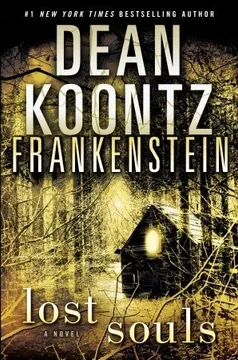
Lost Souls, the fourth book in Dean Koontz's Frankenstein series, receives mixed reviews averaging 3.94/5. Many readers enjoy the return of fan-favorite characters like Deucalion, Carson, Michael, Erika 5, and Jocko, alongside compelling new additions. The Montana setting and introduction of terrifying "Builders" add fresh intrigue. However, the most common criticism is the abrupt, unresolved ending, leaving readers frustrated without closure. Some feel the book reads more like setup for the next installment rather than a satisfying standalone story.
People Also Read

Characters
Deucalion
The remorseful first creationVictor Frankenstein's6 earliest creation, Deucalion is centuries old, physically formidable, and marked by the damage of his first attempt to destroy his maker6. He has committed violence in his past and now seeks a life governed by restraint and moral responsibility. Monasteries offer him a kind of shelter, though he never mistakes shelter for belonging. His intuition and strange abilities make him an effective hunter, but his most important strength is his capacity to choose differently from the man who made him. He is loyal to Carson2 and Michael3, and his tenderness toward children reveals how completely he rejects Victor's6 contempt for ordinary human attachments.
Carson O'Connor-Maddison
The relentless detective motherA former New Orleans homicide detective turned private investigator, Carson is direct, observant, and exceptionally capable under pressure. She works in close partnership with her husband3, Michael3, and their shared history gives their humor a practical intimacy. Becoming a mother has not erased her courage, but it has changed her calculations: each risk now includes the possibility of leaving Scout14 without her. Carson resists being reduced to either a fearless cop or a cautious parent. Her strongest instinct is to protect people who cannot protect themselves, and she learns to act without pretending that love has made danger less frightening.
Michael Maddison
Carson's steady partnerMichael is a former New Orleans homicide detective and Carson's2 husband and investigative partner. His humor softens tense moments, while his caution often exposes the personal cost of a decision before Carson2 is ready to name it. Fatherhood has made him protective to the point of comic suspicion, especially about Scout's14 safety, but it has not made him unwilling to confront danger. He trusts Carson's2 instincts even when he worries about their consequences. His steadiness comes less from fearlessness than from loyalty: he keeps choosing to stand beside his wife2, their child14, and the people their work brings into danger.
Erika Swedenborg
The maker's escaped companionCreated by Victor Frankenstein6 as one of a succession of idealized companions, Erika has spent her life resisting the identity imposed on her. She now uses the name Swedenborg and has built a quiet home in Montana. Her love of nature and reading reflects a sincere effort to understand the human world from which she was manufactured. Erika's compassion is not passive: she protects Jocko5, recognizes the danger Victor6 represents, and joins the effort to stop him. Her central struggle is to claim a self that is not merely a product, possession, or function of her creator6.
Jocko
The lonely, brilliant misfitJocko emerged from one of Victor's6 creations in a form no one intended, and he has survived rejection, fear, and life outside ordinary society. Erika4 gives him a home and the closest thing he has to a family. Restless, imaginative, and easily frightened, he uses play, books, food, and elaborate routines to manage anxiety. His unusual intelligence and computer skills coexist with a deep need to be liked. Jocko often assumes that he will fail before anyone else can judge him, but he longs to contribute and to make Erika4 proud. His humor is both a gift and a shield.
Victor Frankenstein
The life-making antagonistVictor is a brilliant scientist who treats the natural order as a challenge to be overcome and human beings as material to redesign. His ambition combines genuine intellectual daring with an increasingly absolute contempt for ordinary life. He seeks control not only over bodies but over the meanings people attach to family, faith, and freedom. The beings he creates do not always conform to his plans, and their capacity for choice threatens the logic by which he justifies his work. Victor is most dangerous when he turns a grand theory into machinery, staffing, and routines that allow cruelty to proceed efficiently.
Nummy O'Bannon
The kind-hearted survivorNummy is a local man with an intellectual disability who lives by the lessons of his grandmother: be honest, notice right and wrong, and try to choose happiness. His literal speech can frustrate people who expect quick explanations, but his attention to others is unusually generous. He treats a stuffed toy as a beloved dog and tries to help even when he does not understand the danger. Nummy's quiet confidence rests on knowing his limits without accepting other people's contempt for him. His friendship with Lyss8 develops through patience, concern, and an unwillingness to imitate the cruelty he encounters.
Conway Lyss
The dangerous jailbreakerA gaunt, abrasive burglar, Lyss enters the story convinced that other people are prey, obstacles, or sources of profit. He is clever with locks and escapes, quick to threaten, and deeply suspicious of kindness. Nummy's7 straightforward honesty unsettles him because it offers no obvious leverage. Though Lyss keeps insisting on his own badness, he begins to show flashes of care that his self-image cannot comfortably explain. His relationship with Nummy7 is not a simple conversion from criminal to hero; it is a struggle between the survival habits that have kept him alive and the unexpected possibility of responsibility.
Bryce Walker
The watchful Western novelistBryce is a seventy-two-year-old Western novelist whose long life has left him observant, patient, and alert to the small signs that something is wrong. Since his wife's death, he has felt the pull of loneliness and passivity, but he still believes that courage consists of acting honorably when action is needed. His instincts are practical rather than sensational: he gathers evidence, studies routines, and makes plans. Bryce becomes a protective adult for Travis10 without pretending to know everything. His old-fashioned understanding of duty proves useful in a crisis his books never prepared him to imagine.
Travis Ahern
The boy who wants to protectNine-year-old Travis is hospitalized after severe allergic reactions and is frightened by the people who are supposed to care for him. He is perceptive enough to recognize changes in the staff and brave enough to tell Bryce9 what he has noticed. His absent father and his mother's10 exhausting work have made him eager to grow up and become someone she can rely on. Travis is still a child, and his fear remains real, but his desire to protect Grace gives him purpose. Bryce's9 respect helps him act without requiring him to pretend he is already a man.
Erskine Potter
The stolen civic identityThe real Erskine Potter is Rainbow Falls' mayor and the owner of a local roadhouse. His ordinary habits, family ties, and public role make him a useful target for impersonation. He represents the trusting civic life that the Community exploits, from local government to church gatherings. The copy's access to his memories shows how intimate knowledge can be turned against the people who shared it.
Mary Margaret Dolan
The family's practical anchorMary Margaret is a former nurse who cares for Scout14 while Carson2 and Michael3 work. Warm, perceptive, and plainspoken, she understands that their new family has changed their tolerance for risk. She does not flatter them or accept easy excuses, but her firmness is rooted in affection. Mary Margaret brings the competence of a caregiver into a household full of detectives, monsters, and improbable dangers.
Arnie O'Connor
Carson's thoughtful brotherCarson's2 younger brother, Arnie, once lived with severe autism and now enjoys learning, chess, and ordinary family life. His calm confidence contrasts with Carson's2 impulse to anticipate danger. He understands the emotional stakes of his sister's2 choices and encourages her without pretending the threat is harmless. His relationship with Deucalion1 is marked by trust and intellectual challenge.
Scout Maddison
The detectives' infant daughterScout is the young daughter of Carson2 and Michael3. Her babbling, new tooth, and easy affection give her parents a life beyond the cases that once defined them. She is too young to understand the danger around her, but her dependence changes how Carson2 and Michael3 assess every risk. Scout represents not an abstract future but a particular child whose safety gives their choices immediate weight.
Rafael Jarmillo
The town's compromised chiefRainbow Falls' elected police chief is respected by local residents and trusted by the people he serves. That position makes his identity especially valuable to the Community, which can use public authority to manage its takeover. Jarmillo's role underscores how institutions depend on the character of the people occupying them, and how easily familiar authority can disguise a threat.
Addison Hawk
The town's attentive editorHawk edits and publishes the Rainbow Falls Gazette and takes deep pride in the town's history. His knowledge of local people and the secretive End Times Highway makes him a useful source for Carson2 and Michael3. He is curious without being careless, and he can recognize when an explanation does not quite fit. His affection for the town is grounded in attention to its people and stories.
Frost and Dagget
The unofficial FBI observersFrost and Dagget are covert FBI agents investigating an unexplained operation in Rainbow Falls. They use surveillance, coded radio traffic, and a false corporate cover to follow the police chief15 and the people financing the project. Their dry humor sustains their partnership, but both understand that their investigation has become more dangerous than the information they were first given suggested.
Sully York
Bryce's trusted veteranSully York is a retired colonel and an old friend of Bryce Walker9. He has a mechanical hand and a reputation for surviving difficult assignments. Bryce9 trusts him enough to bring Travis10 to his door when the hospital becomes unsafe.
Plot Devices
The brain tap
Identity theft by implantA small electronic device implanted in a person's temple downloads memories into an engineered copy. It also suppresses the victim's ability to act freely, leaving captives conscious but obedient. The Community uses the device to reproduce a target's social identity, allowing a copy to replace a mayor11, police officer15, nurse, or family member without immediately alarming the people around them. Its visible silver head becomes a recurring clue for characters who notice that something is wrong. The technology turns memory into both a weapon and a counterfeit biography.
The Builders
Bodies become new creaturesBuilders are swarms of microscopic organisms that can assemble themselves into a humanlike form, then dissolve into a consuming mass. They kill people and use their flesh and bones as material to multiply. Their beauty disguises their function, while their cocoons conceal organisms developing toward another stage. Victor6 relies on them as the force that can spread beyond the smaller number of memory-stealing Community members. They make the invasion self-expanding: every human victim can become raw material for further destruction.
The Community
A town taken from withinThe Community consists of engineered copies who replace real people after their memories have been harvested. They imitate the habits and public roles of their targets, infiltrating homes, government, police, hospitals, schools, and workplaces. Their disciplined cooperation helps them capture victims and preserve secrecy, while their lack of ordinary human attachments makes their behavior subtly unnatural. The strategy depends on both force and familiarity: people are most vulnerable when the person giving orders appears to be someone they already trust.
Deucalion's crossings
Distance becomes a doorwayThe lightning that animated Deucalion1 also gave him a way to move between places without ordinary travel. He can pass through locked barriers and cross great distances in moments, and his understanding of time allows journeys that do not seem to consume the travelers' usual hours. These abilities let him reach the Montana crisis quickly and investigate without using roads or public transport. They are powerful but not omniscient: Deucalion1 still needs evidence, allies, and judgment before he can act safely.
Victor's hidden successor
A second life in reserveA concealed chamber in Victor's6 mansion holds a figure suspended inside a glass case. Erika's4 earlier encounter with it becomes the clue that the Victor6 who died in Louisiana may not have been the last version of him. The successor possesses the original's memories but has developed a different and more absolute purpose. This device turns apparent death into a question of continuity: whether a copied mind is the same person, a new person, or a more dangerous variation. It also explains how the threat can return without erasing the significance of the original's defeat.
Download PDF
Download EPUB
.epub digital book format is ideal for reading ebooks on phones, tablets, and e-readers.








