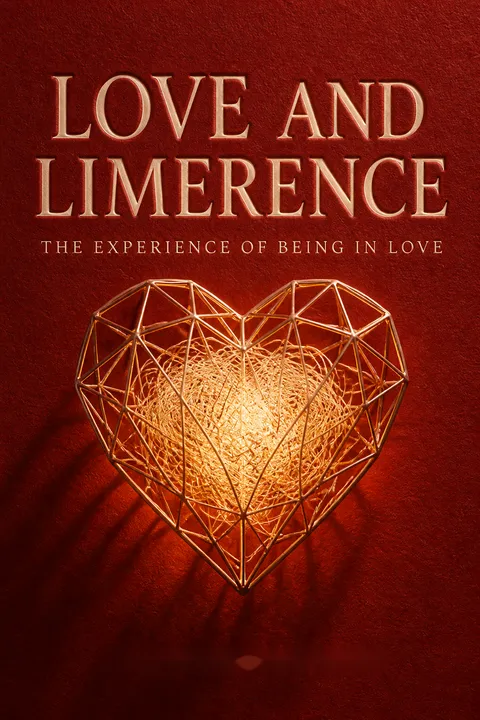


Key Takeaways
Name the state before mistaking its intensity for lasting love.
A hidden pattern. Psychologist Dorothy Tennov began studying romantic love after students described being unable to work, sleep, or think about anything but a particular person. One student, Marilyn, arrived in tears after a breakup, rereading a letter for signs of hope. Tennov recognized the same pattern in other accounts, but not in everyone she interviewed. Her friend Helen had never experienced it and found the stories baffling. That contrast helped Tennov define limerence: an intense, involuntary state of longing for a particular person’s return of feeling. She coined the word because “love” also describes affection, care, and companionship, which can exist without this consuming reaction.
A shared experience, not a diagnosis. Tennov gathered questionnaires from roughly 800 people, interviewed more than 300, and examined personal diaries and letters. She found recurring descriptions across people whose other circumstances and personalities varied widely. Her central distinction is not that limerence is the only real love, but that it is a recognizable state that can overwhelm other priorities.
What's striking is the value of naming an experience without turning it into a moral verdict. A distinct label can help people compare experiences, notice patterns, and ask for support without deciding that they are either uniquely irrational or uniquely romantic. This resembles a basic move in clinical science: separate a phenomenon from the everyday word that blurs it with neighboring experiences. Tennov’s interviews make a persuasive case for that distinction, though the self-selected participants and informal questionnaires cannot establish how common limerence is or prove that every account reflects one identical process.
Track how much your mind is captured, not only how warmly you feel.
Attention is the giveaway. Tennov describes limerence as more than attraction or fondness. Its hallmark is intrusive preoccupation: thoughts of the desired person keep returning, often against the person’s wishes. A man in her study found that work, reading, and ordinary routines repeatedly slid into imagined conversations and reviews of a woman’s every gesture. He could function outwardly while his attention remained elsewhere. Tennov called the desired person the limerent object, or LO. The limerent person typically longs for reciprocation, reacts strongly to perceived signs of interest or rejection, and struggles to focus on other concerns.
A rough measure. Tennov asked people to estimate what share of their available waking time went to thoughts and fantasies about the LO. She called this a “preoccupation percentage.” Some estimated that the thoughts filled nearly all their free time. The number is a personal estimate, not a clinical test, but it makes the experience’s defining feature concrete.
The focus on attention gives readers a more useful question than the vague one, “Am I in love?” It invites observation: How often does the person interrupt other thoughts, and how much does daily life bend around interpreting their behavior? Contemporary research on attention and rumination likewise treats repeated, hard-to-disengage thought as important in understanding distress. Still, frequency alone does not diagnose a problem. Someone may think often about a new relationship with pleasure and choice, while intrusive thoughts that damage sleep, work, or safety call for more serious attention.
Hope mixed with uncertainty can keep rejection from ending the fixation.
Mixed signals intensify attention. Limerence depends on the limerent person’s interpretation of the other person’s behavior, not simply on objective events. A warm call may revive hope; a cancelled date may deepen longing rather than reduce it. In Tennov’s account of Margrit and Bert, each break in contact left Margrit thinking about him more, while renewed attention made her feel euphoric. The intensity of her preoccupation and the pleasantness of her mood were separate: she could be intensely focused and miserable at the same time.
Not all rejection works alike. Tennov’s model requires both hope and uncertainty. Clear, sustained evidence that feelings are not returned can weaken hope, but ambiguous attention may keep it alive. The person may find a favorable interpretation even in behavior an outside observer would read as neutral. This helps explain why “just move on” rarely works as an immediate instruction.
This pattern has a useful parallel with intermittent reinforcement, a learning principle in which unpredictable rewards can sustain repeated behavior. The analogy helps explain why irregular attention may be more gripping than consistent warmth, but it should not be mistaken for proof that relationships and laboratory reward schedules are the same thing. The central practical insight is to distinguish a signal from the story built around it. When contact is inconsistent, asking what the behavior reliably demonstrates can be more grounding than treating every exception as a hidden confession.
See idealization as selective attention, not proof you know someone deeply.
The mind edits the portrait. Tennov borrows Stendhal’s term crystallization for the way a limerent person’s perception of the desired person changes. Existing admirable traits grow more vivid, while flaws may be noticed but lose emotional force. Ordinary details, such as a walk, a favorite object, or a particular expression, can acquire unusual charm. The idea is not that the limerent necessarily invents a flawless person from nothing. Rather, attention and feeling give selected features more weight than they would receive from a neutral observer.
Fred’s diary shows the gap. While living in France, Fred became fixated on Laura, a receptionist who treated him politely but showed little evidence of romantic interest. He interpreted her neutral behavior hopefully, while his diary also recorded reasons they might not suit each other. After leaving and recovering, he reread the diary and saw how far his interpretations had outrun the evidence.
Crystallization is a helpful alternative to the simple claim that love makes people blind. People can perceive a partner’s shortcomings while discounting their importance, a distinction that matters in friendships and politics as well as romance. Emotion changes what receives attention and how much weight it carries. The caution is that outsiders can also overestimate their own neutrality. The useful test is not whether a person has flaws, but whether decisions are being made from sustained knowledge of their conduct, or from a portrait built mainly out of hoped-for meaning.
Keep sex, limerence, and durable care conceptually separate.
Different bonds can overlap. Tennov argues that sexual desire, affection, and limerence are related but not interchangeable. Limerence involves wanting emotional reciprocation from someone viewed as a possible sexual partner, yet sexual contact alone does not satisfy that longing. The imagined high point may be a look or declaration that confirms mutual feeling, rather than sex itself. Tennov’s questionnaire respondents often said they preferred sex when love was involved, while many also reported having felt sexual attraction without love, or love without wanting sex.
A quieter partnership can matter. Tennov uses affectional bonding for a relationship grounded in care, companionship, shared interests, and often sex, without limerence’s intrusive preoccupation or intense need for reciprocation. Lou, for example, described deep love for her husband and family but did not feel the consuming passion associated with being “in love.” Tennov does not rank that bond as inferior. A stable, caring relationship may be more valuable than a passionate fixation.
Separating these dimensions prevents a common category error: treating intensity as the only evidence of intimacy. Contemporary relationship research also distinguishes passionate attraction from companionate closeness, though the terms and models differ. The distinction can be liberating for people who do not experience limerence, and clarifying for those who do. It also resists a romantic script in which a relationship without obsession must be deficient. At the same time, affectional stability is not automatically healthy; respect, consent, and mutual care still matter more than whichever label a couple uses.
Treat heartbreak as potentially serious without labeling ordinary passion illness.
Normal does not mean harmless. Tennov insists that limerence can occur in otherwise capable, psychologically ordinary people. Yet its effects can be severe. In her first questionnaire group of 79 students, more than half reported emotional depression connected with love, and over a quarter reported suicidal thoughts. Those figures describe a small, early group, not the general population. Her interviews also include people whose work, studies, appetite, and family attention were disrupted by unreturned passion. The opening story of Marilyn, unable to complete an assignment after a devastating letter, captures how private distress can remain invisible until it spills into daily life.
Take suffering seriously. The book documents extreme cases of self-harm and violence, while acknowledging that limerence itself does not explain every such act. Its practical distinction is valuable: do not dismiss intense distress as silliness, but do not assume that passion alone means mental illness.
The distinction between a common human state and a dangerous level of impairment is essential. Normal experiences can become crises, and stigma can make people conceal warning signs. Tennov’s historical figures should be read cautiously because the samples were limited and not representative, but the underlying point remains useful: emotional pain deserves assessment by its effects, not by whether outsiders find its cause reasonable. Thoughts of suicide, threats, or inability to function warrant prompt support from qualified professionals and trusted people, regardless of whether limerence is the right label.
Use distance and unmistakable evidence to starve unreturned hope.
Reduce the fuel. Tennov describes three broad ways a limerent response ends: reciprocation, gradual loss of hope, or a shift of attention to a new person. For painful unreturned limerence, she sees reduced contact and the removal of plausible hope as the most reliable route available. Fred’s preoccupation declined after he left France and no longer encountered Laura daily, though a later visit briefly revived it. This illustrates how even neutral contact can restart interpretation and fantasy.
Effort has limits. Listing the LO’s faults did not help one interviewee, because the flaws seemed less important when filtered through longing. Distractions and self-management records helped some people, but Tennov did not present them as dependable cures. Writing extensively about the person could even feed repetitive thought. The aim is not to shame oneself into control, but to change the conditions that keep the fixation active.
This advice resembles stimulus control in behavioral psychology: changing exposure can make a recurring response less likely to be triggered. It is a more realistic strategy than demanding that someone simply stop thinking. Distance is not always possible, especially with coworkers, co-parents, or shared responsibilities, so boundaries may need to be practical rather than absolute. The book also wisely avoids promising a quick fix. When fixation is impairing daily life, outside support can help with safety and functioning even if no technique immediately switches the feelings off.
Give a limerent person clarity, not kindness that looks like possibility.
Ambiguity has consequences. Tennov notes that a person who does not return limerent feelings may intend only friendship, politeness, or compassion. But the limerent person can interpret those gestures as evidence of hidden interest. A phrase like “I need time” may preserve hope when the actual answer is no. Tennov therefore urges the nonlimerent LO to communicate clearly and, when needed, end contact rather than offer warmth that can be mistaken for an opening.
Compassion needs boundaries. Her case histories include people who remained attached to therapists whose professional role involved attentive, intimate conversation. Some therapists handled those feelings irresponsibly, and some exploited patients sexually. The examples underline the need for firm professional boundaries. They do not mean that every intense attachment is transference, or that every therapist behaves unethically.
The ethical tension is real: bluntness can hurt, but prolonged ambiguity can keep another person emotionally invested. Clear communication protects both parties when paired with respectful limits and consistent behavior. In professional relationships, the power imbalance raises the stakes because attention, care, and confidentiality are part of the role, not necessarily signs of personal desire. Tennov’s account is especially strong as a warning about boundary violations, though her broader criticism of psychotherapy is shaped by a polemical argument that should not be treated as a neutral review of all therapy.
Build commitment on the bond that remains when fixation fades.
Passion has a course. Tennov estimates that full limerence commonly lasts around two years, with many cases between roughly 18 months and three years; she also reports much shorter and, rarely, lifelong cases. These are estimates from her interviews and questionnaires, not a universal timetable. Reciprocation often slows the rise in intensity, while marriage does not guarantee that a limerent person feels securely loved. Some partnerships move toward affectionate companionship; others break apart or remain troubled.
Ask what supports the relationship. Tennov’s examples suggest that a relationship can outlast limerence if another bond develops, such as affection, compatibility, shared work, or commitment. Mary and Frank described a marriage in which the early consuming intensity softened without diminishing their care for each other. The useful question is therefore not only whether passion is present, but what the couple can build together when attention is no longer consumed by uncertainty.
This is a useful antidote to treating the honeymoon state as the permanent standard. Long-term relationships rely on repeated behavior, shared decisions, and care that remains available when excitement fluctuates. The caveat is that duration estimates from retrospective interviews can be distorted by memory, and relationship quality cannot be inferred from whether passion fades. Some people prize continuing intensity; others value steadiness. A sound commitment needs explicit agreement about what each person expects, rather than an assumption that one emotional trajectory fits every couple.
Treat evolutionary explanations as hypotheses, not permission to surrender agency.
A possible biological function. Tennov proposes that limerence may have helped humans form pair bonds, reproduce, and care for children. She points to the recurring features of the experience across very different people and to animal behaviors that resemble attachment and courtship. She also discusses a study of marriages in Israeli communal settlements: among 2,769 marriages in a second generation, none paired people who had been raised together continuously during their first five years. She interprets this as evidence that early familiarity may help prevent close-kin pairing, though it does not directly prove a biological basis for limerence.
Culture shapes expression. Tennov argues that men and women describe similar core feelings, while social roles influence what they admit and how they act. Her biological account is explicitly a proposal, not an established explanation of why a particular person becomes an LO.
The distinction between a proposed function and demonstrated cause matters. Evolutionary reasoning can generate testable questions, but a story about reproductive advantage does not establish that a trait evolved for that reason. Modern accounts of attraction also emphasize learning, culture, individual history, and context. Tennov’s strongest point is modest: intense attachment appears to exceed deliberate choice, while people still interpret and act on it within social rules. Biology may help explain susceptibility; it cannot decide what commitments, boundaries, or responsibilities a person should honor.
Analysis
Love and Limerence is both a field-opening psychological account and an argument about what counts as evidence. Tennov’s key methodological move is to begin with private experience rather than with observable dating behavior or established relationships. That choice lets her identify a recurring pattern that those other approaches could miss: intrusive thoughts, emotional dependence on perceived reciprocity, and a particular kind of longing. The distinction between limerence and broader love language is the book’s most durable contribution. It makes room for passionate fixation, affectionate partnership, sexual desire, and care to coexist in different combinations without declaring one combination the only authentic one.
The evidence is vivid and cumulative, but not equivalent to a modern representative study. Tennov relies on volunteers, retrospective interviews, diaries, and early questionnaires, often with small or unclear samples. Such material is well suited to describing subjective experience and generating hypotheses, but less suited to establishing prevalence, causal mechanisms, or universal stages. Her account also acknowledges that the same person may experience limerence at one time and not another, which complicates simple categories of people as permanently limerent or nonlimerent.
The book’s explanatory reach is uneven. Its analysis of hope, uncertainty, selective attention, and relationship mismatch follows closely from the testimony. Its evolutionary account is more speculative: the proposed reproductive function is plausible as a research question, but the book does not demonstrate that limerence evolved for that purpose. Likewise, its critique of psychotherapy contains important warnings about power and sexual misconduct, but its broad judgments exceed the evidence assembled in this volume.
The book is most useful when treated as a map, not a verdict. Its vocabulary can help readers recognize a powerful state, distinguish feeling from commitment, and understand why ambiguous contact can prolong distress. Its strongest practical implication is not that people are helpless, but that clear evidence, boundaries, and attention to consequences matter precisely because feelings are not always chosen.
Review Summary
Love and Limerence explores the concept of intense romantic infatuation, distinguishing it from long-term love. Readers found the book insightful, validating their experiences of obsessive attraction. Many wished they had read it earlier in life. The book's strengths lie in its case studies and explanations of limerent behavior. However, some criticized its heteronormative focus, repetitiveness, and lack of solutions for ending limerent patterns. Despite its age, many readers found the concept of limerence helpful in understanding their own romantic experiences and relationships.
People Also Read


Glossary
Limerence
Involuntary longing for reciprocationA state of intense romantic preoccupation with a particular person, marked by intrusive thoughts, longing for returned feeling, and strong mood shifts based on how that person’s behavior is interpreted. Tennov distinguishes limerence from sexual desire, friendship, and caring affection, though any of them may coexist.
Limerent object
Person at the centerTennov’s term for the person toward whom someone is experiencing limerence. The limerent object is regarded as a possible sexual partner, but the central desire is emotional reciprocation, not merely sexual contact. The abbreviation LO is used throughout the book.
Crystallization
Emotionally weighted perceptionA term Tennov adopts from Stendhal to describe how a limerent person’s perception of the desired person changes. Attractive features become especially salient, neutral details may seem charming, and flaws can lose emotional weight. The process need not involve inventing qualities; it often involves selectively emphasizing real ones.
Affectional bonding
Care without limerent fixationTennov’s label for a relationship based on affection, companionship, compatibility, and sometimes sexual intimacy, without the intrusive preoccupation and urgent need for reciprocation characteristic of limerence. She treats it as a potentially valuable form of partnership, not as a deficient substitute for passionate love.
Readiness and longing for limerence
Desire for a new attachmentTennov’s description of wanting to experience limerence even when no particular person currently occupies the center of attention. The longing can persist after fixation on a specific person has faded, creating openness to a new attachment. She distinguishes it from a practical wish for companionship, marriage, or children.
FAQ
What's Love and Limerence about?
- Exploration of Limerence: The book delves into the concept of limerence, an involuntary state of intense romantic desire and longing for reciprocation, distinct from love.
- Human Experience: Dorothy Tennov argues that limerence is a fundamental aspect of human nature, influencing relationships and societal decisions.
- Impact on Life: It discusses how limerence can lead to both positive and negative effects, including emotional highs and lows, and disruptions in personal lives.
Why should I read Love and Limerence?
- Understanding Relationships: The book provides insights into the dynamics of romantic relationships, particularly the phenomenon of limerence.
- Psychological Perspective: Tennov's work is grounded in psychological research, offering a credible source for those interested in the science of love.
- Cultural Relevance: The themes are timeless and resonate with anyone who has experienced the complexities of love.
What are the key takeaways of Love and Limerence?
- Definition of Limerence: Limerence is characterized by obsessive thinking, longing for reciprocation, and emotional dependency, distinct from love.
- Stages of Limerence: The book outlines stages from initial attraction to the decline or transformation into a different type of love.
- Effects on Behavior: Limerence can lead to emotional volatility and self-destructive actions, emphasizing the importance of recognizing these behaviors.
What is the difference between limerence and love as described in Love and Limerence?
- Involuntary vs. Voluntary: Limerence is an involuntary state with obsessive thoughts, while love is a more stable, voluntary commitment.
- Intensity and Duration: Limerence is intense but temporary, while love can develop into a lasting bond.
- Focus on Reciprocity: Limerence seeks reciprocation, leading to dependency, whereas love is about mutual care and support.
What are the symptoms of limerence according to Love and Limerence?
- Intrusive Thinking: Persistent, obsessive thoughts about the limerent object dominate the mind.
- Emotional Volatility: Mood swings occur, with elation from perceived reciprocation and devastation from rejection.
- Physical Symptoms: Reactions like heart palpitations and trembling highlight the intense emotional connection.
How does Love and Limerence define unrequited limerence?
- Longing for Reciprocation: Unrequited limerence involves a strong desire for reciprocation, often leading to emotional pain.
- Isolation and Suffering: It is a state of relative isolation, with feelings experienced in secrecy, leading to loneliness.
- Hope Amidst Pain: Despite suffering, there is persistent hope for reciprocation, sustaining the limerent state.
What advice does Love and Limerence offer for managing limerence?
- Recognizing the State: Awareness of experiencing limerence helps in understanding and managing feelings.
- Seeking Balance: Balancing emotional investment with other life aspects can mitigate negative effects.
- Professional Help: Therapy can provide support and strategies for coping with emotional turmoil.
How does Love and Limerence address the cultural perceptions of love?
- Historical Context: Tennov explores how cultural attitudes towards love have evolved, particularly the stigmatization of limerence.
- Commercial Exploitation: Limerence is often exploited commercially, perpetuating unrealistic expectations about love.
- Misogyny and Love: The book critiques misogynistic undertones in literature, encouraging reflection on societal narratives.
What coping strategies does Love and Limerence suggest for dealing with limerence?
- Recognizing Nonlimerence: Identifying nonlimerent behaviors in others can reduce feelings of isolation.
- Eliminating Hope: Clear communication with the limerent object about feelings can help diminish limerent intensity.
- Seeking Support: Engaging with supportive friends or professionals can provide relief and perspective.
What is the significance of the term "limerence" in Love and Limerence?
- New Terminology: Tennov coined "limerence" to describe intense romantic desire, distinct from other forms of love.
- Psychological Framework: It provides a framework for analyzing romantic relationships, helping articulate experiences.
- Cultural Impact: The term has influenced how people understand and discuss romantic experiences.
What role does music and art play in the experience of limerence as discussed in Love and Limerence?
- Emotional Expression: Many limerents express feelings through writing, poetry, and music, capturing emotional intensity.
- Cultural Reflection: Love themes in music and literature reflect society's fascination with limerence.
- Therapeutic Value: Engaging with music and art can help limerents process feelings and find solace.
What is the significance of the term "homolimerence" in Love and Limerence?
- Definition of Homolimerence: It refers to limerence directed toward individuals of the same sex, highlighting its universality.
- Experiences of Homolimerents: The book includes accounts from homosexual individuals, emphasizing emotional intensity.
- Cultural Context: Societal attitudes toward homosexuality can add complexity to the experience of homolimerence.
Download PDF
Download EPUB
.epub digital book format is ideal for reading ebooks on phones, tablets, and e-readers.








