

Key Takeaways
Judge a relationship by the story its partners want, not appearances
Appearances can mislead. Zach and Tammy fought loudly and threatened to leave, yet their marriage lasted 28 years. Both saw love as a kind of conflict, so their relationship matched the story each wanted. Valerie and Leonard looked like a contented couple, but Leonard ultimately left because their calm, garden-like marriage did not match his desire for mystery and excitement. The contrast suggests that outsiders cannot reliably judge a relationship by its surface behavior alone.
Fit is not a guarantee. Sternberg calls a person's idea of what love should be an ideal story. Couples are more likely to feel satisfied when their actual relationship resembles both partners' preferred stories. That does not mean every compatible story is healthy, or that staying together proves a relationship is good.
What's useful here is the distinction between public appearance and private meaning. A pattern that looks chaotic to friends may feel familiar and mutually intelligible to the couple, while an apparently peaceful partnership may conceal unmet expectations. But compatibility is not the same as well-being: a shared pattern of intimidation or misery does not become healthy simply because both partners recognize it. The story lens explains why relationship judgments require context, while leaving room to assess concrete harms and consequences rather than treating every private definition of love as equally sound.
Build a shared interpretation, not a clone of yourself
Similar stories can unite differences. Sternberg argues that partners need not have identical personalities. They need stories about love that can fit together, with roles that complement rather than duplicate each other. One partner might prefer teaching and the other learning, for example, as long as both genuinely accept that arrangement. Trouble grows when each interprets the same event through an incompatible script.
Partners often misread each other. In one study, couples predicted each other's questionnaire answers with only a 0.3 correlation on a scale where 0 represented random guessing and 1 perfect prediction. Dean sees Susan's attempts to discuss conflict as attacks; she sees his withdrawal as refusal to work on the relationship. Their actions reinforce opposing interpretations, undermining communication even when neither intends harm.
This account makes compatibility less about matching traits and more about coordinating meaning. That is a practical shift: curiosity about what a partner thinks an action signifies may be more useful than arguing only about what happened. The study's low correspondence also warns against assuming intimacy automatically produces accurate understanding. Still, a shared story cannot replace direct communication. If partners keep guessing at each other's inner worlds, the story model itself points toward a simple corrective: ask, listen, and check the interpretation instead of treating a hunch as proof.
Treat your first reading of a partner as a hypothesis
Interpretations feed behavior. A story is not just a description of a relationship; it shapes what each partner notices and how each responds. Allan, who had experienced painful rejection as a teenager, reads his partner's distraction or independent plans as evidence that she is rejecting him. His anxiety can then produce reactions that strain the relationship, making his fear seem confirmed. The story becomes a self-reinforcing loop.
Bad news carries extra weight. Sternberg describes the negative information effect, in which unfavorable details can outweigh many favorable ones, and the fundamental attribution error, in which a partner's mistake is blamed on character while one's own is blamed on circumstances. These biases can gradually turn an affectionate account of a relationship into a hostile one without either partner noticing the shift.
The strongest implication is methodological: separate an observable event from the meaning assigned to it. A late reply is an event; indifference is an interpretation. Pausing between the two creates room for alternative explanations and a less reactive response. Yet skepticism about interpretation must not become a way to explain away repeated cruelty or control. Stories can distort perceptions, but behavior still has consequences that can be documented and evaluated. The useful stance is neither automatic suspicion nor automatic excuse-making, but a willingness to test the account against patterns and evidence.
Trace today's reactions back to the love script you inherited
Old themes travel forward. Sternberg suggests that stories draw on childhood, adolescent relationships, personality, and losses. Someone repeatedly rejected when young may become alert to signs of exclusion; someone accustomed to mistrust may interpret ambiguity as deception. Allan's past rejection shapes how he reads ordinary moments with Dale, even when he recognizes that his reaction may be disproportionate.
Stories have structure. Sternberg describes a relationship story through its plot, theme, and characters. The plot is what seems to happen; the theme is the lesson a person draws from it; and the characters include not only the current partners but also people from the past who shape expectations. Culture and other life stories, such as work and family, also influence which versions of love seem acceptable or desirable.
Tracing a reaction to its history can turn shame into useful information. A person who recognizes a recurring fear can begin to distinguish an old alarm from a present threat, without pretending the alarm is meaningless. The model also makes clear that partners bring more than individual preferences: family expectations and cultural ideals help define which relationships feel legitimate. Its limit is that a compelling origin story can become too neat. Knowing where a pattern may come from does not, by itself, establish why it persists or what should change.
Compare your ideal story with the relationship you are actually living
People carry more than one script. Sternberg argues that individuals often have several love stories, arranged in a preference hierarchy. Different partners may activate different stories. Aaron values a calm relationship with Lucy after a conflict-filled marriage, yet becomes drawn to Dottie, whose relationship with him feels more turbulent and familiar. Neither relationship ultimately satisfies him. His confusion reflects competing stories, not necessarily a clear verdict about which partner is right.
Choice involves uncertainty. Sternberg compares partner choice to climbing a mountain in fog: a relationship may feel like the best available point without revealing whether a better fit exists elsewhere. The comparison captures the risk of both settling too quickly and endlessly searching for a perfect match. A useful question is whether the current relationship fits an important ideal, not whether it can be proven to be the best possible one.
The hierarchy idea helps explain why a new attraction can suddenly change how an established relationship feels. It also cautions against mistaking intensity for compatibility: a familiar, dramatic pattern may appeal strongly without meeting a person's broader needs. The mountain image is valuable because it treats commitment as a decision under uncertainty, not as proof that no alternative exists. Still, continual comparison can make any relationship lose by default. Reflection is most useful when it clarifies priorities, rather than turning a partner into a contestant in an endless search.
Use story types as a map, not a verdict
The stories cluster into five families. Sternberg presents 25 recurring kinds of love stories, while stressing that the list is tentative and people can combine or modify them.
1. Asymmetrical stories: partners hold unequal roles, as in teacher and student or sacrificer and beneficiary.
2. Object stories: a person or relationship serves a function, as in the art or house-and-home story.
3. Coordination stories: partners build something together, as in travel, gardening, or business.
4. Narrative stories: an outside script guides the relationship, as in fantasy or cookbook stories.
5. Genre stories: a recurring mode defines the relationship, as in war, humor, theater, or mystery.
Context matters. A garden story may encourage care, while a war story may suit partners who both enjoy conflict. The same pattern can also become harmful or fail when only one partner wants it.
The taxonomy is memorable because it turns vague dissatisfaction into a more specific question: what kind of relationship are these partners trying to create? It can help people notice, for instance, whether humor is a source of connection or a way to avoid serious discussion. Its categories are best treated as prompts for inquiry, not fixed personality labels. A couple may move between stories as circumstances change, and a single label can obscure differences between consent, habit, and coercion. The map is useful when it opens discussion, not when it replaces it.
Make unequal roles and power visible before they become traps
Every relationship allocates influence. Sternberg groups several stories around unequal or complementary roles: teacher and student, sacrificer and beneficiary, governor and governed, police officer and suspect, or addict and codependent. These roles can be comfortable when both partners want them, but they can also become difficult to change. Jerry, for example, says he is content to let Kristen make most decisions, while his friends worry that she is isolating him. The crucial question is whether he freely accepts the arrangement.
Control can escalate. In a police story, one partner monitors the other's activities and treats ordinary independence as suspicious. In a horror story, fear itself can become part of the relationship, with serious risks to safety. The story framework distinguishes these patterns, but their consequences require attention beyond whether the participants call them love.
The emphasis on roles helps expose power that couples may otherwise disguise as personality or routine. Asking who decides, who adapts, and who bears the cost can make an unequal arrangement discussable before it becomes entrenched. Consent matters, but it is not a one-time signature: a role can stop feeling acceptable as circumstances or personal needs change. The safety distinction is especially important. A mutually enjoyed division of responsibility is not equivalent to surveillance, threats, or violence, even if both can be described as complementary roles.
Change the plot beneath behavior, then test the new story
Replotting starts with awareness. Sternberg argues that changing isolated behaviors may not transform a relationship if the underlying story continues to give those behaviors their meaning. He calls the effort to revise that story replotting. It involves identifying one's own and one's partner's ideal stories, noticing what the current relationship resembles, and considering which parts to preserve or change. Louise and John had tried books and counseling without progress; exchanging fables about a couple's future let them discuss their different expectations with less defensiveness.
Early findings support the model, cautiously. In a study of 43 couples, partners tended to have similar story profiles, and greater differences between their profiles were associated with lower satisfaction. A separate study of 60 undergraduates found garden stories rated highest and horror stories lowest. Sternberg describes this research as ongoing, not conclusive.
The story exchange illustrates how indirect expression can make a difficult conversation less threatening: fiction gives partners room to describe hopes without immediately accusing each other. The research offers a promising test of the theory, but its small samples and associations do not establish that story mismatch causes dissatisfaction or that matching guarantees happiness. Replotting should therefore be treated as a reflective tool rather than a clinical prescription. It is most useful when paired with concrete changes, honest feedback, and appropriate support when a relationship is unsafe.
Analysis
Sternberg's most consequential move is to shift the unit of explanation from isolated behavior to interpreted relationship patterns. A quarrel, a period of silence, or a generous act does not carry one stable meaning. Partners place each event inside a narrative that makes it evidence of love, rejection, duty, control, or something else. This helps explain why advice aimed only at improving communication can miss the conflict beneath the words: partners may disagree about what communication is for.
The model is also unusually attentive to fit without confusing fit with virtue. A shared war story may feel coherent to its participants, while an outsider sees distress; a relationship story may be mutually accepted and still carry real costs. That distinction is essential. Explanatory pluralism, the idea that several accounts can illuminate one situation, should not collapse into moral relativism. Threats, coercion, and injury remain consequential regardless of the story used to justify them.
The taxonomy's practical strength is its vocabulary. Naming roles and patterns can help people recognize that their assumptions are not universal laws of love. Its corresponding weakness is that a finite set of categories can invite overclassification. Real relationships mix stories, change across contexts, and involve constraints beyond preference, including money, caregiving, and culture. A label should generate questions, not decide what a couple is.
The empirical evidence presented is appropriately preliminary. The reported studies are small, and the association between compatible story profiles and satisfaction does not establish direction or causality. Satisfied partners may develop more similar accounts, just as compatible accounts may support satisfaction. The model's strongest contribution is therefore not a predictive formula but a disciplined invitation: examine the story linking an event to its meaning, compare that account with the partner's, and assess whether the pattern remains acceptable in practice. Love may be narrated, but its effects are lived.
Review Summary
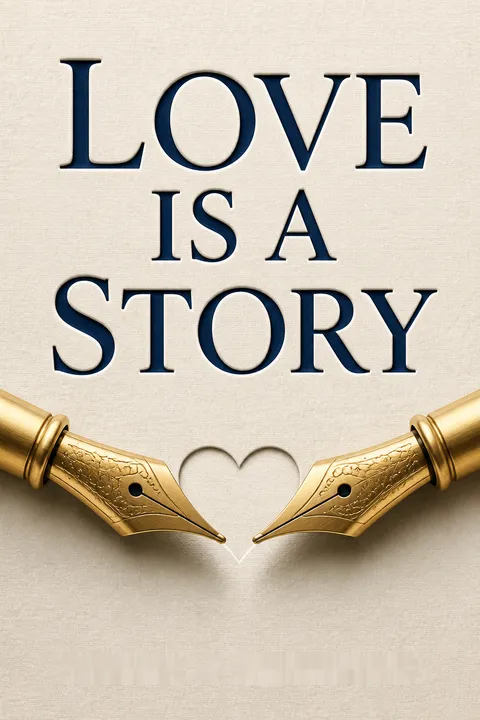
Love Is a Story receives mixed reviews, with readers praising its insightful approach to understanding relationships through narrative patterns. Many find the concept of love stories helpful for self-reflection and improving partnerships. Critics note the book's heteronormative focus and repetitive structure. Some reviewers appreciate Sternberg's theory but find the examples simplistic. Overall, readers value the book's unique perspective on love, though opinions vary on its depth and applicability.
People Also Read





Glossary
Love as a Story
Narrative model of loveSternberg's view that people understand and shape intimate relationships through stories about what love should be. A story influences whom someone chooses, how each partner interprets events, and which roles feel natural. Relationship satisfaction depends partly on how well the partners' stories fit together, though the model does not claim that compatibility alone makes a relationship healthy.
Story hierarchy
Ranked love preferencesA person's stories about love are not necessarily singular or equally influential. They may have several preferred stories, with some more compelling than others. Different partners or circumstances can activate different stories, creating conflict between what someone wants in one relationship and what attracts them elsewhere.
Ideal story
Preferred relationship narrativeA person's partly conscious account of what an ideal love relationship should be. It shapes attraction, expectations, and satisfaction by influencing whether an actual or potential relationship feels like a good fit. The ideal may be realistic or difficult to sustain, and it can change or coexist with other preferred stories.
Complementary roles
Fitting partner positionsThe paired positions that partners occupy within a love story, such as teacher and student, gardener and flower, or sleuth and mystery figure. Sternberg proposes that partners may share a story while taking different roles. Such role differences can be satisfying when both partners accept them, but can create power imbalances or conflict when one partner does not.
Replotting
Revising a relationship narrativeThe process of becoming aware of the stories shaping a relationship and deliberately revising them. Replotting involves examining the current relationship, each partner's ideal story, and the meanings assigned to repeated events. It may mean changing a story, adapting one to make it more workable, or trying a different pattern.
Asymmetrical stories
Unequal relationship rolesA family of love stories organized around unequal or complementary positions between partners. Examples include teacher and student, sacrificer and beneficiary, governor and governed, and police officer and suspect. The roles may be consensual or unwanted, and their effects depend on the partners' interpretations, power distribution, and ability to revise the arrangement.
Object stories
People or relationships as meansStories in which a partner or the relationship is valued chiefly for serving a particular function. In person-as-object versions, a partner may be prized for appearance, strangeness, or a place in a collection. In relationship-as-object versions, the relationship may serve aims such as a stable home, recovery, religious meaning, or winning a game.
Coordination stories
Partners building togetherStories that define love as partners jointly creating, maintaining, or developing something. Sternberg's examples include travel, sewing and knitting, gardening, business, and addiction stories. The stories differ in what the partners are building and how they cooperate, and some forms can create dependency or unequal burdens.
Narrative stories
Outside scripts guide loveStories in which partners use a real or imagined text outside the relationship to prescribe how love should unfold. Examples include fantasy stories based on fairy tales, history stories shaped by the past, science stories organized around analysis, and cookbook stories built around a relationship formula.
Genre stories
A mode defines the relationshipStories in which the relationship's recurring style is central to its identity. Sternberg's examples are war, theater, humor, and mystery stories. Partners may define love through ongoing conflict, role-playing, joking, or the pursuit of hidden information. A style can create interest for both partners or become distressing when it is not shared.
Narrative thinking
Intuitive, story-based thoughtA mode of understanding that organizes experience as a whole, relies heavily on intuition and concrete impressions, and often feels self-evidently true. Sternberg contrasts it with slower, more analytic reasoning. In relationships, narrative thinking supplies the assumptions that make actions feel loving, hostile, meaningful, or irrelevant, often before partners can explain those judgments.
FAQ
What's Love Is a Story about?
- Narrative Approach: Love Is a Story by Robert J. Sternberg explores the concept of love as a narrative or story, suggesting that individuals create and live out these stories in their relationships.
- Components of Love: The book discusses key elements of love, such as intimacy, passion, and commitment, and how they form the basis of different love stories.
- Diverse Stories: Sternberg categorizes various types of love stories, each with unique characteristics, such as the teacher-student story, sacrifice story, and horror story, impacting how relationships function.
Why should I read Love Is a Story?
- New Perspective: The book offers a fresh lens on relationships, encouraging readers to reflect on their own love stories and how these narratives influence their experiences.
- Practical Insights: Sternberg provides practical advice and examples to help readers understand and improve their relationship dynamics.
- Research-Based: Grounded in psychological research, the book is a credible resource for those interested in the psychology of love, backed by Sternberg's extensive background in the field.
What are the key takeaways of Love Is a Story?
- Love as a Narrative: Love is not just an emotion but a story that individuals tell themselves and each other, which can be understood and adjusted over time.
- Compatibility Matters: The success of a relationship often hinges on the compatibility of partners' love stories, with similar narratives leading to greater satisfaction.
- Influence of Past Experiences: Past experiences shape the love stories individuals create, and recognizing these influences can help in understanding and improving current relationships.
What are the different types of love stories discussed in Love Is a Story?
- Asymmetrical Stories: These include narratives like the teacher-student and sacrifice stories, where one partner holds more power or responsibility, often leading to imbalances.
- Object Stories: In these stories, partners are valued for their roles or functions, such as in the science-fiction or art story, which may lack emotional depth.
- Coordination Stories: These focus on collaboration and shared goals, like the garden or business story, emphasizing teamwork and mutual support.
How does Sternberg define love in Love Is a Story?
- Triangular Theory: Sternberg's earlier work introduced the triangular theory of love, comprising intimacy, passion, and commitment, which he expands on in this book.
- Narrative Construction: Love is seen as a story constructed from experiences, beliefs, and cultural influences, evolving over time.
- Subjective Experience: Love is a subjective experience, shaped by personal stories and interpretations, unique to each individual.
How can understanding my love story improve my relationships?
- Self-Reflection: Recognizing your love story allows for deeper self-awareness regarding your relationship patterns and expectations.
- Enhanced Communication: Understanding your narrative helps communicate needs and desires more effectively, fostering open dialogue.
- Adaptation and Growth: Identifying areas for growth and change in your love story can lead to healthier relationship dynamics.
What is the significance of understanding love stories in relationships?
- Improves Communication: Understanding love stories can enhance communication by clarifying expectations and desires between partners.
- Identifies Compatibility Issues: Analyzing love stories helps identify potential compatibility issues early, allowing for proactive conflict resolution.
- Promotes Personal Growth: Recognizing the narratives shaping one's love life can lead to personal growth and healthier relationships.
What are some examples of love stories mentioned in Love Is a Story?
- Teacher-Student Story: Involves one partner as a teacher and the other as a student, potentially leading to power imbalances.
- Sacrifice Story: One partner consistently makes sacrifices, which can lead to resentment if not reciprocated.
- Horror Story: Characterized by fear and control, highlighting the darker aspects of love and potential for abuse.
What are the risks associated with different love stories?
- Horror Story Risks: Can lead to abusive or toxic relationships, replicating past traumas and causing emotional pain.
- Fantasy Story Risks: May result in disillusionment when reality doesn't match idealized expectations, leading to dissatisfaction.
- War Story Risks: Thriving on conflict can lead to emotional exhaustion and communication breakdown if not mutually shared.
How can individuals identify their own love stories?
- Self-Reflection: Engage in self-reflection to understand personal narratives about love, examining past relationships for patterns.
- Inventory Statements: Use inventory statements provided in the book to assess love stories and gain insight into relationship dynamics.
- Partner Discussions: Open discussions with partners about respective love stories can clarify expectations and foster understanding.
What are the best quotes from Love Is a Story and what do they mean?
- "Love really is a story.": Emphasizes that love is constructed through narratives shaped by personal experiences, crucial for healthy relationships.
- "We shape the facts of a relationship to conform to our personal fictions.": Highlights the subjective nature of love and the importance of recognizing biases in understanding relationship dynamics.
- "The success of a relationship often depends on the compatibility of the partners' love stories.": Points to the significance of shared narratives in fostering relationship satisfaction.
How do cultural factors influence love stories according to Love Is a Story?
- Cultural Narratives: Cultural narratives shape individual love stories, influencing expectations and norms in relationships.
- Diverse Experiences: Different cultures emphasize various aspects of love, leading to diverse experiences and expectations.
- Impact on Choices: Cultural factors affect partner selection and relationship dynamics, with individuals seeking partners aligning with their cultural narratives.

Download PDF
Download EPUB
.epub digital book format is ideal for reading ebooks on phones, tablets, and e-readers.








