

Plot Summary
Prologue
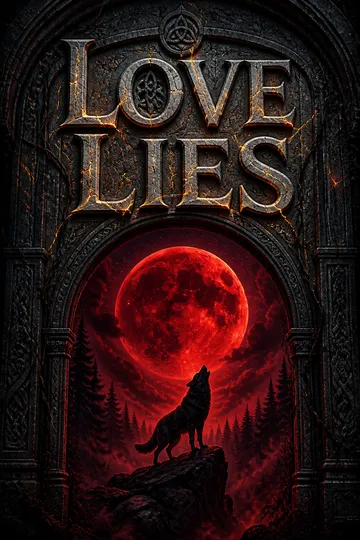
In a dark field, a vampire bites Hanna Harvey’s neck while a great wolf tears him away. Blood drains from Hanna as the wolf and vampire fight across the grass, their bodies breaking under the night sky.
She presses a hand to her wound and thinks of her cats at home, certain she is dying. Then warmth leaves her body, and the world goes dark. The scene opens the story at its brink: Hanna’s survival, and the wolf’s identity, will only make sense after the events that lead her there.
The opening makes Hanna’s body the first mystery. The vampire’s bite and the wolf’s rescue establish that survival in this world can depend on violence, but the scene withholds the distinctions that will matter later: who is attacking, who is protecting, and what it costs to return from death. Hanna’s thought of her cats keeps the supernatural danger intimate and ordinary. The future glimpse also frames the book’s central tension: being saved is not the same as being safe, especially when protection comes from people who control what she knows.
A Clipping in Kass’s Studio
Hanna Harvey works as assistant to Mark Abernathy, the werewolf owner of The Crossing, an art gallery and oddities shop in Georgetown, Colorado. While clearing the studio of Rosemary Kass, a murderous half-werewolf recently killed, Hanna finds newspaper clippings about murdered women and an old article about her own father’s death.
Before she can get answers from Mark, he introduces Vincent Van Gogh, a living werewolf artist seeking protection. Vincent reports that Paul Gauguin, Cézanne, and Manet have been killed, each with his heart removed, and brings a drawing showing himself dead.
Mark suspects a vampire may be behind the attacks. Hanna insists Vincent stay at the gallery, placing the threatened artist under the same roof as the woman whose past has just surfaced.
The clipping makes Hanna’s private history part of the supernatural plot before she understands how. Her frustration is not simply that Mark keeps secrets; it is that others seem to know facts about her life before she does. Vincent’s arrival turns that unease into an urgent threat, while Hanna’s instinct to offer him shelter shows how care becomes her first response to danger. The gallery is both workplace and refuge, but it is already compromised by the dead woman’s archive and the evidence that someone is hunting its artists.
Van Gogh’s Bad Night
Hanna tries to welcome Vincent at the Alpine, where Mark joins her, artist Steven Franke, and Steve’s new date, Shayla Vandemeer. Vincent rejects Hanna’s admiration as affection for a legend rather than for the man, then drinks until his grief spills into a destructive rampage. Police take him away, and Mark disappears with Helena, a woman Hanna believed dead.
Detective James Morrison, with whom Hanna has a complicated sexual history, drives her home, where they sleep together again. The next morning Hanna finds a precise drawing of her disemboweled body in her purse, made by the same hand as the threatening portrait of Vincent. The threat now reaches beyond the famous artists and points directly at Hanna.
Vincent’s breakdown gives the famous artist a present-tense burden: public admiration cannot repair the loneliness of surviving one’s own death or watching the world change beyond recognition. Hanna’s eagerness to love the legend meets his insistence on being seen as a person, and the rejection lands because she is already hungry for connection. Mark’s disappearance and her return to Morrison deepen that insecurity. The drawing then converts emotional uncertainty into a concrete danger. Hanna is not just adjacent to a mystery about artists; someone has marked her as its next subject.
The Choice Mark Won’t Take
Mark explains that Hanna carries dormant werewolf ancestry and could transform through mating with an alpha male. For werewolves, mating is a lifelong bond, not casual sex, and Mark himself could be the catalyst.
The revelation arrives amid jealousy over Helena and arguments about his secrecy. During a blizzard, Mark takes Hanna to dinner with Toulouse-Lautrec, another werewolf artist who confirms that he too received a murder drawing. Stranded overnight in Toulouse’s studio, Hanna and Mark share a bed; when Mark invites her to choose him, she cannot.
He leaves before morning, and Hanna returns home to find a dead raccoon on her doorstep with her name attached. The message makes clear that refusing transformation will not remove her from the hunt.
The mating rule gives desire a consequence Hanna cannot treat as a joke or a flirtation. Her attraction to Mark is real, but the choice would also change her body, lifespan, and relationship to the world. His insistence that she choose freely is protective, yet his silence and sudden departure leave her without the reassurance she needs. The dead raccoon turns a private fear into an intrusion on home, the one place Hanna had believed she could control. The section binds agency to risk: choosing not to decide does not stop other people from acting on her behalf.
The Suitors Close In
As Hanna’s cycle approaches, male werewolves begin treating her as an available mate. Randy Lee Roberts propositions her, while a motorcycle-riding stranger corners her at the gallery and threatens sexual assault.
Toulouse intervenes with the silver-headed cane he carries for self-defense, throwing the attacker through a window. When more suitors gather outside, Vincent embraces Hanna and announces that she has chosen him, scattering the crowd long enough to buy them time.
He later arrives at Hanna’s apartment badly beaten, and she cleans his wounds while he mourns his brother Theo. At the gallery, Steve helps Hanna face the pressure and the danger, while she refuses to let the suitors decide her future. The protection works temporarily, but the drawings and dead animals continue.
The suitors expose how a supposedly romantic supernatural custom can become coercive when men treat biology as entitlement. Hanna’s humor and threats help her reclaim space, but they cannot erase the physical danger; Toulouse’s intervention is necessary, and Vincent’s public claim is a temporary shield rather than a solution. Her care for Vincent after his beating complicates the role he plays in her life: he is not only a protected artist but someone who needs her. The scene also contrasts protection with possession. Hanna needs allies, but she is determined not to let their actions substitute for her consent.
Helena Names London
Hanna keeps The Crossing running while Mark remains absent, hires Shayla to manage the oddities shop, and organizes a well-attended show featuring Scott Kirkpatrick’s paintings and Toulouse’s work. Morrison questions her about the heartless body found at Mother’s Saloon, the same motorcycle attacker who had pursued her.
At the show, Helena appears unexpectedly calm and tells Hanna that Mark is in London. She also reveals that she slept with Scott to learn Mark’s location, unaware that werewolf sex can create a lifelong bond.
Hanna, meanwhile, finds another drawing of her dead in her purse. After refusing to return to an uncertain relationship with Morrison, she buys a ticket to London and asks Steve to watch her cats without telling Toulouse. She leaves to find Mark and uncover who is targeting them.
The gallery opening shows Hanna building competence in the very place that once made her feel like an impostor. She brings artists and customers together, but the event also gathers the danger around her: a murder inquiry, a fresh threat, and Helena’s information. Helena’s accidental bond with Scott parallels Hanna’s own fear of irreversible intimacy, while her disinterest in Mark’s whereabouts suggests that desire and attachment do not always follow the rules others expect. Hanna’s departure is both an act of self-direction and a risky attempt to reclaim the relationship Mark has left undefined.
Oscar’s Invitation
In London, Hanna follows Mark’s trail through his art supplier, butcher, and tailor, learning he has lived in the city for centuries and still has an appointment there. A mysterious benefactor arranges her hotel and transport, then reveals himself at lunch as Oscar Wilde, a vampire.
Wilde offers Hanna exquisite food and draws her into a numbing spell that suppresses her senses and memories. He takes her to Hyde Park, where her body abruptly wakes after hours in suspended animation. As she realizes she has missed Mark’s appointment, Wilde attacks and drinks from her.
Mark follows her returning scent to the park, while Allan Ede, a werewolf tailor and Mark’s old friend, uses his own blood to keep Hanna alive. Hanna survives, but Allan’s transfusion leaves her temporarily more wolf-like.
Oscar’s attack weaponizes the very appetite through which Hanna usually experiences the world. Food, color, and sensation are her sources of pleasure and attention; Wilde uses them to seduce her into surrendering awareness. His claim to relieve pain by removing feeling exposes the danger of a comfort that erases the person receiving it. Hanna’s missed meeting with Mark is not merely bad luck: it is the consequence of someone else taking control of her time and perception. Allan’s rescue restores her life through an imperfect exchange, leaving Hanna changed in ways she did not choose.
The Reunion Breaks Away
Back in Mark’s London flat, Hanna confronts him for disappearing and putting the pack at risk. Mark admits that he wants her but fears taking her choice away, and their renewed intimacy is interrupted by his decision to leave while her temporary wolf instincts are intensified.
That night Steve calls with news that Toulouse has been found apparently murdered. Hanna summons Mark, and they fly home together. At the airport, Morrison arrests Hanna for an old traffic warrant and Mark for Toulouse’s murder.
Morrison believes the evidence against Mark, including a silver dagger bearing his fingerprints, is conclusive. When Hanna insists Mark is innocent, Morrison attacks him during questioning, then discovers that Toulouse’s body has vanished from the morgue. A lawyer secures their release, but the killer remains at large.
Mark finally gives Hanna the emotional truth she has been trying to draw from him, but his restraint still takes the form of leaving. Their attraction is not the problem; his fear that desire could become coercion is. Toulouse’s apparent murder then replaces romantic uncertainty with a shared emergency. Morrison’s arrest brings Hanna’s two worlds into direct collision, and his violence shows how a commitment to justice can become distorted by fixation. The vanished body unsettles the police case without resolving the danger, leaving Hanna and Mark free but unable to return to the safety of their old assumptions.
The Face Behind Vincent
Hanna and Mark return to The Crossing and find the gallery deserted. In Vincent’s studio they discover the promised canvases untouched and the floor, walls, and ceiling covered with drawings of murdered artists and Hanna.
An old photograph of Vincent with his brother reveals that the man Hanna knew as Vincent is actually Theo Van Gogh. Before she can process the deception, Theo drives a silver dagger into Mark’s back and knocks Hanna unconscious. When she wakes, she is tied to a chair beside Mark, who lies bleeding but alive.
Theo explains that he believes Mark profited from Vincent’s art while failing to support him in life, and that the killings are vengeance for the suffering he believes drove his brother to die. He plans to make Mark watch Hanna suffer.
The studio turns the threat into evidence: the drawings were not scattered warnings but a private record of obsession, hidden in plain sight. Theo’s disguise also reorders Hanna’s relationship with the artist she thought she knew. Her admiration made her vulnerable to the person impersonating him, while Mark’s physical injury leaves her unable to rely on his strength. Theo’s revenge is built from grief, but grief has hardened into a story that permits him to make new victims. His accusation echoes the book’s concern with art’s afterlife: who receives recognition, who controls value, and what is lost when a life becomes a legend.
The Family He Buried
Theo wounds Hanna while forcing Mark to watch, then reveals that Hanna’s father died in the same car crash that nearly killed her infant brother. Mark’s silence confirms that the family story Hanna grew up with is incomplete.
Before Theo can finish his revenge, Toulouse, who survived the attack and has been recovering, bursts into the room in wolf form and attacks him. Hanna frees herself and pulls the silver dagger from Mark’s back, but his wounds leave him too weak to fight.
She cuts her palm and presses her blood to his injury; Allan’s werewolf blood passes into Mark and helps him recover. While Toulouse and Theo fight, Hanna joins the struggle herself. She drives the silver blade into Theo’s heart, ending the hunt, then collapses beside the man she has killed.
Theo’s revelation attacks Hanna at the point where identity is most fragile: the childhood story that made her family comprehensible. Mark’s silence gives the accusation weight, even before Hanna knows what he withheld. Yet she does not become merely a witness to another man’s violence. She frees herself, uses the blade, and gives Mark the blood that keeps him alive. The shift is significant: Hanna’s body, previously treated by others as a prize or a target, becomes an instrument of deliberate action. Her victory is costly, because ending Theo’s vengeance requires her to kill a grieving man.
A Brother Still Living
After the fight, Mark sleeps for days while Hanna keeps him handcuffed to her bed with silver cuffs borrowed from Morrison. When he wakes, she demands the truth about her father and the brother Theo said Mark took from her. Mark explains that Hanna’s mother and grandmother belong to a line of werewolf heirs whose daughters can remain human if they choose human partners.
Hanna’s parents had a second child, a boy, against the danger Mark had warned them about. Her father fled the hospital with the fragile infant and died in a crash; Mark found the baby barely alive, changed him with werewolf blood, and arranged for another family to raise him. That child grew up to be Steven Franke. Hanna’s lost brother has been beside her all along.
The final revelation does not undo Hanna’s losses; it changes their meaning. Mark did not simply conceal an abstract supernatural rule. He made a life-altering decision about Hanna’s family and then watched her grow up without the truth. His secrecy was partly protection, partly guilt, and its consequences became impossible to separate. Hanna’s brother is not a stranger waiting beyond the story but Steve, the friend who has repeatedly offered practical care and emotional steadiness. The ending converts the book’s question of inheritance into relationship: Hanna’s nature is not only a bloodline, but the people who have already chosen to stand beside her.
Analysis
Love Sucks uses comic friction to make its supernatural rules feel lived in. Hanna cooks for an enormous cat, runs an art gallery, and frets about cheese while werewolves debate mating and vampires manipulate the senses. The humor is not a detour from danger; it is how Hanna keeps her footing in a world where other people know more about her life than she does.
Art provides the novel’s most sustained question about recognition. Hanna loves famous artists, but Vincent resists being reduced to a beloved image. Theo’s revenge grows from a different wound: the belief that Mark helped turn Vincent’s work into wealth without giving Vincent the support he needed while alive. The book does not treat fame as simple justice. Art can preserve a person’s vision, but it cannot repair neglect or replace intimacy.
The novel also distinguishes protection from possession. Mark repeatedly tries to keep Hanna safe through secrecy, while suitors treat her ancestry as permission to claim her. Hanna’s resistance is not a rejection of love or community. It is a demand that care leave room for choice. Even her transformation remains unresolved until she can understand what it means.
Finally, the family revelations recast inheritance as both biological and relational. Mark’s hidden history shaped Hanna’s childhood, but Steve’s daily loyalty gives the recovered family bond a present form. The ending does not erase the damage caused by secrecy. It offers Hanna a truth she can begin to live with, and a brother who has already been part of her life.
Review Summary
People Also Read
Characters
Hanna Harvey
The stubborn art-world heirHanna is a recently divorced art-history graduate who works at The Crossing and measures comfort in cats, good food, and a well-run plan. Her jokes and bluster help her manage fear, but they also cover a deep need to know where she belongs and whether others will choose her. She pushes back when Mark withholds information, even when her impulsiveness makes situations more dangerous. Her love of art is personal rather than academic alone: she wants to recognize the living person behind the celebrated image. As she learns that her identity carries consequences, Hanna moves from denial toward active choice, insisting that protection cannot mean deciding her life for her.
Mark Abernathy
The guarded pack alphaMark is Hanna’s centuries-old werewolf boss, owner of The Crossing, and a powerful protector with a practiced habit of withholding information. His composure comes from a long life spent managing danger, but it often leaves the people he protects feeling excluded and abandoned. He believes control can prevent harm, even when silence damages trust. His attraction to Hanna makes that contradiction harder to sustain: he wants closeness but fears that his strength and her dormant heritage could turn desire into an irreversible choice. Mark’s challenge is not learning to care, but learning that care without honesty can become another form of control.
Vincent Van Gogh
The hunted artistVincent is a werewolf painter whose fame contrasts with his private exhaustion and grief. He has lived far beyond the brief life recorded in human history, yet public reverence has not made him feel understood. His intensity can overwhelm those around him, especially when drink strips away his restraint, but he is also capable of tenderness and sincere companionship. Hanna’s devotion to his work initially feels to him like devotion to a story rather than to a person. His presence tests her ability to look past the myth without pretending that the myth has no power.
Steven Franke
The sunny gallery werewolfSteve is a lanky, cheerful artist at The Crossing whose dancing, odd jokes, and improvised plans make him the pack’s emotional ballast. He is generous with affection and quick to notice when someone feels left out, even when he has little tact for difficult conversations. His loyalty shows itself in practical acts: helping Hanna with the gallery, caring for her cats, and drawing people into company when they retreat into grief. Steve’s easy manner should not be mistaken for simplicity. He carries a deep capacity for attachment and a personal history that connects him more closely to Hanna than either initially understands.
Toulouse-Lautrec
The cane-carrying protectorToulouse is a compact, impeccably dressed werewolf artist with a commanding voice and a private softness for people society overlooks. He is experienced enough to know that apparent size says little about strength, and he carries silver in his cane as practical protection. His manners and wit give him a poised surface, while his loyalty to Mark and concern for Hanna reveal a more vulnerable attachment beneath it. He understands the precariousness of fame and anonymity because he has had to negotiate both.
Shayla Vandemeer
The blue-haired shopkeeperShayla works at the neighboring coffee shop before joining The Crossing, where her directness and colorful style make her an immediate presence. She is a Nereid, a sea-associated supernatural being, and knows more about the hidden world than Hanna does. Her friendship with Steve grows through teasing, attraction, and shared work. Shayla tends to offer the kind of clear-eyed emotional advice Hanna resists but needs, challenging her to notice when an old life was not as satisfying as memory makes it seem.
James Morrison
The persistent detectiveMorrison is the local detective investigating the deaths connected to Mark and the gallery. He is observant, stubborn, and comfortable using pressure to get answers, traits that make him effective but also personally difficult. His connection with Hanna is sexual and emotionally complicated, and he is drawn to her even as suspicion of Mark shapes his judgment. Morrison’s private regrets and his need to solve cases coexist with a tendency to mistake certainty for truth.
Scott Kirkpatrick
The prickly wildlife painterScott is a short, grouchy werewolf artist whose biting manner makes him easy to underestimate. His paintings of animals are controlled, perceptive, and far more expressive than his social behavior suggests. He is jealous, private, and uncomfortable with vulnerability, yet his loyalties run deeper than his complaints reveal. The contrast between his abrasive speech and his sensitive work gives Hanna a reason to keep looking past first impressions.
Helena Pool
The returning former loverHelena is a striking, sharp-tongued werewolf whose history with Mark is initially misunderstood by Hanna. She uses seduction and aggression as tools, but beneath her confidence is someone still trying to make sense of what she is and what she is owed. Her hostility toward Hanna is tangled with jealousy and insecurity rather than simple malice. Helena’s choices show how a person can mistake attention for love when the truth has been withheld.
Oscar Wilde
The charming vampireOscar is an ancient vampire who approaches conversation as a performance and treats boredom as an offense against his intelligence. He is elegant, witty, and deeply cynical about human attachment, especially its dependence on temporary pleasures. His fascination with Hanna’s responses to food and beauty gives their encounter a deceptively intimate quality. Under the charm is a predator who regards other people’s sensations as something he can manipulate.
Allan Ede
The irreverent tailorAllan is an elderly werewolf tailor and longtime friend of Mark, known for sharp humor, flamboyant clothes, and an instinct for practical help. He understands the danger of Hanna’s situation and acts decisively when she is near death. His affection for Mark allows him to challenge him in ways few others can. Allan’s irreverence does not diminish his loyalty; it makes his care feel brisk, personal, and impossible to mistake.
Theo Van Gogh
Vincent’s devoted brotherTheo is Vincent’s younger brother, remembered through the depth of their bond and the history they shared. He represents the intimate human relationship that stood behind Vincent’s public legend. Their connection gives the story’s discussions of art and loss a personal center: admiration may outlast a life, but it cannot replace the person who knew the artist before the world did.
Randy Lee Roberts
The swaggering suitorRandy Lee is an older alpha werewolf who believes his status and persistence should make him irresistible. His folksy bravado masks a possessive view of women and a poor grasp of consent. He treats Hanna’s ancestry as an invitation rather than a choice.
Rosemary Kass
The dead gallery menaceRosemary Kass is a former resident artist whose cluttered studio holds evidence of her violent history. Her grudges reach into the Abernathy family and leave Hanna with a dangerous cleanup job as well as unanswered questions.
Penny
Mark’s dangerous half-sisterPenny is Mark’s half-sister, a werewolf whose violence places Hanna and the gallery artists in danger. Her actions belong to the troubled family history that Mark keeps trying to manage without explaining.
Plot Devices
The werewolf heir
Inheritance with a choiceHanna carries dormant werewolf ancestry, and mating with an alpha can activate it. The rules make her attraction to Mark consequential rather than casual, while the wider werewolf community treats her heritage as a reason to pursue or protect her. Her family line has preserved its human state through generations of daughters choosing human partners. The device links supernatural identity to consent, family secrecy, and the question of whether a person can choose a life they have not yet fully understood.
Silver and the heart
The rules of werewolf deathSilver slows werewolf healing, and a werewolf’s heart being eaten is a sure sign that the death is final. These rules give the murders of the artists a recognizable supernatural signature and make the silver dagger lodged in Mark especially dangerous. Silver also becomes a practical defense: Toulouse’s cane can stop an attacker, and Hanna uses a blade to fight back. The device establishes physical limits in a world where many injuries otherwise heal quickly.
The death drawings
A killer’s calling cardCarefully rendered drawings of disemboweled or mutilated victims appear before and during the attacks. Vincent and Toulouse receive images of themselves, and Hanna finds several versions of her own death in her purse. Their shared artistic precision links the threats and gives the eventual discovery in Vincent’s studio a visual trail to follow. The drawings turn a private skill into an instrument of intimidation, while their placement among the gallery’s artists lets the killer hide obsession behind the appearance of art.
Vampire suppression
A scentless path to dangerVampires can suppress life in themselves and others, masking the scent that werewolves use to track them. The effect helps explain why Mark cannot immediately follow Hanna after Oscar takes her into suspended animation. When her body begins living again, her scent returns in a concentrated trail, allowing Mark to find her. The mechanism makes the vampire threat distinct from the werewolf one and connects Hanna’s near-death experience to the rescue that follows.
Tails from the Alpha Art Gallery Series
Download PDF
Download EPUB
.epub digital book format is ideal for reading ebooks on phones, tablets, and e-readers.








