

Plot Summary
The Crane Into Titanic
On April 10, 1912, Valora Luck reaches Southampton determined to find her twin, Jamie, who left London two years earlier to work for a Chinese steamship company. Their father, Ba, has recently died, and Jamie refused to return even for the funeral.
Valora hopes to persuade him to pursue their childhood dream of joining a circus in America. Although she carries a first-class ticket bought by her late employer, Mrs. Sloane, officials refuse her passage because her Chinese heritage makes her subject to American exclusion laws.
As the ship prepares to sail, Valora lures a rat into a passenger’s hood, uses the commotion to climb onto a cargo platform, and hides beneath a motorcar. April Hart, a sharp-eyed American passenger, then prevents the crew from exposing her.
Valora’s journey begins as both an act of loyalty and a refusal to accept the limits assigned to her. The boarding officer treats ancestry as a legal barrier, while Valora answers with physical ingenuity, turning the ship’s cargo system into a route past exclusion. Her resourcefulness is not merely bravado: she has learned to improvise in a world where permission is rarely offered. Yet her certainty that she knows what Jamie needs foreshadows a conflict between care and control. Her rescue by April introduces an important counterpoint: help can arrive from a stranger, not only from family.
Jamie Chooses The Boilers
Once the Titanic has sailed, Valora searches third class and finally locates Jamie among the Chinese sailors he works beside. His companions include the young card players Olly and Wink, and the guarded fireman Chow Bo Wah, known as Bo.
Valora embraces Jamie, then lays out her plan: the siblings can impress circus investor Albert Ankeny Stewart and reach New York together. Jamie refuses. His contract sends him and his crew to Cuba, and the Chinese Exclusion Act makes America an uncertain destination.
He also insists that he prefers the steady work and starry nights of a fireman to performing. Valora hears rejection where Jamie means independence. His closeness with the Johnnies, as the sailors call themselves, makes her wonder whether she still belongs in her twin’s life.
The reunion exposes the book’s central relational tension: intimacy can survive separation and still become a claim one person must resist. Valora understands family as a shared future, so Jamie’s new friendships feel like evidence that she has been replaced. Jamie, meanwhile, describes work and routine as chosen forms of peace, not failures of ambition. Their disagreement is sharpened by economic and racial reality: his caution about America is not simply timidity. The scene asks whether love means preserving a bond in its old form, or allowing the other person to grow beyond the role one remembers.
A Widow's Borrowed Suite
To avoid discovery, Valora passes herself off as the absent Mrs. Sloane, whose first-class room and trunk have followed her aboard. Steward Andy Latimer finds her a luxurious suite, believing her story of bereavement, and Valora uses its privacy as a hiding place.
She feels uneasy about lying to the kind steward, but the room also gives her access to the upper decks. April Hart soon visits, recognizes the stowaway, and promises to protect her secret. April asks Valora to model clothes from her fashion label, House of July, because a mysterious, elegantly dressed widow will attract attention.
Valora accepts the arrangement in exchange for April’s help locating Stewart. Her disguise becomes more than concealment: it offers a way to move through spaces that would otherwise be closed to her.
The borrowed identity makes class privilege tangible: the same ship that bars Valora from boarding lets her pass once she is read as a wealthy widow. Her disguise exposes how status can outweigh truth, but it also costs her emotional ease. She must inhabit another person’s grief while carrying her own. April’s fashion campaign turns appearance into an instrument rather than a simple mask. Yet the partnership is reciprocal, not rescue alone: April needs a model, Valora needs access. Their alliance makes self-presentation a tactical skill in a world that already scrutinizes Valora’s body and ancestry.
Bread Heels Become Gold
Jamie’s refusal to perform pushes Valora toward a wager. She challenges him and Bo to earn more money than she can before the ship’s lights-out signal; if she wins, Jamie must perform with her for Stewart, while losing means returning to London.
Olly and Wink join Valora’s side. At lunch, the third-class passengers receive scorched bread heels while other diners are served more generously, so Valora turns the insult into material for a juggling routine. She balances a pineapple on her head and juggles the bread with an apple, drawing coins from passengers across the decks.
The take is far beyond her usual earnings. The quartermaster and master-at-arms stop the unauthorized show, but the boys escape with the money. Valora has proved her talent and made the wager consequential.
The performance converts humiliation into a public, practical resource. Valora does not deny the unequal treatment of third-class passengers; she makes its discarded bread visible and turns it into the center of an act that earns money and attention. Her confidence is real, but so is the risk she imposes on Jamie by tying performance to a high-stakes bet. For Valora, spectacle promises agency: an audience might see skill where prejudice expects inferiority. The authorities’ intervention shows that even popular entertainment remains subject to rules controlled by those with power.
The Boiler Room Family
Jamie and Bo answer Valora’s wager with money earned from repairing deck chairs and gambling, leaving the contest tied. Hurt by Jamie’s secrecy and convinced Bo is steering him away from her, Valora storms off.
Drummer, another Chinese fireman and a gifted maker of rhythms, brings her below decks to Boiler Room 6. There, his music helps exhausted workers coordinate their labor, and Valora sees the warmth and solidarity Jamie has found among the firemen.
Later, Jamie explains that he left home partly to escape the pressure of Ba’s failed schemes and the burden of caring for everyone. Valora begins to recognize that her own plans have repeated Ba’s habit of deciding what others need. Jamie agrees to perform with her, but makes clear he still may not leave for America.
The boiler room revises Valora’s assumptions by showing that Jamie’s life is not merely a lesser version of her dream. Drummer’s rhythm makes labor communal without making it easy, and the men’s mutual care gives Jamie a place to recover from the family’s past. Valora’s recognition is gradual because her ambition has served as a survival strategy; relinquishing it feels like abandoning him. The deeper insight is that control can disguise itself as devotion. Jamie’s agreement to perform is meaningful precisely because it does not surrender his right to choose what follows.
The Captain's Permission
Valora’s solo juggling has already drawn Stewart’s interest, but he needs Captain Smith’s permission to arrange a performance. With April’s fashionable widow persona keeping attention on her, Valora uses a private welcome with the captain to argue that passengers need entertainment.
She also thanks him for a supposed rescue by Chinese sailors, securing public recognition for the men and making it harder to dismiss their contribution. Charlotte Fine, a first-class passenger who has grown close to Jamie, helps Valora find Stewart on the promenade.
Together they let him overhear that the twins are skilled acrobats and that a rival circus might recruit them. Stewart asks to see them perform. Jamie and Valora then enlist the Johnnies: Ming Lai will announce the act, Drummer will provide rhythm, and Tao and Fong will supply props.
Valora learns to make access through relationships rather than force alone. April’s clothes, Charlotte’s social position, and the sailors’ practical skills all become parts of a collective strategy. Her appeal to Captain Smith also gives Chinese crew members a moment of public dignity, though she must frame it through the respectable fiction of a first-class widow. The plan reflects the story’s recurring tension between visibility and safety: being seen can bring opportunity, but it can also invite scrutiny. Most importantly, Jamie’s participation becomes a cooperative choice, supported by his community rather than extracted by his sister.
The Rail Becomes a Stage
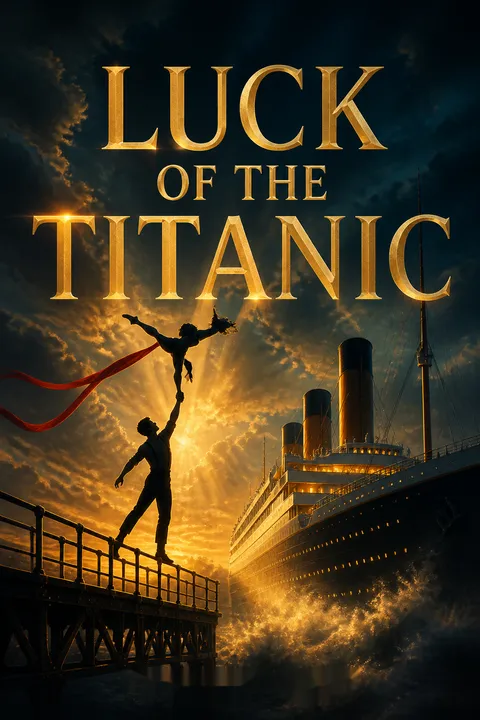
On April 13, Valora and Jamie perform on the narrow docking-bridge rail before hundreds of passengers. They begin with a careful crossing and a leapfrog, then repeat the feat with cups and saucers balanced on their heads.
Their routine is simpler than the elaborate act they once planned, but Jamie’s recovered balance and Valora’s precision hold the audience. A peanut thrown by the hostile coal workers knocks Valora off balance; Jamie catches the falling cup and saucer, turning the near accident into the act’s most thrilling moment.
The crowd erupts, and the Johnnies collect a substantial purse. Afterward, Charlotte drops Mrs. Sloane’s vase of supposed ashes, revealing that it contains tobacco. Latimer sees the mishap, leaving Valora afraid that her false identity will soon collapse.
The performance repairs the twins’ connection without returning them to childhood unchanged. Jamie’s catch is a shared reflex, not proof that he must follow Valora’s plan. Their physical trust lets them cooperate even while their futures remain unsettled. The thrown peanut makes prejudice an active threat, but the audience’s applause briefly changes the social arrangement: the Chinese performers command the deck’s attention on their own terms. The broken vase complicates that triumph. Public success expands Valora’s possibilities while making her hidden life more vulnerable to discovery.
A Closet Without Light
As Valora prepares for her appointment with Stewart, a notice in the ship’s daily bulletin announces that Mrs. Sloane’s son has publicly commemorated his dead mother. Valora realizes the false name may be exposed.
Before she can secure her money, the third-class steward called Skeleton corners her in the men’s cabin, identifies her as a girl, and demands the performance earnings. Valora stabs him with one of Bo’s carving tools and kicks free, but the master-at-arms locks her in a dark squash-equipment closet.
Her old fear of enclosed darkness returns. She steadies her breathing, removes a metal aglet from her bootlace, and works it into the lock until the door opens. Jamie and Tao find her on the stairs, with Strudel the poodle helping locate her. The delay leaves her late for Stewart.
The closet forces Valora to confront the difference between courage and invulnerability. Her escape depends not on a sudden transformation but on practices learned through years of bodily discipline: breathing, patience, and attention to small details. Skeleton’s assault reveals that the danger of her disguise is not merely legal; a woman moving without protection can be targeted by someone who knows she is trapped. Jamie’s rescue matters, but Valora first opens the lock herself. The scene therefore preserves her agency while allowing family and community to become support rather than substitutes for it.
A Circus With New Brothers
Despite arriving late, Valora and Jamie meet Stewart. He wants the twins for Ringling Brothers, but the legal exception he proposes for circus teachers applies only to men, so he expects Jamie to pose as the instructor and Valora as his wife.
Jamie resists the arrangement, and Valora recognizes that forcing him to America would repeat her mistake of treating his wishes as secondary. Rather than accept a future that requires Jamie’s surrender, she offers Olly and Wink as apprentice performers.
Jamie supports the plan, and Stewart agrees to take the two boys, who can train while working. Valora has gained a route toward America without compelling her brother to abandon the life he chose. The decision also gives the boys a chance beyond ship labor, though the voyage has not yet reached port.
This negotiation is Valora’s decisive change of mind. She has spent the voyage trying to turn opportunity into a shared destiny, but Stewart’s condition makes the cost of that strategy unmistakable. Her alternative preserves the practical ambition while releasing Jamie from the role she assigned him. It also widens her definition of family: Olly and Wink become people whose futures she can help open, not simply tools for winning a bet. The scene avoids an easy triumph. The boys’ opportunity depends on a precarious arrangement, and Valora’s American future remains uncertain.
Ice Opens the Hull
After midnight, the Titanic strikes an iceberg and the crew orders passengers toward the Boat Deck. Valora leaves April and Charlotte to search for Jamie’s companions. In the confusion, she reaches the boiler-room workers and learns that Boiler Room 6 has flooded.
Brandish gives her Drummer’s whirling drum, explaining that Drummer’s foot was trapped underwater and the men could not free him. Valora understands that he has died. Bo finds her grieving, then helps her search for Wink and Olly as the ship lists and passengers crowd the stairways.
They see the iceberg and hear officers report that flooding has spread beyond the first boiler room. The Titanic’s celebrated safety cannot stop the sea. Bo and Valora press upward, trying to locate the boys before the lower decks become impassable.
The disaster strips away the ship’s hierarchy of comfort while leaving its social habits intact. Valora’s knowledge of the engine spaces gives her a clearer sense of danger than many passengers possess, but knowledge cannot undo the flooding. Drummer’s loss is especially sharp because his music had made dangerous work feel shared and bearable. The whirling drum becomes a physical remainder of that communal life. Valora’s response is action rather than denial: she grieves, then helps Bo search. The shift from ambition to survival does not erase her earlier loyalties; it tests what they demand now.
Wink Beneath the Water
Valora and Jamie find Wink in Room 14, submerged and unconscious. He had returned for the money bag, which tangled around his neck when the cabin door opened under pressure. Jamie and Valora pull him onto a bunk and take turns performing chest compressions until he coughs up seawater. Wink tells them that he once believed his birth caused his mother’s death, a belief reinforced by his abusive father.
His near drowning has given him a different understanding: a baby cannot be responsible for a parent’s death. With the lower corridor filling fast, the three strap on life belts and swim down Scotland Road. The current eventually carries them into an aft stairwell, where they can climb above the water and reach the upper decks.
Wink’s rescue joins literal survival to the correction of a private, long-held wound. The money bag that represents the boys’ hoped-for future nearly becomes the weight that drowns him, a consequence of trying to carry security alone. Jamie and Valora save him through coordinated effort, echoing their acrobatic partnership but placing care above performance. Wink’s account of his mother also exposes how children absorb blame when adults give them no safe explanation. His new understanding does not undo the abuse, but it loosens the false guilt that has shaped his sense of himself.
The Last Boat Leaves
On the Boat Deck, Valora discovers that Tao has gone to seek a place for someone else, leaving Fong devastated. Bo persuades Fong to keep moving and carries him upstairs; before setting off to search for Tao, Bo gives Valora his coat, kisses her, and promises to return. Jamie, Valora, Wink, Olly, and Fong face lifeboat crews who question Valora’s sex and refuse the boys as too old.
April and Charlotte vouch for her, but the family still cannot board together. At a later boat, Valora and Jamie use a desperate story to get Wink aboard. Seeing a mother with an infant left behind, Valora gives the woman her own place. Wink leaves with Ming Lai and the Domenic family; Jamie stays with Valora.
The lifeboat sequence turns the book’s arguments about belonging into immediate decisions about whose life is treated as worth saving. Valora is repeatedly forced to prove who she is, while the boys’ age becomes an excuse to separate them from protection. Her final sacrifice is not a rejection of her own future but an extension of the care she has been learning to practice without control. Bo’s departure and the siblings’ separation remain painful rather than neatly resolved. The acts of solidarity on deck matter, but they cannot overcome the shortage of boats or the discriminatory judgments governing access.
One Twin Reaches Shore
With the bow submerged and the lifeboats gone, Jamie leads Valora toward an overturned collapsible tied to the ship by ropes. Valora walks the lines first, then Jamie follows, until a falling smokestack knocks both into the sea.
They cling to the flooded crow’s nest, then reach a floating chaise longue and keep themselves moving through the freezing water. Jamie weakens, and Valora’s visions finally resolve: the dreams of Ba needing rescue were about her own fear and strength.
A lifeboat finds them but has room for only one. Valora insists that the rescuers take Jamie, who stirs as they lift him aboard. She remains on the drifting float and dies, imagining her spirit rising like a bird. Jamie survives, carrying the loss of his twin into the future.
The ending completes Valora’s movement from trying to keep Jamie beside her to actively choosing his life over her own. The rope crossing recalls their shared training, but now she must lead without expecting the partnership to guarantee safety. Her dream imagery changes meaning at the point when she stops treating Jamie as the person responsible for rescuing her. The book grants no consoling reunion on earth: Jamie is saved, Valora is not. Its emotional resolution rests instead on the fact that her final act expresses the love she once tried to enforce, now freed from possession.
Epilogue
In a letter sent from Cuba on April 30, Jamie tells Charlotte that she has arranged for Wink and Olly to join her through the Home for Little Souls. Jamie is traveling with Ming Lai, while Bo has gone to escort Fong back to Hong Kong and plans to rejoin them.
Valora’s death still governs Jamie’s grief, but he intends to live with the curiosity and courage she gave him. He hopes the student provision of the exclusion law may eventually open a path to America, and he continues to look to the stars as a way of holding onto Charlotte and his sister.
The letter refuses to convert survival into a simple victory. Jamie reaches Cuba, but his new life is built around absences: Valora is dead, the Johnnies are scattered, and the future he once rejected may still be possible only by another route. Charlotte’s adoption of Wink and Olly extends Valora’s care beyond the ship, while Bo’s responsibility to Fong shows the crew’s bonds continuing after catastrophe. Jamie’s hope of studying in America echoes Valora’s ambition, yet it is now his own choice. The stars become a practice of remembrance rather than a promise that loss can be reversed.
Analysis
Luck of the Titanic places a young woman’s coming-of-age story inside a disaster whose danger is intensified by the ship’s social structure. Valora begins by treating mobility as proof of freedom: if she can reach America, win a circus contract, and bring Jamie with her, the siblings can escape the limits that shaped their childhood. The voyage steadily complicates that equation. Jamie’s work among the Johnnies is not a failure to dream but a form of belonging he chose for himself. Valora’s growth comes when she stops treating his independence as abandonment and begins to make room for futures that do not match her own.
The ship’s class divisions are more than scenery. Valora is denied boarding because she is Chinese, then admitted into first class only by impersonating a white widow. Third-class passengers receive inferior food, Chinese workers are isolated by language and prejudice, and access to lifeboats remains contested even as the ship sinks. The disaster exposes how ordinary rules become lethal when time is short. Yet the story does not make solidarity magical: Drummer dies, Tao disappears into the crisis, and Valora cannot save everyone. What cooperation can do is create chances, share knowledge, and refuse to treat excluded people as expendable.
The novel’s recurring balancing acts bind its physical and moral conflicts. Acrobatics require trust without absolute control; Valora initially wants to control Jamie’s direction as if that were another skill she can master. By the end, she understands that love requires both catching and letting go. Her final choice to give Jamie the rescue place makes that change concrete, while his later attempt to seek his own route to America suggests that separation does not erase their bond. Survival is uneven, grief persists, and the future remains uncertain, but Valora’s influence survives in the lives she helped set moving.
Review Summary
Luck of the Titanic received mixed reviews, with praise for its diverse representation and unique perspective on the Titanic's history. Readers appreciated the well-developed characters, especially the protagonist Valora, and the exploration of Chinese passengers' experiences. Many found the story engaging and emotionally impactful, particularly the ending. However, some critics felt the pacing was slow and the plot underdeveloped. Overall, the book was commended for shedding light on an often-overlooked aspect of the Titanic's story and for its compelling sibling relationship.
People Also Read


Characters
Valora Luck
stowaway acrobat sisterA British Chinese teenager raised in London, Valora is a skilled acrobat, quick improviser, and relentless planner. She and her twin brother, Jamie, learned performance from their father, Ba, and she sees their shared talent as a route toward security and a better life. Her energy often turns into insistence: she can mistake deciding for someone for caring about them. Years of exclusion have also taught her to read rooms, disguise herself, and turn small openings into opportunities. Beneath her confidence are grief, fear of abandonment, and a strong capacity for practical tenderness. Valora’s central challenge is to keep her ambition while learning that love cannot require another person to follow the same path.
Jamie Luck
star-watching twin brotherJamie is Valora’s twin and former acrobatic partner, now a fireman working with the Atlantic Steam Company. He is observant, careful with words, and drawn to astronomy and the quiet rhythm of boiler-room labor. Unlike Valora, he resists the idea that a grand public achievement is the only measure of a worthwhile life. His distance from her is rooted in grief, responsibility, and complicated feelings about Ba’s risky schemes, not in a lack of affection. Jamie has built meaningful ties with the Chinese sailors he works beside, and he protects their dignity as well as his own. His bond with Valora remains deep, but he needs room to define himself outside their shared childhood.
Chow Bo Wah
guarded sailor and artistBo, usually called Bo, is a strong, reserved fireman and Jamie’s closest friend among the Johnnies. His careful English and intimidating scowl conceal a patient observer who sketches people, cuts hair, and carves small objects from ordinary materials. He is protective of Jamie because he has already experienced the cost of losing a brother. That history makes Valora’s arrival feel like a threat before he understands what she means to Jamie. Bo’s loyalty is not blind: he challenges Valora when she assumes she knows what Jamie needs. His guardedness reflects grief held as duty, while his gentler attention suggests a desire for connection he rarely permits himself to name.
April Hart
bold American designerApril is an American fashion designer traveling first class with her mother. She dresses in tailored suits, speaks with confidence, and treats social rules as things that can be questioned. After recognizing Valora as a stowaway, she keeps the secret and recruits her to model House of July designs, giving both women something they need. April’s wit can make her seem careless, but she is perceptive about grief and family conflict. Her support is practical rather than sentimental: she makes introductions, lends clothes, and gives Valora room to make decisions. She also carries private tensions with her mother, which shape her understanding of how long it can take family to accept difference.
Charlotte Fine
kind first-class allyCharlotte is a young New Yorker traveling with her mother and her poodle, Strudel. Her quiet manner initially contrasts with Valora’s forceful presence, but Charlotte proves more resourceful than her gentleness suggests. She befriends Jamie while he walks Strudel and helps Valora approach Stewart without drawing unwanted attention. Her family life is unsettled by her mother’s illness and her father’s absence, so she recognizes how affection can coexist with distance. Charlotte does not treat the Chinese sailors as curiosities or threats. Her growing connections with Valora and Jamie come through careful listening and concrete acts of help.
Wink
watchful young runawayWink is a small, twitchy, sharp-eyed boy who works as a ship’s assistant alongside Olly. He notices details others miss, loves card games, and hides vulnerability behind a growly manner. His mother died when he was born, and his father blamed and abused him, leaving Wink with a painful sense of responsibility for events beyond a child’s control. His friendship with Olly gives him companionship, while his connection to Valora offers another model of adult care. Wink is resourceful and eager for a future beyond ship labor, though he often doubts whether he is entitled to want one.
Olly
talkative young runawayOlly is a lively, undersized ship boy who became close to Wink after both boys ran away and were taken in by sailors. He talks quickly, jokes when nervous, and has the reflexes that make him a natural learner. His enthusiasm sometimes carries him into foolish choices, but he is also generous and responsive to others. Olly wants ordinary pleasures he has rarely been able to afford, along with a place where he and Wink can belong. He brings humor to Valora’s plans and helps turn her juggling into a group effort.
Drummer
rhythm-making firemanDrummer is an energetic Chinese fireman whose music helps workers coordinate their labor and lift one another’s spirits. He can make rhythm with a small instrument, his hands, or whatever surface is nearby. His warmth draws Valora into the community Jamie has formed below decks, challenging her belief that the boiler rooms are only grim and lonely. Drummer is also devoted to his wife, Chin Chin, and tries to put his affection into a letter. His generosity is active: he shares his time, his skill, and his knowledge of the ship.
Tao
serene elder and locksmithTao is an older Chinese sailor with a long braided beard and a calm, reflective manner. He offers Valora gentle encouragement, mediates tensions among the men, and holds to Buddhist ideas about the movement of souls. His apparent softness does not mean helplessness; he is skilled with locks and understands how to act when a door must be opened. Tao’s patience gives the Johnnies a moral center, though he is not untouched by the dangers and losses around him.
Fong
suspicious older sailorFong is an elderly, sharp-tongued Chinese sailor who distrusts strangers and regularly questions women’s independence. He is practical, superstitious about unlucky numbers, and fond of taking small objects that do not belong to him. His hostility toward Bo has a history, though Valora initially sees only his suspicion and bluntness. Fong’s habits make him an uneasy member of the Johnnies, but his place among the older men is real. He is shaped by loss and caution, even when he expresses those feelings as prejudice or irritation.
Ming Lai
steady sailor and announcerMing Lai is a broad, even-tempered Chinese sailor with a deep voice and a steadying presence. He helps the Johnnies communicate with others despite language barriers and lends his voice to Valora and Jamie’s performance. His friendship with Dina Domenic grows through gestures and patience rather than shared language. Ming Lai is neither as restless as Drummer nor as guarded as Bo; his quiet reliability makes him a natural bridge between people.
Albert Ankeny Stewart
circus investor aboardStewart is a first-class passenger and investor connected to the Ringling Brothers Circus. Practical and attentive to business, he does not immediately respond to Valora’s ambitions; she must make him curious enough to watch the twins perform. He is willing to consider unconventional arrangements, but his plans remain shaped by American immigration law and the risks he associates with hiring a young woman. Stewart represents an opportunity within the existing system, not a solution to its unfairness.
Captain Edward Smith
Titanic's commanding captainCaptain Smith is the proud, experienced commander of the Titanic. He attends to the ship’s passengers and crew while navigating pressure from White Star Line leadership. Valora encounters him through her Mrs. Sloane disguise and uses his concern for a first-class passenger to argue for onboard entertainment. His authority is substantial, but it operates within a hierarchy that includes the company chairman and the ship’s rules.
Skeleton
predatory third-class stewardKnown to the third-class passengers as Skeleton, this steward has a thin, striking appearance and a nose for the ship’s sweepstakes and its passengers’ business. He speaks jauntily and uses his position to gather information. Valora learns that his cheerful manner does not make him trustworthy. His presence shows how authority can become personal leverage when those at the bottom of the ship have little protection.
Ba
inventive acrobat fatherBa is Valora and Jamie’s Chinese father, an imaginative man who taught the twins acrobatics and filled their childhood with schemes for a better life. Some of his ideas succeeded; others left the family with debt and instability. He loved his children, but his optimism could place the burden of recovery on them and their mother. His death leaves the twins with sharply different memories of what he gave them and what his ambition cost.
Valora and Jamie's mother
English mother and memoryThe twins’ English mother was the daughter of a vicar who married Ba despite her family’s disapproval. She taught Valora and Jamie practical skills and urged them not to remain trapped by the past. Her marriage exposed her to the prejudice directed at her Chinese husband and mixed-race children, while her warmth gave the twins a model of care that did not depend on agreement. The photograph Valora carries of her parents remains a private link to the family the siblings lost.
Andy Latimer
kind first-class stewardLatimer is the courteous chief steward who mistakes Valora for Mrs. Sloane and helps her settle into a first-class suite. He carries his own grief and responds to Valora with unusual kindness. His decency makes her deception more difficult to maintain, and his position shows that individual compassion can exist inside a rigid class system.
J. Bruce Ismay
White Star chairmanIsmay is the imposing chairman of White Star Line, traveling aboard the Titanic. He is exacting with staff and concerned with the company’s reputation and speed. Valora’s unauthorized performance catches his attention, placing her in danger of being treated as a troublemaker even as her act attracts public interest.
Lucy Duff-Gordon
celebrated British dressmakerLucy Duff-Gordon is a celebrated first-class fashion designer traveling with her husband. She is attentive to clothes, quick to express an opinion, and accustomed to having her work recognized. Her rivalry with April’s House of July gives Valora’s borrowed wardrobe an added social purpose.
Sir Cosmo Duff-Gordon
wealthy first-class passengerSir Cosmo is Lucy Duff-Gordon’s husband, a wealthy and self-assured passenger whose authority follows him into the ship’s public spaces. His polished manner reflects the confidence of a man used to having his preferences obeyed.
Dina Domenic
Russian passenger and friendDina is a young Russian passenger who befriends Ming Lai despite their lack of a shared language. Their tentative connection develops through gestures and curiosity, linking her family to the Chinese sailors aboard.
Mr. Domenic
protective Russian fatherDina’s imposing father travels with his family and watches over his daughter. His size and strength make him formidable, but his presence is also a source of protection for the people close to him.
Mrs. Fine
Charlotte's ill motherCharlotte’s mother is frequently weakened by illness and depends on her daughter’s attention. Her condition shapes Charlotte’s loneliness and her complicated feelings about family duty.
Mrs. Hart
April's disapproving motherApril’s mother travels first class and remains closely involved in her daughter’s life. Her expectations and disagreements with April reflect the strain between parental hopes and an adult child’s self-definition.
Plot Devices
The Mrs. Sloane Disguise
borrowed class protectionValora uses the ticket, trunk, and first-class room belonging to her late employer to pass as a wealthy widow. The disguise lets her cross boundaries that would otherwise block a Chinese stowaway, gain access to Captain Smith and Albert Stewart, and wear April Hart’s designs. It also creates a chain of risks: the real Mrs. Sloane’s family is still alive, Steward Latimer has reason to question the identity, and the story depends on a false account of bereavement. The device makes class privilege visible as something that can change how the same person is treated.
The Acrobat's Wager
ambition made measurableValora turns her conflict with Jamie into a wager over who can earn more before lights out. If she wins, Jamie must perform with her for Stewart; if she loses, she returns to London. The bet converts a private argument about family and ambition into a public contest, drawing Olly and Wink into her side and leading to the bread-heel juggling act. Its rules give Valora leverage, but they cannot settle the deeper question of whether Jamie wants the same future.
The Flying Twins Act
skill becomes a passportValora and Jamie’s acrobatics are both their childhood craft and their strongest chance of securing work in America. Their rail performance demonstrates balance, timing, and trust under pressure, earning Stewart’s interest and helping the Johnnies share in the proceeds. Stewart’s proposed teacher exception to immigration law makes the act part of a practical legal strategy, but it also tests whether Valora can pursue opportunity without demanding that Jamie accompany her.
The Crow's Nest Dreams
grief seeking a meaningValora repeatedly dreams of Ba in danger while Jamie looks away or waits above her. She assumes the dreams mean that Jamie must forgive their father, but the images gradually point toward Valora’s own need to act without making Jamie responsible for her future. The dreams draw on the family’s beliefs about ancestors and the afterlife, while the stars connect Jamie’s private interests to their shared history. Their meaning becomes clearest during the final crisis, when Valora understands that she can survive emotionally without insisting that the twins choose one path.
The Whirling Drum
rhythm calling for helpDrummer’s small instrument represents the way he turns labor into shared rhythm and lifts the spirits of the firemen. Valora keeps it after the flooding takes him, carrying a tangible reminder of the community she has entered through Jamie. In the water, its sound becomes a signal that can reach rescuers when Valora is too weak to call. The drum links ordinary acts of cooperation to survival, without pretending that solidarity can prevent every loss.
About the Author


Download PDF
Download EPUB
.epub digital book format is ideal for reading ebooks on phones, tablets, and e-readers.








