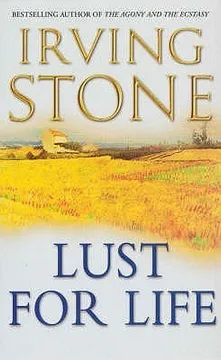


Plot Summary
Prologue
At twenty-one, Vincent Van Gogh1 works for an art dealer in London and falls in love with Ursula Loyer,3 the young woman whose family rents him a room. He mistakes her warmth for a promise, then learns she is engaged and refuses to accept her answer. After her family sends him away, he follows her to London from teaching jobs in Ramsgate and Isleworth.
He reaches the Loyers’ house on the day Ursula3 marries someone else. The sight ends his pursuit. Vincent1 leaves England, abandons the art trade, and drifts through several jobs before his family steers him toward the ministry, a calling he hopes will let him serve the poor.
The opening makes rejection the first force that breaks Vincent’s ordinary ambitions. His love for Ursula is real, but he treats his own intensity as evidence of a shared bond and cannot recognize her independent choice. The wedding finally makes that choice undeniable. His collapse is not simply romantic disappointment: it exposes how poorly he fits a life organized around commerce, status, and conventional success. His turn toward ministry offers a moral structure for his energy, but the prologue leaves open whether service is truly his vocation or another way to make suffering meaningful.
The Ministry He Cannot Study
In Amsterdam, Vincent1 tries to prepare for university ministry under the supervision of his uncle, the Reverend Stricker. He becomes enamored of his cousin7 Kay,7 but she is married to Vos, and her family life sharpens Vincent’s1 loneliness rather than offering him a future.
Classical tutor Mendes da Costa6 sees that Vincent’s1 real concern is not polished theology but practical work among the poor. Vincent1 nevertheless grinds through Latin, Greek, and mathematics until it becomes clear that formal study is defeating him.
He leaves his uncle’s house without permission and joins an evangelical training school in Brussels. There, instructor Bokma condemns his written sermons and his refusal to preach extemporaneously, so the committee denies him an appointment.
Vincent’s failed studies expose the difference between moral conviction and institutional competence. He is not unwilling to work; he works to exhaustion. The problem is that he mistakes endurance for evidence that a path suits him. Mendes offers a countermeasure by treating vocation as something tested through action, not granted by credentials. Kay’s marriage also matters: Vincent’s longing for intimacy is already entangled with an idealized image of being understood. The rejection in Brussels repeats the same pattern in another register. An institution judges his manner, while he believes the sincerity of his purpose should be enough.
A Calling in Coal Dust
Reverend Pietersen,14 who recognizes Vincent’s1 sincerity, sends him to Petit Wasmes in Belgium’s Borinage, a coal district where families live on meagre wages and scraps of fuel. Vincent1 boards with the baker Madame Denis and begins visiting miners, nursing the sick, teaching children, and preaching in a shed.
Foreman Jacques Verney12 introduces him to Henri Decrucq,13 a miner whose scarred body testifies to years underground. Vincent1 descends into the mine and sees children pushing coal carts through air thick with heat and dust. He then gives away his clothes, moves into a leaking hut, and eats as the miners do. When he preaches with coal dust on his face, the villagers finally recognize him as one of their own.
Vincent’s ministry becomes credible to the miners only when it costs him something visible. His sermons alone cannot bridge the distance between a sheltered visitor and people whose bodies are spent underground. The coal dust is both literal disguise and social proof: he makes himself legible to the community by accepting its conditions. Yet this identification contains a danger. Vincent believes moral authority requires sharing deprivation without remainder, so care becomes a test of self-denial. His actions bring him close to the miners, but they also prepare the conflict between compassionate presence and the material limits of what one person can repair.
Faith Buried at Marcasse
After Vincent1 descends Marcasse, he understands how badly the miners are endangered, but the company manager explains that low profits leave no money for safer equipment or shorter shifts. Winter brings hunger and sickness; Vincent1 gives away his clothes and spends his wages on food and medicine.
In spring, grisou gas explodes in a deep seam, trapping fifty-seven miners. Jacques12 joins the rescue effort and dies after a haemorrhage. Vincent1 tends burned children and feeds families during the strike, but the company refuses concessions and the evangelical committee cancels his appointment, condemning his life among the miners as disgraceful.
When the miners return to work, Vincent1 sees that neither the church nor his faith can change their conditions. He concludes that God will not rescue them and withdraws from preaching.
The disaster forces Vincent to confront a distinction he has postponed: solidarity can relieve suffering, but it cannot by itself alter the machinery producing it. The manager’s economic explanation does not absolve the company; it shows how responsibility can be distributed until no individual admits control. Vincent’s religious collapse follows from this impasse. He has offered faith as comfort, then watched the same system kill the people who trusted him. His own self-sacrifice cannot answer the miners’ need for structural change. The section turns his compassion from a stable vocation into a moral crisis, leaving him without either institutional belonging or a belief that sustains his work.
The Pencil Finds Him
After the committee dismisses him, Vincent1 remains in the Borinage, nearly mute and without purpose. One day he sketches a miner leaving Marcasse, then begins drawing the workers, their families, and the huts around him. His first attempts are clumsy, but drawing briefly quiets his despair.
He walks to Brussels to show three sketches to Pietersen,14 who teaches him basic proportion yet recognizes that one rough drawing captures the miners’ wives. Vincent1 returns to work and copies Millet and other masters.
When his brother Theo2 visits, he finds Vincent1 ill in a bare hut. Theo2 nurses him, studies the drawings, and offers to support him as a painter. Vincent1 understands, with Theo’s2 help, that painting is the work he has been circling throughout his failed careers.
The artistic vocation does not arrive as a sudden talent but as a practice Vincent discovers while trying to survive a collapse of meaning. Drawing gives his attention a shape when neither religion nor employment can hold it. Pietersen’s response is crucial because he distinguishes technical error from expressive force: the sketch is imperfect yet truthful to the people Vincent knows. Theo then supplies something different, not artistic authority but sustained material backing and recognition of Vincent’s desire. Their partnership converts private impulse into a viable, if precarious, life project. Art begins as a way to endure, then becomes the first purpose Vincent chooses for himself.
Kay’s Second No
Vincent1 returns to his parents in Etten and begins studying drawing, copying exercises while trying to capture peasants from life. His widowed cousin7 Kay Vos7 visits with her young son, and their walks awaken his hope that affection might finally be returned. He declares his love and asks her to marry him.
Kay7 refuses, still devoted to her dead husband, while Vincent’s parents4 object to the match and to his lack of income. He presses his case, but Kay7 leaves for Amsterdam and will not reconsider. Vincent1 turns back to his work, though the rejection unsettles him. He travels to The Hague with drawings to seek instruction from Anton Mauve,10 a successful painter who is related to him and has agreed to help him learn.
Kay’s refusal reverses the emotional position Vincent occupied with Ursula: he now wants not merely to give love but to receive it. Yet he still treats his own need as a force that should persuade another person. Kay’s grief and refusal reveal the limits of that logic. His parents’ concern about money is practical, but it also echoes the social judgment that has followed him from job to job. Turning to Mauve is therefore more than career advancement. Vincent seeks a form of recognition grounded in work, where effort might be judged on its merits, though he still carries the hope that mastery will repair emotional exclusion.
Sien and the Price of Shelter
In The Hague, Mauve10 teaches Vincent1 watercolour and encourages him to work from models. Vincent1 meets Sien,8 a poor laundress and sex worker who is pregnant, and invites her and her son Herman into his life.
He pays for her medical care, supports her through childbirth, and builds a home for her and the new baby, Antoon. Their domestic arrangement gives Vincent1 companionship and new subjects, but it also deepens his dependence on Theo’s allowance. Sien’s8 health and habits deteriorate as money runs short, while Vincent1 spends what he can on models and materials.
His artistic priorities and her need for food pull in opposite directions. When he can no longer support the family, Vincent1 and Sien8 separate; he promises to help with Antoon and leaves The Hague.
Vincent’s relationship with Sien begins in reciprocal need: he offers shelter and care, while she gives him intimacy and a household shaped by ordinary labor. But good intentions cannot erase the unequal expectations they bring to that arrangement. Vincent views domestic life as material for art and invests scarce money in the work that defines him; Sien needs reliable food, care for her children, and security beyond his uncertain income. Their conflict is not a simple contest between devotion and selfishness. It shows how Vincent’s vocation can give his life meaning while making him unreliable as a provider, and how compassion without sustainable resources may reproduce the vulnerability it tries to relieve.
The Potato Eaters
Vincent1 settles near his parents in Nuenen, where his father4 has become the village minister, and converts a small outbuilding into a studio. He spends his days among weavers and peasants, studying their work, their homes, and the way their bodies bend toward the soil.
The villagers distrust him at first, but his practical kindness helps soften their suspicion. After Vincent’s father4 dies, his family grows more distant, and he moves into rooms rented from a church caretaker.
The De Groot family lets him sketch their labour and their plain supper of potatoes. Vincent1 works repeatedly until he can paint them gathered around the table, their hands shaped by digging the food they eat. The painting becomes his first sustained statement about peasant life.
Nuenen gives Vincent a community he can observe over time, not merely a scene he can visit. The weavers and De Groots supply the rhythms and physical details through which he understands labor as a way of inhabiting the world. His effort to join figures and earth in the same visual field also challenges the distance between subject and observer: these people are not picturesque specimens but makers of their own survival. Family estrangement leaves him socially isolated, yet the daily routines of the villagers give his work continuity. The Potato Eaters marks a shift from collecting studies toward constructing a larger claim about dignity earned through work.
The Brabant Turns Against Him
Margot Begeman,9 a neighbour who has followed Vincent’s1 work in the fields, falls deeply in love with him. Her family blocks their marriage, and after Vincent1 admits that he cannot return her love with equal force, Margot9 takes poison; she survives and is removed from Nuenen. At the same time, a Catholic priest accuses Vincent1 of fathering Stien de Groot’s child, though Stien tells Vincent1 privately that the father is the church sexton.
The accusation turns the village against him, and the caretaker is ordered to evict him. Vincent1 finishes The Potato Eaters in a final night of concentrated work, then leaves for Paris with his drawings. He carries the Brabant’s people and landscapes with him, but no longer has a home there.
The Brabant episodes expose the cost of being interpreted by a community that values respectability more than evidence. Margot’s family treats her desire as a threat to its order, while the village turns a false accusation into a verdict on Vincent’s character. His inability to love Margot as she loves him also reveals a painful asymmetry: he knows the suffering of unreturned desire most intimately when he is the one who wants. Completing The Potato Eaters before leaving gives his departure a creative rather than merely defensive shape. He leaves not because the subject has failed him, but because social hostility has made continued work impossible.
Paris Breaks the Palette
Theo2 brings Vincent1 to Paris, where he manages an art gallery and champions younger painters. Vincent1 sees works by Monet, Manet, Degas, and others, and realizes how dark his own paintings remain beside their luminous colour and visible brushwork.
He meets Toulouse-Lautrec,16 Gauguin,15 Seurat,17 and Cezanne,23 whose sharply different methods unsettle his assumptions about art. Vincent1 studies at Corman’s studio and argues with his new acquaintances about whether painting should capture emotion, scientific order, or decorative form.
He tries to lighten his palette, but his first attempts imitate the artists around him. Theo2 points out that Vincent1 is copying styles instead of absorbing what they can teach. The discovery expands Vincent’s1 artistic world while leaving him uncertain how to make it his own.
Paris destabilizes Vincent by making artistic history immediate. What he had developed in isolation now meets a community of practitioners who disagree not only about technique but about what a painting is for. His initial response, imitation, is psychologically understandable: he wants to catch up with a revolution he has encountered late. Theo’s criticism reframes the problem from deficiency to assimilation. Vincent does not need to discard his own visual instincts; he must learn how light can serve them. The tension between belonging and originality becomes central. The artists offer companionship and intellectual friction, but their presence also makes Vincent newly conscious of how many other painters are struggling to matter.
The Colony He Abandons
Vincent1 joins his Paris friends in imagining a cooperative art colony, with Theo2 managing a shared gallery and painters contributing work in exchange for food, shelter, and materials.
The idea grows into plans for a shop and a country house; Père Tanguy25 and Toulouse-Lautrec16 help raise money, and artists send canvases to the crowded apartment. Vincent1 becomes the tireless organizer, writing rules, attracting supporters, and neglecting his own painting.
When he finally sorts through his recent canvases, he sees that the Paris influence has begun to merge with his individual style, but the work has stalled. He tells Theo2 he must leave the city and return to landscapes. Cezanne’s23 praise of Provence and Lautrec’s16 recommendation of Arles help him choose the South.
The colony is Vincent’s social ideal translated into an institution: artists would share what the market denies them and make art accessible beyond elite galleries. Its failure is not simply financial or logistical. Vincent’s organizing energy becomes a substitute for the work that first gave him purpose, and he recognizes the substitution only when he sees his brushes untouched. The moment also marks a shift from solitary defiance to a more complicated understanding of artistic community. He wants collaboration, but not at the cost of his own practice. Choosing Arles allows him to preserve the dream of a collective future while returning to the conditions under which he can paint.
The Yellow House Opens
Arles overwhelms Vincent1 with its hard light, intense colours, and the force of the mistral. He paints orchards, fields, night cafés, and the postman18 Joseph Roulin,18 then rents a bright house on Place Lamartine and furnishes it as a home and studio. Vincent1 hopes to gather painters there and persuades Theo2 to help bring Gauguin15 from Brittany.
As he prepares the house, Vincent has a sun-struck vision of Maya,22 a woman who seems to know his past and promises that his work will one day be understood. The encounter gives shape to his longing for love and recognition, and afterward he paints an autumn garden with unusual assurance. His invitation to Gauguin15 turns the house from private refuge into a planned artistic partnership.
The Yellow House is Vincent’s attempt to make stability rather than merely endure its absence. He spends scarce money on rooms, furniture, and decoration because he imagines a durable place where artists can live and work together. The vision of Maya intensifies that hope by giving it an intimate witness: she recognizes both his suffering and his ambition without asking him to become conventional. Yet this recognition occurs in a sun-struck, visionary state, not in a secure social world. The section binds creative confidence to vulnerability. Vincent’s home and art flourish together, but both depend on an emotional and physical equilibrium that the coming partnership will test.
Gauguin Leaves Arles
Gauguin15 arrives at the Yellow House, and the two painters immediately clash over method, colour, and whether art should be made from direct observation or imagination. Their arguments intensify as heat, wind, absinthe, and overwork wear down their restraint. Vincent1 wants Gauguin15 to stay and treats the partnership as essential to his future; Gauguin15 becomes increasingly alarmed by Vincent’s agitation.
After Vincent1 throws a glass at him and later rushes at him with a razor, Gauguin15 leaves for a hotel. Vincent1 cuts off part of his ear and carries it wrapped in paper to Rachel at the brothel. The police find him unconscious the next morning and send him to hospital. Theo2 arrives, while Gauguin15 returns to Paris.
The rupture at Arles grows from a conflict between artistic intimacy and incompatible needs. Vincent experiences shared work as a possible answer to isolation; Gauguin values companionship but also needs distance and control over his own practice. The more Vincent depends on Gauguin’s presence, the more disagreement feels like abandonment. His self-injury is not presented as a calculated artistic gesture but as a catastrophic break in judgment amid exhaustion and mental distress. The ear becomes a material emblem of how the body absorbs pressures that Vincent cannot regulate. The Yellow House, designed as a sanctuary for collaboration, becomes the setting where the limits of that dream are made painfully concrete.
St Remy’s Locked Garden
After hospital treatment, Vincent1 returns to find Arles hostile: children mock him, restaurants refuse him, and neighbours sign a petition to have him confined. Doctor Rey19 arranges his admission to St Paul de Mausole, an asylum near St Remy.
Vincent1 first recoils from the silent wards and the patients’ seizures, then begins to understand their mutual care and to paint from a barred studio window. The staff eventually lets him work in the surrounding countryside.
He paints cypresses and olive groves with renewed force, but attacks recur, including one after he returns to Arles to retrieve his canvases. During another seizure, he is found in a ditch. The incident convinces Doctor Peyron that Vincent1 must remain within the asylum walls for a time.
The asylum changes Vincent’s relation to madness by making it a daily condition rather than an abstract terror. He sees patients help one another through episodes, and this shared vulnerability weakens his belief that illness makes a person wholly alien. Painting gives him structure, but it does not cancel the recurrence of seizures. The barred window and garden become both confinement and access: he can still encounter the world, though only within limits set by others. His return to Arles reveals how place itself can trigger distress. The section refuses a simple recovery narrative, showing creative capacity and instability coexisting rather than neatly replacing one another.
A Sale, Then Auvers
During his later months at St Remy, Vincent1 continues painting when his health allows, while Doctor Peyron monitors his recurring crises. Theo2 sends news that a canvas, The Red Vineyard, has sold, and that a critic has written seriously about Vincent’s1 work.
Theo2 also tells him that his son has been named after his uncle. The recognition lifts Vincent’s1 spirits, but a religious hallucination in the asylum’s charged winter atmosphere brings another attack. Vincent1 tells Theo2 that he cannot risk another episode there and asks to leave on his own strength.
Theo2 arranges for him to stay in Auvers with Doctor Gachet,20 a physician who knows painters and has promised to supervise his care. Vincent1 leaves St Remy hoping that a quieter village will let him work safely.
Recognition arrives at a psychologically complicated moment. The sale and critical attention confirm that Vincent’s work can reach someone beyond Theo, yet they cannot undo the bodily crises that threaten his ability to continue. The news of Theo’s child offers a different kind of continuity, grounded in family rather than artistic reputation. Vincent’s decision to leave is an act of agency, but also a wager on his ability to manage a condition that has repeatedly escaped his control. Auvers promises care without institutional enclosure. The section turns hope into a practical question: can a new place and trusted doctor preserve both Vincent’s independence and his capacity to work?
The Last Fields of Auvers
Doctor Gachet20 welcomes Vincent1 to Auvers and encourages him to paint, but Vincent1 soon finds that his old urgency has faded. He works more slowly, worries about Theo’s2 job and his sick child, and fears becoming a financial burden. Gachet20 praises his paintings, yet Vincent1 feels detached from the work and distrustful of his own future.
As his next expected seizure approaches, he becomes increasingly anxious about losing control of his mind. After a tense visit to Gachet’s20 house, Vincent1 walks to the fields with his painting equipment. He paints a cornfield under a darkening sky, then returns to Ravoux’s inn with a gunshot wound. He refuses to give Gachet20 Theo’s2 address, insisting that his brother’s2 Sunday should not be disturbed.
Auvers strips away the conditions that once allowed Vincent to confuse motion with hope. He is no longer driven by the feverish certainty that another canvas will resolve his life, and this quietness feels less like peace than depletion. Worry about Theo’s family converts dependence into guilt: Vincent can imagine his own needs only as a cost imposed on others. His fear of a future seizure deepens the sense that he may lose authorship over his life. The final act follows from this narrowing horizon, not from a single quarrel or failure. His return to painting before the shot suggests that art remains his language, even when he can no longer imagine a life beyond it.
Two Brothers, One Grave
Theo2 reaches Auvers the next day and stays beside Vincent1 as the wound proves fatal. The brothers1 spend their final hours remembering their childhood in Brabant, and Vincent1 asks Theo2 to protect his health and care for his wife and son. After Vincent1 dies, friends gather at Ravoux’s café, where they cover the walls with his paintings before carrying his coffin through the fields to the cemetery.
Theo2 is overwhelmed by grief and enters a sanatorium; he dies six months later. Johanna later has his body moved from Utrecht to Auvers, placing him beside Vincent.1 She plants sunflowers around the brothers’1 graves, joining the painter’s work and the family bond that sustained him in one lasting memorial.
The resolution completes two intertwined stories: Vincent’s struggle to make a life through art, and Theo’s effort to make that life materially possible. The improvised exhibition at Ravoux’s turns a dim café into a final public encounter with Vincent’s work, but the recognition comes too late to restore the artist himself. Theo’s collapse shows that support is not an inexhaustible resource; love can sustain another person while also exposing the supporter to profound strain. Johanna’s decision to reunite the brothers in Auvers converts mourning into an act of stewardship. The sunflowers do not erase the losses. They make visible the bond and artistic legacy that survive them.
Analysis
Lust for Life presents artistic vocation as neither a gift that guarantees success nor a noble escape from material conditions. Vincent1 must learn to draw through repeated failure, but the work that sustains him also costs food, health, intimacy, and social belonging. The novel repeatedly tests his belief that suffering grants moral authority. In the Borinage, he gives away his comfort to gain the miners’ trust, then discovers that personal sacrifice cannot repair an exploitative system. In The Hague, his care for Sien8 cannot create economic security. In Paris, artistic community inspires him but also distracts him from making art. Each apparent solution is real and limited.
The relationships clarify different kinds of recognition. Ursula3 and Kay7 show Vincent1 how desire can become entitlement when he assumes intensity should be reciprocated. Sien8 reveals the difference between compassion and sustainable partnership. Margot’s9 love exposes his capacity to wound someone even when he understands the pain of rejection. Theo2 alone combines affection with practical support, though the novel makes clear that this support has a cost to both brothers.1 Their relationship is not a simple patronage arrangement: Theo2 helps finance the paintings, and Vincent1 gives Theo’s2 commercial life a purpose beyond sales.
The book’s central artistic argument emerges through conflict. Tersteeg11 values work that can enter the market; Seurat17 seeks impersonal order; Gauguin15 favors invention; Vincent1 insists on sensation, character, and the movement connecting people to the land. His evolving palette is therefore not merely technical progress. It records his effort to find a visual language that can carry the world as he experiences it. The final canvases matter because they express that language, not because they cure him or secure a living.
By ending with Theo’s2 grief and Johanna’s act of joining the brothers’1 graves, the novel distinguishes artistic survival from bodily survival. Vincent1 cannot see the future value of his work while he is alive, yet the final exhibition and the sunflowers make his labour publicly legible. The conclusion offers no comforting bargain in which genius justifies every loss. It instead shows that recognition may arrive through other people’s care, long after the maker can benefit from it.
Review Summary
Reviewers across languages and cultures are captivated by Lust for Life, praising it as an emotionally profound portrait of Van Gogh's tortured yet passionate existence. Many highlight the deep bond between Vincent and his brother Theo as the story's emotional core. Readers note the book inspires reflection on success, suffering, and artistic dedication. Some acknowledge the fictionalized elements while appreciating Stone's reliance on real letters. Common criticisms include occasional excessive length, but the overwhelming consensus is that it's an unforgettable, transformative reading experience.
People Also Read


Characters
Vincent Van Gogh
The relentless painterVincent is a Dutchman whose powerful need to be useful first draws him toward commerce and ministry, then toward painting. He is intellectually curious and capable of tenderness, but his intensity often outruns his judgment, especially when he mistakes emotional need for mutual understanding. He is drawn to laborers because their physical lives seem honest and visible, and he works to make their dignity legible in art. Poverty and rejection deepen his empathy while also feeding his isolation. His artistic development depends on stubborn practice, criticism, and a willingness to revise what he believes. He wants recognition, but more urgently needs a form of work that can hold his restless attention and give suffering a shape.
Theo Van Gogh
The steadfast brotherTheo is Vincent’s1 younger brother and an art dealer who believes that new painters deserve a chance before the market approves them. He provides Vincent1 with money, supplies, practical care, and a rare kind of emotional loyalty that survives long silences and disagreement. More socially composed than Vincent1, Theo understands the pressures of the art business and tries to balance his brother’s1 needs with his own responsibilities. His support is not blind agreement: he challenges Vincent1 when he sees imitation or self-neglect. Their bond is a partnership in which Theo supplies stability and Vincent1 supplies a vision of what that stability might serve.
Ursula Loyer
The first rejectionUrsula is the young woman who runs a kindergarten with her mother while Vincent1 lodges in their home in London. Friendly and playful, she enjoys his company without sharing his romantic expectations. Her engagement is a fact Vincent1 refuses to accept until her marriage makes it undeniable. She is not responsible for his idealization, but her refusal exposes how little he understands the difference between affection and consent.
Theodorus Van Gogh
The principled fatherTheodorus is Vincent’s1 father, a village minister who values education, decorum, and religious duty. He loves his son but struggles to understand a temperament that rejects stable careers and conventional measures of usefulness. His attempts to guide Vincent1 often become judgments, especially when art seems to him an unreliable livelihood. Beneath his strictness is a genuine wish to keep the family intact.
Anna Cornelia
The forgiving motherAnna Cornelia is Vincent’s1 mother, whose tenderness makes her the family member most able to see his suffering without reducing him to it. She hopes he will find security and often imagines practical routes to success, but she can also allow him to follow a path she does not understand. Her affection gives Vincent1 a sense of home even when the family cannot share his ambitions.
Mendes da Costa
The wise tutorMendes da Costa tutors Vincent1 in classical languages in Amsterdam. Patient and perceptive, he sees that Vincent’s1 wish to serve God is less academic than practical. He does not dictate a career; instead, he helps Vincent1 trust that sustained self-expression matters more than fitting a prestigious role. His calm counsel offers a model of judgment that is neither indulgent nor punitive.
Kay Vos
The unattainable cousinKay is Vincent’s1 cousin, a young wife and mother when he first meets her in Amsterdam. She is lively, intelligent, and able to sense the narrowness Vincent1 risks adopting in his religious studies. Later, grief changes her manner, and Vincent1 mistakes their closeness for the beginning of a romance. Her refusal shows the difference between sympathy and desire, while her own history of family constraint makes her caution understandable.
Sien
The vulnerable companionSien, whose name is Christine, is a laundress and sex worker Vincent1 meets in The Hague. Poor health and responsibility for her children have left her exposed to exploitation, yet she is practical, resilient, and capable of unexpected generosity. With Vincent1 she finds a period of care and domestic shelter. Their relationship reveals how affection can flourish without shared ambitions, but also how poverty strains even sincere efforts to build a home.
Margot Begeman
The devoted neighbourMargot is a neighbour in Nuenen who falls in love with Vincent1 after watching him work outdoors. Long constrained by her mother and sisters, she invests his attention with the possibility of a life she has been denied. Her love is generous, but its intensity reveals how isolation can make a new attachment feel like a final chance. Vincent’s1 inability to match her feeling complicates his understanding of unrequited love.
Anton Mauve
The demanding mentorMauve is Vincent’s1 cousin and a successful painter who helps him move from drawing toward colour and watercolour. He recognizes energy in Vincent’s1 studies and offers instruction, equipment, and money. Mauve values discipline and artistic technique, while Vincent1 resists systems that seem to flatten lived character. Their relationship gives Vincent1 a genuine beginning in professional art, but their different temperaments make mentorship fragile.
Tersteeg
The cautious dealerTersteeg manages the Goupil gallery in The Hague and has long-standing ties to the Van Gogh family1. He wants Vincent1 to succeed, but believes an artist must meet professional standards and cultivate respectable habits. His judgments are shaped by the art market, which makes him both a source of practical advice and a gatekeeper whose caution wounds Vincent’s1 confidence.
Jacques Verney
The miner’s guideJacques is a respected foreman in Petit Wasmes who introduces Vincent1 to the realities of mine work. His loyalty to the miners coexists with his position inside the company, giving him a complicated view of their poverty and danger. He helps Vincent1 understand the community through experience rather than sermons.
Henri Decrucq
The defiant minerDecrucq is a badly injured miner whose anger and humor survive repeated accidents underground. He gives Vincent1 an unvarnished account of the miners’ working lives and embodies both their endurance and the cost of it. His fierce independence makes him an important counterweight to Vincent’s1 idealized language about poverty.
Reverend Pietersen
The unexpected encouragerPietersen is an evangelical minister who sees Vincent’s1 sincerity despite his failures in formal training. He sends him to the Borinage and later gives him a first serious response to his drawings. As a painter himself, Pietersen can recognize the expressive force in rough work even when its technique is weak.
Paul Gauguin
The volatile collaboratorGauguin is a painter who values invention, memory, and decorative structure more than close observation of nature. He is forceful, witty, and quick to provoke, and he treats conflict as part of artistic life. Vincent1 admires his confidence and wants him as a partner at the Yellow House, but their opposed working methods and emotional needs make cooperation precarious.
Henri Toulouse-Lautrec
The frank artistToulouse-Lautrec is a Paris painter drawn to dancers, brothels, and other subjects the respectable art world rejects. His physical disability has sharpened his independence and his appetite for life, while his humor protects him from pity. He recognizes Vincent’s1 attraction to character over conventional beauty and helps him see Arles as a place of intense colour.
Georges Seurat
The scientific innovatorSeurat is a methodical painter who tries to reduce colour and composition to a precise system. His impersonal theories challenge Vincent’s1 belief that painting must carry the force of individual feeling. Their disagreements make the Paris art circle feel intellectually alive, and Seurat’s experiments expose Vincent1 to possibilities he can learn from without adopting wholesale.
Joseph Roulin
The generous postmanRoulin is an Arles postman who becomes one of Vincent’s1 few local friends. His plainspoken reflections on God, work, and inequality give their conversations unusual depth. Roulin poses for portraits and welcomes Vincent1 into his family, offering the artist an ordinary human connection that is neither a professional test nor a romantic fantasy.
Doctor Rey
The practical physicianDoctor Rey treats Vincent1 after his crisis in Arles and tries to protect him without stripping away his independence. He arranges a quieter place for Vincent1 to recover and understands that painting is part of his patient’s identity. His care is practical and humane, though he cannot promise that Vincent’s periods of illness will not return.
Doctor Gachet
The painter’s physicianDoctor Gachet is a physician in Auvers with a lifelong interest in painting and a collection of works by modern artists. Nervous and emotionally intense, he recognizes Vincent’s1 talent and urges him to keep working. His enthusiasm can become overwhelming, and his own sense of failure as an artist shapes the way he admires Vincent’s1 vocation.
Henri Rousseau
The untrained visionaryRousseau is a self-taught painter whose imaginative jungles and animals are mocked by fashionable guests. Beneath his guileless manner is a quiet resolve to keep painting. Vincent1 recognizes in him a fellow outsider whose work does not need academic approval to possess its own logic.
Maya
The imagined witnessMaya appears to Vincent1 in a sun-struck vision in Arles. She embodies the kind of complete understanding and love he has long sought, while also voicing his hope that his work may someday be valued. Her presence belongs to the novel’s imaginative, visionary register rather than its ordinary social world.
Paul Cezanne
The resistant innovatorCezanne is a fiercely independent painter whose theories about form and perception set him apart even from fellow innovators. His bitter exchanges with friends show how artistic ambition can make recognition feel like betrayal. Vincent1 encounters him as part of the volatile Parisian circle that tests his ideas.
Emile Zola
The realist novelistZola is a successful novelist whose work addresses poverty and social conditions directly. He believes that writing can change public understanding, but his portrayal of Cezanne23 strains their friendship. His arguments with the painters sharpen the book’s debate over whether art should judge society or simply represent what it sees.
Père Tanguy
The artists’ friendPère Tanguy sells art supplies and gives young painters credit when they cannot pay. He cares more about the work than its market value and offers a rare, practical form of solidarity in Paris. His shop becomes a meeting place where rejected artists can see one another’s paintings.
Plot Devices
Theo’s letters and allowance
A lifeline between brothersTheo’s letters carry money, art materials, criticism, and news across the distance between the brothers1. They let Vincent1 remain an artist when his work brings in almost nothing, but they also make each financial shortage emotionally charged. Vincent1 alternates between gratitude and shame, while Theo2 must balance support for his brother1 with his own household and career. The correspondence is more than exposition: it is the practical form their loyalty takes, allowing Vincent1 to work and giving Theo2 a continuing role in the paintings’ creation.
The changing palette
A record of artistic growthVincent’s1 materials and colour choices chart his movement from tentative pencil studies to paintings shaped by light, thick pigment, and emotional contrast. The Borinage begins with charcoal and borrowed paper; Paris confronts him with Impressionist colour; Arles gives him the yellows and blues that become central to his vision. His experiments with canvas, pigment, and frames show that artistic identity is made through labor as well as inspiration. Each shift marks a change in what he believes a painting can communicate.
The Yellow House
A home built for artVincent1 rents and furnishes the Yellow House in Arles because he wants a settled base for himself and a community of painters. Its rooms become a visible expression of his hope that artists can live together outside commercial competition. He decorates the house, plans for Gauguin’s15 arrival, and imagines future residents sharing work and resources. The house also gives the Arles chapters a concrete measure of how Vincent1 spends his money and energy: every purchase serves either the life he wants or the art he hopes to make.
Recurring mental crises
A cycle that limits freedomVincent’s1 recurring seizures and hallucinations interrupt periods of intense work and repeatedly force him to reassess where and how he can live. The novel connects these episodes to overwork, isolation, and emotional strain, while also showing that Vincent1 cannot predict or fully control them. Hospitals and the asylum offer care but restrict his movement. His attempts to manage the cycle reveal the tension between artistic independence and the need for protection, without reducing his art to illness.
Maya’s vision
A fantasy of recognitionIn Arles, Vincent1 encounters Maya22 in a vision that gathers his longings for love, understanding, and artistic recognition into one figure. She seems to know the history he has carried from London and the Netherlands, and her certainty briefly gives him a sense of being wholly seen. The episode is distinct from the book’s ordinary realist scenes and works as an imaginative counterpart to Vincent’s1 paintings: it gives external form to an inner hope. The vision does not solve his isolation, but it accompanies a moment of strong creative confidence.
Download PDF
Download EPUB
.epub digital book format is ideal for reading ebooks on phones, tablets, and e-readers.








