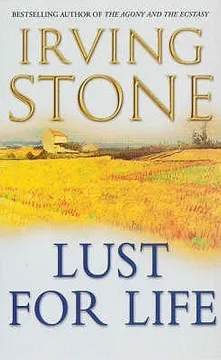


Plot Summary
Prologue
At twenty-one, Vincent Van Gogh works for an art dealer in London and believes that love for Ursula Loyer will open a settled life. He mistakes her friendliness for a promise, proposes, and learns that she is already engaged. His refusal to accept her answer costs him his lodgings and, after he follows her to London on foot and sees her wedding carriage leave, the last of his hope.
He tries teaching and preaching, finding the poor of Whitechapel in greater need than the prosperous congregations he serves. When Ursula marries, he leaves England and returns to his family in Holland, carrying heartbreak into a new search for a life of service.
The London opening makes Vincent’s first failure intimate before it becomes vocational. He cannot distinguish a woman’s kindness from an invitation, and his insistence turns love into a contest he believes he can win through effort. Ursula’s wedding finally ends that fantasy. His subsequent work among the poor is not yet a stable calling, but it redirects the pain he cannot master toward people whose hardship is visible and material. The prologue also establishes a pattern that will recur: Vincent chooses an ideal with absolute force, then discovers that feeling intensely cannot make other people or institutions answer as he hopes.
Amsterdam Rejects the Classroom
At twenty-four, Vincent moves into his uncle’s Amsterdam home to prepare for the ministry, studying Latin, Greek, history, and mathematics for as many as twenty hours a day. At his aunt’s house he meets his cousin Kay, whose warmth awakens his hunger for love, but her husband and child make clear that her affection belongs to her own family.
Tutor Mendes da Costa helps Vincent see that academic study is not the same as serving the poor. Vincent recognizes that he wants direct work among people in need, not a university education followed by a comfortable pulpit. He leaves without saying goodbye and travels to Brussels to train as an evangelist, risking the disapproval of relatives who have paid for his studies.
Amsterdam turns a private sense of inadequacy into a moral decision. Vincent’s punishing study schedule is not simple ambition: he is trying to earn permission to serve through the family’s approved route. Mendes offers a different standard, one based on fidelity to purpose rather than institutional credentials. Kay’s domestic happiness sharpens Vincent’s loneliness, but it does not become a plot of romantic pursuit; her marriage instead exposes what he lacks. Leaving without farewell shows both courage and his characteristic difficulty with negotiated exits. He acts decisively once his inner verdict is reached, even when the people affected by that decision have not agreed to it.
The Borinage Appointment
In Brussels, Vincent’s evangelical training collapses under a teacher who demands polished, improvised sermons. Vincent writes painstakingly prepared talks, refuses to perform them extemporaneously, and is denied an appointment by the committee.
Reverend Pietersen, who has quietly supported him, offers another route: the coal-mining district of the Borinage, where families endure dangerous work and grinding poverty. Vincent arrives in Petit Wasmes and sees miners emerge from Marcasse blackened by the underground shift.
Jacques Verney, a foreman, and injured miner Henri Decrucq introduce him to the community’s conditions. Vincent settles with the baker’s family and begins visiting the huts, determined to bring both religious comfort and practical help to people whose lives the church barely reaches.
The failed examination exposes a mismatch between Vincent’s gifts and the institution’s preferred performance. He can prepare meaning with great seriousness, but cannot turn conviction into the fluent public manner the committee rewards. Pietersen’s intervention matters because it converts rejection into a concrete destination rather than a consoling abstraction. In Petit Wasmes, Vincent encounters suffering that cannot be reduced to a sermon: the miners’ bodies bear the costs of the economic order. His arrival begins a test of whether religious solidarity can survive contact with material need, a question that will unsettle both his ministry and his faith.
Coal Dust Earned Trust
Vincent holds meetings in a shed, teaches village children, and brings food, clothing, and care to sick miners. When Verney takes him underground, he sees girls pushing coal cars through airless passages and men working in heat so punishing that even a brief rest costs wages. Back above ground, he finds Decrucq’s children shivering in a hut and gives their mother the money he has.
Ashamed of preaching poverty while living comfortably, Vincent rents a freezing shack and gives away nearly all his clothes. The miners accept him more fully because he now lives as they do, not merely because he speaks for them. His ministry becomes hands-on labor, and his own health begins to fail.
Vincent treats solidarity as something that must be legible in the body. Coal dust on his face and the bare shack make his commitment visible to the miners, but they also reveal the limits of imitation: he can choose hardship, while their poverty is imposed and inescapable. His giving is compassionate, yet increasingly self-punishing. The scene with Decrucq’s children forces him to confront the distance between spiritual consolation and immediate survival. By making his housing and clothing match the miners’, Vincent wins trust, but he also turns service into a test of personal purity that leaves little room for sustainable care.
Marcasse Takes Its Dead
An explosion traps fifty-seven miners in a dangerous section of Marcasse. Vincent uses his own clothes to bandage three badly burned children, then helps the village endure the long rescue effort and the hunger that follows when work stops. Jacques Verney dies after collapsing, and the church committee cancels Vincent’s appointment, condemning the shack and services it once ignored.
The company cannot or will not improve the mine, so Vincent must tell the miners to return to work. He concludes that prayer cannot answer the conditions they face and sinks into isolation. Months later, he sketches miners outside the pit. When Theo visits and finds him sick in a bare cabin, Vincent realizes that drawing, not preaching, may be his true work.
The disaster is a practical and theological rupture. Vincent’s care for the burned children gives him a task, but neither his effort nor the committee’s authority can recover the trapped workers or change the mine’s terms. His crisis does not begin as a neat conversion from religion to art; it begins with the collapse of a particular claim that spiritual leadership can remedy structural misery. Theo’s arrival interrupts Vincent’s retreat, while the sketches supply a form of attention that does not pretend to rescue its subjects. Art begins here as witness, though it will demand its own costs and offer no guaranteed audience.
A Painter Takes Shape
Theo agrees to support Vincent while he learns to draw, and Vincent returns to his family’s home in Etten. He studies anatomy, copies prints, and sketches peasants at work until his family worries that he is wasting his time.
His cousin and painter Anton Mauve examines the drawings and sees an authentic vitality beneath their awkward technique. Mauve encourages him to begin painting and offers instruction in The Hague. Vincent’s parents are relieved that he has chosen a direction, though they still measure work by income and social respectability.
Vincent insists on drawing laborers rather than the prosperous townspeople who might pay for portraits. For the first time, his daily practice begins to connect his sympathy for ordinary people with a demanding craft.
Etten shifts Vincent from moral self-sacrifice toward disciplined making. The family’s concern is understandable: Theo’s money keeps him afloat, and the drawings look unfinished. Yet Mauve notices what a purely commercial judgment would miss, namely that the awkward figures carry an individual response to labor and character. Vincent’s refusal to prioritize paying clients is not simply romantic stubbornness; he believes that truthful attention must precede market approval. The tension between livelihood and artistic integrity is now explicit. His work becomes a way to stay close to the people he values, while the craft itself requires him to accept correction without surrendering his subject.
Kay’s Answer, The Hague
Kay visits Etten after her husband’s death, and Vincent mistakes their companionship for the beginning of a shared life. He proposes, but Kay refuses; her family insists that she return to Amsterdam, and Vincent follows her there, demanding to hear her answer directly. When her father bars him from seeing her, Vincent holds his hand over a candle to prove the depth of his desperation.
Kay remains unwilling, and Vincent returns to The Hague with the rejection unresolved in his mind. There he rents a studio, studies with Mauve, and meets Christine, a poor laundress known as Sien. He gives her money, hires her as a model, and offers her shelter, finding in their unpolished companionship a domestic warmth he has never managed to secure.
Kay’s refusal repeats the wound of Ursula, but Vincent approaches it with more adult self-knowledge and still cannot accept its finality. The candle gesture turns pain into evidence, as though endurance might compel recognition. It does not. In The Hague, Sien’s presence offers a radically different kind of intimacy: not a refined ideal but shared food, work, and practical need. That connection is compassionate, yet it also begins under an imbalance of money and dependence. Vincent’s desire to make a home is sincere, but he keeps treating affection as something that can be secured by devotion, a belief that will be tested by everyday scarcity.
Sien Shares the Studio
Sien moves into Vincent’s studio with her son Herman and later gives birth to another child. Vincent supports the household with Theo’s allowance, pays for medical care, and tries to keep drawing while Sien resumes contact with the family that draws her back toward drinking and street work.
He wants her to model so he can avoid hiring others; she wants food and security for the children. Their arguments sharpen as his limited money goes to paint and models instead of household needs.
The painter Mauve breaks with Vincent, while Tersteeg condemns his choices and doubts his ability. When debt and exhaustion leave Vincent unable to sustain the household, he and Sien separate. He leaves The Hague for Nuenen, promising to continue helping with the baby.
The relationship reveals that care cannot be sustained by feeling alone. Vincent’s generosity gives Sien safety and work for a time, but he also expects her labor to serve his artistic needs. Sien’s return to old habits is presented through the pressures of poverty and family influence, not as a simple moral failure. Their competing necessities expose how little Theo’s allowance can stretch across food, children, rent, and art materials. Vincent’s choice to leave protects his work but leaves Sien and the children vulnerable. The episode complicates the image of the artist as a selfless helper: he can recognize suffering and still place creation first.
Nuenen’s Potato Table
At Nuenen, Vincent builds a studio in the vicarage garden and spends two years drawing weavers and peasants. He becomes close to Margot Begeman, whose family blocks their marriage; after she takes poison, she survives, but the event deepens the village’s suspicion of him.
Vincent’s father dies, and a later scandal compounds the hostility: priest Pauwels accuses Vincent of fathering Stien de Groot’s child, though Stien privately tells him the father is a church official. The rumor still costs Vincent his lodging. Before leaving, he works through the night on a painting of the De Groot family eating potatoes, using years of studies to make labor and food belong together. He calls it The Potato Eaters, then leaves Brabant for Paris.
Nuenen gives Vincent the subjects he has sought since the Borinage, but intimacy with the village remains conditional. He learns the rhythms of peasant life through repeated visits, not from a detached ideal of rural virtue. Margot’s suffering and Stien’s predicament show how family authority and public judgment constrain women as well as him. The accusation against Vincent is false, yet reputation functions more powerfully than proof. The Potato Eaters becomes his answer to this unstable social world: a family’s meal is rendered as the product of hands that have worked the soil. His departure follows both artistic completion and social exclusion.
Paris Rewrites the Palette
In Paris, Theo takes Vincent to the gallery where he exhibits Monet, Manet, Degas, and Pissarro. Their bright color, visible brushwork, and living atmosphere shock Vincent into seeing how dark his own canvases have become. He studies with Corman and meets Toulouse-Lautrec, Gauguin, Seurat, Cezanne, and the dealer Père Tanguy, whose shop gives young painters a place to show work.
The artists argue over whether painting should follow scientific rules, decorative design, or emotional force. Vincent tries to absorb their discoveries, especially their treatment of light, while Theo warns him not to imitate them. He begins to understand that modern painting is not a single style to copy, but a challenge to find a personal way of seeing.
Paris is both a school and a destabilizing mirror. Vincent’s shock at the Impressionists does not erase his earlier labor; it reveals that technical seriousness can still be historically out of step. Theo helps him separate learning from imitation, while the competing artists dramatize incompatible theories of what a painting should do. The city also supplies a community of peers, but that community magnifies his insecurity: every painter has a recognizable method, and Vincent fears he has none. His task is not simply to lighten the palette. It is to convert borrowed visual knowledge into a form that still bears the pressure of his own attention.
The Colony Comes Apart
Vincent proposes that Paris’s younger painters exhibit in working-class restaurants, making art visible and affordable beyond the grand galleries. The first display at the Restaurant Norvins attracts no buyers; the diners focus on their meals, and the artists carry their canvases home. Vincent then expands the idea into a cooperative colony, with Theo managing a shared gallery and country house.
Père Tanguy and Lautrec contribute money, and the group raises funds, but planning consumes Vincent’s days. When he returns to his neglected canvases, he sees that his own work has begun to find a distinct style. He tells Theo he must leave the organizer’s role and the city. Drawn by the southern sun, he heads for Arles to paint alone.
The failed restaurant exhibition is not merely a commercial disappointment. It tests Vincent’s belief that access to art can be changed by goodwill and organization, and it shows how little the painters can control their audience. The larger colony repeats his habit of turning conviction into an all-consuming plan. Yet the pause from painting gives him a clearer view of his own progress. His departure is not a rejection of community in principle; it is a recognition that he cannot build a collective life without losing the practice that gives him purpose. The choice restores artistic agency while deepening his dependence on Theo.
Arles Burns Bright
In Arles, Vincent encounters a landscape whose intense sun makes the colors of field, river, and roof seem almost unreal. He paints rapidly, often finishing a canvas in a day, and begins using color to intensify feeling rather than simply reproduce what lies before him. A fictional figure named Maya appears during one painting session, offering the love and understanding Vincent has long wanted; when she vanishes, he finds that the canvas of the garden is complete.
He befriends postman Roulin and paints people willing to sit for him. Seeking a permanent base, Vincent rents the Yellow House and fills it with furniture and painted decorations. He imagines a southern artists’ studio and persuades Theo to help bring Gauguin from Brittany.
Arles gives Vincent the environmental intensity he has sought, but the new color is not just a response to climate. He bends color toward emotional truth, making the landscape carry his inner pressure. Maya’s appearance is explicitly a fictional episode in the book, and it externalizes a longing that ordinary relationships have never satisfied: the wish to be understood without qualification. The Yellow House turns that wish outward into a material plan, a shared studio where art might become communal rather than solitary. Yet the house is built on fragile finances and on Vincent’s belief that Gauguin will fulfill a role the other man has not agreed to inhabit.
Gauguin Enters the Yellow House
Vincent prepares rooms and paints sunflower panels for Gauguin, who finally arrives after Theo provides travel money. The friends establish a shared budget, but their artistic habits quickly collide.
Gauguin criticizes Vincent’s color and urges him to work from memory; Vincent insists that painting must carry the movement and rhythm he sees in nature. Their arguments intensify as they work through heat, wind, little sleep, and absinthe. Gauguin’s portrait of Vincent makes the painter look mentally unwell, and Vincent recognizes his own exhaustion in it.
After Vincent throws an absinthe glass at Gauguin, Gauguin decides to leave. Vincent pleads with him to stay, but the partnership has become a daily contest between Vincent’s need for companionship and Gauguin’s need for distance.
The Yellow House turns Vincent’s ideal of artistic fellowship into a close study of incompatible needs. He wants Gauguin as a peer, teacher, and proof that the house can become a lasting institution. Gauguin wants a separate artistic authority and does not accept the emotional responsibility Vincent attaches to their cohabitation. Their shared hardship does not create solidarity; it intensifies irritability and competition. The argument over style is therefore also a struggle over dependence. Vincent can recognize Gauguin’s skill, but cannot bear the possibility that the friend he invited may leave. The house becomes a pressure chamber in which art, money, and attachment are inseparable.
The Ear, Then the Hospital
After another quarrel, Vincent follows Gauguin with an open razor but turns back before reaching him. Alone in the Yellow House, he cuts off part of his right ear, wraps it, and takes it to Rachel at the brothel. Police find him the next morning and carry him to hospital. Gauguin leaves for Paris, while Theo rushes south and stays beside his brother.
Vincent recovers under Doctor Rey’s care, paints the hospital garden, and returns to the Yellow House, only to find that Arles has turned against him. Children taunt him, restaurants refuse him, and a petition declares him dangerous. The landlord removes his belongings. Doctor Rey arranges for Vincent to enter St. Paul de Mausole, a quiet asylum near Saint-Rémy.
The ear injury converts an already volatile conflict into bodily catastrophe. Vincent’s action follows Gauguin’s impending departure, but it cannot be reduced to a single cause; exhaustion, isolation, and an escalating mental crisis have converged. Theo’s immediate arrival reaffirms the brothers’ bond, while the town’s response turns a medical emergency into public spectacle. The insult and petition matter because they remove Vincent’s ability to return to the home he built. St. Paul is offered as protection, yet entering it means surrendering control of his movements. The transition asks whether artistic work can continue inside a place designed to contain instability.
Behind St. Remy’s Walls
At St. Paul, Vincent first shares a ward with silent patients who suffer seizures and delusions, then wins permission to use a small studio and paint outside the grounds. He produces landscapes of the fields and cypresses, briefly believing that work has restored his command of himself.
A trip to Arles to retrieve his canvases ends in a collapse, and further attacks bring renewed confinement. Theo’s letters, the news of his child, and the sale of Vincent’s Red Vineyard for four hundred francs revive him.
A critic praises his work, but Vincent does not show the review to Doctor Peyron. As the asylum’s religious routines disturb him and another episode follows, Vincent decides that he cannot remain there. He asks Theo to help him move to Auvers.
St. Remy makes illness cyclical rather than a single fall from sanity. Vincent’s return to painting is real, but it does not prevent another crisis; his confidence rises faster than his ability to predict or control the next episode. The asylum’s patients form a community through mutual care, yet its restrictions also narrow his world. Theo’s news and the first sale offer evidence that Vincent’s work reaches beyond his room, while the critic’s praise remains private and fragile. His decision to leave is an attempt to reclaim agency, not a claim that he is cured. The move to Auvers renews hope while leaving the underlying risk intact.
Auvers Offers a Last Shelter
In Auvers, Doctor Gachet takes Vincent under his care and encourages him to paint. Vincent rejects the expensive inn Gachet first selects and chooses Ravoux’s cheaper café, then works in the doctor’s garden and gives him portraits. At first he paints the church, fields, and village houses, but the pace slows and nature no longer stirs the same urgency.
He worries that Theo may lose his gallery job and that the baby is ill. When Vincent learns that a future seizure could leave him permanently impaired, fear for Theo’s burden deepens. He becomes convinced that he has said what he can through painting. After a tense visit to Gachet, Vincent walks to a cornfield and shoots himself, then returns wounded to Ravoux’s.
Auvers offers care without resolving Vincent’s central conflict. Gachet recognizes his talent and provides attention, but cannot restore the compulsive energy that once made painting feel necessary. The cheap room at Ravoux’s shows Vincent’s enduring refusal to live beyond his means, even while he relies on Theo. Anxiety about Theo’s job and child shifts the question from personal survival to whether continued dependence is fair. His fear of a future seizure is a fear of losing agency and becoming someone others must contain. The shooting is a deliberate attempt to end that uncertainty, but his return to the inn leaves the final choice unfinished.
Theo Holds His Brother
Doctor Gachet tends Vincent through the night and sends for Theo, who arrives the next morning. Vincent refuses to let the doctor disturb Theo’s Sunday, but the message reaches him anyway. The brothers spend their final hours remembering childhood in Brabant and the plans they once made beside the mill at Ryswyk.
Theo promises to open a small gallery devoted to Vincent’s work. Vincent dies shortly after one in the morning, with Theo holding his hand. Friends carry his coffin to the cemetery above the Oise.
Gachet fills the café walls with Vincent’s paintings for the funeral, turning the dim room into a memorial to the color the village had once mocked. Theo’s health collapses under grief, and he dies six months later; Johanna has him buried beside Vincent.
The ending returns the story to the bond that has sustained it from the Borinage onward. Vincent’s death does not resolve his dependence on Theo; it makes that dependence visible as a shared life of care, money, and belief. Theo’s promise of a gallery answers the opening’s failed art commerce with a private act of advocacy, while the funeral exhibition gives Vincent’s paintings a public presence among the people who loved him. The brothers’ burial together completes the book’s recurring image of intertwined lives. Recognition arrives among friends, not as a triumph Vincent can experience, leaving the reader to hold both the work’s endurance and its human cost.
Analysis
Lust for Life presents Vincent’s career not as a smooth ascent toward recognition but as a succession of failed roles that gradually reveal what he can do. He leaves art dealing, formal theology, evangelical work, and domestic life when each proves unable to contain his sense of purpose. Those departures are not always noble. Vincent’s intensity gives him unusual attention to miners, peasants, and people whom respectable society treats as disposable, but it also makes him impatient with boundaries, dependent on Theo, and prone to confusing personal sacrifice with effective care.
The novel’s central tension is between usefulness and expression. In the Borinage, Vincent believes that service must involve material solidarity, then discovers that a single minister cannot undo the conditions that injure a whole community. Painting does not solve those conditions either. It gives him another means of seeing them, preserving the texture of labor and ordinary life without claiming to rescue the people represented. The Potato Eaters crystallizes that ambition: food, hands, faces, and soil belong to one lived system.
Artistic development is shown as learning followed by resistance. Paris teaches Vincent about light and color, but he must stop imitating his peers before those lessons become his own. Arles then brings artistic freedom and dangerous acceleration together. The Yellow House promises collective creation, yet Vincent’s dependence on Gauguin makes companionship difficult to sustain. Across these episodes, the novel questions whether artistic intensity can be separated from the conditions that exhaust the artist. Theo’s role prevents the story from becoming a myth of solitary genius. He supplies the practical conditions Vincent lacks, advocates for painters excluded by commercial taste, and remains emotionally present when Vincent’s choices strain their relationship. The brothers’ final separation is therefore not a triumph of art over ordinary life. It is the cost of a life made possible by another person’s loyalty. The ending offers posthumous recognition, but refuses to make recognition a cure: Vincent cannot experience it, and Theo cannot survive the grief. The work endures, while the human beings who carried it remain irreducibly vulnerable.
Review Summary
Lust for Life is a highly acclaimed biographical novel about Vincent van Gogh. Readers praise Stone's vivid portrayal of the artist's tumultuous life, his struggles with mental health, and his passionate dedication to art. The book offers insights into van Gogh's relationships, artistic development, and the historical context of the Impressionist movement. Many readers find the novel emotionally powerful and inspiring, gaining a deeper appreciation for van Gogh's work. Some note minor historical inaccuracies but overall consider it a compelling and well-researched account of the artist's life.
People Also Read



Characters
Vincent Van Gogh
The relentless painterVincent is a Dutchman whose appetite for purpose is as powerful as his physical presence. He tries art dealing, teaching, theology, and evangelical service before recognizing that drawing and painting unite his attention to labor, hardship, and nature. He is generous toward people in poverty, but his intensity can become possessive, self-neglecting, and difficult for those close to him. Vincent measures sincerity by effort and often expects other people to meet him at the same pitch. His artistic development depends on both discipline and emotional exposure: he studies technique, absorbs new movements, then reshapes them through his own temperament. He wants to be useful, understood, and free to work, but struggles to separate those desires from the need for love and approval.
Theo Van Gogh
The steadfast brotherTheo is Vincent’s younger brother and closest source of practical and emotional support. A capable art dealer, he provides money, materials, encouragement, and access to painters who might otherwise remain invisible to the public. He understands Vincent’s talent before Vincent can name his vocation, though he does not always understand the choices Vincent makes in love or domestic life. Theo is gentler and more socially composed than his brother, yet his loyalty requires him to absorb strain that Vincent rarely knows how to measure. His work in the art trade gives him influence but also traps him between commercial expectations and sympathy for artists who are not yet accepted.
Theodorus Van Gogh
The disapproving fatherVincent’s father is a minister who values order, education, religious duty, and respectable conduct. He loves his son but cannot easily understand a vocation that offers neither income nor social standing. His own disappointment at being overlooked in church life makes him especially sensitive to failure within the family. He alternates between trying to guide Vincent toward approved paths and offering him a home when those paths collapse. Theodorus’s moral certainty contrasts with Vincent’s need to test beliefs against lived experience, making their disagreements intimate rather than merely ideological.
Anna Cornelia Van Gogh
The forgiving motherVincent’s mother offers warmth without demanding that he explain himself perfectly. She worries that his choices bring him pain, yet she feeds and welcomes him when he returns home and gradually makes room for his artistic work. Her instinct is to protect him through ordinary care: meals, clothing, and a place in the family. She cannot always understand what he is trying to make, but she is more accepting of his difference than his father or sisters. Her compassion represents a form of attachment that does not depend on Vincent’s success.
Ursula Loyer
The first heartbreakUrsula is the young woman Vincent loves while working in London. She is friendly and lively, but her warmth is not a promise of romance, a distinction Vincent fails to grasp. Her established engagement makes his proposal impossible, and his insistence frightens her. Ursula’s role is brief but formative: she exposes the distance between Vincent’s intense private hopes and another person’s independent wishes. She is not responsible for his persistence, though her rejection becomes the first of several losses he turns into a test of his own worth.
Kay Vos
The unavailable cousinKay is Vincent’s cousin, a widow, and the mother of a young son. In Amsterdam she is lively and secure within her marriage; later, grief gives her a more inward and subdued presence. Vincent mistakes their closeness in Etten for a mutual courtship, but Kay remains attached to her late husband and does not return his love. She is one of the few people who recognizes that Vincent is poorly suited to a conventional clerical life. Her story shows how grief can make a person receptive to companionship without making that companionship romantic.
Mendes da Costa
The wise tutorMendes da Costa tutors Vincent in classical languages and becomes a quiet intellectual confidant. He recognizes that Vincent’s academic struggle is also a struggle over the kind of service he wants to offer. Rather than decide for him, Mendes encourages him to trust the integrity of his own purpose and accept the possibility of failure. His counsel helps Vincent leave the university track for practical ministry. Mendes represents a rare form of authority that guides without demanding obedience.
Reverend Pietersen
The painter who opens a doorPietersen is an evangelical minister who supports Vincent after the Brussels committee rejects him. He directs him toward the miners of the Borinage and later looks at Vincent’s first drawings with the eye of an artist. His willingness to recognize character in technically awkward work helps Vincent imagine painting as a vocation. Pietersen himself has private ambitions as a painter, which makes his encouragement personal as well as charitable. He sees possibility where official authorities see disobedience and lack of polish.
Jacques Verney
The miners’ foremanVerney is an experienced mine foreman who remains loyal to the miners despite his modestly improved position. He guides Vincent through Marcasse and explains the risks and wage pressures underground. His knowledge makes the mining world concrete rather than symbolic, and his deteriorating health shows the cost of a lifetime in the pit.
Henri Decrucq
The unbowed minerDecrucq is a badly injured miner and outspoken critic of the company. He has survived repeated accidents but lives with permanent damage and raises his children in severe poverty. His resilience draws Vincent close, while his household reveals that courage cannot insulate workers from danger, hunger, or preventable loss.
Anton Mauve
The demanding mentorMauve is Vincent’s cousin and an established painter who gives him early instruction in drawing and watercolor. He recognizes a forceful quality in Vincent’s studies, then becomes impatient when Vincent resists academic exercises and conventional expectations. Mauve’s support is sincere but limited by his own habits and workload. His approval gives Vincent a crucial beginning, while their rupture teaches Vincent that a mentor’s judgment cannot substitute for his own artistic convictions.
Christine, called Sien
The struggling modelSien is a poor laundress and mother whom Vincent meets in The Hague. She models for him, shares his studio, and offers companionship grounded in meals, housework, and direct kindness. Vincent helps her through pregnancy and illness, and she brings warmth to his isolated life. Their relationship is unequal in its dependence on his money and artistic needs, and the strain grows when the household cannot meet both the children’s needs and Vincent’s costs. Sien is neither an emblem of virtue nor a simple source of trouble; she is a woman shaped by deprivation and limited choices.
Margot Begeman
The devoted neighborMargot is a middle-aged neighbor in Nuenen who has spent much of her life constrained by her mother and sisters. She falls deeply in love with Vincent and sees in his intensity a freedom she has been denied. Vincent cares for her but does not love her with the same force, a mismatch that becomes painful as her family blocks the relationship. Margot’s longing is genuine, but her capacity to act has been worn down by decades of dependence.
Paul Gauguin
The combative fellow painterGauguin is a strong-willed painter who prizes invention, memory, and decorative design. He respects Vincent’s energy but challenges his method and refuses to become the stable artistic companion Vincent hopes to find. Their friendship is intellectually fertile and emotionally combustible: each wants the other’s recognition while guarding his own independence. Gauguin’s confidence and appetite for provocation expose Vincent’s vulnerability to criticism and abandonment. He is not merely a rival; his presence briefly gives Vincent a peer with whom he can argue about the purpose of painting.
Henri Toulouse-Lautrec
The candid Parisian artistLautrec is a painter who seeks character among dancers, performers, and women in brothels. His physical disability has shaped his sense of himself, but he refuses the expectation that he should pursue a respectable aristocratic life. He welcomes Vincent into the younger Paris art circle and shares his interest in subjects the public considers ugly or disreputable. His wit can be cruel, though it often exposes pretension rather than hiding his own vulnerability.
Georges Seurat
The scientific painterSeurat is a disciplined painter who seeks to organize color and composition through a systematic method. His cool theories contrast with Vincent’s belief in immediate feeling and movement. He contributes to the artistic debates that reshape Vincent’s understanding of modern painting, even when Vincent rejects the idea that art can become an impersonal science. Seurat’s rigor demonstrates one possible response to the uncertainty that troubles the painters around him.
Père Tanguy
The artists’ generous dealerTanguy sells paint and provides a welcoming place for artists whose work established dealers ignore. His faith in art is personal rather than commercial; he is reluctant to part with paintings he loves, even when he needs money. He extends credit to Vincent and other painters, making practical help possible without demanding respectability or immediate success. His shop becomes a modest refuge for the emerging artists of Paris.
Doctor Felix Rey
The Arlesian physicianRey treats Vincent after the ear injury and supports him through recovery in Arles. He offers a medical explanation for Vincent’s crisis, provides humane attention, and later helps arrange his move to St. Paul de Mausole. Rey is practical and kind, though his care cannot remove the social hostility surrounding Vincent or guarantee that the episodes will not return.
Doctor Peyron
The asylum physicianPeyron supervises Vincent at St. Paul de Mausole. He provides a studio and permits him to paint when he believes it is safe, but restricts him after recurrent episodes. Peyron’s approach is cautious and institutional, shaped by responsibility for both Vincent and the other patients. He offers protection while also embodying the limits of a life lived under medical supervision.
Doctor Gachet
The nervous art patronGachet is a physician in Auvers who cares deeply about painters and collects work by artists he admires. He welcomes Vincent, encourages him to work, and responds emotionally to his paintings. Gachet’s restless enthusiasm makes him an unusual companion, someone who recognizes artistic force even when his own life has taken a different path. His concern is genuine, though his confidence that work will restore Vincent exceeds what he can control.
Joseph Roulin
The postman friendRoulin is an Arles postman who becomes one of Vincent’s warmest local friends. His plainspoken reflections on God, work, and inequality echo questions Vincent has carried since the Borinage. Roulin and his family welcome Vincent to meals and sit for portraits, giving him both human companionship and subjects drawn from everyday life. His affection is steady rather than demanding.
Paul Cezanne
The embattled painterCezanne is a painter who resists easy acceptance and distrusts the way others interpret his work. In Paris, Vincent encounters his anger over a novel that he believes has betrayed and ridiculed him. Cezanne’s stubborn independence and bitterness make him part of the novel’s wider portrait of artists struggling against both public judgment and their own doubts.
Henri Rousseau
The tender primitiveRousseau is a self-taught painter who creates fantastical scenes while living in poverty. His gentle manner contrasts with the polished guests who mock his music and paintings. Vincent recognizes in him another artist whose sincerity survives public ridicule, and the two share a brief, candid fellowship.
Herman Tersteeg
The exacting art dealerTersteeg is a respected dealer who supports young Dutch painters but expects work to meet conventional standards and artists to behave respectably. He wants Vincent to succeed, yet his ideas about salability and social conduct repeatedly clash with Vincent’s priorities. His judgment carries weight because he knows the market, but the novel also shows how commercial confidence can mistake unfamiliar work for lack of talent.
Weissenbruch
The merciless painterWeissenbruch is a successful painter known for blunt criticism and a deliberately austere manner. He alternately mocks and encourages Vincent, recognizing strength in rough studies that more cautious observers dismiss. His claims that hardship improves artists are provocative and often callous, but his technical advice and defense of Vincent’s individuality help the younger painter resist pressure to make work merely saleable.
Plot Devices
Theo’s letters and allowance
The lifeline between brothersTheo’s money keeps Vincent supplied with food, lodging, paint, books, and models while Vincent struggles to establish himself. The letters also carry emotional news, criticism, encouragement, and requests for help. This support is never a simple solution: Vincent’s needs compete with Theo’s work and family expenses, and both brothers understand that the arrangement strains them. The letters preserve a record of Vincent’s changing artistic practice and keep Theo involved even when distance, silence, or conflict separates them. In the final years, Theo’s financial uncertainty becomes one of the pressures that Vincent cannot stop thinking about.
The evolving palette
Color tracks Vincent’s inner lifeVincent’s materials and colors change alongside his understanding of art. His early drawings focus on the bodies and labor of miners and peasants. Paris introduces him to brighter pigments, visible brushwork, and the treatment of light; Arles gives him a way to exaggerate color for emotional force. The novel repeatedly links what Vincent sees to how he feels, from the dark studies of Brabant to the burning yellows of the South. Color is not merely decoration or a measure of technical progress. It lets the reader follow Vincent’s effort to turn observation, memory, and emotional intensity into a visual language.
The Yellow House
A home built for fellowshipVincent’s rented house in Arles gives him a permanent studio after years of unstable rooms and moves. He paints and furnishes it with the hope that Gauguin will join him and that other southern painters may eventually share the space. The house becomes the physical expression of Vincent’s wish to reconcile solitude with artistic community. Its sunflower decorations and rooms prepared for a guest make his hopes visible, while the arguments and rupture inside it expose how fragile those hopes are. The Yellow House also gives Vincent a home that the town’s hostility and his crisis eventually make impossible to keep.
Maya’s appearance
A vision gives longing a faceDuring a painting session in Arles, Vincent encounters Maya, a woman who claims to have followed his life and loved him for years. She offers the understanding and tenderness he has repeatedly sought, then disappears, leaving him with a completed landscape. The novel’s note identifies this episode as pure fiction, so the scene functions as an imaginative encounter rather than a factual event in the historical life. Maya gathers Vincent’s romantic longing, his need for artistic recognition, and his desire for a witness who can accept his whole past. Her arrival marks an emotional high point before Gauguin’s presence brings companionship back into conflict.
Recurring blackbirds
A visual sign of crisisBlackbirds appear in Vincent’s episodes of mental distress, overwhelming his perception as he struggles to distinguish what is happening around him from what his mind imposes. Their first appearance follows Gauguin’s mockery of Vincent’s plan to make a collaborative painting; later, they return amid the crowd’s harassment in Arles and during Vincent’s final work in the cornfield. The recurring image connects humiliation, fear, and loss of control without explaining them away. It gives the novel a visible form for Vincent’s subjective experience while preserving the difference between his perception and the events other characters can witness.
Download PDF
Download EPUB
.epub digital book format is ideal for reading ebooks on phones, tablets, and e-readers.








