

Key Takeaways
Texas mobs turned racial murder into public leisure, spectacle, and commerce.
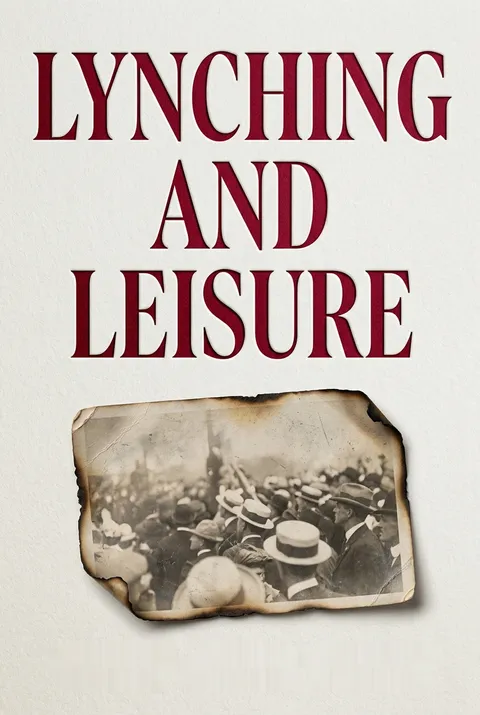
A new public ritual. The book contrasts a masked 1883 lynching near McDade, where three white men were hanged at night and left intact, with the 1916 killing of Jesse Washington in Waco. Washington was a Black teenager convicted after a rushed trial, then seized and killed before a crowd estimated at 10,000 to 15,000. Spectators left work and school, watched from buildings, and bought or gathered keepsakes. A local photographer had arranged to capture the event, and some images became postcards.
Leisure reveals social meaning. Scott argues that lynching became more than an attempt to punish a supposed offense. For many white Texans, attendance, spectatorship, and souvenir collecting made racial violence a chosen activity during free time. The crowd's participation helped make the killing a public performance of white power.
What's striking is the shift in the unit of analysis: the book studies not only the victim or the perpetrators, but the assembled audience and the uses it made of the event. This resembles a media event, in which a spectacle creates a shared public story and confirms who belongs to the dominant group. Calling lynching leisure is morally unsettling, which is precisely its analytical force. The term should not imply that every spectator felt pleasure or that watching equaled killing. Its value is in showing how public attendance and ordinary enjoyment could normalize violence without requiring every attendee to hold the same motive.
Treat the alleged crime as evidence of racial power, not its explanation.
Crime was elastic. Scott documents as many as 750 lynchings in Texas from 1866 to 1950, including 469 Black victims. The alleged offenses ranged from murder and assault to theft, unemployment, speaking against a white family, or asserting a relationship with a white woman. In one case, a note attached to a Black victim said the killing was for insulting a white family, not for the robbery named in the same message. Such records expose how racial hierarchy shaped what white communities treated as criminal.
Accusation could suffice. Claims of sexual assault against white women often drew crowds despite weak or missing evidence. The accusations helped depict Black men as dangerous and made violence seem justified before any fair inquiry. Scott argues that Black advancement and self-assertion could themselves be read as threats requiring punishment.
This account distinguishes a formal offense from the social meaning assigned to it. In legal theory, criminalization is not merely a response to harmful conduct. It also reflects who has the power to define threat, credibility, and acceptable behavior. The Texas cases make that asymmetry visible: the accusation could trigger punishment, while a Black person's denial or progress could be recast as further evidence of defiance. The analysis is strongest when it avoids implying that every allegation was fabricated. The essential point is more robust: even when a crime occurred, racialized process determined who received evidence, a defense, and due process.
Recognize mob rule as a rival system of law, not law's absence.
A local code of power. Texas communities had a long tradition of citizens claiming authority to judge and punish. After emancipation, Scott argues, this frontier-style authority became a racialized system of norms that could displace courts. A crowd in Waco declared that courts were unnecessary, while officials failed to protect Jesse Washington. In Dallas in 1910, a mob removed Allen Brooks from a courthouse and hanged him; a grand jury returned no indictments.
Institutions could cooperate. The boundary between legal authority and mob violence was often blurred. Sheriffs, judges, and coroners sometimes surrendered prisoners, declined to intervene, or described mob killings as the community's will. Scott therefore resists treating lynching as merely vigilantism outside the legal order. In practice, local authorities and public opinion often helped establish a substitute system of judgment, punishment, and immunity.
The book's account is a useful correction to the idea that institutions are defined only by their written rules. In practice, authority also depends on enforcement, public recognition, and predictable consequences. When officials allow a mob to seize a prisoner, the state does not simply disappear. Its selective inaction helps determine whose rights count. At the same time, describing mob violence as a rival legal system should not obscure the difference between an organized court and extrajudicial murder. The comparison clarifies how communities normalized violence, but it does not grant that violence the legitimacy of law.
Read burning as staged racial domination, not simply a method of killing.
Torture made power visible. Scott identifies 45 people burned by mobs in Texas between 1876 and 1933. Forty-four were Black men, and 34 of those were accused of assaulting a white woman or young person. Burning required time, a public site, and confidence that authorities would not interrupt. The prolonged act turned a killing into a display of the mob's control over the victim's body and over the town's legal order.
The ritual carried a warning. Crowds gathered in advance, traveled to the scene, and sometimes remained after death to collect remains or pose for photographs. These actions made the violence visible to Black communities as well as to white spectators. Scott links the burning of Black men to racist stories about sexual threat and white womanhood, which supplied a justification for punishment far beyond any verified offense.
The analysis connects bodily violence to political communication: the victim's body becomes a surface on which power is displayed and a message delivered to a wider audience. This insight travels beyond lynching studies to the study of public punishment and political spectacle. The numerical pattern is especially revealing, though it should be read as evidence about the cases Scott identified, not as a complete account of every Texas lynching. The chapter also shows why time matters. A slow, public killing required practical confidence that authorities would not intervene, making impunity part of the performance itself.
Connect lynching's growth to Black migration, labor conflict, and urban change.
Mobility unsettled racial boundaries. After emancipation, Black Texans moved from rural areas into growing towns and cities, seeking factory work, education, business opportunities, and relief from sharecropping. By 1900, Black residents made up nearly a third of Waco's population. Railroads and industries expanded employment, but also brought Black and white workers into new forms of contact and competition.
Economic anxiety became racial control. White resistance targeted more than jobs. Black residents who built businesses, bought homes, or entered professions challenged the assumption that white people alone owned public and social space. In Dallas, white residents bombed Black homes on Caddo Street in 1927 as Black families moved into formerly white blocks. Scott argues that urban growth and migration helped intensify racial conflict, while cautioning through her cases that mob violence had multiple causes and local forms.
This account places racial violence inside economic and spatial change, rather than treating it as a timeless expression of prejudice. That approach is valuable because it asks how labor markets, housing, and migration alter who encounters whom, and who feels entitled to a place. It also resists a comforting rural-backwater explanation: industrializing towns could produce modern forms of racial control. The connection is not a simple formula in which migration automatically causes violence. Scott's evidence supports a historically specific relationship among Black mobility, white anxiety, and institutions that protected segregation, not a single universal cause.
Follow the souvenirs: lynching's audience and message outlasted the killing.
Objects carried the event home. After Jesse Washington's death, some people sold his teeth and pieces of the chain that had restrained him. Photographers sold images of the crowd and the remains. Postcards, photographs, stereographs, and even phonograph recordings circulated accounts of other Texas lynchings. These were not incidental scraps. They turned the event into something that could be kept, shown, discussed, and revisited.
Memory could recruit new witnesses. A souvenir gained meaning through the story attached to it. A postcard of Allen Brooks's hanging was mailed as a personal greeting, while a photograph of a burned victim could be displayed to visitors. Each retelling extended the audience beyond the scene and rehearsed a distorted story of Black criminality. Scott shows how consumer culture made racist violence portable, familiar, and easier to remember as entertainment rather than as a crime.
The material culture argument is a sharp contribution to the study of memory. Objects do not merely preserve the past. Their selection, circulation, and display shape what a community chooses to remember and how it interprets that memory. A postcard can make a local killing part of a private exchange, reducing the distance between atrocity and everyday life. This also suggests a broader question for museums and archives: preservation is not neutral when the original object was made to celebrate domination. Historical interpretation must identify the object's use and power, not only its age or visual content.
See trains and cars turn racial terror into a destination.
Modern transport widened the crowd. Railroads carried people to impending lynchings and to sites where killings had already occurred. When Henry Smith was taken to Paris, Texas, in 1893, trains arriving from nearby towns were packed with spectators. Some railroads offered transport connected to the search for him. Cars later made it easier to arrive from farther away and to turn the victim's body into part of a public procession.
Sightseeing normalized the scene. After George Hughes was killed in Sherman in 1930, thousands of visitors came to see the courthouse and other places connected to the lynching. They arrived on a Sunday, treating the aftermath as an outing. Scott uses these trips to show that tourism, transport technology, and racial violence could reinforce one another. The town's landscape became both a site of terror for Black residents and an attraction for white visitors.
The chapter overturns the assumption that modernity and brutality occupy opposite ends of history. Transportation, mass communication, and leisure travel did not automatically make society more humane. They could also expand access to a violent spectacle and make it easier to consume from a distance. This is a media and mobility insight as much as a history of lynching: infrastructure shapes who can witness an event, how quickly a story spreads, and whether a place becomes a destination. Tourism is not inherently celebratory, so the historical claim rests on the behavior and context of these visitors, not on travel itself.
Use the Black press's exposure of lynching as a strategy, not just testimony.
Reporting became intervention. Black journalists described the spectacle, leisure, and commerce surrounding lynching to challenge readers who might otherwise see it as isolated punishment. After Jesse Washington's murder, W. E. B. Du Bois and the NAACP published the account known as the Waco Horror. It reached 42,000 subscribers, hundreds of newspapers, and every member of Congress, and helped solicit donations for antilynching work.
Satire reversed the accusation. Black newspapers used irony to portray white communities as uncivilized, highlighting the contradiction between Christian respectability and public enjoyment of torture. The aim was to redirect attention from the accused person's alleged guilt to the mob, its spectators, and the officials who enabled it. Scott shows journalism working as counter-spectacle: it used the mob's own public performance as evidence against the culture that celebrated it.
This is a sophisticated account of advocacy as a contest over attention. The Black press did not only report facts; it selected details and framed them to disrupt readers' assumptions about civilization, justice, and respectable leisure. In communications terms, the strategy changed the question from whether a victim was guilty to what a crowd and its institutions had done. Such framing can mobilize outrage, but it also faces a lasting ethical tension: graphic evidence may expose violence while reproducing the victim's exposure. Scott's account makes clear that those choices were made under urgent political conditions.
Test modern racial violence by tracing authority, race, and impunity.
Continuity is not sameness. In her epilogue, Scott connects the history of Texas lynching to the deaths of George Floyd, Ahmaud Arbery, and Elijah McClain. Her comparison centers on the racialized suspicion of Black presence, the power to treat a person as a criminal without due process, and the initial failure of authorities to hold some perpetrators accountable. She also discusses James Byrd Jr., whose 1998 murder by dragging led to convictions, the first imprisonment in Texas for participants in the lynching of a Black person.
Keep the comparison precise. The book does not require that a modern killing reproduce the exact form of an earlier mob spectacle to reveal a historical connection. Scott asks readers to examine who makes the accusation, who can use force, which institutions intervene, and whether accountability follows. Those questions identify patterns without flattening distinct events into one interchangeable story.
The epilogue's comparison is most persuasive as a question about structures of authority, not as a claim that every modern killing is identical to a historical lynching. That distinction matters for both historical accuracy and public debate. The same analytical questions can illuminate different settings: whose perception of danger is treated as credible, what safeguards are available, and how institutions respond after death. The book's history also warns against treating prosecution alone as proof that a system has changed. Accountability is essential, but it does not by itself explain or remove the social meanings attached to Blackness.
Analysis
Scott's central intervention is to make leisure part of the explanation for racial terror. That shift expands the historical frame from the crime alleged against a victim to the crowd's time, pleasure, travel, consumption, and memory. It also makes the spectator legible as a participant in a public culture, even when that person did not tie a rope or light a fire. The argument does not reduce lynching to entertainment. It shows how punishment, racial hierarchy, civic identity, and consumer culture could converge in a single event.
The book's regional history gives this claim texture. Scott documents a transition from older forms of mob punishment, often masked and clandestine, to a racialized practice that was increasingly public, commercial, and protected from prosecution. She joins that change to emancipation, Black political and economic mobility, urbanization, wage labor, and new transportation. The relationship is not presented as a single-cause theory. Rather, these changes unsettled established racial arrangements, while mobs and local officials created new ways to enforce them. The expanded Texas tally, 750 lynchings from 1866 to 1950, also demonstrates how archival research can alter a familiar statistical picture, while reminding readers that counts depend on surviving evidence and definitions.
The most productive tension is the book's use of leisure as a category. It captures the voluntary, self-directed character of spectatorship and the evidence that some people treated lynching as recreation. Yet a broad category risks grouping active perpetrators, curious visitors, coerced witnesses, and silent bystanders too closely. Those roles carried different degrees of agency and danger. Distinguishing them would sharpen, rather than weaken, the argument about collective responsibility.
The epilogue's present-day comparisons are strongest when they focus on recurring questions of racialized suspicion, procedural protection, and official accountability. Historical analogy should identify continuities without suggesting that contexts or mechanisms remain unchanged. Overall, the book's lasting contribution is to show that racial terror was not marginal to modern life. It could be organized through modern institutions, circulated through modern media, and made socially ordinary through everyday leisure.
Review Summary
Lynching and Leisure receives high praise from readers, with an average rating of 4.17 out of 5. Reviewers describe it as a powerful and important work that examines the transformation of lynching in Texas from extralegal punishment to racialized recreation. The book is noted for its extensive documentation, including itemized lists and photographs. While some find it uncomfortable to read, it is considered a must-read for those interested in true Texas history and a pioneering examination of lynching.
Glossary
new lynching culture
Public racialized mob spectacleScott's term for the post-Reconstruction transformation of lynching in Texas. Mob violence increasingly targeted Black people and became public, highly attended, and often commercialized. Spectatorship and enjoyment shaped the event itself, while photographs, souvenirs, tourism, and impunity carried its meaning beyond the killing.
leisure narrative
Violence framed as recreationThe interpretive pattern in which lynching was understood and presented as an activity undertaken during free time, sometimes for novelty or enjoyment. Scott uses the term to connect attendance, travel, spectatorship, souvenir collecting, and public celebration to the social meaning of mob violence.
pseudojudicial system
Mob norms replacing due processScott's description of the locally accepted rules and practices through which white Texans claimed authority to accuse, judge, and punish Black people outside formal court procedures. It was not simply a rejection of law: officials and public opinion often enabled mob judgments, while racial hierarchy shaped what counted as crime.
New Negro
Contested image of Black autonomyA post-emancipation figure understood differently by white and Black communities. White critics often portrayed the New Negro as insolent or threatening, while African Americans associated the term with taking opportunities, building institutions, and claiming citizenship. Scott emphasizes that the conflicting images intensified racial anxiety about Black progress.
experiential lynching
Lynching consumed beyond its siteScott's account of how people experienced lynching without necessarily taking part in the killing. Photographs, postcards, stereographs, phonograph recordings, souvenirs, travel, and retold memories extended the event to audiences beyond the original crowd and helped make racial violence a consumable public experience.
lynching
Group extrajudicial killingScott follows a definition developed by antilynching organizations and scholars: a person is killed unlawfully by a group acting under a perceived claim of service to race, tradition, or justice. The book notes that the precise size required for a group has not been uniformly agreed upon.
Download PDF
Download EPUB
.epub digital book format is ideal for reading ebooks on phones, tablets, and e-readers.








