

Key Takeaways
Treat change as a current to enter, not a problem to overpower
Acceptance creates room. Jonsson argues that change is already in motion, while resistance can keep attention fixed on what feels wrong. Accepting a situation is not the same as approving it or giving up. It means seeing what is happening without adding a fight against its existence, then choosing how to respond. She suggests noticing what differs from yesterday, rather than repeatedly confirming that nothing has changed.
Try a lighter sequence. Choose what matters, notice the present pattern, release the demand that it change on command, and stay open to other responses. The book calls this practical play: approach experience with curiosity instead of treating every difficulty as a repair job. Its promise is greater flexibility, not control over every outcome.
The useful distinction here is between acceptance and resignation. Acceptance can reduce the extra strain created by arguing with facts, while choice preserves agency about what happens next. This resembles a basic principle in emotion regulation: naming an experience without immediately judging it can make a response more deliberate. The metaphor of flow is less helpful if it implies that every obstacle should simply be tolerated. Some conditions require resistance, planning, or outside help. The practical test is whether acceptance clarifies the next action, rather than excusing inaction.
Notice the old scripts steering you before you mistake them for identity
Patterns can be learned. The book uses two specialized ideas to explain habitual behavior. A morphic field is a proposed organizing pattern that gains influence through repeated similarity. A meme is a piece of information that spreads between minds. Jonsson also sorts memes into labels, strategies, and associations: what something is called, what action seems to follow, and what feeling or idea has become linked to it.
A child may learn to stay quiet. If an honest comment repeatedly brings punishment or shame, a child may adopt silence as a way to stay safe. Years later, that response can feel like a fixed personality trait rather than a once-useful strategy. The suggested exercise is to identify the thought behind a stuck behavior, question whether it still serves, and imagine a more useful response.
The strongest part of this model is its invitation to separate a person from a learned response. That distinction can create room to experiment without shaming someone for habits that once helped them cope. The book's terminology also gives readers a way to think about how social expectations spread. Its larger claim that morphic fields transmit habits as a distinct force is not established by the examples offered here. The model works most reliably as a lens for reflection, not as a proven account of how behavior travels.
Use the Two Point to loosen your grip on one outcome
Attention makes a bridge. The Two Point, developed by Matrix Energetics founder Richard Bartlett, is an exercise for shifting attention between a present pattern and something not yet noticed. A person selects two points that draw attention, which may be on the body or elsewhere, connects them mentally, then stops monitoring for a particular result. The purpose is to interrupt a fixed view of the situation, not to force a specific change.
Expectations can narrow noticing. Jonsson reports that after trying two points on her body, she felt calmer and noticed less foot pain, then observed other changes in mood and sleep. This is her personal account, not proof that the exercise caused the changes. The practical instruction is to stay curious and look for genuine differences, including shifts in one’s own reaction.
This exercise is most defensible as a structured pause. It redirects attention, makes expectations less dominant, and encourages observation beyond the first interpretation. Those ingredients can be useful even without a special energy mechanism. The author’s account of physical relief may feel persuasive because the sequence is vivid, but a before-and-after story cannot establish causation. Pain can fluctuate for many reasons. Treating the exercise as an invitation to notice, rather than a guaranteed intervention, keeps its reflective value without overstating its reach.
Let heart-centered attention quiet the fixer and widen your options
Begin with the body. The field of the heart is Jonsson’s term for a state of awareness she associates with inner wisdom, connection, and possibility. It is not simply the physical heart. In practical terms, she recommends breathing out, relaxing the shoulders, and letting attention settle in the chest or center of the body. A person can then observe thoughts without chasing each one and ask an open question about what they may be missing.
The science is part of her model. Jonsson describes this state using ideas about electromagnetic fields, torsion, and quantum physics, presenting the heart as a gateway to potential. Those claims are not required for the exercise. The accessible practice is to pause, notice bodily and emotional cues, and let the first impulse to fix or label a problem soften before deciding what to do.
The practice separates an experience from the reflex to solve it immediately. That can help people notice bodily tension, emotions, and options that hurried analysis may miss. The book’s physical language gives the exercise a grand explanatory frame, but a calming effect does not demonstrate that the heart accesses a nonlocal field or alters quantum events. A reader can keep the useful contemplative practice while holding its scientific explanation lightly. This distinction respects both personal experience and the difference between metaphor and evidence.
Revisit old emotional triggers as stories, not fixed destinies
The past can be reconsidered. Jonsson calls one reflective exercise Time Travel. A person first settles attention, then counts backward from their current age while noticing changes in sensation, mood, or memory. The instruction is not to choose an exact origin for a problem in advance, but to let associations arise without demanding a dramatic revelation.
A conversation becomes an example. Jonsson describes feeling angry when an authority figure interrupted and dismissed her. During the exercise, she noticed a sensation in her throat while counting back decades, though she did not recall a specific event. The emotional intensity eased, and she could state what she needed from the other person. The value in this account is the shift in her response, not proof that the exercise literally changed the past or identified the trigger’s true cause.
The exercise can be understood as guided reflection: a present emotion prompts associations, and changing the frame may make a more measured response possible. It also usefully separates remembering an event from feeling certain about its origin. That caution matters, since suggestion can shape autobiographical memory, especially when someone expects to uncover a hidden cause. The practical outcome described is concrete: less reactivity and clearer communication. A person need not treat an emerging memory or age as historical fact for the exercise to support self-observation.
Rehearse a capable alternate self, then take the next real step
Possibility can be rehearsed. Jonsson draws on the many-worlds interpretation of quantum mechanics to describe Parallel Universes: alternate versions of a person living out different possibilities. Her practical exercise is to imagine an aspect of oneself already doing something desired, such as sleeping well, learning a skill, or pursuing a creative ambition. The imagined version is treated as a source of perspective and encouragement.
Action still matters. The book tells of a mother who had set aside her dream of singing opera to care for her family. Imagining an alternate self who became a singer can help her reconnect with that capacity or reconsider what is possible now. Jonsson explicitly says this does not remove the need to act. The exercise is most useful as rehearsal: picture a possible self, learn from the image, and choose a feasible next step.
A future or alternate self can function as a vivid form of mental rehearsal. Imagining oneself succeeding may make a goal feel less foreign and help identify actions worth trying. That practical use does not depend on the existence of parallel versions of a person. The many-worlds interpretation is a disputed account of quantum mechanics, not evidence that people can access alternate biographies or manifest outcomes by resonance. Keeping the imaginative exercise separate from the physics claim preserves its motivational value while avoiding false certainty.
Include your limitations without mistaking them for your whole self
Wholeness includes difficulty. Jonsson calls the evolving self the True Authentic Self, or TAS. It holds two ideas together: a person can be more than their conditioning, and still have habits, fears, or limits that deserve honest attention. The goal is not to erase every imperfect part, but to meet it without letting it define the whole person.
Integrate rather than wage war. The book treats ego as a useful capacity for expression when guided by values and awareness, not as an enemy to destroy. It also warns that authenticity does not mean feeling joyful all the time. A person may feel miserable without being reducible to that feeling. In daily life, the approach is to acknowledge what is difficult, decide what matters, and act with greater honesty toward oneself and others.
This is a compassionate alternative to the idea that growth requires becoming a purified, flawless person. Integrating uncomfortable traits can support self-understanding more effectively than treating parts of the self as contaminants. The distinction between a feeling and an identity can also reduce shame without denying the feeling. Still, describing distress as temporary or as a lesson should not make serious suffering seem optional or self-created. Compassion includes seeking practical support when distress persists, not merely reframing it.
Love people without surrendering boundaries or excusing harmful behavior
Care is not compliance. Jonsson presents love as a source of connection, while arguing that unconditional love does not require accepting every behavior or circumstance. A person can care about someone and still disagree, decline a request, or leave a relationship in its current form. The book calls honest, values-aligned interaction True Authentic Relating, or TAR.
Choose empathy without absorbing everything. Jonsson distinguishes sympathy, which she describes as taking on another person’s emotional state, from compassionate empathy, which means staying connected while recognizing what the other person feels. She suggests that a steadier person may offer more useful support than someone who is overwhelmed alongside them. The practical lesson is to listen and care without giving up self-respect, clear communication, or the right to say no.
The distinction between care and compliance is a valuable safeguard against turning spirituality into an excuse for tolerating mistreatment. Emotional boundaries can make compassion more sustainable, because understanding another person does not require adopting their feelings or choices. The book’s language of connection becomes less safe when every difficult interaction is interpreted as a reflection of the self. That framing can shift responsibility away from harmful conduct. Compassionate relating is strongest when it preserves both empathy and accountability.
Treat symptoms as signals, not substitutes for medical diagnosis
A label is not a person. Jonsson encourages readers to see problems and diagnoses as patterns rather than as complete definitions of identity. She argues that naming a condition can shape expectations and attention, and proposes that some illness patterns may reflect unresolved psychological or emotional constraints. Her examples include a woman whose long-term silence in relationships is followed by illness.
Do not mistake speculation for treatment. The book makes much stronger claims that disease labels and medical systems can reinforce illness, but it does not establish those claims clinically. Its pattern language may help someone explore how a condition affects daily life, but it cannot determine what caused a disease or how to treat it. Symptoms deserve appropriate professional evaluation, and the book’s spiritual exercises should not replace medical care or prescribed treatment.
Separating a diagnosis from a person’s identity can reduce stigma and help preserve agency. But the book’s suggestion that disease expresses suppressed emotion, or that focusing on a diagnosis strengthens illness, risks implying that patients cause or maintain their conditions through attention. That is not established by the examples presented. Diagnostic labels can also guide investigation and treatment, rather than merely limit a person. A careful reader can use the metaphor of patterns for reflection while relying on qualified clinicians for medical decisions.
Analysis
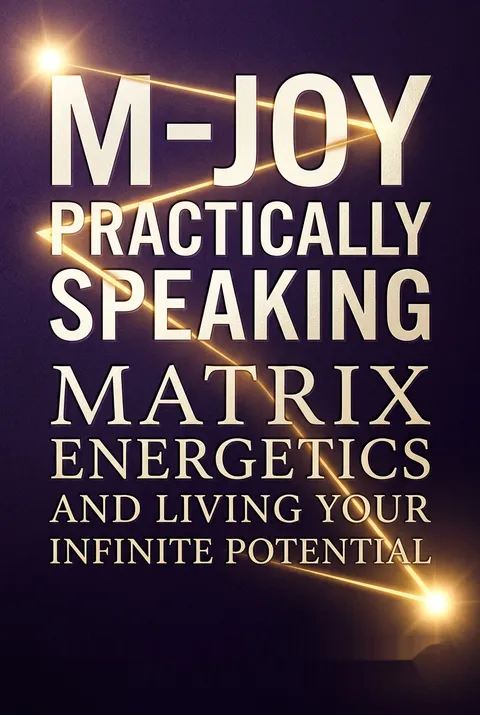
This is a spirituality and personal-development book organized as a progression from an expansive worldview to exercises in daily life. At roughly 57,000 words, it moves through change, habits, consciousness, Matrix Energetics, the self, and relationships. Its central promise is that people can become less stuck by releasing rigid interpretations, attending to inner experience, and choosing a more flexible response. The narrative repeatedly returns to play, curiosity, and the idea that a person is not identical to a problem or a learned pattern.
The most useful material is often the least dependent on the book’s cosmology. Noticing habitual scripts, pausing before reacting, considering more than one interpretation, and setting loving boundaries are understandable practices with practical value. The Two Point, Time Travel, and Parallel Universes exercises can be read as prompts for attention, reflection, and imagination. In that form, they offer readers a vocabulary for experimenting with perspective rather than a guarantee of transformation.
The book’s scientific framing requires substantial caution. It combines established terms, such as memes and the many-worlds interpretation, with speculative claims about torsion fields, quantum observation, remote influence, and healing. Quantum physics does not establish that human awareness selects outcomes in the way described here, nor that an imagined alternate self can transmit skills across universes. A measured electromagnetic field around the heart does not by itself demonstrate the broader spiritual claims. These distinctions matter most when health is involved. The book’s claims that diagnoses may reinforce disease or that illness can reflect blocked expression are not supported by the anecdotes it offers, and could lead readers to blame themselves or delay care.
The strongest reading, then, is neither literal acceptance nor wholesale dismissal. Treat the metaphysics as the author’s interpretive map, borrow the exercises that encourage reflection, and keep empirical and medical claims accountable to evidence. The book is most compelling when it teaches flexibility and self-respect, and least reliable when metaphor is presented as physics or diagnosis.
Review Summary
The review praises M-Joy Practically Speaking for presenting familiar concepts in a fresh way, sparking new insights. The reader found the book valuable, highlighting passages for future reference. However, they noted some meandering writing and questioned the necessity of physics references. Despite these minor critiques, the book provided "ah ha" moments and was appreciated for its spiritual content. The overall rating on Goodreads is 4.30 out of 5 stars based on 40 reviews, indicating generally positive reception among readers.
Glossary
Matrix Energetics
A consciousness practiceJonsson describes Matrix Energetics as a field of consciousness potential that people can engage through awareness, play, and curiosity. It began as a healing technique associated with Richard Bartlett and is presented here as a flexible approach to changing how people experience physical, emotional, relational, and other patterns. Its broader claims about energy and physics are not established clinical findings.
Two Point
A shift in attentionA Matrix Energetics exercise in which a person notices two points, on or off the body, and connects them in awareness. The exercise is intended to loosen attention from a fixed experience and make room to notice something different. The practitioner is encouraged not to demand a particular result. The book presents it as a route to transformation, though its reported effects do not establish a specific mechanism.
True Authentic Self (TAS)
Whole self, limits includedJonsson’s term for a self that recognizes both its potential and its conditioned limitations. Rather than trying to remove every difficult trait, the TAS meets the full person without judgment and continues to evolve through choices and actions. It is described as perfectly imperfect: connected to a larger spiritual whole while still having ordinary fears, habits, and vulnerabilities.
morphic field
An organizing patternA term developed by biologist Rupert Sheldrake for a proposed field that organizes the form or behavior of systems. Jonsson applies the idea to habits, cultures, and patterns of experience, arguing that repeated similarities can strengthen familiar responses. She treats morphic fields as containers for information, but their proposed influence is not an established scientific explanation for personal transformation.
meme
A copied information patternA unit of information that spreads from mind to mind through imitation or communication. Drawing on Richard Dawkins and Richard Brodie, Jonsson distinguishes memes that label things, prescribe strategies, or link one experience with another. She uses the idea to examine how learned beliefs and reactions can shape behavior, and encourages readers to question patterns that no longer help them.
field of the heart
A state of inner awarenessJonsson’s name for a nonliteral space of awareness associated with calm, connection, intuition, and potential. She describes it through torsion-field and electromagnetic language, but the practical exercises involve settling attention in the body, relaxing, observing thoughts, and listening inwardly. The spiritual and physical explanations offered for this field should be distinguished from the exercise itself.
Time Travel
A reflective timeline exerciseA Matrix Energetics practice in which a person settles attention, identifies a present concern, and counts backward or forward through ages while noticing sensations, emotions, and associations. Jonsson presents it as a way to alter resonance with past patterns or imagine future possibilities. The exercise can support reflection, but it does not demonstrate literal travel through time or establish the historical source of a feeling.
Parallel Universe process
Imagining another possible selfA Matrix Energetics exercise that asks a person to imagine an alternate version of themselves already living a desired possibility, such as mastering a skill or sleeping well. Jonsson connects the practice to the many-worlds interpretation of quantum mechanics and suggests that such imagining can expand what seems possible. Used cautiously, it can serve as mental rehearsal; the physics interpretation does not prove access to alternate lives.
True Authentic Relating (TAR)
Values-aligned honest relatingJonsson’s term for relating to others with honesty, self-respect, and awareness of connection. It includes expressing needs and limits without requiring another person to agree or reciprocate. TAR frames integrity as action: care for others can coexist with disagreement, refusal, or a decision not to continue a relationship in its current form.
Download PDF
Download EPUB
.epub digital book format is ideal for reading ebooks on phones, tablets, and e-readers.








