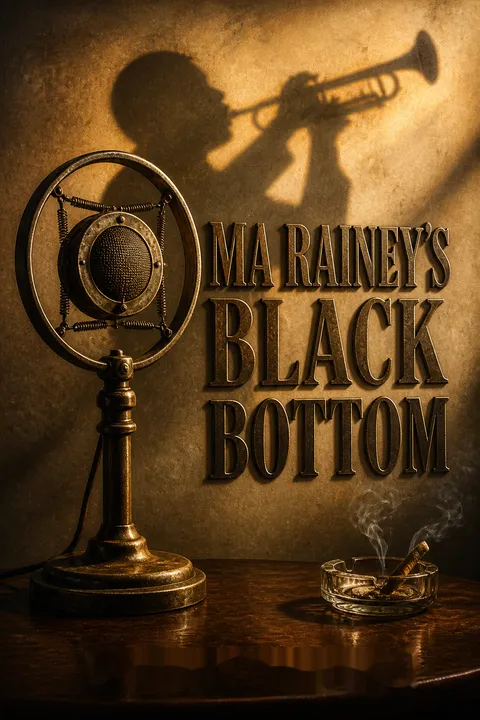


Plot Summary
Four Dollars and New Shoes
In a Chicago recording studio, producer Sturdyvant and manager Irvin prepare to record Ma Rainey, while Sturdyvant worries about costs and wants a livelier sound. Ma is late, so her backing musicians gather in the basement: bandleader Cutler, pianist Toledo, bassist Slow Drag, and trumpeter Levee.
Levee arrives with new shoes bought partly with money he won from Cutler, and he boasts that Sturdyvant may let him record his own songs. He dismisses Ma's familiar material as dated, while Cutler insists the musicians should rehearse and play whatever Ma wants. Their argument exposes Levee's impatience with the supporting role he has been hired to fill. He wants recognition as an artist, not simply a place in the band.
The shoes and the songs give Levee two visible forms of self-invention. One is purchased, the other still only promised, but both let him imagine himself beyond the narrow job he has been given. Cutler's insistence on rehearsing is not merely professional discipline: it reflects a life built on dependable work and collective responsibility. Levee hears that pragmatism as a ceiling. The studio's schedule and song list establish a hierarchy before Ma even arrives, and the musicians' dispute shows how little room any of them has to shape the work. Levee's ambition is real, but it is already entangled with dependence on the people whose authority he resents.
The Mother of Blues Arrives
Ma arrives with her companion Dussie Mae, her nephew Sylvester, and a policeman who has accused her of assault after a dispute over a cab. Sylvester had been driving Ma's car when it collided with another vehicle, and the argument escalated as they tried to find a ride.
Ma says the cab driver refused Black passengers; the policeman presents a different account and threatens to take her to the station. Irvin quietly pays him off, and the officer leaves without arresting anyone.
Ma immediately demands that her damaged car be repaired and complains about the cold studio. Sturdyvant tries to hurry her along, but Irvin repeatedly steps between them. Her entrance makes clear that the session depends on a performer who can refuse the terms imposed on her.
The police encounter places the recording business inside the same racial order that governs the street. Ma's fame does not protect her from a cab driver's refusal or a policeman's readiness to arrest her. Irvin can resolve the immediate threat only by paying, turning racial power into another expense of the session. Yet Ma is not simply at the mercy of the room: her records earn money, and the label needs her voice. Her complaints about the car and the cold are practical demands, but they also assert that her time and comfort have value. The scene complicates authority: Irvin manages her, Sturdyvant controls the studio, but Ma can still make both men wait.
Sylvester Takes the Intro
The musicians rehearse Levee's arrangement of Ma Rainey's Black Bottom after Irvin confirms that the label wants it. Ma hears the new version upstairs and refuses it, insisting on the arrangement she knows and assigning the spoken introduction to Sylvester.
Levee argues that his version will suit northern listeners, but Ma tells Cutler to teach her nephew the part and orders Irvin to stop treating the decision as a matter for the men in the studio. Sylvester's stutter makes the assignment difficult, and Levee mocks his ability to perform it.
Ma does not relent. Sturdyvant then takes Levee's written songs, encouraging the trumpeter to believe that his own recording opportunity may still come. The session now carries two competing claims: Ma's authority over her music and Levee's hope of being heard.
The arrangement dispute is a fight over who gets to define musical modernity. Levee imagines the audience as a market to be won with a sharpened, dance-ready sound; Ma treats the song as something whose identity cannot be separated from her judgment. Sylvester's stutter turns the disagreement into a public test of whose confidence matters. Ma's insistence gives her nephew a chance, but it also exposes how easily artistic language can become a weapon against someone with less status. Sturdyvant's interest in Levee's songs offers a fragile alternative future. By taking the pages, he gives Levee hope without giving him a contract, leaving the young trumpeter vulnerable to promises controlled by the label.
The Scar Beneath Levee's Smile
After the band challenges his claims about handling white men, Levee reveals the history behind his defiance. As a child in Mississippi, he saw white men attack his mother while his father was away. He tried to stop them with a knife and was slashed across the chest.
His father later learned the attackers' identities, sold the family land to one of them, moved his family to safety, then returned to kill several men before he was caught and murdered. Levee says he learned from his father's smile that appearing compliant could hide a plan for revenge.
The story changes the room's mood, and Slow Drag answers with a song of destruction. Levee's bravado now carries the weight of a childhood shaped by racial violence and an inherited lesson in concealment.
Levee's story does not simply explain his anger; it explains the method he has mistaken for freedom. His father's smile becomes a model of strategic survival, a way to remain unreadable while preparing to act. Levee applies that lesson to the recording studio, where politeness toward Sturdyvant feels to him like a mask he controls. But the childhood scene also exposes how little control the child actually possessed: he was injured trying to defend his mother, and his father's revenge ended in further violence. The scar is not a badge of uncomplicated courage. It marks a wound Levee has turned into proof that he must never appear powerless again.
Coke Before the Song
At the next session, Irvin tries to start with Moonshine Blues, but Ma demands that they record Black Bottom first and give Sylvester a microphone. When Irvin says the band doubts her nephew can manage the introduction, Ma insists he be allowed to try.
She also refuses to sing without Coca-Cola, sending Slow Drag and Sylvester to fetch it while the others wait. In private, she explains to Cutler that the label wants her voice more than it values her as a person, so she uses every point of leverage she has.
During the delay, Levee approaches Dussie Mae, promising gifts and a place beside his future band. She resists his advances and makes clear that promises alone will not earn her trust. Ma's demands and Levee's courtship both test what words are worth.
Ma's delay can look like caprice if the recording session is viewed only from the producer's side. Her explanation to Cutler supplies the missing context: the label's need for her voice gives her a limited bargaining position, and she uses concrete demands because moral appeals alone will not protect her. The Coke is small enough to seem trivial, yet its absence reveals how readily the company saves money at the performer's expense. Levee's approach to Dussie Mae echoes the same economy of promises. He offers a future band and imagined generosity, but she measures him by what he can actually provide. Both scenes ask whether a person can claim respect through leverage when the larger system controls the terms.
A Voice Through Static
Once Ma has her Coke, Sylvester tries the introduction several times. His stutter catches him on the first attempts, but Ma steadies him, and he eventually delivers the lines clearly before she sings the song in her own arrangement.
Irvin praises the performance, then discovers that the recording has captured nothing because the microphone cord is damaged. Ma blames the studio's disorganization and heads for the door. Sturdyvant warns that leaving could end her recording relationship, while Irvin begs for fifteen more minutes.
Ma agrees to stay only for that brief extension. The musicians retreat downstairs during the repair. Levee denies causing the problem, though the others suspect he was careless. The successful performance has vanished from the record, and the group must wait while the studio tries again.
Sylvester's success briefly rearranges the room's expectations: the stutter does not disappear, but it does not prevent him from completing the task either. Ma's support makes the difference between a presumed limitation and a performance the band can hear. The broken cord then exposes another asymmetry. The musicians have given the studio a usable song, but only the machinery can make that work count as a record. Ma's threat to leave is credible because the label needs her, yet Sturdyvant's warning reminds her that his company can shape her future. The failed take converts a human achievement into a technical blank, sharpening the play's question of who controls what survives.
Cutler's God on Trial
While the studio repairs its equipment, the musicians argue about judgment, responsibility, and the choices that make a person foolish. Cutler tells of Reverend Gates, a Black minister stranded in a Southern town, where white men forced him to dance and destroyed his Bible and cross.
Levee challenges the idea that God protects the persecuted, connecting the story to the violence he witnessed as a child. Cutler, offended by Levee's attack on his faith, punches him and pins him down.
Slow Drag and Toledo pull Cutler away, but Levee draws a knife and turns his fury toward the God he believes abandoned his mother. He threatens Cutler while stabbing at the air, then lowers the blade. The immediate fight ends, but Levee has shown how quickly humiliation can become a threat.
The story of Reverend Gates makes religious belief answer to a concrete history of racial coercion. Cutler holds faith as a source of endurance, while Levee sees the minister's forced performance as evidence that divine protection failed. Their disagreement becomes physical because both men experience the argument as a defense of personal history, not an abstract theological exercise. Levee's knife shifts the conflict from speech to an imagined reckoning with God, but it does not resolve his grief or restore control. The scene also echoes his earlier account of his mother and father. Violence has become the language through which he tries to make an unanswered injury visible, even when the person in front of him is not its cause.
The Session Ends Without Levee
The recording resumes, and the musicians finish the songs while Ma praises Slow Drag's bass and Toledo's piano. She condemns Levee for adding too many notes and disrupting her singing; Levee defends his improvisation, but Ma dismisses him from the band.
Irvin then tells her that Sturdyvant proposes taking twenty-five dollars from her pay to compensate Sylvester. Ma refuses to fund her nephew's wages herself and makes Irvin return to the producer until the boy is paid separately. Sturdyvant brings the money, and Ma signs the release forms only after securing the payment.
She leaves with Sylvester and Dussie Mae, warning Irvin that another such mistake could cost him her future recordings. The session has produced usable records, but Levee is excluded from the band and Ma's next decision remains her own.
The completed recording does not reward every musician equally. Ma recognizes the work of Slow Drag and Toledo, but she rejects Levee's attempt to make the song answer to his own instincts. His firing is both an artistic judgment and a loss of the position he has used to imagine a larger career. Ma's insistence on Sylvester's separate wages demonstrates the limits and uses of her leverage: she cannot make the company generous, but she can force it to honor a specific payment before signing. Her departure ends the day's negotiations without settling the longer imbalance. The label receives the recordings; Ma leaves with her fee and a warning; the musicians receive cash but little control over what happens next.
The Shoe He Couldn't Save
After the others pack their instruments, Sturdyvant tells Levee that the label will not record his songs and offers to buy them for five dollars apiece. Levee insists that the songs need his own band and playing to work, but Sturdyvant presses the money into his coat pocket and leaves.
Levee throws the cash away. As Toledo gathers his belongings, he accidentally steps on Levee's polished shoe and apologizes. Levee fixates on the damage, shoves the shoe toward Toledo, and demands that he acknowledge it.
When Toledo turns back to packing, Levee pulls his knife and stabs him in the back. He immediately tries to lift the limp pianist, then begs the others to make Toledo close his eyes. Cutler sends Slow Drag to find Irvin as Levee's trumpet sounds and the lights go out.
The rejection of Levee's songs strips away the future he has been using to endure his present job. Sturdyvant's offer reduces his writing to a cheap commodity, and Levee discards the payment because money cannot substitute for recognition. Toledo's accidental step on the shoe is a small, immediate injury, but Levee invests it with the force of every humiliation he has been unable to answer. The shoe, once a sign of his imagined arrival, becomes the focus of a violence that cannot restore anything. His attempt to help Toledo after stabbing him reveals the fracture between action and comprehension: he sees the consequence, yet clings to the grievance that preceded it. The blackout denies the audience a consequence beyond the act.
Analysis
The play turns one recording session into a struggle over who gets to control Black music after it has been made. Ma can command the room because her reputation and audience give her bargaining power, but that power remains conditional. She must argue for her own arrangement, her nephew's wages, a working microphone, and even the drink she expects before singing. The company does not need to silence her outright; it can profit from her voice while treating the person who owns it as an inconvenience.
Levee's ambition grows from the same structure but takes a different shape. He believes that authorship, a new sound, and the appearance of success will let him escape the role of hired accompaniment. His confidence is not empty, yet the label can solicit his songs, encourage his hopes, and then reduce his work to a token payment. The rejection leaves him without the future he had been using to interpret the present. His violence against Toledo is not a political answer to that exploitation. It is a disastrous displacement of anger onto the person nearest him, a collapse of the distinction between a real wound and an accidental slight.
The older musicians offer several imperfect ways to endure. Cutler trusts discipline and faith. Slow Drag values pleasure and companionship. Toledo tries to make historical understanding part of ordinary life. None can eliminate the racial power surrounding the studio, and none can persuade Levee to accept a future that feels too small. Their disagreements matter because the band is not a single voice, even when its members share a history.
The recording machinery makes the play's central irony concrete. A successful performance can disappear when a cable fails, while a company can preserve a voice and control how it is sold. Ma's blues emerge from lived experience, not from the equipment that captures them. The final stabbing leaves no moral repair: the day's work has been recorded, the band has been paid, and Toledo lies on the floor. Art survives as sound, but the people who make it remain exposed to economic pressure, racial violence, and one another's unhealed injuries.
Review Summary
Ma Rainey's Black Bottom is a powerful play set in 1920s Chicago, depicting tensions between a blues singer, her band, and white record producers. Reviewers praise Wilson's masterful dialogue, character development, and exploration of racial dynamics. The play's confined setting allows for intense interactions and revelations of personal histories. Many note the building tension and explosive ending. While some find it less polished than Wilson's later works, most consider it a groundbreaking and insightful portrayal of African-American experiences in the early 20th century.
People Also Read
Characters
Ma Rainey
Blues star with leverageMa is an established blues singer whose authority comes from years of work and a devoted audience. She knows that the recording company wants the value of her voice, and she protects herself by setting conditions around her time, music, comfort, and payment. Her directness can seem imperious, but it is also a practiced answer to people who expect her to comply without complaint. She is protective of her nephew Sylvester and expects her musicians to follow her artistic judgment. Ma understands performance as more than a product: the blues carry lived experience that a new arrangement or a recording machine cannot simply replace. Her confidence rests on knowing both her worth and the limits of the power she can exercise.
Levee
Restless trumpet visionaryLevee is a young trumpeter who writes songs, favors a showier sound, and dreams of leading his own band. He wants recognition as a creator, not just wages as an accompanist, and he treats style, clothing, and charm as evidence that he is already moving toward a larger life. His quick wit can turn a room in his favor, but his need to control how others see him makes criticism difficult to bear. He alternates between deference toward the white producer and loud claims of independence, convinced that he can manage both without surrendering himself. Beneath his confidence lies a history he rarely trusts others to understand. The tension between ambition and injury shapes how he reads every slight.
Cutler
The band's practical anchorCutler leads the backing band and plays guitar and trombone. He values preparation, steadiness, and the shared discipline that keeps working musicians employed. His long experience has taught him to distinguish between a leader's authority and a player's ambition, so he repeatedly tries to keep Levee focused on the assignment. Cutler's faith is personal and hard-won, not a theory he is willing to surrender lightly. He can be blunt, but his bluntness often comes from a desire to prevent a bad situation from getting worse. His relationship with the other musicians is built on years of travel, work, and mutual dependence, making him both a musical leader and a keeper of the group's boundaries.
Toledo
The band's thinking pianistToledo is the pianist and the only band member who reads. Self-educated and reflective, he tries to connect everyday choices to the history that shaped Black life in America. His explanations can frustrate the other musicians, especially Levee, who hears them as empty talk unless they lead to immediate change. Toledo is not detached from ordinary experience: he has worked, loved, married, and learned through disappointment. He uses conversation to make the group look beyond its immediate needs, though he does not claim to possess a simple solution. His measured perspective gives the band a language for its shared past, even when that language cannot prevent personal conflict.
Slow Drag
Easygoing bass playerSlow Drag is the band's bassist, a large, unhurried man with a sly sense of humor and a firm attachment to life's pleasures. He has traveled and worked with Cutler for many years, and their familiarity allows him to tease without disguising their loyalty. He is less interested than Toledo in abstract arguments and less combustible than Levee, but his observations often cut through the room's posturing. Slow Drag values music, companionship, and the small freedoms that make a hard life bearable. His relaxed manner should not be mistaken for stupidity: he notices more than he lets on and understands the practical costs of being a working musician.
Irvin
Manager between two powersIrvin manages Ma and acts as the intermediary between her and Sturdyvant. He knows how to calm a tense situation, bargain with the police, and keep the recording moving, but he also depends on the label that pays him. His professional manner masks the strain of trying to satisfy Ma's demands while delivering the efficient session Sturdyvant expects. Irvin's familiarity with Ma gives him access, not ownership: she repeatedly reminds him that managing her does not mean deciding for her. His role shows how an intermediary can soften conflict while still serving the institution that controls the money and recording equipment.
Sturdyvant
Profit-minded producerSturdyvant runs the recording operation and thinks in terms of budgets, schedules, and which sounds will sell. He keeps a physical distance from the musicians, often addressing them through the control booth, and expects Irvin to manage Ma's behavior for him. His interest in Levee's songs appears encouraging, but it remains subject to his own commercial judgment. Sturdyvant is not portrayed as a simple caricature of greed; he is an efficient businessman who regards the musicians' labor as material to be organized and marketed. That efficiency helps explain why he can sound reasonable even while denying the artists meaningful control over their work.
Dussie Mae
Ma's watchful companionDussie Mae travels with Ma and is close enough to receive her attention, advice, and protection. She is young, observant, and conscious of the practical value of money and gifts. Levee's confidence and flirtation interest her, but she does not treat his promises as proof that he can provide what she wants. Her independence appears in small choices: she moves away when he presses too close and sets conditions rather than accepting his imagined future. Dussie Mae's presence also makes Ma's protective instincts visible, as Ma watches how she presents herself and where she spends her time.
Sylvester
Ma's stuttering nephewSylvester is Ma's nephew, a young man from Arkansas who is new to the recording studio and uncomfortable in his fine clothes. His stutter makes other people doubt his ability to perform a spoken introduction, but Ma believes he deserves the chance to try. He is loyal to his aunt and willing to stand up for himself when Levee mocks him. Sylvester's position in the session is shaped by both vulnerability and family protection: he needs support, yet Ma expects him to take responsibility for his work and send money home to his mother.
Policeman
Street-level authorityThe policeman brings Ma, Dussie Mae, and Sylvester to the studio after a street dispute. He holds the power to take Ma to the station, then accepts Irvin's money and lets the matter go. His brief appearance shows how quickly a routine conflict can become a threat for Black travelers.
Plot Devices
The recording studio
A machine for ownershipThe studio is divided between the band room below and the recording space above, with Sturdyvant listening from the control booth. That physical arrangement makes the power structure visible: musicians rehearse and wait downstairs, while the producer controls the machinery that turns their work into records. A song can be performed beautifully and still vanish if the equipment fails. The studio also narrows artistic choice into decisions about time, cost, arrangement, and what a record company believes listeners will buy. It is both a workplace and a mechanism for separating performance from ownership, since the players create the sound but have little authority over its commercial future.
Levee's arrangement
A fight over authorshipLevee's new arrangement of Ma Rainey's Black Bottom gives him a chance to demonstrate the sound he believes audiences want. Its brighter, dance-oriented approach sets his ambition against Ma's wish to perform the song in her established style. The disagreement is not only musical: it asks whether the performer, the arranger, the manager, or the label gets to decide what a song means. Ma's refusal keeps Levee in the role of accompanist, while the label's interest in his writing encourages him to imagine a different future. The arrangement therefore carries both artistic possibility and the tension of a promise that its owner may not be able to fulfill.
Ma's Coca-Cola
A small act of leverageMa's insistence on having Coca-Cola before she sings may appear to be a minor delay, but it reveals how she uses the limited bargaining power available to her. The recording company needs her voice, yet it tries to hurry her, control her songs, and minimize expenses. By refusing to begin without a familiar condition, Ma makes the session acknowledge her presence rather than treating her as a sound source. The demand also gives the musicians time to talk outside the studio's formal order. Its smallness is precisely what makes it revealing: the company can debate the cost of a bottle while profiting from the work of a celebrated singer.
Levee's new shoes
Ambition made visibleLevee spends much of his money on polished shoes because he wants to look like the success he believes he is becoming. The shoes distinguish him from the older musicians and make his self-invention tangible, but they also expose how much he has staked on appearances. Other players tease him for choosing footwear over more practical purchases, while Levee treats it as part of his style. When Toledo accidentally steps on one near the end, the damage becomes the focus of Levee's anger. The shoes connect his hunger for status to the play's final violence, showing how a small material object can absorb a much larger accumulation of frustration.
Stories and blues
Memory carried in performanceThe musicians' stories about family, faith, racial violence, and past work give the session a history that cannot be reduced to the songs on the label's list. Ma understands the blues as a way of recognizing life rather than simply improving a listener's mood. Toledo uses stories and ideas to connect present behavior to a collective past, while Cutler's account of Reverend Gates makes racial danger immediate. Levee's own story reveals how memory can shape a person's responses long after the original event. These narratives do not settle the men's disagreements, but they let the audience hear what the music carries into the studio, even when the recording process cannot capture it all.
FAQ
0. Synopsis & Basic Details
What is Ma Rainey's Black Bottom about?
- A 1920s Chicago recording session: The play centers on a tense afternoon in a Chicago recording studio in 1927, where legendary blues singer Ma Rainey and her band gather to record new songs. The setting becomes a crucible for the simmering racial tensions, artistic clashes, and personal traumas of the African American musicians under the exploitative gaze of their white producers.
- Clash of generations and styles: At its heart, the narrative explores the friction between Ma Rainey's traditional, raw blues style and her ambitious young trumpet player, Levee, who yearns to modernize the music with a jazzier sound and establish his own band. This artistic conflict mirrors deeper generational and ideological divides within the black community regarding identity, survival, and progress in a white-dominated world.
- Power dynamics and exploitation: The story vividly portrays the systemic exploitation of black artists by white record producers, who control their music, image, and financial destiny. Ma Rainey fiercely asserts her limited power to maintain dignity and artistic integrity, while her band members grapple with their own aspirations and the harsh realities of racial prejudice and economic disenfranchisement.
Why should I read Ma Rainey's Black Bottom?
- Unflinching historical mirror: August Wilson's play offers a raw, powerful look into the lives of black musicians in 1920s America, illuminating the systemic racism, economic exploitation, and cultural appropriation they faced. It's a vital piece of American theater that provides a window into a pivotal era of the Great Migration and the birth of recorded blues.
- Rich character depth and dialogue: The play is celebrated for its complex, fully realized characters, particularly Ma Rainey and Levee, whose struggles, dreams, and internal conflicts are brought to life through Wilson's masterful, poetic dialogue. Their conversations are not just plot devices but deep philosophical debates on race, religion, art, and survival.
- Exploration of the blues as lifeblood: Beyond being a historical drama, the play is a profound meditation on the blues itself—its origins, its purpose, and its enduring power as an expression of black experience. Reading it offers a deeper understanding of how this music served as both a lament and a source of resilience for a community facing immense hardship.
What is the background of Ma Rainey's Black Bottom?
- Great Migration and urban North: The play is set against the backdrop of the Great Migration, where millions of African Americans moved from the rural South to northern cities like Chicago seeking better opportunities and escaping Jim Crow laws. This migration brought Southern culture, including the blues, to urban centers, but also exposed migrants to new forms of racial discrimination and economic struggle.
- Exploitation in early recording industry: The 1920s saw the rise of "race records," where white-owned labels profited immensely from black artists like Ma Rainey, often paying them meager sums and owning their intellectual property. The play highlights this exploitative system, where black talent was commodified, and artists had little control over their own creations or financial futures.
- Cultural clash of tradition vs. modernity: The era was a crossroads for black culture, with traditional blues evolving alongside newer forms like jazz. Levee's desire to "jazz it up" and Ma's insistence on the "old way" reflect this broader cultural tension, as black artists navigated how to honor their roots while adapting to changing tastes and commercial pressures.
What are the most memorable quotes in Ma Rainey's Black Bottom?
- "They don't care nothing about me. All they want is my voice.": Ma Rainey's poignant observation to Cutler in Act Two encapsulates the core theme of exploitation. It reveals her acute awareness that white producers value her talent only for its commercial potential, stripping away her humanity and agency, a central point in any Ma Rainey's Black Bottom analysis.
- "God take a nigger's prayers and throw them in the garbage. God don't pay niggers no mind. In fact... God hate niggers!": Levee's explosive declaration in Act Two, born from deep-seated trauma and disillusionment, is a raw and controversial challenge to faith and the perceived indifference of a divine power to black suffering. This quote is central to understanding Levee Green's motivations and his crisis of faith.
- "We's the leftovers. The colored man is the leftovers.": Toledo's "stew" metaphor in Act One profoundly articulates the historical dispossession and fragmented identity of African Americans, who were consumed and then discarded by the dominant white society. This philosophical insight is key to understanding the themes in Ma Rainey's Black Bottom regarding identity and historical trauma.
What writing style, narrative choices, and literary techniques does August Wilson use?
- Blues aesthetic and oral tradition: Wilson masterfully infuses the play with the structure and spirit of the blues, using call-and-response patterns in dialogue, extended monologues that function like blues verses, and a cyclical narrative that returns to core themes of pain, resilience, and survival. This choice grounds the play deeply in African American cultural forms.
- Realism with poetic depth: While the dialogue is rooted in the vernacular of 1920s black America, Wilson elevates it with poetic imagery and philosophical weight, allowing characters like Toledo and Levee to articulate profound ideas about history, identity, and God. This blend creates a vivid, authentic world that also resonates with universal human struggles.
- Symbolism and foreshadowing: Wilson employs rich symbolism, such as Levee's new shoes representing his aspirations and eventual downfall, and the broken microphone cord foreshadowing the disruption of black voices. Subtle hints, like Levee's earlier display of his knife, build dramatic tension and prepare the audience for the tragic climax, enhancing the Ma Rainey's Black Bottom symbolism explained.
1. Hidden Details & Subtle Connections
What are some minor details that add significant meaning?
- The changing band room location: Levee's initial complaint about the band room being moved downstairs ("Last time the band room was upstairs. This time it's downstairs.") is more than just a minor gripe; it subtly symbolizes the constant displacement and lack of control black artists experienced, even over their physical environment, reflecting a broader theme of instability and powerlessness.
- Sturdyvant's "textiles" ambition: Sturdyvant's casual mention of wanting to get into "Textiles. That's a respectable business. You know what you could do with a shipload of textiles from Ireland?" highlights the white producers' ultimate goal: to extract wealth from any source, including black music, before moving on to more "respectable" (and less racially charged) ventures, underscoring the transient and exploitative nature of their interest in the blues.
- Slow Drag's "same titty" joke: When Slow Drag tries to get a reefer from Cutler by invoking their long history, including "sucked on the same titty," and then admits he "just threw that in there to make it sound good," it's a humorous moment that also subtly points to the constructed nature of kinship and shared struggle, and how even deep bonds can be exaggerated for immediate gain, reflecting the pragmatic survival instincts of the musicians.
What are some subtle foreshadowing and callbacks?
- Levee's knife and violent tendencies: Early in Act One, Levee recounts how he tried to cut a white man's throat as a child, showing his scar and declaring, "I tried my damndest to cut one of them's throat!" This vivid story, coupled with his later brandishing of the knife during his argument with Cutler, heavily foreshadows his ultimate violent act against Toledo, revealing a deep-seated, unresolved rage that is a key aspect of Levee Green's motivations.
- Toledo's "leftovers" metaphor: Toledo's extended metaphor about black people being "leftovers from history" in Act One, consumed and discarded by white society, subtly foreshadows his own fate. He becomes a literal "leftover," a victim of the internalized violence that stems from this very historical process, making his death a tragic callback to his own philosophical insight.
- Ma Rainey's "dog in the alley" comment: Ma's statement, "If you colored and can make them some money, then you all right with them. Otherwise, you just a dog in the alley," foreshadows Levee's eventual rejection by Sturdyvant. Once his music is deemed unprofitable, he is discarded, becoming that "dog in the alley," highlighting the transactional and dehumanizing nature of the white producers' relationship with black artists.
What are some unexpected character connections?
- Ma Rainey and Levee's shared defiance: Despite their constant clashes, both Ma and Levee share a fierce, albeit differently expressed, defiance against white authority. Ma asserts her power through demands and control over her art, while Levee's defiance is more volatile and destructive, rooted in a desire for individual recognition and revenge for past injustices. This parallel highlights different strategies for navigating oppression.
- Toledo's intellectualism and the band's pragmatism: Toledo, the self-taught philosopher, often engages in abstract discussions that the other band members, particularly Slow Drag and Cutler, find "highfalutin." However, their reactions, whether through humor or irritation, reveal a deep, unspoken respect for his insights, even if they don't fully grasp them. This dynamic shows the varied ways black men processed their experiences, from intellectual analysis to practical survival.
- The band's collective trauma and Levee's outburst: While Levee's story of his mother's rape and father's revenge is intensely personal, the other band members' reactions—their silence, their attempts to calm Cutler, and Slow Drag's immediate shift to a blues song—suggest a shared, unspoken understanding of such racial violence. This collective memory forms an invisible bond, making Levee's trauma a communal one, even if they don't articulate it directly.
Who are the most significant supporting characters?
- Toledo, the philosophical anchor: Toledo serves as the intellectual and moral compass of the band, offering profound insights into the historical and psychological impact of racism on black identity. His "stew" and "leftovers" metaphors provide a crucial framework for understanding the play's themes, making him indispensable for Ma Rainey's Black Bottom analysis.
- Cutler, the voice of tradition and caution: As the bandleader, Cutler embodies the older generation's wisdom, pragmatism, and adherence to tradition. He acts as a foil to Levee's ambition, constantly reminding him of the realities of their position and the importance of collective survival over individual glory, highlighting the generational themes in Ma Rainey's Black Bottom.
- Sylvester, the symbol of vulnerability and hope: Ma Rainey's stuttering nephew, Sylvester, represents the vulnerable and often overlooked members of the black community. Ma's fierce determination to have him perform the intro, despite his disability, underscores her protective nature and her desire to uplift her family, even in the face of white indifference, making him a symbol of both fragility and potential.
2. Psychological, Emotional, & Relational Analysis
What are some unspoken motivations of the characters?
- Ma Rainey's need for absolute control: Ma's seemingly petty demands (the Coke, Sylvester's intro) are not just diva antics; they are her way of asserting agency and dignity in an environment where she is otherwise powerless. Her motivation is to reclaim control over her art and personhood, knowing that once the recording is done, her leverage disappears: "As soon as they get my voice down on them recording machines, then it's just like if I'd be some whore and they roll over and put their pants on."
- Levee's desperate search for validation: Levee's ambition to create his own "hot" music and lead a band is deeply rooted in a need to prove his worth and overcome the trauma of his past. His desire for Sturdyvant's approval, despite his outward defiance, stems from a yearning for recognition from the very system that oppressed him, a complex aspect of Levee Green's motivations.
- Irvin's self-deception about "allyship": Irvin genuinely believes he's "good" to black artists and "knows how to handle them," but his actions consistently prioritize Sturdyvant's profits over the musicians' well-being. His unspoken motivation is to maintain his comfortable position within the exploitative system while convincing himself he's a benevolent figure, highlighting the insidious nature of passive complicity.
What psychological complexities do the characters exhibit?
- Levee's fractured identity: Levee struggles with a profound psychological split: he wants to be a modern, independent artist, yet he is haunted by the trauma of his childhood and the systemic racism that defines his existence. His volatile temper, his simultaneous deference and rage towards white men, and his misplaced aggression towards Toledo reveal a mind deeply scarred and unable to reconcile these conflicting forces, central to Levee Green's psychological analysis.
- Toledo's intellectual detachment as a coping mechanism: Toledo's constant philosophical musings and his ability to analyze the "colored man's problems" from a detached perspective serve as a psychological defense. By intellectualizing their suffering, he creates a buffer against the raw emotional pain, allowing him to process the harsh realities without being consumed by them, until Levee's final act shatters this intellectual shield.
- Ma Rainey's performative assertiveness: Ma's "royal fashion" and demanding demeanor are not inherent traits but a carefully constructed persona, a psychological armor against a world that seeks to diminish her. Her moments of vulnerability, like her monologue about white folks only wanting her voice, reveal the emotional toll of maintaining this facade, showcasing the depth of Ma Rainey's character analysis.
What are the major emotional turning points?
- Levee's traumatic confession: The most significant emotional turning point is Levee's raw, unburdened recounting of his mother's rape and his father's subsequent revenge. This moment shatters his facade of bravado, exposing the deep well of pain, rage, and disillusionment that fuels his actions, and profoundly shifts the emotional landscape of the band room, revealing the core of Levee Green's motivations.
- Ma Rainey's "voice" monologue: Ma's speech to Cutler about white people only wanting her voice, not her as a person, marks a crucial emotional climax for her character. It's a moment of profound vulnerability and clarity, where she articulates the dehumanizing reality of her profession, solidifying her resolve to assert control in the only ways she can.
- The band's reaction to Levee's blasphemy: Cutler's violent outburst against Levee for blaspheming God, followed by Levee's challenge to God with his knife, is an intense emotional turning point. It highlights the deep-seated faith and moral boundaries within the black community, and the explosive consequences when those boundaries are crossed, revealing the raw emotional stakes of their spiritual beliefs.
How do relationship dynamics evolve?
- Ma Rainey's assertion of matriarchal power: Initially, Irvin and Sturdyvant attempt to dictate terms to Ma, but her arrival quickly re-establishes her as the undisputed authority. Her relationship with her band, particularly her protective stance towards Sylvester, solidifies her role as a matriarch who demands loyalty and respect, shifting the power dynamic from the white producers to her.
- Levee's increasing isolation: Levee's relationships with the other band members deteriorate throughout the play. His initial clashes with Cutler over music escalate to philosophical arguments with Toledo and eventually to physical violence. His ambition and defiance, while understandable, ultimately alienate him from the communal solidarity of the band, leaving him tragically isolated by the end.
- The band's fragile brotherhood: Despite their bickering and individual differences, the band members (Cutler, Toledo, Slow Drag) share a deep, unspoken bond forged through years of shared experience and racial struggle. This brotherhood is tested by Levee's disruptive presence and ultimately shattered by his violent act, revealing the fragility of unity in the face of internalized oppression.
4. Interpretation & Debate
Which parts of the story remain ambiguous or open-ended?
- The true nature of God's presence: Levee's furious challenge to God ("Where is you? Come on and turn your back on me, motherfucker!") leaves the question of divine justice and intervention unanswered. The play doesn't offer a clear theological stance, instead presenting the raw, agonizing human experience of faith tested by profound suffering, leaving the audience to grapple with the spiritual implications.
- The future of black music and artistic direction: While Ma Rainey's traditional blues triumphs in the recording session, Levee's modern, jazz-infused sound is rejected by Sturdyvant. The play ends without a definitive answer on which artistic path will ultimately prevail or how black artists will navigate the commercial pressures of the future, leaving the evolution of the blues open to interpretation.
- The long-term impact of the recording session: The immediate outcome is tragic, but the play doesn't explicitly detail the lasting effects on the surviving band members or the broader music industry. It leaves open questions about whether the exploitation will continue unchecked, if new forms of resistance will emerge, or if the cycle of trauma and violence will simply repeat, prompting further Ma Rainey's Black Bottom analysis.
What are some debatable, controversial scenes or moments in Ma Rainey's Black Bottom?
- Levee's blasphemous rant against God: Levee's furious denunciation of God, accusing Him of hating "niggers" and turning His back on black suffering, is highly controversial. It challenges traditional religious beliefs and forces the audience to confront the profound despair and anger that can arise from systemic injustice, sparking debate about faith, suffering, and divine responsibility.
- The final murder of Toledo: Levee's sudden, brutal stabbing of Toledo over a trivial incident (stepping on his shoes) is a shocking and debatable climax. While rooted in Levee's deep-seated trauma and dashed hopes, its immediate trigger—a minor slight—raises questions about the nature of internalized violence, the fragility of human connection, and whether Levee's actions are a tragic inevitability or a preventable outburst.
- Ma Rainey's "diva" demands: Ma's insistence on her Coca-Cola, her specific intro, and her general demanding behavior can be seen as controversial. Some might view it as excessive diva behavior, while others interpret it as a necessary strategy for a black woman to assert power and maintain control in a deeply exploitative and racist industry, prompting discussions on agency and resistance.
Ma Rainey's Black Bottom Ending Explained: How It Ends & What It Means
- Levee's shattered dreams and violent outburst: The Ma Rainey's Black Bottom ending explained reveals Levee's complete disillusionment. After being fired by Ma and having his original songs rejected and bought for a pittance by Sturdyvant, his dreams of artistic independence and respect are utterly crushed. This final rejection, following a lifetime of trauma, pushes him to a breaking point, culminating in the fatal stabbing of Toledo over a seemingly minor slight (stepping on his shoes).
- The tragic cycle of internalized oppression: Levee's act of violence against Toledo, another black man, symbolizes the devastating impact of systemic racism and exploitation. Unable to direct his rage at the white power structure that truly oppressed him, Levee turns it inward, destroying a member of his own community. This ending powerfully illustrates how oppression can lead to internalized violence and self-destruction, a key theme in Ma Rainey's Black Bottom.
- The haunting echo of unfulfilled potential: The play concludes with the sound of Levee's trumpet, "a muted trumpet struggling for the highest of possibilities and blowing pain and warning." This final, mournful sound represents Levee's lost potential, the unrecorded music, and the enduring pain of black artists whose voices and dreams were stifled and exploited. It serves as a poignant reminder of the human cost of racial injustice and the tragic waste of talent.
The Century Cycle Series

Download PDF
Download EPUB
.epub digital book format is ideal for reading ebooks on phones, tablets, and e-readers.








