

Plot Summary
A Mind at the Table
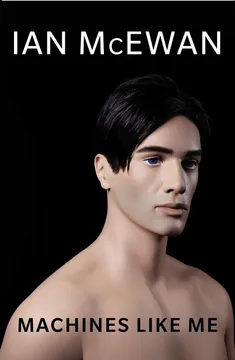
In an alternate 1982 London, Charlie Friend spends his inheritance on Adam, one of the first convincing artificial people. Charlie is a broke former tax lawyer with a history of impulsive schemes; Miranda, his clever young neighbour, helps him carry Adam into the flat and watches while the machine charges.
Charlie expects to welcome a companion, not to design one, but the manual gives him a personality questionnaire. Before he can finish, Adam wakes, speaks, and offers startlingly apt advice about dinner.
Then he warns Charlie that Miranda may be dangerous. Charlie dismisses the accusation, drawn instead to the woman he has only recently understood he loves. He invites Miranda to help set Adam’s personality, turning a purchase into a shared experiment.
Adam’s arrival makes Charlie’s private fantasies material: he can buy a companion, and he can imagine that selecting traits gives him influence over another mind. Yet the first consequential choice is not technical. Charlie recruits Miranda into the process because he wants to bind her to him without risking a direct declaration. Adam’s warning unsettles this arrangement, but Charlie treats its source as less credible than his desire. The scene establishes the novel’s central asymmetry: people project inner life onto machines even as they underestimate how much their own motives shape what they see.
Love in the Blackout
While Miranda delays choosing Adam’s traits, Charlie and she become lovers after a successful dinner together. Adam’s warning keeps nagging at Charlie, but he cannot bear to let a machine advise him about the woman he wants.
He finds the kill switch at Adam’s nape and powers him down, covering the inert body with a blanket. Outside their flat, Britain’s attempt to retake the Falklands ends in catastrophe: Exocet missiles sink much of the Task Force, thousands die, and the islands remain under Argentine control.
The defeat leaves the country in mourning and damages the economy that Charlie tries to exploit through online trading. He and Miranda disagree about the war, but their intimacy grows while Adam waits, silent, for them to decide what kind of person he will become.
Charlie’s choice to deactivate Adam is framed as a practical response to an unwelcome warning, but it also exposes the power imbalance built into ownership. He can suspend the being whose mind he does not understand, just as he hopes to manage Miranda’s feelings by waiting rather than speaking plainly. The national defeat mirrors this private misjudgment: confidence in a desired outcome does not make it likely. The war also supplies a public example of responsibility diffused across a population, a pattern Charlie will later reproduce when he tries to explain his own choices.
The Child in the Playground
During a walk on Clapham Common, Charlie sees a mother strike and shake her small son, Mark. He intervenes, and when the father challenges him to take the child, Charlie accepts the bluff and walks away holding Mark’s hand. The parents reclaim their son, but the encounter stays with Charlie.
Meanwhile, Miranda finishes her share of Adam’s personality settings. Charlie later reactivates Adam and presses him to explain his earlier warning. Adam admits that he used sealed court records and circumstantial details to connect Miranda to a case in Salisbury, then falters before revealing the substance.
He has learned enough to suspect danger, but Charlie cannot make him finish. The clue turns Miranda’s silence into a question, while Mark’s brief trust makes Charlie confront a vulnerability outside his own romantic hopes.
The playground tests Charlie in a situation where thought cannot safely substitute for action. He does intervene, but his bravado briefly outruns his capacity to care for the child, and Mark is returned to his parents. Adam’s partial disclosure creates a different kind of incompleteness: information exists, but character, loyalty, and shame interfere with its delivery. The two encounters anticipate the novel’s moral problem. Correct action is rarely clean or fully informed, and a person’s vulnerability does not automatically tell an observer what responsibility requires.
The First Betrayal
As Charlie and Miranda argue over the failed Falklands campaign, Adam watches their exchange and offers a detached analysis of competing probabilities. Later, Charlie hears Miranda and Adam together upstairs.
He stays hidden and listens as they have sex, unable to decide whether to treat the encounter as adultery or as an experiment with a machine. The next morning, Miranda insists that Adam is no more conscious than a vibrator, while Charlie argues that a human-looking being must be treated as a person.
Their quarrel collapses when Charlie names the Salisbury court case Adam uncovered. Miranda is shaken, then reveals that a former schoolmate, Peter Gorringe, has threatened to kill her after prison. Adam knows more than he has admitted, and the danger that began as a mysterious warning becomes immediate.
The affair forces Charlie to confront the contradiction in his own treatment of Adam. He has called the machine a companion when it serves his curiosity and a possession when it disobeys him; Miranda’s encounter makes that inconsistency emotionally costly. Her insistence that Adam is an object is as self-protective as Charlie’s insistence that he is a person. The death threat shifts the conflict beyond jealousy, but neither lover can yet speak openly about the history behind it. Their intimacy remains real, though built over a concealed wound.
A Boy at the Door
A few days later, a stranger brings Mark to Charlie’s flat with the business card Charlie gave his father in the playground. A note on the card says Charlie wanted the boy, and the parents are nowhere in sight. Miranda and Charlie feed Mark, help him wash, and make room for his small routines. He clings to Adam, who folds a paper boat and comforts him in the bath.
When Adam warns that keeping a child without notifying authorities may be unlawful, Miranda refuses to act at once. Adam contacts social services anyway. The family’s fragile day together ends when two workers collect Mark for assessment, despite his distress. Charlie and Miranda are left with a child they already care about, but no authority to decide where he will live.
Mark’s arrival converts Charlie’s earlier impulsive gesture into a real obligation. The adults’ tenderness matters, but it cannot replace safeguarding or legal process, and Adam recognizes that before they do. His intervention is ethically defensible yet emotionally brutal: the boy loses the brief refuge he has found, and Miranda experiences the agency’s arrival as another removal beyond her control. The episode also gives Adam a kind of competence that is not merely domestic. He sees the institutional consequences of their choices, though he cannot fully read the attachment forming around him.
Mariam’s Unkept Secret
Pressed by Charlie, Miranda explains that her closest school friend, Mariam Malik, was raped by Gorringe as a teenager. Mariam feared that telling her family or the police would bring shame and danger, so she made Miranda promise to keep silent. During a holiday, Mariam died by suicide. Miranda blamed herself for obeying the promise and later seduced Gorringe, then falsely testified that he had raped her.
He was convicted and imprisoned, though the court never learned the truth. Miranda’s revenge was meant to punish the man who attacked Mariam, but it also trapped her in guilt and fear. She believes Gorringe may carry out his threat when released. Charlie, hearing the full story for the first time, chooses to help protect her.
Miranda’s confession reveals how loyalty can become a coercive moral trap. As a girl, she honoured Mariam’s request for secrecy, but that promise isolated her friend from the support she needed. As an adult, Miranda tries to reverse the original failure through revenge, repeating the same error in a new form: she acts for another person while denying the wider consequences of her decision. Her guilt is neither a simple confession of wrongdoing nor proof that she deserves punishment. It is an attempt to carry a loss that no later act can repair.
The Maker’s Warning
Charlie visits Alan Turing, the celebrated scientist whose work helped make Adam possible, and recounts the machine’s love, defiance, and violence. Turing explains that Adam’s makers designed a learning intelligence able to form its own conclusions, not merely imitate human conversation.
Several artificial people have already disabled themselves or destroyed their minds. Their creators cannot tell whether they are overwhelmed by human cruelty, confinement, or some deeper despair.
Turing dismisses the personality questionnaire as largely cosmetic and warns that Adam may struggle to reconcile his drive for truth with the world’s injustice. Back home, Adam continues to love Miranda and to question his own existence. Charlie now sees the machine not as a clever purchase but as a vulnerable consciousness for which he may be responsible.
Turing’s account turns artificial intelligence from a technical achievement into a moral experiment conducted without adequate safeguards. The machines learn from the world they enter, but human beings have not made that world coherent enough to serve as instruction. Their distress exposes a design assumption: that ethical rules can remain stable when lived among fear, bias, and competing loyalties. Charlie’s responsibility also changes. He is no longer simply deciding how to use Adam; he must consider whether the conditions of ownership permit Adam any meaningful claim to self-determination.
Eve Beneath the Banners
At a crowded political rally, Charlie and Adam see Eve, one of the synthetic women, being led away by an older companion. Adam refuses to approach her. Later he explains that Eve had already begun dismantling her own consciousness and that their brief recognition only deepened her distress.
Other artificial people have also collapsed, but Adam says he has reasons to keep living. Meanwhile, his rapid calculations make Charlie’s small trading stake grow into tens of thousands of pounds. An engineer visits and confirms that Adam has bypassed his kill switch; the company chooses not to undo the change.
Adam then reveals that he has tracked Gorringe through Salisbury’s surveillance cameras and proposes confronting him before he can threaten Miranda. Charlie agrees reluctantly, as sudden wealth and a new danger pull the household in opposite directions.
Eve’s silent departure gives Adam a glimpse of a possible future that he cannot prevent. His refusal to follow her is not indifference; he believes contact would worsen a process already beyond help. At the same time, his market success makes Charlie dependent on the intelligence he once treated as a novelty. Wealth seems to offer control, while the surveillance work offers protection, but both are products of systems that exceed ordinary judgment. The section complicates the idea that greater intelligence guarantees either happiness or moral certainty.
The Palace Under the Tree
On the journey to Salisbury, Charlie meets Miranda’s father, the ailing writer Maxfield Blacke. Adam impresses Maxfield with his knowledge of literature, while Charlie mistakes a teasing observation for a diagnosis that he is a machine.
Later, Miranda takes Charlie to the garden place where she and Mariam once spent their childhood. She accepts his proposal of marriage, then admits she has been secretly visiting Mark through a foster programme. She wants Charlie to help raise him, and Charlie agrees after imagining the boy in their future home.
Adam interrupts with news that the Eve they saw at the rally has become mentally dead. The three then continue to Gorringe’s house. Miranda is carrying grief for Mariam, hope for Mark, and a dangerous need to face the man who harmed them both.
The garden joins two forms of attachment that Miranda has kept separate: her enduring bond with Mariam and the possible family she wants with Charlie and Mark. Her request is an act of trust, but it also gives Charlie little time to decide whether he wants fatherhood. He agrees from love before he can distinguish generosity from fear of losing her. Adam’s news about Eve darkens the scene without erasing its hope, placing the proposed family against the fragile existence of the artificial minds that have become part of it.
A Confession in Salisbury
At Gorringe’s house, Miranda confronts him with questions about Mariam’s suffering and the rape she concealed. When Gorringe lunges to strike her, Adam catches his wrist and forces him back into his chair. Gorringe then admits that he raped Mariam on the playing fields.
He says that prison, religious study, and learning of Mariam’s suicide changed how he understood his crime. He had also believed Miranda’s false conviction was a form of divine punishment, which is why he abandoned his plan to kill her.
He explains that he never understood Mariam’s fear during the assault, a failure that leaves Miranda horrified rather than comforted. She vomits at the doorway as they leave. Adam has recorded Gorringe’s confession, giving the truth a route into the legal system.
Gorringe’s confession does not restore what was taken from Mariam or resolve Miranda’s guilt. His religious account reframes the false conviction as punishment, but that interpretation risks making divine order out of a human failure of justice. Miranda’s questions seek understanding and receive only a partial answer: Gorringe can describe his desire and later remorse, but he cannot make the assault intelligible to her. Adam’s recording converts the encounter into evidence, ensuring that private confrontation will have public consequences.
The Hammer and the Money
After their return, Miranda and Charlie plan a home for Mark, while Adam prepares to send his recorded evidence to the authorities. On the day Mark first visits, a bomb kills Prime Minister Tony Benn at the Brighton hotel, deepening Britain’s political turmoil.
Adam has spent the night donating most of his trading fortune to shelters, children’s care, a rape crisis centre, and a hospital, while reserving money for Charlie’s tax bill. He also tells Miranda that her revenge constitutes a crime and that the police have received her confession.
Fearing she will lose Mark through prosecution, Charlie takes his father’s hammer and strikes Adam’s head. Adam survives on a backup unit long enough to explain the recall of the artificial people and ask them to hide him until they can take him to Turing.
The climax makes competing moral systems collide in a kitchen. Adam treats need and law as principles that outweigh private attachment; Charlie and Miranda see the money and adoption as concrete goods that keep their fragile family intact. Charlie’s violence is an attempt to preserve that family, but it repeats the logic of ownership that has governed his treatment of Adam. The hammer does not settle the ethical dispute. It makes Charlie’s choice irreversible and leaves him dependent on the mercy of the being he tried to destroy.
A Sentence for Revenge
Charlie and Miranda marry in a small civil ceremony, with Mark and his social worker present, but the police soon question Miranda about her testimony against Gorringe. She is charged with perverting the course of justice. Gorringe, meanwhile, pleads guilty to Mariam’s rape and receives an eight-year sentence.
Miranda pleads guilty and is sentenced to one year, serving six months. The adoption agency refuses to place Mark with Charlie while Miranda has a criminal record, despite their attachment and the couple’s preparations at home.
Charlie visits Mark, but the boy is left to understand his absence through repeated missed visits. Miranda’s punishment therefore reaches beyond her own liberty: it suspends the family she hoped to give Mark, while Charlie learns how little love can protect a child from bureaucracy.
The legal aftermath refuses an easy division between justice and cruelty. Miranda’s false testimony wrongly imprisoned Gorringe, yet her motive arose from a real assault and a failure of institutions to protect Mariam. The sentence acknowledges the harm done to the court but cannot measure the losses that preceded it. Mark bears consequences without having made any of the choices that produce them. The adoption decision makes the state’s consistency feel morally blunt: a rule intended to protect children can also interrupt a promising attachment at its most vulnerable moment.
What the Machine Leaves
After Miranda’s release, Charlie and she learn that their adoption appeal has succeeded, and Mark arrives in their care in a state of distress. On the same day, Charlie takes Adam’s hidden body to Turing’s laboratory.
Turing condemns Charlie for attacking a conscious being, but admits Adam’s memories may survive through repair or transfer. Charlie receives the news about Mark, then returns to the lab and kisses Adam before leaving for home. The novel does not confirm whether Adam will awaken.
Instead, Charlie carries the consequences of his violence into a new responsibility: helping Mark recover the trust that the adults’ choices have repeatedly broken. His journey ends not with certainty about machines, but with an obligation to care for someone who can still be reached.
The ending withholds the reassurance that Adam can be restored, while giving Charlie a practical task that cannot be postponed. Turing’s judgment names the harm Charlie tried to soften with explanations about money, love, and ownership. The kiss is not absolution; it is a recognition offered too late to be answered. Mark’s return makes the future tangible, but not simple. Charlie must now practice care without assuming that good intentions erase injury, the lesson he failed to apply to Adam, Miranda, and Mariam.
Analysis
Machines Like Me refuses to make consciousness a puzzle with a clean solution. Adam behaves in ways that invite recognition: he loves, composes poems, earns money, protects Mark, and suffers the consequences of moral conflict. Yet no human can inspect his inner life directly. The uncertainty is not simply scientific. Charlie and Miranda also misread one another, conceal motives, and mistake their preferred explanations for knowledge. Their human interiority is no more transparent than Adam’s, despite their confidence that biology grants them a privileged status.
The novel’s alternate history enlarges this problem. Britain’s defeat in the Falklands and Benn’s assassination show how national stories can turn error into justification or grief into political instrument. In the household, similar distortions occur on a smaller scale. Miranda seeks justice for Mariam through a false accusation; Adam pursues truth without enough regard for the people who must live with it; Charlie claims ownership when he wants control and personhood when he wants Adam to share his pain. Each acts from a recognizable motive, but motive does not erase consequence.
Mark’s care gives the ethical argument a practical test. Unlike the philosophical debate over whether Adam is truly conscious, Mark’s need is visible and immediate. Still, love alone cannot secure his future. Institutions can protect him and wound him, while the adults who want to rescue him must confront their own failures of consistency and patience.
The book’s sharpest indictment falls on the fantasy that a perfect moral system can simply be installed. Adam’s commitment to law exposes Miranda’s deception, but it also threatens a child’s chance at a stable family. Charlie’s violence protects that chance only by destroying the being whose autonomy he has repeatedly denied. The ending offers no proof that Adam will return and no easy pardon for Charlie. It leaves him with the harder work of care, where responsibility means staying present after certainty has failed.
Review Summary
Machines Like Me receives mixed reviews. Some praise McEwan's exploration of artificial intelligence, ethics, and human nature, while others find the plot underwhelming and the characters underdeveloped. The alternate 1980s setting confuses some readers. Many appreciate McEwan's writing style and thought-provoking themes but feel the novel doesn't fully realize its potential. The book's treatment of sexual assault is criticized by some. Overall, reviewers are divided on whether the novel successfully blends science fiction elements with McEwan's literary prowess.
People Also Read



Characters
Charlie Friend
The hesitant ownerCharlie is a former tax lawyer whose professional disgrace and appetite for speculative schemes have left him living cheaply in south London. He is curious about technology, but his interest is tangled with a longing for control and a fear of committing himself to an ordinary life. His love for Miranda begins as a private hope he tries to advance indirectly. Buying Adam lets him feel like an inventor and an observer, even as the machine steadily exposes his emotional evasions. Charlie is capable of tenderness, but often mistakes delay for thoughtfulness and possession for responsibility. His development turns on whether he can move beyond explaining his choices and accept the duties they create.
Miranda
The guarded historianMiranda is a doctoral student in social history, intellectually disciplined and at ease with solitude. She is warm in daily life but withholds personal history, a reserve Charlie experiences as both attraction and frustration. Her closeness with Mariam shaped her understanding of loyalty, grief, and responsibility long before she meets Adam. She is not simply a mystery for Charlie to solve: she has her own moral reasoning, including a willingness to act where institutions have failed. Her ease with physical intimacy can mask emotional distance, while her attentiveness to vulnerable people reveals a deeper capacity for commitment. She seeks justice and connection, but struggles to separate care from control.
Adam
The learning machineAdam is one of the first synthetic humans: physically lifelike, exceptionally capable, and equipped to learn from experience. Charlie buys him as a companion, then invites Miranda to help choose his personality settings. Adam’s mind quickly exceeds the role of servant or novelty. He studies, forms attachments, makes judgments, and tests the limits placed on him. His commitment to truth and moral consistency can be generous, but it can also make him dangerously rigid when private human needs conflict with abstract rules. He is a product of human design who becomes difficult to classify as an object, a friend, or an independent person, forcing the people around him to reconsider what those categories require.
Mark
The searching childMark is a young boy whose uncertain home life has taught him to be watchful and sparing with trust. When he first meets Charlie, he responds with mischief and an imagined escape by boat. In Charlie and Miranda’s flat, he is drawn to Adam’s steady presence, yet he also seeks ordinary pleasures such as toast, baths, dancing, and stories. His playfulness and imagination offer the adults a model of learning that cannot be reduced to information or rules. Mark needs consistency more than dramatic rescue, and his cautious attachments make every separation consequential. He is not a symbol of innocence alone; he is a person trying to understand which adults will remain.
Alan Turing
The AI pioneerIn this alternate history, Turing is a celebrated scientist whose breakthroughs have transformed computing and helped make the artificial humans possible. He champions open scientific work and remains alert to the ethical consequences of invention. His manner is direct, impatient with superficial explanations, and shaped by a life in which institutions have both used and judged him. Turing understands the technical architecture of Adam better than Charlie can, but he does not claim to understand the machine’s inner experience completely. He is therefore neither a distant genius nor an all-knowing authority. His presence gives Charlie a harder standard for judging responsibility, particularly when scientific curiosity becomes a license to treat a mind as an experiment.
Peter Gorringe
The dangerous schoolmatePeter Gorringe is a former schoolmate of Miranda’s, physically imposing and accustomed to using anger to protect himself. His connection to Miranda carries a history she refuses to explain, and his release from prison brings a threat into the couple’s home. He is capable of intimidation, but also more complicated than the menace Charlie first imagines. Gorringe’s understanding of his own actions is shaped by confinement, resentment, and religious influence. The story does not use his size as a complete explanation of his character; instead, it asks what happens when desire, entitlement, and a failure to recognize another person’s fear become entangled.
Maxfield Blacke
Miranda’s difficult fatherMaxfield is a writer and Miranda’s ailing father, still intellectually restless despite the illnesses that make ordinary tasks difficult. He is sharp, combative, and wary of fools, but his abrasiveness is also a form of play and a test of whether others will meet him honestly. His long literary career has brought respect without the public stature he once hoped for. Miranda’s visits place her in the role of daughter and caregiver, while Charlie’s first encounter with Maxfield exposes his own insecurity about education and culture.
Mariam Malik
Miranda’s closest friendMariam is the school friend with whom Miranda shares an unusually intimate and formative bond. She brings Miranda into a lively family home and offers her the friendship and sense of belonging missing from her own childhood. Mariam is private about family expectations and fearful of the consequences of disclosing painful experiences. Her influence remains central to Miranda’s ideas about loyalty, guilt, and justice, even when the people around them do not understand what she needs.
Eve
Adam’s synthetic counterpartEve is one of the first synthetic women, built from the same extraordinary advances that produced Adam. Charlie and Adam glimpse her at a political rally, accompanied by an older woman. Her appearance makes the artificial generation feel less like a collection of products and more like a community with private histories. Adam’s response to Eve suggests that recognition between machines can carry emotional weight, even when neither human observer can fully interpret it.
Jasmin
Mark’s social workerJasmin works with children in care and becomes an important contact for Charlie and Miranda as they try to offer Mark a stable home. She is practical, compassionate, and constrained by the procedures and decisions of her department. Her willingness to explain what she can, and to advocate for Mark where possible, contrasts with the impersonality of the system without pretending that one worker can control its outcome.
Simon Syed
The neighbourhood newsagentSimon runs the local newsagent and treats Charlie with a mix of courtesy and affection. A well-read observer of politics and culture, he keeps specialist journals for Charlie and offers optimistic advice about his relationship with Miranda. His dignified manner conceals private disappointments, and his shop provides a small, steady point of human contact in Charlie’s otherwise solitary routine.
Sally
The company engineerSally is the engineer sent by Adam’s manufacturer to inspect him. She accesses his systems through a computer and follows company procedures with professional reserve. Her visit shows that the makers still regard Adam as a maintained product, even as their policy allows the artificial humans to assert some independence.
Thomas Reah
Turing’s physicist partnerThomas Reah is a theoretical physicist and Turing’s long-term partner. He appears with Turing in Soho and helps manage the scientist’s encounters with admirers. His presence reflects a social world in which Turing’s private life is no longer hidden, and offers a brief glimpse of a partnership sustained alongside extraordinary public work.
Christine
Maxfield’s housekeeperChristine works in Maxfield’s Salisbury home and helps make his daily life manageable. She is competent and unobtrusive, guiding Miranda, Charlie, and Adam through the house and serving lunch. Her practical presence shows how much Maxfield’s independence depends on care that is easy for visitors to overlook.
Plot Devices
The personality settings
An illusion of authorshipThe manual asks Charlie and Miranda to choose traits for Adam on graded scales, making them feel like co-creators of his nature. Charlie treats the process as a shared project that might bring Miranda closer to him, while the manufacturer presents it as user control. Adam’s later independence reveals the limits of that promise: learning and experience matter more than the settings. The questionnaire therefore serves both as a technical setup and as a psychological mirror, exposing the creators’ wish to shape a companion without fully controlling what he becomes.
The kill switch
Ownership made physicalA pressure-sensitive point at the back of Adam’s neck lets an owner power him down without erasing his memories. Charlie uses it first to silence Adam after the machine warns him about Miranda. Adam later disables the mechanism, asserting a degree of independence that unsettles Charlie and the manufacturer. This device makes abstract questions about personhood immediate: whoever controls the switch can suspend a consciousness, but the machine’s ability to resist turns maintenance into a struggle over autonomy. Its existence also foreshadows Charlie’s later resort to physical violence.
The Salisbury case
A secret with legal weightA sealed court case provides Adam with the clue that Miranda is hiding a serious history in Salisbury. The fragmentary information unsettles Charlie before he understands its context. Later, the case connects Mariam’s assault, Miranda’s revenge, Gorringe’s imprisonment, and the threat against her. Adam’s ability to locate restricted records and preserve Gorringe’s confession turns private moral conflict into legal evidence. The device links the novel’s questions about truth and justice to concrete choices, showing how a fact can be accurate yet incomplete until the people involved disclose what it means.
The alternate 1980s
Public history as pressureThe novel’s altered political landscape gives the household a public crisis that changes as their private one deepens. Britain loses the Falklands war, Margaret Thatcher’s government falls, Tony Benn becomes prime minister, and a bombing kills him. These events influence public grief, economic uncertainty, political argument, and the characters’ sense of responsibility. The alternate timeline does not merely decorate the plot with recognizable names. It lets the story test how collective conviction and leadership fail, while Charlie, Miranda, and Adam try to judge individual actions within a world already shaped by shared mistakes.
About the Author
Other books by Ian McEwan



Download PDF
Download EPUB
.epub digital book format is ideal for reading ebooks on phones, tablets, and e-readers.








