


Plot Summary
Prologue
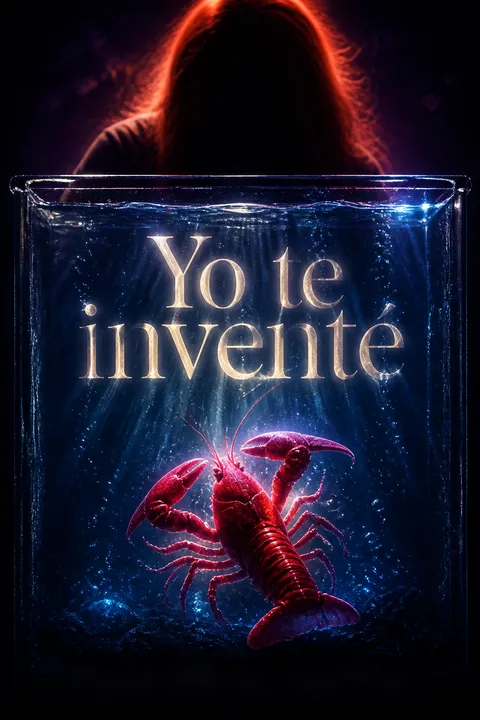
At seven, Alex1 stands at the lobster tank in a Meijer supermarket, her red pigtails pressed against the glass. A boy with impossible blue eyes approaches — not to comment on her hair, but to recite the lobster's scientific classification.
He smells like fish and pond scum, covered in Band-Aids, thrown into a pond by someone he won't name. He lifts her to the tank's hatch, and she pulls lobsters out one by one, dropping them onto the tile floor. Then her mother13 yanks her away, and the boy waves goodbye with her abandoned Yoo-hoo bottle.
She never learns his name. Years later, her mother13 reveals the truth: she never freed the lobsters, and the boy was never real. Her first friend was a hallucination — the earliest sign of the paranoid schizophrenia diagnosed at thirteen.
Senior Year in the Tank
After spray-painting the word Communists across her old school's gym floor during a psychotic episode, Alex1 transfers to East Shoal for senior year with mandatory community service. She has a system for managing her paranoid schizophrenia: photograph everything suspicious, because hallucinations fade from pictures over time.
Check food for poison. Spin in circles when entering rooms. Her coworker Tucker3 at Finnegan's diner warns her about a customer named Miles2 — feared by the entire school — and when he walks in, his blue eyes detonate something in her memory.
She spills water everywhere. The next morning, he's at the locker beside hers, in every AP class, assigned as her chemistry partner. During their first lab, Miles2 murmurs the same Latin classification for leeches that Blue Eyes spoke ten years ago. Alex's1 hands start shaking and never really stop.
Asshat and Allies
Miles2 kicks Alex's1 pencil across the room; she shoves his backpack off his desk. He steps on her shoelace; she rips his homework in half. This low-grade warfare becomes their language as Alex1 joins Miles's2 community service club — Theo,8 who writes for the school paper, her identical twin brothers Evan and Ian,16 the enormous and gentle wrestler Art,9 and the French-speaking Jetta.10
When football captain Cliff11 corners Alex1 after a game, threatening to shave her lobster-red hair, Miles2 and the triplets materialize to clear a path.
Tucker3 explains the scoreboard legend: a girl died under it years ago, and Principal McCoy6 worships it like a deity. Alex1 glues Miles's2 locker shut. Miles2 destroys her textbook bindings. She fills his backpack with fire ants. Their mutual hostility starts to feel like something else entirely.
Bloody Miles at the Bonfire
Celia Hendricks,4 who has been obsessively pursuing Miles2 all year, invites Alex1 to her bonfire only because Miles2 demands it. Pressed together on a crowded bench, Alex1 and Miles2 have their first genuine conversation — he smells like pastries and mint soap, and his smile is something no one at school has witnessed.
Then Celia's4 hair catches fire and she blames Alex.1 Fleeing the chaos, Alex1 encounters a second Miles2 on the street: clothes shredded, blood oozing from where his freckles should be, grinning with stained teeth.
Bloody Miles reaches for her face. The real Miles2 appears behind her, confused, asking who she's talking to. She punches him, screams, and collapses. Art9 carries her to Miles's2 truck. The episode costs her three weeks in the hospital and medication that turns the world gray.
The Jerk Who Knew
Alex1 returns to school with a mono cover story. Her father14 has flown home from South Africa, and his presence anchors the household — her mother13 has begun discussing committing Alex1 to a psychiatric facility. During the worst nights, her eight-year-old sister Charlie7 plays violin outside Alex's1 door without asking what's wrong.
At school, Miles2 blocks Alex's1 path and flatly announces she's schizophrenic. She walks away without denying it. He doesn't tell anyone. The power balance shifts: he holds her secret, but she senses he understands what it means to carry one.
Alex1 overhears a sharp-voiced blonde woman berating Celia4 for losing the cheer captain position and calling Miles2 an obstacle that needs removing. Alex1 begins photographing McCoy's6 interactions, assembling pieces of a conspiracy she can't yet name.
The Witch Kisses First
Alex1 photographs Celia4 spray-painting an obscenity on a classmate's car, then hides under a van when Celia4 gives chase. Miles2 finds her. That night, someone has sawed Alex's1 beloved bike Erwin — a gift from her archaeologist father14 — clean in half. Miles2 drives her home and offers daily rides.
While he runs inside the school, Alex1 reads his secret notebook in the truck: not a hit list, but pages of math equations, German journal entries, and one observation — that schools without bike racks should be convicted of criminal negligence — dated the day they met.
Later, at Red Witch Bridge, where Alex1 is the local legend's screaming witch, she and Miles2 scare Cliff's11 group together. Sitting in the gravel road afterward, she discovers she wants to kiss him. So she does. He freezes. Then his fingertips find her neck.
Secrets Like Currency
After Alex1 helps Miles2 prank Tucker's3 house — putting IcyHot in his underwear without knowing the target was her friend — guilt fractures both relationships. Tucker3 stops speaking to Alex.1 Miles,2 cornered by her anger, offers something he's never given anyone: the truth.
His mother, June,5 is in a psychiatric hospital in Goshen, committed by his abusive father Cleveland15 through fabricated evidence of a suicide attempt. Miles2 works every shift and runs every job to save money for her release when he turns eighteen.
He also names a condition of his own: alexithymia, a difficulty identifying emotions. He's not cold — he's confused. Alex1 reciprocates by telling him everything about McCoy6 and Celia's4 mother. For the first time, they're working from the same map, even if neither can see where it leads.
June Remembers the Lobsters
On a Saturday road trip to Goshen, Miles2 takes Alex1 to meet June5 at the psychiatric hospital — whose sign Alex1 reads as Crimson Falls, though Miles2 will later say it's called Woodlands. June5 is warm, sharp, and nothing like the diagnosis suggests.
She shares the history Alex1 needs: Scarlet Fletcher18 was the school's golden girl, McCoy6 was obsessively devoted to her, and when the scoreboard crushed Scarlet18 at a reunion, McCoy6 tried to lift it off her like his entire reason for existing was pinned beneath it.
Then June5 says what Alex1 has needed to hear for a decade — Miles2 remembers the girl who wanted to free the lobsters. Blue Eyes was real. He liked her red hair. That night, at the Meijer lobster tank, Alex1 tells Miles2 she knows who he is. He turns, finds her waist, and kisses her like he's been rehearsing this his entire life.
Celia's Microphone Bomb
At a band competition in March, Celia4 commandeers the scorer's table microphone and announces to the packed gymnasium that Alex1 is a paranoid schizophrenic who spray-painted Hillpark's gym. Miles2 tears the power cord from the wall and rips the mic from Celia's4 hands, but every face in the bleachers has already turned.
Alex1 vomits in a bathroom stall and can't make herself move. Her father14 takes her home. The revelation wasn't spontaneous — Alex1 noticed whispers and pointed fingers for weeks. Celia4 had been leaking the information gradually, and the announcement was the final detonation.
College rejection letters keep arriving in thin envelopes. The hallways become gauntlets of stares and silence. The walls of Alex's1 carefully maintained normalcy have crumbled, and what stands exposed is exactly what she spent four years hiding.
Soggy Potato Salad Returns
Tucker3 appears on Alex's1 porch, the first real conversation since their falling out. He admits he doesn't care about her diagnosis — his own father treats schizophrenic patients and considers them normal people with extra quirks.
Then he confesses: the night of Celia's4 bonfire, he slept with Ria Wolf,17 which is why Cliff11 paid Miles2 for the revenge prank. Tucker3 had it coming, he concedes, though it still hurt. With both secrets aired, they turn to the real problem. Tucker3 proposes breaking into McCoy's6 house to find evidence of his obsession — anything incriminating won't be at school, he reasons.
Alex1 recruits Miles,2 who agrees on condition he handles the entry. The three of them — former best friends, current allies, still not fully trusting one another — begin planning their first joint operation.
Everything Comes Unglued
Miles2 spirals. He takes every humiliating job offered — letting Cliff11 punch him for fifty dollars, wearing a full Nazi uniform as a baseball-game stunt. When he goes to change, attackers steal his glasses and throw him in the pool, exploiting the one phobia his father15 planted in him as a child.
Meanwhile, the legendary python from the ceiling wraps itself around Alex1 during English class — the snake she dismissed as a hallucination all year was real. Tucker,3 who has secretly been feeding it in his janitor's closet, helps coax it off.
After Cliff11 trips Alex1 at Finnegan's diner and Miles2 retaliates, the brawl gets her fired. Then Tucker3 casually mentions that Finnegan doesn't own a Magic 8 Ball — the one Alex1 has consulted all year for comfort never existed. Even her anchors are made of air.
Charlie Was Never There
Alex,1 Miles,2 and Tucker3 break into McCoy's6 house and find a second-floor room that stops them cold: mannequins in blonde wigs wearing prom dresses, walls plastered with photographs of Scarlet Fletcher.18 A picture of Celia's4 father sits on the desk, his eyes burned out.
As they flee, Alex1 panics — her eight-year-old sister Charlie7 followed them inside. Miles2 grabs her shoulders. Charlie7 isn't real. She died four years ago, choking on a chess piece before her fifth birthday. Alex's parents13 confirm it at home: they tried to tell her during a hospitalization, but the words never landed.
Alex1 runs to Red Witch Bridge. Miles2 follows. She presses her hand to his chest and asks if he's real. His heart beats hard against her palm. If nothing is real, he tells her, then it doesn't matter — she lives here, and that's real enough.
Scarlet's Scoreboard Falls Again
At the spring awards ceremony, Alex1 confronts McCoy6 in his office — but when she returns to the gym, McCoy6 is already at the microphone. The figure she spoke to may not have been real. Below the scoreboard, Celia4 stands near Miles.2
Alex1 sees Scarlet's18 ghost pointing upward, sees the words CRIMSON FALLS dripping red above the scoreboard. The supports snap. Alex1 throws herself into Miles's2 back, shoving him clear. The scoreboard crushes her.
McCoy6 had loosened the supports to kill Celia4 — the daughter of the woman he'd obsessed over for two decades — and when his plan failed, he tried to strangle Miles2 before Mr. Gunthrie12 dragged him off. Alex1 wakes three days later, her face scarred by glass. McCoy6 is in custody; police found journals, plans, and surveillance videos of Celia4 in his house.
Stairs and Sirens
After the scoreboard, Miles2 vanishes. The club searches his house, his workplace — nothing. Then Tucker3 bursts into Alex's1 hospital room: Miles2 came to Tucker's3 door, panicked, tripping over apologies, asking Tucker3 to make sure Alex1 was okay.
Alex1 recognizes the cadence of someone saying goodbye. She convinces Tucker3 to sneak her out of the hospital. They drive to Miles's2 house in Lakeview Trail, climb the drainpipe to his bedroom, and find it empty. Tucker3 spots him first: slumped at the bottom of the stairs, bleeding, glasses dangling from one ear.
Alex1 presses her ear to his chest. Faint breathing. A heartbeat like a whisper. Police find Cleveland's15 car wrapped around a tree nearby and arrest him stumbling through a drunken rage. The tank that held Miles2 has finally shattered.
Ich Liebe Dich Auch
Alex1 agrees to enter Woodlands voluntarily — not because her mother13 forced it, but because she can no longer distinguish real from imagined on her own. She attends graduation flanked by orderlies, wrists in soft restraints, watching from the auditorium doorway.
Tucker's3 salutatorian speech declares that surviving means having the worst thrown at you and continuing despite it. Miles2 takes the podium, tosses his cap aside, apologizes to Tucker,3 thanks the club for literally keeping him alive, and tells the entire school he's in love with Alex.1
He closes with a German obscenity that makes Jetta10 thrust her fists in triumph. Outside, in two minutes stolen from the orderlies, Alex1 grabs the front of his robe and whispers the German words for I love you too. Then the car pulls away, and Miles2 shrinks to a point of light behind her.
Epilogue
Months later, Alex1 walks out of Woodlands into autumn sunlight, her hair trimmed to her shoulders. The staff member who cuts it has never quite believed Miles2 exists — he only visits weekends, outside her shifts. But there he stands at the curb, leaning against his sky-blue truck in his grandfather's bomber jacket, smiling wider than she's ever seen.
She climbs in. Mint soap and pastries. Whatever comes next — the ongoing negotiation between her mind and reality — she's breathing the shockingly fresh air of someone who has finally climbed out of the tank. Wisps of violin music float on the breeze behind her. She closes her eyes and knows: the real thing is always better.
Analysis
Made You Up interrogates the unreliable narrator by making it literal — Alex's1 schizophrenia means every event, character, and detail exists under epistemological suspicion. Zappia's achievement is not merely generating surprise when hallucinations are revealed but constructing a narrative where the reader, like Alex,1 must develop tolerance for uncertainty. The three-part structure — The Tank, The Lobsters, Rubber Bands — traces progression from isolation to community to the painful removal of constraints that were both prison and protection.
The Charlie7 revelation functions as the structural keystone. Unlike Bloody Miles2 or phantom rooftop sentries, Charlie7 is never coded as strange — she chews chess pieces, plays violin, deploys a vocabulary word of the week. By making the most devastating hallucination the most ordinary, Zappia argues that mental illness is most dangerous not when it produces monsters but when it replaces grief with comfort so seamlessly that loss never surfaces. The parents' complicity — setting Charlie7 a place at the table, buying Christmas presents — implicates the family system in the delusion's persistence and raises uncomfortable questions about whose reality is being protected.
The romance resists the trope of love as cure. Miles2 cannot fix Alex's1 schizophrenia; she cannot fix his alexithymia or his father's violence. What they provide is witness — someone who sees the full picture and stays. Miles's2 emotional bluntness paradoxically registers as acceptance to someone accustomed to pity and fear. Alex's1 decision to enter Woodlands voluntarily is the novel's most radical act, acknowledging that love and friendship are not substitutes for professional treatment.
McCoy6 operates as a dark mirror: obsession untreated for decades, love curdled into worship and predation. Meanwhile, the blonde woman Alex1 sees confronting Celia4 — whom she takes for Celia's4 mother — is revealed as Scarlet's18 ghost, another hallucination overlaid on real events. The person least trusted to perceive reality correctly is the only one paying close enough attention to detect what everyone else missed. Unreliable perception, Zappia suggests, is not the same as unreliable moral instinct.
Review Summary
Made You Up received mostly positive reviews, with readers praising its unique portrayal of schizophrenia, complex characters, and unpredictable plot twists. Many found the story compelling and emotionally engaging, particularly appreciating the slow-burn romance between Alex and Miles. Some critics felt the representation of schizophrenia was inaccurate or romanticized. The book's exploration of reality versus hallucination intrigued readers, though a few found certain plot elements unrealistic. Overall, reviewers commended the author's writing style and the book's ability to provoke thought about mental illness.
Characters
Alex (Alexandra Ridgemont)
Schizophrenic history loverAlex navigates senior year while managing paranoid schizophrenia diagnosed at thirteen—a condition she hides behind compulsive photography, perimeter checks, and bravado that barely covers her terror. Named after Alexander the Great by history-obsessed parents, she carries her archaeologist father's14 gifts like talismans and checks food for poison with the methodical precision of someone who knows her own mind betrays her. Her deepest fear isn't the hallucinations themselves but the possibility that nothing around her is real—that the friends she's finally made, the boy she's falling for, and even her own sister7 might be constructions of a brain she cannot trust. What drives her is not mere survival but proof: that she can exist in the same world as everyone else and be worthy of staying there.
Miles Richter
Feared genius, hidden heartThe school's valedictorian and its most feared student, Miles runs paid jobs—revenge pranks, thefts, sabotage—that keep everyone at arm's length. Behind the icy exterior lies a boy who fled to Germany at seven with his mother5, returned with an accent that became a target, and channeled his intelligence into control because control was the only thing his abusive father15 couldn't take. He has alexithymia—difficulty identifying emotions—which makes him appear callous when he's actually bewildered. He works constantly, saving every dollar to free his wrongly committed mother5. His notebook contains not schemes but equations, German journal entries, and observations so tender they contradict his reputation entirely. He built a fortress of fear to feel safe. What he never anticipated was someone knocking on the door.
Tucker Beaumont
Loyal conspiracy salutatorianThe salutatorian who runs a conspiracy theory club from a janitor's closet and harbors a secret of his own behind its locked door. Bespectacled and self-deprecatingly funny, Tucker is Alex's1 first friend at East Shoal. Former best friends with Miles2 in middle school, estranged when Miles2 deemed him unambitious. Tucker's quiet loyalty—showing up at hospitals, proposing break-ins, forgiving betrayals—makes him the moral anchor Alex1 needs when reality fractures around her.
Celia Hendricks
Manipulated popular girlOnce the school's queen of cosmetics and social warfare, Celia is driven by forces she can't escape: a principal6 who has fixated on her since sophomore year, a demanding family legacy, and the slow erosion of every friendship she possesses. Her obsession with Miles2 and her cruelty toward Alex1 mask a girl being systematically isolated and controlled, unable to ask for help because no one ever taught her she could.
June Richter
Miles's imprisoned motherMiles's2 mother, committed to a psychiatric hospital by her abusive husband Cleveland15 through fabricated evidence. A former valedictorian and teacher, June possesses the emotional intelligence Miles2 lacks—she reads people's personal histories the way others read books. Her warmth and clarity behind hospital walls stand in stark contrast to the narrative her husband15 constructed, and her love for Miles2 is the engine driving every sacrifice he makes.
Mr. McCoy (Richard)
Scoreboard-obsessed principalThe principal whose surface competence—top test scores, immaculate office—masks a decades-long obsession with a dead woman. McCoy loved Scarlet Fletcher18 since high school, failed to save her when the scoreboard crushed her, and now worships the instrument of her death while fixating on her legacy through Celia4. His cheerful morning announcements about scoreboard celebrations are symptoms of a grief that has long since curdled into pathological control.
Charlie (Charlemagne)
Chess-chewing little sisterNamed after Charlemagne, Charlie is eight years old, perpetually chewing chess pieces, and devoted to her big sister1. She plays Tchaikovsky's 1812 Overture on violin and maintains a vocabulary Word of the Week. She is the person Alex1 lets herself cry in front of, the one presence that feels unconditionally safe. Her small body and big blue eyes make her seem eternal—someone who will always be there when needed.
Theo Light
Club's overachieving organizerOne-third of a triplet set, Theo takes seven AP classes, works graveyard shifts, and runs the concession stand with military precision. She writes for the school newspaper, harbors a crush on editor Claude Gunthrie, and serves as the club's most vocal defender of its members.
Art Babrow
Gentle giant of the clubThe school's best wrestler and the club's muscle, Art is enormous, soft-spoken, and reliably gentle. He carries Alex1 to safety during her worst episode and serves as Miles's2 most dependable operative, his quiet loyalty belying the physical intimidation his frame suggests.
Jetta Lorenc
Multilingual French club memberA French student who speaks six languages and serves as Miles's2 only companion for German conversation. She calls him mein Chef, feeds him grapes during trivia games, and channels fierce loyalty through a disarming smile.
Cliff Ackerley
Football captain, chief bullyA burly football player who bullies Alex1 for her red hair, calls Miles2 a Nazi, and uses physical dominance to terrorize anyone smaller. His volatile relationship with Ria17 cycles through jealousy, violence, and reconciliation.
Mr. Gunthrie
Drill-sergeant English teacherA Vietnam veteran who teaches AP English by bellowing orders and wielding a golden fountain pen. His gruff exterior conceals genuine concern for students, and he intervenes decisively when danger erupts.
Alex's mother
Protective, overwhelmed parentAlex's1 mother oscillates between fierce protectiveness and helplessness, managing a household alone while her husband14 travels. She struggles to distinguish keeping Alex1 safe from keeping her confined.
David (Alex's dad)
Traveling archaeologist fatherAn archaeologist often abroad in Africa, David brings home artifacts and unconditional warmth. He is the parent Alex1 trusts most—the one who listens rather than prescribes.
Cleveland Richter
Miles's abusive fatherA violent alcoholic who had his wife5 committed through deception, terrorized Miles2 by throwing him into lakes as a child, and keeps a massive Rottweiler to prevent his son from leaving the house.
Evan and Ian Light
Theo's identical twin brothersIdentical triplets with Theo8, they finish each other's sentences, share mischievous grins, and serve as the club's bleacher crew. Their prankish energy provides comic relief amid escalating tension.
Ria Wolf
Cliff's manipulative girlfriendA popular volleyball player who annually sleeps with other boys to make Cliff11 jealous, triggering cycles of violence. Her callousness toward those she uses reveals someone comfortable treating people as instruments.
Scarlet Fletcher
Deceased school legendThe former cheerleading captain whose father donated the scoreboard. Scarlet died when it fell on her at a reunion. Her death ignited McCoy's6 lifelong obsession and cast a shadow over Celia's4 entire adolescence.
Plot Devices
The Lobster Tank
Symbol of confinement and freedomThe lobster tank at Meijer is where seven-year-old Alex1 met Blue Eyes and tried to free the lobsters—creatures huddled together with rubber-banded claws, unable to escape. It serves as the novel's central metaphor: Alex1 is confined within her own mind, Miles2 within his abusive home, and both within a school that rewards conformity and punishes difference. The tank is also the site of their reunion kiss as teenagers, the place where Alex1 finally confirms Blue Eyes was real. The book's three-part structure—The Tank, The Lobsters, Rubber Bands—maps onto stages of confinement, community, and the painful removal of constraints that were both prison and protection. When Alex1 enters the hospital voluntarily, she is not a lobster resigned to captivity but one choosing to seek help—and the epilogue confirms she eventually climbs out.
Alex's Camera and Photos
Reality-testing systemAlex1 discovered that hallucinations fade from photographs over time while real subjects remain. Her cheap digital camera becomes her primary tool for navigating a world she can't trust—she photographs squirrels, classmates, rooftop figures, Celia4 spray-painting a car, anything that might betray her senses. The system has limits: some hallucinations persist longer, and some never register as suspicious because they're too mundane. The camera also serves practical purposes in the real world—her photos of Celia's4 vandalism reach the school newspaper and change Celia's4 social standing. The device underscores the novel's central tension: Alex's1 desperate attempt to anchor herself in objective reality using a system that is itself imperfect and cannot catch everything her mind invents.
The Scoreboard
Memorial turned weaponDonated by Scarlet Fletcher's18 father twenty years before the story begins, the scoreboard killed Scarlet18 when it fell during a class reunion. McCoy6, who tried to save her and was electrocuted in the process, transformed it into a shrine—cleaning each bulb by hand, soliciting offerings of flowers and lightbulbs, announcing celebrations. Students mock the tradition without understanding its origin. The scoreboard's history, uncovered by Alex1 and Tucker3 at the library, reveals McCoy's6 obsession with the dead woman he could never save. In the climax, McCoy6 loosens the supports to drop it on Celia4, recreating Scarlet's18 death with her daughter. Alex1 intervenes, and the scoreboard crushes her instead—an echo of the original tragedy that exposes McCoy's6 decades of hidden psychosis.
Miles's Black Notebook
Window into hidden selfMiles2 carries a battered leather notebook everywhere, scribbling in it constantly. Other students assume it contains schemes or hit lists. In reality, it holds math equations, scientific classifications, German journal entries about his mother5 and friends, and personal declarations—observations about intelligence, empathy, and schools without bike racks. When Alex1 secretly reads it, she discovers the gap between Miles's2 public persona and his private self. The notebook was June's5 idea: write things down instead of saying them aloud, to avoid provoking his father's15 anger at a son smarter than him. It becomes the clearest window into who Miles2 really is—not the feared manipulator the school sees, but a boy who collects knowledge the way other people collect friendships, because knowledge was the only thing no one could beat out of him.
The Magic 8 Ball
Hallucinated comfort oracleThroughout the novel, Alex1 consults Finnegan's Magic 8 Ball for guidance—asking it about Miles2, about her sanity, about whether she'll be okay. Its answers serve as the book's Greek chorus: evasive, occasionally reassuring, always just vague enough to mirror Alex's1 own uncertainty. Entire interstitial chapters are devoted to her conversations with it. The revelation that the 8 Ball never existed—Tucker3 tells her Finnegan doesn't have one—is devastating precisely because it was so ordinary. Unlike the dramatic hallucinations of Bloody Miles2 or men in suits, the 8 Ball passed every test of plausibility. Its exposure demonstrates the novel's most frightening truth: the most dangerous hallucinations are the ones that never seem strange, the comforts so seamlessly woven into daily life that questioning them never occurs.
FAQ
Synopsis & Basic Details
What is Made You Up about?
- Navigating Unreliable Reality: The novel follows Alexandra "Alex" Ridgemont, a high school senior living with paranoid schizophrenia, who constantly struggles to distinguish between vivid hallucinations and objective reality. Her coping mechanisms, like taking photographs, are central to her daily life.
- New Beginnings, Old Fears: After an incident at her previous school, Alex transfers to East Shoal High, determined to appear "normal" while navigating a new environment filled with eccentric characters, including the enigmatic Miles Richter, who uncannily resembles her childhood "imaginary friend."
- Unlikely Bonds Form: Forced into community service with a group of school misfits, Alex finds herself drawn into a complex web of school politics, personal vendettas, and hidden truths, all while grappling with her own internal battles and the blurring lines of her perception.
Why should I read Made You Up?
- Immersive Psychological Journey: The novel offers a unique and deeply empathetic first-person perspective into the mind of someone with schizophrenia, challenging readers' perceptions of reality and truth. Alex's witty, self-aware narration makes her a compelling and relatable protagonist despite her struggles.
- Intriguing Mystery & Suspense: Beyond the psychological depth, the story unfolds as a compelling mystery, as Alex and her friends uncover dark secrets within their seemingly normal high school, leading to escalating stakes and a dramatic climax.
- Powerful Themes of Connection: It explores profound themes of trauma, healing, and the transformative power of unlikely friendships and love, demonstrating how acceptance and support can help individuals navigate profound personal challenges.
What is the background of Made You Up?
- Contemporary Midwestern Setting: The story is set in the fictional small towns of Hannibal's Rest, Hillpark, and East Shoal in suburban Indiana, creating a grounded, relatable backdrop for Alex's extraordinary internal world. The contrast between the mundane setting and Alex's vivid hallucinations highlights her unique experience.
- Focus on Mental Health: The narrative delves into the complexities of paranoid schizophrenia, drawing on the author's research and personal insights to portray Alex's daily struggles with medication, therapy, and the societal stigma surrounding mental illness.
- Exploration of High School Dynamics: The novel captures the intense social hierarchies, rivalries, and pressures of high school life, using the East Shoal environment as a microcosm for broader societal issues of conformity, bullying, and the search for identity.
What are the most memorable quotes in Made You Up?
- "Sometimes I think people take reality for granted." (Chapter 1): This opening line immediately establishes Alex's unique perspective and the central conflict of her life, setting the stage for the unreliable narration and deep psychological exploration. This quote defines Alex's struggle.
- "If nothing's real, then what does it matter? You live here. Doesn't that make it real enough?" (Chapter 49): Miles's profound statement to Alex after the revelation about Charlie offers a powerful philosophical anchor, suggesting that lived experience and emotional truth can transcend objective reality. This quote is pivotal in Alex's journey.
- "We're survivors. So now let's live." (Chapter 62): Tucker's salutatorian speech encapsulates the novel's core message of resilience and hope, emphasizing the importance of moving forward and embracing life despite past traumas and challenges. This quote defines a major theme in Made You Up.
What writing style, narrative choices, and literary techniques does Francesca Zappia use?
- First-Person, Unreliable Narration: Zappia employs a deeply immersive first-person perspective, allowing readers direct access to Alex's thoughts, fears, and hallucinations, making them complicit in her unreliable perception of reality. This technique blurs the lines between what is real and imagined, mirroring Alex's experience.
- Witty and Self-Aware Tone: Alex's internal monologue is characterized by sharp wit, sarcasm, and a self-deprecating humor that provides levity amidst heavy themes. Her direct address to the reader ("You know...") creates an intimate, confessional tone, drawing the reader into her confidence.
- Fragmented Memories & Foreshadowing: The narrative often presents information in a non-linear fashion
Download PDF
Download EPUB
.epub digital book format is ideal for reading ebooks on phones, tablets, and e-readers.








