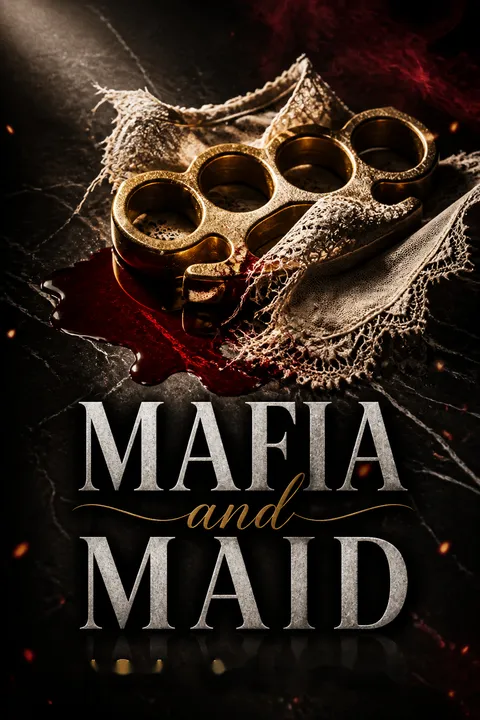


Plot Summary
Prologue
Five years before the story begins, mafia enforcer Camillo Marchiano attends the wedding of Rosa Davis, daughter of a wealthy Chicago businessman, to Grayden Devlin. He notices Rosa as she passes him in the church, but her startled withdrawal from his scarred hand at the reception confirms the distance between their worlds.
She becomes Grayden's bride; Camillo returns to his brothers and the criminal life he believes is all he can offer. The brief encounter leaves him with an image of Rosa that resurfaces when, years later, she arrives at his casino looking for work.
The prologue plants attraction in a scene designed to display social rank. Camillo is present as a negotiating force, not a guest who belongs, while Rosa is being transferred between powerful families through marriage. Their brief contact is shaped by the same hierarchy that will later threaten their relationship: she recoils from the visible evidence of his violence, and he interprets the gesture as proof that he belongs outside respectable life. The wedding also turns the romance's first sighting into a painful contrast. Rosa's apparent happiness conceals coercion, while Camillo's cynicism conceals a capacity for attachment he has not yet imagined.
The Paperweight Breaks Everything
Five years into her marriage, Rosa lives as a servant in Grayden's mansion, enduring his drunken rages and her family's refusal to help. When he throws a glass paperweight at their four-year-old son, Ethan, Rosa shields the boy and takes the blow herself. A badly injured rib makes her understand that staying could kill them both.
She slips out with Ethan, reaches a clinic that treats her without alerting Grayden, then finds refuge with Kori, a single mother she met at the park. With Ethan safe for the day, Rosa cuts and dyes her hair to disguise herself and searches the neighborhood for work. No employer takes a chance on her, and she has no money or plan beyond keeping her son out of Grayden's reach.
The rupture is not simply Rosa's escape from a violent husband. It is the first time she treats Ethan's safety as more important than the demands of the families that arranged her life. Her flight is materially precarious: she has injuries, little money, no employment history, and no dependable support from her parents. The clinic and Kori provide brief forms of care outside the structures that have failed her. Her haircut is both practical concealment and an early act of self-determination, though it cannot yet free her from the beliefs that have made her accept blame for abuse.
A Job Behind the Gates
At a casino owned by the Marchiano family, Rosa pleads with the receptionist for any work and is nearly removed by security. Camillo steps in and offers an interview for a live-in maid position at his brothers' mansion. He initially turns her away because she has no professional experience and seems too frightened for his volatile household.
Yet his family needs a replacement after their latest maid quits, and the agencies will not send anyone to the Marchianos. Camillo calls Rosa back, hires her for a month's trial, and tells her to move in. He recognizes her as Conor Davis's daughter, the bride he saw years earlier, but Rosa hides her marriage, escape, and son. She accepts because the wages might buy them a way out of Chicago.
The job is a bargain made under unequal conditions, but it gives Rosa a foothold that neither her family nor the labor market has offered. Camillo's first refusal is protective in intent, yet his eventual decision is entangled with his own need to solve a domestic problem. Neither character enters the arrangement with a clear account of the other. Rosa conceals her most urgent vulnerability, while Camillo mistakes visible timidity for the whole of her character. The mansion becomes a forced-proximity setting where trust must develop through repeated actions rather than declarations.
Bullets Beside Dinner
Rosa arrives at the Marchiano mansion and discovers that her new employers are Camillo, capo Marco, and adviser Alessio, all powerful figures in Chicago's criminal underworld. Marco's threats and the brothers' scrutiny make her first dinner an ordeal; her cooking is uneven, and she retreats to her room in tears.
Soon afterward, the men return from a gunfight with bullet wounds. Camillo orders Rosa to fetch the first-aid kit, then asks her to remove bullets and stitch Marco and Alessio when he cannot manage the wounds alone.
Though shaking, she does it, and the brothers survive. The sight of blood and their indifference to it convinces Rosa she has entered another dangerous world. She scrubs the evidence away, already considering how to leave.
The scene reverses the household's initial power dynamic without erasing it. Rosa is still an employee surrounded by armed men, but in the crisis her practical competence becomes indispensable. The brothers' survival depends on the very person they have treated as disposable. Her willingness to help is not evidence that she feels safe; it is a capacity formed under pressure, and she immediately recognizes the cost of living among men for whom violence is routine. Camillo's response to her terror begins to distinguish him from Grayden, though protection has not yet become trust.
Kindness Without a Price
After the shooting, Camillo finds Rosa scrubbing blood from her hands and gently washes them for her. He later takes her to his hair salon, where stylist Helen discovers a bald patch caused by someone pulling out Rosa's hair. The revelation sharpens Camillo's anger, but he does not force her to explain. At home, Marco realizes that Rosa can bake confidently even when fear disrupts her dinners.
He has her cook while music plays and he sits facing away; the meal succeeds, and he keeps her on the job. Camillo also insists that his brothers stop shouting at her and thank her for meals. The mansion remains demanding, but Rosa begins to encounter care without punishment and builds routines that let her work with more confidence.
Small acts matter here because Rosa's history has taught her to expect help to carry a hidden cost. Camillo's washing her hands responds to a specific distress rather than demanding disclosure; Marco's cooking exercise separates skill from the fear that has been suppressing it. The household's behavior does not become gentle overnight, but Camillo begins using his authority to change how his brothers treat her. These gestures challenge Rosa's belief that every mistake proves her worthlessness. They also expose Camillo's emerging impulse to protect her before he can explain why her safety matters so much.
A Date Under Doubt
As Rosa's cooking improves, Camillo becomes openly attentive. He praises her figure, encourages her at the mansion gym, and takes her to an upscale Italian restaurant. Rosa barely eats, convinced that Camillo is embarrassed to be seen with her; he realizes she misread his jacket and reassurance as concealment and tells her he finds her beautiful.
Their closeness is interrupted by a dinner Marco arranged with Sheena, the daughter of a mafia underboss, as a possible political match for Camillo. Sheena's mother boasts about her, and Sheena later corners Rosa and insults her weight, claiming Camillo needs a woman who fits his status. Camillo explains that the dinner was arranged before he met Rosa, but the encounter deepens Rosa's fear that she can never belong in his world.
The date exposes how shame can distort even an offered kindness: Rosa reads Camillo's attempt to keep her warm as an effort to hide her body. His reassurance is meaningful, but it cannot undo years of criticism in a single evening. Sheena's contempt gives private insecurity a public voice, linking thinness and social polish to presumed romantic worth. The matchmaking dinner also reminds the reader that Camillo's choices are constrained by mafia alliances, not only by desire. Rosa is not simply competing with another woman; she is measuring herself against an entire system that treats marriage as a status transaction.
The Alley Finds Her
Rosa spots Kane, one of Grayden's men, watching her around the neighborhood. Believing Grayden will soon find Ethan, she gives Marco her resignation rather than bring danger to the mansion. That night she goes to check on her son, but Grayden catches her in an alley, drags her down, and beats her while demanding Ethan's location. Rosa escapes when a bus driver stops for her.
Back at the estate, Camillo finds her bruised and filthy; his concern finally breaks through her silence. She explains that she fled Grayden after he attacked Ethan, and reveals that the boy is staying with Kori. Camillo promises to protect them both, while Marco abandons the business risk of angering the Davis family and orders a convoy to retrieve Ethan.
Rosa's resignation is an attempt to protect others by making herself disappear, a survival strategy learned in a life where her needs were repeatedly treated as a burden. Grayden's attack demonstrates that distance alone cannot secure her or Ethan. The crucial shift comes when Rosa accepts Camillo's help and names the danger rather than carrying it alone. Camillo's response is immediate and protective, but his family's decision to prioritize the child over a lucrative alliance gives that protection substance. The scene also establishes the tension that will recur: Camillo reaches for violent solutions, while Rosa needs safety without becoming another object controlled by powerful men.
A Room for Ethan
Camillo, Marco, and their armed men bring Ethan from Kori's home to the mansion. Rosa and her son sleep in Camillo's room, while Camillo spends the night outside their door. He has a bedroom built for Ethan and buys him clothes, toys, and a red racing-car bed. At first Ethan hides from the brothers and barely eats.
Camillo asks his own brothers and cousin Lorenzo how to approach him, then lets Ethan set the pace. Mr. Fluffy, the family dog, helps draw the boy into the room; games, storybooks, and patient conversation follow. During a baseball afternoon, Camillo gives Ethan a Marchiano jersey embroidered with his name. Ethan hugs him, and the boy's growing ease begins to make the mansion feel like a home.
Camillo's care becomes credible through labor: he yields his bedroom, sleeps on the floor, prepares a room, and seeks advice instead of assuming that authority will win a child's affection. Ethan's progress is deliberately incremental, shaped by predictable routines and the freedom to withdraw. The jersey carries particular force because it offers belonging without demanding that Ethan earn it. For Rosa, seeing her son laugh and play is a direct counter to the muted, watchful child Grayden's home had produced. The family dog is more than comic relief; its unthreatening presence mediates contact between a guarded child and men who look frightening.
The Family's Old Wound
Hoping to raise money for a permanent escape, Rosa visits her parents and leaves Ethan with Kori. Her mother and father urge her to return to Grayden, dismissing her account of abuse; her sister Reagan calls her dramatic and treats the marriage as a family asset. Rosa remembers that Grayden cheated on their wedding day and married her for her father's business connections.
Then she overhears Grayden on a call, insulting her and announcing that he is coming to collect her. Rosa slips out through the back of the family mansion, runs through the dark, and reaches Kori's home. She returns with Ethan to the Marchianos, newly certain that her birth family will not rescue them and that her old life was built on bargains disguised as duty.
The visit clarifies that Rosa's isolation is not an accidental by-product of Grayden's abuse. Her parents helped create it by valuing business ties, reputation, and her sister's prospects above Rosa's testimony. The wedding memory reframes her marriage as a transaction from its beginning, while Grayden's call confirms that he feels entitled to reclaim her. Leaving the family home is therefore a second escape, this time from the hope that obedience might eventually earn care. The scene makes chosen family ethically significant: affection alone is not enough; it must be accompanied by belief, protection, and respect for Rosa's agency.
A Kiss in Training
After Rosa returns, Camillo teaches her basic self-defense so she can resist an attacker until help arrives. He adapts the lesson when she admits that the gym mirrors intensify her body shame, asking her to focus on him instead. During practice, they end up against the wall and kiss.
Rosa assumes the kiss was a mistake and avoids him for several days, but Camillo tells her he wants to remember it and that his attraction is real. He takes her to a sold-out concert by her favorite band, Gilded Shelter; when the crowd blocks her view, he lifts her onto his shoulders. Their kisses deepen, and the lessons that began as protection become a space where Rosa can choose closeness rather than brace for harm.
The self-defense lesson carries a contradiction: Camillo is teaching Rosa to regain bodily agency while his own desire threatens to overwhelm the boundary between instruction and intimacy. The narrative makes that risk legible through Rosa's initial freeze and subsequent hesitation. Her avoidance gives her time to interpret the kiss, and Camillo's willingness to speak plainly allows her to choose whether to continue. The concert provides a contrasting form of physical support: he lifts her so she can see, not to restrain or direct her. Their relationship begins to distinguish protective touch from coercive touch through consent, attention, and Rosa's ability to say no.
A Place at the Table
Camillo and Rosa begin a sexual relationship after he helps her cook, and the intimacy grows through ordinary routines as much as passion. He reads to Ethan, teaches him baseball, and arranges a sleepover; the boy starts to trust him and the wider Marchiano family. When Rosa bakes Marco a birthday cake, Marco's anger at first reflects his grief over their parents and his habit of caring for the family through food.
Camillo confronts him, and Marco later apologizes. The women and children return from Italy, and Rosa worries that she is no longer needed in the household. Camillo tells her she belongs regardless of whether anyone needs a maid. Meanwhile, he notices her restrictive eating and urges her to seek discreet help.
Domestic rituals make belonging tangible: a story read aloud, a baseball game, a cake baked for someone else. The birthday conflict shows that care can unsettle family members as well as comfort them. Marco's reaction is rooted in grief and a role he has performed since childhood, while Camillo's intervention allows the family to accept new care without erasing old bonds. Rosa's fear of becoming unnecessary reveals how deeply she equates labor with the right to remain. Camillo's insistence that she belongs beyond her usefulness challenges that equation, while his concern about her eating acknowledges that romantic reassurance cannot replace sustained support.
The Threat He Chooses
Camillo asks Rosa to divorce Grayden, but she fears Grayden's money and connections will let him take Ethan in court. With the Marchiano women home, Rosa again fears she has no place; Camillo reassures her, and the family welcomes her.
He tells her he intends to kill Grayden because legal avenues seem too weak. Rosa refuses to accept murder as the answer and asks him to find another way, leaving a painful distance between them.
A misunderstanding briefly convinces her that Camillo fathered triplets with another woman; the supposed mother is actually a dog breeder angry that Mr. Fluffy impregnated her prize dog, Felicity. The comic correction restores their trust, but the unresolved threat of Grayden remains. Rosa also agrees to address her eating disorder with professional support.
This section tests whether love can interrupt the logic of the world Camillo inhabits. His first instinct is to eliminate the threat, a solution that promises certainty but risks turning protection into possession. Rosa's refusal is not a rejection of him; it is a demand that he recognize alternatives and the moral cost of violence. Her fear over custody exposes how law itself can be weaponized by wealth. The dog pregnancy misunderstanding briefly releases pressure without resolving the underlying conflict. Meanwhile, Rosa's decision to seek help reframes recovery as an ongoing practice, not a reward for being loved or a problem Camillo can solve for her.
A Funeral Divides Them
When Rosa's father dies, she returns to the Davis mansion with Camillo and Ethan. The family treats Camillo as an intruder, and guests gossip about Rosa's relationship with him. At the funeral reception, two men insult Rosa's body and sexual history; Camillo punches one and chokes him until others pull him away.
Rosa's mother and Reagan prevent her from following. Though Camillo's men remain nearby for security, Rosa stays at the mansion to help her grieving mother and sister.
Camillo leaves, hurt by her choice, and fails to answer her message. In the days that follow, Rosa is ordered to serve guests, hide Ethan, and follow her mother's restrictive diet. The old household's criticism erodes her confidence and revives the habits she had begun to challenge.
The funeral brings class prejudice into direct collision with Camillo's protective violence. His rage is understandable in context, but the public assault makes Rosa bear the social consequences and deprives her of a chance to choose how to respond. Her decision to stay is shaped by obligation and grief, not a wish to abandon Camillo. Their silence afterward reveals how both characters retreat into old defenses: he interprets separation as rejection, while she resumes shrinking herself to satisfy her family. The episode also shows that physical safety can coexist with emotional harm; Rosa is guarded from Grayden yet returned to a household that undermines her.
She Chooses Her Home
At the Davis mansion, Rosa watches Ethan grow quiet again and recognizes the same withdrawal she once fought to undo. Her mother criticizes her clothes and orders her onto a stricter diet, while Reagan treats her as an embarrassment. Rosa stops waiting for their approval, tells Camillo she is coming back, and asks him to collect her from the house itself.
At a luncheon, she wears his black T-shirt and calmly tells her family that their treatment has made her feel unworthy, then leaves with him and Ethan. Back at the estate, Camillo apologizes for the funeral and reveals that his lawyers and a specialist are preparing a plan to protect Rosa's custody rights. He offers the documents and support rather than demanding she trust him blindly.
Rosa's return is a choice grounded in comparison: she sees Ethan's renewed fear in the Davis home and refuses to let family obligation recreate the conditions she escaped. Her public appearance in Camillo's shirt is not merely a romantic signal; it rejects the demand that she conceal the relationship to preserve her family's status. By naming the harm plainly, she shifts from seeking permission to setting a boundary. Camillo's legal plan answers her earlier objection to his violent solution with material support and professional expertise. Their reconciliation works because he offers a route that preserves her agency instead of treating her as someone to be rescued without consent.
The House Intruder
While Rosa is alone in the Marchiano mansion, Grayden gets past security and attacks her in the den. He tells her he intends to take Ethan and punish her for leaving. Rosa's fear briefly wipes away the self-defense training, but she fights back, kicks him, and reaches the kitchen for a knife. She wounds his shoulder before he knocks it away and chokes her in the foyer.
Camillo arrives as she is losing consciousness, pulls Grayden off her, and kills him. Rosa wakes injured but alive, with Ethan safe in the care of Juliana and Cate. Camillo fears she will see only a monster in him; Rosa tells him that Grayden would have kept threatening them and that Camillo saved her life.
The climax makes the earlier self-defense lessons matter without pretending that training can erase trauma. Rosa acts, resists, and uses a weapon, but Grayden's physical power still puts her near death. Camillo's arrival fulfills his promise of protection, yet the act that ends the threat is also the one he fears will destroy their relationship. Rosa's response is neither simplistic approval of violence nor condemnation of the man who saved her. She recognizes that the danger was persistent and that his action changed their circumstances. The emotional resolution begins when she can name both truths: violence horrifies her, and she does not blame him for stopping Grayden.
The Family They Build
After Grayden's death, Rosa recovers in Camillo's bed while the Marchiano women care for Ethan. She tells Camillo she loves him and refuses to let his fear of being a monster decide their future. The household helps clean the scene, but Rosa sets her own pace and returns to therapy to address the trauma and disordered eating that remain.
Camillo commits to telling her what he feels rather than withdrawing when he is afraid. Rosa and Ethan stay at the estate as members of the family, not employees or guests. The immediate danger is over, but neither is magically healed: their new life rests on continued care, honest choices, and the support of people who have learned to make room for them.
The resolution does not equate safety with cure. Rosa survives Grayden, but the habits of self-erasure and food restriction require ongoing therapeutic work; Camillo's remorse and love cannot substitute for it. Likewise, Camillo does not become harmless or renounce his world. He begins to distinguish responsibility from emotional isolation and lets the family witness his vulnerability. The household's response matters because it turns romance into a social structure: Rosa and Ethan have room, routines, and relationships beyond the couple. The ending's hope is therefore practical rather than magical. Belonging becomes a condition maintained through action, not a prize granted after suffering.
Epilogue
Camillo surprises Rosa with cupcakes iced to spell out a marriage proposal, then presents a ring and asks her to become his wife. She accepts, teasing him about the flour-covered kitchen and his disastrous baking. He has prepared another tray for Ethan, asking the boy whether he will let Camillo become his father.
Ethan agrees and clings to him. The proposal gathers the book's separate forms of belonging into one domestic scene: Rosa is chosen as a partner, Ethan is invited into a lasting parent-child bond, and the family celebrates them both.
The proposal is staged through a domestic failure: Camillo's ruined kitchen and imperfect cupcakes turn his attempt at romance into an extension of the household they have built together. Rosa's acceptance does not depend on glamour or flawless performance. The second message, addressed to Ethan, makes clear that Camillo is not asking to possess Rosa while treating her son as an obstacle. He asks the child directly, leaving room for his answer. Their combined yes offers a chosen family rather than a repaired version of the old social arrangement. The scene does not erase trauma; it imagines commitment as a daily practice that includes both mother and child.
Analysis
The novel sets two systems of coercion beside each other: the criminal power of the Marchianos and the respectable power of the Davises and Devlins. Rosa initially assumes that danger will be obvious, marked by tattoos, weapons, and rough speech. Her experience with Grayden complicates that assumption. His money, marriage, and social polish make abuse easier to conceal, while her parents' concern for business and reputation turns family respectability into another instrument of control. The Marchianos remain violent, but they are unusually candid about what they are. That contrast does not make their world harmless; it lets the story examine how accountability depends on conduct, not presentation.
Rosa's recovery is deliberately tied to material choices. She needs wages, a safe room for Ethan, protection from Grayden, and legal help before she can imagine a future. Emotional reassurance matters, but it becomes credible when Camillo changes the household's behavior, gives Ethan space, and pursues a legal strategy after Rosa rejects murder. Her relationship with food likewise cannot be solved by compliments about her figure. The text links restrictive eating and bingeing to a history of criticism, then points toward therapy, steady meals, and a wider sense of self-worth. Love supports that work without replacing it.
Camillo's arc turns on the difference between protection and possession. His first response to threats is to eliminate them, because violence is the tool his family has trained him to use. Rosa's refusal forces him to confront the consequences of making decisions for her, even when his motive is care. His growth is not a transformation into an innocent man; it is a willingness to temper instinct, seek counsel, apologize, and stay emotionally present. Ethan makes that change visible through small, earned moments of trust. The ending's chosen-family vision is strongest because it does not require Rosa to return to the people who harmed her or Camillo to deny what he is. Instead, they build belonging through repeated acts of care, and the proposal extends that commitment to Ethan as well as Rosa.
Review Summary
Mafia and Maid received mixed reviews, with an average rating of 3.88 out of 5. Readers praised the slow-burn romance, character development, and the handling of sensitive topics like domestic violence. Many enjoyed the chemistry between Camillo and Rosa, as well as the inclusion of Rosa's son Ethan. However, some critics found the book too long, repetitive, and criticized the characters' low self-esteem. The mafia elements were described as "lite," and the spice level varied in readers' opinions. Overall, it was a polarizing read with passionate fans and detractors.
People Also Read










Characters
Rosa Davis
The survivor reclaiming choiceRosa is the daughter of wealthy Chicago businessman Conor Davis, wife of Grayden Devlin, and devoted mother to Ethan. Raised to treat beauty, obedience, and family reputation as measures of worth, she has learned to apologize before anyone can accuse her. Her quietness conceals practical intelligence: she can organize a vast household, bake with confidence, and act decisively in a crisis. Food and her body carry years of criticism, making self-care complicated rather than simple. Rosa's central need is not merely escape from danger but the chance to make choices without earning permission. Her bond with Ethan grounds her courage, while the kindness she encounters gradually lets her imagine that she can belong without shrinking herself.
Camillo Marchiano
The feared family enforcerCamillo is the tattooed enforcer of the Fratellanza and the youngest of the Marchiano brothers. He cultivates a fearsome reputation because violence is useful in his work and because he assumes tenderness would expose a weakness. Beneath his bluntness, he is fiercely loyal to his family and more emotionally perceptive than he initially believes. He expresses care through protection, food, practical help, and eventually a willingness to ask for advice. His attraction to Rosa unsettles his certainty that he is unworthy of love, while his connection with Ethan reveals a desire for family he had dismissed as impossible. Camillo's challenge is to protect without controlling and to speak honestly before fear turns into anger or withdrawal.
Ethan
Rosa's watchful young sonEthan is Rosa and Grayden's four-year-old son, a gentle child whose quietness reflects the frightening home he has known. He colors, clings to his teddy bear, and watches adults carefully before deciding whether they are safe. Rosa's love is his anchor, but his world begins to widen through predictable kindness: a bedroom of his own, patient games, baseball, storybooks, and the companionship of Mr. Fluffy. Ethan's small gestures carry emotional weight because trust is not automatic for him. He wants to play and be included, yet he needs time and reassurance before he can approach new people. His presence makes the adults' decisions consequential beyond their romance.
Grayden Devlin
The polished abuserGrayden is Rosa's much older husband, a wealthy businessman whose public refinement conceals drunkenness, cruelty, and a belief that marriage gives him ownership over Rosa. He uses money, social connections, and the threat of taking Ethan to keep her isolated. His insults about Rosa's body and usefulness echo the judgments she heard from her family, reinforcing her self-doubt. Grayden's polished status allows him to present control as respectability, making it harder for Rosa to find help. He represents the danger of violence protected by wealth and reputation rather than by the obvious symbols of criminal life.
Marco Marchiano
The commanding family capoMarco is Camillo's oldest brother and the capo of the Marchiano family. He is controlling, exacting, and quick to anger, but his severity grows from the burden of having raised younger siblings after their parents' deaths. Food and family rituals are among the ways he expresses care, which helps explain his complicated reaction when Rosa makes him a birthday cake. As a husband and father, he understands the pain of separation from children. His authority can intimidate Rosa, yet he is capable of recognizing when he has treated her unfairly and of changing course.
Alessio Marchiano
The meticulous adviserAlessio is Camillo's brother and the Marchiano family's consigliere, a man who prefers systems, careful planning, and orderly routines. His color-coded wardrobe becomes an early test of Rosa's attention to detail. He can be critical and fussy, particularly under pressure, but he is loyal to his brothers and understands the family's need for security. Alessio helps Camillo think through his growing connection with Ethan and offers practical counsel even when he teases him. His dry humor softens a household otherwise governed by threats and business.
Kori
The first safe refugeKori is a single mother Rosa meets at the park and the first person to offer her shelter after she escapes Grayden. She does not demand the full story before giving Rosa and Ethan a couch, a mattress, and practical help. Her mother, Kathleen, helps with childcare, allowing Rosa to search for work. Kori's generosity is limited by her own finances, but she offers something Rosa's wealthy family withholds: immediate belief and a place to rest. She remains a connection to life outside the Marchianos' mansion.
Conor Davis
Rosa's powerful fatherConor is Rosa and Reagan's wealthy father, a businessman whose connections link the Davis family to both Grayden and the Marchianos. He treats marriage as a means of strengthening business alliances and expects his daughters to protect the family's standing. His influence gives him access to money and status, but it does not translate into emotional support for Rosa. His choices help explain why Rosa believes that family duty must come before personal safety.
Cyndie Davis
The image-conscious motherCyndie is Rosa's mother, a woman deeply invested in appearance, social standing, and the family's reputation. She has learned to treat her daughters' marriages as practical alliances and often interprets Rosa's distress as a threat to those arrangements. Her criticism of Rosa's body and choices reinforces the shame that Grayden exploits. Cyndie's own grief and dependence on appearances complicate her behavior, but she repeatedly fails to offer the care Rosa needs.
Reagan Davis
The favored younger sisterReagan is Rosa's younger sister, admired for her beauty and accustomed to receiving her parents' attention. She measures social success through appearance and marriage prospects, then treats Rosa's decisions as threats to the family image. Her dismissive confidence leaves little space for curiosity about what Rosa has endured. Reagan's role shows how a household can distribute approval unevenly and make one child feel responsible for the comfort of everyone else.
Juliana Marchiano
Marco's warm-hearted wifeJuliana is Marco's wife and one of the women who returns from Italy with the Marchiano children. Warm and socially perceptive, she welcomes Rosa into the household and makes an effort to include her in family life. Her kindness contrasts with Rosa's experiences among the Davises. Juliana also understands the strain of mafia family politics and recognizes that the men need emotional connection as well as security.
Cate Marchiano
Alessio's practical partnerCate is Alessio's wife and a caring presence in the Marchiano household. She helps welcome Rosa and Ethan, shares domestic work, and contributes to the children's sense of safety. Cate's practical warmth makes inclusion feel ordinary rather than ceremonial. Her own marriage began within the pressures of mafia politics, giving her an understanding of how difficult it can be to build trust in a family shaped by power.
Lorenzo
The cousin who advisesLorenzo is Camillo's cousin, a senior member of the extended Marchiano family and a father with experience raising children through grief and change. Camillo turns to him for advice on connecting with Ethan after Marco and Alessio's suggestions prove too general. Lorenzo recommends patience, shared activities, and letting the boy set the pace. His counsel helps Camillo approach fatherhood as attentive practice rather than an instinct he should already possess.
Mr. Fluffy
The gentle household dogMr. Fluffy is the Marchiano family's large Chow Chow, beloved by Juliana and notorious for stealing food. His calm, cuddly presence helps Ethan approach the men without direct pressure. Camillo initially resents the dog's appetite and Rosa's attention to him, then comes to value the bond between the animal and the boy. Mr. Fluffy provides a soft, nonverbal bridge inside a house otherwise filled with sharp voices and dangerous work.
Sheena
The proposed political matchSheena is the daughter of a Marchiano underboss and the woman Marco's allies hope will make a suitable match for Camillo. Her polished appearance and social confidence stand in sharp contrast to Rosa's insecurity. Sheena's hostility toward Rosa turns an arranged dinner into a reminder that political marriages value status as much as personal desire.
Kathleen
Kori's helpful motherKathleen is Kori's mother and helps care for Ethan while Rosa searches for work. She offers practical support without requiring Rosa to prove that she deserves it. Her willingness to include Ethan alongside Kori's son gives Rosa a temporary, dependable arrangement when she has nowhere else to turn.
Plot Devices
The live-in maid position
Forced proximity becomes refugeThe vacant maid's job brings Rosa into Camillo's mansion at the moment she needs income and shelter, while the Marchianos need someone to run their large household. Because she lives and works among the brothers, daily tasks expose their habits, tempers, and vulnerabilities. The arrangement initially preserves a sharp employer-employee imbalance, especially since Rosa hides her son and past. Over time, meals, cleaning, and shared routines become a means of trust. The job's meaning shifts from temporary wages to a place where Rosa and Ethan can be protected and included.
The kitchen and its food
Care made through daily laborCooking is both Rosa's work and a measure by which others have taught her to judge herself. Her baking is confident, while fear of criticism makes her meals fail until Marco gives her room to cook with music. Camillo's appetite turns her cakes into a playful point of connection, but Rosa's restrictive eating and bingeing reveal that food also carries shame and attempts at control. As the household learns to praise and share meals, the kitchen becomes a place where care can be offered without grand speeches. It is also where Camillo learns to participate rather than simply demand service.
The mansion's security
Safety with a fragile perimeterArmed guards, monitored gates, and the mansion's protected layout allow Rosa and Ethan to live near the Marchiano family while Grayden remains a threat. The security is not merely atmosphere: it enables the brothers to retrieve Ethan and gives Camillo a way to promise protection in concrete terms. Yet the system is not absolute, and Grayden eventually penetrates the estate. This vulnerability prevents safety from becoming a magical cure and raises the stakes of the final confrontation. The house is a refuge because people maintain it, not because walls make the family invulnerable.
Self-defense lessons
Agency rehearsed in safetyCamillo teaches Rosa practical ways to escape holds and defend herself after Grayden has already attacked her. He adjusts the lessons when mirrors intensify her body shame, asking her to focus on him rather than her reflection. The exercises build physical skill, but they also create a structured setting for mutual trust and desire. At the climax, Rosa does fight back, though her training cannot guarantee victory against a stronger attacker. The device therefore avoids equating empowerment with invulnerability: preparation gives her choices, while survival still depends on help and circumstance.
Custody and legal leverage
A route beyond retaliationRosa fears that Grayden's wealth and connections will let him take Ethan if she seeks a divorce. That fear explains why she hides and resists Camillo's first suggestion to involve lawyers. It also gives Camillo's impulse toward violence a concrete alternative to confront. He eventually consults Marchiano lawyers and a specialist familiar with abusive relationships, preparing a strategy to protect Rosa's custody rights. The legal plan does not instantly erase danger or resolve every question, but it represents a change in Camillo's approach: he begins supporting Rosa's choices with expertise and resources instead of assuming force is the only protection.
FAQ
Synopsis & Basic Details
What is Mafia and Maid about?
- A Single Mom's Escape: Rosa Devlin flees a violent, abusive marriage with her young son, Ethan, seeking refuge and a chance for a new life away from her cruel husband, Grayden, and unsupportive family.
- Unexpected Mafia Sanctuary: Desperate for work, Rosa takes a job as a live-in maid for the powerful Marchiano mafia brothers, finding an unlikely sanctuary in their opulent but dangerous world.
- Healing Through Connection: Amidst the shadows and secrets of the mafia estate, Rosa begins to heal from her trauma and build unexpected bonds, particularly with the formidable enforcer, Camillo Marchiano, who sees her strength and offers protection and acceptance for her and Ethan.
Why should I read Mafia and Maid?
- Deep Emotional Resonance: The story delves into Rosa's psychological recovery from abuse, offering a raw and compelling portrayal of resilience, self-worth, and finding strength after trauma.
- Complex Character Dynamics: It features a compelling "monster" hero, Camillo, whose protective instincts and hidden vulnerability are revealed through his interactions with Rosa and her son, challenging typical mafia romance tropes.
- Themes of Chosen Family: The narrative beautifully explores the formation of a found family, highlighting how love, acceptance, and belonging can be found in the most unexpected places, contrasting sharply with toxic biological ties.
What is the background of Mafia and Maid?
- Contemporary Chicago Setting: The story is set in modern-day Chicago, contrasting the city's high society elite with the shadowy underworld of the Italian-American mafia, the Fratellanza.
- Mafia World Context: It exists within a broader interconnected mafia universe (as indicated by the author's note and sneak peek), featuring characters and organizations from other standalones, though this book functions as a standalone romance focusing on Camillo's family branch.
- Focus on Domesticity vs. Danger: The backdrop juxtaposes the domestic routines of a large household (cleaning, cooking, childcare) with the inherent violence and danger of the mafia lifestyle, creating a unique tension.
What are the most memorable quotes in Mafia and Maid?
- "Because a monster like me always belongs in the shadows…": This quote from Camillo in the prologue encapsulates his self-perception as a dark, unlovable figure, setting up his internal conflict and the thematic exploration of his identity.
- "You're a useless piece of shit! Can't cook. Can't clean. You can't even keep yourself in shape, you fat bitch.": Grayden's cruel words in Chapter 1 highlight the verbal and emotional abuse Rosa endured, revealing the source of her deep-seated insecurities about her worth and appearance.
- "Nulla è difficile per chi ama.": This recurring Italian phrase, meaning "nothing is difficult for those who love," is first muttered by Camillo in moments of frustration (Chapter 3, 5) but later becomes a tender declaration of his unwavering commitment and love for Rosa (Chapter 27, 45), symbolizing his transformation.
What writing style, narrative choices, and literary techniques does Isa Oliver use?
- Dual Perspective Narrative: The story primarily uses alternating first-person perspectives (Rosa and Camillo), allowing readers deep insight into their individual thoughts, emotional struggles, and evolving feelings for each other.
- Sensory and Emotional Detail: Oliver employs rich descriptions focusing on sensory details (scents, tastes, physical sensations) and internal emotional states, immersing the reader in the characters' subjective experiences, particularly Rosa's anxiety and Camillo's internal turmoil.
- Symbolism and Motif: Recurring symbols like Camillo's tattoos, food (especially baking), physical spaces (the mansion, the gym, the pantry), and weather/light patterns are used to reflect character development and thematic elements like identity, control, comfort, and vulnerability.
Hidden Details & Subtle Connections
What are some minor details that add significant meaning?
- Camillo's Tattoos as Identity: Camillo's extensive tattoos, like the open-mouth skull swallowing a rose (Chapter 5), are not just decoration but an outward expression of the "demon inside" (Chapter 2), symbolizing his self-perception as a monster and his struggle with his violent nature, contrasting with the hidden softness Rosa sees.
- The Maid's Left-Behind Clothes: The closet full of clothes left by the previous maid (Chapter 5) initially seems practical for Rosa but, coupled with Marco's chilling "If you steal from us, you're fucking dead" rule (Chapter 5), subtly hints at the potential dangers of working for the Marchianos and the abruptness with which previous maids might have left, adding to Rosa's initial fear.
- Alessio's Color-Coded Closet System: Alessio's obsessive need for his predominantly black clothes to be organized by graduated shades (Chapter 6) is a seemingly minor quirk that highlights his controlling personality and meticulous nature, providing a source of anxiety for Rosa and demonstrating her dedication when she devises a system to manage it (Chapter 7).
What are some subtle foreshadowing and callbacks?
- Camillo's Wedding Gaze: In the prologue, Camillo is captivated by Rosa at her wedding, noting her curves and beauty, foreshadowing his later intense attraction and desire for her, despite his initial dismissal of relationships as "unicorns and rainbows shit" (Prologue).
- The Shattered Paperweight: Grayden throwing and shattering the paperweight near Ethan (Chapter 1) is a violent act that directly foreshadows his later physical attack on Rosa and his targeting of Ethan, establishing the immediate danger that forces Rosa's escape.
- Recurring Italian Phrase: Camillo's repeated, almost unconscious muttering of "Nulla è difficile per chi ama" (Chapter 3, 5, 27, 45) evolves from a seemingly random foreign phrase to a powerful thematic statement of his love and commitment, subtly tracking his emotional journey and the central theme of love conquering difficulty.
What are some unexpected character connections?
- Camillo's Empathy for Ethan's Timidity: Camillo, the feared enforcer, shows surprising patience and understanding towards Ethan's shyness and fear (Chapters 19, 26, 28), subtly connecting to his own past trauma and feelings of being an outsider or "monster" that others fear, allowing him to empathize with the boy's withdrawal.
- Rosa's Family's Business Ties to the Marchianos: The revelation that Rosa's father, Conor Davis, had business dealings with the Marchianos (Prologue, Chapter 5, 17) creates a complex and dangerous interdependency, explaining why Grayden's actions against Rosa could have significant repercussions for the Marchianos' operations and highlighting the high stakes of Camillo's decision to protect her.
- Mr. Fluffy's Protective Bond: The Marchiano family dog, Mr. Fluffy, initially seems like a minor character but develops a strong, protective bond with Ethan (Chapters 12, 19, 26, 28, 34), mirroring Camillo's own protective instincts and symbolizing the growing sense of safety and belonging Ethan finds within the Marchiano household.
Who are the most significant supporting characters?
- Marco Marchiano: As the Capo, Marco is pivotal to the plot, representing the authority and danger of the mafia world. His initial harshness towards Rosa (Chapter 5) and later grudging acceptance (Chapter 29) highlight her impact on the family, while his protective nature towards his siblings and children (Chapter 2, 17, 19, 39) provides context for Camillo's own loyalty and actions.
- Alessio Marchiano: The consigliere, Alessio, serves as a foil to Camillo's impulsiveness, offering a more strategic perspective (Chapter 2, 6, 17, 19, 39). His initial skepticism towards Rosa (Chapter 5) and later appreciation for her calming influence and cooking (Chapter 10, 19, 32) underscore her value to the household, and his bond with his own children informs his empathy for Ethan's situation (Chapter 17, 19).
- Juliana and Cate Marchiano: Marco and Alessio's wives, Juliana and Cate, represent the domestic heart of the Marchiano family and the potential for acceptance within their world (Chapter 32, 35, 44). Their immediate warmth and inclusion of Rosa and Ethan, contrasting sharply with Rosa's biological family, highlight the theme of chosen family and provide Rosa with much-needed female support.
Psychological, Emotional, & Relational Analysis
What are some unspoken motivations of the characters?
- Camillo's Need for Acceptance: Beyond protection, Camillo's intense desire for Rosa and Ethan's acceptance (Chapters 19, 26, 28, 30, 43) stems from his deep-seated belief that he is a monster (Prologue, Chapter 2, 33, 39), seeking validation that he is capable of being loved and seen as something more than his violent role.
- Rosa's Drive for Self-Sufficiency: Rosa's insistence on working and contributing (Chapter 5, 7, 32, 44), even when unnecessary, is an unspoken motivation to prove her worth and independence after years of being told she was useless (Chapter 1, 3, 9, 40, 42), linking her self-esteem to her ability to provide and be needed.
- Grayden's Need for Control: Grayden's relentless pursuit of Rosa and Ethan (Chapter 1, 16, 41) is less about love or even possession and more about reasserting absolute control and punishing Rosa for defying him and embarrassing him (Chapter 16, 40), highlighting his abusive nature is rooted in power dynamics.
What psychological complexities do the characters exhibit?
- Trauma-Induced Timidity and Resilience: Rosa exhibits complex responses to trauma, including deep-seated timidity, flinching, and body image issues (Chapters 1, 5, 9, 11, 35, 42), alongside remarkable resilience, determination, and a fierce protective instinct for her son (Chapter 1, 7, 16, 42, 44).
- Enforcer Persona vs. Hidden Softness: Camillo struggles with a dual psychological identity: the ruthless, controlled enforcer the world sees (Prologue, Chapter 2, 6, 17, 33, 39) versus the protective, gentle, and emotionally vulnerable man he is with Rosa and Ethan (Chapters 8, 17, 19, 26, 28, 30, 43, 45), revealing the psychological toll of his role and his capacity for deep connection.
- Familial Disapproval and Self-Worth: Rosa's interactions with her mother and sister (Chapters 9, 36, 37, 40, 42) highlight the psychological damage inflicted by constant criticism and conditional acceptance, contributing significantly to her low self-esteem and making the unconditional acceptance from the Marchianos particularly impactful.
What are the major emotional turning points?
- Rosa's Decision to Flee: The brutal attack on Rosa and Grayden's targeting of Ethan (Chapter 1) is the critical emotional turning point that pushes Rosa past despair and ignites her desperate resolve to escape, prioritizing her and Ethan's safety above all else.
- Camillo Witnessing Rosa's Vulnerability: Camillo seeing Rosa's terror and helping her clean the blood after the shooting (Chapter 7, 8) is a significant emotional turning point for him, deepening his protective instincts and shifting his perception of her from just a maid to someone he feels compelled to care for.
- Rosa's Stand Against Her Family: Rosa confronting her mother and sister and choosing to return to the Marchiano estate (Chapter 42, 43) is a powerful emotional turning point, signifying her liberation from their toxic influence and her courageous decision to prioritize her own and Ethan's happiness and chosen family.
How do relationship dynamics evolve?
- Maid-Employer to Found Family: The dynamic between Rosa and the Marchiano brothers evolves from a formal maid-employer relationship (Chapter 5, 6) to one of mutual respect, protection, and eventually, chosen family (Chapters 17, 19, 29, 32, 42, 43, 44), demonstrating how shared experiences and genuine care can transcend initial roles.
- Fear to Trust and Love: Rosa's relationship with Camillo transforms from initial fear and timidity (Chapter 3, 5, 12) to tentative trust (Chapter 8, 13, 18), then deep emotional connection and love (Chapters 22, 24, 25, 30, 32, 35, 43, 45), driven by his consistent kindness, protection, and acceptance of her vulnerabilities.
- Skepticism to Acceptance: The Marchiano family's dynamic with Rosa and Ethan shifts from initial skepticism and scrutiny (Chapter 5, 6) to genuine acceptance, warmth, and inclusion (Chapters 19, 29, 32, 35, 44), influenced by Camillo's feelings and Rosa's quiet strength and positive impact on the household.
Interpretation & Debate
Which parts of the story remain ambiguous or open-ended?
- The Full Extent of Previous Maids' Departures: While reasons are given for some maids leaving (Chapter 5), the abrupt departure of Maid 9 and the previous maid leaving all her clothes (Chapter 5) remain somewhat ambiguous, hinting at potential darker reasons or simply the difficulty of working for the Marchianos without explicitly detailing them.
- The Long-Term Impact of Trauma: While Rosa makes significant progress in healing from her trauma and eating disorder (Chapter 35, 44), the narrative acknowledges it's an "ongoing journey" (Chapter 44), leaving the long-term process of her psychological recovery and maintaining her self-esteem open-ended beyond the book's conclusion.
- The Future of Camillo's Enforcer Role: The ending sees Camillo embracing his role as protector for his family (including Rosa and Ethan) and finding alternative solutions (the divorce plan - Chapter 43), but his identity as the "monster" enforcer (Prologue, Chapter 33, 39) and the inherent violence of his world remain, leaving the future balance between his two identities open to interpretation.
What are some debatable, controversial scenes or moments in Mafia and Maid?
- The Nature of Camillo's "Monster" Identity: Readers might debate whether Camillo is truly a "monster" or simply a man shaped by a brutal environment, interpreting his violent actions (Chapter 17, 39, 41) as either inherent darkness or necessary evils for protection within his world.
- The Speed of Rosa and Camillo's Relationship: The rapid development of deep emotional connection and physical intimacy between Rosa and Camillo, given Rosa's recent escape from severe abuse and her deep-seated trauma, could be debated regarding its psychological realism and pacing.
- The Justification of Grayden's Death: Camillo's decision to kill Grayden (Chapter 41) and his lack of remorse (Chapter 45) is a controversial element, prompting debate on whether his actions are justified as protection or represent the inherent amorality of his mafia lifestyle.
Mafia and Maid Ending Explained: How It Ends & What It Means
- Resolution of Grayden's Threat: The Mafia and Maid ending sees Grayden track Rosa to the Marchiano estate and attack her, but Camillo intervenes and kills him (Chapter 41). This brutal act permanently removes the direct threat to Rosa and Ethan, signifying Camillo's ultimate protective commitment and the definitive break from Rosa's past abuse.
- Rosa's Choice and Acceptance: Rosa chooses to return to the Marchiano estate and stand up to her biological family (Chapter 42, 43), explicitly choosing her chosen family with Camillo and the Marchianos over her toxic blood ties. This signifies her newfound strength, self-worth, and acceptance into a loving, albeit unconventional, family unit.
- Proposals and Found Family: The epilogue reveals Camillo's dual proposals to Rosa (marriage) and Ethan (adoption - Chapter 45), cementing their future as a family. This ending means that Rosa and Ethan find not just safety and love, but a complete, unconventional family unit built on acceptance, protection, and mutual devotion, fulfilling the themes of redemption and transformation and chosen family.
Download PDF
Download EPUB
.epub digital book format is ideal for reading ebooks on phones, tablets, and e-readers.








