

Key Takeaways
Treat money as a tool, not a verdict on your worth
Money is not a savior. Howes argues that money cannot guarantee inner peace or repair relationships, but it can widen the choices available. His Financial Freedom Framework compares having or lacking money with feeling free or trapped. Someone with money and little peace may feel frustrated; someone with little money but inner peace may still feel happy, though constrained. The goal is not wealth at any cost, but a healthier relationship with money and greater agency.
A personal history matters. Howes links his later anxiety about money to childhood memories, including stealing $25 from one of his father's clients and feeling shame afterward. The experience affected trust and how he interpreted money, showing how financial behavior can become tangled with identity.
The framework usefully separates financial resources from emotional well-being, resisting the simplistic claim that wealth equals happiness. It also makes room for a practical truth: money can reduce some constraints without resolving grief, isolation, or insecurity. The distinction matters because both poverty romanticism and wealth worship obscure real trade-offs. The framework is best treated as a reflection tool, not a diagnosis; actual freedom also depends on obligations, health, and the economic conditions people face.
Rewrite the money script you inherited before choosing your strategy
Stories shape choices. A Money Story is the collection of learned beliefs, memories, and feelings that influence how someone earns, spends, saves, and discusses money. A Money Style describes a person's recurring tendencies: the Director favors decisive action, the Energizer improvisation, the Shepherd other people's needs, and the Analyzer careful research. Howes's Money Strategy Formula connects style and story to the strategy a person chooses, while stressing that neither is destiny.
Start with observation. Ask what money meant in childhood, what emotions accompany spending or saving, and which fears steer current decisions. The style categories are broad prompts, not scientific diagnoses or fixed personality boxes. Awareness helps distinguish a useful tendency from a reflex that no longer serves the person's goals.
This approach resembles narrative identity: people interpret repeated experiences as evidence about who they are, then act in ways that reinforce the story. Naming a pattern can create distance from it, especially when labels are held lightly. The multiplication formula is memorable, though not a literal predictive model. Financial behavior also reflects income, access, and family responsibilities, so changing a story may expand options without removing structural limits.
Notice financial triggers before they turn old wounds into new decisions
Bring reactions into view. Howes calls painful experiences linked to money money trauma. It may involve loss, secrecy, unfair exchanges, or repeated messages that resources are scarce. He describes learning to connect his defensive reactions about money to earlier experiences rather than treating each conflict as a fresh offense. His method is to identify triggers, write down emotional responses, speak with a safe person, forgive past mistakes, and set clear boundaries around agreements.
Practice a different response. If a money conversation sparks panic or anger, pause long enough to identify the memory or fear behind it. Then ask questions, check the facts, and choose a response aligned with present circumstances. Professional help may support this work, particularly when distress is severe.
The strongest part of this idea is the pause between trigger and action. It turns an overwhelming feeling into information that can be examined rather than obeyed. This resembles cognitive reappraisal, in which people reconsider what an event means before responding. The book's language about emotional energy attracting similar energy is less firmly grounded than its practical advice. Awareness and boundaries are useful regardless of whether any metaphysical account is accepted.
Let a meaningful mission guide money, while learning how to fund it
Purpose needs a plan. A Meaningful Mission is a personally chosen aim that gives work significance beyond income or status. Howes's own route changed after a wrist injury ended his football ambitions. He earned little in arena football, then used his knack for connecting people and ideas to offer LinkedIn training. That work helped him leave his sister's couch and build toward a broader media mission.
Avoid the false choice. The book contrasts chasing money first with assuming passion alone will pay. Its middle ground is to pursue work that fits personal values while developing the sales, marketing, or other skills needed to sustain it. Some seasons may require practical income before a closer fit becomes possible.
The mission idea helps distinguish intrinsic motivation from status chasing, while the emphasis on practical skills keeps purpose from becoming a slogan. It also makes room for changing priorities across life stages. Yet mission alignment is not a guarantee of financial return: valuable work can be underpaid, and markets reward some forms of contribution more than others. The useful question is not whether purpose replaces economic reality, but how to make the two inform each other.
Give from gratitude, not guilt, and never confuse generosity with returns
Start with what is available. The Mindset Habit pairs gratitude with generosity, including gifts of time, expertise, attention, or money. Howes recalls helping entrepreneurs with LinkedIn at a small business gathering without asking for payment. Those relationships led to five webinars and about $500,000 in business within three months. He presents this as an example of service opening opportunities, not as a guaranteed exchange rate.
Plant beyond yourself. As a child, Howes helped his father plant more than a thousand tree seedlings at a camp. Decades later, he returned to find a forest. The story illustrates how a generous act can benefit people far beyond its original moment. Give at a level that is honest and sustainable, not from pressure or shame.
Generosity can create trust and connection, and gratitude can redirect attention toward resources already present. Those benefits do not require believing that the universe repays gifts with money. The webinar outcome is anecdotal, and treating it as a formula could turn service into disguised salesmanship. A sounder reading is that generosity can build relationships and capability while remaining worthwhile even when no financial return arrives.
Define your rich life before calculating what it costs
Choose the destination. Howes retells a story of a tourist urging a fisherman to expand his business so he can eventually retire to the peaceful life he already enjoys. The point is not that ambition is foolish, but that growth is empty if it serves no chosen purpose. Define what richness means personally, whether that includes time with family, travel, creative work, security, or a larger contribution.
Make the plan visible. The Mapping Habit turns that vision into numbers and actions. For example, a $100,000 annual income target works out to about $8,333 per month. Howes recommends identifying the reason, deadline, skills, connections, and next steps behind a goal. Memory dividends are the lasting value of experiences that can be enjoyed and remembered over time.
The fisherman story is a useful corrective to the assumption that every life should maximize income or scale. At the same time, a clear vision can prevent years of effort from serving someone else's definition of success. Numbers turn aspiration into a testable plan, but the arithmetic alone cannot establish whether a goal is realistic. Plans also need room for changing health, responsibilities, and priorities.
Turn useful skills into value people can recognize and pay for
Make value legible. The Monetizing Habit asks people to identify what they do well, use it to help others, improve the skill, explain its value clearly, and find ways to serve more people. Howes argues that talent alone is not enough if potential customers cannot understand the offer. His own path moved from personal LinkedIn help toward media and products that did not require his constant one-to-one involvement.
A visible example. Olympic runner Allyson Felix challenged sponsorship practices that failed to protect athletes during pregnancy. After walking away when broader protections were refused, she partnered with Athleta and worked with her brother on women's athletic shoes, including a maternity return policy. Her skills and public position became a way to address a problem larger than her own contract.
The focus on packaging value captures a real gap between being capable and being discoverable. Clear offers, customer understanding, and repeated feedback can help close it. Felix's example also shows that monetization can include changing the terms of an industry, not simply selling a product. Still, market price is not a reliable measure of human worth; the framework concerns exchange value, not personal dignity.
Build relationships by helping first, then invite people into your vision
Make the exchange mutual. Howes's Mastermind and Magnetic habits combine learning from experienced people with offering useful help in return. He describes his father building trust by remembering community members and sending them relevant newspaper clippings with handwritten notes. Howes applied a similar approach by asking contacts what challenges they faced, helping directly when possible, and making introductions when he could not.
Invite, do not pressure. Enrollment means communicating a clear purpose and giving others a genuine choice to join it. Howes's two-minute conversation about LinkedIn impressed entrepreneur Joel Comm and led to an invitation to present a webinar. The principle is consistent contribution and follow-through, not a cold pitch disguised as friendship. A small peer group discussing money books can also provide accountability without expensive programs.
Relationships can transmit knowledge, opportunity, and confidence, making them a genuine form of practical capital. The service-first approach counters transactional networking, but it should not imply that people must earn access through unpaid labor. Mutuality includes boundaries and fair compensation. Enrollment is ethical when the other person's interests remain visible and refusal is respected; otherwise, the language of shared vision can become a polished form of manipulation.
Delegate repeatable work so your strengths can reach more people
Do not build an upside-down business. Howes's first marketing company grew revenue but relied too heavily on its two founders. They worked harder, became resentful, and lacked the systems to train others. The Mobility Habit reframes delegation as giving responsibility to people who can contribute to a shared mission, rather than merely handing off unwanted chores.
Find the leverage. Track how time is spent, identify work that only the owner can do, and consider what can be automated, documented, or assigned. Howes credits his assistant Sarah with organizing his work and operations leader Matt with building a team that could grow beyond his personal capacity. Delegation requires clear expectations, training, and follow-up; handing off a task without those supports is not a system.
The account identifies a common scaling trap: growth increases workload when every decision remains centralized. Delegation can improve both capacity and team development, but it is not automatically efficient. Training, coordination, and quality checks have costs, and some tasks should remain personal or confidential. A time audit helps leaders compare those costs with the value of focusing on work that genuinely depends on their expertise.
Learn the financial basics before risking money you cannot afford to lose
Build knowledge deliberately. The Mastery Habit treats financial literacy as a continuing practice, especially because many people were never taught budgeting, debt management, taxes, or investing. The book cites reports that more than three in four Americans live paycheck to paycheck, while many have no retirement or emergency savings. Its Financial Knowledge Flow is to learn from others, share useful lessons with peers, and teach people who have less access to them.
Protect the foundation. Howes adapts lessons from The Richest Man in Babylon: save regularly, control expenses, make money work over time, protect against losses, build ownership, and strengthen future earning ability. He describes losing money in early angel investments and cryptocurrency after acting without enough research. His later approach emphasizes study, expert input, and smaller, considered steps.
The chapter's most durable lesson is epistemic humility: not knowing what is unknown can make confidence expensive. Learning, diversification, and cautious sizing are more defensible than trying to predict market winners. The source's suggestions about particular assets or strategies should not be treated as universal advice, especially since personal circumstances differ. Financial education is most powerful when paired with qualified guidance and an honest accounting of risk.
Analysis
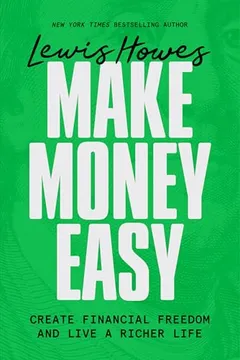
Make Money Easy is part memoir, part mindset guide, and part entrepreneurial playbook. Its unifying claim is psychological: people can improve their financial lives by understanding the stories and habits that shape their choices. The structure moves from self-awareness, through healing and purpose, toward practical habits involving planning, value creation, relationships, delegation, and financial learning. Howes makes that progression accessible through personal episodes, including childhood shame about money, a career-ending injury, and early business experiments.
The book's strongest contribution is its effort to connect emotional history with concrete economic behavior. It treats money as more than arithmetic without pretending that arithmetic is irrelevant. Its practical advice about defining goals, tracking time, explaining an offer, learning from experienced people, and avoiding uninformed investment decisions can support agency. The personal stories make abstract advice easier to remember, though their outcomes remain anecdotes rather than evidence that the same actions reliably produce wealth.
The central metaphor of money as a relationship is useful when it encourages attention, boundaries, and less reactive behavior. It becomes less persuasive when framed as though money itself responds to gratitude or generosity. Generous conduct may foster trust and relationships, but it cannot ensure financial return. Likewise, confidence and mission can help someone act, but they cannot erase low wages, discrimination, illness, caregiving burdens, or limited access to capital. These structural conditions deserve equal attention alongside internal beliefs.
The most balanced reading therefore separates the book's grounded practices from its more speculative abundance language. Emotional reflection can clarify decisions; skills and networks can increase opportunity; financial knowledge can reduce avoidable mistakes. None guarantees wealth, and the author explicitly disclaims personalized financial advice. The title's promise is best understood as making one's relationship with money less confusing and fearful, not making wealth effortless. A richer life is defined by the reader, while financial tools serve that definition rather than replacing it.
Glossary
Money Story
Learned beliefs about moneyA person's Money Story is the set of memories, assumptions, emotions, and repeated messages that shapes how they relate to money. It may begin in childhood, through observing family behavior or hearing statements about scarcity, wealth, and spending. Howes treats the story as influential but changeable, encouraging people to examine it without shame and choose more useful beliefs and actions.
Money Style
Default money tendenciesMoney Style refers to a person's recurring behavioral tendencies in money-related situations. Howes describes four broad types: the action-oriented Director, the spontaneous Energizer, the relationship-focused Shepherd, and the detail-oriented Analyzer. The categories are presented as reflection prompts rather than fixed identities or professional psychological diagnoses. A person's style can interact with learned experiences and change how they make financial decisions.
Money Strategy Formula
Style and story shape strategyThe Money Strategy Formula is Howes's shorthand for the interaction between a person's Money Style and Money Story in shaping their financial strategy. The formula is expressed as style multiplied by story equals strategy. It is a conceptual model, not a mathematical prediction. Its purpose is to help people see how natural tendencies and past experiences influence choices, while preserving the possibility of choosing a different approach.
Financial Freedom Framework
Money crossed with felt freedomThe Financial Freedom Framework compares two conditions, having money or lacking it, with two experiences, feeling free or not feeling free. It creates four possible situations, from having resources and peace to having neither, while also recognizing that someone can feel content with little money or frustrated despite having wealth. Howes uses the framework to distinguish financial resources from emotional well-being.
Meaningful Mission
Personally chosen purposeA Meaningful Mission is a personally chosen direction that feels significant and calls for effort beyond routine or status seeking. In Howes's account, it should be authentic to the individual rather than imposed by others. Money can support the mission by funding tools, teams, or wider reach, but the mission also helps determine which kinds of income and work feel worthwhile.
Priority Pendulum
Balancing money and purposeThe Priority Pendulum describes the choice between pursuing money first and assuming money will follow passion. Howes argues that either extreme can fail: income-first work may feel empty, while passion alone may not reach an audience or generate enough revenue. He favors a middle position in which purpose, income needs, personal circumstances, and the skills required to earn are considered together.
Value Appreciation Ladder
Develop and scale useful valueThe Value Appreciation Ladder is Howes's model for turning ability into economic value. It begins with recognizing useful skills, then using them to help others, improving them, presenting them clearly to potential customers or employers, and extending their reach. The model distinguishes personal worth from what a market will pay, and emphasizes that communicating and packaging an offer matter alongside skill.
Financial Knowledge Flow
Learn, share, teachFinancial Knowledge Flow is a cycle for building and circulating money knowledge. A person learns from books, mentors, and experience, shares useful lessons with peers, and teaches people who have less access to that information. Teaching can deepen understanding, while sharing supports other people's financial learning. The process frames literacy as a continuing community practice rather than a one-time course.
7 Money Habits
Seven practices for money growthThe 7 Money Habits are the book's practical sequence for preparing for a healthier financial life: cultivate a generous mindset, map a desired life and plan, recognize and monetize value, build helpful relationships, invite others into a shared vision, delegate to extend capacity, and keep learning about money. The habits combine psychological reflection with business and financial practices; they are not a guarantee of wealth.
Memory dividends
Long-lasting value from experiencesMemory dividends are the continuing value a person receives from meaningful experiences after the event itself has passed. Howes, drawing on Bill Perkins's idea, argues that spending thoughtfully on experiences at a time when someone can enjoy them may create memories that remain rewarding. The concept encourages planning for meaningful activities rather than postponing every source of enjoyment until a distant retirement.
Download PDF
Download EPUB
.epub digital book format is ideal for reading ebooks on phones, tablets, and e-readers.








