

Key Takeaways
Make comics to move a reader, not to imitate a drawing style
Story comes first. McCloud’s subject is not how to copy a favorite artist’s line or anatomy. It is how to arrange pictures and words so a reader follows, feels, and remembers a story. The book’s central idea is that comics are made through a sequence of choices about what to show and how to show it. Those choices apply across genres, from superhero adventures to manga, gag strips, and graphic novels.
Instinct gets a toolkit. The advice is aimed chiefly at immersive storytelling, the kind of reading experience that makes someone forget the page and enter the imagined world. McCloud acknowledges that comics can pursue other goals, too. His principles are meant to sharpen artistic instincts, not replace them with rules or guarantee a successful comic.
The distinction between drawing skill and storytelling skill is unusually practical. A polished image can still leave a reader confused, while a simple drawing can communicate a precise action or feeling. The book treats technique as a means of directing attention, not as proof of artistic seriousness. Its emphasis on immersion is a useful starting point, though not a universal definition of comics: some comics aim for argument, experiment, or visual play rather than narrative absorption. The strongest use of the book is therefore diagnostic. It helps creators ask what an image is doing for the reader, instead of assuming that more rendering means more meaning.
Diagnose a weak page by changing one storytelling decision at a time
Five levers shape a page. McCloud groups the artist’s decisions into five areas: which instant to show, how to frame it, what to depict, what words to use, and how the reader’s eye travels through the page. Together, these choices help explain why a scene feels clear, confusing, slow, or forceful. When a page does not work, the framework offers specific places to look instead of a vague instruction to draw better.
Clarity and intensity differ. Dynamic angles, extreme close-ups, and heavy detail can increase a page’s visual energy, but they can also obscure the action. Chester Brown’s restrained historical comic Louis Riel uses static poses and plain layouts while still drawing readers into dramatic events. The right choice depends on the scene’s purpose, not on how spectacular a panel can look.
The value of this checklist lies in separating problems that artists often treat as one. If a reader misses an action, the answer may be a clearer viewpoint, not more detail. If a scene feels flat, more visual force may help, but only if the sequence remains legible. The framework is most effective as a revision tool: change one variable, then see what the page gains or loses. It also resists a common confusion between complexity and communication. A dense composition can reward close attention, but density is not automatically depth.
Choose panel gaps that control pace, inference, and atmosphere
Readers complete the sequence. Closure is the act of mentally connecting separate comic panels into a continuous event. A creator can show a character beginning an action and then show its result, leaving the reader to supply what happened between. The size and kind of that gap shape the experience: tiny changes can slow a moment, while a jump to another place or time can compress events and invite interpretation.
Transitions set the rhythm. McCloud distinguishes six broad ways panels can relate, from small changes within one action to shifts between scenes, subjects, or aspects of a place. He also includes jumps that deliberately lack an obvious connection. A conversation may move among speakers; an atmospheric sequence may linger on details without advancing an action. The choice is not merely about continuity. It changes how quickly the reader moves and what they must infer.
This account makes a comic’s silence visible as a design decision. The reader is not simply receiving missing information; the reader is actively constructing continuity, which gives even a sparse sequence a sense of participation. The same gap can create brisk efficiency or deliberate unease, depending on what surrounds it. That flexibility is powerful, but ambiguity is not automatically productive. If a reader cannot tell whether a leap is intentional or accidental, the work may lose trust. The useful question is not whether every transition is explicit, but whether its degree of uncertainty serves the scene.
Give characters histories and desires that collide on the page
Past experience creates friction. A character’s background shapes what they fear, value, and pursue. Relationships become interesting when characters with different histories want different things, even if neither states those desires aloud. McCloud warns against spending all one’s energy inventing unseen backstory. A character history matters when it changes what happens in a readable scene.
Let readers discover the shift. In the 2002 Spider-Man film, Peter initially lets a thief escape after being cheated by a fight promoter. A father in the audience reportedly called the choice justice. When the thief then kills Peter’s uncle, the character and audience receive the moral reversal together. The scene works because the viewer has briefly shared Peter’s mistaken outlook. That shared change gives the event more force than an explanation of the lesson would.
The emphasis on conflicting wants connects character design to scene construction: personality becomes observable through choices under pressure. A biography is not dramatic merely because it is detailed. It becomes useful when it predicts, complicates, or contradicts a character’s behavior in the present. The Spider-Man example also shows how timing can align a reader’s judgment with a protagonist’s, then revise both at once. That technique depends on earned sympathy. If a story manipulates the audience into endorsing cruelty without examining the consequences, the same alignment can feel coercive rather than illuminating.
Let posture and facial details carry what dialogue conceals
Emotion is a combination. Faces communicate through interacting features, not a single switch for each feeling. Raised brows, a changing mouth, and the direction of a gaze can combine into a mixed or shifting expression. Adults also hide or manage what their faces reveal, so a character’s expression may conflict with what they say. That discrepancy is useful: readers can infer a desire or fear before the character admits it.
Bodies speak at a distance. Height, spacing, posture, and hand gestures can signal status, intimacy, tension, or discomfort. A small, clear pose may work better in a long shot, while a close-up can support subtler facial detail. McCloud treats expression guides as tools for understanding, not templates to copy. The aim is communication, not a single correct style of drawing emotion.
This approach treats emotion as evidence that readers assemble, rather than a label pasted onto a face. That makes visual storytelling more nuanced: a smile can coexist with tension, and a relaxed pose can undermine an angry line of dialogue. The scale of the panel matters because visual signals have to survive the distance at which they are seen. The model does not make every gesture universally readable, however. A pose’s meaning can depend on context, convention, and the character’s established behavior. Testing a drawing on readers can reveal whether the intended signal travels beyond the artist’s own assumptions.
Make words and pictures share the storytelling workload
Neither mode must do everything. McCloud describes seven ways words and pictures can work together. Sometimes the text carries the facts while the image sets a mood; sometimes the image tells the story and words add little. The two can repeat one another, overlap, contribute different pieces of a single meaning, tell parallel parts of a story, or combine into a collage. These are options, not boxes a creator must select before beginning.
Use each mode’s strengths. Words can name sounds, smells, tastes, and thoughts that a picture cannot directly show. Pictures can communicate setting, movement, and expression without a line of dialogue. Thought captions can create a different intimacy from a balloon, while a sound effect can become part of the visual design. The practical test is whether each element adds something, rather than competing for attention.
The framework is useful because it replaces the false choice between text-heavy and silent comics with a question of division of labor. A page can be visually rich while its captions carry precise information, or it can let images do most of the narrative work and reserve words for a sensory detail. The possible friction is productive too: when words and pictures disagree, readers notice the gap and search for a reason. But redundant explanation can flatten that interaction. Every caption need not justify itself with novelty; repetition can establish emphasis, as long as it is intentional.
Draw the setting as part of the story, not stage dressing
Place carries feeling. A room, street, or landscape can establish mood and suggest the life surrounding a scene. Small details may summon a reader’s sensory memories, while an empty panel can give attention to a place rather than a character. McCloud urges artists to think beyond the conventional wide establishing shot: a sequence of fragments can evoke a location through its objects, textures, and atmosphere.
Detail is not the same as labor. John Porcellino’s comics use very few lines yet create a strong sense of place through carefully chosen details. Edward Gorey’s silent story The West Wing makes a location itself the subject. These examples complicate the idea that backgrounds are optional or that richer environments always require exhaustive rendering. The important decision is what the reader needs to notice about the world.
Treating setting as meaningful changes the composition of a scene. If the frame points into empty space, that space is no longer neutral; the reader is invited to explore it. This makes the environment a source of mood and context, not merely a container for action. The lesson is not to fill every panel with detail. Selective detail can be more evocative because it lets the reader supply the rest. The challenge is proportion: elaborate scenery can distract from a character’s urgent choice, while a bare backdrop can make a socially or emotionally specific scene feel placeless.
Choose tools for the mark, then protect your hands
Equipment is a means. McCloud surveys pencils, pens, brushes, paper, digital drawing, and publishing options, but his broader point is that no tool is essential to making comics. He once made a sketch with an inexpensive rolling-ball pen and calculated that, at that rate, a complete 24-page comic could be drawn for a little over two dollars. The experiment is a reminder that accessible materials can be enough to begin.
Work sustainably. Tools affect line quality, speed, and workflow, so creators should choose what suits the work rather than chase professional status. Digital methods can improve flexibility, while traditional materials may offer a preferred mark. McCloud also warns that prolonged lettering and drawing can strain the hands. He recommends taking breaks when soreness starts, including short pauses at roughly 20-minute intervals during demanding work.
The tool survey is strongest when read as permission to experiment, not as a buying guide. A creator’s attachment to a particular pencil or brush can be practical because familiarity reduces friction, but equipment can also become a respectable form of procrastination. The inexpensive-pen example shifts attention back to the act of making pages. The ergonomic advice adds an important limit to romantic ideas of artistic endurance: a workflow that damages the body undermines the ability to keep working. Productivity is not simply output per hour; it also includes whether the process remains sustainable.
Study comics traditions as options, not competing commandments
Different traditions solve different problems. McCloud contrasts broad tendencies: Japanese manga often gives space to pacing, silent panels, and a range of specialized genres; European comics have often invested heavily in recurring, detailed environments; North American comics have frequently emphasized the figure and energetic staging. These are starting points for study, not descriptions of every artist in a region.
Art needs multiple values. The Four Tribes of Comics is McCloud’s way of describing artists drawn toward character and inner life, classical craft, formal experimentation, or resistance to convention. He presents these orientations as overlapping clusters, not fixed identities. Like an ecosystem, comics benefits from different artistic priorities. Declaring one approach the only legitimate one narrows the medium and turns useful differences into factional arguments.
The comparative lens gives creators a richer vocabulary than the familiar split between mainstream and alternative work. It encourages close study of pacing, setting, and expressive design across traditions, while the warning against rigid categories matters just as much. Regional patterns can illuminate history, but they can also hide variation within a culture or turn a tendency into a stereotype. The four orientations offer a similar benefit and risk: they clarify artistic motives, yet no label can fully describe a maker. Their best use is to broaden attention, not sort people into permanent camps.
Treat comics as sustained practice, not a shortcut to a career
The work is demanding. McCloud describes professional comics as difficult to sustain financially, despite the appeal of making stories for a living. Chris Ware’s estimate for his labor-intensive work is roughly 4,000 units of production time for each unit of finished narrative time. The ratio is not a universal measure, but it conveys how much effort can disappear behind a short reading experience. Web publishing offers new routes to readers, yet its markets change quickly and attention is hard to earn.
Keep learning and finishing. McCloud’s closing advice is to learn from many creators, avoid following any one of them, look for patterns, and work persistently. He also distinguishes experimentation from storytelling: formal play can reveal possibilities, but it can become a distraction when the story needs to move. A finished comic teaches more than an elaborate plan for one.
The book ends by replacing the fantasy of easy recognition with a craft ethic grounded in repetition. Its most useful tension is between exploration and completion. Experiments can expand what comics can do, but a creator who never finishes a readable work cannot learn how those ideas function across a whole story. The career discussion also deserves a time stamp: the book dates to 2006, and its market descriptions are historical snapshots rather than current business guidance. Its durable point is less about any particular platform than about the uncertainty of earning a living from comics.
Analysis
Making Comics is both a practical manual and an argument about attention. Its subject is not simply how to draw panels, but how a creator predicts and shapes a reader’s mental activity. A panel selects evidence. A transition asks the reader to infer continuity. A facial expression offers clues about motive. A setting recruits memory and sensation. The medium’s distinctive force emerges from the exchange between what the page supplies and what the reader completes.
The book is especially effective when it treats formal decisions as adjustable rather than absolute. Its five-part diagnostic can help a creator find the source of a weak page, while the contrast between clarity and intensity warns against making every moment visually loud. That is a sophisticated principle of communication: emphasis works only against a baseline. A restrained scene can gain force from contrast, just as an explosive composition can lose meaning if every panel competes to be the climax.
The character advice also links design to ethics. Simple visual shorthand can make a figure legible quickly, but the discussion of racial caricature shows that shorthand carries history. A design is not socially neutral merely because it is efficient. The same attention that helps an artist distinguish characters should also prompt scrutiny of the assumptions embedded in familiar visual types.
The book’s main limitation is its chosen center of gravity. It treats immersive storytelling as the usual aim, which is a fruitful foundation but not the only reason to make comics. McCloud acknowledges that other ambitions exist, and the book’s own attention to experimentation helps keep its prescriptions from becoming rules. Its recommendations about specific tools and the comics market are also situated in 2006. Those details have aged, while the deeper advice has not: study widely, make deliberate choices, test what readers understand, and finish work. The book offers a grammar for making comics, not a formula for making them all alike.
Review Summary
Making Comics receives high praise from readers for its insightful and comprehensive approach to comic creation. Many reviewers appreciate McCloud's clear explanations, practical advice, and engaging visual format. The book is lauded for its usefulness to both aspiring comic artists and writers, as well as those simply interested in understanding the medium better. Readers find it inspiring, entertaining, and educational, often comparing it favorably to McCloud's previous work. Some note its value extends beyond comics to storytelling in general, while a few mention certain sections may be more relevant to artists than writers.
People Also Read
Glossary
The Five Choices
Page-level storytelling decisionsMcCloud’s framework for examining five recurring decisions in comics: which moment to show, how to frame it, what images to include, what words to use, and how to guide the reader’s eye through the page. The choices help artists diagnose clarity, pacing, and emphasis without treating the framework as a mandatory formula.
Closure
Reader-completed visual gapsThe mental process by which readers connect separate panels and infer what happens between them. A comic may show the beginning and result of an action while leaving the intervening event unseen. Readers supply that missing continuity, and the kind of gap affects pace, interpretation, and the amount of inference required.
The Six Transitions
Panel relationship categoriesMcCloud’s classification of six broad relationships between consecutive panels. They range from tiny changes within a moment or action to shifts among subjects, scenes, or aspects of a setting, and include sequences with no apparent connection. The categories help creators consider how panel changes affect speed, continuity, and atmosphere.
The 7 Types of W/P Combination
Ways words and images interactMcCloud’s categories for how written language and pictures contribute to a comic. One may carry most of the information, both may repeat or overlap, each may supply different pieces of a shared meaning, they may tell parallel parts of a story, or they may be combined as montage. The categories describe possibilities, not rules for planning every page.
The masking effect
Simple figures invite identificationMcCloud’s idea that simplified, cartoon-like characters can make it easier for readers to identify with them, while more realistically drawn settings can convey sensory detail. The contrast gives different visual treatments different jobs: the character can serve as an accessible emotional presence, while the environment evokes a more concrete world.
Four tribes of comics
Overlapping artistic orientationsMcCloud’s metaphor for four broad clusters of artistic priorities: animists emphasize characters as living presences, classicists value established craft and beauty, formalists explore the medium’s structures, and iconoclasts resist convention. He presents these as overlapping tendencies rather than fixed groups, arguing that different priorities help sustain a varied comics culture.
FAQ
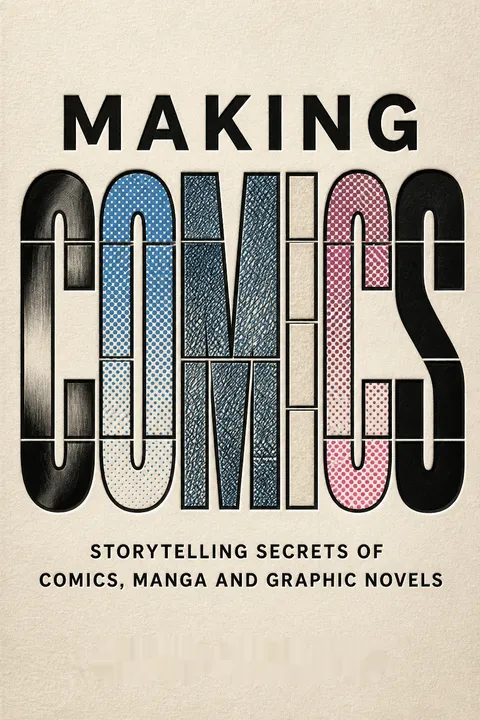
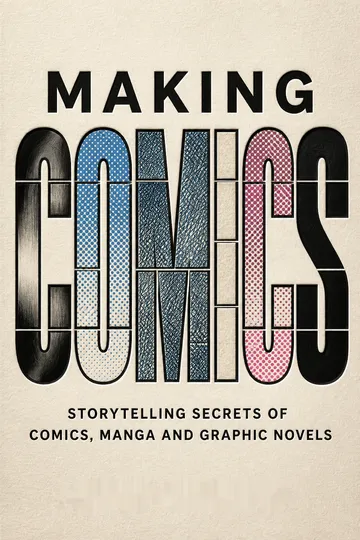
What’s "Making Comics: Storytelling Secrets of Comics, Manga and Graphic Novels" by Scott McCloud about?
- Comprehensive guide to comics: The book is a detailed exploration of the art and craft of making comics, focusing on storytelling techniques, visual communication, and the unique language of comics.
- Beyond drawing skills: McCloud emphasizes that making comics is more than just drawing well; it’s about making storytelling choices that engage and immerse readers.
- Covers all aspects: Topics include panel composition, character design, world-building, the integration of words and pictures, and the tools and technology used in comics creation.
- Applicable to all styles: Whether you’re interested in graphic novels, superhero comics, manga, strips, or webcomics, the book provides principles that apply across genres and formats.
Why should I read "Making Comics" by Scott McCloud?
- Unique focus on storytelling: Unlike most how-to-draw books, McCloud’s work delves into the storytelling secrets and narrative techniques that are often overlooked.
- For creators and fans: The book is valuable for aspiring comics creators, teachers, and anyone interested in understanding how comics work on a deeper level.
- Practical and theoretical: It combines hands-on exercises with theoretical frameworks, helping readers both practice and understand the craft.
- Industry relevance: McCloud addresses the rapidly changing comics industry, ensuring the advice is relevant for both print and digital creators.
What are the key takeaways from "Making Comics" by Scott McCloud?
- Five storytelling choices: The book identifies five crucial choices in comics creation—moment, frame, image, word, and flow—that shape how stories are told.
- Integration of words and pictures: Effective comics require a balance and interplay between visual and verbal elements, using seven types of word/picture combinations.
- Character and world-building: Memorable comics feature believable characters with inner lives and distinctive designs, set in rich, immersive worlds.
- Tools and methods matter: The choice of tools, from traditional pens to digital tablets, influences the creative process but should serve the story, not dictate it.
How does Scott McCloud define the "Five Choices" in comics storytelling?
- Choice of Moment: Deciding which moments in the story to depict as panels, and what to leave out, to maximize clarity and impact.
- Choice of Frame: Selecting the distance, angle, and point of view for each panel, affecting how readers perceive action and emotion.
- Choice of Image: Determining the level of detail, style, and what visual information to include, balancing clarity with mood.
- Choice of Word: Choosing what dialogue, narration, or sound effects to include, and how they interact with the images.
- Choice of Flow: Arranging panels and page layouts to guide the reader’s eye and control the pacing of the story.
What are the "Seven Types of Word/Picture Combinations" in "Making Comics" by Scott McCloud?
- Word-Specific: Words carry most of the meaning, with images providing illustration or atmosphere.
- Picture-Specific: Images tell the story, with words adding little or serving as minor labels.
- Duo-Specific: Words and pictures send the same message, reinforcing each other.
- Interdependent: Words and pictures work together, each providing information the other lacks.
- Intersecting: Words and pictures follow different courses, with meanings intersecting at key points.
- Parallel: Words and pictures appear to follow separate paths without intersecting.
- Montage: Words are treated as part of the image, blending visually and conceptually.
How does "Making Comics" by Scott McCloud approach character design and development?
- Visual distinction: The book stresses the importance of making characters visually unique and easily recognizable, even in simple styles.
- Inner life and motivation: Characters should have clear desires, backgrounds, and personalities that drive their actions and relationships.
- Expressive traits: Mastery of facial expressions and body language is essential for conveying emotion and intent.
- Avoiding stereotypes: McCloud discusses the history and pitfalls of visual stereotypes in comics, urging creators to be thoughtful and original.
What advice does Scott McCloud give on world-building in comics?
- Sense of place: Creating immersive environments is crucial; backgrounds should evoke mood and context, not just fill space.
- Establishing shots: Use wide or detailed panels to orient readers and set the scene, varying the approach based on story needs.
- Reference and research: Drawing from life, using photos, and studying real-world details enhance believability and richness.
- Balancing detail: McCloud warns against both overloading and neglecting backgrounds, advocating for purposeful, story-driven choices.
How does "Making Comics" by Scott McCloud address the integration of words and images?
- Mutual enhancement: Words and pictures should work together, each enhancing the other’s meaning and emotional impact.
- Word balloons and captions: The book explores the design and placement of word balloons, thought bubbles, and captions for clarity and mood.
- Sound effects and lettering: Attention to the style and integration of sound effects and lettering can add energy and nuance to a comic.
- Experimentation encouraged: McCloud encourages creators to experiment with different combinations and to trust their instincts while remaining aware of the effects.
What tools and techniques does Scott McCloud recommend for making comics?
- Traditional tools: The book covers pencils, pens, brushes, paper, and inking techniques, with advice from various professional artists.
- Digital tools: McCloud discusses the transition to digital, including tablets, software like Photoshop and Illustrator, and digital lettering.
- Choosing what works: He emphasizes that the best tools are those that suit your style and workflow, not necessarily the most expensive or popular.
- Care and ergonomics: Practical tips include taking care of your hands, setting up a comfortable workspace, and maintaining your tools.
How does "Making Comics" by Scott McCloud compare comics styles and cultures (e.g., manga, European, American)?
- Cultural differences: The book examines how Japanese manga, European bandes dessinées, and American comics differ in pacing, framing, genre diversity, and visual style.
- Influence and convergence: McCloud notes increasing cross-pollination between styles, with artists borrowing techniques and genres from each other.
- Genre maturity: Manga is highlighted for its wide range of genres and storytelling approaches, while European comics are praised for world-building.
- No single right way: The book encourages learning from all traditions and finding a personal approach that fits your story and audience.
What are the "Four Tribes" of comics creators described by Scott McCloud?
- Animists: Focused on storytelling and character, aiming to create immersive, emotionally engaging narratives.
- Classicists: Value craft, beauty, and mastery of traditional techniques, often emphasizing clear, elegant visuals.
- Formalists: Interested in experimenting with the form and structure of comics, pushing boundaries and exploring new possibilities.
- Iconoclasts: Driven by personal expression, often challenging conventions and prioritizing authenticity over polish.
- Ecosystem metaphor: McCloud suggests that all four "tribes" are necessary for a healthy comics culture, and most creators blend elements from each.
What are the best quotes from "Making Comics" by Scott McCloud and what do they mean?
- "Learn from everyone. Follow no one. Watch for patterns. Work like hell." – McCloud’s personal rules for creative growth, emphasizing openness, independence, observation, and hard work.
- "Telling stories is why comics exist." – Highlights the centrality of narrative to the medium, beyond just drawing skills.
- "Every technique we use begins its life as a conscious process and, with luck, gradually becomes second nature." – Stresses the importance of practice and developing instinct through mindful learning.
- "You could ignore everything I’ve written and still produce a great comic. You could follow every suggestion I’ve made and still turn out a piece of crap." – Reminds readers that rules and advice are guides, not guarantees, and that creativity ultimately comes from within.
- "Comics is an ecosystem, and each of the four tribes has a role to play in keeping it healthy and growing." – Encourages respect for different creative philosophies and the diversity of the comics community.
The Comic Books Series
Download PDF
Download EPUB
.epub digital book format is ideal for reading ebooks on phones, tablets, and e-readers.








