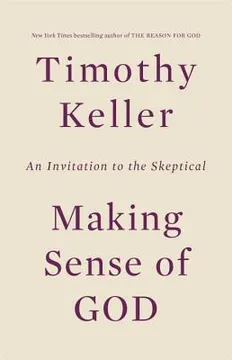


Key Takeaways
Compare worldviews; secularism is a belief system, not neutral ground.
Name the assumptions. Keller distinguishes political secularism, which separates religion and government, from a secular worldview that treats nature as all reality and this life as the only horizon. He supports the first while challenging the second. He also questions the claim that religious people rely on faith while secular people rely on evidence alone. The rule that only empirically proven claims count as knowledge cannot itself be proved by an experiment, and it cannot establish moral claims such as equal human worth.
Test both sides. Every worldview rests on assumptions about what is real, what counts as evidence, and what makes life good. Keller calls the belief that science alone decides what is real “exclusive rationality.” He argues that beliefs should be compared for how well they explain experience, whether they cohere, and whether people can live by them.
The distinction between secular government and secular metaphysics matters: pluralistic societies need not privilege a faith, but that civic arrangement does not settle whether transcendence exists. Keller’s strongest move is methodological. It replaces a one-sided demand for proof with comparison of rival explanations. Still, exposing the assumptions behind naturalism does not establish Christianity by itself. Scientific methods remain exceptionally powerful for studying natural causes; the further claim that natural causes are all that exist is a philosophical conclusion, not a scientific result.
Modernization has not made religion obsolete, and global demographics complicate the story.
Notice the uneven trend. Keller challenges the prediction that education and modernization inevitably erase religion. The 2015 Pew projection he cites expected the worldwide share of atheists, agnostics, and religiously unaffiliated people to fall from 16.4 percent to 13.2 percent over roughly four decades, even as unaffiliation was rising in the United States and Europe. He points to religious growth in regions including sub-Saharan Africa and China, and to the stronger retention and conversion rates of some traditional religious communities.
Distinguish decline from change. In the book’s account, inherited, moderate religion is more vulnerable than faith people actively choose and practice. Religious populations also tend to have more children. These are demographic explanations for religion’s persistence, not evidence that a religion is true.
This evidence usefully breaks the equation between modernity and unbelief. It also reminds readers that religious change is global, not simply a story about Western institutions. The careful limit is that population growth, conversion, and family size explain who may belong to a community, not whether its central claims are true. Projections depend on assumptions about future behavior, too. The chapter is most persuasive as a reason to take religion seriously, rather than as a forecast that settles the debate.
Let beauty and moral experience challenge a closed material account.
Attend to what resists reduction. Keller describes “fullness,” a term Charles Taylor uses for experiences when ordinary life suddenly feels charged with meaning, coherence, beauty, or presence. Art, grief, and moments of wonder can feel like more than useful brain activity. The dying neurosurgeon Paul Kalanithi, once an atheist, argued that a scientific account of matter could not capture what love, meaning, virtue, or suffering are like as lived realities. Art historian Kenneth Clark and writer Barbara Ehrenreich also reported experiences of transcendence, though they interpreted them differently.
Do not confuse explanation with dismissal. A biological account may describe mechanisms involved in emotion or aesthetic response. Keller asks whether that account fully explains why love and beauty matter, or whether it prematurely treats their significance as illusion.
The useful distinction is between explaining how an experience occurs and deciding what it means. A neural account of music need not cancel its emotional or cultural significance, just as knowing how vision works does not make a landscape unreal. These experiences can motivate metaphysical questions, but they do not uniquely identify their answer: different traditions can interpret awe, grief, and beauty in different ways. Keller’s case is strongest when such moments count as evidence to weigh, not as proof that admits no alternative.
Give your purpose a horizon suffering cannot erase.
Meaning reaches beyond activity. Keller defines meaning as both purpose and significance: having a reason to act, and believing the action serves something beyond the self. Atul Gawande recounts a nursing home where residents cared for animals. People who had seemed withdrawn began speaking and walking; deaths fell by 15 percent. The episode illustrates how responsibility and contribution can restore a reason to live.
Ask what endures. Secular people can find real purpose in parenting, work, or service, Keller grants, but he calls such purposes created meanings when they depend on chosen goals within this life. Discovered meaning, in his account, rests on a purpose that exists beyond personal choice. Viktor Frankl’s account of concentration-camp prisoners argues that transcendent commitments could sustain dignity when work, status, and family life were taken away.
The nursing-home example makes purpose concrete: care is not a decorative extra but a way people become needed by one another. Frankl’s experience sharpens the question of whether meaning can survive when its ordinary objects disappear. Yet the contrast between created and discovered meaning is not exhaustive. A chosen commitment can be deeply shared and durable, while a claimed divine purpose can be misused. The practical test is not only where meaning comes from, but what kind of courage, care, and integrity it produces.
Reorder what you love instead of chasing the next high.
Success can disappoint. Ecclesiastes imagines a life with wealth, achievement, pleasure, and status, yet finds none of them sufficient. Keller draws on research linking wealth only weakly with contentment and describes the “hedonic treadmill”: gains bring a temporary lift, then become the new normal, prompting pursuit of the next upgrade. The woman in Peggy Lee’s song keeps finding that the experiences she expected to satisfy her leave something missing.
Change the hierarchy. Augustine’s account is that discontent comes from “ordered loves” gone wrong: good things become destructive when treated as the ultimate source of security or worth. The answer, in Keller’s Christian framing, is not to love family, work, or pleasure less, but to love God above them. That makes other goods gifts to enjoy, rather than demands they cannot meet.
This diagnosis distinguishes the object of desire from the role assigned to it. A career or relationship can be worthwhile and still become crushing when required to provide total security or identity. That insight connects naturally to the way people adapt to gains: satisfaction often fades when a new condition becomes routine. The theological solution, however, depends on whether a reader believes God is real and loving. Without that premise, the diagnosis still invites a useful audit: which good thing has been asked to do an impossible job?
Choose constraints that make love and lasting freedom possible.
Freedom has a direction. Keller distinguishes negative liberty, freedom from interference, from positive liberty, freedom to pursue a meaningful good. Complete freedom to follow every impulse is impossible because desires conflict. A man who loves both favorite foods and time with his grandchildren may need to restrict his diet to preserve his health. Students, athletes, and musicians likewise accept limits in order to gain abilities they could not otherwise have.
Commitment can liberate. Close relationships require people to give up some independence, such as changing plans or caring for a sick partner. Keller argues that the harm principle, the idea that freedom ends where harm begins, cannot decide disputes unless people first agree on what counts as harm and what a good life is. Every practical account of freedom therefore rests on values.
The chapter’s central distinction helps expose the difference between having options and being able to do something worthwhile with them. Discipline can enlarge agency when it develops capacities or protects relationships. But constraint is not automatically liberating: imposed rules can preserve injustice, and people may disagree about which ends deserve sacrifice. A good account of freedom must ask both who sets the limits and whether those limits enable human flourishing, rather than treating either autonomy or obedience as sufficient on its own.
Receive a secure identity so failure need not define you.
Performance makes a fragile self. Keller contrasts “expressive individualism,” the idea that identity comes from expressing an inner self, with older identities grounded in social roles. He argues that inner desires conflict and change, while self-approval still depends on recognition from other people. The Christian alternative is an identity received through grace: a person is valued by God, Keller argues, not because of achievement or moral success.
Separate worth from vocation. Two aspiring actors in Keller’s church auditioned for the same major role and were both rejected. Sam, whose Christian faith had become central, was disappointed but continued with work and acting as one part of life. Jim, still measuring his worth by acting, was devastated and drifted between jobs. Keller calls the Christian model cross-shaped because it joins humility about human failure with confidence in being loved.
The actors’ contrasting reactions show how the same setback can have radically different psychological reach depending on what it threatens. This is a valuable account of identity as more than a private feeling: people need recognition, but tying all worth to a single audience or achievement makes rejection existential. The proposed security in divine acceptance is distinctive, though not empirically transferable to every reader. Its ethical measure is whether confidence reduces defensiveness and comparison, rather than becoming another badge of superiority.
Build hope on resurrection, not an optimistic forecast.
Hope is more than prediction. Andrew Delbanco traces American hope through three centers: God, nation, and finally the self. Keller argues that secular optimism about endless progress is vulnerable to war, economic limits, and environmental risk. Hope, by contrast, can affirm life without assuming history is steadily improving. Howard Thurman describes how Christian spirituals gave enslaved people a vision of divine justice and reunion that could endure when earthly prospects were grim.
Face death with a concrete promise. Christianity claims that Jesus’s resurrection points to personal, embodied life in a renewed world, not merely survival as matter or absorption into an impersonal whole. The promise is relational, involving love without separation, and is offered as grace rather than a reward for moral achievement. Keller presents this future hope as a way to confront grief without pretending death is natural or harmless.
Hope grounded in a future beyond present conditions can protect people from making immediate success the measure of life. Thurman’s example also resists the simplistic charge that afterlife belief must pacify the oppressed; the expectation of judgment can sustain resistance to injustice. Still, hope can become escapism if it excuses preventable suffering now. The chapter’s strongest version holds future restoration and present action together: confidence in justice should make injustice harder to tolerate, not easier to ignore.
Ground universal rights in a story that also restrains power.
Obligation needs an account. Keller argues that evolution and social convention can help explain moral feelings, but do not by themselves explain why a person is obligated to act justly when selfishness would pay. He draws on philosopher Alasdair MacIntyre’s concept of telos, a purpose or end that makes it possible to call something good or defective. Without an account of what human beings are for, moral judgments risk becoming preferences presented as universal rules.
Justice needs humility, too. Keller acknowledges that religious certainty has justified abuse. He argues that the Christian story can resist domination because it repeatedly centers the poor and marginalized, and because its central figure dies for enemies. The cross, in this account, reminds believers that they need grace too, making justice a demand without granting moral innocence to the people pursuing it.
This pairing addresses a real political problem: rights need more than force if they are to command respect across disagreement, while moral certainty needs safeguards against becoming a warrant for coercion. The claim that Christian teaching uniquely supplies those safeguards is more debatable than the need for safeguards itself. Rights have also been defended through nonreligious ethical reasoning, and religious institutions have sometimes resisted them. Keller’s framework is most useful as an internal test: does a community’s account of truth make it more accountable to the vulnerable?
Follow evidence from cosmic existence to Jesus without demanding certainty.
Compare explanations. Keller surveys six arguments for God: existence, the fine-tuning of physical constants, moral realism, consciousness, reason, and beauty. These are not laboratory proofs. They are claims that theism may explain features of reality that materialism struggles to account for, such as why anything exists, why the universe permits life, and why moral obligation feels objective. Keller argues that both belief and unbelief involve philosophical commitments that exceed direct empirical demonstration.
Ask who Jesus was. Keller then points to the Gospel accounts, written within the lifetimes of eyewitnesses according to the book’s argument, and to the early worship of Jesus, the reported empty tomb, and accounts of followers who claimed to see him alive. He presents the resurrection as the hinge of Christian belief, while acknowledging that suffering, biblical violence, judgment, and science remain serious objections requiring fuller examination.
The cumulative case is more persuasive as an invitation to inquiry than as a knockout argument. Explanatory fit matters in science and history, but different people judge simplicity, prior probability, and testimony differently. Evidence for Jesus’s existence is not identical to evidence for the resurrection, and historical arguments remain open to challenge. Keller’s strength is to make the skeptic’s choice less automatic: the question becomes which account best fits the evidence and human experience, not which side can claim certainty without assumptions.
Analysis
Keller’s book is a work of Christian apologetics aimed less at converting through a single proof than at making Christianity seem intellectually and existentially worth examining. Its structure is cumulative: first it challenges the picture of secularism as neutral reason, then compares secular and Christian answers to meaning, satisfaction, freedom, identity, hope, and justice, and finally turns to arguments for God and the historical case for Jesus. The narrative repeatedly moves from abstract claims to human examples, including dying patients, prisoners, rejected actors, and people confronting injustice. That makes the argument memorable, though it also means its examples sometimes carry more emotional force than evidential weight.
The most valuable method is comparative rather than triumphalist. Keller asks whether a worldview can account for experiences its adherents treat as real, whether its commitments fit together, and whether it gives people resources to live through suffering. This is a serious challenge to the assumption that naturalism is simply the default result of science. Yet the argument sometimes moves too quickly from showing that materialism has explanatory difficulties to treating Christian theism as the best available answer. Non-theistic moral realism, accounts of meaning grounded in relationships, and alternative theories of consciousness deserve fuller treatment than a short invitation can provide. Likewise, Christianity’s historical contributions to rights and justice are important, but they do not erase competing causes or the record of religious coercion.
The book’s strongest theological insight is that grace is meant to reshape motivation, not merely provide a doctrine: a person secure in unearned acceptance should be less driven by status and less eager to condemn outsiders. That claim can be tested in practice, even by readers who do not accept its metaphysical premise. Its central invitation is therefore not to abandon reason for faith, but to notice that reason always works within assumptions, then examine which worldview best makes sense of both human dignity and human failure.
Review Summary
Making Sense of God receives overwhelmingly positive reviews, with readers praising Keller's humble, well-researched, and winsome approach to Christian apologetics. Many appreciate his respectful engagement with secular and atheist perspectives, avoiding straw man arguments. Reviewers highlight his compelling critiques of secularism across topics like meaning, identity, morality, and hope. Some critics feel the arguments won't persuade true skeptics, noting occasional logical gaps. Overall, the book is widely recommended for both believers seeking deeper understanding and skeptics open to reconsidering Christianity's intellectual and existential merits.
Glossary
Exclusive rationality
science as sole truth testKeller’s term for the view that empirical science alone determines what is real and factual, and that claims lacking decisive empirical proof should not count as truth. He argues that this standard cannot itself be established by empirical proof and cannot adequately ground many ordinary commitments, including moral judgments.
Subtraction story
secularity as mere subtractionCharles Taylor’s label for the account that secular people arrive at nonbelief simply by removing religious superstition and retaining pure reason. Keller argues that becoming secular involves adopting new assumptions about reality, knowledge, and morality, rather than merely losing prior beliefs.
Fullness
felt encounter with transcendenceA term used by Charles Taylor for experiences in which ordinary life seems suddenly charged with meaning, coherence, beauty, or presence. Such experiences may be interpreted religiously or otherwise, but Keller argues that they challenge a view of life that treats material, measurable reality as the whole of existence.
Created meaning
purpose chosen by individualsA purpose people assign to their lives through commitments such as family, work, or a cause. Keller accepts that these purposes can motivate real service and satisfaction. He argues, however, that they depend on human choice and circumstances, making them less durable than meaning understood as an objective purpose beyond the self.
Discovered meaning
purpose grounded beyond selfMeaning understood as existing independently of personal preference because life has an objective purpose. In Keller’s Christian account, people discover rather than invent their deepest purpose by relating to God. He argues that this can give purpose a durability that self-chosen goals cannot guarantee.
Ordered loves
rightly ranked attachmentsAugustine’s account of how a person’s loves shape character and conduct. Loves are disordered when a limited good, such as achievement or family approval, is treated as ultimate or valued above a more important good. Keller uses the idea to explain dissatisfaction and the harm caused by asking finite things to provide total fulfillment.
Expressive individualism
identity through inner expressionA modern Western approach to identity in which people are encouraged to discover and express an inner core of feelings and desires, rather than defining themselves primarily through inherited roles or community duties. Keller argues that inner desires conflict and change, and that self-definition still depends on social recognition.
Negative liberty
freedom from interferenceFreedom understood as the absence of external barriers or constraints on choice. Keller contrasts it with freedom directed toward a worthwhile end. He argues that unrestricted choice cannot be the whole of freedom, because relationships, skills, and health often require limits that enable people to do things they otherwise could not.
Telos
human purpose or endA Greek philosophical term for the end, purpose, or fulfillment toward which something is directed. Drawing on Alasdair MacIntyre, Keller argues that judgments about whether a person or action is good depend on knowing what human life is for. Without a telos, moral evaluations risk being reduced to subjective preference.
Moral argument
argument from moral obligationAn argument for God that begins from the claim that some moral obligations are objectively binding, regardless of individual preference or cultural convention. Keller argues that a personal God provides a more coherent basis for such obligation than an impersonal universe. He presents this as evidence for God, not as a proof that compels every reasonable person.
Cross-shaped identity
identity shaped by the crossKeller’s description of Christian identity grounded in the cross of Jesus. The cross is understood as showing both human moral failure and divine love. The resulting identity should combine humility with security: people need not claim superiority over others, yet do not depend on achievement or approval for their worth.
Nontotalizing metanarrative
universal truth resisting dominationA proposed framework for affirming universal moral values without using them to dominate dissenters or vulnerable groups. Keller presents the biblical story as a candidate because it acknowledges human limits, locates final redemption in God rather than human mastery, and repeatedly centers people who lack social power.
About the Author
Other books by Timothy J. Keller







Download PDF
Download EPUB
.epub digital book format is ideal for reading ebooks on phones, tablets, and e-readers.








