

Key Takeaways
Train your mind around a purpose, then reinforce it with daily practice
A trainable capacity. The book calls mindpower the ability to use thought, emotion, and understanding to shape behavior. Its central model has three supports: a foundation of personal direction, mental toughness for handling difficulty, and habits that make useful practices repeatable. The opening story gives this idea a dramatic frame: after a golf ball severely injured his eye, Stéphane followed medical advice, rested, and repeatedly imagined clear vision. His sight began returning on day 21 and was fully restored by day 42.
Belief needs boundaries. The authors credit belief and visualization as part of his recovery, but the story cannot show that they caused it. The more practical lesson is that mental rehearsal can help someone stay engaged with a recovery plan, while professional medical care remains essential.
The book is strongest when it treats mental training as a practice rather than a supernatural power. Visualization can sharpen attention, prepare action, and support persistence, all plausible routes to better performance. The eye story is memorable precisely because it is emotionally charged, but a single recovery cannot establish what produced it. A careful reader can keep the useful question, what mental practice helps me participate constructively in a difficult process, without concluding that belief controls biology or replaces clinicians.
Let ranked values choose between passion, pay, and prestige
Make priorities visible. Values are the qualities a person considers important, and ranking them turns vague preferences into a decision tool. A client named Martin faced two similarly paid jobs: one matched his passion, while the other offered a stronger career path. Listing and ordering eight career values, including family support, stability, and meaningful work, showed that the second role fit far more of what mattered to him.
Passion has several doors. The authors describe four possible sources: enjoying the work itself, serving a larger cause, caring about how well the work is done, or doing it for particular people. Their Three Ps are principles, passion, and purpose. The point is not to love every task, but to check whether daily work and personal definitions of success fit a considered direction.
This approach usefully separates what feels exciting from what is actually important. In decision science, writing down criteria can reduce the pull of whichever option is most vivid at the moment. The four sources of passion also loosen the common idea that meaningful work must be enjoyable in every detail. A useful caution is that ranked values are not permanent commandments. Family needs, health, and economic conditions change, so the ranking is best treated as a current map, not a lifelong contract.
Treat recurring failures as clues to learned beliefs, not fate
Look for the pattern. The authors use the term running parachutes for learned beliefs and unresolved emotions that create drag in a person's life. They argue that some patterns begin through early experience and observation. A client named Gary noticed that he withdrew from his wife whenever work became demanding. He connected this reaction to watching his father experience repeated marital breakdowns while succeeding professionally, and to an assumption that work and marriage could not both go well.
Investigate without self-blame. Another client, Lucas, had been fired from three jobs in three years. He associated the pattern with childhood memories of his father losing jobs. In the book's model, noticing a possible origin creates a chance to question a belief and choose a different response. A memory can suggest a hypothesis, though it does not prove the cause of a present problem.
The useful move is from self-condemnation to curiosity: repeated behavior may have a history, and a history can be examined. This resembles cognitive behavioral approaches that identify assumptions and test how they affect actions. But autobiographical memory is reconstructive, and an emotionally compelling childhood explanation is not necessarily the true or only explanation. The strongest use of this exercise is exploratory: notice patterns, look for evidence in present behavior, and seek qualified help when distress is serious. Responsibility should increase agency, not turn every misfortune into a person's fault.
Rehearse the outcome, but let real-world evidence guide the plan
Make the target concrete. The book encourages imagining a desired result in sensory detail, then directing attention toward opportunities that fit it. It describes the reticular activating system, or RAS, as a brain network involved in regulating alertness and selecting information for attention. In a cited basketball experiment, players who mentally rehearsed free throws reportedly improved by 23 percent, close to the 24 percent improvement among players who practiced physically. That supports mental rehearsal as a potential supplement, not a substitute for practice.
Aim attention deliberately. The authors also recommend replacing a focus on what is unwanted with a clearer description of what is wanted. Their client seeking a kind partner shifted from cataloguing past bad dates to naming the qualities she hoped to find. The practical sequence is to imagine a target, notice relevant options, and act on them.
Mental rehearsal has credible uses in skill learning because imagining an action can engage some of the same planning processes used during performance. Attention also changes which opportunities are noticed. That is more grounded than the book's suggestion that imagined events become indistinguishable from real ones or that focus makes outcomes manifest. Visualization works best when it includes the process and obstacles, not just the triumphant ending. A vivid goal can orient effort; evidence, feedback, and access to opportunity determine whether the plan needs to change.
Step beyond comfort, then use mistakes as information
Practice brave action. A DJ client named Ziggy was earning about $900 a month and wanted to reach $9,000. She resisted the sales work she believed the goal required. After agreeing to distribute many more demo recordings, she eventually built a six-figure income, according to the authors. Her story shows how a new result may require behavior that does not yet feel natural.
Learn rather than freeze. The book's ICE Method offers a response to mistakes: identify what happened, change something based on the lesson, and embrace the fact that learning involved an error. The authors also recommend aiming for excellent work rather than waiting for perfection. Fear can warn of real danger, so the lesson is not to ignore it. It is to distinguish a manageable risk from a genuine threat, then take the next considered step.
Ziggy's story makes a strong behavioral point: confidence can follow action instead of preceding it. This fits exposure-based learning, in which a person gradually encounters a feared situation and discovers what they can handle. The needed nuance is that not all discomfort is growth. Unsafe work, exploitative relationships, or severe distress should not be reframed as character tests. The error-review practice is especially useful because it converts shame into specific process changes. Courage is not the absence of caution; it is action informed by an honest assessment of risk.
Own your next response without pretending every hardship was your fault
Find room to choose. The authors use Viktor Frankl's account of surviving Nazi concentration camps to underline the difference between what happens and how a person responds. Frankl sought meaning in imagining future work and in unfinished responsibilities. The book applies this idea to ordinary setbacks, too. When Stéphane was left to manage daily life at sixteen, he took jobs, continued school, and treated the hardship as a challenge to meet rather than a reason to stop.
Reframe without erasing. Finding a silver lining means looking for a constructive interpretation, not claiming that a painful event was good or deserved. The authors pair this with taking responsibility for the next action. That can restore agency, but it does not mean people cause every circumstance or must feel grateful for harm. Some events require protection, support, or grief before any useful meaning can emerge.
This distinction between responsibility and blame is ethically important. A person may not control the event, yet may retain choices about help-seeking, boundaries, and next steps. Meaning-making can support resilience, but it should remain voluntary: insisting on a positive lesson too soon can silence grief or excuse injustice. Frankl's experience is not a template for comparing everyday frustration with atrocity. Used carefully, the idea offers a modest and powerful question: given what cannot be changed right now, what response remains possible?
Use breath and gratitude to reset stress before it runs the day
Start with the body. Box breathing is a paced cycle of inhaling, holding, exhaling, and holding again for equal counts. The authors suggest beginning with three seconds for each stage and repeating until calmer. Shalee describes using guided breathing to avoid fainting while receiving stitches after a mountain-bike crash. The book also cites an eight-week breathing intervention with twenty sessions, reporting reduced negative affect and lower cortisol in the trained group.
Add a deliberate pause. Gratitude directs attention toward something valued, while the Satisfaction State is a brief moment of imagined enjoyment after completing a task. These practices aim to interrupt a hurried, negative loop and make effort feel rewarding. They are small resets, not cures for chronic stress or substitutes for treatment when anxiety, trauma, or depression is interfering with daily life.
Slow breathing offers a practical way to influence arousal because breathing patterns interact with autonomic regulation. Pairing it with a pause of appreciation may also interrupt habitual rumination and make accomplishments more noticeable. The book sometimes presents gratitude as if it were impossible to experience negative emotion alongside it, which overstates the case: people can feel grateful and distressed at once. That does not make the practice useless. It works better as an additional emotional resource than as a demand to replace difficult feelings with positivity.
Schedule deep work around priorities, not the dopamine of easy tasks
Put the important first. The authors adapt the familiar big-rock image to weekly planning: identify the few essential outcomes before filling the calendar with smaller tasks. Their Most Valuable Priorities, or MVPs, sort work by importance, with lower-priority items held back until the major work is done. Daily planning then selects a small number of priorities from the weekly list.
Give focus a container. The book recommends 90-minute work sessions followed by 15 to 30 minutes away from the task. During a session, work on one project and silence likely interruptions. This counters the temptation to clear easy messages for the quick feeling of completion. It also gives the mind a chance to rest rather than treating every open hour as usable work time. The schedule is an ideal to adapt, not a test to pass perfectly.
The central insight is not that everyone should use precisely 90-minute blocks, but that attention has switching costs and needs recovery. Research on task switching supports protecting uninterrupted work, while calendar design can make priorities visible before the day gets crowded. Yet an intense schedule can become another source of pressure if it leaves no room for care work, emergencies, or creative wandering. A robust plan therefore includes buffers and slack. The measure of planning is not calendar obedience; it is whether meaningful work gets done without exhausting the person doing it.
Write specific goals, then convert them into near-term proof of progress
Define the destination. The authors call ambitious annual targets Big Effing Goals, or BEGs. They recommend writing goals that are specific, measurable, relevant, and time-bound, while choosing a scale that stretches without becoming meaningless. They also suggest reviewing the previous year's wins and lessons before setting new targets.
Shrink the next step. Mini-wins are smaller milestones that build toward a larger goal. The book's example is a salesperson who aimed to double annual income, then divided that target into quarterly amounts. It also proposes listing 100 wants, selecting ten for the coming year, and narrowing those to three for the next month. The point is to connect long-range ambition to actions on the weekly calendar. A goal is not evidence of progress until behavior changes.
Specific goals help coordinate effort and make progress easier to evaluate, especially when paired with feedback and realistic milestones. The book's emphasis on writing goals and translating them into daily priorities is more actionable than relying on inspiration. Still, goals can distort judgment if they reward only a measurable outcome, such as revenue, while ignoring health, relationships, or ethical costs. Targets should guide attention without becoming the sole definition of success. Regular review matters because circumstances shift and a sensible goal may need revision.
Make new routines concrete and attach them to cues you already have
Specify the start. An implementation intention is a plan that identifies when and where a behavior will happen. Habit stacking links a new routine to an existing one, making the familiar behavior a cue for the new action. The book combines these into a Habit Hack Agreement, a written commitment that names the cue, behavior, time, and place.
Repeat, then adjust. The authors cite a study in which 91 percent of participants who planned when and where to exercise worked out at least once that week, compared with 35 to 38 percent in two other groups. That result concerns one week's activity, not permanent habit formation. The larger point is that removing ambiguity improves follow-through. Their Law of Action adds a useful correction to visualization: imagining a desired outcome must be paired with sustained, concrete attempts to reach it.
A specific cue can reduce reliance on memory and motivation, making a behavior easier to initiate. This connects with implementation-intention research, which finds that people act more consistently when plans specify a situation and response. The study's one-week result is encouraging but does not prove a lasting routine has formed. Repetition, a workable level of difficulty, and context all matter. The book's strongest correction to manifestation culture is simple: mental rehearsal can prepare a person to notice and pursue an opening, but it cannot apply for the job, practice the skill, or build the relationship in their place.
Analysis
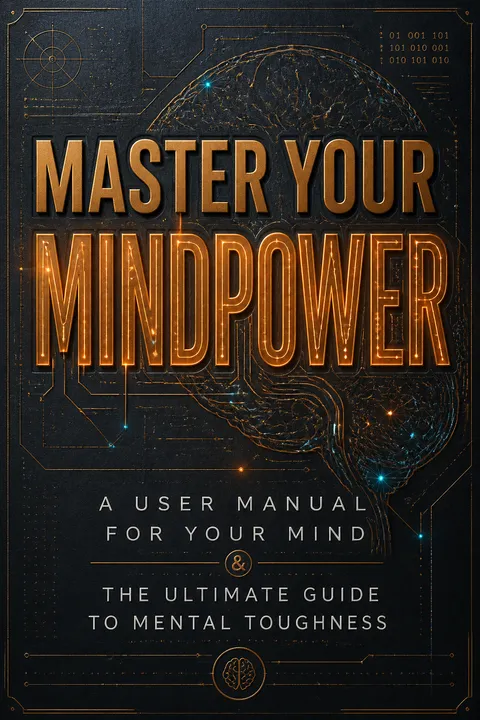
Master Your Mindpower is a coaching manual organized around three concerns: personal direction, resilience under pressure, and routines that translate intention into action. Its narrative method is memorable. The authors repeatedly move from a personal or client story to a named exercise, then to a broader claim about the mind. The eye injury, marathon, and mountain-bike crash make abstract ideas emotionally legible, while clients such as Martin and Ziggy illustrate decisions and behavior change in work settings. This architecture is useful for a reader seeking practical prompts rather than a systematic account of psychology.
The book's most defensible contribution is behavioral. Ranking values can clarify tradeoffs; written goals and milestone planning can make intentions easier to act on; protected work periods can limit distraction; breathing and reflection can help regulate attention. These practices need not depend on every explanation supplied for them. They can be tested in ordinary life, adjusted, and retained if they improve conduct or well-being.
The explanatory claims require more caution. The text presents broad assertions about unconscious memory, the percentage of mental activity outside awareness, the brain's inability to distinguish imagined from real events, and the reticular activating system as a route to manifestation. Those claims are not established by the anecdotes and studies summarized in the book. Mental imagery can influence preparation and emotion, but it does not guarantee external outcomes. The author's recovery from an eye injury is a meaningful personal account, not evidence that visualization restored sight. Medical care and natural healing are essential parts of the context.
The same care applies to responsibility and positivity. Taking ownership of a next step can counter helplessness, but implying that people unconsciously create all their circumstances risks turning adversity into personal culpability. Likewise, gratitude can coexist with grief rather than erase it. Read as a collection of experiments in attention, planning, and self-reflection, the book offers usable tools. Read as a universal neuroscience or healing theory, it overreaches. Its practices are most valuable when paired with evidence, flexibility, and respect for real constraints.
Review Summary
Glossary
Mindpower
Using mental capacities deliberatelyThe authors' term for deliberately using thought, emotion, and understanding to influence behavior and pursue desired results. They present it as trainable through three broad supports: a personal foundation, mental and emotional resilience, and repeated habits. The term describes their overall approach, rather than a standard scientific construct with a single agreed definition.
Three Ps
Principles, passion, purposeThe authors' shorthand for three sources of personal direction: principles or values that guide choices, passion that supplies motivation, and purpose that describes a broader reason for one's work or life. They recommend checking whether these elements support one another when making decisions and setting goals.
Running Parachutes
Beliefs that create dragA metaphor for limiting beliefs, unresolved emotions, and internal conflicts that the authors believe make progress feel more difficult. The metaphor compares these burdens to resistance parachutes used in athletic training. Their exercises ask readers to notice recurring patterns, explore possible origins, and decide what beliefs or responses they want to adopt instead.
The Mental Toughness State
Relaxed peripheral awarenessThe authors' name for a calm, attentive state they associate with relaxed peripheral vision. Their exercise asks a person to look at a spot above eye level while noticing the edges of the visual field. They recommend the state for composure, concentration, and reciting affirmations, though the book's stronger claims about its effects should be treated cautiously.
ICE Method
A review method for mistakesA three-part process for responding to an error: identify what happened, change an action or process to reduce recurrence, and embrace the experience as part of learning. The authors use it to discourage perfectionism and self-punishment. Its practical aim is to turn a mistake into specific feedback rather than a verdict about personal worth.
Most Valuable Priorities (MVPs)
Ranked weekly and daily prioritiesThe authors' method for sorting tasks by importance before less consequential work consumes available time. They recommend choosing a small set of high-priority outcomes for the week, then selecting daily priorities that advance them. Lower-priority tasks remain secondary or on deck, rather than displacing essential work.
Big Effing Goals (BEGs)
Ambitious annual targetsThe authors' label for goals large enough to demand substantial effort and change. They recommend writing these targets clearly, connecting them to personal values, and breaking them into smaller milestones. The aim is to preserve ambition while turning a distant outcome into work that can be scheduled and assessed.
Habit Hack Agreement
A written routine planA written commitment that specifies an existing cue, a new behavior, and the time and place for performing it. The authors combine the logic of implementation intentions with habit stacking, so a familiar routine can prompt a desired one. The agreement is meant to be reviewed regularly and reinforced through repetition.
Download PDF
Download EPUB
.epub digital book format is ideal for reading ebooks on phones, tablets, and e-readers.








