

Key Takeaways
Trade forced exits, not market stories or your forecast
Follow the pressure. Carter’s central idea is that markets often move sharply when traders have to exit, through stop orders, margin calls, or panic selling. In his rafting story, prepared people survived the river by acting rather than freezing. His trading example makes the same point: Joe planned a stock trade with a defined stop, but a gap carried the price below his stop-limit order. Instead of accepting the changed risk, he held on, sold near the lows, then went short and was caught in a rebound. His account fell from $100,000 to about $45,000.
The mechanism matters. A market does not need a compelling economic explanation to move. A sudden imbalance between urgent buyers and urgent sellers can be enough. Carter’s alternative is to identify who may be trapped and avoid joining the crowd after its forced move is already underway.
The useful shift is from explaining price to observing order pressure. That is a more operational question: who must act now, and what orders might follow? It also tempers the temptation to treat every sharp move as a deliberate trap. Forced selling and stop cascades are plausible mechanisms, but price alone cannot prove who is behind them. The framework is strongest as a way to formulate hypotheses and manage exposure, not as a claim that every reversal can be anticipated.
Treat small losses as operating costs, not proof you are failing
Grade the process. Carter argues that ordinary habits of persistence can become dangerous in trading. People often defend a choice after committing to it, even as evidence changes. His example of a fund manager repeatedly shorting Yahoo as it rose shows how refusing a small loss can turn into a much larger one. Removing stops, averaging down, and holding out for breakeven make the account depend on hope rather than a defined trade.
Measure execution. A valid trade can lose, and a profitable trade can be poorly executed. Carter recommends recording whether the planned setup and exit rules were followed, separately from the profit or loss. He also warns that paper trading cannot reveal how a person behaves when real money is at risk. Smaller live positions can expose that behavior without making each mistake ruinous.
Separating decision quality from outcome is a powerful antidote to outcome bias, the tendency to judge a decision only by what happened afterward. A stop can be followed correctly and still produce a loss; that does not make the decision irrational. But process discipline alone does not establish that a strategy has an edge. A careful journal must also track results across enough trades to distinguish a repeatable advantage from a tidy record of disciplined losses.
Choose markets and setups your temperament can execute repeatedly
Fit beats fascination. Carter treats markets as different competitive environments, not interchangeable charts. The Dow, S&P, bonds, grains, and currencies attract different participants and behave differently. He describes a successful 10-year-note trader who struggled after switching to the faster S&P futures, then returned to the market that suited him. His own observation is that some newer traders handle the mini-sized Dow more comfortably than the S&P futures, partly because its price increments feel less abrupt.
Match the whole trade. A trader’s fit includes the market, timeframe, setup, position size, and time available. Futures offer leverage, while forex trades around the clock; both can magnify mistakes as easily as opportunities. Carter advises testing markets and setups rather than assuming that popularity or excitement signals suitability.
This is a useful form of person-environment fit: performance depends not only on skill, but also on whether the task’s pace and feedback suit the person doing it. A quieter market may allow one trader to follow rules, while another needs faster movement to stay engaged. The caution is that comfort can masquerade as competence. A market that feels familiar still requires evidence of positive results, and a market that feels uncomfortable may simply demand smaller size or more practice.
Read market internals to filter signals, not to predict certainty
Look beneath the index. Carter watches several measures to estimate whether buying or selling pressure is broad. TICKS track advancing versus declining stocks on the New York Stock Exchange; TIKI applies a similar idea to the 30 Dow stocks. He treats extreme readings as warnings that a move may be stretched, and uses readings near plus or minus 1,000 as potential fade signals. TRIN compares advancing and declining issues with their volume, so he emphasizes its direction during the session rather than treating one reading as a standalone verdict.
Check sentiment and breadth. The combined put/call ratio helps him notice when options activity is unusually bullish or bearish. A sector list shows whether influential groups, including banks, brokers, and semiconductors, confirm an index move. Market Profile offers another view by organizing time, price, and volume to reveal areas of acceptance or rejection.
These tools are best understood as contextual evidence, not a voting machine that delivers a certain forecast. Breadth, volume, and sentiment can expose a mismatch between index price and underlying participation, which is valuable when choosing among setups. However, thresholds such as a particular tick or put/call reading are specific to the author’s practice and may shift with market structure. The practical question is not whether an indicator says buy, but whether independent signals tell a coherent story.
Fade ordinary opening gaps only when premarket volume stays light
Separate gaps by context. Carter prefers fading opening gaps in broad indexes because their many components can respond differently to the same news. A gap in one company may reflect a company-specific event and may never fill. For index gaps, he checks premarket trading in heavily traded stocks before deciding whether the move has real participation.
Scale expectations to activity. In his experience, when several key stocks trade below roughly 30,000 shares before the open, the index gap has about an 85 percent chance of filling that day. With roughly 30,000 to 70,000 shares, he reduces size and may target only halfway back across the gap. Above that range, he avoids fading. He also cautions against certain calendar days and against treating every gap as a reversal.
This setup shows how a simple trade idea becomes more disciplined when conditioned on context and size. The premarket filter is meant to distinguish a low-conviction opening probe from a move supported by active participation. Its percentages should be read as the author’s historical observation, not a guarantee or timeless market law. A trader applying the idea would need to test it against current data, execution costs, and the exact instruments being traded.
Trade pivot levels differently on trending and choppy days
Map prices in advance. Pivot points are support and resistance levels calculated from a previous session’s high, low, and close. Carter plots daily, weekly, and monthly levels, sometimes adding midpoints. He uses them to plan entries before the session rather than chasing prices after they move.
Let the day type decide. On a trending day, he waits for price to move through a pivot and then seeks an entry on its first pullback. On a choppy day, he is more likely to fade a move into a pivot, with a modest first target and a further target near the next level. He uses five-minute S&P volume as one rough clue: activity consistently below about 10,000 contracts per bar after the open suggests a quieter session. Stops and targets are set before entry.
The central strength is conditionality. A level does not carry the same meaning in every market state: a pivot can act as a turning point during rotation or a pause before continuation during a trend. This resembles regime-based decision making, where the same observation leads to different actions depending on context. Yet a volume threshold is a heuristic, not a natural boundary. Traders should treat it as a prompt to inspect conditions, then verify that the day’s actual price behavior fits the chosen play.
Let volatility compression alert you, then confirm direction with momentum
Wait for the coil. Carter’s Squeeze is a setup for spotting a quiet market that may be building energy for a larger move. Bollinger Bands measure changing volatility; Keltner Channels provide a comparison range. When the Bollinger Bands contract inside the Keltner Channels, the chart signals compression. When they expand back outside, a trade signal may be forming.
Use direction and risk rules. Carter checks a momentum histogram to choose long or short, then sets a stop appropriate to the market and timeframe. He applies the setup on intraday charts and on daily charts for longer trades. His advice is not to fight a five-minute Squeeze signal with an opposing intraday setup. The signal can help identify a change in volatility, but the trader still needs a planned exit and a position size that can absorb a losing trade.
Compression is a compelling visual metaphor because it turns a vague sense of quiet into a testable condition. It also separates two questions that traders often confuse: whether activity is likely to expand, and which direction price will take. The momentum measure addresses the second, imperfectly. No volatility indicator can promise a breakout, and false starts are part of the method. Its value lies in preparing a trader to respond when conditions change, rather than predicting the next move with certainty.
Wait for price-confirmed reversals instead of guessing tops and bottoms
Demand evidence of a turn. HOLP and LOHP mean “high of the low period” and “low of the high period.” For a possible bottom, Carter identifies a low period and enters only after price closes above its high. For a possible top, he identifies a high period and waits for a close below its low. A two-bar trailing stop can help manage the position after entry. Brick plays use a related confirmation idea, waiting for a sequence of closes to change direction before acting.
Use pullbacks systematically. His 8/21 EMA propulsion setup looks for a pullback to the 8-period exponential moving average after it crosses the 21-period average. In the stock version, he describes a 4 percent initial stop and an 8 percent target, then trails the stop after the trade moves favorably. These are specific rules to test, not universal settings.
Confirmation trades away the fantasy of buying the exact low in exchange for evidence that control may be shifting. That is a sensible asymmetry: missing the first part of a move can be preferable to absorbing a long decline while insisting it must reverse. The moving-average method likewise turns an impression of trend into an explicit entry condition. Its fixed percentage parameters deserve particular caution, since volatility differs sharply across stocks and market periods.
Find opportunities across markets, but match each setup to its behavior
Expand the watchlist selectively. When stock indexes are quiet, Carter looks to currencies, bonds, or other futures rather than forcing trades in a market that offers little movement. His box play seeks a horizontal range with at least two tests of both its upper and lower boundaries. He places orders beyond the range, then uses the box’s width as the target. He favors currencies for this setup because, in his experience, they can break from consolidation and trend cleanly.
Keep the logic distinct. This is not permission to trade everything. Each instrument has different contract values, spreads, trading hours, and risks. Carter stresses learning how a one-point, tick, or pip movement affects account value before entering a position. Cross-market awareness can broaden opportunity, but it does not replace a defined setup or careful sizing.
The portfolio-level lesson is to search for opportunity without becoming indiscriminate. A broader opportunity set can reduce the pressure to manufacture trades in a stalled index, while specialized setups respect the different mechanics of each market. However, owning positions in several markets does not automatically diversify risk. Instruments may move together during stress, and leverage can make small price changes consequential. The useful discipline is to diversify sources of setups while calculating exposure across the account as a whole.
Write a plan that governs size, exits, review, and recovery
Turn intentions into rules. Carter’s trading plan specifies which markets and setups he will use, how much capital each receives, how entries and exits work, and when trading stops after a drawdown. It also includes a journal that scores both results and whether the setup was followed. This makes it possible to compare strategies instead of relying on memory or a particularly vivid win.
Plan the operating conditions. His checklist covers office interruptions, backup internet and power, time away from screens, rewards, and physical health. The purpose is to treat trading as work with real constraints, not as an isolated chart-reading exercise. The plan’s exact profit goals and drawdown limits are personal examples. The transferable idea is to define consequences before pressure arrives.
A trading plan functions like an operating manual for decisions made under uncertainty. Its value is not that it predicts the market, but that it reduces improvisation when money and emotion are involved. Journaling also makes the plan falsifiable: repeated results can show whether a setup deserves continued capital. The caveat is that a written plan can still encode bad assumptions. Review must be analytical, and targets or risk limits should fit the trader’s actual finances rather than imitate another person’s numbers.
Analysis
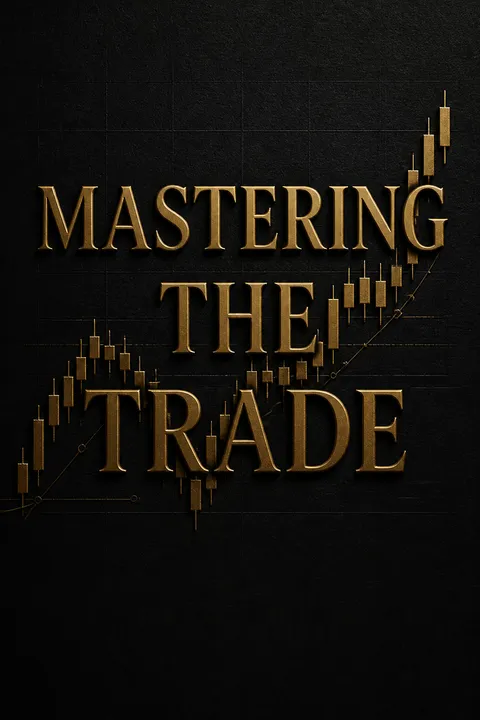
Mastering the Trade is a practical trading manual built around one memorable causal story: markets move not because a forecast proves persuasive, but because traders become compelled to transact. Carter develops that idea through psychology, market mechanics, specific setups, and an unusually broad operating plan. The book’s strongest contribution is the connection between these layers. A gap fade is not presented only as a chart pattern; it is linked to who may be trapped, how much participation supports the move, what stop belongs to the setup, and how the trader should behave while waiting.
Its strongest discipline is procedural. Carter repeatedly redirects attention from predicting correctly to controlling exposure, following predefined exits, and recording whether a trade was executed as planned. This is an effective response to outcome bias and impulsive decision making. The trading plan extends that logic beyond the chart to interruptions, technology failures, personal health, and drawdown rules. Trading is treated as an operating system for a person, not merely a collection of indicators.
The main limitation is evidential. The book offers vivid examples and numerical thresholds, but many are based on the author’s experience rather than presented as broadly validated results. Gap-fill rates, tick thresholds, stop distances, and moving-average parameters may depend on the era, instrument, costs, and execution quality. A rule that worked in one market regime can decay as participation and trading technology change. The many setups also risk overwhelming beginners unless they choose a small number and test them carefully.
The most reliable reading is therefore neither a promise of profit nor a menu to copy wholesale. It is a framework for converting observations into testable rules, controlling the damage when they fail, and learning which methods fit a specific trader. Carter’s decisive insight is psychological, but its proper test is empirical: disciplined execution matters, and so does evidence that the discipline is being applied to a strategy with an edge.
Review Summary
Mastering the Trade receives mixed reviews. Some readers praise its insights on trading psychology and strategies, particularly the TTM Squeeze setup. Others criticize the book for promoting paid indicators and specific setups without proper explanation. Many find the content more suitable for day trading than swing trading. Some reviewers appreciate the author's candid approach and entertaining anecdotes, while others see it as a sales pitch. The book's value seems to depend on the reader's experience level and expectations, with beginners finding it more useful than experienced traders.
People Also Read







Glossary
Fake and break
Failed breakout reversalA stock setup in which price reaches a new high, but momentum or volume fails to confirm the advance. The trader watches for price to fall back below a prior high, then considers a short position. Carter describes it as a way to take the other side of buyers drawn in by an apparent breakout.
Squeeze
Volatility expansion setupA chart condition used to identify a period of reduced volatility that may precede a larger move. Carter marks compression when Bollinger Bands move inside Keltner Channels, then looks for the bands to expand outside them. A momentum histogram helps select a direction, while a separate stop and exit plan manage risk.
HOLP and LOHP
Confirmed trend reversal entriesHOLP means high of the low period, and LOHP means low of the high period. For a potential bottom, a trader waits for price to close above the high of a low period. For a potential top, the trader waits for price to close below the low of a high period. The method seeks confirmation rather than attempting to predict the exact turning point.
Box play
Range breakout tradeA setup built around a horizontal trading range, or box, with at least two tests of both its upper and lower boundaries. The trader places entry orders just beyond each boundary. If one is triggered, the opposite order becomes a stop, and the box’s width is used as a target. Carter applies the setup to multiple timeframes, especially currency markets.
Propulsion plays
Moving-average pullback tradesA swing-trading method using the 8-period and 21-period exponential moving averages. After the shorter average crosses above or below the longer one, the trader looks for a pullback to the 8-period average in the direction of the trend. Carter describes percentage-based stops and targets for stocks, with different parameters for index futures.
Market Profile
Time-price-volume displayA method for organizing market activity into a visual display of time, price, and volume. It helps traders identify where trading was concentrated, where prices were accepted or rejected, and whether the market appears balanced or directional. Carter presents it as a way to understand market context and participant behavior, rather than as a standalone entry signal.
TICKS
NYSE advancing-declining readingAn intraday measure of the number of New York Stock Exchange stocks rising in price compared with those falling. Carter uses extreme positive or negative readings as clues to broad buying or selling pressure. He also treats very high readings as possible exhaustion signals, while emphasizing that the measure should be interpreted alongside price action.
TIKI
Dow-stock tick readingA tick measure based on the 30 stocks in the Dow rather than the full New York Stock Exchange. Carter uses it as a fast indication that a buy or sell program may be affecting the major index. Its sharp readings provide an early alert, while broader tick data help confirm whether pressure is sustained.
TRIN
Issue-volume pressure measureAn index comparing advancing and declining stocks with the volume associated with those groups. Carter focuses on whether TRIN is rising or falling during the session, using a rising trend as evidence of selling pressure and a falling trend as evidence of buying pressure. He also treats extreme closing readings as possible contrarian clues for the following session.
3:52 play
Late-session reversal fadeA short-term futures trade based on the author’s observation that an intraday reversal often develops around 3:30 p.m. Eastern. At 3:52 p.m., the trader takes the opposite side of the move, provided it has moved sufficiently from the earlier reference price. The trade uses a fixed stop and exits shortly before the session closes.
FAQ
What's Mastering the Trade about?
- Trading Psychology: The book emphasizes the psychological aspects of trading, focusing on how emotions can lead to poor decision-making and the importance of understanding one's mental state.
- Practical Techniques: John F. Carter provides proven techniques for intraday and swing trading setups, covering strategies with specific entry and exit points to maximize profits.
- Market Mechanics: It explains the basic mechanics of different markets, including stocks, futures, and forex, which is crucial for traders to navigate and profit from these markets.
Why should I read Mastering the Trade?
- Comprehensive Guide: The book serves as a comprehensive guide for traders at all levels, offering insights into trading psychology, market mechanics, and specific strategies.
- Real-World Examples: Carter uses real-world examples and case studies to illustrate concepts, making them relatable and easier to understand.
- Risk Management Focus: Emphasizes the importance of risk management and developing a trading plan, providing actionable advice on protecting capital and managing trades effectively.
What are the key takeaways of Mastering the Trade?
- Market Movements: Understanding that market movements are driven by human emotions and reactions, which traders must comprehend to succeed.
- Psychological Phases: Carter outlines three phases traders typically go through, helping them identify their current mindset and adjust strategies accordingly.
- Importance of Setup: Stresses the significance of having a specific trading setup and sticking to it, advising against impulsive decisions based on emotions.
What are the best quotes from Mastering the Trade and what do they mean?
- "Amateurs hope; professionals steal.": Highlights the difference between amateur and professional traders, emphasizing calculated actions over reliance on luck.
- "It's not the economy, stupid.": Suggests that market movements are driven by trader psychology rather than economic indicators, encouraging focus on market sentiment.
- "The financial markets are naturally set up to take advantage of and prey upon human nature.": Emphasizes the importance of understanding human psychology in trading.
How does Mastering the Trade address trading psychology?
- Emotional Awareness: Carter stresses that emotions can be detrimental in trading, encouraging traders to develop self-awareness and recognize their emotional impact.
- Professional Mindset: Suggests adopting a professional mindset, focusing on setups rather than outcomes, to manage emotions and make rational decisions.
- Trader Development Phases: Outlines psychological phases traders go through, aiding in personal development and improving trading performance.
What specific trading strategies are discussed in Mastering the Trade?
- Gap Trading: Discusses the "Opening Gap" strategy, providing rules for identifying high-probability gap trades and managing them effectively.
- Pivot Points: Covers using pivot points for both trending and choppy market conditions, explaining setup on charts and trading psychology.
- Scalping Techniques: Introduces scalping strategies for quick trades, emphasizing timing and execution in fast-paced trades.
What is the TRIN and how is it used in trading according to Mastering the Trade?
- TRIN Definition: The TRIN, or Arms Index, is a market breadth indicator measuring the relationship between advancing and declining stocks and their volume.
- Interpreting TRIN Values: A TRIN value above 2.0 indicates a high likelihood of a market rally, while a value below 0.60 suggests a potential sell-off.
- Practical Application: Traders can use TRIN readings to focus on long or short setups based on previous day’s values, aiding in trading decisions.
How does the put/call ratio work in trading as explained in Mastering the Trade?
- Understanding the Ratio: Compares the volume of put options to call options, providing insight into market sentiment.
- Key Thresholds: A put/call ratio above 1.0 signals extreme bearishness, while a ratio below 0.60 indicates extreme bullishness.
- Market Dynamics: Helps traders understand market participant positioning, allowing anticipation of potential reversals.
What are pivot points and how are they used in Mastering the Trade?
- Pivot Points Definition: Technical indicators used to identify potential support and resistance levels based on the previous day’s high, low, and close.
- Calculating Pivot Points: Involves using a simple formula that averages the previous day’s price action to determine key levels.
- Trading Strategy: Used to set entry and exit points, with traders looking for bounces or reversals at pivot points.
How can I apply the concepts from Mastering the Trade to my trading?
- Develop a Trading Plan: Carter stresses having a well-defined plan with specific setups, risk management strategies, and performance tracking.
- Practice Discipline: Encourages sticking to setups and avoiding impulsive decisions based on emotions, crucial for long-term success.
- Utilize Market Internals: Discusses using market internals like ticks and TRIN to gauge market direction, improving decision-making.
How does Mastering the Trade suggest managing risk?
- Set Stop Losses: Emphasizes using stop-loss orders to limit potential losses, with guidelines for determining appropriate levels.
- Position Sizing: Discusses the significance of proper position sizing to manage risk effectively, advising specific capital allocation per trade.
- Drawdown Rules: Recommends establishing daily and monthly drawdown rules to protect capital, suggesting cutting positions or halting trading if thresholds are exceeded.
What are the common mistakes traders make according to Mastering the Trade?
- Lack of a Plan: Entering the market without a clear trading plan leads to impulsive decisions and losses.
- Emotional Trading: Letting emotions dictate actions results in poor decision-making; maintaining control is advised.
- Overtrading: Warns against overtrading, especially in choppy markets, encouraging patience for high-probability setups.
Download PDF
Download EPUB
.epub digital book format is ideal for reading ebooks on phones, tablets, and e-readers.








