

Key Takeaways
Treat psychology as a trading pillar, not a finishing touch
Knowledge alone can fail. Robert, a technically capable new trader, made a series of mistakes after early losses, then continued trading until he had taken 20 trades and won only two. Trader Siri, another smart newcomer, described fear, poor position sizing, revenge trading, and copying someone else in desperation. Their accounts illustrate Aziz’s central argument: technology, strategy, and psychology all matter, and a weakness in execution can undo strengths elsewhere. The book also warns against blaming psychology for every loss. Sometimes the strategy is unproven, or the trader simply needs more practice.
Diagnose before you prescribe. A useful first question is whether the problem is a broken process, a weak strategy, or an emotional reaction. More technical study will not fix impulsive execution, but pep talks about discipline will not make a bad strategy profitable.
The strongest feature of this framing is its refusal to treat mental toughness as a substitute for competence. In high-pressure work, performance depends on both knowing what to do and being able to do it under stress. The distinction also guards against a common trap: labeling every disappointing result a psychological failure can protect a weak method from scrutiny. A trader needs evidence about both the quality of the setup and the quality of its execution. That makes psychology part of the operating system, not a mystical explanation for every red day.
Trade probabilities, not your need to be right
Losses belong in the math. Aziz describes trading as a probabilistic business, not a contest to predict every move. A strategy can have an edge and still lose on individual trades. The book cites the common pattern that a small share of trades can generate most profits, while many trades lose. What matters is whether average gains and losses, combined with win rate, produce positive expectancy: positive average results across a sufficiently large set of trades.
Costs raise the bar. Unlike a simple zero-sum contest, trading expenses such as commissions, platform charges, and bid-ask spreads reduce what winners keep. The poker comparison is useful: skilled players wait for favorable situations and fold poor hands. Traders likewise need a tested setup, a favorable risk-to-reward, and the patience not to participate when conditions are poor.
This model changes the emotional meaning of a losing trade. A loss can be ordinary evidence from a strategy rather than proof that the trader is foolish. But probability is not a permission slip to keep repeating an untested idea. A genuine edge must be demonstrated with comparable trades, and market conditions can change. The book’s emphasis on execution is therefore important: probabilities help only when the trader follows the rules that generated the evidence in the first place.
Set the exit before entry, then protect the account
Decide while calm. Matt, an experienced trader, shorted a fast-rising technology stock without a stop because he believed the price had to fall. As it rose, he added to the position repeatedly, hoping to improve his average entry. He eventually lost more than $5,000 on an account of about $20,000. His rule afterward was to define the exit before entering and never add to a losing trade. Averaging down can feel like a clever route back to break-even, but it increases exposure precisely when the original idea is failing.
Keep the trade in its lane. A day trade that goes badly should not quietly become an overnight swing trade. A planned swing trade has its own analysis and risk limits. Stops, position size, and a maximum daily loss are different layers of protection, all designed to keep one mistake from ending the business.
Precommitting an exit is a way to make a decision before fear, hope, and sunk costs distort it. The Matt story shows how quickly a small forecast error can become a business-threatening position when the trader keeps increasing exposure. A stop is not a guarantee of a precise fill, especially in a fast market, so traders still need an execution plan suited to the instrument and its liquidity. The principle is broader than any single order type: define the point at which the idea is no longer worth funding.
Treat FOMO and revenge trading as alarms to stop
Urgency is not an edge. Fear of Missing Out, or FOMO, pushes traders into moves they have not planned or that no longer offer sensible risk and reward. During the 2017 cryptocurrency surge, one trader made $70,000, then lost $50,000 in less than 48 hours after chasing the boom and abandoning risk controls. Revenge trading follows a similar emotional logic: after a loss, the trader tries to win the money back immediately, often with worse setups or larger size.
Use a circuit breaker. Set a daily maximum loss and a limit on trades before the session begins. After a major loss or a strong emotional reaction, step away, shut down the platform, or switch to simulation. Robert’s informal label, Crack Addict Trading Syndrome, describes the pull to keep trading after a win or loss. It is a warning sign, not a clinical diagnosis.
The useful move here is to interpret urgency as information about the trader’s state, not as evidence that the market is offering a rare opportunity. Naming a loop can interrupt it, especially when shame would otherwise keep the behavior hidden. Still, addiction language should be used carefully. The book’s nickname is memorable, but compulsive trading can have serious consequences and should not be reduced to a joke or a self-control problem. When trading harms finances, relationships, or work, outside support may be necessary.
Build a TradeBook for each setup, then reject everything else
Turn a strategy into a procedure. A TradeBook is a trader’s written guide to one specific strategy. Aziz and co-author Mike Baehr recommend four parts: criteria for choosing a stock, signals that identify the setup, rules for entering and exiting, and a review of results. It should make clear what conditions qualify and where the risk lies. If a tempting trade does not fit any TradeBook, the default answer is no.
Narrow the field. The book recommends mastering one strategy and watching a small number of Stocks in Play, meaning stocks attracting unusual attention and trading activity. Aziz’s planned trade in Occidental Petroleum illustrates the approach: he noted its gap, volume, and key price levels before the open, waited for the setup, and exited after a brief trade. The point is preparation, not copying that trade.
The TradeBook turns vague discipline into observable behavior. It also reduces the number of decisions a trader must invent in real time, when attention is already divided. That is a practical advantage of checklists in any complex task. A written playbook, however, is only as good as its evidence. Recording a pattern does not establish that it has an edge; the trader must track results across enough comparable examples and revise the rules when they stop fitting the market.
Trade your own edge, not another trader’s confidence or P&L
Borrow knowledge, not decisions. A chatroom can provide ideas, feedback, and companionship, but copying another trader’s entries or share size ignores differences in experience, account, risk tolerance, and strategy. One member lost a profitable position after consulting bullish posts on StockTwits instead of following his own plan. Another found that switching between many tickers made him miss setups and chase late entries.
Find your fit. Traders differ in pace, markets, and time frames. Some may prefer slower afternoon patterns to the fast opening session. The book advises testing styles, then using actual records to see what suits the trader rather than adopting someone else’s routine. Hiding the live P&L display can also help: the dollar figure is not a market signal, and watching it can prompt premature exits or fearful decisions.
Community works best as a place to compare reasoning, not outsource judgment. The distinction matters because social proof can feel like evidence, especially when confident voices and visible profits dominate attention. Yet independence does not mean isolation: peers can expose blind spots and help traders review decisions. The useful balance is to borrow questions, tools, and critique while retaining responsibility for the actual trade. A good mentor makes independent judgment stronger, rather than making imitation more comfortable.
Recover by facing the loss, extracting a lesson, and restarting smaller
Resilience is practiced. Aziz presents resilience as more than toughness. Resilient traders accept the facts, find a useful lesson in hardship, and improvise with the resources available. After being laid off and losing more than $10,000, he returned to a job and practiced trading in simulation before work. The book also describes Morgan Stanley’s evacuation preparation before September 11, which helped many employees leave the South Tower quickly. Preparation made the organization better able to respond when danger arrived.
Give the setback a review. Capture the chart, record what happened, and ask what was controllable. After a serious loss, reduce size or return to simulation instead of trying to recover the money at once. A supportive community can help traders talk through setbacks without treating a bad day as a personal verdict.
The book makes resilience concrete by linking it to preparation, reflection, and social support rather than heroic temperament. That is a more useful account than simply urging people to toughen up. The Morgan Stanley example also shows that resilience can be built into procedures, not just personalities. A caution is warranted: persistence is not always virtuous. Continuing is sensible only while the evidence, resources, and personal circumstances justify it. Resilience should help a trader adapt, including by pausing or leaving, not merely endure losses indefinitely.
Set goals you control, then review the evidence every day
Measure the craft. A profit target is not the only useful goal, and the book favors goals tied to skills and decisions: follow the stop, wait for the setup, or trade one defined strategy. Matt, a developing trader, used specific monthly goals for simulator practice and risk-to-reward performance, then reviewed his progress. By the end of one month, he reported a 72 percent win rate and a 4.2-to-1 average profit-to-loss ratio. Those figures describe his experience, not a promise of typical results.
Make review routine. Journaling should capture the setup, entry, exit, size, result, and the trader’s state of mind. Ask what was done well as well as what needs correction. The point is to find recurring patterns and choose a manageable improvement, not to punish oneself for every losing trade.
This approach shifts feedback from a volatile outcome to behaviors the trader can actually inspect. It resembles deliberate practice: choose a narrow skill, observe performance, and adjust. The examples are most helpful when read as demonstrations of measurement, not as benchmarks to chase. A high win rate by itself can hide occasional catastrophic losses, while a lower rate may still be profitable if gains exceed losses. Metrics need context, and a journal should inform a testable change rather than become an elaborate record of regret.
Treat sleep, movement, and food as trading equipment
The trader is part of the system. The book argues that trading quality is affected by conditions outside the screen. Sleep loss, poor nutrition, inactivity, alcohol, and excessive caffeine can interfere with concentration and decision-making. It cites sleep researcher Matthew Walker’s recommendation of seven to nine hours for adults and notes his discussion of caffeine’s lingering effects. Aziz also describes a morning routine built around exercise and preparation before the market opens.
Build a repeatable routine. A trader need not adopt Aziz’s diet or schedule. The practical lesson is to notice how sleep, meals, movement, and stress correspond with performance, then make sustainable adjustments. The book’s advice to use a simulator during experiments is especially sensible: test whether a routine change affects focus without putting capital at risk.
This section broadens trading psychology beyond what happens during a trade. Fatigue and distraction can undermine the very safeguards a trader depends on, so routines are part of risk management. The book sometimes moves from general performance advice to strong dietary preferences; those claims should not be treated as universal prescriptions. Sleep, movement, and nutrition affect people differently, and trading records alone cannot isolate cause. The strongest application is modest and empirical: monitor personal patterns, make one change at a time, and avoid mistaking a lifestyle anecdote for proof.
Analysis
Aziz builds his case from the inside out. The book opens with traders who know the mechanics yet lose control after a few bad decisions, then treats their stories as evidence that technique cannot be separated from the person executing it. Its distinctive contribution is not a new chart pattern. It is the practical translation of broad advice such as discipline into concrete behaviors: define the stop, cap the day’s loss, narrow the watchlist, write rules before the open, and review the session afterward.
The community stories give the book its human force. Robert’s spiral, Matt’s averaging down, and the cryptocurrency trader’s rapid reversal of fortune make abstract hazards vivid. They also reveal how ordinary competence can coexist with spectacular mistakes. The reader sees how a loss becomes a larger loss through a sequence of justifications, not through one mysterious psychological flaw.
The book’s central tension is its emphasis on psychology alongside its warning that traders often misdiagnose insufficient skill as a mindset problem. That tension is valuable, but it limits the force of some claims. Community anecdotes illustrate possible failure modes and useful safeguards; they do not establish how often those methods work or whether a strategy has a durable edge. Similarly, reported profitability and dramatic recoveries are not evidence that a reader can reproduce them. A cautious reader should treat performance figures, success-rate claims, and time-to-profit expectations as contextual rather than predictive.
The strongest synthesis is that trading psychology is partly designed. Emotional steadiness is not simply summoned at the moment of crisis. It is supported by position limits, tested rules, smaller size, preparation, and the ability to stop. The book is most persuasive when it makes survival the first performance objective. Preserving capital and judgment keeps a trader able to learn. That is a more credible promise than quick mastery, and a more useful one for anyone entering a risky, uncertain business.
Review Summary
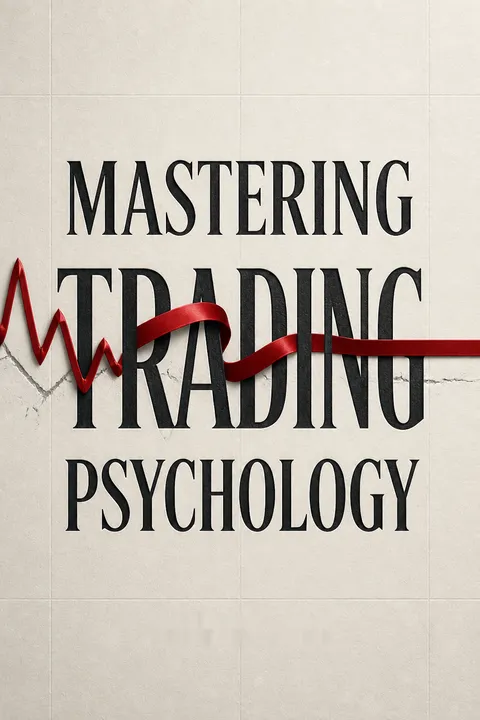
Mastering Trading Psychology receives mixed reviews, with an overall rating of 4.30/5. Many readers praise its insights on self-discipline, emotion management, and trading strategies. Some find the book valuable for both novice and experienced traders, appreciating its modern context and relatable experiences. However, critics argue it's repetitive, lacks original content, and relies too heavily on user comments. Some readers suggest it could be more concise and focused. Despite criticisms, many find it helpful in understanding trading psychology and avoiding common mistakes.
People Also Read




Glossary
TradeBook
A playbook for one strategyA TradeBook is a trader’s detailed guide to a particular strategy. It records which stocks and conditions qualify, how to recognize the setup, how to enter and exit, and how to evaluate results. Its practical purpose is to make trade decisions consistent and to rule out opportunities that do not fit the trader’s tested plan.
positive expectancy
Positive average return per riskPositive expectancy describes a strategy whose average outcome is profitable over a sufficiently large set of relevant trades. It depends on both how often trades win and the average size of wins relative to losses. The book gives the calculation as win rate multiplied by average win, minus loss rate multiplied by average loss. It should be calculated from trades that actually follow the strategy.
OODA Loop
A repeating decision cycleThe OODA Loop is a decision framework discussed in the book, originally developed by strategist and Air Force colonel John Boyd for rapidly changing situations. Its letters stand for Observe, Orient, Decide, and Act. A trader observes market information, interprets it in context, chooses a response, acts, and then observes the new conditions to repeat the cycle.
Crack Addict Trading Syndrome (CATS)
Compulsive trading after wins or lossesCATS is a humorous, informal label used by trader Robert for the urge to keep trading after reaching a daily goal or suffering a loss. The behavior can lead to overtrading and attempts to recover money immediately. The book uses the term as a warning about loss of control, not as a formal clinical diagnosis.
Fear of Missing Out (FOMO)
Anxiety about missed opportunitiesFOMO is the pressure to enter a trade because a move appears to be happening without the trader. It can prompt chasing a stock after a good entry has passed, acting before a pattern is confirmed, or ignoring risk limits. In the book, a trade without a defined stop and worthwhile risk-to-reward is a sign that urgency may be replacing a plan.
Stocks in Play
Stocks drawing unusual trading activityStocks in Play are stocks attracting substantial attention and activity on a given trading day, often because of news, earnings, a price gap, volume, or volatility. The book recommends selecting a small number of them to monitor closely rather than scanning many tickers at once. The list changes from day to day, so traders should focus on the stock’s current conditions, not its familiar name.
Learned helplessness
Expecting effort cannot change outcomesLearned helplessness is a psychological concept associated in the book with Martin Seligman’s experiments. After repeated experiences in which they could not avoid an unpleasant event, subjects became less likely to act to escape a later one, even when escape was possible. Applied to trading, repeated setbacks can produce resignation, but the book argues that awareness, reflection, and renewed action can help counter it.
Stages of Change Model
Stages in behavior changeThe Stages of Change Model, attributed in the book to Prochaska and DiClemente, describes five stages in changing a behavior: precontemplation, contemplation, preparation, action, and maintenance. It distinguishes not yet recognizing a need to change from considering change, preparing for it, acting, and sustaining new behavior. The model helps frame lifestyle changes as a process rather than a single act of will.
FAQ
What's Mastering Trading Psychology about?
- Focus on Psychology: Mastering Trading Psychology by Andrew Aziz emphasizes the psychological aspects of trading, highlighting how emotions, mindset, and self-discipline impact trading performance.
- Real-Life Experiences: The book includes firsthand accounts from various traders, sharing their struggles and successes, which helps readers relate to the challenges of trading.
- Three Pillars of Success: It outlines technology, strategy, and psychology as the three essential components for successful trading, with a strong focus on the psychological aspect.
Why should I read Mastering Trading Psychology?
- Enhance Trading Performance: The book provides insights into how mental skills can significantly improve trading outcomes, making it a valuable resource for both novice and experienced traders.
- Learn from Others: By sharing real-life stories, the book allows readers to learn from the mistakes and successes of others, which can help avoid common pitfalls.
- Comprehensive Approach: It covers various aspects of trading psychology, including risk management, emotional control, and the importance of a disciplined lifestyle.
What are the key takeaways of Mastering Trading Psychology?
- Resilience is Key: The book stresses that resilience is crucial for traders to recover from losses and maintain a positive mindset.
- Focus on Process, Not Money: Successful traders concentrate on executing their trading plans rather than fixating on monetary outcomes.
- Set Realistic Goals: Emphasizes the importance of setting achievable goals that prioritize skill development over immediate financial success.
What is the "Trilogy of Success" in Mastering Trading Psychology?
- Three Essential Components: The trilogy consists of technology, strategy, and psychology, which together form the foundation for successful trading.
- Interconnectedness: Removing any one of these pillars can lead to failure, emphasizing the need for a balanced approach.
- Psychology as a Pillar: While technology and strategy are important, psychology is often the most overlooked yet critical aspect of trading success.
How does Mastering Trading Psychology define resilience in trading?
- Capacity to Recover: Resilience is described as the ability to recover quickly from difficulties and setbacks, essential for traders facing losses.
- Mental Toughness: It is a measure of mental toughness, allowing traders to endure the emotional rollercoaster of trading.
- Learning from Hardship: Resilient traders learn from their mistakes and use those experiences to improve their trading strategies.
What are some common psychological hazards in trading according to Mastering Trading Psychology?
- Averaging Down: Identified as a significant psychological hazard that can lead to account blow-ups.
- Revenge Trading: Engaging in revenge trading after losses often results in further losses and emotional distress.
- Overtrading: Warns against overtrading, which can stem from emotional impulses rather than sound trading strategies.
What is the advice on setting goals in Mastering Trading Psychology?
- Define Realistic Goals: Encourages traders to set clear, achievable goals based on their trading strategies and risk tolerance.
- Daily and Weekly Targets: Suggests establishing daily and weekly profit targets, as well as maximum loss limits, to maintain discipline and focus.
- Focus on Process: Goals should be process-oriented rather than solely profit-driven, helping traders to stay grounded and avoid emotional trading.
How does Mastering Trading Psychology suggest handling losses?
- Accept Losses as Normal: Stresses that losses are an inevitable part of trading and should be accepted rather than feared.
- Reflect and Learn: After a loss, traders are encouraged to reflect on what went wrong and learn from the experience.
- Take Breaks: Advises taking breaks after significant losses to regain composure and prevent emotional decision-making.
What is the significance of emotional control in trading according to Mastering Trading Psychology?
- Control Over Emotions: Emotional control is highlighted as a critical skill for traders, as uncontrolled emotions can lead to poor decision-making.
- Mindfulness Techniques: Suggests using mindfulness and self-reflection to manage emotions and maintain focus during trading.
- Avoiding Impulsive Decisions: By developing emotional control, traders can avoid impulsive decisions driven by fear or greed.
What are some strategies for improving trading psychology mentioned in Mastering Trading Psychology?
- Journaling: Recommends maintaining a trading journal to track emotions, decisions, and outcomes, which can help identify patterns.
- Community Support: Engaging with a trading community for support and accountability is emphasized as a way to build resilience.
- Mindfulness Practices: Encourages incorporating mindfulness practices to enhance self-awareness and emotional regulation.
What are the best quotes from Mastering Trading Psychology and what do they mean?
- “Scared money never wins.”: Underscores the importance of confidence in trading, as fear can lead to poor decision-making.
- “You learn more from other people’s failures than their successes.”: Emphasizes the value of learning from mistakes, providing critical insights for better strategies.
- “Trading is not an endurance sport.”: Reminds traders that they don’t need to be in the market constantly, focusing on waiting for the right opportunities.
How can I create a successful trading routine based on Mastering Trading Psychology?
- Establish a Morning Routine: Suggests starting the day with a consistent routine that includes exercise and preparation.
- Develop a Watchlist: Traders should create a watchlist of stocks to monitor closely for better analysis and decision-making.
- End-of-Day Reflection: Incorporating a daily recap of trades helps reinforce learning and self-reflection.
About the Author
Download PDF
Download EPUB
.epub digital book format is ideal for reading ebooks on phones, tablets, and e-readers.








