

Key Takeaways
Treat your abilities as a purpose-built deposit, not a finished résumé
Capacity is still unused. Munroe’s central claim is that each person carries abilities that have not yet been expressed, and that using them in service of a purpose is a responsibility, not merely a route to personal success. His phrase “die empty” means reaching the end of life without leaving important gifts, ideas, or work unused. It is not a call to exhaust yourself, but to avoid mistaking what you have already achieved for all you are capable of doing.
A video recorder illustrates the idea: Munroe could operate its basic controls, but ignored the manual and missed many of its functions. He argues that people can similarly settle for a narrow range of what they know how to do. In his Christian framework, purpose comes from God, and potential is the capacity to fulfill that assignment.
What's valuable here is the distinction between accomplishment and capacity. A résumé records past performance; it cannot tell someone what remains possible. That distinction can reopen ambition after a success, a setback, or a major life change. The metaphor also needs a humane boundary: people are not machines with a single intended use, and no one can know the full extent of their capacity in advance. The practical question is not whether every latent possibility gets realized, but whether a person is choosing meaningful work rather than living by inertia or someone else’s definition of success.
Measure progress against your capacity, not someone else's speed
Comparison distorts the target. Munroe recalls driving on Germany’s autobahn. He felt fast at about 115 miles per hour, until a car passed him at roughly 150. The episode prompts a distinction between what a person has done and what that person might be capable of doing. The book argues that another person’s performance cannot establish an individual’s ceiling, just as passing slower drivers did not prove the car had reached its capacity.
Munroe draws a further lesson from experience: it records what has happened, but should not dictate what can happen next. He urges readers to compare present effort with their own purpose and potential, rather than using others as the standard. His biblical frame describes this as accountability to God, not competition for public approval.
The autobahn story makes a useful point about reference groups: change the comparison, and the same performance can look either exceptional or inadequate. Personal benchmarks are often more informative than social ranking, especially when people begin with different resources and constraints. Yet the book’s language of maximum performance can make every unfinished possibility feel like a moral failure. Comparison with oneself is healthier than comparison with others only when it includes realistic limits, changing priorities, and the possibility that a chosen life is already worthwhile without constant acceleration.
Find your purpose, then build the conditions and skills it demands
Purpose needs a plan. Munroe says potential becomes useful when a person understands the purpose it is meant to serve. He tells the story of Saul, a persecutor of early Christians who, after an encounter with Jesus, became the apostle Paul. In Munroe’s account, Paul’s transformed direction illustrates how discovering a purpose can reveal abilities that had been misdirected.
The book offers six practical requirements for releasing potential: know your source, understand how you are meant to function, identify your purpose, recognize your resources, maintain a supportive environment, and work. For Munroe, God is the source, faith is the intended mode of life, and work turns possibility into action. Paul’s education, citizenship, and trade skills are examples of resources that could be used in service of a larger assignment.
This framework joins identity to execution. A purpose is not useful merely because it feels profound; it becomes actionable when someone can name the capabilities, relationships, and working conditions it requires. That makes the emphasis on resources and environment as important as the emphasis on inspiration. The religious premise will not be shared by every reader, but the underlying diagnostic can travel: clarify what matters, inventory what is available, and identify what must be learned. A worthwhile check is whether the chosen purpose serves real needs, rather than simply granting ambition a noble-sounding label.
Name the forces that abort a dream before they become your habits
Obstacles come in recognizable forms. Munroe warns that a promising beginning does not guarantee completion. His list of threats includes fear, discouragement, procrastination, past failures, hostile opinions, distractions, premature satisfaction with success, tradition, unhealthy environments, comparison, opposition, and social pressure. He also treats sin and disobedience as spiritual barriers that disrupt a person’s relationship with God.
The point is not that every obstacle has the same cause, but that vague discouragement is hard to address. A person delaying a decision needs a different response from someone surrounded by people who undermine a goal. Munroe’s advice is to notice what is interfering, protect the vision from needless exposure, and keep acting rather than letting delay, criticism, or an early win quietly replace the larger purpose.
The taxonomy is useful because it turns a blurred feeling of being stuck into questions about causes: Is the barrier internal, social, practical, or spiritual? That is more actionable than a generic demand for confidence. The sharpest caution concerns criticism. Some objections are attempts to belittle a person’s ambition, but others contain information about risk, feasibility, or harm to others. Treating all resistance as an enemy can isolate a dream from necessary scrutiny. A sound approach preserves the goal while testing its assumptions and distinguishing sabotage from useful feedback.
Guard a vision with preparation, persistence, and practical action
Protection has two stages. Munroe distinguishes guarding, which means preparing for foreseeable threats, from protecting, which means responding when a threat is active. He uses Nehemiah’s rebuilding of Jerusalem’s walls as an example. Nehemiah faced ridicule and threats, prayed, organized workers, and continued the construction rather than abandoning the project to argue with his opponents.
The lesson is to make a plan before pressure arrives, keep working when criticism appears, and avoid distractions that pull effort away from the goal. Munroe frames resistance as spiritual attack and encourages reliance on God. He also insists that people must take the first practical steps themselves: a person who wants to become a teacher, for instance, can research training and strengthen needed skills instead of waiting passively for guidance.
The distinction between preparation and response is broadly useful: plans work best when they anticipate friction, not just ideal conditions. Nehemiah’s example also shows how a leader can keep a project moving without letting every provocation set the agenda. The book’s spiritual interpretation may strengthen a reader’s resolve, but it should not replace ordinary diagnosis. Delays can come from inadequate resources, poor planning, or valid objections, not only hostile forces. Protection is strongest when perseverance is paired with feedback, adaptation, and a clear-eyed assessment of what the work actually requires.
Feed your body, mind, and spirit with what helps them grow
Growth requires maintenance. Munroe compares developing potential to tending a garden: seeds may contain the capacity to grow, but they need suitable conditions and ongoing care. He describes three dimensions to cultivate: the body, the soul, and the spirit. For the body, he emphasizes nourishing food, exercise, rest, and avoiding harmful substances. For the soul, which he defines as mind, will, and emotions, he urges learning, self-discipline, and careful attention to what influences thought and feeling. For the spirit, he stresses relationship with God.
Knowledge is part of this cultivation. Munroe argues that people often lose opportunities not because information is unavailable, but because they fail to seek or use it. Work then puts learning into practice. Without effort, even strong ability can remain dormant; without knowledge, effort can be misdirected.
The garden image brings together development and maintenance: talent is not a finished asset but something shaped by repeated attention. The emphasis on learning is especially practical because it counters the fantasy that desire alone can produce expertise. The three-part account reflects Munroe’s theology, and readers may define mind, body, and spirit differently. Whatever the framework, the useful question is whether daily routines support the person’s chosen work. Care should not become another test of moral worth, however. Health, time, and access to education are partly shaped by circumstances beyond individual control.
Your gifts reach their full value when other people benefit
Potential is meant to circulate. Munroe argues that abilities are not given solely for private satisfaction. He compares people’s contributions to the parts of an orchestra: each instrument has a distinctive sound, but music emerges through coordination. A seed offers another image. It releases what it holds into the soil, grows, and produces fruit containing further seeds. In both cases, potential becomes visible through contribution.
The book links this principle to the Christian idea that God gives so people can give to others. Munroe also warns that isolation blocks this exchange. Sharing need not mean giving money; a person can offer time, knowledge, practical skill, or encouragement. But he places sharing within moral boundaries, arguing that generosity should serve a purpose rather than violate the principles governing a person’s life.
This view treats contribution as part of fulfillment, not an optional decoration added after success. It also captures something important about collaborative work: a skill can matter more when it complements others than when it is displayed alone. The seed and orchestra metaphors emphasize mutual benefit without requiring everyone to contribute in the same way. A necessary distinction is that generosity is not the same as unlimited availability. Communities can praise self-sacrifice while quietly shifting costs onto individuals. Sharing is most sustainable when it is voluntary, reciprocal, and compatible with the giver’s own needs.
Treat limits as safety rails that preserve power for its purpose
Freedom has consequences. Munroe argues that freedom without responsibility can destroy the very options it promises. His example is a novice swimmer who leaves the marked route in a cross-bay race, underestimates dangerous currents, and must be rescued. The race rules limit the swimmer’s choices, but they are intended to make finishing possible.
The book applies this reasoning to God’s laws and commandments. It presents laws as boundaries that protect people, help them function together, and guide them toward their purpose. Disobeying a rule can bring consequences that diminish future choices. Munroe therefore challenges the assumption that limits exist only to restrict enjoyment. In his Christian framework, the limits set by God are meant to preserve human potential, not suppress it.
The swimmer’s mistake makes the distinction between arbitrary restriction and informed constraint concrete: a boundary can protect the goal it appears to limit. This is a strong way to think about commitments, safety rules, and shared norms. But the analogy has a limit. Not every law is wise, fair, or protective, and appeals to authority do not settle that question. Mature judgment asks who made a rule, whom it serves, and what consequences it produces. The book’s case is most persuasive when limits are evaluated by their actual effects on human dignity and flourishing.
Forgive the past, learn from it, and spend the remaining time deliberately
Recovery begins with release. Munroe tells of a former prisoner who found faith while incarcerated and later spoke to women still in prison. She had carried shame and accepted her family’s low expectations, but came to believe that her past did not define what she could become. Her story illustrates the book’s first step in recovering potential: accept God’s forgiveness and stop treating confessed wrongdoing as a permanent verdict.
Munroe then urges readers to use past experience as instruction rather than as a sentence. A person who has survived addiction, prison, or a painful mistake might use that knowledge to help someone facing similar risks. The final step is to use remaining time deliberately. Regret cannot change what happened, but it can clarify what should happen next.
The prisoner’s story gives recovery a human scale: change is not presented as erasing history, but as refusing to let history dictate every future choice. That distinction supports both accountability and hope. Forgiveness need not mean minimizing harm or bypassing repair; it can make honest repair more possible by loosening the grip of shame. The call to use time well is also compelling when it leads to concrete choices. It becomes less helpful if every hour is judged by productivity. Recovery may require rest, support, and accepting that some losses cannot be converted into a visible achievement.
Make your work reproduce itself in the lives of the next generation
A life reaches beyond itself. Munroe argues that potential is not fully expressed when its benefits end with the person who developed it. He uses seedless fruit to make the point: it may be pleasant to consume, but without seeds it cannot reproduce another generation. He also describes a school founded by a man who had spent childhood in foster care. Had his life been cut short before he acted on that vision, students would have lost an institution that helped them learn.
The point is broader than biological children or financial inheritance. Skills, ideas, institutions, and encouragement can all be passed on. Munroe invokes the image of Paul’s life as something poured out in service to others. The practical question is what a person can leave that helps others continue, improve, or build.
The intergenerational lens changes the measure of accomplishment from personal output to what others can use. It makes teaching, institution-building, and sharing knowledge forms of work rather than side projects. The seed metaphor is vivid, though it can imply that every person must produce a legacy to justify a life. That is too narrow: care, presence, and ordinary relationships also shape the next generation, often without a public monument. The strongest version of the argument asks people to pass on what they can while recognizing that human worth does not depend on measurable productivity or descendants.
Analysis
Munroe’s book is a Christian personal-development argument organized around one recurring image: a person contains more than current performance reveals. Its narrative examples give the thesis traction. The video recorder makes unused capacity ordinary and recognizable; the autobahn turns comparison into a vivid lesson about standards; Nehemiah models persistence under pressure; and the former prisoner shows recovery as a change in self-understanding, not a denial of history. These stories help readers remember an otherwise abstract vocabulary of purpose, potential, and responsibility.
The book’s strongest practical contribution is its insistence that aspiration requires conditions and behavior. Purpose alone does not release ability. A person must learn, work, protect attention, choose an environment, and share the result. This makes the argument more substantial than simple encouragement. Its distinction between guarding against a threat and responding to one also gives readers a useful way to plan for predictable friction.
Its main limitation is the risk of interpreting unrealized potential as individual failure. The text sometimes treats barriers as fear, ignorance, or spiritual opposition, while poverty, discrimination, illness, caregiving, and limited opportunity can constrain what a person can do. Its language of maximum living can also blur meaningful contribution with relentless achievement. A balanced reading keeps the book’s call to agency while recognizing that capacity is shaped by social conditions and that rest or a modest life is not evidence of wasted worth.
The theological frame is central, not incidental: purpose is received from God, human gifts are stewardship, and obedience provides direction. Readers who do not share that faith can still use the book’s questions about purpose, capability, environment, and contribution, but should not mistake its claims about divine design for neutral empirical findings. Its most durable invitation is to turn an abstract sense of possibility into work that serves a chosen purpose and can be shared with others.
Review Summary
Maximizing Your Potential receives mostly positive reviews, with readers praising its motivational content and practical wisdom. Many find it life-changing, emphasizing the importance of fulfilling one's God-given purpose and potential. Readers appreciate Munroe's biblical perspective and relatable examples. Some criticize the book for being repetitive or oversimplified. Overall, reviewers recommend it for those seeking inspiration and guidance in realizing their full potential, with many highlighting its relevance to both personal and professional growth.
Glossary
Potential
Capacity for intended purposeMunroe uses potential to mean the abilities, talents, gifts, and possibilities a person has not yet fully expressed. In his Christian framework, these capacities are given by God and fitted to a purpose. Potential is not the same as past achievement: it must be discovered, developed, protected, and used before it can benefit the person or others.
Maximum living
Purposeful use of capacityMaximum living is Munroe’s term for developing and using one’s abilities in pursuit of a God-given purpose. It includes discovering what a person can do, cultivating relevant skills, and contributing those abilities rather than settling automatically for social expectations or past accomplishments. It describes an ongoing way of living, not a single achievement or a competition with other people.
Laws of limitation
Boundaries governing potentialLaws of limitation are the boundaries Munroe believes God establishes to guide and protect how people use their abilities. He argues that these limits are not intended simply to restrict freedom; they preserve people’s ability to fulfill their purpose and live responsibly with others. Ignoring them, in his account, carries consequences that can damage both personal potential and shared life.
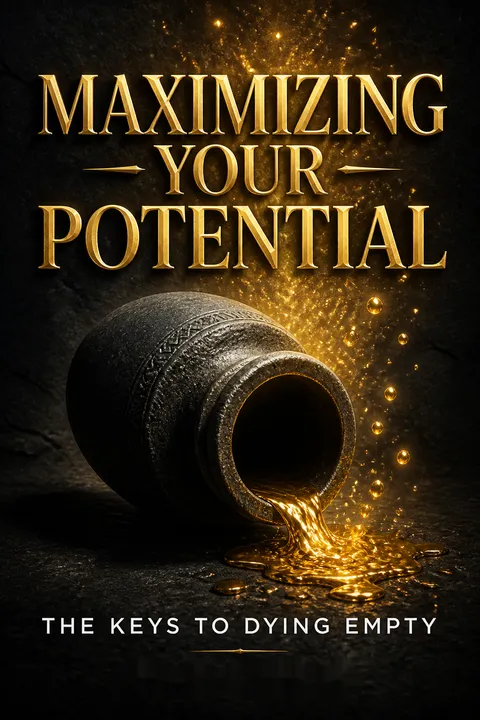
Die empty
Leave gifts unused as little as possibleDie empty is Munroe’s summary of a life spent expressing and sharing its God-given abilities. It urges readers not to confuse past success with completed purpose or to leave important work, knowledge, and gifts unused. The phrase is about contribution and fulfillment in the book’s spiritual framework, rather than a literal demand to work without rest or limits.
FAQ
1. What is "Maximizing Your Potential: The Keys to Dying Empty" by Myles Munroe about?
- Unlocking Human Potential: The book explores how every person is born with untapped abilities, gifts, and talents, and how to discover, release, and maximize them.
- Purpose-Driven Living: Munroe emphasizes that fulfilling your God-given purpose is essential for personal satisfaction and contributing to humanity.
- Spiritual Foundation: The book is rooted in biblical principles, teaching that true potential is realized through a relationship with God.
- Dying Empty Concept: Munroe’s central message is to “die empty”—to leave nothing undone, unshared, or unfulfilled, so that you exit life having given all you were created to give.
2. Why should I read "Maximizing Your Potential" by Myles Munroe?
- Break Free from Mediocrity: The book challenges readers to move beyond the comfort of the “norm” and strive for excellence in all areas of life.
- Practical and Spiritual Guidance: It offers actionable steps and spiritual insights for personal growth, making it relevant for both faith-based and general audiences.
- Overcome Life’s Barriers: Munroe addresses common obstacles like fear, procrastination, and societal expectations, providing strategies to overcome them.
- Legacy and Impact: The book encourages readers to think generationally, ensuring their lives positively affect others and future generations.
3. What are the key takeaways from "Maximizing Your Potential" by Myles Munroe?
- Potential Is Unlimited: Everyone has more within them than they have accomplished; what you’ve done is only a fraction of what you can do.
- Purpose Unlocks Potential: Discovering and pursuing your God-given purpose is the key to releasing your full abilities.
- Action Is Essential: Dreams and talents must be cultivated, protected, and shared through consistent effort and discipline.
- Environment Matters: The right spiritual, mental, and physical environments are crucial for maximizing potential.
- Legacy Mindset: True maximization of potential includes passing on your gifts and knowledge to the next generation.
4. How does Myles Munroe define "potential" in "Maximizing Your Potential"?
- Untapped Ability: Potential is described as dormant, hidden ability—what you can do but haven’t yet done.
- God-Given Treasure: Munroe teaches that potential is a deposit from God, designed to fulfill a specific purpose.
- Not Measured by Past: Your potential is not determined by your past achievements or failures, but by what remains within you.
- Requires Release: Potential must be discovered, developed, and released through intentional action and faith.
5. What are the main steps to maximizing your potential according to Myles Munroe?
- Know Your Source: Reconnect with God, the Creator, to understand your original design and purpose.
- Understand Your Function: Learn how you were designed to operate—by faith, not by sight or societal standards.
- Discover Your Purpose: Identify your unique reason for existence and align your actions with it.
- Use Your Resources: Recognize and utilize the skills, experiences, and opportunities God has given you.
- Maintain the Right Environment: Surround yourself with influences and conditions that nurture growth.
- Work Diligently: Consistent, purposeful work is the master key to releasing potential.
6. What are the "enemies of potential" discussed in "Maximizing Your Potential" by Myles Munroe?
- Disobedience and Sin: Turning away from God’s will blocks the flow of potential.
- Fear and Discouragement: These paralyze action and keep abilities dormant.
- Procrastination and Past Failures: Delaying action or dwelling on past mistakes prevents progress.
- Opinions of Others and Distractions: Allowing others’ negativity or losing focus can derail your purpose.
- Success, Tradition, and Wrong Environment: Settling for small achievements, clinging to old ways, or being in toxic environments stifles growth.
7. How does Myles Munroe advise readers to guard and protect their potential?
- Be Proactive: Anticipate challenges and set up boundaries to defend your dreams and abilities.
- Rely on God’s Armor: Use spiritual tools like prayer, faith, and God’s Word to withstand attacks.
- Choose Associations Wisely: Surround yourself with supportive, purpose-driven people.
- Take Responsibility: Recognize that you alone are accountable for safeguarding your potential.
8. What does "cultivating and feeding your potential" mean in "Maximizing Your Potential"?
- Continuous Learning: Seek knowledge, wisdom, and understanding to grow your abilities.
- Healthy Habits: Maintain your body, mind, and spirit with proper nourishment, exercise, and rest.
- Positive Input: Feed your mind and spirit with uplifting, godly information and avoid toxic influences.
- Active Development: Regularly challenge yourself with new experiences and disciplined effort.
9. Why is sharing your potential important according to Myles Munroe?
- Fulfills Purpose: Potential is not meant for self alone; it must be given to benefit others.
- Multiplies Impact: Sharing your gifts inspires and equips others, creating a ripple effect.
- Completes the Cycle: Like seeds producing fruit, your potential is maximized only when it reproduces in others.
- Brings Joy and Satisfaction: True fulfillment comes from seeing your abilities bless and empower others.
10. How does "Maximizing Your Potential" by Myles Munroe address the next generation and legacy?
- Generational Responsibility: You are called to leave an inheritance of wisdom, skills, and values for those who follow.
- Avoiding a "Seedless Life": Failing to pass on your potential is likened to fruit without seeds—enjoyable now but unable to reproduce.
- Influence Beyond Self: Your obedience and maximized potential affect countless lives beyond your immediate circle.
- Dying Empty: The goal is to leave nothing undone, ensuring your life’s impact continues after you’re gone.
11. What role do "laws of limitation" play in maximizing potential, according to Myles Munroe?
- Freedom with Boundaries: True liberty is found within God’s laws and principles, not in lawlessness.
- Protection and Maximization: Laws are designed to protect, assist, and maximize your abilities, not to restrict you.
- Consequences of Violation: Ignoring God’s boundaries leads to loss, slavery, and death of potential.
- Obedience Is Key: Living within divine limitations ensures you fulfill your purpose safely and effectively.
12. What are the best quotes from "Maximizing Your Potential" by Myles Munroe and what do they mean?
- “Die empty. Die fulfilled by dying unfilled.” – Give all you have so nothing is left unused when you leave this world.
- “What you have done does not equal the sum of what you can do.” – Past achievements are only a fraction of your true capacity.
- “Potential is dormant ability, reserved power, untapped strength, unused success, hidden talents, and capped capability.” – Potential is everything within you that is yet to be realized.
- “You were designed to be distinctive, special, irreplaceable, and unique, so refuse to be ‘normal’!” – Embrace your uniqueness and resist the pull of mediocrity.
- “The greatest tragedy in life is not death, but a life that never realized its full potential.” – The real loss is not dying, but failing to become all you were meant to be.
About the Author
Other books by Myles Munroe



Download PDF
Download EPUB
.epub digital book format is ideal for reading ebooks on phones, tablets, and e-readers.








