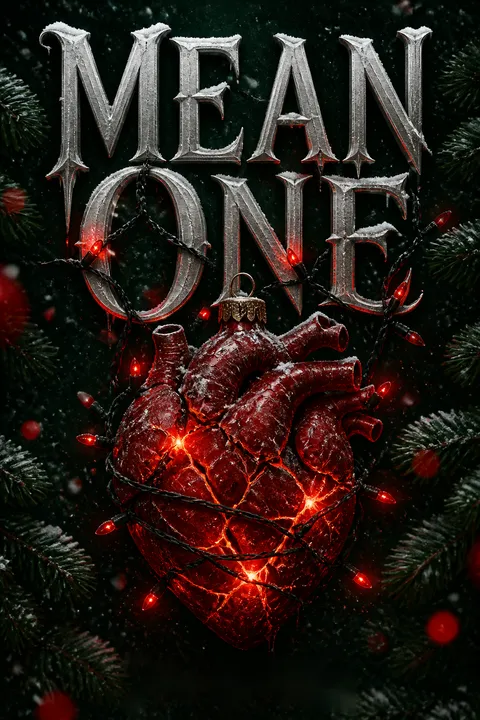


Plot Summary
Prologue
A childhood memory returns in the Grouch's1 sleep: Gus4 beating him while May-Martha3 denies loving him to make the blows stop. Now grown, the green-furred outcast1 lives in an abandoned quarry with Max,2 who followed him there as a child and became his lover.2
A warning sign outside his refuge rekindles his fury. When a drunken couple mention Gus,4 the Grouch1 attacks them, and Max2 helps kill the woman. Together they decide to leave their hiding place and bring their revenge to Whoreville, where the people who hurt him still live.
The opening binds the Grouch's violence to a specific wound: not simply being rejected, but being told that the person he loved wanted nothing to do with him while he was being beaten. The memory is presented as a recurring nightmare, suggesting that his adult revenge is an attempt to seize control of a scene he could not control as a child. Max joins him in turning private pain into public terror. Their shared violence creates intimacy, but it also gives the past a new audience, setting the town's fear in motion.
A Note in the Snow
Outside the brothel, May-Martha3 finds the couple's mutilated bodies and a bloodstained message addressed to her and Gus.4 A glimpse of glowing eyes across the street confirms her fear: the Grouch1 has returned. Shaken, she locks herself in her room and searches frantically for a small box she has hidden beneath the bed.
Inside is a keepsake connected to the boy she once loved,1 and holding it brings back the guilt she has tried to bury. May's3 present life is already constricted by Gus's4 control and her work in the brothel. The note makes the past immediate again, while the box shows that she has never managed to put it away.
The dead couple turns the Grouch's return into a public fact, but the note makes the threat intimate: May is not merely living in a frightened town, she is being addressed by someone whose history she shares. Her search for the box exposes a split between her daily survival and her private attachment to the past. She has learned to endure Gus and perform indifference, yet she has preserved evidence of a bond she cannot dismiss. The scene's strongest tension comes from that contradiction. May fears the Grouch's return, but the object she retrieves suggests that fear is entangled with remorse and longing.
Blood on the Press
The Grouch1 learns from a newspaper that his mother7 has publicly disowned him and that the town is calling for justice over the couple's murders. He refuses Max's2 suggestion to kill his elderly mother,7 but chooses to punish the paper instead. At the printing press, he and Max2 attack a worker who cannot name the writer of the article.
The worker eventually identifies the reporter as Cindy.5 The Grouch1 kills him, then uses his blood to leave a threat for Cindy on the wall. By targeting the person who reported his mother's7 words, he turns public humiliation into another act of revenge and gives the authorities a new crime to investigate.
The newspaper gives the Grouch a distorted mirror: his mother's rejection reaches him through the town's public voice, where private history becomes spectacle. His refusal to kill her complicates his fury, showing that revenge has boundaries even as he brutalizes a stranger. The printing press matters because it manufactures a public story about him; he answers by turning the worker's body into a competing message. Violence is both punishment and authorship here. He cannot control what the town believes, so he forces it to read his threat instead.
The Warning at the Bar
May3 drugs Gus's4 water so she can leave the brothel unnoticed and find Cindy,5 who works at a bar as well as writing for the newspaper. May3 warns her that the Grouch1 is killing people and has singled her out. Cindy5 recognizes the danger, then explains that she bullied Max2 as a child and remembers the Grouch1 protecting her.
After he fled town, Max2 disappeared into the woods, apparently following him. Cindy5 also reminds May3 that both she and Gus4 helped break the Grouch's1 trust. May3 leaves knowing that Max's2 loyalty is not harmless companionship: she sees May3 as the person standing between her and the man she wants.1
May's warning is an act of practical courage, but the conversation also forces her to hear her past described by someone outside her own guilt. Cindy's recollection makes Max's presence in the quarry legible as a long attachment rather than a recent alliance. That history changes the shape of the threat: May is caught not only between the Grouch and Gus, but within Max's possessive understanding of their bond. Cindy's bluntness also punctures May's isolation. She cannot treat the return as a private reckoning when the violence has already reached the town and its witnesses.
The Axe Finds Cindy
On her way to check on Cindy,5 May3 follows Max's2 eerie laughter into a dark alley. Max2 confronts her with an axe and a severed hand, then admits that her devotion to the Grouch1 governs everything she does. May3 tries to unsettle her by revealing the matching red-heart tattoos she and the Grouch1 got as teenagers.
Max2 responds with rage, mocking May's3 work at the brothel and kissing her hard enough to draw blood. When Max2 disappears, May3 follows a blood trail and finds Cindy's5 mutilated body, with a warning for May painted above it. Cindy's5 death confirms that Max2 has already acted on the threat, while her choice to spare May3 leaves the next encounter hanging over the town.
Max's confrontation is a contest over who gets to define the Grouch's past. May uses the tattoo as proof of a bond; Max treats it as evidence that the bond still threatens her. Neither woman can separate love from possession, and the alley makes that conflict physical through the axe, the cut, and the forced kiss. Cindy's body is not just a warning to May. It is the consequence of a rivalry in which Max has chosen to punish the people she associates with the Grouch's pain. Her decision to leave May alive preserves a rival, not peace.
A Cave Full of Jealousy
Back in the quarry, Max2 gives the Grouch1 Cindy's5 severed hand and tells him she encountered May.3 His anger spikes until Max2 makes clear that she did not kill her. The reassurance matters more than he wants to admit: even while he claims to want revenge, May's3 safety still governs his reactions.
Max2 exploits that weakness, drawing him into their familiar, rough intimacy and pressing him to acknowledge his dependence on her. He gives her the attention she wants but keeps his deepest feelings unspoken. Their closeness is real, yet it is built around a rivalry with a woman absent from the cave. Max2 can make him yield physically, but she cannot make him forget May.3
The cave functions as a refuge from the town, but it is not a refuge from the past. Max and the Grouch repeat a pattern in which jealousy becomes provocation, and provocation becomes erotic closeness. Their intimacy can soothe him, yet it does not resolve the question Max keeps asking: whether he belongs to her in the way she wants. His alarm at May's possible injury reveals how thoroughly the old attachment persists. Max recognizes this, then tries to convert his bodily response into proof of emotional possession. The scene exposes the difference between access and trust.
Gus Offers a Cage
Gus4 arrives at May's3 room and demands that she cover the tattoo she shares with the Grouch. Then he proposes marriage, presenting it as protection from the man who has returned.1 May3 understands the bargain beneath the offer: Gus4 wants to end her work at the brothel so he can claim exclusive control over her.
When she hesitates, he grips and bruises her, insisting that she will become his wife whether she agrees or not. After he leaves, May3 retrieves the hidden box and weeps over what she has kept. Gus's4 threat changes her fear into a recognition that remaining in the life he has chosen for her is no longer tolerable.
Gus frames possession as rescue, using the Grouch's return to make coercion sound like security. His proposal therefore echoes the town's wider habit of deciding what the Grouch and May are worth, while also exposing how little protection his badge offers her. May's refusal is not a clean escape; she remains afraid and economically trapped. But her response marks a change in self-understanding. She no longer mistakes endurance for consent. Returning to the box after Gus leaves links this decision to her buried history, suggesting that the life she wants cannot be built on pretending the past meant nothing.
A Ring in the Snow
While searching for firewood, the Grouch1 and Max2 find a couple having sex in the snow. They kill them, then discover an invitation to Whoreville's Christmas Eve celebration among the man's clothes. It announces Gus's4 engagement to May.3 Max2 tries to hide the news, but the Grouch1 reads it and spirals into rage, interpreting the engagement as proof that May3 chose Gus4 after all.
He decides to attend the celebration and kill the people who hurt him. Max2 agrees on the condition that he wear a Santa costume, turning their plan for revenge into a grotesque holiday outing. The invitation brings his old wound into the present and gives the violence a date and a destination.
The invitation is a small piece of paper with disproportionate force because the Grouch reads it through the abandonment he remembers, not through what May actually wants. His interpretation converts uncertainty into certainty and then into a plan for violence. Max's attempt to conceal the news shows her awareness that May still has power over his emotions, even while she insists on her own claim. The Santa costume sharpens the story's dark holiday irony: the killers enter a celebration dressed as its familiar symbols. Christmas becomes less a promise of reconciliation than a public stage on which their private resentments will collide.
Christmas Eve Turns
In matching Santa costumes, the Grouch1 and Max2 slip into Whoreville's celebration. Gus4 announces his engagement to May3 before the crowd, and May3 freezes rather than answering freely. When Gus4 forces the ring onto her finger and kisses her, the Grouch1 abandons their plan and storms away. Max2 tells him to go to the bar while she creates a distraction, then follows Gus4 and May3 to the brothel.
She enters May's3 room with a knife and attacks, blaming her for occupying the Grouch's1 heart. May3 fights back, but the struggle stops when Gus4 pounds on the locked door. Max2 strikes May,3 escapes through the window, and leaves Gus4 to find her injured. The celebration has become the opening for Max's2 private attempt to eliminate her rival.3
The public proposal stages May's lack of agency as entertainment for the town. Her silence is read as agreement, while the crowd's celebration helps Gus impose a decision she has not made. The Grouch sees the ring as confirmation of his old rejection and retreats into rage; Max sees the same scene as her opportunity. Her attack reveals that she is not merely following his revenge but pursuing her own, rooted in fear of being displaced. The interruption by Gus prevents a simple resolution, leaving May wounded and Max free. Each character acts from a different version of the same triangle, and none yet knows the whole truth.
A Heart for Christmas
Crispin1 reaches May's3 room and finds Gus4 hanging from her bed after she stabbed him to stop his abuse. Crispin1 kills Gus,4 then demands an explanation. May3 tells him she never meant to reject him: Gus4 kept her from helping when a fire killed one of Crispin's mothers,6 and she had preserved the other mother's7 remains in the box.
The truth reunites them, and Crispin1 promises to return after spending Christmas Eve with Max.2 Max2 overhears, kills May,3 and presents her heart3 as a gift. Crispin1 wounds Max2 with broken glass, but then collapses with a piercing pain of his own. In the epilogue, Max2 is still alive, wearing a coat made from Crispin's1 fur and keeping May's3 heart3 beside her.
The revelation briefly repairs the story's central misreading: May's childhood rejection was an attempt to survive Gus's violence, not proof that she never loved Crispin. The urn gives that truth material form, and their reunion shows how much of the tragedy depended on a story each carried alone. But clarification arrives too late to undo the habits formed around pain. Crispin's promise to return to Max postpones an honest choice, while Max treats the delay as a final theft. The heart gift literalizes her possessiveness. The epilogue leaves no moral restoration, only a survivor wearing the remains of the people she could not bear to lose.
Epilogue
Max2 sews through the night, finishing a coat with green fur and a sleeve made from the Grouch's1 body. She tends her wounded shoulder, hums along to Christmas music, and settles into his chair.
May's3 heart3 rests beside the radio. Max2 treats these remains as a way to keep both of them close, declaring the bond permanent while the cave glows with lights and the fire burns.
The epilogue refuses the usual promise that a violent climax will produce closure. Max survives, repairs her wound, and converts the bodies into objects she can wear and keep. The coat is both memorial and possession: it replaces the living relationships she could not control with a private ritual of permanent ownership. Christmas music and decorations remain, but their warmth is emptied out by the scene's material cost. Max's final sense of togetherness is therefore profoundly unstable. She has preserved the physical traces of the people she wanted, while destroying the possibility of mutual recognition that could have made intimacy real.
Analysis
Mean One turns a familiar holiday setting into a study of how people mistake possession for care and pain for proof. The Grouch's1 childhood humiliation shapes his adult violence, but the story does not make his suffering a moral defense. His revenge injures people who had different degrees of responsibility, while his fixation on May3 keeps him interpreting new events through an old wound. Max2 and Gus4 mirror one another in their claims over other people. Gus4 uses official authority and the language of protection; Max2 uses intimacy and the language of devotion. Both treat another person's choice as an obstacle.
May3 occupies the center of these competing claims, yet her agency is not presented as simple liberation. She has learned to survive Gus4 through deception and accommodation, and her silence at the public proposal4 reflects coercion rather than consent. Her preserved urn becomes a material counterargument to Crispin's1 belief that she discarded him. That revelation matters, but it comes after years in which the characters have acted on partial knowledge and unexamined assumptions. Truth can repair an interpretation; it cannot automatically repair the lives built around it.
The book's most unsettling device is its literal treatment of metaphor. A shared heart tattoo becomes a contested claim, and Max's2 gift of May's3 actual heart3 makes possessive love physically grotesque. The transformation does not suggest that Max's2 feelings are false. Rather, it shows how sincere attachment becomes destructive when the other person is treated as an object that can be secured. The Christmas decorations and music sharpen the irony: familiar signs of warmth continue to glow while the characters destroy the possibility of mutual care. The ending offers no sentimental rescue. Max's2 survival preserves the cycle in material form, leaving the reader with a grim distinction between keeping someone close and being loved by them.
Review Summary
Mean One is a polarizing erotic horror retelling of The Grinch that readers found either brilliantly unhinged or utterly regrettable. The novella features explicit sexual content, graphic violence, and dark themes set in "Whoreville." Many praised the creativity, spicy scenes, and shocking twist ending involving the character Max, while others found it poorly developed garbage. Reviewers emphasized it's horror, not romance, with no happy ending. The short read was described as bonkers, twisted, and unforgettable—for better or worse.
Characters
Crispin, the Grouch
The rejected monsterCrispin is a green-furred outcast who has withdrawn from Whoreville to live in an abandoned quarry. Years of ridicule and childhood abuse have left him quick to read humiliation as proof that no one can love him. His fierce attachment to May-Martha3 survives beneath the anger he directs at her, while his bond with Max2 offers companionship without settling his longing for acceptance. He uses cruelty to reclaim power, especially when old wounds are stirred, but his reactions reveal how much control those wounds still exert. Crispin is both frightening and deeply reactive: his violence grows from a history he has never been able to place safely behind him.
Max
The possessive survivorMax followed Crispin1 into the woods as a child and grew into his closest companion, lover, and partner in violence. Copper curls, green eyes, and a playful manner make her appear lively, but her humor often masks a need to test how far she can push people before they leave. She accepts pain and provokes danger as ways of securing attention, especially from Crispin1. Her devotion is genuine, yet she confuses being needed with being chosen and treats rivals as threats to be removed. Max's energy keeps the quarry from becoming a place of simple isolation, while her possessiveness makes that refuge emotionally volatile.
May-Martha
The buried first loveMay-Martha is a brothel worker whose present circumstances conceal a more complicated past with Crispin1. She survives Gus's4 control by reading his moods, drugging him when she needs freedom, and keeping her own feelings private. Her guilt over the way Crispin1 remembers their separation has hardened into self-punishment, but her concern for others remains active: she risks leaving the brothel to warn Cindy5. May is neither simply a victim nor a passive romantic figure. She has learned to endure coercion, yet she still carries a sense of responsibility for the harm around her and struggles to distinguish accountability from deserving abuse.
Gus, or Gustopher
The town's coercive chiefGus is Whoreville's police chief and May's3 long-standing abuser. His public authority lets him command crowds and present himself as a protector, while in private he uses money, intimidation, and physical force to control her. He frames possession as care, insisting that marriage would save May3 even as he denies her the right to choose. His confidence depends on the town's willingness to trust his uniform and on May's3 fear of the past. Gus's role shows how civic power can shelter private violence when no one challenges the respectable image attached to it.
Cindy
The sharp-tongued reporterCindy writes for Whoreville's newspaper and works shifts at a local bar. Blunt, quick-witted, and financially practical, she has ambitions that exceed the work she can currently afford to leave. She once bullied Max2 and remembers Crispin1 protecting her, a history that gives her a useful perspective on the childhood relationships shaping the present danger. Cindy does not soften her judgments to comfort May3, but she offers her information and takes the threat seriously. Her reporting makes her visible to the town and to the Grouch1, placing her between public storytelling and private retaliation.
Crispin's mother
The tender parentOne of the two mothers who raised Crispin1, she represents the tenderness and safety he associates with home. Her relationship with him is bound up in his sense of belonging, making the loss of that family bond central to his childhood pain. May3 remembers her as someone whose absence still matters to the people who knew her.
Crispin's other mother
The estranged parentCrispin's1 other mother remains connected to Whoreville and becomes a public voice in the story's account of his past. Her estrangement from him gives his return another family wound to confront. She represents a living link to the household he left behind and to the community's judgment of him.
Plot Devices
The matching heart tattoos
A bond made visibleMay3 and Crispin1 share matching red-heart tattoos from their teenage relationship. The marks let May3 make a claim about their bond without relying on a spoken explanation, and Max2 recognizes them as evidence that May3 still occupies a place in Crispin's1 emotional life. The tattoo also gives the story a physical counterpoint to the competing stories each character tells about the past. For May3, it signifies a promise she has not discarded. For Max2, it is a sign of a rival's lasting access. Its meaning is powerful precisely because the same mark can be read as love, memory, or threat.
The hidden urn
Memory kept in secretA small box beneath May's3 bed contains an urn holding the remains of one of Crispin's mothers6. May3 has kept it through the years, intending to return it to him. The object makes her remorse concrete and gives her a way to prove that her feelings survived the separation. It also complicates Crispin's1 understanding of the past: May's3 preservation of the urn contradicts the belief that she simply abandoned him. When the box is finally opened between them, it carries both grief and an act of care that had gone unseen.
Blood-written threats
Violence becomes public messageThe Grouch1 and Max2 use messages left at murder scenes to turn private revenge into a spectacle Whoreville cannot ignore. The first note tells May3 that the Grouch1 has returned; later, blood at the printing press threatens Cindy5, and a message near Cindy's5 body names May3 as the next target. These warnings carry information, but they also serve as displays of power. Each one forces the intended recipient to imagine what might happen next, spreading fear beyond the immediate victim. The town's public attention, which once made the Grouch1 an object of ridicule, becomes a channel he can use to command attention.
The Christmas celebration
A festive public trapWhoreville's Christmas Eve celebration gathers the town in one brightly decorated place and provides the setting for Gus's4 public engagement announcement. The Grouch1 and Max2 attend in Santa costumes, using the holiday crowd as cover while they pursue revenge. The contrast between the celebration's staged cheer and the violence planned around it gives the scene its dark force. Christmas also matters privately to Max2, who decorates the quarry and insists that the Grouch1 join the town's festivities. The holiday setting gathers their incompatible desires in one night: Max2 wants shared ritual, Gus4 wants public possession, and the Grouch1 wants reckoning.
Download PDF
Download EPUB
.epub digital book format is ideal for reading ebooks on phones, tablets, and e-readers.








