

Key Takeaways
Use brief, repeated relaxation to make inner attention available on demand
Start with the body. Gawain treats meditation as a learnable practice, not a test of spiritual talent. A short routine of slow breathing, relaxing each part of the body, and letting thoughts pass helps shift attention away from daily demands. She suggests practicing for five to ten minutes, then returning to it often enough that settling down becomes more familiar.
Let imagination be flexible. In the inner sanctuary exercise, a meditator imagines a private, peaceful place and rests there before asking for guidance. The place can be seen, sensed, or simply imagined; vivid mental pictures are not required. The book also offers practical formats: read an exercise to a friend, pause while reading to try it, or record it to guide yourself.
The exercise is strongest when understood as a repeatable transition: from scattered attention toward deliberate noticing. Body awareness and paced breathing give the mind a concrete task, while the sanctuary provides a memorable image for rest. Neither requires a supernatural interpretation to be useful. The invitation to accept nonvisual experience is also unusually inclusive for a visualization book. A useful boundary is that relaxation is not a cure-all; persistent distress, trauma, or severe anxiety may call for support beyond solitary practice.
Pause long enough to hear intuition, then test it against reason
Make room for a signal. Gawain describes intuition as an inner sense of what feels right, often noticed as a hunch or bodily feeling. Her quick check-in is deliberately brief: notice current thoughts, physical sensations, and emotions, then ask whether anything needs attention. A quiet pause can reveal a response that constant activity has drowned out. Small reminders placed around home or work can prompt the habit.
Use the signal in context. One client got a flat tire and initially planned to call her mother for help. After pausing, she noticed assistance nearby, and a couple soon offered help. Gawain does not ask readers to discard intellect; she presents reason as a useful tool that can organize information while intuition suggests what deserves attention.
A useful modern reading is that a hunch may compress experience the conscious mind has not yet put into words. That makes pausing valuable, but it does not make every feeling accurate. Fear, wishful thinking, and old habits can also feel compelling. Treating intuition as a lead to investigate, rather than an order to obey, preserves the book's respect for inner signals while adding a safeguard. The flat-tire story illustrates attentional openness, not proof that every problem resolves through intuition.
Pair inner knowing with action instead of letting either dominate
Join sensing and doing. Gawain uses feminine and masculine energies as names for two capacities within any person. The feminine is receptive intuition, the ability to notice what feels true; the masculine is outward action, the ability to express or carry out that guidance. She explicitly presents this as an internal model, not a prescription for how women and men should behave.
Notice where the process breaks. An artist might sense an idea and then begin making it. Someone who feels reluctant to accept an invitation might act on that feeling by declining, rather than complying from habit. Gawain calls the controlling voice that suppresses inner knowing the old male. In practical terms, the exercise is to notice a feeling, ask what it suggests, and choose a concrete response.
The model offers a memorable account of a common gap: people can recognize what matters to them yet fail to act, or act efficiently without checking whether the goal still fits. Its gendered labels are the main limitation. Readers can preserve the useful distinction by translating it into receptivity and agency, without treating either capacity as inherently male or female. The book itself warns against projecting the metaphor onto social roles, a clarification that helps keep the idea psychologically useful rather than biologically prescriptive.
Treat conflicting inner parts as voices to understand, not enemies to suppress
Expect inner disagreement. Gawain describes people as containing sub-personalities, distinct parts with their own needs and opinions. A driven worker and a part that wants rest may both belong to the same person. Trouble arises when one part dominates while the other is ignored. She compares this inner life to a family or committee: listening to its members makes it easier for the conscious self to choose rather than react.
Give the vulnerable part care. The inner child is her name for emotional, playful, imaginative, and vulnerable aspects of the self. Gawain suggests asking what this part needs, then making room for suitable forms of care, such as play, contact, creativity, or rest. Her guided exercise invites a conversation with the imagined child, followed by regular, responsible attention to its needs.
The inner-family metaphor makes ambivalence easier to approach without reducing it to hypocrisy or weakness. It also points toward a practical question: what need is a behavior trying to protect or meet? Contemporary parts-based approaches use related language, though this account is a self-reflection tool, not a clinical diagnosis. The child image can be compassionate, especially for feelings dismissed as childish. It should not be treated as a literal explanation for every decision or difficulty; present circumstances and learned behavior matter too.
Make creativity safer by letting imperfect experiments outrun the inner critic
Separate making from judging. Gawain argues that creativity is not limited to art. Raising a child, cooking, running a home, or changing a room can all involve creative choices. A frequent obstacle is the inner critic, the learned voice that labels an attempt foolish, inadequate, or not good enough before it begins. She recommends noticing that voice rather than trying to silence it by force.
Try before you evaluate. One exercise is to write down both the critic's objections and the more curious response that wants to experiment. Then make something, such as a drawing, without requiring it to be impressive. Gawain also suggests following a fantasy with a small, manageable step. A recurring wish may reveal a neglected interest, but it need not dictate a career or a life plan.
This approach protects the fragile early stage of creative work, when evaluation can stop experimentation before anything exists to improve. It also treats creativity as a way of engaging, not merely a polished product. The critic need not be cast as useless: standards and revision help once a first attempt is underway. The practical distinction is timing. Let curiosity generate material, then let judgment refine it. That sequence makes room for play without pretending that every impulse is brilliant or every fantasy feasible.
Develop spiritual, mental, emotional, and physical life as one system
Use four lenses. Gawain calls these the four levels of existence. The spiritual level concerns a sense of essence, connection, and purpose. The mental level includes thoughts, beliefs, and reasoning. The emotional level is the capacity to feel and connect. The physical level includes the body and the practical abilities needed to live in the material world. She argues that growth in only one area cannot substitute for the others.
Check what is neglected. A person may reject spirituality after an experience with beliefs that felt wrong, lack confidence in thinking, carry emotional hurt, or need practical skills to feel capable in daily life. The integration meditation invites attention to each level in turn: purpose, mental clarity, feelings, bodily needs, and everyday surroundings. There is no required order; the next area to work on depends on the person's circumstances.
This framework is useful because it resists the familiar split between inner life and practical life. A sense of meaning cannot by itself resolve an unmet physical need, just as practical competence may not settle emotional pain. The model resembles holistic approaches that consider interacting dimensions of well-being, while its spiritual level makes a metaphysical claim rather than a clinical one. Balance should not mean equal time or equal progress in all areas. Illness, caregiving, or financial strain can make one level appropriately urgent.
Read relationship friction as information, not proof that every conflict is yours
Look for a useful reflection. Gawain proposes that relationships can reveal qualities a person welcomes or disowns in themselves. She recalls repeatedly choosing unavailable partners, then recognizing her own ambivalence about commitment and self-love. She says people may also be drawn to qualities they have not developed, or irritated by traits they reject in themselves.
Translate judgment into inquiry. In her mirror exercise, identify the specific behavior that bothers you, then ask what healthy capacity might sit beneath it. Seeing someone as lazy might point toward a neglected ability to rest; judging someone as domineering might reveal a need for greater assertiveness. The goal is not to imitate an extreme or excuse harmful behavior. It is to consider whether the encounter highlights a quality worth developing.
The mirror idea turns irritation into a question about the self, which can reveal blind spots that self-description misses. Its value depends on keeping it as one hypothesis, not a universal law. Another person's conduct may reflect their choices, a power imbalance, or a genuine breach of boundaries, rather than a hidden trait in the observer. The book's own instruction not to copy an extreme is important. Reflection becomes constructive when it expands self-understanding without replacing clear judgment about how others behave.
Define prosperity by what fulfills life, not money alone
Broaden the measure. Gawain defines true prosperity as having enough of what matters, including nonmaterial needs, while recognizing that money is closely tied to life in the modern world and basic needs must be met. She critiques three narrow approaches: accumulating wealth as the route to fulfillment, rejecting material life for spiritual purity, and assuming positive beliefs alone can produce unlimited wealth. Each captures part of the picture but leaves something out.
Work the whole process. Her path includes gratitude, awareness of limiting beliefs, healing, following inner guidance, imagining a fulfilling life, setting goals without clinging to them, and sharing one's abilities. She treats money as a symbol of exchanged energy and a possible mirror of how people relate to power. That metaphor can prompt reflection, but it should not be mistaken for a complete account of financial circumstances.
The broad definition makes prosperity harder to reduce to a bank balance and gives gratitude a concrete role: noticing resources already present, including relationships, health, and meaningful work. The claim that finances mirror inner beliefs is more debatable. Income also depends on institutions, opportunity, discrimination, health, and chance. A person facing poverty should not be blamed for supposedly blocking abundance. The strongest use of Gawain's framework is as a prompt to examine choices and values, alongside an honest assessment of material conditions.
Let personal healing sharpen, not replace, your contribution to the world
Join inner and outer work. Gawain rejects two extremes: trying to change society while ignoring one's own patterns, and pursuing spirituality as if physical life and public problems do not matter. Her path of transformation joins personal development with responsible participation in the world. She describes feeling both faith and fear about the future, and argues that difficult feelings should be acknowledged before people can respond creatively.
Make a vision tangible. The book's exercises first ask readers to notice their expectations and emotions about personal life, community, humanity, and the environment. A second exercise invites them to imagine a more balanced future for themselves and the wider world, then write or draw that vision. The practice is meant to clarify what matters and make possible action more visible, not to guarantee that imagined outcomes will occur.
The connection between self-understanding and public responsibility is a meaningful corrective to both private self-absorption and abstract activism. Imagining a future can help surface priorities that are otherwise hidden by worry. Yet inner change does not automatically alter policy, institutions, or ecological conditions. A vision gains public force when it informs cooperation and concrete choices. The book's best balance is to treat personal healing as one contribution among many, not as a substitute for collective work or structural solutions.
Analysis
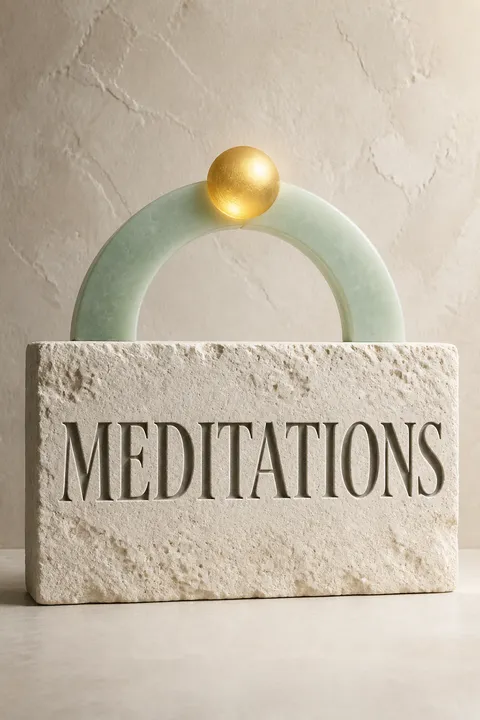
Meditations is less a single argument than a collection of guided practices organized around a consistent premise: attention turned inward can help people notice feelings, needs, and possibilities that daily momentum obscures. Its distinctive method is experiential. Rather than asking readers to master an abstract theory, Gawain repeatedly guides them through relaxation, imagery, questions, and small acts of follow-through. The inner sanctuary acts as a reusable setting; the inner child, wise being, and creative self give otherwise vague experiences a character that can be approached in dialogue.
The book's strongest practical thread is integration. Intuition is not meant to eliminate reasoning, creativity is not confined to art, and spirituality is not meant to erase physical needs. Its exercises repeatedly ask readers to move from awareness toward expression: feel something, understand it, then decide what action fits. This makes the book more than a collection of calming scripts. It is a model of self-observation that aims to turn reflection into choices.
The same imaginative style creates a boundary readers should keep in view. Images of universal guidance, money as energy, and relationships as mirrors are spiritual interpretations, not established causal explanations. Used lightly, they can prompt questions; used literally, they can overstate personal control and understate other people's agency or social conditions. Gawain's gendered symbolism also reflects its era and is more useful translated into receptivity and action than applied to gender roles.
The most durable reading, then, is neither credulous nor dismissive. These meditations offer a structured way to pause, externalize inner conflict, and explore what a person values. Their value rests less on whether an imagined guide exists independently than on whether the practice helps someone notice a need, test an assumption, or take a small, fitting step. The book's invitation is to become more attentive and whole, while remaining responsible for distinguishing metaphor from fact.
Review Summary
Meditations by Shakti Gawain receives generally positive reviews, with an average rating of 3.93 out of 5. Readers appreciate its easy-to-understand guidance on visualization and meditation techniques. Some find it spiritually enlightening and instructive, while others view it as an ongoing resource. The book is praised for its mind power exercises and law of attraction concepts. However, some readers note that it may not appeal to everyone due to its spiritual nature. Several reviewers mention the need for multiple read-throughs to fully grasp and implement the book's teachings.
People Also Read




Glossary
Inner sanctuary
Imagined place of inner refugeA private, peaceful place created through visualization and revisited during the book's meditations. It may be a natural setting, such as a beach or garden, and can be experienced visually, emotionally, or simply through imagination. Gawain uses it as a setting for rest and for meeting imagined aspects of the self, such as a wise being or inner child.
Quick Intuitive Check-In
Brief pause for inner noticingA short exercise for noticing thoughts, bodily sensations, and emotions, then asking whether anything needs attention. It is designed to fit into an ordinary day, even during a brief pause at work or elsewhere. Gawain presents it as a way to become more aware of intuitive impressions, not as a method that guarantees a correct answer.
sub-personalities
Distinct inner points of viewGawain's term for the different parts of a person that have their own needs, opinions, and desires. A hardworking part and a part that wants rest are one example. She encourages readers to recognize and respect these internal perspectives so that conscious choice, rather than whichever part takes over, can guide behavior.
inner child
Emotional, playful inner selfA metaphor for vulnerable, feeling, playful, imaginative, and sometimes wise aspects of the self. Gawain suggests that adults may suppress these qualities while trying to protect themselves from hurt. Her exercises invite people to ask what this part needs and to provide appropriate care, play, expression, and connection.
four levels of existence
Four dimensions of personal lifeGawain's framework for considering spiritual, mental, emotional, and physical life. The spiritual level concerns essence and connection; the mental level includes thoughts and beliefs; the emotional level involves feelings and relationships; and the physical level includes the body and practical life. She presents development and healing across all four as a route toward greater integration.
old male
Controlling inner actionGawain's name for an internal pattern that uses action, thought, or control to suppress intuitive and receptive capacities. She argues that this pattern can appear in people of any gender and distinguishes it from actual men or a social role. The concept belongs to her symbolic vocabulary for describing fear of surrendering control.
new male
Action guided by inner knowingGawain's term for the active capacity when it supports rather than suppresses inner guidance. In her model, this form of action listens to intuition and gives it expression in practical life. The term is intended as an internal metaphor, not a claim that men should behave in a particular way or that agency belongs to one gender.
true prosperity
Having enough of what mattersGawain's broader definition of prosperity as the experience of having enough of what a person genuinely needs and wants, materially and otherwise. It includes money but is not defined by wealth alone. Her approach combines gratitude, awareness of limiting beliefs, healing, inner guidance, vision, flexible goals, and sharing one's abilities.
path of transformation
Inner growth joined with human lifeGawain's name for an approach that integrates spiritual development with emotional, mental, physical, and practical human needs. It rejects both exclusive focus on external change and a spiritual approach that dismisses the material world. The path links personal healing with responsible participation in the wider world.
FAQ
What is "Meditations: Creative Visualization and Meditation Exercises to Enrich Your Life" by Shakti Gawain about?
- Guided Meditations and Visualizations: The book is a collection of guided meditations and creative visualization exercises designed to enrich various aspects of life, including relaxation, intuition, creativity, relationships, and prosperity.
- Self-Discovery and Healing: It emphasizes self-discovery, healing, and personal growth through inner exploration and practical exercises.
- Integration of Mind, Body, and Spirit: The book explores the integration of spiritual, mental, emotional, and physical aspects of being for holistic well-being.
- Accessible Practices: Shakti Gawain provides step-by-step instructions for meditations that can be done alone or with others, making the practices accessible to beginners and experienced meditators alike.
Why should I read "Meditations" by Shakti Gawain?
- Practical Tools for Growth: The book offers practical, easy-to-follow exercises that can help reduce stress, enhance creativity, and foster emotional healing.
- Holistic Approach: It addresses multiple dimensions of personal development, including intuition, inner guidance, relationships, and prosperity.
- Support for Daily Life: The meditations are designed to be integrated into daily routines, supporting readers in navigating challenges and finding balance.
- Empowering Self-Discovery: Readers are encouraged to trust their own experiences and inner wisdom, fostering greater self-awareness and empowerment.
What are the key takeaways from "Meditations" by Shakti Gawain?
- Inner Guidance is Accessible: Everyone has an inner source of wisdom and guidance that can be accessed through relaxation and meditation.
- Balance is Essential: True well-being comes from integrating and balancing the spiritual, mental, emotional, and physical aspects of life.
- Relationships as Mirrors: Our relationships reflect our inner state and can be powerful tools for self-understanding and growth.
- Prosperity is Internal: Prosperity is not just about money, but about experiencing abundance and fulfillment in all areas of life.
How does Shakti Gawain define and use creative visualization in "Meditations"?
- Imagination as a Tool: Creative visualization involves using the imagination to create positive images and scenarios, which can influence feelings, behaviors, and outcomes.
- Personalized Practice: Gawain encourages readers to adapt visualizations to their own preferences, trusting whatever images, feelings, or sensations arise.
- Manifestation and Healing: Visualization is presented as a method for manifesting desires, healing emotional wounds, and connecting with inner wisdom.
- Integration with Meditation: The book blends visualization with meditation techniques to deepen relaxation and self-awareness.
What is the role of relaxation and deep relaxation exercises in "Meditations" by Shakti Gawain?
- Foundation for Inner Work: Relaxation is the starting point for all meditative and visualization practices, helping to quiet the mind and body.
- Step-by-Step Guidance: The book provides detailed instructions for achieving deep relaxation, including breathwork and progressive muscle relaxation.
- Stress Reduction: Regular practice of relaxation exercises can reduce stress, improve well-being, and make it easier to access intuition and creativity.
- Quick Access Over Time: With practice, readers can learn to enter a deeply relaxed state quickly, even in the midst of daily activities.
How does "Meditations" by Shakti Gawain help readers connect with their inner guidance and intuition?
- Inner Sanctuary Visualization: The book introduces the concept of an inner sanctuary—a safe, peaceful place within—to access wisdom and guidance.
- Wise Being Meditation: Readers are guided to meet and interact with a wise inner being or guide, which can offer support and answers to personal questions.
- Practical Intuitive Check-Ins: Gawain provides quick exercises for checking in with intuition during daily life, making inner guidance more accessible.
- Trusting Personal Experience: The author emphasizes trusting whatever arises during meditation, whether it’s a feeling, image, or thought.
What are the "male and female within" concepts in "Meditations" by Shakti Gawain, and how do they relate to creativity?
- Inner Masculine and Feminine: Gawain explains that everyone has both masculine (active, action-oriented) and feminine (intuitive, receptive) energies within.
- Balance and Integration: Creativity arises from the harmonious interaction of these energies—the feminine receives inspiration, and the masculine acts on it.
- Internal, Not External Roles: The focus is on internal balance, not traditional gender roles; both men and women benefit from developing both aspects.
- Meditation Practice: The book includes a meditation to help readers contact and integrate their inner male and female energies for greater creativity and wholeness.
How does "Meditations" by Shakti Gawain address the concept of the inner child?
- Multiple Subpersonalities: The book describes the inner child as one of many subpersonalities, each with unique needs and gifts.
- Key to Emotions and Creativity: The inner child is seen as the seat of emotions, playfulness, magic, and creativity.
- Healing and Nurturing: Readers are guided to contact, listen to, and nurture their inner child, which can lead to emotional healing and increased joy.
- Practical Exercises: Specific meditations help readers connect with their inner child, understand its needs, and integrate its qualities into daily life.
What guidance does "Meditations" by Shakti Gawain offer for developing intuition?
- Intuition as Natural Ability: Gawain asserts that intuition is a natural, universal ability that can be reclaimed and developed with practice.
- Balancing Logic and Intuition: The book encourages integrating rational thought with intuitive guidance for better decision-making.
- Simple Daily Practices: Readers are taught to pause, relax, and check in with their gut feelings regularly, even during busy days.
- Overcoming Cultural Conditioning: The book addresses how Western culture often suppresses intuition and offers ways to reconnect with this inner sense.
How does "Meditations" by Shakti Gawain help readers achieve integration and balance in their lives?
- Four Levels of Healing: The book identifies spiritual, mental, emotional, and physical aspects as essential to holistic well-being.
- Self-Assessment and Healing: Readers are encouraged to assess which areas need attention or healing and to use meditation to support integration.
- Regular Practice: A specific integration meditation is provided to help harmonize all four levels, promoting a sense of wholeness.
- Personal and Collective Impact: Achieving balance within oneself is presented as a way to contribute to healing and balance in the wider world.
What is Shakti Gawain’s perspective on prosperity and abundance in "Meditations"?
- Prosperity Beyond Money: Prosperity is defined as having plenty of what we truly need and want, not just financial wealth.
- Money as Energy: The book views money as a symbol of creative energy and a mirror of our beliefs about power and self-worth.
- Seven Steps to Prosperity: Gawain outlines steps such as gratitude, awareness, healing, following inner truth, visioning, goal-setting, and sharing gifts.
- Meditations for Prosperity: Guided exercises help readers cultivate gratitude, clarify desires, and envision abundance in all areas of life.
What are the best quotes from "Meditations" by Shakti Gawain and what do they mean?
- "There is no right or wrong way to work with any of this. Any time you spend relaxing and doing these meditations is time well-spent."
- Emphasizes the importance of personalizing meditation practice and being gentle with oneself.
- "Our relationships can be powerful mirrors, reflecting back to us what we need to learn."
- Highlights the idea that interactions with others reveal aspects of ourselves that need attention or healing.
- "Prosperity is the experience of having plenty of what we truly need and want in life, material and otherwise."
- Redefines prosperity as an internal state, not just external wealth.
- "The key to creativity is being willing to try something, to risk doing it and seeing what happens."
- Encourages readers to overcome fear of failure and embrace experimentation as part of the creative process.
About the Author
Other books by Shakti Gawain



Download PDF
Download EPUB
.epub digital book format is ideal for reading ebooks on phones, tablets, and e-readers.








