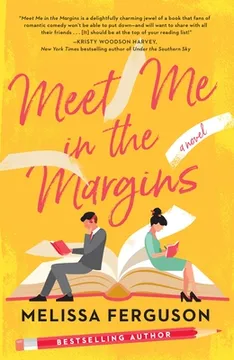


Plot Summary
Prologue
Savannah Cade, an assistant editor at the struggling Pennington Publishing, has spent years trying to finish a romance novel in secret. When Claire Donovan, a leading editor at Baird Books, finally asks to see the manuscript, Savannah promises to send it that day, then revises her reply several times before committing.
Her anxious email reveals the gap between her confident professional advice to authors and her uncertainty about claiming a writer’s life. The request turns a private ambition into a deadline, just as Pennington’s shrinking staff and changing leadership make Savannah fear that even her day job may not be secure.
The email exchange gives Savannah’s ambition a small, measurable beginning: she must stop polishing long enough to send the work. Her revisions expose a familiar psychological split between professional competence and private self-doubt. At work, she can judge a manuscript; with her own, every decision feels like a verdict on her worth. The publishing house’s instability heightens the stakes, since writing is not a separate fantasy but a fragile second identity inside the very industry that may reject it. The prologue frames the book’s central tension as a struggle to act before certainty arrives.
The Manuscript Takes Flight
At an all-staff meeting, Savannah edits her romance manuscript while Pennington’s new publisher, William Pennington, warns that the company cannot afford mistakes during an important author conference. She trips on loose plastic, falls, and scatters the pages across the room. As coworkers help her gather them, one sheet remains in William’s hands.
He studies it, then returns it without exposing her, but the page carries her pen name and romantic opening. Savannah is left certain he knows what she has been writing. The embarrassment compounds her fear of losing her job: William has arrived from a larger publisher to rescue his mother’s faltering company, and Savannah already suspects that his first impression of her is disastrous.
The fall makes Savannah’s private ambition physically visible inside a workplace that disdains the genre she is writing. Her panic is not simply about being caught breaking a rule; it is about having her separate identity judged by the institution that employs her. William’s silence complicates that fear. He could expose her, but instead he withholds judgment, leaving Savannah to supply the condemnation herself. The incident also establishes the novel’s comic method: professional catastrophe arrives through a mundane accident, while its emotional consequences are entirely real. Her manuscript’s literal dispersal previews the difficult work of assembling a story and a self from scattered pieces.
The Sparrow Room Opens
Savannah hides her manuscript in a concealed room behind a filing cabinet in Pennington’s attic, a book-filled refuge she discovered earlier and has quietly made her own. When she returns after hosting author Oswald Makers through an exhausting day, the pages have been gathered into a neat stack and covered in blunt handwritten edits.
At home, she discovers the notes challenge her opening, characters, point of view, and prose. Still stung, she sends the uncorrected manuscript to Claire, then finds comfort in the familiar household routine with her ex-boyfriend Ferris, now engaged to her younger sister, Olivia. The manuscript has left her hands, but the stranger’s criticism follows her into the next day.
The hidden room externalizes Savannah’s need for a protected space where ambition can exist without professional or familial scrutiny. Its concealed entrance makes secrecy feel both playful and defensive. The unknown editor’s marks threaten that shelter, yet they also offer something Savannah lacks: an independent reader who can see the manuscript without her accumulated attachment to it. Sending the draft before considering the notes is an act of self-protection, but also a refusal to let critique become the only voice in the room. Meanwhile, Ferris’s presence beside Olivia shows how Savannah’s family has normalized her sacrifice, treating her continued closeness to a painful history as proof of loyalty.
Forty-Four Days Left
At the librarians’ conference, Savannah’s late arrival gives William reason to reprimand her, while former Sterling colleagues needle him about losing his New York position. Savannah nevertheless stands by Pennington when editorial director Jim Arrowood tries to recruit her.
After Claire reads the manuscript, she explains that the submitted draft has lost the appealing premise Savannah once described. Claire identifies problems with the meet-cute, a major character, and the tense, but offers to reconsider a complete rewrite by March 1, before her retirement.
Savannah accepts. That night, when author Tom Haggerty presses her into a dance, William intervenes, arranges Tom’s ride home, and takes over as his editor. Savannah now has both a deadline and a boss whose actions are kinder than his manner suggests.
Claire’s response separates the worth of an idea from the readiness of its execution. Savannah hears rejection, but the conditional invitation asks her to become teachable rather than merely hopeful. The forty-four-day deadline converts a vague dream into labor with a cost: she must revise the work she has protected for years. In parallel, William’s intervention with Tom introduces a different model of authority from Pennington’s punitive culture. He expects staff to serve authors, but he also recognizes when service has become personal discomfort. Savannah’s loyalty to the company and William’s protection of its people begin to establish a reciprocal ethic that the old leadership has neglected.
A Stranger Edits Back
Finding only the first chapter marked, Savannah writes a plea on a note and leaves it beside the manuscript. The anonymous reader answers with a simple instruction to stay focused, then begins a sustained exchange through the margins. He cuts implausible scenes, challenges Savannah’s inflated word choices, and explains why her romantic leads feel artificial.
Savannah bristles, then laughs when she recognizes that one of his criticisms is right. At a family blood donation, she searches the acknowledgments of Trace Green’s novels and finds William praised as Green’s devoted editor, which makes his bluntness seem possible. But after she glimpses contract lawyer Sam near the hidden room, she starts suspecting him instead.
The marginal notes make criticism intimate without making it gentle. Savannah can push back, ask questions, and revise at her own pace, so the exchange becomes a rare relationship in which disagreement does not threaten belonging. Her initial defensiveness gradually gives way to the pleasure of being read accurately. That pleasure matters as much as the technical advice: the stranger treats her as a writer whose choices deserve serious argument. Yet Savannah’s uncertainty about his identity shows how readily she projects a coherent person onto a voice that meets her needs. The reader becomes emotionally vivid before he becomes socially legible, creating the novel’s central romantic misdirection.
The Boss Earns Trust
As the editorial exchange deepens, Savannah and William grow closer through late-night work, teasing conversations, and shared concern for Pennington’s future. During a darts game, Savannah tells William that Giselle has taken credit for acquisitions Savannah developed and that the company’s management is failing.
William later demotes Giselle, then asks Savannah to assess Yossi, an anxious editor. Savannah refuses to help condemn him and argues that his loyalty and experience matter more than his lateness.
William promotes Yossi to editorial director and publicly credits the qualities Savannah named. The exchange convinces Savannah that her judgment carries weight. When she recognizes William’s phrasing in one of the anonymous edits, she begins to suspect that the person behind the manuscript is closer than she thought.
Savannah’s resistance to being used as an informant marks a shift from people-pleasing toward ethical discernment. She can identify Giselle’s abuses without wanting to convert every weakness into grounds for dismissal. William, in turn, moves from managerial force toward listening, showing that competence requires more than decisive action. His willingness to act on Savannah’s judgment gives her a form of respect she has rarely experienced at home or work. The private editing bond and public professional trust begin to converge, though Savannah still misreads their source. Her developing confidence is not a sudden transformation; it is built through specific moments in which her assessment changes what happens to another person.
A Valentine’s Day Almost-Wedding
On Valentine’s Day, William asks Savannah to accompany him to the courthouse, where they become accidental participants in a procession of couples and are briefly mistaken for people seeking marriage. Their shared laughter and handclasp sharpen Savannah’s attraction to him.
On the drive, William asks why she still spends time with Ferris, the former boyfriend who left her for Olivia and is now her sister’s fiancé. Savannah defends the family’s loyalty, but admits she privately hopes their wedding goes wrong.
William points out that her family’s devotion may not be returned in kind and tells her she deserves the happiness she wishes for others. The comment unsettles the story Savannah tells herself about Ferris, even as she continues to believe her anonymous editor may be Sam.
The courthouse turns a workplace errand into a comic rehearsal of commitment, allowing Savannah and William to experience physical closeness without having to name their attraction. The episode is funny precisely because the mistake exposes a possibility both characters are avoiding. William’s questions about Ferris then challenge Savannah’s moral vocabulary. She has treated self-erasure as loyalty, assuming that endurance proves love. His intervention does not dictate what she should choose; it makes the cost of her chosen story visible. Her longing for Ferris and her attraction to William can coexist for now, but the mismatch between the life she defends and the happiness she wants is becoming harder to ignore.
The Kiss in the Margins
As the novel’s final scene approaches, Savannah’s anonymous editor rejects her lifeless kiss and presses her to consider what romance means to her. Savannah admits that her experience with Ferris made kissing feel unappealing, then describes the companionship she wants to write: ordinary people choosing one another through daily life, not instant attraction alone.
The editor apologizes for his tone and offers to help. Savannah believes the writer is Sam and accepts a date, while William separately gives her a coffee mug from their hidden room.
She takes it as a sign from Sam, and Sam’s startled reaction when he sees her carrying it leaves her more convinced. Her manuscript is nearly finished, but her understanding of both men is badly tangled.
The argument over the kiss is really a dispute about whether Savannah can imagine desire without surrendering her values. Her defense of companionship is emotionally sincere, but it also protects her from confronting the hurt that has narrowed her sense of physical intimacy. The editor’s bluntness risks wounding her, yet his apology restores the collaborative trust between them. Meanwhile, Savannah’s mistaken identification transforms a carefully built intimacy into comic confusion. She has learned to recognize the hidden reader’s mind but assumes that intellectual recognition guarantees a face-to-face match. The coffee mug becomes a misleading token of affection, showing how easily a person can interpret gestures through the story they already hope is true.
Ferris Chooses Too Late
At Olivia’s fundraising banquet, Ferris pulls Savannah aside and admits he cannot marry her sister, asking Savannah to return to him instead. He blames Olivia’s relentless fitness routines and wedding demands, but Savannah recognizes that the old relationship never gave her the steady companionship she now wants.
She refuses Ferris and finds Olivia, who has overheard enough to understand. Rather than punish her sister, Savannah helps her through the shock and urges her to reconsider a life built on constant achievement. Olivia begins to listen.
Because the confrontation makes Savannah miss her planned date with Sam, she leaves the hidden room a note explaining the crisis, apologizing, and admitting she wants someone else. She asks to remain friends and offers to celebrate her finished manuscript the next day.
Ferris’s return tests whether Savannah wants him or simply wants the past to validate her. His offer briefly resembles the happily-ever-after she once imagined, but its timing and self-interest expose the difference between being chosen and being cherished. Savannah’s refusal is consequential because she does not use Olivia’s pain as revenge; she comforts the sister who once benefited from her hurt. The conversation about Olivia’s achievement-driven life also reverses their usual roles, with Savannah offering care without submitting to her sister’s standards. Missing Sam’s date forces Savannah to speak honestly rather than preserve the fantasy through silence. Her note is both a breakup and an act of gratitude.
The Rejection Arrives
Savannah sends her revised manuscript to Claire and waits fourteen anxious days for an answer. Claire praises the finished work but explains that Baird’s team will not acquire it. The rejection stings more because Savannah lacks an agent, a platform, and a clear route to another publisher.
She begins building a website and querying agents, receiving quick refusals that make her reconsider how casually she has rejected submissions as an editor.
At home, Olivia starts changing her habits, relaxing her strict routines and supporting Savannah’s writing instead of measuring her. When Sam finally leaves a note asking whether Savannah received an offer, she tells him no, thanks him for his help, and returns to work on a book proposal in the glowing hidden room.
The rejection removes the exceptional shortcut Savannah had imagined: a direct connection to a powerful editor cannot substitute for the collective judgment of an acquisitions team. Her disappointment is sharpened by the labor of entering an industry whose invisible demands she once imposed on other writers. Building an author platform makes those demands concrete and destabilizes her assumptions about rejection as a simple administrative act. Yet the work continues, and Olivia’s changed behavior gives Savannah a new kind of support: less instruction, more presence. The anonymous reader’s brief return does not resolve their personal confusion, but it confirms that the creative relationship still matters. Savannah’s persistence now rests on the work itself, not an assured reward.
Pennington Finds Its Future
After further agent refusals, Savannah attends an urgent staff meeting where William announces that Pennington will be sold to Archer, a commercial publisher, to prevent the company from closing. The new partnership will preserve existing specialties while creating Archer Heart, a line for uplifting romance.
William reveals that its incoming editor, Maggie Samson, has selected Savannah’s manuscript for a possible three-book offer after comparing it with other rejected proposals Claire supplied. Savannah learns that Claire’s team declined the book, but Claire had passed it to William, who submitted it anonymously among the candidates.
Before Savannah can fully absorb the offer, a dispute over coffee mugs exposes that Sam and Brittney, not William, had been using the hidden room for private dates. William then admits he built the refuge as a boy, and Savannah finally understands who edited her book.
The corporate rescue answers the novel’s opening threat of institutional decline without asking Pennington to abandon its identity. The new imprint makes commercial romance a legitimate part of the house rather than a secret embarrassment, aligning Savannah’s private vocation with a public future. The offer also corrects the meaning of rejection: Baird’s refusal was real, but it was not a final measure of the manuscript’s value. The reveal of the true editor arrives through mundane objects and workplace overlap, not a grand confession. Sam and Brittney’s mugs expose the mistaken identity, while William’s authorship of the room connects his childhood refuge to Savannah’s adult one. The place that sheltered both of them becomes evidence of an unexpected intimacy.
The Margins Become Real
Savannah tells William that she was drawn to the person in the margins and had failed to realize that same person stood before her every day. William confirms that he is the editor who guided her rewrite, and explains that he created the hidden room as a boy with help from his father. The two discover that their attraction was real even when Savannah thought she had to choose between an editor on paper and a boss in person.
William offers one last practical lesson for the manuscript’s weak kiss scene, then kisses her. Savannah accepts Maggie’s offer, and the private refuge becomes a place they can share openly. Her story has not only found a possible publisher; its central romance has stepped out of the pages and into her life.
The revelation resolves the novel’s romantic misdirection by showing that Savannah’s imagined ideal and her actual experience were never separate people. Her mistake was not loving a false identity so much as failing to connect emotional intimacy with the ordinary, sometimes intimidating man she already knew. William’s authorship of the room deepens that connection: both characters have used hidden spaces to protect vulnerable parts of themselves. The kiss works as more than a genre convention. It gives Savannah a new experience that does not erase her past but revises its authority over her future. Professional recognition and romantic fulfillment arrive together, yet her worth is not reducible to either outcome.
Epilogue
Two years later, Savannah is both a published author under the name Holly Ray and an acquisitions editor at ArcherPennington. At a librarians’ convention, she signs the second book in her series while helping the overwhelmed young editor Gabriel and preventing Lyla, now pregnant, from giving away a display board.
Will arrives with copies of a Trace Green novel and tells Savannah that he has finished reading her next manuscript, still finding things to edit. Their marriage has not ended their work together or their teasing. As he kisses her beneath the convention lights, Savannah’s career, friendship, and home life have grown around the writing she once hid in the attic.
The epilogue measures change through ordinary continuities rather than a dramatic reinvention. Savannah still edits, still writes, still shares an office with Lyla, and still receives candid notes from Will. The difference is that she no longer has to conceal these identities from one another. Her public success is tangible, but the more revealing image is her helping Gabriel through the kind of professional anxiety she once carried alone. Lyla’s familiar unruliness remains, now moderated by friendship rather than extinguished. The final kiss joins romance to ongoing collaboration: Savannah’s happy ending is not a finished book but a life in which intimacy and revision can coexist.
Analysis
Meet Me in the Margins uses a workplace romance and a manuscript-revision plot to ask who gets to define a life as successful. Savannah works in publishing but hides the very genre she wants to write, because Pennington’s prestige culture treats commercial fiction as a cultural failing. Her secrecy is comic, yet structurally serious: the institution’s hierarchy has taught her to divide professional competence from personal desire. The hidden room gives that division a physical form, a place where her private work can survive until she is ready to risk judgment.
The anonymous edits complicate the familiar fantasy that encouragement means praise. Savannah’s draft improves because the editor takes it seriously enough to disagree, while she grows because she can defend, revise, and remain in relationship at once. The marginal exchange is an alternative model of intimacy: attention is demonstrated through careful reading, not through flattery. Its mistaken identity plot also shows how people construct others from partial evidence. Savannah recognizes the editor’s mind before she can identify the person, and her assumptions about Sam expose how desire can attach itself to a plausible story.
The family subplot gives the romance its emotional stakes. Savannah’s loyalty to Olivia and Ferris has hardened into self-abandonment, while Olivia’s relentless productivity makes care feel like management. Savannah’s refusal to resume her relationship with Ferris is therefore not simply a romantic choice. It is the first time she declines a familiar role that rewards her for being endlessly accommodating. Likewise, Olivia’s willingness to slow down opens their relationship to honesty rather than comparison.
Pennington’s sale to Archer offers a resolution at both institutional and personal levels. The company survives by making room for the commercial fiction it once scorned, and Savannah’s manuscript gains a chance because of its quality rather than a shortcut through Claire. The book’s conclusion is not that ambition guarantees success. Baird still rejects Savannah, agents still refuse her, and the future requires work. Its more grounded claim is that rejection need not settle the question of whether the work matters, especially when a person has learned to keep creating without confusing recognition with worth.
Review Summary
People Also Read







Characters
Savannah Cade
Secret romance writerSavannah is an assistant acquisitions editor who can identify weaknesses in other people’s manuscripts more easily than she can trust her own. She is observant, funny, and deeply loyal, but often confuses accommodation with kindness and treats her family’s expectations as obligations she must meet. Her private romance novel gives her a place to examine what love means beyond attraction and grand gestures. Though she tends to second-guess herself, she has a sharp editorial eye and a strong instinct for fairness. Savannah’s story is shaped by the gap between the modest life she believes she deserves and the creative work she wants to offer the world.
William Pennington
Reforming publisherWilliam returns to Nashville from a successful publishing career in New York to take charge of the Pennington Pen division. He is disciplined, direct, and difficult to read, especially when the company’s finances force him to make painful decisions. Beneath his polished authority is a practical man formed by his father’s example and attached to the place where he grew up. William values competence, but he learns that good leadership also requires listening to people whose titles carry little power. His dry humor and attention to the needs of both authors and employees complicate the severe impression he makes at work.
Lyla
Savannah’s fearless friendLyla works in marketing and design at Pennington, where her talent is matched by her impatience with corporate niceties. She is Savannah’s oldest friend and frequent ally, a gifted visual thinker who spends her evenings pursuing country music. Her boldness can tip into bluntness, but her loyalty is practical: she catches pages, makes room for Savannah’s ambitions, and says what others avoid saying. Lyla’s creative drive gives her a parallel to Savannah, though she expresses it openly and with less concern about appearing sensible. Their friendship offers Savannah a model of support that does not demand sameness.
Olivia Cade
Driven younger sisterOlivia is Savannah’s younger sister, a high-achieving student and founder of a nonprofit step challenge. She approaches nearly every problem through planning, exercise, and measurable progress. Her discipline has helped her build an impressive life, but it can make her insensitive to the people who do not thrive under the same regimen. Olivia loves her family, yet she often assumes that care means correcting or motivating them. Her relationship with Savannah is complicated by comparison, shared history, and different ideas of what a worthwhile life looks like. She is capable of reflecting on her habits when someone speaks to her plainly.
Ferris
The returning exFerris is Savannah’s longtime former boyfriend and now part of the Cade family through his relationship with Olivia. He is warm, attentive, and skilled at easing Savannah’s anxiety with small gestures, which helps explain why their history has remained emotionally potent. Yet he has also left her carrying the hurt of being replaced by her sister. Ferris tends to mistake familiarity and past affection for a promise that can be resumed whenever he is ready. His presence forces Savannah to distinguish nostalgia from the kind of mutual, dependable partnership she wants.
Patricia Pennington
Traditional publishing chiefPatricia, usually addressed as Ms. Pennington, founded and leads the family publishing house. She is exacting, traditional, and fiercely protective of the literary identity she built, with a management style that can leave employees anxious about mistakes. Her pride in the company is sincere, but her attachment to its established mission makes adaptation difficult. As William’s mother, she is both his professional superior and a source of personal history. Patricia’s convictions give the workplace its rigid culture, while her relationship with her son reveals that authority and affection do not always move in the same direction.
Claire Donovan
Baird Books editorClaire is a senior romance editor at Baird Books whose warmth makes Savannah’s first encounter with her feel unusually personal. She recognizes the promise in Savannah’s story but evaluates the manuscript according to professional standards, not simply the enthusiasm of their earlier conversation. Claire’s approaching retirement limits the time she can offer, so she is candid about both the manuscript’s flaws and its potential. She represents the difficult kindness of an editor who must deliver disappointment without pretending that the work is hopeless.
Sam
Pennington contract lawyerSam works in contracts and has a history with Giselle, making him an awkward figure in Savannah’s office life. He is reserved in casual conversation, which makes it difficult for Savannah to imagine him as the witty and incisive person she encounters through anonymous notes. His guarded manner encourages her mistaken assumptions, though his professional discretion and quiet personal life place him close to the hidden refuge. Sam is not simply a romantic possibility or a plot clue; he is a private person navigating workplace complications while trying to protect his relationship from unnecessary scrutiny.
Brittney
The quiet executive assistantBrittney is Patricia Pennington’s young personal assistant, usually seen following her employer with a notebook and pen. Her quiet diligence makes her easy for coworkers to overlook, but she has her own private life and a fondness for the hidden room. Brittney’s careful manner contrasts with the dramatic personalities around her. She is observant, discreet, and more assertive than her silent presence initially suggests, particularly when sentimental belongings are involved.
Giselle Shaw
Ambitious editorial directorGiselle is Savannah’s direct supervisor, a polished editor who knows how to cultivate influence with senior management. Her confidence can shade into entitlement, and her history with Sam complicates workplace relationships. Giselle is skilled at presenting herself as indispensable, but her treatment of colleagues creates mistrust beneath the company’s courteous surface. She embodies the competitive habits that take root when employees fear scarcity and seek security through status.
Oswald Makers
The reluctant gardening authorOswald is a successful author of gardening books whose expertise far exceeds his comfort in social situations. He is soft-spoken, hesitant, and easily overwhelmed by attention, even at his own conference signing. His quietness can be mistaken for passivity, but he has preferences and boundaries that emerge when someone gives him room to express them. Savannah’s efforts to host him reveal both her professional generosity and the comic distance between an author’s public success and private ease.
Yossi Jacobs
Loyal, anxious editorYossi is a longtime Pennington editor who is knowledgeable, bookish, and nervous under scrutiny. He struggles with punctuality and tends to ramble when asked to report, but his commitment to the company is genuine. Because others often judge him by his hesitations, his deeper strengths can be overlooked. Yossi represents the employees whose value is not captured by briskness or executive polish.
Tom Haggerty
The overfamiliar bestselling authorTom is a successful Pennington author whose enthusiasm for Savannah can become intrusive. He enjoys attention, nightlife, and physical familiarity, often assuming his intentions are welcome. His behavior creates a test of the company’s promise to care for authors without neglecting its employees.
Trace Green
Savannah’s favorite novelistTrace Green is a popular novelist whose fast-moving stories once inspired Savannah to pursue a life in publishing. His work represents the power commercial fiction can have for readers who need escape, encouragement, or a reason to imagine a different future.
Jim Arrowood
William’s former colleagueJim is an editorial director at Sterling House and one of William’s former coworkers. He uses confident, polished banter to remind William of the status and success of the company he left. His brief presence exposes the professional pressure surrounding William’s return to Pennington.
Plot Devices
The hidden sparrow room
A refuge for private workBehind a filing cabinet in Pennington’s attic is a small, concealed room filled with books, a stained-glass sparrow, a rug, and a beanbag. Savannah uses it to hide her manuscript and escape the judgment of a workplace that dismisses commercial romance. The room becomes a private correspondence space as an unknown reader leaves notes on her pages. Its history reaches back to William’s childhood, and other employees have also found it. The refuge therefore links several people who need privacy, but it also complicates Savannah’s belief that a place can remain hers simply because she discovered it first.
Marginal manuscript notes
Critique becomes courtshipHandwritten comments in the margins transform Savannah’s flawed draft into a sustained conversation. The editor’s concise, sometimes severe notes force her to reconsider scenes, characterization, point of view, and the final romantic moment. Savannah answers in the margins, defending her choices and revealing personal experiences she rarely shares aloud. Because the reader remains unnamed, the notes allow intellectual intimacy to develop before either character can manage face-to-face vulnerability. The device also makes revision visible: each new page records both the book’s improvement and the relationship’s growing trust.
The pen name Holly Ray
A shield for ambitionSavannah writes her romance as Holly Ray, keeping her authorship separate from her editorial work at a house that openly disparages the genre. The pen name lets her submit the manuscript and imagine a public career without immediately exposing herself to colleagues’ judgments. It also creates distance between Savannah’s daily identity and the heroine she is trying to write. As she learns to revise honestly and seek publication despite rejection, the shield becomes less necessary, turning the name from a hiding place into a professional identity she can claim.
The Steps-4-Life challenge
Achievement made measurableOlivia’s nonprofit step challenge tracks participants’ daily movement and encourages exercise, fundraising, and mutual accountability. For Savannah, the app’s quotas become a source of pressure, especially when work and family events keep disrupting her plans. The challenge gives the sisters a concrete way to argue about discipline, care, and what counts as a healthy life. Its recurring numbers also sharpen the contrast between Olivia’s desire to optimize every hour and Savannah’s growing belief that rest, friendship, and writing deserve time too.
Download PDF
Download EPUB
.epub digital book format is ideal for reading ebooks on phones, tablets, and e-readers.








