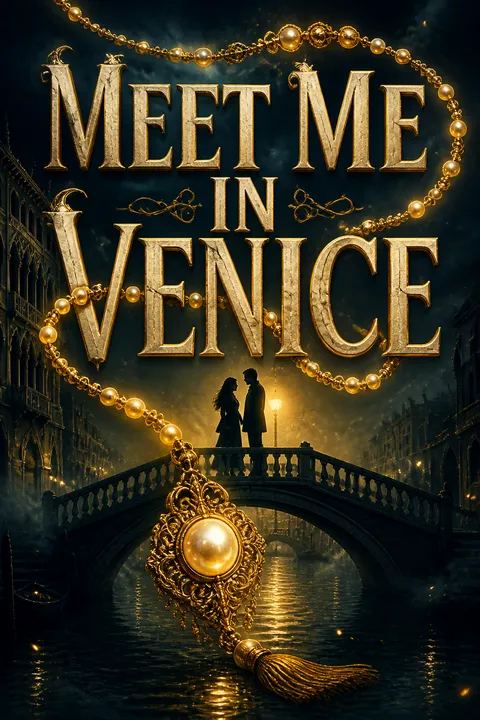


Plot Summary
Prologue
Six months before the main story, Ana Yuan travels from Shanghai to Suzhou, where she is struck from behind and pushed into a canal. Rain washes away the blood, and her death is ruled an accident.
At her funeral, her American husband, Bennett, grieves beside the wealthy Chinese family that has taken back Ana's property and left him with little. The mourners remember a young woman with everything to live for, but no one can explain why she went to Suzhou.
The prologue gives the novel its first false certainty: a murder is made to look like an accident, and public grief helps seal the explanation in place. Ana's death also establishes Bennett through the reactions of others, as a bereaved husband and an outsider denied access to wealth. The question of why she went to Suzhou keeps the scene open even as the official account closes it. That gap between what a community accepts and what actually happened becomes the book's central engine, with the canal serving as both setting and evidence that can be erased.
A Pearl Changes Hands
In Shanghai, antiques dealer Lily Song pitches a Swiss intermediary on an extraordinary necklace centered on a huge pearl once taken from Empress Cixi's tomb. The necklace has just come to Lily through Tai Lam, an old friend of her late mother, who kept her mother's promise to deliver it when Lily turned forty.
Lily's mother had stolen the jewels from her own family before leaving Paris to marry Henry Song, then concealed them from her gambling husband. Lily now sees the necklace as her chance to escape the precarious life built around illicit antiquities.
Her partner and childhood friend, Mary-Lou Chen, notices Lily's secrecy. Having already been stealing from Lily's hidden cash reserve, Mary-Lou spies on her and discovers the jewel case in the cellar safe.
Lily's inheritance is both a gift and a moral trap. Her mother intended the necklace to give her daughter security, but its history is inseparable from theft, secrecy, and the family's original rupture. Lily's response is not to reject that inheritance but to fold it into the same ambition that drives her antique smuggling. Mary-Lou mirrors Lily's hunger for wealth while lacking the restraint that makes their partnership possible. Their shared poverty has become a private creed, yet the secret safe shows that each woman already treats trust as a resource to be used rather than a bond to protect.
The Partner Turns Predator
Mary-Lou photographs the necklace and approaches Bennett Yuan, the recently widowed businessman she met after her car was stolen. She wants him to find a buyer, promising a split of the proceeds while keeping her plan to demand marriage from him secret.
Bennett initially resists handling a possibly stolen object, but Lily's dinner invitation lets him meet the owner and hear about her Parisian cousin, Precious Rafferty. Lily's casual account makes Preshy sound wealthy, with an inherited business and an aristocratic aunt.
Bennett begins to see her as a more useful prospect than Mary-Lou. Meanwhile, Mary-Lou continues fencing stolen diamonds, and her growing desire for both Bennett and the necklace turns their friendship with Lily into a concealed contest.
Mary-Lou's scheme exposes how she converts intimacy into leverage: she hopes marriage can guarantee the money that beauty and a temporary affair cannot. Bennett reads that same vulnerability accurately and uses it to keep options open. Lily, meanwhile, supplies the crucial information without recognizing that her family history has become bait. The scene links romantic calculation to the antiques market, where provenance adds price but also danger. Each character wants a different kind of security, yet all three imagine wealth as a way to escape dependence. Their plans collide because none of them can accept that another person might refuse to be owned.
A Parisian Whirlwind
In Paris, Bennett James meets Preshy Rafferty at a brasserie after first noticing her antiques shop. He presents himself as a Shanghai exporter, invents a polished story of lonely beginnings, and draws Preshy into a rapid romance with a Seine cruise, intimate dinners, and regular trips from China. Preshy, thirty-eight and long resigned to life without a lasting partner, trusts the tenderness and consistency he performs.
Bennett proposes during a country weekend, gives her a diamond ring at the Eiffel Tower, and travels to Monte Carlo to ask her aunt Grizelda for permission to marry. Preshy accepts eagerly, plans a Venice wedding, and believes she has finally found the companionship she once watched other couples enjoy from a Paris café.
Preshy's longing is not simply for marriage; it is for a shared life that makes her feel chosen after years of self-sufficiency. Bennett supplies convincing rituals of care, and their distance allows each reunion to feel like proof of devotion rather than a test of ordinary compatibility. His fabricated biography also exploits a real asymmetry: Preshy knows her own life intimately but has little access to his. Her trust is emotionally credible, not foolish in isolation. The danger lies in how romance compresses time, making a sequence of grand gestures feel like accumulated knowledge.
The Corniche Ambush
As Grizelda races to arrange the Venice wedding, a white truck crowds her Bentley on the Grande Corniche and strikes its rear bumper. She swerves into a roadside lay-by and crashes against the rock face, escaping with her life while the truck speeds away. Grizelda dismisses the incident as the work of a reckless driver and hides it from Preshy, but Mimi suspects someone deliberately tried to kill her.
The attack lands amid an unusually hurried wedding plan: Grizelda is securing the basilica, a palace, flowers, and a reception in only a few weeks. The danger goes unconnected to Bennett for now, but the attempt makes the apparently festive arrangements carry a threat no one has yet identified.
The attack briefly punctures the novel's romantic surface with physical danger, yet Grizelda's instinct is to preserve Preshy's happiness by minimizing what happened. That choice reflects her protective role, but it also keeps the threat outside the family's shared knowledge. Her survival depends on practical familiarity with the road, not on luck or rescue. The timing gives the wedding preparations a second meaning: while the family treats the event as a joyful threshold, an unseen actor may be trying to alter who inherits and who remains alive. The scene plants danger before the characters have a framework for interpreting it.
The Empty Basilica
On the morning of the Venice ceremony, Preshy reaches Santa Maria della Salute in her chosen wedding clothes, only to learn that Bennett checked out of his hotel the night before. She leads the stunned guests to the planned reception rather than collapse in public, but the abandoned celebration feels more like a wake than a wedding.
Back in Paris, she discovers that Bennett James, his export company, and his claimed Dartmouth history cannot be verified. Grizelda then recalls telling him that her fortune would go to charity, not Preshy. Preshy concludes he pursued her for imagined money. She spends weeks grieving, then cuts her hair, changes her routine, adopts a Siamese cat named Maow, and begins trying to reclaim her own life.
The abandoned wedding breaks more than a promise: it discredits the story Preshy used to understand her recent happiness. Her response moves from public composure to private grief, then toward deliberate change through haircut, new routines, and the cat. Those gestures do not erase the betrayal; they give her a way to act before she can fully interpret it. Grizelda's revelation about the charitable estate makes Bennett's motive plausible without making his emotional performance any less consequential. Preshy must distinguish the reality of her feelings from the false account that elicited them, a distinction that becomes essential when he returns.
Snowbound Strangers in Paris
During a snowstorm, Preshy meets Sam Knight, an American mystery novelist stranded in Paris, at La Coupole. Their wary conversation distracts her from the anniversary of Bennett's betrayal, and Sam offers to drive with her when Lily finally calls from Venice. Lily says someone is pursuing her for an object she possesses and warns that Preshy may also be in danger.
Preshy decides to go, despite closed airports, and Sam insists on accompanying her. They drive south through the night, stopping in Nice to meet Grizelda and Mimi, then fly on to Venice. Before leaving Shanghai, Lily had sent Preshy a replica terra-cotta warrior, apparently an inexplicable gift. The reason for the parcel remains hidden.
Sam enters as a counterweight to Bennett: less polished, openly difficult, and unwilling to promise safety he cannot guarantee. Yet Preshy's decision to travel shows that her renewed independence does not mean retreating from responsibility. Lily's warning converts a distant family connection into an urgent obligation, while the snowstorm physically narrows the available choices. The replica warrior quietly places a puzzle in Preshy's home before she understands its purpose. The trip also draws Preshy back toward Venice, the site of her humiliation, but now for a reason larger than romantic closure.
A Body in Venice
A flight diversion sends Lily from Frankfurt to Venice, where Mary-Lou secretly follows her. Lily spends an evening admiring the city, then is struck and pushed into a canal. Preshy and Sam reach the Bauer Hotel too late to find her alive. Sam later sees police recover an Asian woman's body from the water and tells Preshy it may be Lily.
The police identify her through her passport and fingerprints, and the autopsy rules her death an accidental drowning after a fall. Preshy is left to arrange the body's return to Shanghai. Sam, shaken by the discovery and by his own history with a missing woman, leaves for New York, but Preshy continues east alone.
Lily's death repeats Ana's supposed accident, turning the prologue's image into a pattern rather than a closed tragedy. Yet the official finding again offers a simple explanation that Preshy cannot reconcile with Lily's fear. Sam's departure is not indifference so much as self-protection: the scene echoes an unresolved trauma he has not explained. Preshy nevertheless accepts the practical burden of her cousin's body, acting from kinship before she has any lived relationship with Lily. Her choice keeps the investigation moving, but it also carries her into the city where the dead woman's motives and family history can be examined.
Bennett's Shanghai Trail
In Shanghai, Preshy meets Mary-Lou, who presents herself as Lily's devoted colleague and promises to handle the funeral. Preshy and Sam, who has changed course and come to help, follow an address in Lily's book to a luxury apartment building. Its doorman identifies the missing resident as Bennett Yuan, Ana's husband, and explains that Ana drowned in Suzhou, a canal city described as China's Venice.
The similarity to Lily's death makes Preshy suspect her former fiancé, though Sam is more certain. At Lily's funeral, her mother's old friend Tai Lam reveals that the necklace came from Preshy's Hennessy grandmother and was entrusted to Lily. Preshy understands that Bennett's supposed interest in her may have begun with the jewels.
The Shanghai inquiry changes the scale of the story: Preshy's romantic wound now intersects with two suspicious drownings and a valuable object passed through her family. The doorman's account provides a concrete link, but not yet proof, preserving Preshy's conflict between the Bennett she loved and the man the evidence suggests. Tai Lam's account also reframes inheritance. The necklace belongs to Preshy's history, but Lily received it through her mother's act of remorse and a delayed promise. The funeral makes that history public just as suspicion begins to focus on the living.
The Funeral's Missing Portrait
Only a handful of people attend Lily's burial, including Mary-Lou, Tai Lam, and Preshy's friend Sylvie, who has flown in to support her. Preshy notices that her grandfather's wedding photograph has disappeared from her Paris apartment, and Sam recalls Bennett had been the only visitor who could have taken it.
At a later meeting, Mary-Lou denies ever having traveled to Europe, though Sam recognizes her as the woman who followed Lily from Venice. Mary-Lou takes over Lily's business and insists she knows nothing about the necklace. With no proof to force an arrest, Preshy and Sam return to Paris, carrying a family mystery that now appears connected to both Bennett and Mary-Lou.
The small funeral makes absence visible: Lily's isolation is not merely emotional but structural, leaving Preshy and a few tenuous connections to manage her affairs. The missing photograph functions as material evidence of Bennett's access to the family story, while Mary-Lou's denial turns grief into suspicion. Neither clue is conclusive, and that uncertainty matters. Preshy is learning that good intentions cannot substitute for verification, yet she resists treating every person as guilty. The tension between her ethical caution and Sam's investigative suspicion becomes a conflict about how much evidence is enough to act.
The Second Venice Invitation
Back in Paris, Sam urges Preshy to press Mary-Lou and investigate Bennett, but she refuses, exhausted by grief and accusation. The next morning Bennett calls, claiming he left her because he was poor and ashamed, not because he lacked love. He says he knows who killed Lily and warns that Preshy is in danger, then asks her to meet him in Venice during Carnevale.
Preshy recognizes the risk but wants the truth about both Bennett and Lily, so she books a flight and packs the fur-trimmed wedding cape he never saw her wear. She tells Grizelda where she is going. The Aunts alert Sam, and he and the two women race to Venice as Preshy enters the masked city alone.
Bennett's call is powerful because it offers Preshy the explanation she has wanted since the altar, wrapped around a threat she cannot ignore. His account shifts blame onto shame and poverty, recasting abandonment as sacrifice. Preshy recognizes the danger but still seeks a final account, a choice that mixes agency with vulnerability rather than simple recklessness. The wedding cape becomes a charged object: she carries the symbol of the life he refused, now as disguise and armor. The Aunts' intervention and Sam's return show that her isolation is no longer as complete as it once felt.
The Plague Doctor's Mask
At the Carnevale gathering near Palazzo Rendino, Bennett finds Preshy beneath her mask and presses her for the necklace, which he assumes Lily sent to her. He admits he pursued Preshy for money and planned to kill Grizelda to secure an inheritance, then kill Preshy; he also makes clear that the necklace is his real prize.
When he restrains her, Grizelda arrives with a revolver and Sam tackles him, taking a bullet in the arm. Bennett escapes their grasp, slips while trying to board a party boat, strikes his head on a mooring post, and falls into the canal. The police accept the death as a Carnevale accident. Preshy leaves with the Aunts, shaken but no longer deceived about Bennett.
The masked festival literalizes Bennett's defining method: he has used invented identities and romantic roles to conceal a predatory calculus. Preshy's refusal to accept his story marks a decisive break from the woman who once mistook attention for knowledge. His confession strips the affair of its remaining ambiguity, while the necklace reveals the material motive beneath both courtship and violence. The climax's accidental death prevents a tidy judicial reckoning, but Bennett's own choices produce the outcome. Grizelda's imperfect shot and Sam's intervention also make rescue a collective act, not a romantic fantasy of one hero.
Leilani's Last Letter
After Bennett's death, Sam hears that police found a red jacket near his Outer Banks home, with his missing wife Leilani's wedding ring in its pocket. He expects renewed suspicion and returns with Preshy to face questioning. On the beach, he finds a letter Leilani had hidden in his jacket.
She explains that her severe depression had made her feel unable to live, and that she planned to enter the sea herself. Sam brings the letter to police, who verify her handwriting and close the case. Preshy stays with him through the aftermath. In the days that follow, they share the beach house, meals, walks, and stories; Sam finally admits he loves her, and she returns the feeling.
Leilani's letter resolves the mystery without making her suffering a device for Sam's redemption. It establishes her decision as an expression of illness and despair, not evidence of his violence, while showing the cost of his silence: by protecting her privacy, he left himself under suspicion. Preshy's insistence that he share the letter with police asks him to accept that truth sometimes requires disclosure. Their romance develops after the crisis, through presence and ordinary companionship rather than spectacle. Unlike Bennett's performed intimacy, Sam and Preshy's bond grows by allowing each other to be difficult, grieving, and known.
The Warrior Breaks Open
Preshy and Sam return to Paris together, expecting to begin a quieter life. While they were away, Maow has toppled the terra-cotta warrior Lily sent from Shanghai, breaking its hollow shell and exposing a wrapped necklace inside. Preshy recognizes the jewels from her grandfather's missing wedding photograph: Lily had hidden the family heirloom in the replica and shipped it to her for safekeeping.
The necklace explains why Bennett searched for it and why Lily was so frightened. Preshy refuses to treat the treasure as a windfall. Because it was stolen from Empress Cixi's tomb, she decides to offer it back to China for preservation in a museum. The final secret emerges through the cat's mischief, not through a criminal's scheme.
The reveal completes the novel's chain of concealment with an almost comic accident: the cat destroys a convincing replica and uncovers what deception was meant to protect. The warrior's hollow body turns counterfeit commerce into an unlikely vessel of genuine history. Preshy's choice to return the necklace rejects both Bennett's acquisitive logic and the assumption that family inheritance must become private wealth. The pearl's violence-laden provenance cannot be cleansed by possession, but it can be placed in public custody. The ending joins romantic renewal to ethical restraint, suggesting that a future is built not by claiming every legacy, but by deciding what should no longer be privately owned.
Analysis
The novel makes provenance its governing question. Antiques acquire value through the stories attached to them, while people do the same through carefully managed biographies. Bennett understands this better than anyone: he turns his orphaned childhood, business success, and romantic attention into a saleable history. Preshy initially trusts the story because it answers a real need for companionship. Her eventual growth is not a rejection of romance but a refusal to confuse its gestures with evidence of character.
The necklace carries several histories at once: imperial plunder, family theft, maternal remorse, and Lily's attempt to convert danger into freedom. Its monetary value intensifies the novel's moral problem. Nearly every character treats money as protection against vulnerability, but Bennett's pursuit shows how that logic can erase other people. Preshy's decision to return the necklace to China offers a counterclaim: history can be cared for without being privately possessed.
The repeated canal deaths expose the limits of official explanations. Rain, water, and assumptions about accidents let violence pass as misfortune until separate clues are placed together. Yet the story also resists making suspicion sufficient proof. Sam's wife truly chose the sea, and the letter that clarifies her death cannot simply be collapsed into the pattern around Ana and Lily. His case asks for an ethical distinction between hidden truth and convenient accusation.
Finally, the novel contrasts performed intimacy with durable companionship. Bennett overwhelms Preshy through speed, spectacle, and promises. Sam and Preshy become close through shared work, uncomfortable disclosures, food, travel, and grief. The ending joins that quieter love to the discovery of the necklace, suggesting that trust is not a leap made once but a practice of looking carefully, accepting uncertainty, and choosing what one owes to others.
Review Summary
Meet Me in Venice receives mixed reviews, averaging 3.42 out of 5. Readers praise Adler's vivid descriptions of Paris, Venice, and Shanghai, and enjoy the blend of romance, mystery, and suspense. However, many criticize the one-dimensional characters, predictable plot, and the protagonist's naive decision-making. The heroine's name, "Preshy," short for Precious, draws frequent complaints. While some find it an engaging, fast-paced read, others feel the romantic and thriller elements are underdeveloped, resulting in an underwhelming story despite its appealing settings.
Characters
Precious Rafferty
Parisian antiques keeperKnown as Preshy, she runs Rafferty Antiques in Paris and is the granddaughter of Arthur Hennessy. Her independence is real, but it has also become a defense against the loneliness she rarely admits. She wants a partner who can share humor, food, and daily life, which makes Bennett's elaborate courtship especially persuasive. Preshy is generous toward friends and family, sometimes extending trust before she has enough evidence to justify it. Her work with antiques gives her a habit of looking closely at objects and provenance, though she must learn to apply the same scrutiny to people. Her emotional strength lies less in never being fooled than in recovering her own judgment after betrayal.
Lily Song
Shanghai's guarded dealerLily is Preshy's Shanghai cousin, raised by a French mother and Chinese father in a household shaped by gambling and scarcity. She builds an antiques business through replicas and illicit trade, convinced that wealth will protect her from the instability of her childhood. Her ambition coexists with an uneasy awareness of the damage done to ancestral tombs, but she tends to quiet that discomfort rather than change course. Lily is private, orderly, and self-reliant, keeping her home as controlled as her business. Her connection to her mother and the Hennessy family is distant but consequential, and the necklace forces her to confront the complicated legacy her mother left behind.
Sam Knight
Grieving mystery novelistSam is an American novelist whose career and private life have stalled under the weight of an unresolved loss. He is sharp-eyed, blunt, and often more comfortable investigating a mystery than speaking plainly about himself. His habitual drinking offers temporary distance from guilt and grief, while his dry humor keeps other people from approaching too quickly. Sam recognizes danger before Preshy does, but his instinct to withdraw can leave others to face consequences alone. His coastal home and attachment to the sea reveal the landscape that steadies him and the marriage he cannot yet understand. He values truth, though learning when to disclose it is as difficult for him as finding it.
Bennett Yuan
Charming fortune hunterBennett is a handsome American living in Shanghai who presents himself as a successful businessman and a man of cultivated taste. He understands how to make attention feel intimate, tailoring his manner to the hopes and insecurities of the women around him. His childhood of abandonment has hardened into a consuming need for money, status, and control, which he disguises beneath charm. Bennett is adaptable and observant, quick to identify a useful connection and to revise his plans when one fails. His polished self-invention makes it difficult for others to separate genuine feeling from performance, a danger that shapes both his relationships and the mystery surrounding him.
Mary-Lou Chen
Ambitious Shanghai partnerMary-Lou is Lily's childhood friend and business partner, a striking woman whose elegance masks a fierce fear of returning to poverty. She believes wealth is a form of safety and feels few obligations to rules or people who stand between her and it. Her beauty and social intelligence help her read what others want, while her impatience encourages her to turn insight into manipulation. Mary-Lou's friendship with Lily is genuine in its history but compromised by rivalry, theft, and unequal trust. She wants romance as well as money, yet often treats both as transactions in which she must secure the advantage before someone else does.
Grizelda von Hoffenberg
Flamboyant protective auntPreshy's Austrian aunt raised her amid hotels, travel, parties, and unconventional affection. Grizelda is theatrical, generous, and used to arranging a room as confidently as she arranges a life. Beneath her flamboyance is a fiercely protective instinct, especially when Preshy is hurt or threatened. She prefers to shield her niece from worry, but her loyalty eventually pushes her into direct danger. Grizelda values independence and expects Preshy to make her own way, even as she surrounds her with every possible comfort.
Mimi Moskowitz
Grizelda's loyal companionMimi, a former showgirl and longtime friend of Grizelda, shares her home and her devotion to Preshy. Her directness and booming humor balance Grizelda's more elaborate theatricality. Mimi is socially perceptive, practical when a crisis arrives, and deeply loyal to the small family she has chosen. She is unafraid to tease Preshy or challenge her romantic decisions, though her concern is always rooted in affection.
Daria
Boston confidanteDaria is Preshy's oldest friend, a quick-witted Bostonian married to physics professor Tom and mother to Lauren. She offers blunt advice and emotional shelter, refusing to let Preshy mistake endless self-pity for recovery. Her marriage and family give Preshy a close-up picture of ordinary, imperfect companionship. Daria can be bossy, but her pressure comes from knowing Preshy's habits and wanting her friend to return to life.
Sylvie Verlaine
Chef and steadfast friendSylvie is Preshy's French friend, a talented chef who owns the busy Bistrot Verlaine. Her exacting standards and hot temper make her formidable in the kitchen, while her devotion to Preshy makes her an unrelenting protector outside it. Sylvie's practical care often arrives as food, a warning, or an inconveniently honest assessment. She values friendship as an obligation expressed through action.
Leilani Knight
Private, gifted artistLeilani is Sam's Hawaiian-born wife, an artist who once found quiet and creative refuge in Santa Fe. Sensitive and private, she experiences emotional pain that she struggles to explain even to the person closest to her. Her relationship with Sam is shaped by a tension between his love of the ocean and her fear of it, and by the difficulty of translating care into understanding. Her presence remains important to Sam's life and to the questions he carries.
Ana Yuan
Bennett's late wifeAna is a modest young woman from Shanghai's wealthy Yuan family. Her marriage links Bennett to a powerful dynasty, though the family keeps its wealth and decisions closely guarded. She is remembered by others as gentle and private, and her unexplained journey to Suzhou leaves questions that reach beyond her immediate family.
Tai Lam
Keeper of family historyTai Lam is an elderly scholar and longtime friend of Lily's mother. He honors the promise made to her by preserving the necklace until Lily reaches the age her mother specified. Tai Lam treats objects as carriers of memory and obligation, not merely as commodities. His quiet dignity gives the family history a human witness.
Arthur Hennessy
Parisian antiques patriarchPreshy's grandfather, Arthur Hennessy, is an American who falls in love with Paris and establishes the family antiques business. He teaches Preshy to recognize the craft and history embodied in old objects, leaving her a vocation as well as a home. His choices and possessions connect the cousins across a family rupture.
Henry Song
Gambling family patriarchHenry is Lily's Chinese father, a gambler whose habits bring financial instability into the Song household. His marriage to Lily's French mother isolates the family from the Hennessys. He represents the precarious world Lily is determined to escape, and the resentment that shapes her ambition.
Tom
Daria's steady husbandTom is Daria's professorial husband and Lauren's father. His understated manner and domestic steadiness offer Preshy a warm example of partnership grounded in everyday life.
Lauren
Preshy's young goddaughterLauren, affectionately nicknamed Super-Kid, is Daria and Tom's lively three-year-old daughter. Her exuberance gives Preshy a loving connection to her friends' family life.
Voortmann
Backstreet diamond cutterVoortmann is a Dutch diamond cutter in Shanghai's underground trade. His expertise is undermined by addiction and poor judgment, making him a risky contact for anyone seeking to move valuable stolen goods.
Plot Devices
The Cixi Pearl Necklace
Inheritance and motiveThe necklace once belonged to Empress Cixi and contains an immense pearl taken from her tomb. Arthur Hennessy acquired it without understanding its full provenance, and his daughter stole it when she left Paris for Shanghai. Lily receives it decades later from Tai Lam, according to her mother's instructions, and seeks a buyer. Its value draws Bennett's attention, while its contested history forces Preshy to decide whether family possession is enough to make it hers. The necklace connects Chinese imperial history, the Hennessy family rupture, and the present-day criminal plot.
The Canal Deaths
Accident conceals murderAna's death in Suzhou is officially treated as a fall and drowning. Lily's later death in Venice receives the same kind of explanation, even though both women had reasons to fear someone and both deaths serve the interests of a man seeking wealth. The parallel makes the first death newly suspicious and turns the waterway into more than a scenic setting. It is a place where evidence can disappear and where public assumptions can protect a killer. The device binds the prologue to the main plot while keeping certainty just out of reach until the final confrontation.
The Terra-Cotta Replica
Hidden evidence travelsLily sends Preshy a low-value replica warrior from Shanghai, apparently an odd and wasteful shipment. The statue is hollow, however, and conceals the necklace inside its shell. The concealment lets the heirloom leave Shanghai without drawing attention to its contents, while the replica itself reflects Lily's ordinary business in copied antiquities. Its purpose becomes visible only when Maow knocks it from a shelf after Preshy and Sam return to Paris. The device turns an overlooked parcel into the final proof of Lily's trust and the key to Preshy's decision about the necklace.
Leilani's Letter
Private truth clears suspicionLeilani leaves Sam a handwritten letter in the pocket of his jacket, but the note remains undiscovered while investigators suspect him in her disappearance. It explains her severe depression and her intention to end her life, information Sam had withheld to protect her privacy. When he finds and shares it, handwriting checks help close the police inquiry. The letter resolves Sam's subplot while testing whether he can accept that keeping a loved one's secret may harm the living. Its intimate form contrasts with the public suspicion surrounding him and gives Preshy a reason to urge disclosure.

Download PDF
Download EPUB
.epub digital book format is ideal for reading ebooks on phones, tablets, and e-readers.








