Key Takeaways
1. The Storyteller's Core: Theme, Want, and Character's Equation
Knowing the theme and premise makes a whole series of aesthetic choices easier and clearer.
Unifying your story. Every compelling story needs a central theme, a single word defining its emotional arena, like "ambition" for Macbeth or "trust" for a combat narrative. This theme then expands into a premise, a short sentence articulating the story's viewpoint, such as "ruthless ambition leads inevitably to destruction." This core idea acts as a spine, organizing every scene and guiding aesthetic choices, ensuring the narrative feels organic and purposeful.
Character's driving force. Characters are born from their "wants"—fundamental desires like love, money, freedom, or recognition. Without a motivating desire, a character remains in stasis, and the drama cannot begin. These "wants" externalize a character's inner state, propelling them into motion and shaping the narrative.
The character equation. Character is fundamentally defined by: Want + Motion + Obstacle + Choice. A character wants something, takes motion to get it, encounters an obstacle, and makes a choice in response. This choice, specific to the character and situation, is what individuates them and reveals their true nature. Storytellers must continually introduce obstacles to force these choices and propel the narrative forward.
2. Drama as Negotiation: Scenes, Deals, and Reciprocal Action
The meat of the scene is the negotiation to arrive at the new deal, and when the deal is cut, the scene is over, period.
Scenes are deals. A scene is not merely a segment of a movie or a place for exposition; it's a "business deal" where the contract or balance of power between characters changes. Two or more individuals enter with one understanding, negotiate or battle, and exit with a new agreement or power dynamic. When this new deal is struck, the scene should conclude, avoiding unnecessary introductions or lingering dialogue.
Story as a grand negotiation. On a macro level, an entire story represents the renegotiation of a major contract between opposing forces. This could be:
- Romantic comedies: renegotiating the contract between men and women.
- Myths: reworking the compact between humans and cosmic forces.
- Courtroom dramas: laying out a new agreement through judgment.
The climax of a story often signifies the final terms of this overarching deal, and the narrative should end once this "big deal" is definitively cut.
Reciprocal action. The primary building block of drama is reciprocal action, a continuous game of approach and response between characters. Character A acts to fulfill a "want," Character B, with a conflicting "want," adjusts and responds. This negotiation, combat, or "tennis game" continues until one character's want is fulfilled, a compromise is reached, or an external event interrupts. This dynamic is how dramatists reveal character, convey information, and create compelling conflict.
3. The Audience Contract: Deliver Entertainment and Transformation
Focused attention has always been one of the rarest and most valuable commodities in the universe, and it's even truer today, when people have so many things fighting for their attention.
A sacred exchange. A story is a contract between the storyteller and the audience. The audience invests valuable time and money, and in return, the storyteller must deliver something truly worthwhile. This obligation goes beyond mere plot; it's about providing a meaningful experience that justifies their attention.
Fulfilling the contract. There are many ways to honor this contract:
- Entertainment: Offering novelty, shock, surprise, or suspense.
- Sensory experience: Appealing to visceral sensations like speed, terror, or sexiness.
- Laughter: Providing much-needed comic relief.
- World-building: Transporting the audience to another place and time.
- Star power: Featuring beloved actors in appealing combinations.
- Novelty: Creating buzz-worthy, talked-about experiences.
- Wish fulfillment: Granting deep-seated desires (e.g., seeing dinosaurs, flying).
- Zeitgeist capture: Aligning with the prevailing mood or current events.
Beyond entertainment. While entertainment is crucial, the most powerful stories also offer catharsis and transformation. The Hero's Journey, for instance, provides a metaphor for life's challenges, allowing the audience to gain insight into themselves. The goal is not just to amuse, but to potentially guide them to new possibilities or a deeper understanding of life.
4. Mythic Structure: The Hero's Journey and Its Inner Dimension
The hero myth is a skeleton that should be masked with the details of the individual story, and the structure should not call attention to itself.
The universal pattern. Joseph Campbell's Hero's Journey, adapted into a twelve-stage outline, reveals a universal narrative pattern found in myths, dreams, and stories across all cultures. This "monomyth" provides a psychologically true map of the psyche, resonating with audiences because it addresses fundamental human questions like "Who am I?" and "What is good and evil?"
The twelve stages:
- Ordinary World: Hero introduced, uneasy or unaware.
- Call to Adventure: Situation shaken up, change begins.
- Refusal of the Call: Fear of the unknown, hero hesitates.
- Meeting with the Mentor: Guide provides training, equipment, or advice.
- Crossing the Threshold: Commits to leaving the Ordinary World.
- Tests, Allies, Enemies: Hero tested, allegiances sorted.
- Approach to the Innermost Cave: Prepares for major challenge.
- The Ordeal: Confronts greatest fear, faces death, new life emerges.
- Reward: Takes possession of treasure.
- The Road Back: Driven to complete adventure, leaves Special World.
- Resurrection: Severely tested once more, purified by sacrifice.
- Return with the Elixir: Brings back treasure/lesson to transform the world.
The inner journey. Good stories tell two tales: an outward journey for an external goal and an inward journey for emotional and character development. The outer "want" often leads to the discovery of an inner "need." The inner journey charts the hero's evolving consciousness, from limited awareness to lasting commitment to change, achieving mastery or a "sacred marriage" of warring personality aspects. The best stories satisfy on both plot-driven and character-driven levels, offering both physical and emotional transformation.
5. Character Archetypes and Functions: Beyond Stereotypes
The repeating characters of the hero myth such as the young hero, the wise old man or woman, the shapeshifting woman or man, and the shadowy antagonist are identical with the archetypes of the human mind, as revealed in dreams.
Archetypal roles. Archetypes are recurring patterns of human behavior, symbolized by standard character types in stories. These include:
- Heroes: Central figures, learn the most, sacrifice for greater good.
- Shadows: Villains, enemies, repressed aspects of the hero.
- Mentors: Guides, teachers, sources of wisdom.
- Heralds: Bring the call to adventure.
- Threshold Guardians: Forces blocking the hero's way.
- Shapeshifters: Characters whose loyalty or nature seems to change (e.g., love interests, buddy-comedy partners).
- Tricksters: Clowns, mischief-makers, expose flaws.
- Allies: Helpers, sidekicks.
These archetypes evoke primal emotions and provide a foundational "alphabet" for character.
Propp's functional characters. Russian scholar Vladimir Propp's analysis of fairy tales identified 31 story "functions" or significant actions performed by characters, rather than complex individuals. These functions include:
- Villain: Struggles against hero, deceives.
- Donor: Prepares hero, gives magical object.
- Helper: Aids hero in quest.
- Princess/Father: Object of quest, assigns tasks, rewards.
- Dispatcher: Sends hero on mission.
- Hero: Undertakes quest, struggles, weds.
- False Hero: Claims credit, exposed.
Propp's insight is that these are temporary, transient jobs that different characters can perform as needed, making character conception freer and more realistic.
Theophrastus' character flaws. Theophrastus, Aristotle's pupil, cataloged 30 "character flaws" or types (e.g., The Boor, The Distrustful Man). These are not full characters but a "menu of possibilities" for behavior. By combining two or three of these traits, writers can create multi-dimensional, realistic characters, moving beyond one-dimensional stereotypes. For example, a "Coward" combined with a "Boastful Man" creates a more nuanced figure like Falstaff. Stereotypes can be useful for quick audience orientation, but the skill lies in subverting them with unexpected, contradictory qualities.
6. Environmental Facts: The Six Dimensions of Story Reality
Hodge was making a promise. If I could correctly identify and interpret the clues exposed in my Environmental Facts essays and my investigations into “wants,” Reciprocal Actions and Polarities, I would enter and understand the special three-dimensional world the writer had originally imagined.
Unearthing story's depth. Francis Hodge's "Environmental Facts" provide a powerful diagnostic tool for storytellers, urging them to investigate six dimensions of their narrative world: Date, Location, Social, Religious, Political, and Economic. Writers embed a story's three-dimensional reality into a two-dimensional script, and these facts serve as clues for interpretive artists and audiences to uncover that depth.
The six environments:
- Date: Specific day, month, year, season, time of day. "Why this day and no other?" (e.g., The Best Years of Our Lives post-WWII context).
- Location: Precise place, its geography, climate, and cultural impact (e.g., Casablanca's wartime North Africa setting elevating a love story).
- Social Environment: Unspoken rules, customs, class, ethnicity, and group identities (e.g., Mutiny on the Bounty's clash of English vs. Tahitian social priorities).
- Religious Environment: Characters' relationship to gods, spirituality, morality, and highest aspirations (e.g., The Wild Bunch's quest for redemption beneath the violence).
- Political Environment: Power structures, who holds power, how it's gained/lost, laws, and citizen rights/responsibilities (e.g., Shakespeare's plays driven by political upheaval).
- Economic Environment: Wealth, poverty, class, how money is made, and other forms of "currency" like respect or knowledge (e.g., Gilda's Johnny Farrell seeking economic ascent).
Interconnected reality. These facts are not isolated; they are intricately connected, forming a living network of relationships and conflicting forces. By comparing and contrasting details across these environments, recurring themes and elements emerge, crystallizing the story's core questions and revealing the profound impact of its setting on characters and plot.
7. Showmanship and Routining: Mastering Audience Engagement
The most desirable place is just before the last act, because this is the real climax of the evening.
The art of routining. Vaudeville managers mastered "routining a show," arranging diverse acts to create a satisfying emotional experience for the audience. The "next-to-closing" spot was the true climax, building to a sublime moment of pleasure or laughter, while the final act served to send the audience out on a high, noisy note. This principle applies to all storytelling: the most important moment is often the penultimate one, where the hero risks everything.
Principles of entertainment design:
- Contrast: Constantly vary the type and emotional tone of "acts" (scenes/chapters) to heighten artistic effect (e.g., fast action vs. calm intimacy, serious vs. funny). Walt Disney famously applied this to his animated features.
- Topping yourself: Each successive act, joke, or emotional confrontation should be better than the last, steadily building towards the climax.
- Emotional balance: Like Charlie Chaplin's "Laugh a lot and cry a little," stories need a proper balance of serious and funny elements to prevent the main emotion from becoming overwhelming or tiresome.
Filling the bill (story structure):
- Opening Act: Loud, visual, orienting (establish world, character in action).
- Second Position: Top the opening, more intimate, emotional connection.
- Third Position: Full stage, immerse audience in new world (Crossing the Threshold).
- Fourth Position: Climax for the first half (Ordeal).
- Fifth Position: Upbeat extravaganza before intermission (Reward).
- Sixth Position: Curtain-raiser, re-establish energy, speed (Road Back).
- Seventh Position: Meaty dramatic scene, top previous inner journey scenes.
- Next-to-Closing (Eighth): True climax, sensational, cathartic release (Resurrection).
- Ninth (Final) Position: Big, noisy finish, clear stage promptly (Return with Elixir/Denouement).
8. The Writer's Discipline: A Five-Year Plan for Mastery
If you aren't prepared to make a long-term commitment, you'd be wise to aim at a more accessible target.
Commitment to the craft. Professional screenwriting is not about overnight success but a long, arduous journey of dedication and hard work. Aspiring writers must be prepared for a long-term commitment, understanding that fame and fortune are usually preceded by years of thankless effort.
Practical steps for aspiring writers:
- Low-maintenance job-job: Secure an income-generating job that requires minimal mental or emotional investment, freeing up time and energy to write. The goal is maximum money for minimum work, allowing you to "hire yourself to write."
- Work every day: Cultivate the habit of writing daily, even if it's just a few lines in a diary or notes for a story. This builds writing muscles and trains the nervous system to expect the physical act of writing.
- Newspaper files: Read newspapers daily, clip articles, and write paragraphs analyzing their essential drama, characters, conflicts, and how they could be adapted into a film. This develops habitual discipline and story sense.
- Read voraciously: Read everything—across genres, bestsellers, and classics. Learn from diverse storytellers and understand what resonates with audiences. Revisit classics to broaden scope and discover timeless techniques.
- Workshop/support group: Seek feedback from like-minded individuals. Hearing your work read aloud, without comment or defense, provides invaluable visceral feedback on its impact and clarity. Aim for a group where you are in the middle, learning from more skilled writers and crystallizing your insights for less experienced ones.
- A hundred plays in a hundred days: Read 100 screenplays (or books), then synopsize each into 2-3 pages and a single log line. This exercise helps identify the story's spine, component parts, and how they function, revealing universal patterns across diverse narratives.
9. Polar Opposites: The Engine of Conflict
On the most fundamental level, stories pit two opposing forces against each other and then stage scenes of physical, emotional and philosophical combat (i.e., Reciprocal Action) until the conflict is resolved.
The essence of drama. Polar opposition is a fundamental storytelling tool where two opposing forces are pitted against each other. This conflict can manifest as physical combat, emotional struggle, or philosophical debate, driving the narrative forward until one side prevails, a compromise is reached, or a new synthesis emerges.
External and internal polarities. Polarities can exist:
- Between characters: Such as Jules' belief in miracles versus Vincent's belief in luck in Pulp Fiction.
- Within a single character: Like Francesca's internal conflict between her identity as a loving Iowa farm wife and her romantic Italian soul in The Bridges of Madison County.
These internal and external conflicts create tension, suspense, and rooting interest for the audience.
Generating conflict. Identifying polar opposites helps writers generate the core conflict that drives a story. By exploring the differences rather than similarities between characters, or the conflicting aspects within a character, storytellers can deduce the dramatic events and choices that will shape the narrative. The suspense tightens as the audience anticipates which side will prevail or what new possibility the conflict will forge.
10. Log Line and Synopsis: The Diagnostic Tools
That sentence identifies the archetypical Hero, that Hero's “want” and the “obstacle” that Hero will battle.
The story's essence in a sentence. The Log Line is a single sentence that concisely identifies the story's archetypal Hero, their primary "want," and the central "obstacle" they will face. This tool forces writers to distill their entire narrative into its most fundamental idea, ensuring clarity and focus. A well-crafted log line can also ignite interest among executives, producers, and actors.
The story's X-ray. The Synopsis is a 1-2 page outline that pulls the "spine" from the script, focusing on the reciprocal action and major plot points without delving into deep character detail, jokes, or emotional nuances. It serves as a diagnostic tool, like an X-ray, allowing writers to efficiently review the entire story design.
Benefits for the writer:
- Clarity: Helps writers see what they truly know and don't know about their story.
- Problem identification: Reveals plot holes, logic problems, and false assumptions that might be invisible at the scene level.
- Structural overview: Allows writers to step back and see how major parts of the story relate to one another and contribute to the overall effect.
- Adaptability: Enables writers to express their story at any length—from a single word to a full screenplay—a crucial skill for pitching and development.
Last updated:
Review Summary
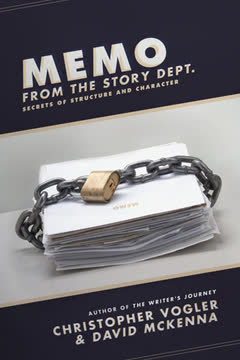
Memo from the Story Dept. receives mixed reviews with a 4.17 rating. Many readers praise its practical tips on storytelling and character development, particularly appreciating concepts like polar opposites and audience contracts. Several found it helpful for writers and filmmakers, with accessible examples making story structure more understandable. However, some critics note the book is more screen-oriented than book-focused, can be tough to read despite being short, and repeats material from Vogler's earlier work, The Writer's Journey.