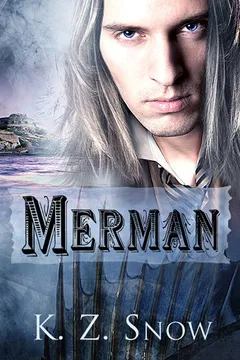


Plot Summary
The Shore Gives Back
After feeding in Purinton, the restless vampire Clancy Marrowbone visits Fanule Perfidor, his old friend and Taintwell’s leader, hoping to learn how Simon Bentcross, the mortal he left behind, is faring. Simon has built a repair shop and is helping design a submersible for an expedition near Floating Brick Island.
On the beach, Clancy finds a naked, net-entangled man with gills and fins who recognizes him as Jordy Hawkes, a prisoner Clancy fed from long ago. Before Jordy can explain, a Special Threats Unit patrol spots Clancy. He knocks the armed agents unconscious, takes their equipment, and throws it into the sea rather than leave evidence that could bring a raid down on Taintwell.
Clancy’s return begins as an act of emotional evasion: he seeks news of Simon while insisting he will not see him. The beach makes that evasion impossible by joining his past to an immediate moral crisis. His decision not to kill the agents is not simple mercy; he calculates that a bloody scene would expose Taintwell to state violence. The choice reveals a vampire still governed by appetite and force, but also by a sense of responsibility that complicates the reputation others fear.
Simon’s Steel Sphere
Simon arrives at Fan’s house angry that Purinton’s officials have barred his Mongrel collaborator, Ape Chiggeree, from working on the expedition’s Bubble. The order revives the prejudice that Taintwell’s residents have spent years resisting.
Clancy and Simon meet again after nearly two years apart. Their hurt turns quickly into familiar sparring, then into renewed intimacy. At Simon’s repair shop, Clancy sees the iron sphere intended to descend into Tower Hole and learns Simon plans to pilot it alone.
Simon explains the equipment with a mechanic’s pride, while Clancy’s concern grows beneath his teasing. Their reunion offers Clancy the warmth he has been denying himself, but the Bubble and the unexplained creature on the shore pull both men toward danger.
The Bubble gives Simon’s practical competence a physical form: a heavy, carefully engineered vessel that asks him to trust both his skill and a project whose sponsors withhold information. Clancy’s return to Simon exposes the cost of his self-protective philosophy. He has treated affection as a weakness to be avoided, yet Simon’s ordinary warmth unsettles him more deeply than any supernatural threat. Their renewed desire is real, but it does not erase the difference between Simon’s rooted life and Clancy’s restless, dangerous existence.
The Basement Tank
A telegram confirms that the strange beach discovery is being held beneath Purinton’s Truth and Justice Building. Simon uses his old Enforcement Agency connection, Monroe Clapstack, to get inside after hours, and he and Clancy find Jordy confined in a glass-and-brass tank. Jordy has been examined and photographed, and he fears the officials will interrogate him until he dies.
Simon agrees to help despite his jealousy and the risk to his own position. Clancy lifts Jordy from the tank and carries him through the night to Floating Brick Island. Once there, Jordy slips into the water, recovers strength, and begins to explain why the prison’s ruins and the ocean are bound to his life.
The rescue turns the expedition’s abstract object of study into a person who can plead, fear, and suffer. Simon’s consent matters as much as Clancy’s strength: he accepts a risk that might reunite Clancy with a former lover because he recognizes the urgency of Jordy’s confinement. The tank also echoes Floating Brick’s old prison, replacing bars with scientific glass while preserving the same power imbalance. The scene questions whether observation can ever be neutral when the observed being has no meaningful right to refuse.
A Colony Beneath
On the island, Jordy recounts surviving the hurricane that destroyed Floating Brick Jail. The mainland left the prisoners to fend for themselves; later, warder Nicholas Tenderby returned as a vampire and fed on the survivors, changing some of them into sea-adapted beings. Jordy says they formed Seafree in the depths and that Tenderby now threatens their freedom.
His account moves Clancy, who follows Jordy underwater. The descent reveals a beautiful settlement of coral, wreckage, and luminous sea life, while Jordy’s singing leaves Clancy dazed and unusually eager to please him. Clancy returns to land carrying both wonder and unease, unable to tell whether his memories of the journey are entirely his own.
Jordy’s story makes the ocean a refuge created by abandonment, not a magical escape from history. The prisoners’ transformation follows a chain of coercion and adaptation: the state neglects them, Tenderby exploits them, and the sea becomes the only environment in which they can survive. Yet the beauty of Seafree is inseparable from Clancy’s loss of mental clarity. The song blurs attraction, memory, and consent, making wonder itself a possible instrument of control.
A Deputy Mayor’s Bargain
As the Enforcement Agency begins blaming Taintwell for the beach attack, Simon and Fan meet Deputy Mayor Lillian Pearlbutton. She agrees to press the city to lift its ban on Ape’s participation and to resist another round of accusations against Mongrels. She also gives Fan access to the Hall of Records, where he and Simon begin tracing Jordy’s and Tenderby’s histories.
Clancy, meanwhile, has his conspicuous white hair cut and dyed so he can move through Purinton less easily recognized. He appears briefly at the Cockerel, where Lillian studies him without exposing his identity. Simon watches Clancy withdraw into secrecy again, sensing that Jordy and the ocean now occupy more of his attention than their rekindled relationship.
This section places intimacy inside a political structure. Simon cannot protect Clancy through affection alone; the couple’s danger is shaped by discriminatory policy, surveillance, and a state apparatus eager to identify enemies. Lillian’s influence offers a limited route through those institutions, while Fan’s access to records shows how political bargains can be used to recover suppressed history. Clancy’s disguise is practical, but it also reflects his habit of adapting his surface rather than allowing anyone to know what he wants.
The Ashes Yield Records
Simon and Fan search the Hall of Records, where Simon finds that Jordy was convicted of murdering his uncle, not merely borrowing a horse as Jordy had told Clancy. On the same night, Clancy tracks down Nicholas Tenderby in a burned-out building. When Clancy demands to know what he wants with Jordy, Tenderby denies setting the fishing net and asks him to hear the history from his own perspective.
He leads Clancy to a discreet gentlemen’s parlor, where he describes Jordy as far more dangerous and calculating than Clancy believes. The prison file and Tenderby’s claims now challenge the story that first won Clancy’s sympathy, but Clancy has not yet decided whom to trust.
The archive disrupts the moral simplicity of Clancy’s rescue without making the state’s treatment of Jordy just. The record is official and therefore incomplete, but its specific contradiction gives Clancy reason to doubt a story he accepted partly because he wanted to save its teller. Tenderby’s calm demeanor is equally difficult to interpret: he may be truthful, self-serving, or both. The tension shifts from identifying who deserves rescue to confronting how desire and sympathy can shape what a person is willing to believe.
Two Histories of Floating Brick
Tenderby tells Clancy that Jordy and his sister murdered their uncle, and that Jordy later claimed to have turned the stranded prisoners into a hidden community. According to Tenderby, there was no settlement: Jordy had only one lover, Benjamin Harrow, and the other survivors may have been kept as feeding stock.
He also says Jordy’s sea-going fins and sharpened teeth were engineered by inventor Mortimer Sind, whom Jordy later threatened into further modifications. Simon and Fan’s records support Jordy’s conviction, though they cannot verify what happened after the hurricane. The rival accounts leave Clancy with a more dangerous possibility: Jordy may be a victim of abandonment and a predator who has learned to exploit compassion.
The novel withholds a clean moral verdict even as evidence accumulates. Jordy’s childhood crime does not erase the state’s abandonment of the prisoners, and Tenderby’s account is not automatically trustworthy simply because documents support one part of it. The most consequential shift is psychological: Clancy must distinguish compassion from credulity. His attraction to Jordy has made him susceptible to a story that promises both sanctuary and belonging, precisely the needs Clancy has spent centuries refusing to name.
The Song Loses Its Hold
Fan consults a trusted seer, who suspects Jordy’s singing has clouded Clancy’s judgment. After reading the prison records, Clancy returns to Floating Brick and finds Jordy pressing him to bring Tenderby to the island. Jordy’s song and visions make Seafree seem like an eternal home they could share, but Clancy recognizes that the images distort his memories and desires.
He tells Jordy that he loves a mortal man and will not turn him. Jordy responds with anger, then certainty that Clancy will return once the mortal bond fades. Clancy leaves without agreeing to capture Tenderby. Before this visit, Simon had told Clancy to stay away from him, believing Clancy had chosen Jordy over their relationship.
Clancy’s resistance does not come from suddenly seeing Jordy as wholly monstrous. It comes from noticing the gap between his own memories and the emotional certainty Jordy’s song imposes. Naming Simon as the person he loves gives Clancy a counterweight to the promised paradise, a relationship grounded in imperfect daily life rather than seductive projection. Simon’s earlier farewell makes that choice costly: Clancy has to act without assurance that his love will be returned or even welcomed.
A Search Closes In
The Special Threats Unit raids Taintwell and searches Ape’s shop for Clancy, while Mongrel residents retaliate with their unusual powers. At Cape Caul, Clancy confronts Mortimer Sind, the inventor who gave Jordy mechanical fins and protective treatments. Sind admits that Jordy threatened him into designing fins that could carry him through the air and make him a more effective predator.
Sind warned Purinton’s officials about the danger, prompting them to set the net that captured Jordy. When Simon warns Clancy that the hunt has reached Taintwell, Clancy returns to the repair shop instead of fleeing. He confesses his love, and Simon welcomes him back, even as the Bubble’s scheduled dive makes immediate danger unavoidable.
Sind’s confession connects private coercion to public violence. He tried to protect himself and the public by alerting officials, but his warning helped place Jordy in a cage and intensified the city’s suspicion of Mongrels. No character’s intentions remain untouched by consequence. Clancy’s decision to return to Simon, despite the expanding manhunt, marks a change from his old pattern of disappearing before attachment can demand anything. Simon’s welcome is not a cure for danger, but it gives Clancy a reason to face danger beside someone.
A Whistle Below
The Bubble descends into Tower Hole with Simon inside and Ape monitoring the equipment above. Jordy appears at the viewing port, damages the window, and cuts one of the tubes before attacking the cable. Simon repeatedly signals the barge as his air supply falters. Clancy hears the alarm, dives after the Bubble, and finds Jordy working at the cable.
He pulls Jordy away, fighting him in the crushing dark. Inside, Simon begins to suffocate until Mortimer Sind’s oxygen tank and pump provide a backup supply. The Bubble rises with Clancy clinging to it. On deck, Simon survives and Jordy is restrained in a net. Soon after, Jordy uses his own spines to pierce his heart rather than remain captive.
The climax brings the book’s competing technologies of survival into direct contact. Simon’s engineering, Sind’s improvised oxygen system, and Clancy’s supernatural strength all matter, but none works alone. Clancy’s rescue is also a decisive refusal of Jordy’s attempt to make love into possession. Jordy’s death follows his own final rejection of captivity, repeating the desperate logic that shaped the prisoners’ first struggle for freedom. The scene offers no easy triumph: Simon lives, but the costs of coercion remain visible.
A Home Without Chains
After the dive, Mortimer Sind explains Clancy’s role to the expedition, and the province grants him immunity from pursuit as long as he does not kill or maim anyone. The inquiry turns toward finding Tenderby and reviewing how the expedition was conducted. Clancy returns to Fan and Will with Simon, accepts praise only reluctantly, and agrees to stay in Purin for a while.
Simon hopes to buy a cottage near his shop, a place they can share between Clancy’s journeys. Clancy warns him that he remains nocturnal, violent by nature, and unable to promise permanent domesticity. Simon accepts those limits without asking him to become someone else. Their future is affectionate, but deliberately not guaranteed.
The ending resists the conventional promise that love will make a restless person domesticated. Simon offers a home without demanding that Clancy surrender his nature, while Clancy finally admits that attachment changes what leaving costs him. The immunity is conditional and political, not a declaration that the city has become just; it merely gives the couple breathing room. Their resolution is therefore a negotiated form of belonging: not permanence, but a relationship sturdy enough to survive absence without disguising what either man is.
Analysis
Merman places romance inside a world where bodies are classified, modified, hunted, and treated as evidence. Clancy’s vampirism makes him a predator, but it does not erase his capacity to recognize the vulnerability of other outcasts. Jordy’s story initially draws on that recognition: he appears to be a survivor whose community has been abandoned by the land. The later contradictions do not cancel the injustice of the prison or the state’s violence. Instead, they expose how easily compassion can be steered when it answers an old wound in the person offering it.
The book repeatedly distinguishes refuge from freedom. Seafree may appear to offer escape from human authority, but its promise is entangled with Jordy’s desire to command another person’s loyalty. Simon’s love is less spectacular and more demanding in a different way: it asks Clancy to be present without requiring him to become mortal, respectable, or permanently domestic. That distinction lets the romance avoid a simple cure narrative. Simon cannot abolish Clancy’s nature, and Clancy cannot promise a conventional shared life. Their intimacy becomes meaningful because each can acknowledge the other’s limits without converting them into betrayal.
The Bubble embodies the novel’s mixed faith in technology. It expands human knowledge, yet its usefulness depends on Mongrel collaboration and on the judgment of people who are excluded from authority. Its near-disaster is not caused by invention alone, but by secrecy, coercion, and a willingness to treat living beings as objects of study or instruments of self-preservation. The ending offers conditional safety rather than utopia. Clancy receives room to remain, Simon offers a home, and neither pretends the arrangement can erase danger or difference. Their hope lies in an honest, provisional bond, not a promise that the world will become fair.
Review Summary
Merman is a steampunk paranormal romance sequel to Mongrel, following vampire Clancy Marrowbone and human Simon Bentcross. Most reviewers praise the vivid world-building, lyrical prose, and dark atmospheric setting. The mysterious merman character, Jordan Hawkes, is widely considered compelling and morally ambiguous. Common criticisms include pacing issues, an anticlimactic ending with key action occurring off-page, and the romance feeling less developed than the first book. Overall, readers enjoyed revisiting Taintwell's unique universe, though many felt Mongrel remained the stronger installment.
Characters
Clancy Marrowbone
Restless vampireClancy is an old vampire with a youthful appearance, a conspicuous shock of pale hair, and an appetite for mortal men. He has survived by treating hunger, sex, and movement as sufficient substitutes for attachment. His sharp wit and flamboyant manner conceal a more vulnerable allegiance to people who are persecuted or discarded. Taintwell feels more like home than any place he can claim, yet he resists the responsibilities that come with staying. His relationship with Simon tests whether Clancy can accept love without either controlling it or fleeing from it. He is dangerous, self-aware, and capable of restraint, though restraint does not come naturally to him.
Simon Bentcross
Inventive mortal loverSimon is a broad, grease-stained mechanic and former bounty hunter who has built a successful repair business. His blunt humor can make him seem careless, but he has a strong instinct for fairness and will challenge officials who try to dictate whom he may work with. He takes pride in practical competence, especially in the Bubble, and is willing to put himself at risk when someone he cares about is threatened. Simon loves Clancy without expecting him to become ordinary or settled. His emotional courage emerges less through polished declarations than through persistence, tenderness, and the work of making room for another person’s limits.
Jordy Hawkes
Sea-changed survivorJordy is a former Floating Brick prisoner whose altered body links him to the sea and makes him difficult for ordinary people to understand. He is intelligent, physically graceful in water, and keenly aware of how confinement strips away a person’s agency. His charm can invite sympathy, while his need for security can make him controlling. Jordy wants a refuge beyond the reach of officials and hunters, and he is drawn to people who might help him secure it. His relationship with Clancy is shaped by old intimacy, present need, and a deep fear of being abandoned again.
Fanule Perfidor
Taintwell’s guarded leaderFan is the titular leader of Taintwell, a Mongrel community whose residents have endured official suspicion and persecution. His striking appearance and severe bearing hide a loyal, perceptive friend who understands Clancy’s evasions better than Clancy would like. He is also Simon’s ally in protecting Ape’s work and resisting renewed scapegoating. His established partnership with Will gives him a perspective on domestic attachment that he can offer without preaching. Fan combines political caution with personal warmth, though he will make threats when someone endangers the people he loves.
Will Marchman
Fan’s steadfast partnerWill is human, kind, and devoted to Fan, despite the prejudice that their relationship can attract. His courage tends to be quiet and practical: he comforts friends, recognizes when humor can ease tension, and stands by Fan without trying to soften his identity. Will’s settled affection provides a contrast to Clancy’s fear of permanence and Simon’s uncertainty about being loved in return. He is not a political leader or a fighter, but his emotional steadiness helps make Fan’s home a place where others can pause without being judged.
Ape Chiggeree
Mongrel engineering partnerApe is an elderly Mongrel inventor with extra limbs and a lifelong devotion to mechanical problem-solving. He collaborates with Simon on the Bubble, contributing technical skill that officials dismiss because of his identity. His pride in his work is matched by an impatience with anyone who treats his shop or person as disposable. Ape is one of Simon’s trusted colleagues, and his presence makes the expedition’s dependence on Mongrel expertise impossible to ignore.
Nicholas Tenderby
Former prison warderTenderby once worked at Floating Brick Jail and is now a vampire who moves through Purinton under an unassuming appearance. His history at the prison complicates the brutal reputation associated with warders, and his account of Jordy challenges what Clancy has been led to believe. He is cautious, articulate, and observant, with a practiced ability to survive by reading other people. Tenderby’s connection to the island’s past makes him an important source of information, though his presence does not guarantee that every mystery will be resolved.
Mortimer Sind
Inventor with a conscienceSind is an eccentric scientist and engineer whose inventions range from prosthetics to complex mechanical devices. He prefers solitude and is more comfortable designing machines than navigating social power. His work has been used by people with motives he did not initially understand, leaving him burdened by the consequences of his ingenuity. Sind is neither a simple villain nor an uncomplicated benefactor; he is a talented man whose fear and conscience pull him in different directions.
Lillian Pearlbutton
Pragmatic deputy mayorLillian is Purinton’s deputy mayor and a former madam who knows how city power operates from both sides of respectability. She is socially astute, persuasive, and unembarrassed by the life that preceded her office. Simon and Fan approach her because she can reach officials who might otherwise ignore them. Lillian is willing to challenge prejudice, but she works within a political system that limits what she can promise.
Lizabetta
Protective healer and seerLizabetta, whom Clancy calls Betty, is a dismembered revenant who works as a healer and seer. She offers him a safe place to sleep, tends to his clothing, and uses her knowledge of herbs and magic to help protect him. Her detached limbs and spectral appearance make her unusual even in this world, but her care is practical rather than sentimental. Betty’s cottage gives Clancy a refuge that asks little of him.
Benjamin Harrow
Jordy’s former companionBenjamin Harrow is a man associated with Jordy’s years after the destruction of Floating Brick Jail. He matters because his relationship to Jordy complicates competing accounts of the prisoners’ fate and the life Jordy claims to have built. Others know little with certainty about his later history.
Arthur Nullif
Special Threats officerNullif is a senior Special Threats Unit agent and a former Enforcement Agency colleague of Simon. He carries himself with institutional confidence and treats Mongrels and vampires as threats to be managed. His presence represents the armed authority that makes Clancy’s return to Purin dangerous.
Plot Devices
The Bubble
A steel descent capsuleSimon and Ape build the Bubble to carry one person into Tower Hole, where ordinary diving suits cannot reach. The sphere has viewing ports, lamps, an air supply, and a whistle system for communication with the barge above. It gives the expedition a way to explore the sea, but it also becomes a confined arena where Simon must face a threat outside its walls. Its mechanical limits make the dive’s danger concrete: damaged tubes, a threatened cable, and inadequate oxygen can turn an ambitious experiment into a deadly trap.
Jordy’s Song
A lure through soundJordy’s singing accompanies his happiness and seems to affect Clancy beyond ordinary attraction. During their underwater journey, the song helps make Seafree feel like a place of safety and belonging. Later, Clancy’s memories blur, and Jordy’s promises become unusually difficult to resist. Fan’s trusted seer suspects the song carries a supernatural influence. The device makes the emotional pull of a refuge uncertain: what feels like a freely chosen desire may have been shaped by someone else’s power.
Seafree
A refuge beneath Tower HoleSeafree is presented as a hidden settlement shaped from coral, rock, shells, and salvaged pieces of wreckage. It represents the possibility that people abandoned on land might build a life in a different element, beyond the reach of ordinary authorities. For Clancy, it becomes both an object of wonder and a promise of escape from the burdens of mortal attachment. Its uncertain history forces him to distinguish the reality of the sea’s beauty from the claims made in its name.
The Special Threats Unit
The state’s hunting armPurinton’s Special Threats Unit uses specialized weapons and surveillance to pursue beings officials classify as unusual enemies. Its patrols on the beach bring Clancy into conflict with the government, while later searches of Taintwell turn suspicion into a direct threat against the community. The unit’s operations make the story’s political danger physical: a vampire’s survival can trigger raids, and prejudice against Mongrels makes them convenient suspects. Its presence also shapes Clancy’s choices about evidence, concealment, and whether to flee.
Immunity from Pursuit
A conditional reprieveAfter Clancy’s role in saving Simon and stopping Jordy becomes known, the province grants him immunity from pursuit on the condition that he does not kill or maim anyone. The protection is practical rather than absolute. It gives Clancy time to remain near Simon without pretending that the authorities have embraced him or that the danger has vanished. The condition reflects the novel’s guarded resolution: a negotiated pause in persecution, not a full restoration of trust.
Download PDF
Download EPUB
.epub digital book format is ideal for reading ebooks on phones, tablets, and e-readers.








