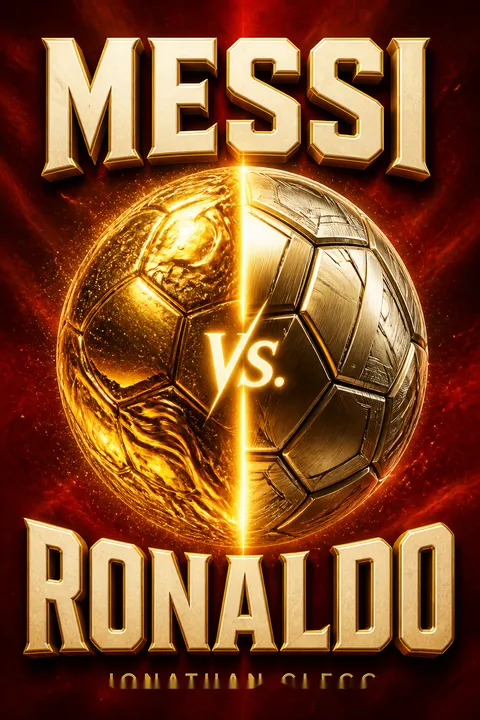


Key Takeaways
Treat Messi and Ronaldo as a system, not a winner-takes-all argument
A rivalry becomes larger. At a 2007 FIFA awards ceremony, Messi and Ronaldo sat second and third while Kaká collected the prize. Within a year, one of them would win the top individual award almost every season for a decade. Their careers were linked by comparison, but the book argues their significance reaches beyond the two players: their contest altered clubs, sponsors, league economics, and the culture of fandom. They met on the field only about three dozen times, yet their rivalry supplied a constant story even when they were playing for different teams.
The debate misses the point. Their contrasting styles made the contest easy to understand: Messi seemed to glide through defenses, while Ronaldo’s game displayed force and deliberate self-improvement. But the longer their careers ran, the more alike they looked in ambition and influence. The central story is not simply who was better. It is how two players became the twin centers of gravity for an era.
What's striking is how a sports rivalry can become an organizing principle for an industry. The players need not meet often if media, clubs, awards, and fans keep staging the comparison. This resembles a two-sided market: each star increases the other's visibility, while audiences and sponsors supply the value. The framing also warns against treating greatness as a clean ranking. Different styles and team contexts make a single scorecard less revealing than the ecosystem built around the contest.
Build development around the talent in front of you, not a standard template
Different routes, tailored support. Ronaldo’s talent emerged on Madeira, where he learned close control on steep, irregular streets, then moved through Portugal’s Sporting academy. He craved extra practice and strength work, even sneaking into the gym when coaches restricted it. Messi’s path depended on a different intervention: treatment for a growth-hormone deficiency, followed by Barcelona’s willingness to bring a shy, undersized 13-year-old from Argentina to La Masia.
Systems make opportunity. La Masia taught a shared playing structure, kept education in the picture, and developed young players as a cost-effective talent pipeline. A Harvard case study cited in the book found that 14 percent of its 530 residential-program graduates played at least once for Barcelona’s first team. The club estimated an average investment of about €2 million for each graduate who reached that level. Neither academy could guarantee a Messi or Ronaldo. Each could create conditions in which unusual ability had a chance to grow.
This contrast resembles a basic principle of developmental science: a person’s environment can either amplify a strength or turn it into a liability. Ronaldo needed room to train and a route to senior minutes; Messi needed medical support, a club willing to take a risk, and a style that could use his control in tight spaces. The lesson is not that every prodigy needs exceptional treatment. It is that equal treatment is not always effective treatment. Systems still need safeguards, especially when ambition is mistaken for a child’s unlimited capacity.
Turn raw brilliance into repeatable decisions through focused coaching
Practice changed Ronaldo’s output. At Manchester United, Ronaldo could beat defenders with tricks and power, but coach René Meulensteen thought he chased spectacular goals instead of reliable ones. During a four-week suspension in 2007, they studied classic United finishes and drilled shots from different positions. Meulensteen estimated that Ronaldo scored about 5,000 practice goals in that stretch. Soon after returning, Ronaldo scored 18 goals in 15 league games, mostly with one or two touches inside the penalty area.
A role can unlock a player. Barcelona’s Pep Guardiola made a different intervention. He moved Messi from the right into a central position behind the forwards, known as a False 9, to draw defenders out and open space. Messi scored twice in a 6-2 win over Real Madrid in 2009. In both cases, coaching did not replace talent. It changed the decisions and conditions through which talent produced results.
The useful distinction is between capacity and execution. Ronaldo already had speed, technique, and ambition; targeted repetition helped him recognize higher-percentage finishes. Messi already had exceptional control; a tactical shift gave that control more useful space. This parallels expertise research that separates deliberate practice from mere hours spent repeating a skill. Yet coaching is not a magic formula: a drill that fits one player may constrain another, and the best intervention depends on the performance problem being solved.
Invest in stars only when the sporting plan can support the spectacle
Madrid sold fame as content. Florentino Pérez saw that a famous player could generate value beyond goals. His Galácticos strategy brought in stars such as Figo, Zidane, Ronaldo, and Beckham, turning signings into global events and attracting corporate partners. By 2004, Madrid’s annual income had doubled from €138 million to €276 million, with marketing and commercial sales responsible for 40 percent of revenue. The club’s Beckham-era tours and sponsorships showed how celebrity could travel farther than match results.
The pitch still matters. The strategy weakened when commercial priorities crowded out team-building. Real signed several attackers without a coherent plan for their roles, and sponsor appearances ate into training time. Coaches were replaced as results fell. Pérez later recognized that excessive indulgence had contributed to the failure. The lesson is not to avoid star power. It is to connect the spectacle to a functioning sporting project, rather than assume that a collection of famous individuals will become a team.
Madrid’s experiment illustrates a familiar distinction in corporate strategy: brand strength can create demand, but it cannot guarantee that the underlying product works. A superstar can attract attention, sponsors, and new markets; coordination, role clarity, and training determine whether that attention converts into sustained performance. The account also complicates the idea that commercial success and sporting success are natural allies. They can reinforce each other, but only when governance protects time and resources for the sport itself.
Package a rivalry around real stakes, not manufactured exhibition alone
The Clásico traveled globally. The Clásico is the name for the rivalry between Barcelona and Real Madrid, rooted in political history but made accessible to new viewers by the Messi-Ronaldo matchup. Unlike a conventional all-star exhibition, these games had league, cup, and European consequences. In the 2010-2011 season, the teams met four times in 18 days, including a Champions League semifinal. Their games helped turn La Liga into a global appointment, with the clubs’ combined annual revenues exceeding €1 billion by 2011-2012.
The league had a structural problem. Real and Barcelona sold television rights individually and earned far more than other Spanish clubs. Collective sales and revenue limits eventually sought to reduce that imbalance, but the superclubs resisted giving up their advantage. Their stars made the league compelling, while the league’s weak distribution model threatened its wider competitiveness. The rivalry was a powerful product, but a league cannot live on two teams alone.
A compelling contest has two assets that are easy to confuse: star appeal and competitive credibility. Messi and Ronaldo supplied the first; cup ties and league stakes supplied the second. The comparison with staged all-star events helps explain why the Clásico attracted attention without feeling like a promotional scrimmage. Still, centralizing attention around two clubs risks hollowing out the competition that gives the spectacle meaning. A league is both an entertainment product and a network of interdependent teams.
Notice when sports comparison becomes a tribal identity
Fans turned preference into allegiance. Messi and Ronaldo reached their peaks alongside the rise of social media, where clips, statistics, and awards made their performances easy to compare in real time. Their different styles gave fans ready-made arguments: creativity versus force, team play versus individual drive, or artistry versus visible effort. Repeated comparisons became a permanent online contest, with obscure statistics used to defend whichever player a fan had chosen.
The rivalry outlived the matches. Many supporters followed the players more closely than their clubs. Ronaldo’s social posts about daily life could attract more engagement than images of him playing. Sponsors, media, and award voters also treated the pair as the default choices. The debate became a lens through which people interpreted nearly every major performance, sometimes making a remarkable game feel like evidence in an endless trial instead of something to enjoy.
The pattern resembles identity-protective reasoning: once a preference becomes part of belonging, new evidence is often recruited to defend the group rather than revise a belief. Social platforms intensify this by rewarding simple conflict and repeatable claims. That does not make devoted fandom inherently irrational. Shared loyalties give sport much of its emotional force. The risk appears when comparison becomes mandatory, leaving little room to appreciate two distinct forms of excellence at once.
Protect the team’s future when one player becomes its whole plan
Dependence carried a price. Barcelona’s reliance on Messi acquired its own name: Messidependencia, meaning dependence on Messi. In the 2011-2012 and 2012-2013 league seasons, he scored 96 goals, accounting for 42 percent of Barcelona’s total in that period. The club responded by making him central to its sporting and commercial plans. When Neymar left for Paris Saint-Germain, Barcelona spent heavily on Ousmane Dembélé, Philippe Coutinho, and Antoine Griezmann, but the three transfers cost a combined €427 million and did not repair the team as hoped.
Star power can distort decisions. Barcelona’s leadership felt pressure to win immediately while Messi remained near his peak. That urgency, combined with poor recruitment planning, contributed to a swollen wage bill and expensive players poorly suited to the team. A superstar can raise the ceiling of a team, but dependence can also make every season feel like a last chance and weaken the club’s ability to plan beyond one person.
This is a principal-agent problem as well as a sporting one. A club’s executives are expected to protect long-term institutional health, while fans and players often demand immediate wins. A transcendent player magnifies that tension because the short-term case for spending is unusually persuasive. The caution is not to deny exceptional players the support they earn. It is to preserve a second source of judgment, so loyalty to a star does not become a substitute for coherent recruitment.
Judge international greatness in context, not by one missing trophy
The national shirt changed the test. Messi’s failure to win a major international title for Argentina weighed heavily on him, especially after losing the 2014 World Cup final and three Copa América finals. In 2016, he briefly announced his retirement from the national team. His Argentina sides lacked the Barcelona teammates and familiar structure that had supported him at club level. In 2021, he finally won the Copa América, scoring four times in the tournament and defeating Brazil in the final.
Ronaldo’s defining win looked different. Portugal’s Euro 2016 campaign began poorly, but Ronaldo urged teammates to keep believing and scored twice in a crucial draw with Hungary. He was injured and left the final early, then encouraged his teammates from the sideline as Portugal beat France. The trophy belonged to the team, not just its star. Together, these stories show why a national-team record cannot be read as a simple measure of individual ability.
International tournaments compress years of achievement into a few matches, making outcomes unusually vulnerable to injuries, tactical fit, and chance. That compression can turn a trophy into a powerful symbol, but it also encourages people to mistake team results for individual verdicts. Messi’s eventual Copa América win mattered because of the emotional burden attached to it, not because it retroactively changed his skill. Ronaldo’s injured final shows the reverse: leadership can matter even when the leader cannot finish the contest on the field.
Star power can bend institutions, but it cannot abolish their constraints
The icons had limited control. After years of describing a desire to leave Barcelona, Messi tried to use a contract option to depart in 2020. A pandemic had disrupted the season calendar, and the club and player disagreed over whether the deadline had passed. Barcelona’s €700 million release clause and Messi’s reluctance to take the club to court kept him there. A year later, financial rules and Barcelona’s debts made a new deal impossible, despite Messi’s willingness to take a pay cut.
The clubs sought guarantees too. The Super League, a proposed breakaway competition for Europe’s wealthiest clubs, promised stable income and more elite matchups. Fan protests and withdrawals by English clubs helped sink the launch within days. Its failure exposed the same tension running through the book: star-driven soccer generated extraordinary money, but players and clubs remained subject to contracts, regulation, debt, and public legitimacy. Celebrity created leverage, not complete freedom.
The ending reframes player power as conditional. A superstar may influence tactics, wages, sponsorships, and even club identity, yet the contract remains embedded in legal and financial systems that no individual can simply wish away. The Super League backlash adds another constraint: audiences are not only consumers but participants with loyalties and expectations. Institutions can exploit attention for revenue, but attempts to strip away shared rules may destroy the legitimacy that makes the attention valuable.
Analysis
The book’s strongest argument is structural: Messi and Ronaldo are not merely two exceptional biographies placed side by side. Their simultaneous careers reveal how modern soccer reorganized itself around individual celebrity. The opening awards ceremony is a miniature of that shift. A team sport begins treating individual prizes as a central arena, and that arena feeds contracts, sponsorships, media narratives, and fan identity.
The paired portrait avoids a simple nature-versus-nurture story. Ronaldo’s self-discipline and appetite for training matter, but so do Sporting’s scouting, United’s coaching, Mendes’s dealmaking, and Madrid’s commercial ambition. Messi’s gifts likewise required hormone treatment, Barcelona’s academy, tactical intelligence, and a club prepared to build around him. Greatness appears as an interaction between individual capacity and institutional design, not as a self-contained miracle.
The book also traces the costs of turning stars into business models. Madrid’s Galácticos show that commercial value cannot replace tactical coherence. Barcelona’s spending after Neymar shows how dependence on one player can turn urgency into bad recruitment. The failed Super League shows that even powerful owners cannot assume that audiences will accept every attempt to monetize their attention. The clubs created enormous value from the rivalry, but their success also made them financially and emotionally dependent on it.
One tension remains productive rather than resolved: the book celebrates the scale of the era while documenting how its economics narrowed the sport’s focus. A global audience gained two unmistakable reference points, yet weaker clubs struggled to compete for money and attention. The Messi-Ronaldo debate simplified soccer for millions, while reducing appreciation of the collective systems that made their achievements possible. Their legacy is therefore double-edged. They expanded what a footballer could mean in the world, and exposed how much of that meaning depends on institutions that neither player fully controlled.
Review Summary
The reviews for "Messi vs. Ronaldo" are generally positive, with readers praising the book's insightful look into the business side of soccer and how these two iconic players shaped the sport. Many appreciate the thorough research and engaging writing style. Some readers wished for more focus on the players' on-field performances, while others found the financial details fascinating. The book is noted for its appeal to both die-hard soccer fans and casual readers interested in sports business. Several reviewers mention that the book's publication before the 2022 World Cup leaves out important recent developments.
People Also Read


Glossary
La Masia
Barcelona’s youth academyBarcelona’s residential youth academy, housed originally in a former farmhouse. It combines soccer development with schooling and a shared playing philosophy, shaped especially by Johan Cruyff. Its purpose is both sporting and economic: develop players who can join the first team without the expense of buying established stars.
juego de posicion
Positional play systemA playing philosophy associated with Barcelona that organizes players around space, passing options, and coordinated movement. Players learn where to position themselves when their team has possession and how to compress space after losing the ball. The aim is not passing for its own sake, but using position to create useful advantages.
False 9
A withdrawn central forwardAn attacking role in which a nominal striker drops away from the opposing center backs instead of staying high beside them. The movement can draw defenders forward and create open space for teammates to run into. Guardiola used Messi in this role at Barcelona, most famously in the 2009 victory over Real Madrid.
Galácticos
Real Madrid’s star signingsReal Madrid’s strategy of acquiring globally famous players, including Luís Figo, Zinedine Zidane, Ronaldo, and David Beckham. The signings were intended to improve the team while also attracting sponsors, fans, and commercial income. The project showed both the revenue potential of celebrity and the danger of allowing commercial priorities to outrun team planning.
Messidependencia
Barcelona’s dependence on MessiA Spanish term used to describe Barcelona’s reliance on Lionel Messi for goals, creativity, and influence. During his most productive seasons, he supplied a large share of the team’s scoring, and the club increasingly shaped recruitment and tactics around him. That dependence helped sustain success but made succession and long-term planning more difficult.
Clásico
Barcelona versus Real MadridThe name for the major rivalry between Barcelona and Real Madrid. The match carries sporting stakes as well as historical and cultural associations connected to Catalonia and Spain. During the Messi-Ronaldo era, it became a global event, pairing two of the world’s most famous players in competitive games rather than promotional exhibitions.
Super League
Proposed elite breakaway competitionA proposed competition organized by Europe’s wealthiest clubs, with permanent founding members and a smaller number of qualifying teams. Its advocates argued that elite matchups and more predictable income could stabilize club finances. The 2021 announcement provoked intense fan opposition, and several clubs withdrew within days, leaving the project in disarray.
Beckham Law
Preferential tax treatment for newcomersA Spanish tax provision intended to attract foreign workers by offering eligible new arrivals a lower rate on Spanish income for a limited period. High-earning foreign athletes who arrived before a later change benefited from the arrangement. Its application became part of the wider scrutiny of footballers’ finances and offshore sponsorship income.
FAQ
What's Messi vs. Ronaldo: One Rivalry, Two Goats, and the Era That Remade the World's Game about?
- Dual Biography Focus: The book examines the careers of Lionel Messi and Cristiano Ronaldo, emphasizing their rivalry and its impact on modern soccer.
- Cultural Impact: It explores how their competition influenced global sports culture, business, and celebrity status beyond the soccer field.
- Historical Context: The authors provide a backdrop of the soccer landscape during their rise, illustrating the sport's evolution over the last two decades.
Why should I read Messi vs. Ronaldo by Jonathan Clegg?
- In-Depth Analysis: The book offers a comprehensive look at two of the greatest players in soccer history, essential for fans and sports enthusiasts.
- Unique Perspective: It combines personal anecdotes, interviews, and historical context, providing a multifaceted view of their impact on the game.
- Cultural Significance: Understanding their rivalry helps readers appreciate the broader implications of sports in society, including issues of fame, power, and influence.
What are the key takeaways of Messi vs. Ronaldo?
- Rivalry Drives Greatness: The competition between Messi and Ronaldo pushed both players to achieve unprecedented heights in their careers.
- Cultural Ecosystem Disruption: Their rivalry disrupted traditional business models in sports, leading to new marketing strategies and fan engagement.
- Diverse Playing Styles: The authors highlight the contrasting styles of Messi and Ronaldo, showcasing how their differences contributed to their individual successes.
What are the best quotes from Messi vs. Ronaldo and what do they mean?
- "Being the GOAT meant first being better than the other guy.": This quote encapsulates the essence of their rivalry, suggesting that their pursuit of greatness was fueled by the need to outdo each other.
- "Implicit in all of it is the mutual understanding from Messi and Ronaldo that their most important business partner is the other one.": This highlights how their competition not only defined their careers but also created a lucrative ecosystem around them.
- "The Debate is never really over.": This reflects the ongoing nature of the Messi vs. Ronaldo discussion among fans, indicating that their legacies will continue to be compared long after they retire.
How did Messi and Ronaldo's rivalry change soccer according to Messi vs. Ronaldo?
- Global Phenomenon: Their competition turned soccer into a global spectacle, drawing in millions of fans and generating unprecedented media attention.
- Commercialization of Soccer: The rivalry led to new marketing strategies, with clubs leveraging their names to attract sponsorships and merchandise sales.
- Inspiration for Future Generations: Young players around the world now aspire to emulate their success, leading to a new generation of talent in the sport.
How did their backgrounds play a role in their success as discussed in Messi vs. Ronaldo?
- Different Upbringings: Messi grew up in Rosario, Argentina, facing health challenges, while Ronaldo hailed from Madeira, Portugal, driven by ambition and a desire to escape poverty.
- Support Systems: Messi's family made sacrifices for his growth, while Ronaldo's father worked in a low-paying job, pushing him to excel in soccer.
- Cultural Influences: Their respective cultures shaped their playing styles and attitudes, with Messi embodying the artistry of Argentine soccer and Ronaldo representing Portuguese determination.
How does Messi vs. Ronaldo compare their playing styles?
- Messi's Playmaking Ability: Known for his dribbling, vision, and ability to create opportunities for teammates, often playing as a false nine or attacking midfielder.
- Ronaldo's Finishing Skills: Celebrated for his physicality, aerial ability, and goal-scoring prowess, often playing as a winger or striker.
- Contrasting Personalities: Messi is portrayed as humble and reserved, while Ronaldo is characterized as confident and flamboyant, influencing their on-field presence.
What impact did their rivalry have on their respective clubs according to Messi vs. Ronaldo?
- Increased Revenue: Both Barcelona and Real Madrid saw significant financial gains due to the global interest in Messi and Ronaldo, leading to lucrative sponsorship deals.
- Tactical Innovations: Coaches adapted their strategies to maximize the strengths of each player, influencing how soccer is played at the highest levels.
- Fan Engagement: The rivalry heightened fan loyalty and engagement, with supporters passionately backing their respective players and clubs.
How did the media portray Messi and Ronaldo in Messi vs. Ronaldo?
- Hero vs. Villain Narrative: The media often framed Messi as the humble genius and Ronaldo as the brash superstar, creating a compelling narrative for fans.
- Focus on Individual Achievements: Coverage frequently highlighted their individual records, awards, and milestones, contributing to the mythos surrounding both players.
- Cultural Icons: Both players transcended sports, becoming global icons and influencing fashion, lifestyle, and social media trends.
What challenges did Messi and Ronaldo face throughout their careers as discussed in Messi vs. Ronaldo?
- Injuries and Physical Decline: Both players have had to navigate injuries and the natural decline that comes with age, adapting their playing styles in response.
- Pressure and Expectations: They have faced immense pressure to perform at the highest level consistently, affecting their mental health and decision-making.
- Changing Football Landscape: The evolving nature of football, including the rise of new superstars and changes in club dynamics, presents ongoing challenges.
How did the pandemic affect the careers of Messi and Ronaldo as described in Messi vs. Ronaldo?
- Financial Implications for Clubs: The pandemic led to significant financial losses for clubs, impacting their ability to retain or acquire top talent.
- Impact on Player Performance: Messi and Ronaldo had to adjust to playing in empty stadiums, affecting the atmosphere and their performances.
- Shift in Focus: The pandemic prompted both players to reflect on their careers and futures, leading to decisions that would shape the final chapters of their legacies.
What does the future hold for Messi and Ronaldo according to Messi vs. Ronaldo?
- Potential Retirement: The book speculates on the possibility of both players retiring in the near future, given their ages and the physical demands of the sport.
- Legacy Beyond Football: They are portrayed as having the potential to influence the sport even after their playing days are over, with their brands continuing to shape football culture.
- Emergence of New Stars: The next generation of players, such as Kylian Mbappé and Erling Haaland, is expected to carry the torch forward, evolving the rivalry narrative.
Download PDF
Download EPUB
.epub digital book format is ideal for reading ebooks on phones, tablets, and e-readers.








