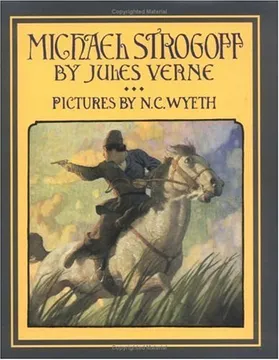


Plot Summary
The Broken Siberian Wire
During a glittering reception in Moscow, the Czar learns that rebellion has cut the telegraph line into Siberia and isolated his brother, the Grand Duke, in Irkutsk. The uprising is being driven by Ivan Ogareff, a disgraced officer who has allied with the Tartar ruler Feofar-Khan and intends to seize the city.
The Czar fears Ogareff will approach the Grand Duke under a false identity and betray him from within. He chooses Michael Strogoff, a seasoned Siberian courier, to carry a sealed warning across thousands of miles of hostile territory. Michael accepts the mission knowing that he must conceal his identity, avoid his own mother in Omsk, and reach Irkutsk before the invaders.
The story begins with a communication failure that is both practical and political. Once the wire is cut, imperial authority cannot arrive as information alone; it must travel in a vulnerable human body. Michael's assignment makes loyalty physical: the letter can be intercepted, his identity can betray him, and even filial love must be subordinated to the mission. The Czar's confidence in a single courier also exposes the fragility beneath the empire's scale. Its reach depends on one man's judgment, endurance, and secrecy.
Nadia at the Closed Gate
Traveling in plain clothes as Nicholas Korpanoff, a merchant, Michael meets Nadia Fedor on the train east. She is a young woman from Riga, traveling alone toward Irkutsk, and her composure during a sudden railway scare catches his attention. At Nijni-Novgorod, a government order bars Russian subjects from leaving the province and expels Asian visitors.
Nadia's permit, once valid, can no longer carry her toward Siberia. Michael finds her at the police station, where officials have refused to authorize her passage. He presents his own travel papers and offers to take her as his sister, making her presence a useful cover for his secret journey as well as a means of helping her continue.
Their alliance begins through a practical fiction. Calling Nadia his sister gives Michael a plausible traveling identity, while it gives Nadia a route through a sudden bureaucratic closure. Neither character treats the arrangement as merely transactional: Michael notices her steadiness, and Nadia accepts help without surrendering her purpose. The episode establishes a recurring tension between official categories and lived loyalties. A permit labels Nadia as a traveler who must stay; an invented kinship makes movement possible and begins to create a real bond.
Secrets Aboard the Volga
On the steamer bound up the Kama, Nadia explains that her father, Wassili Fedor, has been exiled to Irkutsk and that she is carrying her mother's last message to him. Michael promises to help her reach him but reveals nothing about his own sealed mission. The rival foreign correspondents, Alcide Jolivet and Harry Blount, travel the same route, trading observations while competing to report the rebellion first.
Michael also recognizes the gypsy pair Sangarre and an old fortune-teller from Nijni-Novgorod. In the dark, he overhears them discussing the Czar's courier and predicting that he will fail. The discovery confirms that Ogareff's network already knows a messenger is coming, so Michael must guard his cover more carefully.
The steamer brings three kinds of travel into the same confined space: Nadia's private journey to family, Michael's state mission, and the correspondents' pursuit of public information. Each depends on what can be seen or heard, but Michael's overheard exchange turns observation into danger. Jolivet and Blount make rivalry comic, yet their presence also shows how news can travel where government communication cannot. Nadia's disclosure deepens the partnership while leaving Michael's central secret intact, creating intimacy beside deliberate concealment.
The Urals in a Storm
After buying a tarantass at Perm, Michael and Nadia race over the Urals, following a carriage whose occupants turn out to be Jolivet and Blount. A violent storm catches them on a mountain pass. Michael and the driver struggle against the wind to keep the horses and vehicle from plunging over a precipice, while Nadia waits in a shelter cut into the rock.
When a bear enters the shelter and threatens the team, Nadia fires Michael's revolver to protect the remaining horse; Michael arrives and kills the animal with his hunting knife. He then lends the journalists a horse to repair their broken carriage. Their journey continues together to Ekaterinburg, where Michael agrees to travel with them as far as Ishim.
The mountain ordeal turns the supposed sibling arrangement into demonstrated trust. Michael risks himself to protect Nadia and the horses, while Nadia acts decisively rather than waiting to be rescued. The bear encounter also complicates the travelers' roles: she preserves their means of escape, and he finishes the danger. By helping the correspondents after his own peril, Michael draws two observant strangers into his route. Their gratitude will matter later, when the courier can no longer rely on strength or secrecy alone.
The Ichim Whip
At Ichim, the travelers find only three fresh horses at the relay. A hard-driving officer arrives and demands Michael's team, then strikes him with a whip when Michael refuses to surrender it. Michael's hands clench, but he does not fight back. A duel or arrest could expose his identity and delay the letter, so he lets the officer take the horses and spends the night waiting for replacements.
Nadia understands that his restraint has a reason, though the correspondents read it as cowardice. By morning, Michael and Nadia are back on the road. The insult remains with him, but his decision preserves the mission's concealment and lets them continue toward the Irtysh.
Michael's silence is not passivity but controlled action under competing obligations. The scene makes the cost legible through the body: he feels the blow, wants to answer it, and chooses not to. Nadia reads his restraint as evidence of an undisclosed duty, while the journalists judge courage through visible retaliation. The difference exposes how easily public behavior can be misread when its governing context is hidden. Michael preserves the larger objective at the price of immediate dignity, and the humiliation sharpens the emotional burden of secrecy.
The Irtysh Takes Nadia
Near Omsk, Michael and Nadia attempt to cross the swollen Irtysh by ferry. Tartar boats carrying scouts close in before the ferry reaches shore, and a volley kills two horses. Michael urges Nadia to jump with him, but a lance strikes his head and sends him into the current. The Tartars seize Nadia and carry her downstream as a prisoner.
A Siberian peasant rescues Michael from the bank and nurses him unconscious for three days. When Michael wakes, he finds the imperial letter still hidden in his clothes, but learns that Nadia has been taken. He insists on leaving at once, though his wound and the loss of his vehicle leave him with few resources.
The river abruptly dismantles the fragile safety built on the road. Michael retains the letter but loses his companion, transport, and control over the route; Nadia becomes a prisoner precisely when their shared plan seemed most stable. The rescued courier's first concern is still the mission, a reflex that keeps him moving but leaves grief largely unspoken. The peasant's care offers a counterforce to the invasion's violence: survival depends not only on heroic endurance but on ordinary strangers choosing to help.
Omsk's Impossible Goodbye
Michael enters occupied Omsk on foot with the peasant's help, hoping to find a horse without attracting notice. In a crowded posting-house, his mother Marfa recognizes him and reaches for him. Michael denies being her son, keeping his oath and his identity concealed before possible spies.
Marfa quickly understands that his rejection protects a larger purpose and repeats the denial when Ogareff questions her. The officer is the same traveler who took Michael's horses at Ichim, and the realization identifies him as the traitor. Ogareff orders Marfa taken to Tomsk. Michael escapes Omsk after dark on a horse, unaware that his mother is now in enemy hands and that Ogareff has begun hunting him.
This is the mission's most intimate sacrifice so far. Michael's disguise requires him to wound the person whose recognition matters most, and Marfa's answer shows that she understands the moral logic even as it breaks her. Her choice protects his secret but also places her under Ogareff's power. The scene refuses to make duty emotionally clean: Michael's self-command leaves him with guilt, while Marfa must convert maternal feeling into strategic silence. Recognition itself becomes dangerous, a knowledge that can save one person and endanger another.
One Horse Across the Baraba
With one horse and no reliable relay stations, Michael crosses the insect-ridden marshes of the Baraba, resting the animal whenever its strength falters. The devastated settlements confirm how far the Tartars have advanced. Near the Obi, he overhears a Tartar patrol discussing the Czar's courier and Marfa's capture.
He slips away from their camp, but a sentry raises the alarm. Michael shoots the pursuing officer and rides hard for the river as the patrol closes behind him. When bullets strike his horse, he dismounts and swims across the broad current, reaching the far bank alone. He heads toward Kolyvan, where the nearest fighting may offer both danger and a chance to find transport.
The steppe reduces Michael's resources to a single animal, his own body, and the ability to interpret small signs. The horse is not disposable equipment: Michael rests and cares for it because his survival depends on mutual endurance. Hearing that Marfa has been captured adds a private threat to the public mission, but he cannot turn back. His crossing of the Obi is a literal severing from the last reliable means of travel. The narrative shifts from managed transit to desperate improvisation.
Kolyvan's Last Telegram
As Michael approaches Kolyvan, Russian and Tartar forces clash around the town. He reaches a telegraph office and finds its clerk calmly at his post, while Blount and Jolivet argue over access to the line. Blount sends a report first, then ties up the telegraph by transmitting verses to keep Jolivet from taking his turn.
Jolivet finally gets a brief dispatch through, but artillery hits the building and the wire breaks. Blount is wounded, and Jolivet tries to carry him out as Tartar soldiers surround the office. Michael is captured with them. The courier has lost his freedom again, but he remains among prisoners being moved east, closer to the route he must take toward Irkutsk.
The telegraph office compresses the book's central concerns into one room: information is valuable, communication is vulnerable, and even competition can become absurd under fire. Blount's costly delay gives the reporters a comic edge, but the shell ends their contest without regard for who has the better story. The clerk's composure contrasts with the violence outside, suggesting that routine can persist even as its infrastructure collapses. For Michael, capture is both setback and involuntary transport, a paradox that will shape his next attempt to escape.
Two Women, One Secret
In the Tartar camp, Michael keeps apart from Blount and Jolivet while the wounded Englishman receives care from his French rival. The prisoners are later marched toward Tomsk, where Nadia has been held with Marfa. Nadia supports the older woman without knowing who she is, then recounts her journey with Nicholas Korpanoff.
As she describes his courage, his mother, and the humiliation he endured at Ichim, Marfa realizes that the supposed merchant is her son. She keeps the discovery to herself, protecting Michael's secret. On the march, Nadia and Marfa finally see Michael among the prisoners. Marfa restrains Nadia from approaching him, but Sangarre notices the gesture and carries her suspicion to Ogareff.
Nadia's instinctive care creates a bond before either woman knows its full meaning. Marfa learns about her son through another person's memories, and the account confirms that Michael's restraint was not indifference. Their recognition is deliberately silent: each woman understands that a visible gesture could expose him. The scene makes solidarity a form of intelligence, not merely comfort. Sangarre's surveillance turns the same gesture into evidence, showing how an act of love can be read differently by those seeking to control its participants.
The Knout's Answer
At Zabediero, Ogareff summons Marfa and demands that she identify her son among the prisoners. She refuses, even as he threatens her with the knout and orders the captives to file past her. Michael passes without revealing himself. When the executioner prepares to whip Marfa, Michael can no longer hold back.
He steps forward, identifies himself through his actions, and strikes Ogareff across the face with the knout. Soldiers seize him, search his clothes, and find the sealed imperial letter. Ogareff takes it and orders Michael sent on to Tomsk for the Emir's judgment. Marfa's silence has protected Michael as long as possible, but his intervention saves her from immediate torture at the cost of the letter.
The mission's central conflict becomes impossible to contain when the state and the family demand opposite forms of loyalty. Marfa can protect Michael only by enduring violence; Michael can protect Marfa only by exposing himself. His blow answers Ogareff's earlier insult, but its deeper consequence is strategic: the letter is seized. The act is neither simple triumph nor failure. It preserves his mother's life in the moment while making the courier's official task seem lost, shifting the burden from a document he can carry to knowledge he may have to deliver himself.
Tomsk's White Blade
At Tomsk, Feofar-Khan stages a public procession and condemns Michael as a spy. The Emir's executioner heats a saber and passes it before Michael's eyes, apparently blinding him. Marfa collapses, and Nadia, hidden among the prisoners, waits until the guards and celebrants are distracted. She cuts Michael's bonds and leads him out of the city.
Though he can no longer see, he refuses to abandon the journey: he intends to warn Irkutsk from memory and reach the Grand Duke before Ogareff. Nadia becomes his guide, using her sight to replace his and refusing to leave him behind. They escape on foot, with no money, provisions, or safe road ahead.
The punishment transforms the journey's basic sensory arrangement. Michael's sight, once a tool of the courier and hunter, appears destroyed; Nadia's perception becomes the means by which he can continue. Her rescue is not a reversal of his dependence but a deliberate acceptance of shared risk. The execution also weaponizes spectacle: the Tartar court makes his suffering public to display its authority. Yet the escape begins in the gap between spectacle and vigilance, when those who believe Michael powerless stop watching him closely.
The Blind Man's Cart
After reaching an abandoned village, Michael and Nadia meet Nicholas Pigassof, the former telegraph clerk from Kolyvan, traveling with a cart, a horse, and his dog Serko. He recognizes Michael's voice but does not know his identity, and offers them a place in his vehicle. Pigassof carries them toward Krasnoiarsk, sharing food and setting a pace his horse can sustain.
Nadia rests while Michael listens to the landscape through her descriptions and Pigassof's talk. Their progress is slow, but it gives the exhausted pair shelter and transport. Pigassof's unshowy kindness restores a measure of hope, and his presence prepares them to face the next stretch without pretending that courage alone can replace food, rest, or companionship.
Pigassof offers a different model of competence from Michael's disciplined heroism. He does not rush, boast, or claim special knowledge; he shares what he has and moves at the pace his horse can bear. For Nadia, the cart supplies needed rest. For Michael, Pigassof's voice and descriptions create a temporary world he can navigate. The episode insists that endurance is socially supported. After the grand machinery of empire and war has failed, a modest vehicle and a stranger's practical generosity become the means of continuing.
Krasnoiarsk Without People
Krasnoiarsk has been evacuated by order of the Czar, leaving Michael, Nadia, and Pigassof without fresh horses or help. They cross the Yenisei in Pigassof's light cart, buoyed by sealed bottles, and reach the eastern bank after being spun through a dangerous whirlpool. Farther along the road, a third Tartar column captures them.
The soldiers torment Michael by placing him on a blind horse, then leave him to walk after the animal falls into a pit. When a soldier insults Nadia, Pigassof takes a pistol and shoots him. The Tartars bind Pigassof, but the sudden movement breaks Michael's rope. He and Nadia escape into the dark, leaving their friend behind.
The crossing of the Yenisei turns ingenuity into a temporary substitute for infrastructure. Pigassof's improvised flotation allows the group to pass where the government has deliberately removed every boat. Their next capture shows how quickly ingenuity can be overwhelmed by organized force. The blind horse is a cruel parody of Michael's condition, while Pigassof's sudden violence reveals the depth beneath his habitual calm. His intervention saves Nadia from immediate harm, but it costs him his freedom and leaves Michael and Nadia with a debt they cannot yet repay.
Nicholas Beneath the Steppe
Michael and Nadia continue east on foot, scavenging food from deserted villages and crossing the country left in ruins by the Tartars. Near the Dinka, they hear Serko barking and follow the sound to Pigassof, buried alive with only his head above ground. Michael digs him free, but Pigassof dies before they can carry him farther; Serko is killed defending him from a vulture.
Michael and Nadia bury them together, then leave the road to avoid the advancing Tartar patrols. Nadia's strength is nearly spent, so Michael carries her across the remaining miles to Lake Baikal. There, Russian refugees are preparing to depart on a raft down the Angara, and the pair find a final route toward Irkutsk.
Pigassof's death gives material consequence to the kindness that carried Michael and Nadia through their previous ordeal. They cannot rescue him in time, but Michael refuses to leave his body exposed, turning burial into the last service he can offer. Serko's defense makes loyalty visible without speech or calculation. The episode also changes the pair's physical relation: Nadia has guided Michael, but exhaustion forces him to carry her. Their roles have become reciprocal, each sustaining the other as circumstances demand.
Fire on the Angara
A raft carries Michael, Nadia, and refugees across Lake Baikal and down the Angara. Blount and Jolivet join them, recognize Michael, and promise to keep his identity secret. The raft's progress turns perilous when wolves attack across the ice and burning villages light the river. The journalists detect naphtha floating on the water, but the refugees cannot stop without risking capture.
Ice finally jams the raft beneath Tartar fire. Michael and Nadia leave it unseen, crawl across the frozen barrier, and drift downstream on a loose ice floe. Ogareff ignites the naphtha to set Irkutsk ablaze. Michael and Nadia plunge beneath the flames and reach the city, while the fate of the raft's other passengers remains uncertain.
The river becomes the final convergence of the novel's material dangers: frozen water blocks movement, floating oil turns the current into a weapon, and fire makes concealment impossible. The refugees' shared journey offers solidarity, but the crisis forces Michael and Nadia to leave the group and act alone. Their passage over the ice is not a clean escape; it is a narrow survival amid the destruction Ogareff has engineered. Blount and Jolivet's promise marks a change from competitive observers to trustworthy witnesses.
The Duel in Irkutsk
Inside the governor's palace, Nadia recognizes Ogareff as he prepares to betray the Grand Duke and calls out his identity. Ogareff attacks her, but Michael follows her voice into the room. Though everyone believes him blind, he meets Ogareff's sword with his hunting knife, turning aside each strike.
Ogareff's confidence breaks when Michael advances as if he can see. Michael kills him, then identifies himself to the Grand Duke, who had mistaken Ogareff for the Czar's courier. The traitor's scheme to enter Irkutsk under Michael's name has nearly succeeded, but Nadia's recognition and Michael's concealed ability to see expose him before he can deliver the city.
The duel reverses the visual hierarchy imposed at Tomsk. Ogareff trusts his sight and assumes Michael's blindness makes the contest one-sided; Michael's stillness and listening unsettle that certainty. Nadia's voice is the practical link between them, bringing Michael to the room where the conspiracy is unfolding. The false identity now reaches its sharpest point: Ogareff has taken the courier's name, while the genuine courier is treated as an impostor. Recognition, which once endangered Michael, becomes the instrument that interrupts the betrayal.
The Warning Reaches Irkutsk
Michael explains that tears formed a protective film over his eyes when the heated blade passed, allowing him to preserve his sight and convincingly act blind. When Ogareff displayed the stolen letter at Tomsk, Michael read its warning and understood the plan to betray Irkutsk.
He had therefore pressed east not only to deliver the message but to stop the plot in person. The defenders repel the Tartar assault and extinguish the fires; Russian reinforcements arrive soon afterward, forcing the invaders to withdraw.
Wassili Fedor is reunited with Nadia, and Marfa is found alive. Michael and Nadia marry in Irkutsk, then return to Omsk, where Michael's mother welcomes them. Their journey ends with the family restored and the courier honored by the Czar.
The final revelation reinterprets the journey's apparent defeat. Michael's blindness was real to everyone around him but not to himself, and the concealment converted the enemy's punishment into tactical cover. The letter's loss likewise proved temporary because its contents had been read before Ogareff could use it. Still, the ending does not reduce success to individual cleverness: Nadia's guidance, Marfa's silence, Fedor's defense, and the citizens' resistance all matter. The return to family repairs the intimate costs the mission demanded, while the courier's reward places private endurance back inside public service.
Analysis
The novel makes distance an ethical pressure. The cut telegraph does more than delay information: it forces public power to depend on a single person's body, and every mile tests whether Michael can keep his private impulses subordinate to an assigned task. His most painful decisions arise when duty and affection cannot be reconciled. He denies Marfa to protect his identity, then exposes himself to stop her torture. The story treats neither choice as emotionally painless, and that cost keeps heroism from becoming mere physical spectacle.
Its geography works like an active antagonist. Rivers, marshes, empty relay stations, and winter ice repeatedly alter what the characters can do. A carriage can provide speed, then become useless; a river can separate Nadia from Michael, then carry them toward Irkutsk. The landscapes make ingenuity communal. Michael survives through the peasant who nurses him, Nadia's perception, Pigassof's cart, and help from the reporters. Endurance is a quality of character, but survival is a social achievement.
The novel also contrasts two uses of intelligence. Ogareff reads people in order to manipulate them, while Michael's observation is disciplined toward protection and warning. The apparent blindness intensifies this contrast: Ogareff trusts visible advantage, but Michael learns to act through listening, memory, and trust in Nadia. The disguise converts vulnerability into tactical knowledge without erasing its real emotional and physical cost. Jolivet and Blount add a subplot about the making of public truth. Their rivalry first turns news into a contest, yet their shared danger changes competition into cooperation. They observe events that governments cannot reliably transmit, but they also learn when a person's safety matters more than a report. The ending gathers these strands into restoration: the warning reaches Irkutsk, the city holds, and the family bonds strained by the mission can be recognized openly. The novel's optimism depends not on effortless imperial power, but on people repeatedly choosing to help one another across the distance that power cannot quickly cross.
Review Summary
Michael Strogoff is praised as an exciting adventure novel with vivid descriptions of 19th century Russia and Siberia. Readers appreciate the compelling plot, memorable characters, and Verne's detailed geographical knowledge. Many consider it one of Verne's best works, with strong themes of loyalty, courage, and perseverance. Some note it's less science fiction-focused than Verne's other novels. While a few find certain aspects dated, most reviewers, both young and old, enjoy the thrilling journey and heroic protagonist.
People Also Read

Characters
Michael Strogoff
The Czar's Siberian courierMichael is a Siberian-born officer in the Czar's courier corps, trained to endure hunger, weather, and distance without losing his judgment. His defining strength is not simply physical toughness but the ability to subordinate impulse to a chosen duty. That discipline can make him seem cold, especially when he conceals his identity from people he loves, yet his actions repeatedly reveal a deep instinct to protect others. He respects courage in Nadia and accepts help from strangers without treating dependence as weakness. Michael's journey tests the limits of obedience: he must decide when restraint serves the mission and when compassion makes restraint impossible.
Nadia Fedor
The steadfast traveling companionNadia leaves Riga to reach her exiled father, Wassili Fedor, carrying the last emotional connection to her dead mother. Young and nearly penniless, she is nevertheless self-possessed, observant, and stubborn about fulfilling her purpose. Her courage is practical rather than theatrical: she endures difficult travel, acts under immediate danger, and gives care without demanding intimacy in return. The invented brother-sister bond with Michael lets her travel, but her loyalty grows through what they survive together. Nadia's attention to people and terrain also becomes essential to anyone who must depend on her sight and judgment.
Ivan Ogareff
The exiled strategistOgareff is a former Russian officer whose ambition and resentment have survived disgrace and exile. Intelligent, disciplined, and skilled at disguise, he studies people as carefully as military positions, searching for the point where trust can be turned into leverage. His grievance against the Grand Duke gives his ambition a personal focus, while his willingness to manipulate others shows how completely he has separated competence from loyalty. He is a foil to Michael: both are capable, secretive, and trained in service, but they direct their abilities toward opposing ideas of power and obligation.
Marfa Strogoff
Michael's resilient motherMarfa is an elderly Siberian woman shaped by a hard life beside her hunter husband and their son. She knows the steppe, trusts her own judgment, and possesses a reserve that can withstand pressure without becoming passivity. Her love for Michael is openly felt but carefully governed when his safety depends on secrecy. She also recognizes dignity in Nadia's kindness, even before she understands the young woman's connection to her son. Marfa's strength comes from discerning when affection must be expressed and when silence is the more protective act.
Wassili Fedor
The exiled physicianWassili Fedor is a physician exiled from Riga to Irkutsk, separated from his daughter and grieving the wife he left behind. He directs his medical skill toward service and earns respect through work rather than appeals for sympathy. His sense of justice is complicated by the restrictions imposed on him, but he remains committed to the people around him and to the defense of the city that confines him. Fedor represents a form of patriotism that survives punishment without pretending that punishment is harmless.
Alcide Jolivet
The irrepressible French reporterJolivet is a French correspondent who gathers news through questions, quick observation, and an irrepressible appetite for human detail. He treats reporting as a contest, particularly when Harry Blount is nearby, but his humor is not a substitute for courage. He helps Michael during the Ural storm, tends Blount when he is wounded, and becomes more loyal as danger strips away their professional rivalry. Jolivet's lively style makes him an energetic observer of war's absurdities and cruelties alike.
Harry Blount
The exacting English correspondentBlount reports for the Daily Telegraph and relies on patient listening, precise notes, and a reserve that contrasts with Jolivet's theatrical manner. He and the Frenchman compete for scoops, but their shared exposure to the invasion turns rivalry into trust. Blount is serious about his work and willing to remain near danger to record events accurately. His gradual willingness to cooperate shows how a professional contest can give way to mutual responsibility without erasing their distinct temperaments.
Nicholas Pigassof
The generous telegraph clerkPigassof works at the Kolyvan telegraph office and approaches both his profession and the surrounding upheaval with an unusual calm. He believes a clerk's duty includes transmitting messages without becoming entangled in their contents. Away from his desk, he proves generous with his cart, food, and companionship. His slow pace and unpretentious manner offer Michael and Nadia a kind of shelter different from the courier's relentless urgency. Pigassof's loyalty emerges through practical acts rather than grand declarations.
The Grand Duke
Irkutsk's embattled commanderThe Czar's brother governs and defends Irkutsk while the city is cut off from the rest of Russia. He relies on military preparation and the courage of citizens, soldiers, and exiles, recognizing that the city's survival depends on more than rank. His authority is substantial, but the siege exposes how little information and manpower he can command. The Grand Duke's willingness to trust capable people beneath him distinguishes leadership from simple hierarchy.
Feofar-Khan
The Tartar emirFeofar-Khan leads the Tartar invasion with the authority of a ruler accustomed to ceremony and obedience. His decisions direct the army's movement toward Siberia's major towns, and his court turns military victory into public spectacle. He depends on ambitious officers and allied khans, making his campaign a coalition as well as a personal command. The Emir's formal power contrasts with the uncertain practical problem of governing territory through force.
Sangarre
Ogareff's watchful agentSangarre is a gypsy performer and intelligence gatherer whose mobility lets her move through places where formal agents attract suspicion. She is fiercely loyal to Ogareff, and her attention to gestures and faces makes her a persistent observer of the people around him. Her relationship with him is bound to gratitude and allegiance, though it also reveals how personal attachment can be recruited into political violence. Sangarre operates through patience, concealment, and the ability to notice what others overlook.
The Czar
The distant sovereignThe Czar directs Russia's response to the rebellion from Moscow and entrusts the warning to Michael rather than relying on a broken telegraph system. He values both authority and clemency, believing former exiles can remain loyal to their country. His decisions shape the journey even when he is absent from it, making imperial power a distant presence with immediate consequences for Michael, Nadia, and the people of Siberia.
General Kissoff
The Czar's trusted officerKissoff advises the Czar during the first reports of rebellion and recommends Michael for the dangerous courier mission. His confidence rests on firsthand knowledge of Michael's performance in earlier assignments. He functions as the link between the sovereign's urgent need and the particular qualities of the man chosen to meet it.
Serko
Pigassof's loyal dogSerko travels with Pigassof and offers companionship in a country emptied by invasion. Alert and devoted, he follows his master through danger and becomes a source of hope for Nadia and Michael when they are alone on the road. His loyalty is expressed through presence and action rather than words.
Plot Devices
The Czar's sealed letter
Carries the warning eastThe letter is the physical object that gives Michael's journey its official purpose. It warns the Grand Duke about Ogareff's plan to infiltrate Irkutsk and betray the city from within. Because the telegraph line has been cut, the message cannot travel by ordinary state channels. Its seal makes the document valuable, but its contents are what ultimately matter: even after Ogareff takes it, Michael can deliver the warning from memory. The letter links secrecy, communication, and the difference between possessing information and understanding it.
Nicholas Korpanoff's papers
Conceals Michael's identityMichael travels under the name Nicholas Korpanoff, supported by a permit that allows him to move through Russia as a merchant. The disguise keeps his mission from spies and makes Nadia's presence as his sister seem plausible. It also limits his choices: he cannot openly use the privileges of a royal courier without risking exposure. The false identity becomes a protective structure that Michael must maintain even when it costs him his reputation or separates him from people who recognize him.
The severed telegraph
Isolates IrkutskThe telegraph wire initially connects the vast Siberian provinces to Moscow, but the rebellion cuts it in stages and leaves the eastern capital increasingly isolated. This breakdown creates the need for Michael's mission and prevents the Grand Duke from learning the danger Ogareff poses. The line's remaining fragments still carry rumors and reports, especially through the correspondents, but they cannot replace a trusted courier. The severed wire turns distance into a plot force: news arrives late, inaccurately, or not at all.
Michael's apparent blindness
Turns punishment into coverAfter the Tartar executioner passes a heated blade before Michael's eyes, everyone believes he has been blinded. Nadia guides him, and his enemies underestimate what he can perceive. The assumed blindness lets him move through captivity without drawing the same scrutiny, while forcing him to rely on sound, memory, and Nadia's descriptions. The final explanation reveals that tears protected his eyes from the heat, allowing him to maintain the deception. It is both a physical accident and a deliberate strategic advantage once Michael understands it.
Siberia's rivers and roads
Make geography an adversaryThe route to Irkutsk is shaped by the Volga, Kama, Irtysh, Obi, Yenisei, Baikal, and Angara, each demanding a different response. Ferries can be captured, rivers can carry pursuers, and winter ice can either block travel or provide an improvised crossing. The roads and relay stations offer speed only while they remain supplied and safe. These physical obstacles repeatedly undo Michael's plans, but they also create the rare openings that let him escape or approach the city. Geography is not background; it determines what action is possible.
Download PDF
Download EPUB
.epub digital book format is ideal for reading ebooks on phones, tablets, and e-readers.








