

Plot Summary
The Will Sends Her South
After her grandmother Zee dies, Anna Kate Callow leaves Boston and returns to Wicklow, Alabama, a town her mother kept forbidden throughout her childhood. Zee’s will requires Anna Kate to live above the Blackbird Café and run it for sixty days before she can inherit the estate. She plans to complete the obligation, sell the café, and return north for medical school.
On reopening morning, birdwatchers crowd the garden after a rare flock appears at Zee’s funeral. Anna Kate knows the birds are no ordinary visitors: her grandmother taught her that blackbirds carry messages from the dead. The newcomers see a scientific mystery; Anna Kate sees the inheritance Zee intended her to claim, whether she wants it or not.
The will makes inheritance an enforced encounter rather than a sentimental gift. Anna Kate arrives with a practical exit plan, but the café immediately places her inside the work and customs her mother tried to exclude. The birders establish a useful contrast: the same flock can be a rare species to outsiders and a family duty to Anna Kate. Her medical-school plans also frame the deeper choice. She believes her future is already settled, while Zee has arranged circumstances that require her to test that belief in person.
A Niece Behind the Pie
Natalie Walker has returned to Wicklow with her toddler, Ollie, after her husband Matt’s drowning left her widowed, bankrupt, and uncertain whether his death was accidental. She wants a piece of the Blackbird Café’s fabled pie, but her mother, Seelie Linden, has treated the café and the Callows as forbidden territory for decades.
At the park, Anna Kate tells Natalie that she is Zee’s granddaughter and the daughter of AJ Linden, Natalie’s dead brother. Natalie recognizes that the quiet stranger is her niece, then welcomes her into the family despite the shock. The discovery gives Natalie a reason to approach the café again, while Anna Kate learns that the Linden family she has feared is more than a rumor.
Their meeting makes inherited silence concrete: both women have been denied the same family history from opposite sides of the feud. Natalie’s first response is not accusation but welcome, which distinguishes her from the adults who turned grief into a boundary. Anna Kate, meanwhile, gains a living relative who can complicate her mother’s version of the Lindens. The pie is more than a craving for Natalie. It represents permission to approach a forbidden past and seek help for grief she has been trying to manage alone.
The Grandfather at the Door
Dr. James Dawson Linden, known as Doc, visits Anna Kate at the café. His frailty unsettles her, but he speaks with visible regret about never knowing her and invites her to Sunday supper. Anna Kate refuses, citing the way he and Seelie treated her mother after AJ died, including Seelie’s accusation that Eden caused the crash. Doc says the story is more complicated, but offers no full account.
Anna Kate leaves with fresh doubts about the family picture Eden gave her. That evening, Natalie confronts Seelie over a plan to send Ollie to swimming lessons without properly consulting her. Seelie insists the lessons are necessary, and Natalie begins to see that staying under her mother’s roof means accepting rules she cannot control.
Doc’s visit shifts the conflict from a fixed family legend to competing, incomplete memories. His remorse is sincere, but he asks Anna Kate to trust him before supplying the facts that might earn trust. Natalie’s dispute over Ollie’s lessons echoes the same imbalance in a smaller, immediate form: Seelie calls control protection, while Natalie experiences it as the loss of her own authority. Both women are confronting a family system in which care and coercion have become difficult to separate.
A Pool Becomes a Battleground
Seelie arranges swimming lessons for Ollie and tells Natalie that refusing them could mean leaving the family property. Matt’s drowning has made water feel dangerous to Natalie, so the lesson triggers panic rather than reassurance.
She retrieves the pink swimming gear Seelie prepared, but decides she cannot keep living under her mother’s authority. She will find work, save for an apartment, and remain in Wicklow for Ollie’s sake without depending on Seelie.
The next morning, Natalie goes to the café hoping for pie, only to learn the pies are temporarily unavailable. Anna Kate offers her a serving job instead. Natalie accepts at once, taking the first step toward earning her own money and entering the family business her mother had kept her away from.
Natalie’s resistance is not simple defiance. Her fear is rooted in a real loss, yet it has begun to govern choices that belong to her as Ollie’s mother. The new job offers a practical alternative to the household power struggle, but working at the Blackbird also means crossing a family boundary. Her decision therefore carries two kinds of risk: she must tolerate the possibility of water and the certainty of Seelie’s disapproval. Earning wages becomes an early test of whether independence can be built through small actions rather than another flight from home.
A Silent Midnight
Anna Kate tries to bake the blackbird pies herself, but the first batch tastes wrong, and the birds remain silent when they arrive at midnight. The failure matters to customers such as Otis Lazenby, who relies on the pies for dreams of his late wife. At her bedroom window, two birds watch Anna Kate and leave a mulberry leaf on the sill before rejoining the flock.
She has not yet understood the clue. Meanwhile, Natalie wakes after hearing a woman’s voice warn that her father is dying. She finds no intruder and assumes the message was a dream, though she notices that Doc looks tired and avoids directly answering questions about his health. Both women receive signs they cannot yet interpret.
The first failure makes the supernatural tradition dependent on care, not mere performance. Anna Kate can reproduce a recipe but cannot yet understand what gives it meaning, so the birds withhold their song. The leaf turns that silence into guidance. Natalie’s warning operates differently: it does not soothe her but plants dread she tries to rationalize away. The two women are learning that knowledge in Wicklow arrives indirectly, through birds, dreams, and small physical details. Their difficulty lies not only in receiving a message, but in deciding whether they can bear to act on it.
Mulberries Unlock the Song
The leaf leads Anna Kate to the distressed mulberry trees and helps her realize that the pies need their fruit. At first, she makes a sweetened syrup from unripe berries. It is enough to bring the blackbirds back into song, and the crowd outside the café hears their first midnight chorus.
The following morning, Summer Pavegeau reveals a concealed room beneath the pantry stairs, stocked with jars of preserved mulberries that Zee prepared over many years. Anna Kate can now make the pies as intended. Otis confirms that his piece has brought him a dream from Rosemarie, his dead wife. Anna Kate’s success steadies the café and proves that Zee left behind both a tradition and the means to continue it.
The hidden pantry converts family lore into a practical inheritance. Anna Kate’s first success comes through experimentation, but Summer’s knowledge completes what Anna Kate could not discover alone. The secret room also shows how care can be stored materially: years of harvesting, preserving, and planning sit in jars beneath an ordinary kitchen. Otis’s dream confirms the pies’ power, while the birds’ song gives the town a shared experience that outsiders can witness without fully understanding. Anna Kate is beginning to inherit not just property, but a responsibility that requires collaboration.
The Newspaper's Missing Truth
Natalie joins the café staff, and she and Anna Kate begin to trust each other while working through the town’s questions. At the courthouse library, they find old reports on the crash that killed AJ, but the articles offer little beyond the fact that Eden was driving and survived with amnesia.
Natalie admits she grew up believing Eden murdered AJ, though her father now doubts that story. Anna Kate says her mother always insisted the wreck was accidental, without explaining what she remembered.
Natalie also tells Cam Kolbaugh that Matt hid gambling debts, lost his job, and left their finances in ruin before drowning in Lake Martin. Cam listens without trying to dismiss her suspicions, and Natalie agrees to continue grief counseling, though the evidence cannot tell her whether Matt’s death was suicide.
The newspaper records expose how public documentation can preserve facts while leaving the decisive human truth blank. Anna Kate and Natalie find the same gap from different sides: Eden’s memory loss and Seelie’s certainty have allowed suspicion to harden without proof. Natalie’s account of Matt introduces a second unanswered death, linking the cousins through grief without making their losses identical. Cam’s practical questions help Natalie examine evidence rather than simply relive the body’s discovery. The section resists easy closure: investigation can clarify circumstances, but it cannot retroactively make betrayal or uncertainty painless.
Dinner with the Lindens
Anna Kate accepts Doc’s invitation to Sunday supper, hoping to meet her father’s family and see the photo albums Natalie has mentioned. Seelie first receives her warmly, then admits she blamed Eden because assigning fault made AJ’s death easier to endure. The confession falters when Seelie again argues that Eden was wrong for AJ and that the crash vindicated her judgment.
Anna Kate pushes back, saying Seelie never knew Eden as a person, only as a rival. Natalie tries to keep the family at the table, but Anna Kate leaves when the old hostility resurfaces. She has learned that Seelie can recognize her mistakes without yet escaping the habits built around them, and that reconciliation will require more than a single apology.
The supper refuses the tidy structure of confession followed by forgiveness. Seelie can name the psychological purpose of blame, yet still reaches for it when her class judgments and grief are challenged. Anna Kate’s anger is justified, but she also sees that her grandmother’s remorse and cruelty coexist. Natalie’s intervention matters because she wants a family connection her mother’s history has denied her, but she cannot repair the exchange on anyone else’s behalf. The scene makes reconciliation a behavioral question: insight counts only when it changes what a person does next.
Wicklow Flocks Together
The blackbirds draw more visitors, filling the motel and giving local shops a chance to reopen. Anna Kate develops recipes and sells blackberry tea made from Aubin Pavegeau’s recipe, directing its proceeds toward Summer’s college costs. When she learns Summer is short of money, Anna Kate helps Aubin rent his cabin and hunting bunkhouse to birders.
Aubin discovers an old screen-printing press and designs Blackbird Café shirts, creating another source of income. The pies also keep sending messages: Zachariah Boyd dreams that his mother urges him to stop postponing the book he wants to write, while Otis receives practical reminders from Rosemarie. Pebbles hopes Otis will move forward, but he remains attached to his wife’s guidance.
Tourism initially arrives as spectacle, but the residents redirect it into wages, reopened storefronts, and Summer’s education. Anna Kate’s response to the boom is characteristic: she turns a personal recipe into shared income rather than treating it as her own asset. The pie messages are also deliberately ordinary. A dead loved one may offer no grand revelation, only a nudge toward a book, a safer habit, or attention to daily life. Otis’s reluctance and Pebbles’s patience show that comfort can become dependence when the living use memory to avoid new choices.
The Diagnosis at Supper
At another Sunday supper, Doc insists that Anna Kate should inherit his medical practice and continue the Linden family’s physician legacy. Anna Kate objects that she never chose that future. As the argument sharpens, Doc collapses. At the hospital, Natalie learns that he has pancreatic cancer that has spread to his liver, lungs, and stomach.
He has known for six months, declined chemotherapy and radiation, and kept the diagnosis from his family. Anna Kate knew he was ill but had promised not to tell. Natalie feels betrayed by both of them, especially because Doc had evaded her questions about his health. His illness changes the family’s timetable, while his silence turns a wish to protect them into a fresh wound.
Doc’s collapse reveals the cost of confusing protection with control. He has tried to preserve ordinary life by withholding the diagnosis, while Anna Kate has honored a promise without understanding how much the omission would matter to Natalie. Natalie’s anger is sharpened by her history with Matt’s concealed finances, making this silence feel like another betrayal even though its motive differs. The episode also exposes Doc’s attempt to turn Anna Kate into the successor to his practice. His legacy is still framed as a job, when the family now needs honest presence more than a predetermined heir.
A Child Floats
After the hospital, Natalie lashes out at Anna Kate for keeping Doc’s illness secret, then leaves with Ollie rather than face the family’s grief. Cam finds them and takes them to the secluded waterfall he had once offered to show her. There, Natalie admits how angry she is with Matt for hiding gambling debts and possibly choosing to die, and with Doc for concealing his cancer.
Cam helps her consider why each man might have acted as he did without denying the hurt their actions caused. When Ollie runs into the pool, Natalie’s panic rises, but the swimming lessons she resisted let Ollie float safely. Natalie lifts her from the water, then allows her back in, choosing to protect her without making fear the child’s whole world.
The waterfall turns Natalie’s abstract fear into an immediate choice. Her daughter’s safety depends both on preparation and on Natalie’s willingness not to confuse vigilance with preventing all risk. Cam does not solve the deaths or absolve the men; he offers a way to separate understanding a motive from excusing its effects. Natalie’s decision to let Ollie return to the water is therefore modest but consequential. It interrupts the cycle in which one loss dictates every later act of care. Her grief remains, but it no longer gets the final say in this moment.
A Quilt Comes Full Circle
Natalie returns to work and apologizes to Anna Kate for blaming her, recognizing that she ran from grief instead of facing it. She continues counseling and begins building a small sewing business through Marcy’s shop.
Seelie, who has started examining her own behavior, brings Natalie vintage fabric, sewing patterns, and a quilt she began before AJ died. Its patches record Natalie’s childhood milestones, including moments Seelie had been too frightened or withdrawn to celebrate openly.
Seelie explains that fear after AJ’s death made her overprotective and emotionally distant, even as she believed she was keeping Natalie safe. Natalie accepts the quilt and her mother’s apology. She also decides not to seek answers about Matt through blackbird pie, choosing to remember the love he gave her and Ollie.
The quilt gives Natalie evidence of a relationship that was damaged but not empty. Its unfinished work mirrors Seelie’s long inability to act on affection, while the patches show that she did notice her daughter’s life even when she could not meet it warmly. Natalie’s acceptance does not erase the years of control; it gives both women a concrete beginning for a different pattern. Her decision about the pie is similarly self-directed. She no longer needs a supernatural verdict on Matt’s death to recognize that his hidden failures do not cancel the love she experienced.
Two Houses, One Dream
Gideon finally tells Anna Kate why he settled in Wicklow. After eating blackbird pie, he dreamed that his grandfather urged him to open a law practice in Hill House and reunite it with the café, once its carriage house. Zee had owned both properties but insisted that selling the café would be Anna Kate’s decision.
Gideon admits he has stayed away because he feared his interest in the property would make their friendship look calculated. He asks Anna Kate to consider buying Hill House, but she refuses, saying she is leaving for medical school. She does, however, agree to a Fourth of July picnic with him. Their growing affection now carries a practical question: whether Anna Kate’s stated future still fits the life she has begun building.
Gideon’s dream echoes the book’s other messages from the dead, but it does not function as an order with a single obvious interpretation. He initially reads it as a property transaction; Anna Kate must decide whether the vision belongs to him, to her, or to the relationship between the two houses. His confession also addresses a problem of trust: he has withheld his motive because he wants to be seen as sincere. The romantic invitation creates room for desire without resolving Anna Kate’s larger choice. Her refusal is honest, but it sounds increasingly unlike what she wants.
Sparks at the Café
On the Fourth of July, Anna Kate and Gideon head toward the courthouse festivities as the café fills with birders and visitors. Zachariah Boyd spots smoke and alerts them. A sparkler has started a fire on the back deck; Boyd and other birders have already helped extinguish it with a hose and blankets.
The café itself is spared, but the deck and stairs are damaged, and inspectors close the restaurant until repairs are made. Anna Kate grieves over the burned zucchini plants, which she had nursed back to health. The next morning, Bow, Jena, Aubin, Summer, Natalie, Seelie, Doc, and the birders arrive with tools and rebuild the deck together. Their work lets the café reopen before Anna Kate’s planned departure.
The fire briefly makes Anna Kate’s impending loss physical: the café is vulnerable, and the garden’s damaged plants embody how easily care can be undone. The response matters more than the suspected cause. Visitors who first came to observe the blackbirds now protect the place that gave them a reason to gather. The repair effort also changes Anna Kate’s relation to ownership. The café is no longer only the task imposed by Zee’s will or a building she might sell; it has become the center of reciprocal obligations and affection. Community is shown as labor, not sentiment.
The Cat in the Crash
After Seelie gives Anna Kate a copy of the police report and apologizes for how she treated Eden, Anna Kate follows a blackbird and the gray cat to the cemetery. There she finds Aubin beside his wife’s grave. A photograph in the report shows a freshly chewed sweetgum twig in the backseat, and Anna Kate realizes Aubin was in the car with AJ and Eden.
He explains that AJ had chosen both college and marriage, and that the three friends celebrated with lunch and drinks. Eden drove, sober, when a gray cat chased a bird across the road. She swerved, hit a tree, and AJ died. Aubin fled, then confessed privately to Eden, who forgave him and asked him to keep silent. Anna Kate honors her mother’s wish.
The revelation replaces a moral accusation with a chain of contingent events, but it does not make the consequences disappear. Aubin’s fear led him to leave the scene, and his silence allowed Seelie’s version to dominate Eden’s life. Eden’s choice to forgive him protected him from public blame while leaving Anna Kate without the truth. The small twig is an unusually intimate piece of evidence: a personal habit becomes the clue that breaks a decades-long silence. Anna Kate’s decision not to expose Aubin respects Eden’s agency, though it leaves the town’s official record unchanged.
Roots Choose Home
After hearing the truth, Anna Kate accepts that her mother’s promise to make her a doctor cannot decide every part of her life. Seelie asks what Anna Kate herself wants, and she finally answers by choosing Wicklow, the café, its garden, and the people who have become her family. A blackbird with Eden’s green eyes traces the path of the mulberry roots before flying into the passageway, a final message welcoming her home.
At the closing movie night, Gideon holds Anna Kate’s hand, Doc reads to Ollie, Natalie sits with Cam, and Pebbles and Otis share their chairs. The film begins in French, but the group stays anyway. The reporter who came to document rare birds finds himself drawn into the town’s continuing story.
Anna Kate’s choice is not a rejection of medicine so much as a rejection of a future selected for her by other people’s expectations. She chooses to use her healing gifts in the café and in the relationships she has built, while leaving open what form that work may take. Eden’s bird message confirms belonging without supplying a command; Anna Kate has already made her decision. The final gathering collects the book’s parallel repairs: a family is reconnecting, grief is being carried rather than erased, and Wicklow’s revival depends on residents choosing to stay involved.
Analysis
The novel treats grief as a force that reorganizes ordinary behavior. Seelie converts fear into control, Natalie converts it into avoidance, Otis turns remembrance into routine, and Aubin carries guilt through silence. None of these responses is presented as simply irrational; each began as an attempt to survive a loss. Their cost appears in relationships that become narrower over time. The characters move forward when they stop asking grief to provide certainty and begin making choices in its presence.
The magical system gives that movement a domestic form. The pies require gathering, preserving, baking, and sharing. Their messages do not erase death or restore the dead to the living; they help mourners hear what love might ask of them now. The blackbirds are therefore not a shortcut around mourning. They make memory active, sometimes comforting and sometimes inconvenient. Anna Kate’s inability to receive a message of her own underscores the limits of inherited wisdom: she can carry the work for others, but she must choose her future without a supernatural instruction.
Family history is also treated as a contested archive. Seelie’s accusation, Eden’s silence, the incomplete police report, and Aubin’s delayed confession all shape what the next generation believes. The final truth corrects the town’s account without turning the past into a clean moral lesson. Eden protected Aubin and herself in a complicated moment; Aubin’s fear harmed her; Seelie’s grief became cruelty. Accountability and compassion must coexist. Wicklow’s revival parallels this emotional repair. Tourists bring money, but the community’s recovery depends on residents opening rooms, making goods, cooking, and rebuilding the café after the fire. The book’s strongest claim is practical: love is not only a feeling or a message from beyond. It is repeated work, truthful attention, and the willingness to let other people choose their own lives.
Review Summary
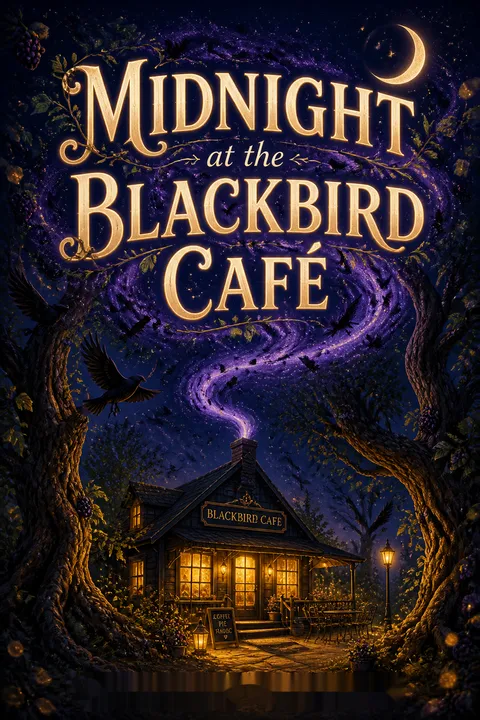
Midnight at the Blackbird Café is a heartwarming story set in a small Southern town, blending magical realism with themes of family, forgiveness, and self-discovery. Readers praise the charming characters, cozy atmosphere, and touching exploration of grief. The mysterious blackbird pie and its connection to departed loved ones adds a whimsical element. While some found it predictable or overly sentimental, most reviewers were captivated by the story's warmth and depth. The book is frequently compared to works by Sarah Addison Allen and described as a perfect feel-good read.
People Also Read








Characters
Anna Kate Callow
Reluctant family healerZee’s granddaughter and Eden’s daughter, Anna Kate arrives in Wicklow after a childhood spent moving from place to place. She is disciplined, observant, and drawn to medicine, but also trusts the herbal knowledge her grandmother taught her. Because she expects to leave, she keeps people at a careful distance and treats the café as a temporary obligation. Her instincts, however, make her notice what others need, from an old customer missing his wife to Summer’s financial worry. Anna Kate is driven by loyalty to her mother and by a quieter longing for a place that feels like hers. Her central tension is between inherited duty and the right to choose her own life.
Natalie Walker
Grieving, determined motherNatalie is Seelie and Doc’s daughter, AJ’s younger sister, and Ollie’s mother. Widowed after Matt’s drowning, she returns to Wicklow with financial problems and unresolved questions about her husband’s death. She is capable, creative, and outwardly composed, but panic and a habit of pleasing others often narrow her choices. Her sewing offers a source of identity beyond wife, daughter, and caretaker. Natalie wants Ollie to grow up with family and community, yet fears repeating her mother’s emotional distance. She is driven to become self-sufficient while still craving approval and safety. Her story explores how a person can acknowledge grief without allowing it to dictate every decision.
Seelie Linden
A mother behind armorSeelie is Doc’s wife and Natalie’s mother, a polished, socially influential woman who chairs Wicklow’s revitalization committee. She prizes order, propriety, and protection, and her standards can become a means of controlling the people she loves. The death of her son shaped her into a guarded parent who struggles to show affection without trying to manage risk. Her pearls and carefully maintained appearance signal the discipline she uses to contain feeling. Seelie is more complicated than her reputation suggests: she has a creative life in sewing and a capacity for tenderness, but grief has made it difficult for her to reach others. Her relationships reveal the cost of mistaking vigilance for love.
Doc Linden
Wicklow's family doctorDr. James Dawson Linden is Seelie’s husband, Natalie’s father, and AJ’s father. A respected physician, he is quieter and more reflective than his wife, with a strong attachment to family and professional responsibility. He carries regret about the way the Lindens treated Eden and wants a relationship with Anna Kate, though his desire to restore the family can make him presume what she should become. His calm manner sometimes conceals important truths, including from the people closest to him. Doc is motivated by love, duty, and a wish to leave something useful behind. His character asks whether a legacy is a profession, a reputation, or the people who carry a person’s values forward.
Gideon Kipling
The lawyer next doorGideon is Zee’s attorney and Anna Kate’s neighbor, living in Hill House beside the café. He is practical, warm, and attentive, with a habit of helping without turning assistance into a debt. His legal work gives him a role in Anna Kate’s inheritance, complicating his growing attraction to her. He values the town’s history and believes the café and Hill House belong together, but his dream about the properties leaves him uncertain how much of that belief is his own. Gideon is drawn to Anna Kate’s humor and care for others, while respecting her right to make her own decisions. His restraint is as important as his affection.
Cam Kolbaugh
The mountain photographerCam is a wildlife photographer, former Green Beret, and newcomer to Wicklow. He lives in the mountains with his dog, River, and prefers the quiet of trails to the scrutiny of town. His military experience and broken marriage have left him familiar with trauma, though he does not use that experience to claim authority over anyone else’s pain. With Natalie, he offers practical help and asks careful questions instead of supplying easy reassurance. He is patient, perceptive, and still learning how to live beyond the role of soldier. His photographs and his retreat into nature reflect a desire to observe the world without being consumed by it.
Aubin Pavegeau
A guarded woodcarverAubin is Summer’s father, a skilled woodcarver and craftsman who lives outside Wicklow with the physical effects of a serious accident. He was once sociable and impulsive, but now protects his privacy and avoids reopening painful memories. His devotion to Summer makes him proud of her plans and reluctant to burden her with his needs. He cooks with what he grows and makes useful objects by hand, translating care into practical work. Aubin is burdened by an old mistake, though he initially resists discussing it. His relationship with Anna Kate develops through shared effort, recipes, and the difficult question of what it means to be a loyal friend.
Summer Pavegeau
The garden's young stewardSummer is Aubin’s eighteen-year-old daughter and a close friend of Zee’s. She gathers eggs and berries, tends the land, and feels more at ease outdoors than among people. Her quiet reserve hides a determined, generous nature and a strong wish to attend college and study something connected to the natural world. Summer worries about leaving her father alone, even when he encourages her to build a life of her own. Her loyalty to the Pavegeau family makes her wary of the Lindens, whose treatment of Aubin left a mark. She becomes an important link between Anna Kate, Zee’s hidden preparations, and the town’s landscape.
Eden Callow
The absent, protective motherEden is Anna Kate’s mother, Zee’s daughter, and AJ’s former partner. She left Wicklow as a young woman and raised Anna Kate while working as a traveling nurse. To Anna Kate, she was loving but guarded about her past; to the Lindens, she became a figure defined by suspicion and loss. Eden’s desire to protect her child shaped the family’s separation, while her connection to the Callow tradition remained part of Anna Kate’s upbringing. She is absent from the present-day action but powerfully present through memory, family stories, and the choices others made about her. Her life asks how protection can preserve a child while also withholding a family.
Andrew James Linden
The lost Linden sonAJ is the son of Seelie and Doc, Natalie’s older brother, and Anna Kate’s father. He was a warm, mischievous young man who loved Eden and planned to become a doctor. His death before Anna Kate’s birth divided the family and shaped the lives of nearly everyone in Wicklow. Stories about his humor and affection come from different people, especially his parents and childhood friend Aubin, giving Anna Kate a sense of him that her mother could not provide. AJ’s memory can inspire love, but the Lindens also use his unrealized future as a standard against which Natalie and Anna Kate are measured.
Zora Zee Callow
The café's guiding grandmotherZee is Anna Kate’s grandmother and the former owner of the Blackbird Café. A gifted cook and gardener, she teaches Anna Kate about herbs, pie making, and the family’s unusual connection to the blackbirds. She is determined to bring her granddaughter back to Wicklow, but expresses that determination through a will that gives Anna Kate little room to avoid the town. Zee is generous with affection and secrets, sometimes trusting younger people with knowledge she withholds from those who work beside her. Her love is practical as well as mystical: she leaves food, skills, relationships, and a carefully prepared inheritance.
Olivia Leigh Ollie Walker
The fearless toddlerOllie is Natalie and Matt’s young daughter, known for her affection, exuberant play, and love of toy trucks and tractors. Her easy warmth draws Anna Kate and Doc close, while her need for care forces Natalie to confront how grief shapes her parenting. Ollie is too young to understand the family’s history, which makes the adults’ choices around her especially consequential. She responds to the world with curiosity before fear, offering Natalie a living reminder that protecting a child also means allowing her to explore.
Bow Barthelemy
The café's steady cookBow works at the Blackbird Café with his wife, Jena, and has served Zee for decades. He cooks, maintains the café, and helps Anna Kate learn the demands of a commercial kitchen. Quiet and observant, he offers support without overwhelming her with questions. His loyalty to the café is connected to a regret he shares with Jena, though he rarely discusses it directly. Bow’s patience helps make the café feel like a family kitchen rather than simply a business.
Jena Barthelemy
The café's wise cookJena is Bow’s wife and the café’s other longtime employee. She cooks, gardens, and guides Anna Kate with warmth sharpened by an unerring eye for what people are avoiding. Her gentle manner does not make her passive; she will challenge Anna Kate when she thinks the younger woman is choosing fear over desire. Jena and Bow have built a life in Wicklow after intending to move on, and their shared history gives their loyalty both tenderness and weight.
Faylene Wiggins
Wicklow's lively matchmakerFaylene is a retired art teacher, longtime friend of Zee, and one of the town’s most energetic storytellers. She welcomes newcomers with food, hugs, questions, and practical offers of help. Her talkative manner can make her seem nosy, but she often uses it to redirect attention away from people who are uncomfortable. Faylene cares for her granddaughter and readily makes room for Natalie and Ollie. Beneath the humor, she understands how grief and loneliness can hold a person in place.
Otis Lazenby
The pie-seeking widowerOtis is an elderly regular who visits the café each morning and has relied on its pies for years. He is fussy about recipes, dressed with meticulous care, and sometimes blunt when the food fails to meet his expectations. His devotion to his late wife Rosemarie is sincere, but it also makes him reluctant to imagine a future beyond the messages he hopes to receive. Beneath his grumbling, Otis is vulnerable and capable of gratitude.
Pebbles Lutz
The patient café regularPebbles is an older Wicklow resident with a towering hairstyle and a sharp sense of other people’s feelings. She is a regular at the café and keeps a close eye on Otis, though she disguises her concern with teasing and argument. Her patience has limits, particularly when Otis uses grief to avoid noticing the living people around him. Pebbles is both proud and hopeful, wary of appearing to ask for affection before she knows it will be returned.
Zachariah Boyd
The devoted birding leaderZachariah is president of the Gulf Coast Avian Society and one of the first outsiders to pursue the blackbirds. His scientific curiosity brings visitors to Wicklow, but repeated encounters with the birds and pies gradually unsettle his skepticism. He is organized, enthusiastic, and more affected by his mother’s memory than he initially lets on. His presence helps turn a strange local custom into an event that supports the town.
Josh Kolbaugh
Wicklow's protective policemanJosh is Marcy’s husband, Cam’s brother, and a local police officer. He is physically imposing but gentle in manner, known for taking care of his family and enforcing practical safety rules during the birding crowds. He helps Anna Kate understand what remains of the old police records. Josh’s steadiness makes him a reliable presence in a town where old disputes often distort what people believe.
Marcy Kolbaugh
The shopkeeping sister-in-lawMarcy runs Hodgepodge, a gift shop in Wicklow, and is married to Josh. She gives Natalie a chance to sell her handmade sewing work on consignment, helping turn craft into income. Marcy is warm, commercially practical, and devoted to her young daughter. She is one of the people trying to keep Wicklow’s small businesses alive as tourism returns.
Lindy-Lou
Ollie's young playmateLindy-Lou is Marcy and Josh’s toddler and Faylene’s beloved granddaughter. She becomes a companion for Ollie during the girls’ time with Faylene. Her presence gives Natalie a practical childcare option and a glimpse of the community she hopes Ollie can grow up within.
Rosemarie Lazenby
Otis's remembered wifeRosemarie is Otis’s late wife, known through the dreams he hopes to receive after eating blackbird pie. Her messages reflect the practical way she cared for him in life. Even in memory, she is direct, attentive, and concerned with the choices Otis makes each day.
Francie Pavegeau
Aubin's beloved wifeFrancie is Summer’s mother and Aubin’s late wife. Her grave remains a daily place of remembrance for Aubin, and her absence shapes his private, cautious life. She represents the family home and happiness he fears losing again.
Mary Beth Sheehan
The local librarianMary Beth works at the courthouse library and helps Anna Kate and Natalie access Wicklow’s old newspaper records. She went to school with Eden and knows some of the town’s history, though the surviving records are incomplete. She is also Faylene’s cousin.
Stacia Dabadie
Ollie's swimming instructorStacia is hired by Seelie to teach Ollie to swim at the family pool. Her lessons become a point of conflict between Seelie and Natalie, whose fear of water follows Matt’s drowning.
River
Cam's gentle rescue dogRiver is Cam’s affectionate dog, a gentle companion who seems quick to notice when people are distressed. He helps draw Natalie and Cam together and delights Ollie, who loves to pet and play with him.
Plot Devices
Blackbird pies
Messages carried through dreamsThe Callow family’s pies contain preserved mulberries gathered from the trees beside the café. When someone grieving eats a properly made pie, the blackbirds can sing a message from a deceased loved one, which the recipient may experience in a dream. The messages are not always declarations of love; they may be practical reminders or challenges to change. The device links domestic labor, grief, and the supernatural, while also giving the café a distinct purpose in Wicklow. Anna Kate must learn that the magic depends on the care embedded in the recipe, not simply on copying its ingredients.
Zee's sixty-day will
An inheritance with conditionsZee requires Anna Kate to live in Wicklow and operate the Blackbird Café for sixty days before inheriting the estate. Anna Kate initially treats the condition as a temporary inconvenience and intends to sell the property afterward. The clause brings her into contact with the blackbirds, the town, and relatives she has never met. It turns a legal document into a plot engine that forces the protagonist to spend enough time in one place to form attachments and uncover family history.
The hidden mulberry room
A secret store of family careA concealed pantry room beneath the café stairs holds years of preserved mulberries, the missing ingredient in Zee’s blackbird pies. Summer knows how to find it because Zee trusted her with the harvest and preserving work. The discovery solves Anna Kate’s immediate problem, restores the birds’ songs, and reveals how much of Zee’s legacy was planned in advance. It also makes the magical tradition materially sustainable rather than a vague inheritance of folklore.
The old crash report
A clue buried in the recordThe police report and accompanying photographs appear to offer a neutral account of the wreck that killed AJ, but the surviving documentation leaves crucial questions unresolved. A chewed sweetgum twig in a backseat photograph gives Anna Kate a way to recognize Aubin’s presence in the car. The report does not itself explain the crash; it becomes meaningful only when compared with Aubin’s memory and Eden’s decision to keep the truth private. It separates physical evidence from the stories the family built around it.
The reporter's interviews
A town-sized chorusShort interviews with Wicklow residents appear between scenes in Anna Kate and Natalie’s stories. The visiting reporter wants an article about the rare blackbirds, but his questions draw out residents’ memories of grief, love, and the town’s history. The frame gives the reader glimpses of how events are understood by people outside the central family, while gradually showing the reporter becoming part of the community he meant only to observe. It reinforces the difference between documenting a phenomenon and understanding what it means to those who live beside it.
About the Author
Other books by Heather Webber
Download PDF
Download EPUB
.epub digital book format is ideal for reading ebooks on phones, tablets, and e-readers.








